Oceanography, Chemical and Physical Degree Guide: Courses, Careers and Program Fit
Explore what an Oceanography, Chemical and Physical program teaches, how it differs from related marine sciences, what study and research can involve, and how to compare programs, costs, and career paths.
By Kieth Nelson · Staff Writer Assessment.com · Published October 12, 2026 · Last updated November 5, 2026
Oceanography, Chemical and Physical is the study of the chemical makeup and movement of ocean water and how marine systems interact with land and the atmosphere. Students connect chemistry and physics with ocean processes, seawater properties, circulation, mixing, and related environmental questions. The National Center for Education Statistics classifies the field under CIP code 40.0607. Programs may lead to different credentials, from associate and bachelor’s degrees to graduate certificates and doctoral study. Prospective students often consider the field because they enjoy scientific questions about oceans, water, climate connections, and environmental processes. The right path depends on which questions and careers interest you, and how much education those goals require.
Degree & Program Decision Insights
Explore your personal fit, education requirements, career potential and next steps.
01Motivational Fit
Discover whether this program fits you
Explore your preferences against the focus of Oceanography, Chemical and Physical. These prompts are not personal MAPP results.
Scientific investigation. Would you enjoy investigating inorganic and organic ocean chemistry and explaining your conclusions from evidence?
Breadth of interest. Consider the place of “material inputs and outputs” in this field. Is this another part you would choose to explore, or mainly a requirement you would tolerate?
Work reality. Related work can involve this task: “Study and document quantities, distribution, disposition, and development of underground and surface waters.” Would you want that activity to be a regular responsibility?
Interest in studying a field can differ from enjoying its related work.
Which part would you want to do repeatedly, and what would you try before deciding?
Discover Your Personal Program Fit
Before investing your time and money in your education, discover how this program aligns with your natural motivations, work preferences and career goals.
U.S. occupational wages are not guaranteed graduate earnings; OEWS excludes self-employed workers.
Projected openings include replacements as well as growth.
U.S. national estimates. A crosswalk does not establish entry-level eligibility; advanced, management and teaching roles can require further qualifications.
Compare the focus and route of these distinct instructional fields; their credentials and admission requirements are not interchangeable.
Marine Biology and Biological OceanographyCIP 26.1302. Compare its emphasis on chemical, physical, and geological oceanography and molecular, cellular, and biochemical studies with this program’s focus.
Geology/Earth Science, GeneralCIP 40.0601. Compare its emphasis on historical geology and geomorphology with this program’s focus.
GeochemistryCIP 40.0602. Compare its emphasis on chemical thermodynamics and equilibrium in silicate systems with this program’s focus.
Explore your motivations. Use MAPP as a starting point for reflecting on your interest in “material inputs and outputs”, then test that interest against a sample learning task.
Examine the work. Compare Hydrologists and Geoscientists, Except Hydrologists and Geographers on daily work and entry qualifications, as well as pay. Explore Hydrologists.
Compare actual providers. Ask for the exact credential, course sequence and assessment methods. Compare how each provider teaches “chemical and biochemical transformations in marine systems”, its entry criteria and its itemized costs.
Check the evidence before applying. Confirm prerequisites and any recognition or professional requirements for your intended route; ask for applicable rules and published outcome definitions in writing.
Verify the institution’s current offering, admissions requirements and outcomes; a search result does not establish your eligibility.
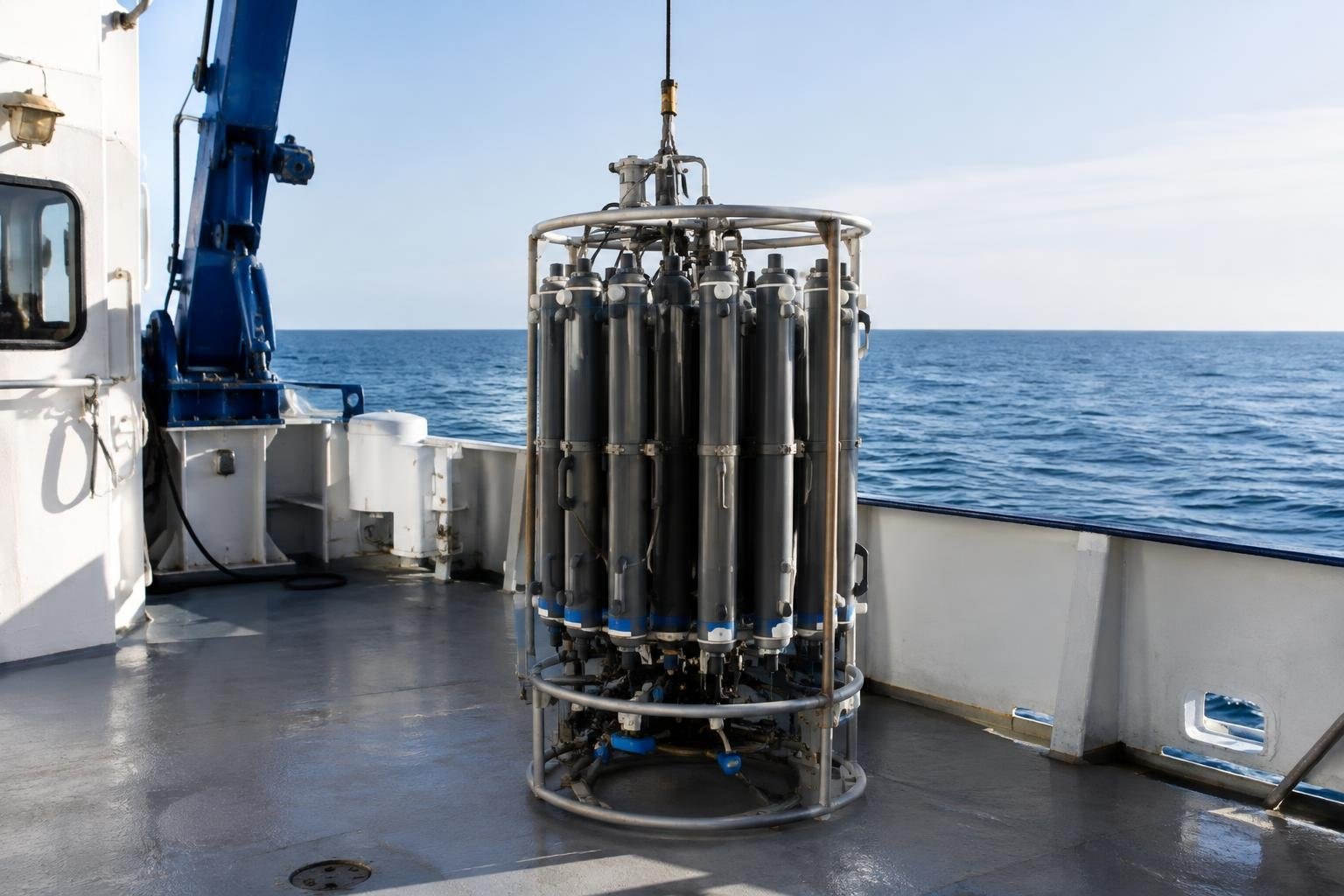
Oceanography students working with seawater samples and field instruments
What Is an Oceanography, Chemical and Physical Degree?
Oceanography, Chemical and Physical is the scientific study of ocean water’s chemical components, structure, and movement, including how ocean systems interact with terrestrial and atmospheric processes. The U.S. National Center for Education Statistics identifies this subject as CIP 40.0607.
The focus connects two perspectives: chemical oceanography examines substances and transformations in seawater, while physical oceanography considers the movement and properties of ocean water. The field description includes topics such as chemical and biochemical transformations, equilibria, ocean circulation, mixing, sediment transport, tides, waves, and seawater properties. Not every program gives equal attention to each topic.
Oceanography is interdisciplinary. An associate-level program described by City College of San Francisco emphasizes connections with chemistry, physics, biology, geology, mathematics, computer science, problem-solving, and communication. Read the NCES program definition and compare it with the course list of each college you are considering.
What Do You Study in Chemical and Physical Oceanography?
Expect a mix of foundational science and specialized marine topics. The exact course sequence is school-specific, so treat the examples below as subjects to look for rather than a universal checklist.
Scientific foundations and specialist study
Relevant preparation can include chemistry, physics, biology, geology, mathematics, and computer science. More focused study may examine seawater chemistry, chemical equilibria, ocean circulation and mixing, tides, waves, sediment movement, and exchanges between ocean, land, and atmosphere. Those subjects help students reason from measurements to explanations of marine processes.
Research, lab, and field learning
Ask how students practice collecting or analyzing evidence. Depending on the program, learning may involve laboratory work, research projects, field experiences, or a culminating assignment. At the graduate level, research can be central: the University of Connecticut describes doctoral students gaining hands-on experience across oceanography areas and developing coursework with a faculty advisor. The University of Rhode Island describes graduate research requirements that can include research credits, a proposal defense, a research cruise, and a final thesis defense. These are examples of particular institutions, not requirements for every degree.
Review course descriptions and ask what students actually do in labs, field settings, or research groups. A course title alone may not reveal the amount of practical work.
Skills You Can Develop
Oceanography coursework can help students practice more than scientific recall. The interdisciplinary scope described by City College of San Francisco points to capabilities in scientific inquiry, analysis, problem-solving, and communication alongside science and computing foundations.
Scientific reasoning: frame questions, assess evidence, and distinguish observations from interpretations.
Quantitative analysis: work with mathematical relationships and measurements relevant to chemistry and physical processes.
Data and technology literacy: build comfort with computer-based analysis and scientific information. Ask programs which tools and methods students use.
Clear communication: describe methods, explain results, and present findings to people with different levels of technical knowledge.
Teamwork and research habits: coordinate projects, keep careful records, and respond to feedback.
These skills can matter in research, environmental and water-related work, science communication, and further study. They do not guarantee a particular job; practical experience and role-specific qualifications also affect career options.
Who Is This Program Best For?
This field may appeal to students who like asking how natural systems work and are willing to combine several sciences to investigate those questions. Interest in the ocean is a useful starting point, but successful study also involves quantitative reasoning, careful analysis, and communicating conclusions.
You do not need to arrive knowing exactly which oceanography specialty you want. A broad program can help you discover whether you prefer chemical processes, physical movement, marine environmental science, or a related area. Florida Tech, for example, lists concentrations in biological, chemical, and physical oceanography, coastal zone management, and marine environmental science within its bachelor’s program.
Does Oceanography Match You?
Consider whether you enjoy working with evidence, learning scientific concepts, and revising an explanation when data do not fit your first idea. Also consider work setting: some students prefer lab and computer-based analysis; others want field or research experiences. A program may include a blend.
Salary, prestige, and broad job-growth claims cannot answer whether you will enjoy the day-to-day work. Use Assessment.com’s MAPP career assessment as one input, then compare your results with degree and career options, course requirements, and conversations with advisers or professionals.
Admissions, Time to Completion, and Academic Difficulty
Admissions requirements are set by each college and by the credential level. Undergraduate applicants should check the institution’s published entry criteria and ask whether prior science or mathematics coursework affects placement. Graduate applicants should review department-specific prerequisites, application materials, and expectations for research preparation. The supplied institutional examples show that graduate study can involve faculty advising and substantial research, but they do not establish a universal admissions standard.
How long completion takes depends on the credential, course load, transfer credit, and program design. A certificate, associate degree, bachelor’s degree, master’s degree, and doctorate represent different amounts and types of study. Do not assume a fixed completion time from the credential name alone. Request a sample plan for full-time and part-time students, and ask how transfer credits affect remaining requirements.
Common academic challenges include moving between multiple science disciplines, building confidence with quantitative work, and managing extended research projects. Preparation can include refreshing math and chemistry, practicing careful note-taking, and asking early about tutoring, advising, and research opportunities.
Online, Hybrid, and On-Campus Options
Oceanography study is available through different formats, but the label “online” does not tell you whether every learning activity is remote. Ask whether lectures, labs, research, field experiences, and advising are online, hybrid, or campus-based. Also check for required travel or scheduled in-person sessions.
Examples illustrate why format details matter. The University of Rhode Island lists an online ocean-science graduate certificate with required courses drawn from its oceanography core. Separately, URI describes a research cruise as part of certain graduate research-degree requirements. Those examples are not a promise that another online certificate or degree includes or excludes fieldwork.
Before enrolling, ask for a written list of in-person requirements, equipment or technology needs, and any travel costs. If you are balancing work, family, or a long commute, confirm that the actual weekly schedule is workable.
Tuition, Costs, and Financial Aid
Compare the full cost of attendance, not just the advertised tuition rate. Ask the financial-aid office for an itemized estimate covering tuition, required fees, books, laboratory or course materials, technology, travel for field activities, and living costs if relocation is involved. Costs differ by institution, residency status, enrollment level, and study format, so use a current estimate from the school you would attend.
Investigate grants, scholarships, federal and institutional aid, employer education benefits, and transfer pathways. For graduate study, ask whether assistantships or funded research appointments are available, what duties they involve, and whether funding is guaranteed for the full period of study. Do not count a funding offer from one institution as typical for the field.
URI’s published 2026–2027 graduate admissions information lists annual stipends of $42,393, $43,647, and $45,497 for different full-time appointment levels. These are institution- and appointment-specific figures, not a general oceanography salary or a universal student funding amount. Confirm current terms directly with the institution before relying on them.
Careers, Jobs, and Employment Outlook
Oceanography may connect with careers in geoscience, hydrology, water resources, natural-science management, and postsecondary teaching in related sciences. The work graduates can pursue depends on their degree level, experience, specialization, and the requirements of a particular employer. A degree does not automatically qualify someone for a research, teaching, or management position.
Related career direction
How oceanography can connect
What to investigate
Geoscientist
Marine processes and interactions with Earth systems may be relevant to geoscience work.
Employer education expectations, specialty, and practical experience.
Hydrologist
Scientific training about water systems can provide a related foundation.
Specific coursework, quantitative skills, and job requirements.
Water resource specialist
Ocean and water knowledge may inform resource-focused work.
Whether the role emphasizes science, policy, planning, or management.
Natural sciences manager
Can be a longer-term direction for people who build relevant expertise.
Management experience and the role’s education requirements.
Postsecondary science teacher
Oceanography can be a subject area within marine or Earth science education.
Graduate qualifications and the institution’s hiring criteria.
These are career directions to investigate, not guaranteed outcomes. Compare current requirements and pay information for each specific job title using authoritative occupational resources and local employers. Avoid treating one salary figure as the value of the entire degree.
Potential employers to research include colleges and research groups, public agencies, and organizations involved in water or environmental science. Verify the duties and qualifications in actual job postings. Scientific software and automated analysis may change how data are handled, but careful measurement, interpretation, and communication remain useful capabilities to develop.
Find out which Career or College Major is right for you!
For many science careers, education is only one part of preparation. Ask programs whether students can join research groups, complete a capstone, present work, or gain field and laboratory experience. Keep a record of projects and methods you have used, and practice explaining your contribution clearly.
How to Stand Out to Employers
Build a concise portfolio of research summaries, data visualizations, or project reports when appropriate.
Seek supervised research, internships, volunteer projects, or other relevant experience that fits your circumstances.
Develop clear writing and presentation skills alongside technical coursework.
Ask faculty and career services how students find relevant openings and make professional connections.
Check whether a target job requires a credential beyond the degree, and confirm that requirement with the employer or relevant authority.
Do not assume that finishing an oceanography program is the same as obtaining a professional license. Requirements depend on the specific occupation and jurisdiction, so check before investing in an additional credential.
Graduate School and Other Further Study
Graduate study can deepen subject knowledge or prepare students for research-focused work. Options described by the supplied institutions include master’s and doctoral degrees in oceanography, graduate certificates, and interdisciplinary study connected with atmospheric science. Choose a next step based on the work you want to do, not simply because it is the next credential available.
At the University of Connecticut, doctoral students can gain hands-on experience across biological, physical, and chemical or geological oceanography and work with a faculty advisor to shape coursework. URI describes master’s and doctoral study focused on oceanography specialties, with research components for its research degrees. A graduate certificate can be a narrower course pathway; for example, Colorado Boulder describes a graduate certificate available to eligible graduate and non-degree students. Check each institution’s admission rules and whether certificate credits apply to a later degree.
Ask potential advisers about research fit, funding, supervision, expected milestones, and how students prepare for work after graduation.
Related Degrees and Alternatives
Related fields can share courses while emphasizing different questions. Compare actual curricula, not just labels.
Marine biology: consider this if living organisms and biological systems are your main interest. Check how much chemistry and physics the program requires.
Oceanography, biological: consider this if you want an ocean-science pathway centered more on marine life.
Geology or geoscience: consider this if you are more interested in Earth materials, landforms, or geological processes.
Environmental science: consider this if you want a broader focus on environmental systems and human impacts.
Chemistry: consider this if you want deeper general chemical study that is not primarily centered on oceans.
Physics: consider this if mathematical and physical theory is your strongest interest.
Hydrology or water resources: consider this if your goal centers on water systems, planning, or resource questions.
Coastal zone management: consider this if you want to combine coastal issues with planning and management. Florida Tech lists coastal zone management among its oceanography concentrations.
When weighing oceanography against marine biology or environmental science, compare laboratory and field expectations, required math, research opportunities, and the extra education needed for your intended role. The title alone cannot show how technical or interdisciplinary a specific program will be.
Advantages, Drawbacks, and Is It Worth It?
There is no universal answer to whether this degree is worth the investment. Its value depends on whether the subject fits your interests, whether the credential aligns with your career plan, and whether the cost and time make sense for your circumstances.
Possible advantages
Interdisciplinary study connects chemistry, physics, and other sciences.
Programs may offer concentration choices or research opportunities, depending on the institution.
Scientific analysis and communication can apply across more than one kind of work.
Tradeoffs to consider
Specialized research paths may require education beyond a bachelor’s degree.
Field, lab, or research activities can affect schedule, location, and cost.
A science degree does not guarantee a particular job, salary, or location.
Build a personal comparison using total cost after aid, completion plan, likely entry-level options, graduate-school plans, and the practical experience you can gain. If a broader or more applied program fits your priorities better, compare alternatives before committing.
How to Choose the Right Oceanography Program
Compare programs using evidence you can verify, rather than relying on a name, brochure, or broad promise about careers.
Curriculum: Do required classes cover the chemical and physical topics you want? Are the math and science prerequisites clear?
Accreditation and recognition: Ask the institution which recognized institutional or programmatic accreditations apply. Confirm any credential requirements for your target occupation with the relevant authority.
Faculty and facilities: What laboratories, research groups, or field resources can students access?
Practical learning: Are there research, field, internship, capstone, or cruise opportunities? Are they required, competitive, or optional?
Cost and aid: What is the complete estimated cost, and which grants, scholarships, assistantships, or employer benefits may apply?
Format and time: Which activities require campus attendance, and what is a realistic part-time completion plan?
Outcomes and support: What information can the college provide about completion, student research, advising, career services, and employer connections?
Transfer and progression: Which credits will transfer, and can certificate coursework count toward a degree?
Look for written answers, sample course plans, and published policies. Use Assessment.com’s degree resources and major-selection guidance as starting points for exploring options, then confirm program details with the college.
From Degree to Career: Possible Pathways
Career development is not a guaranteed ladder, but mapping possible steps can reveal what preparation may be useful. Consider these illustrative pathways and verify requirements for each destination role.
Oceanography study → research assistant or technician role → added research experience → specialized marine research: relevant projects and graduate preparation may matter, depending on the opening.
Oceanography study → water or environmental science support work → experience with data and field methods → water-resource specialization: investigate the duties and qualifications employers request.
Oceanography graduate study → teaching or research position → deeper specialization → academic or science leadership role: advanced study and a record of relevant work may be expected for particular positions.
These examples are planning prompts, not promises of placement. Ask departments for transparent information about the paths their students pursue and what additional preparation those students complete. Compare those pathways with your own priorities, including location and willingness to pursue graduate school.
Questions to Ask Before Enrolling
Use this checklist at college fairs, advising appointments, and financial-aid conversations:
What is the complete cost for my expected enrollment plan after grants and scholarships?
Which science and mathematics courses must I complete before advanced classes?
How much laboratory, field, research, or sea-based experience is available, and what is required?
Can I complete the program online, part-time, or while working? Which activities must be in person?
What transfer credits will count, and can certificate courses apply to a degree?
What research advising, career services, and employer connections can students use?
What do graduates typically do next, and what additional education or qualifications do those paths require?
What funding is available, how long does it last, and what conditions or duties come with it?
Which accreditation applies to the institution or program, and does my intended career require a separate license or credential?
Can I speak with a current student, faculty member, or graduate about the actual workload?
Parents and students can use the answers to compare the same factors across schools, rather than allowing campus setting or marketing language to decide the choice.
Frequently asked questions
What is Oceanography, Chemical and Physical?
Oceanography, Chemical and Physical is a scientific field focused on ocean water chemistry, structure, movement, and interactions with land and the atmosphere. Coursework may connect chemistry and physics with marine processes, mixing, circulation, and seawater properties. Program structure varies by institution and degree level.
Is an Oceanography, Chemical and Physical degree hard?
It can be academically demanding because oceanography draws on chemistry, physics, biology, geology, mathematics, and computer science. Students may need to interpret data, solve quantitative problems, and explain scientific findings. The exact balance varies by program, so review required courses and ask about academic support before enrolling.
Is an oceanography degree worth it?
Potentially, if the program’s scientific focus and career paths fit your goals and the overall cost is manageable. The degree may support further study or work connected with marine science, water resources, geoscience, research, and education. Compare actual program outcomes and the qualifications for your target jobs rather than relying on the degree name alone.
What jobs can I get with an oceanography degree?
Possible related paths include geoscience, hydrology, water-resource work, natural-science management, and postsecondary teaching in atmospheric, Earth, marine, or space sciences. Which roles are realistic after graduation depends on your degree level, research and field experience, technical skills, and any additional employer or state requirements.
How much can you make with an oceanography degree?
There is no single salary for this degree. Pay depends on the occupation, education level, employer, experience, and location. Research the current salary range for specific job titles you are targeting, and compare those figures with realistic entry requirements and the total cost of your program.
Can you earn an oceanography degree online?
Some oceanography-related classes or certificates may be offered online, but each program sets its own format. Ask whether labs, fieldwork, research, cruises, or other practical components require in-person attendance. For example, one graduate certificate lists oceanography core courses, while research degrees may include a research cruise.
Does oceanography require a lot of math?
Students should expect quantitative work. The field draws on mathematics alongside chemistry and physics, and an associate-level oceanography program described by City College of San Francisco also emphasizes biology, geology, and computer science. Check a program’s course sequence to see which math classes are required and when they are taken.
Do you need graduate school to work in oceanography?
Not for every position. A bachelor’s degree may be a starting point for some related work, while research-focused roles and university teaching may call for graduate education. Look up the specific job titles you want, then ask programs how their curriculum, research options, and graduate preparation align with those paths.
People Also Ask
What do chemical and physical oceanographers study?
Students study how ocean water’s chemical components, structure, and movement work, including chemical and biochemical changes, seawater properties, circulation, and interactions with land and atmospheric systems. Programs may also draw on chemistry, physics, biology, geology, math, and computing.
How is oceanography different from marine biology?
Oceanography investigates marine systems, while marine biology centers on living organisms and their interactions. The subjects can overlap in interdisciplinary programs, but students should compare the required courses and research focus at each institution instead of relying on program titles alone.
What degree levels are available in oceanography?
Some institutions offer associate or bachelor’s-level study; other pathways include graduate certificates, master’s degrees, and doctorates. Availability depends on the institution. Check whether a credential is an entry point, a specialization, or a research-focused program before comparing schools.
Do oceanography students have to go to sea?
It depends on the program. Some course content can be delivered online, but research degrees or practical training may require in-person activities. Ask about fieldwork, labs, research cruises, and residency requirements before enrolling in a distance program.
How do I choose an oceanography program?
Compare the required science and math sequence, concentration options, research and field experiences, program format, total cost, transfer rules, and graduate preparation. Ask for a term-by-term plan and clarify how students gain practical experience related to their intended careers.
What is a graduate certificate in oceanography?
A graduate certificate can provide a focused set of courses without being the same credential as a master’s or doctoral degree. For instance, University of Colorado Boulder describes a graduate certificate route for graduate students and eligible non-degree students. Confirm admission rules and credit applicability with the institution.
Oceanography, Chemical and Physical can suit students who want to investigate how seawater’s chemistry and movement connect with marine environments, land, and the atmosphere. It calls for sustained work in science and mathematics, plus careful data analysis and communication. Before enrolling, compare the actual curriculum, research opportunities, total cost, and likely next steps for the careers you are considering. If you are unsure whether this mix of interests and work styles fits you, use Assessment.com’s MAPP career assessment to explore career and degree options.
Want to see your options? Try our comprehensive Degree, Program & College Search tool
We use cookies to offer you a better browsing experience, analyze site traffic and personalize content.
Read about how we use cookies and how you can control them in our
Privacy Policy.
If you continue to use this site, you consent to our use of cookies.
×
Exciting News!
Be one of the first to Beta Test the new AI-Powered Assessment.com Platform.