Geophysics and Seismology Degree Guide: Courses, Careers, and Fit
A practical guide to geophysics and seismology degrees: what students study, math demands, credentials, cost questions, career directions, and how to evaluate program fit.
By Tome Fierre · Staff Writer Assessment.com · Published October 26, 2026 · Last updated November 5, 2026
A geophysics and seismology degree applies physics, mathematics, and measurement to the study of Earth and other planets. Students learn to interpret physical signals and data, investigate how materials and structures behave, and examine processes such as earthquakes and plate motion. Depending on the program and degree level, study may lead toward applied geoscience, research, or teaching. For students and families comparing college choices, the key questions are how quantitative the program is, what research or field experience it offers, and what credential a target role requires.
Degree & Program Decision Insights
Explore your personal fit, education requirements, career potential and next steps.
01Motivational Fit
Discover whether this program fits you
Explore your preferences against the focus of Geophysics and Seismology. These prompts are not personal MAPP results.
Subject curiosity. Would you choose to explore “gravimetric” in depth? Ask for a sample learning activity to test that interest.
Breadth of interest. Consider the place of “seismology” in this field. Is this another part you would choose to explore, or mainly a requirement you would tolerate?
Work reality. Related work can involve this task: “Analyze and interpret geological data, using computer software.” Would you want that activity to be a regular responsibility?
Interest in studying a field can differ from enjoying its related work.
Which part would you want to do repeatedly, and what would you try before deciding?
Discover Your Personal Program Fit
Before investing your time and money in your education, discover how this program aligns with your natural motivations, work preferences and career goals.
Typical occupational entry: bachelor's degree (BLS). BLS lists 5 years or more of related work experience as typical for this occupation; this programme is not a direct promise of entry.
U.S. occupational wages are not guaranteed graduate earnings; OEWS excludes self-employed workers.
Projected openings include replacements as well as growth.
U.S. national estimates. A crosswalk does not establish entry-level eligibility; advanced, management and teaching roles can require further qualifications.
Compare the focus and route of these distinct instructional fields; their credentials and admission requirements are not interchangeable.
GeochemistryCIP 40.0602. Compare its emphasis on chemical thermodynamics and equilibrium in silicate systems with this program’s focus.
Geochemistry and PetrologyCIP 40.0606. Compare its emphasis on mineralogy and crystallography with this program’s focus.
Oceanography, Chemical and PhysicalCIP 40.0607. Compare its emphasis on material inputs and outputs and chemical and biochemical transformations in marine systems with this program’s focus.
Explore your motivations. Use MAPP as a starting point for reflecting on your interest in “gravimetric”, then test that interest against a sample learning task.
Compare actual providers. Ask for the exact credential, course sequence and assessment methods. Compare how each provider teaches “seismology”, its entry criteria and its itemized costs.
Check the evidence before applying. Confirm prerequisites and any recognition or professional requirements for your intended route; ask for applicable rules and published outcome definitions in writing.
Verify the institution’s current offering, admissions requirements and outcomes; a search result does not establish your eligibility.
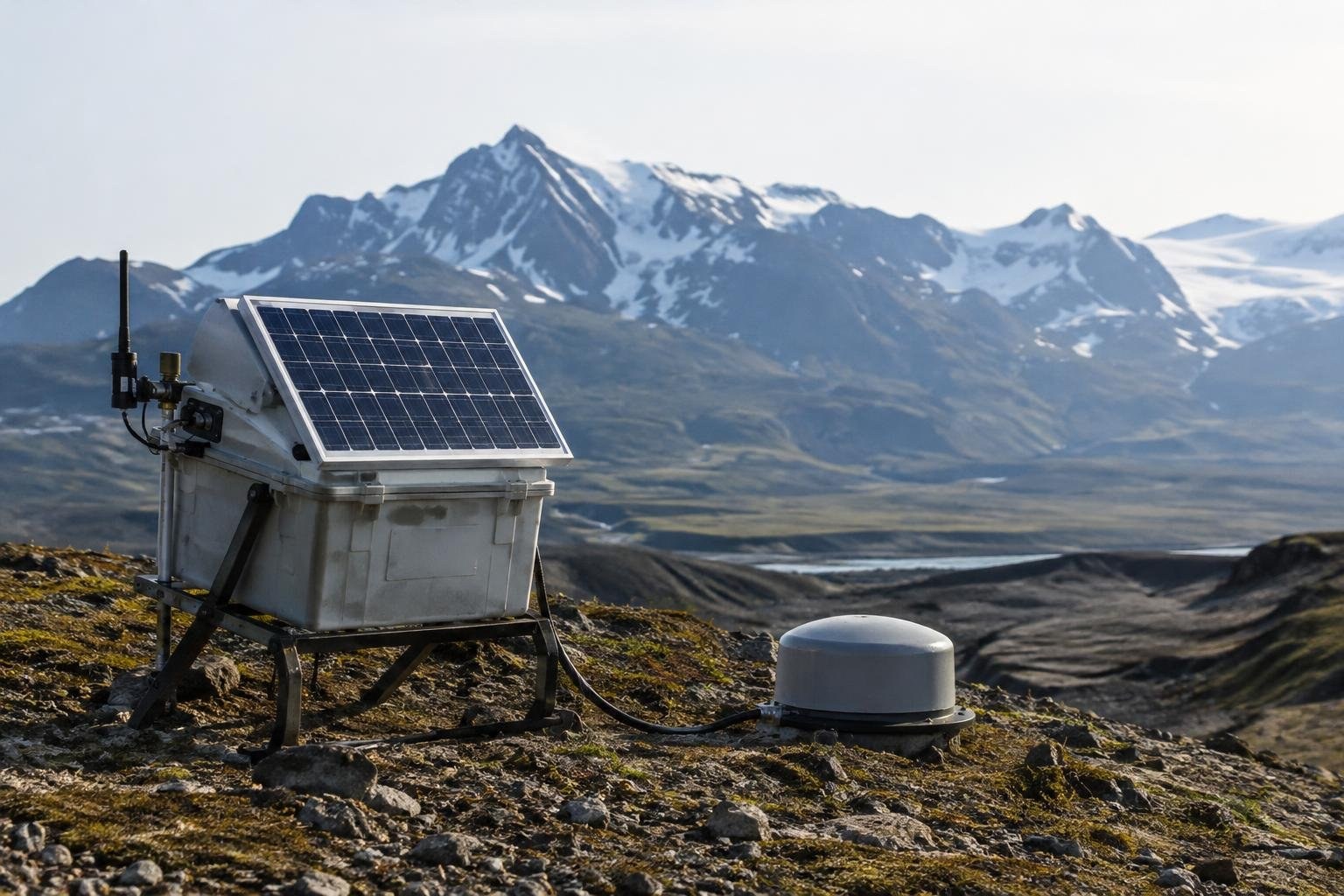
Seismic waves, Earth layers, and field instruments
What Is a Geophysics and Seismology Degree?
Geophysics applies the physics of solid materials and physical measurements to investigate Earth and other planets. Seismology is a major area within the field, examining seismic waves and what they reveal about Earth structure and processes. Depending on the program, students may encounter gravity and geodesy, electrical and magnetic properties, plate tectonics, deformation, thermodynamics, remote sensing, and laboratory simulations. A graduate geophysics program may combine theory with laboratory or field experimentation, as described in Michigan Tech’s program information.
The same subject can appear under geophysics, geophysics and seismology, geosciences, or a combined geology and geophysics department. A program’s label alone does not tell you how much time it gives to mathematical theory, field methods, or a particular research specialty. Read the course list and ask what students actually do. For a career-oriented view of one occupation, explore Assessment.com’s geophysicist career guide.
What Do You Study in a Geophysics Major?
Students build from core physical science toward the mathematical tools needed to interpret measurements. Depending on level and school, a course sequence can include calculus-based physics, Earth materials, data analysis, geodynamics, and mathematical methods. Advanced seismology can explore wave propagation, seismic reflection and refraction, seismic velocity, earthquake generation, post-seismic deformation, and the relationship between faulting and plate tectonics. These topics appear in the Texas A&M University-Kingsville catalog.
At the doctoral level, an example curriculum lists research skills and data analysis as foundational work, with electives such as internal Earth structure, introduction to seismology, structural seismology, earthquake-source seismology, gravity, and geodesy. This is an illustration, not a universal checklist. See the Scripps geophysics doctoral program areas for that curriculum example.
Research may involve learning methods, handling physical measurements, testing interpretations, and presenting evidence. Ask whether undergraduate students can join research groups and how a capstone, thesis, or dissertation is structured.
Skills You Develop and the Math Commitment
The main academic demand is connecting mathematical descriptions to physical evidence. Graduate geophysics study can be highly quantitative and expects a firm foundation in mathematics and physics. Students also need to judge whether data quality and assumptions support a proposed interpretation, rather than treating a computed result as automatically correct.
Quantitative reasoning: use equations and mathematical models to describe physical systems.
Data analysis: organize measurements, examine patterns, and explain uncertainty.
Scientific communication: present methods, results, and limitations clearly to peers or non-specialists.
Research practice: connect theory with laboratory or field evidence and revise an explanation when evidence changes.
These skills can transfer to geoscience research, applied measurement work, and teaching. Programming or specialized software may be useful, but the supplied program descriptions do not establish one required language or software package. Ask departments which tools their students use and whether instruction is part of the curriculum.
Who Is This Program Best For?
This subject may appeal to students who like asking how hidden structures or processes can be inferred from measurements. It can suit people who enjoy physics, math, careful analysis, and open-ended scientific questions. Work can be theoretical, computational, laboratory-based, field-based, or a combination; individual programs and jobs differ.
You do not need to arrive with a fixed career identity. Test your interest in the daily work by taking advanced math and physics, trying a research project, attending a departmental seminar, or talking with current students about their workload. Students who prefer primarily qualitative study or want a path with little quantitative coursework should examine program requirements closely before choosing.
Does Geophysics Match You?
Consider whether you want to work with mathematical models, scientific measurements, and evidence that may not produce simple answers. Assessment.com’s MAPP assessment can help you explore career and degree options; use it alongside course experience, advising, and program research. For additional major-selection guidance, see Choosing College Majors.
Admissions, Credential Levels, and Time to Completion
Entry rules are set by each institution and credential. For graduate study, programs may expect a substantial background in mathematics and physics. One doctoral program welcomes applicants from geophysics and allied disciplines including geology, physics, mathematics, computer science, and electrical engineering. This is an example of possible academic routes, not an admissions guarantee or a rule for every school. Review the Colorado School of Mines geophysics graduate program information for its stated admissions background.
Before applying, compare published prerequisites with your transcript. Ask whether applicants from adjacent fields need prerequisite courses, how research interests are considered, and what materials are required. Do not assume a specific GPA, test, essay, interview, or work-experience requirement unless it appears in the institution’s current admissions information.
There is no single completion time for all geophysics credentials. A certificate, bachelor’s degree, master’s degree, and doctorate represent different scopes of study, and part-time attendance or transfer credit can change an individual timeline. Request a term-by-term plan, including course rotations and research milestones, before deciding how long the program is likely to take.
Online, Hybrid, and On-Campus Study
Some geophysics learning depends on activities that are difficult to assess from a course title alone, such as laboratory or field experimentation. Ask the department whether remote students can access required instruments, field experiences, research supervision, and any in-person sessions.
When comparing formats, request a written answer about which classes meet live, whether any field or laboratory work is required, how research is supervised, and whether local arrangements are permitted. Confirm whether attendance at a particular campus is needed for any required part of the degree. A program described as online may still include location-dependent research or scheduled participation.
Tuition, Total Cost, and Financial Aid
Compare current official tuition and fee schedules at each school rather than relying on a general estimate. Ask for the full cost of completing the degree, not just the per-credit tuition rate. Your budget may also need to account for books and course materials, living expenses, transportation, technology, and any required travel or research expenses.
Ask the institution’s financial-aid office how aid is determined, whether assistantships or departmental awards are available, and whether aid applies to part-time study. Eligibility and awards vary, so confirm terms directly and do not assume an assistantship or scholarship will be offered without a written award.
Before borrowing, compare expected total debt with the positions and further education you plan to pursue. Program cost and aid depend on the institution and individual circumstances, so use current official information to make the comparison.
Careers, Jobs, and Employment Questions
Geophysics study can provide preparation relevant to several scientific and technical directions, but a degree title does not guarantee a job or earnings level. Search current postings in the regions where you may work, note the education and experience requested, and compare those requirements with any documented program outcomes.
Career direction to investigate
What to verify
How geophysics study may relate
Geophysicist or geoscientist
Employer requirements, specialty, and experience.
Physical measurements, Earth structure, data interpretation, and geoscience methods.
Research assistant or research scientist
Education and research experience required for the specific position.
Research methods, quantitative analysis, and focused project work.
Postsecondary teacher in Earth, marine, or space sciences
Education level and teaching expectations set by the institution.
Subject expertise and, where relevant, research and teaching preparation.
Natural sciences manager
Required scientific background and relevant work experience.
Scientific knowledge may be relevant to oversight of technical or research work.
Water resource specialist
Employer-specific education and technical requirements.
Quantitative Earth-science skills may apply to selected projects.
Career options and job requirements vary by specialization, location, employer, and experience. Treat these as directions to investigate, not guaranteed outcomes. Computing can support data-intensive work, but sound interpretation still depends on understanding measurements and assumptions.
Explore Assessment.com’s career guides for geophysicists, geologists, natural sciences managers, water resource specialists, and postsecondary physics teachers as adjacent career references.
Research, Experience, and How to Stand Out
During study, look for supervised research, laboratory or field projects, presentations, and opportunities to work with faculty. These experiences let you practice explaining methods and conclusions, not just list course titles on a résumé. Ask what undergraduates can contribute to research groups, whether students present their work, and how the department supports professional networking.
To stand out to employers or graduate programs, document what you personally did: the question, measurement or dataset, methods, your contribution, and what you learned. Keep a short portfolio of approved project summaries, visualizations, or reports where confidentiality permits. Be ready to describe uncertainty and limitations as well as results. These are practical ways to show evidence of skills; no single activity guarantees employment.
For advanced study, compare research supervision and topic fit, not only program reputation. One university department describes connections between basic research and industry, while other schools may have different facilities or partnerships. Verify current faculty activity, student access, and opportunities directly with each department.
Accreditation, Licensure, and Certification
Credential completion and professional authorization are separate questions. A graduate certificate is an academic credential; completing one does not itself establish eligibility for every geoscience job or professional designation. The supplied program information does not establish a universal geophysics license or certification requirement. Requirements depend on the role, employer, and jurisdiction, so confirm them with the relevant public licensing authority or employer before enrolling. For an example of a geophysics graduate certificate, consult the University of Colorado catalog.
Ask programs whether their curriculum is designed to meet a particular employer or licensing requirement, and request the official rule or written confirmation. For research or teaching paths, determine whether a master’s or doctorate is expected. A PhD is not a universal condition for all geophysics work; verify the qualifications for the specific position.
Check institutional accreditation and the status of the specific program where relevant. Accreditation is not the same as a career license, and a program’s own claims should be independently verified through recognized accrediting or government resources.
Related Degrees and Alternatives
Related majors can lead toward overlapping Earth-science questions while differing in methods and emphasis. Geology may give students a broader or differently organized treatment of Earth materials and processes. Physics offers grounding in physical principles that can support geophysics, while mathematics, computer science, or electrical engineering may be relevant preparation for particular quantitative research paths. One doctoral program accepts applicants from several allied disciplines, but its admissions policy should not be generalized to all institutions.
Geology or Earth science: compare a broader Earth-science curriculum with a measurement- and physics-centered plan.
Physics: consider this if fundamental physical theory is your primary interest.
Applied mathematics or computer science: consider these if quantitative methods or computation are central interests, while checking the Earth-science content you would need to add.
Environmental science: consider this if your priority is environmental systems rather than solid-Earth physics. Assessment.com’s environmental science degree guide offers a related degree reference.
Engineering: compare the required engineering sequence and target occupations if you want a design-oriented curriculum.
Use specific course requirements and career postings to make comparisons, not major names alone. Browse the Assessment.com degree directory to explore available degree guides.
How to Choose the Right Program
To choose between programs, compare evidence that affects your own learning and career plan:
Curriculum: map the required mathematics, physics, geophysics, data-analysis, and elective courses against your preparation and interests.
Research fit: identify faculty working in areas you may want to study and ask how students access research projects.
Field and laboratory learning: clarify what is required, where it takes place, and whether extra costs or travel apply.
Advising and completion plan: check course availability, prerequisite chains, and expected research milestones.
Cost and format: compare total published cost and ask about attendance, lab access, field work, aid, and part-time scheduling.
Outcomes: request the program’s documented completion and employment information, including how it defines and measures outcomes.
Recognition: verify institutional accreditation and any role-specific credential requirements independently.
A common mistake is choosing based on a specialized course or research description without checking whether students can access it or whether it is offered regularly. Another is assuming “online” means no in-person research. Ask direct questions and save written answers. Assessment.com’s college-major decision resource can complement this program-by-program review.
Questions to Ask Before Enrolling
Use this checklist with a parent, counselor, or program adviser before you commit:
What is the complete estimated cost, including fees, living costs, and required travel or research expenses?
Which math and physics courses must I complete before entering or progressing?
What field, laboratory, or research work is required, and where must it be completed?
Can I see a sample term-by-term plan and confirm when required courses are offered?
What research opportunities are available at my credential level?
What are the program’s published completion and career outcomes, and how are they measured?
Does the delivery format match my needs, including any campus attendance?
What accreditation applies to the institution, and do my target roles require additional credentials?
What grants, scholarships, assistantships, or other aid might I be eligible to apply for?
How does the degree compare with geology, physics, or another major that could meet my goals?
Try one small next step before making a large commitment: inspect course syllabi, speak with an adviser, attend a research presentation, or seek a project that tests your interest in quantitative Earth science. Then compare that experience with your financial plan and target occupations.
From Degree to Career: Realistic Pathways
Possible pathways depend on the student’s preparation, chosen program, and job requirements. Treat these as examples to investigate, not guaranteed promotions:
Bachelor’s coursework in geophysics → research or technical support role → additional field or data experience → focused geoscience specialty.
Geophysics master’s degree → applied or research position → deeper specialization in a method or Earth process.
Doctoral study → research scientist or postsecondary teaching pathway → further research, teaching, or scientific leadership experience.
When speaking with a department, ask which graduates entered each type of role and what additional education or experience they had. A degree can provide relevant knowledge, but hiring depends on the position and the candidate’s broader preparation.
Frequently asked questions
What is a geophysics and seismology degree?
Geophysics and seismology degrees apply physics and mathematics to questions about Earth and other planets. Programs may cover seismic waves, Earth materials, geodynamics, gravity, geodesy, and data analysis. Course emphasis varies by institution and degree level, so review the curriculum and research options at each school.
Is geophysics and seismology hard?
It can be challenging for students who have not built a strong foundation in mathematics and physics. Graduate programs may be especially quantitative and can include data analysis, physical theory, laboratory or field experimentation, and mathematical methods. Students can prepare by strengthening prerequisite coursework and seeking academic support early.
Is a geophysics degree worth it?
Geophysics and seismology can prepare students for further study or roles connected with geoscience, research, and teaching. The degree’s value depends on the roles you want, the credential those roles require, program cost, and your interest in quantitative Earth science. Compare course plans and actual job requirements before enrolling.
What jobs can I get with a geophysics degree?
Possible directions include geophysicist, geoscientist, research assistant, and, with appropriate advanced education, postsecondary teacher or researcher. A degree does not guarantee a particular job. Check current employer postings and education requirements for the location and specialty you are considering.
Does geophysics require a lot of math?
Expect substantial use of mathematics and physics, especially in graduate geophysics programs. The field uses physical measurements, quantitative analysis, and mathematical descriptions of Earth processes. The depth of required coursework differs by program, so check course prerequisites and sample degree plans before applying.
Can I study geophysics online?
Some institutions offer geophysics graduate certificates, and degree pathways include master’s and doctoral study. Online availability and any in-person research or field requirements vary by school. Ask the department whether the program can be completed remotely and whether laboratory, field, or research work requires campus attendance.
Do geophysicists need a PhD?
Not every geophysics job requires a doctorate. However, graduate study is a common pathway for research-focused work and university teaching. The right credential depends on the specific position, employer, and duties; compare job postings and ask program faculty about typical pathways for graduates.
What is the difference between a geophysics certificate and a degree?
A graduate certificate may provide focused study in geophysics, while master’s and doctoral programs provide different levels of advanced coursework and research opportunity. A certificate does not automatically replace degree requirements for a job. Confirm how an employer or prospective graduate program treats each credential.
People Also Ask
How is seismology different from geophysics?
Geophysics uses physical principles and measurements to study Earth and planetary systems. Seismology is a related specialty focused on seismic waves, earthquake processes, and the structures those waves reveal. Programs may combine these subjects or emphasize one more strongly.
What subjects are in a geophysics major?
Coursework may include data analysis, physics of Earth materials, geodynamics, mathematical methods, gravity and geodesy, and introductory or advanced seismology. A doctoral program at Scripps, for example, lists research skills, data analysis, Earth materials, geodynamics, and seismology electives. Other curricula differ.
Can you get a certificate in geophysics?
Yes, geophysics can be studied at different levels, and institutions offer different credential options. The supplied field classification includes certificates through doctoral study, but it does not mean every school offers every level. Verify the program’s current offerings directly with the institution.
How long does a geophysics degree take?
There is no single timeline that applies to every credential or student. Full-time and part-time enrollment, transfer credits, research expectations, and program design affect time to completion. Ask each institution for a degree plan showing required credits, course rotations, and the expected schedule.
Should I major in geology or geophysics?
It depends on your interests. Geophysics emphasizes physical measurements and mathematical models of Earth processes; geology programs may place different emphasis on Earth materials, history, and field interpretation. Compare specific curricula rather than relying on program names alone.
How do I choose a geophysics program?
Review the required math and physics sequence, faculty research areas, access to laboratories or field research, advising, total published cost, and outcomes information the department can substantiate. Also check whether the degree meets the education requirements for jobs or graduate programs you may pursue.
Geophysics and seismology can suit students who want to use mathematics, physics, and data to investigate how Earth and other planets work. The path can include field and laboratory research, applied work, or teaching, but advanced research roles may require graduate study. Before committing, compare actual course plans, research opportunities, total cost, and the education level needed for your target work. If you are still weighing options, use Assessment.com’s MAPP assessment to explore career and degree options that may fit your interests and preferences.
Find out which Career or College Major is right for you!
We use cookies to offer you a better browsing experience, analyze site traffic and personalize content.
Read about how we use cookies and how you can control them in our
Privacy Policy.
If you continue to use this site, you consent to our use of cookies.
×
Exciting News!
Be one of the first to Beta Test the new AI-Powered Assessment.com Platform.