Conservation Biology Degree Guide: Courses, Careers, Costs, and Fit
A practical way to compare conservation biology degrees: examine the curriculum, confirm applied learning, review costs, and investigate career requirements before choosing.
By Tome Fierre · Staff Writer Assessment.com · Published October 26, 2026 · Last updated November 5, 2026
Choosing a conservation biology degree means weighing more than a major title. The important questions are what the program teaches, which practical experiences students can actually access, and whether its requirements fit your academic and financial plans. Career examples can help you explore directions, but they are not guarantees of a specific job. This guide gives prospective students and families a structured way to compare curricula, credentials, related fields, costs, and career requirements.
Degree & Program Decision Insights
Explore your personal fit, education requirements, career potential and next steps.
01Motivational Fit
Discover whether this program fits you
Explore your preferences against the focus of Conservation Biology. These prompts are not personal MAPP results.
Subject curiosity. Would you choose to explore “ecology” in depth? Ask for a sample learning activity to test that interest.
Breadth of interest. Consider the place of “environmental science” in this field. Is this another part you would choose to explore, or mainly a requirement you would tolerate?
Work reality. Related work can involve this task: “Develop or conduct environmental studies, such as plant material field trials or wildlife habitat impact studies.” Would you want that activity to be a regular responsibility?
Interest in studying a field can differ from enjoying its related work.
Which part would you want to do repeatedly, and what would you try before deciding?
Discover Your Personal Program Fit
Before investing your time and money in your education, discover how this program aligns with your natural motivations, work preferences and career goals.
Typical occupational entry: doctoral or professional degree (BLS). Postsecondary teaching is a separate appointment and may require advanced study; this programme alone is not a promise of a teaching post.
U.S. occupational wages are not guaranteed graduate earnings; OEWS excludes self-employed workers.
Projected openings include replacements as well as growth.
U.S. national estimates. A crosswalk does not establish entry-level eligibility; advanced, management and teaching roles can require further qualifications.
Compare the focus and route of these distinct instructional fields; their credentials and admission requirements are not interchangeable.
Natural Resources/Conservation, GeneralCIP 03.0101. A general program that focuses on the studies and activities relating to the natural environment and its conservation, use, and improvement.
Environmental ScienceCIP 03.0104. Compare its emphasis on biology and chemistry with this program’s focus.
Ecology and Evolutionary BiologyCIP 26.1310. Compare its emphasis on animal, plant, population, functional, evolutionary, and ecosystem ecology and ecological and evolutionary genetics with this program’s focus.
Explore your motivations. Use MAPP as a starting point for reflecting on your interest in “ecology”, then test that interest against a sample learning task.
Examine the work. Compare Conservation Scientists and Biological Science Teachers, Postsecondary on daily work and entry qualifications, as well as pay.
Compare actual providers. Ask for the exact credential, course sequence and assessment methods. Compare how each provider teaches “environmental science”, its entry criteria and its itemized costs.
Check the evidence before applying. Confirm prerequisites and any recognition or professional requirements for your intended route; ask for applicable rules and published outcome definitions in writing.
Verify the institution’s current offering, admissions requirements and outcomes; a search result does not establish your eligibility.
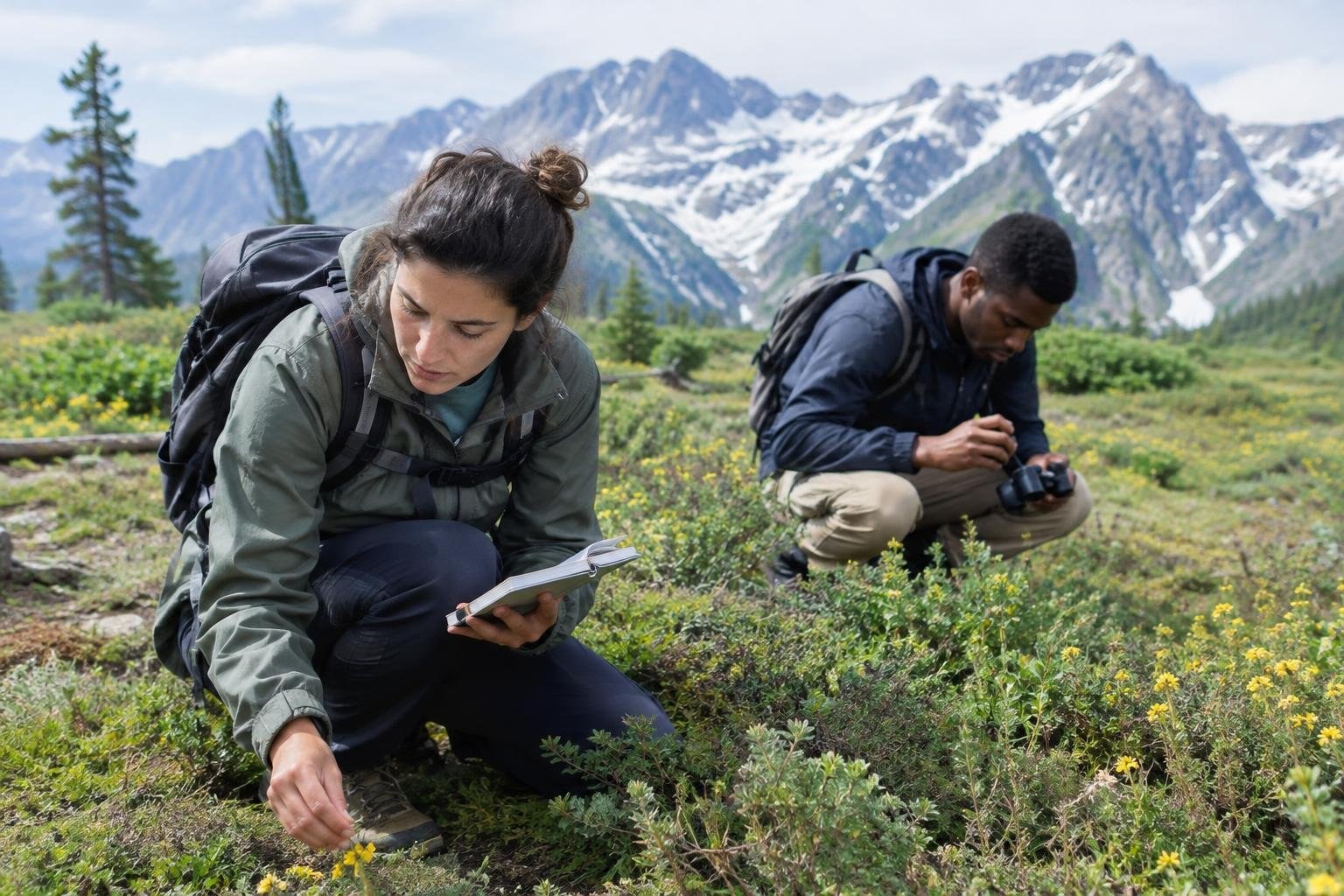
Conservation biology students collecting habitat and species observations in a natural area
Start With a Question, Then Check the Degree Plan
Conservation biology focuses biological science on biodiversity, species preservation, ecological sustainability, and habitat fragmentation. A degree title alone does not tell you what a student will study or what work the credential prepares them to pursue. Treat the decision as a match among three things: the questions that hold your interest, the learning a program actually requires, and the entry requirements of roles you may want to explore.
Start by writing down two or three questions you would like to investigate, such as how ecosystems change or how biological knowledge can inform species protection. Then use program descriptions to find the focus and degree requirements behind the title. For a real example, Arizona State University describes its conservation biology and ecology concentration as focused on environmental challenges, ecosystem preservation, and biodiversity. That is one program’s framing, not a standard curriculum shared by every college. Keep a list of what is confirmed and what you still need the institution to clarify.
Read the Curriculum for Its Emphasis and Experience
Compare programs by examining required courses and the way the school describes its concentration. A broad biology degree can have different emphases: the University of Arizona’s online biology bachelor’s program, for example, lists biomedical sciences and organismal biology. Arizona State University separately describes conservation biology and ecology as a concentration. These examples show why the program map matters more than a general label such as biology.
When reviewing a degree map, mark courses or requirements that directly relate to your interests, then note the parts that remain unclear. Ask whether field, laboratory, or research activities are required, what students do, and how online or hybrid learners complete them. Do not assume that “online” means no practical component or that “conservation” guarantees a particular amount of fieldwork. Use the institution’s current description for the specific credential and format you are considering. The environmental science degree guide can help you compare a related area of study, but the school’s actual curriculum should guide your program choice.
Look for Evidence of What Students Practice
Ask a department to explain how students apply biological knowledge, rather than relying only on broad claims about practical skills. Useful questions include: What is a student expected to produce or explain? Are projects part of required coursework? What research or field opportunities are open to students in this program? Which are required, and which depend on availability? The answers help you distinguish a program’s stated aims from experiences you can reasonably expect to access.
St. Petersburg College identifies critical thinking, analysis, communication, and problem-solving among capabilities used in biological science, and names conservation and research as possible career areas. Treat these as skills and directions to investigate, not a promised outcome for every graduate. If a school describes student projects or research, ask for examples and whether participation is guaranteed. Keep brief notes about assignments or activities you complete, the role you played, and what you learned. That record helps you explain your preparation clearly when comparing later study or job requirements.
Test Personal Fit Against the Work of Studying Biology
Wildlife interest is a useful starting point, but the day-to-day study can also include biological systems, ecosystem science, and other scientific topics. The program description and course requirements are the best way to test whether that academic work sounds engaging to you. Before committing, read a few course descriptions and ask a student, adviser, or faculty member what a typical assignment or project involves. Compare your expectations with the actual mix of classroom, laboratory, field, and research learning at that institution.
A short fit check can make the decision more concrete. For each program, record which subjects attract you, which requirements raise questions, and what practical learning is confirmed. Consider whether you want to study evidence and communicate biological ideas, as well as whether the format and schedule work for you. Assessment.com’s MAPP assessment may help you reflect on preferences and motivations as you compare directions; it is one input in your decision, not a substitute for reviewing degree requirements or speaking with a college.
Verify Admission, Transfer, and Credential Purpose
Do not infer admission rules, transfer treatment, or graduate-school eligibility from a major’s name. Requirements depend on the institution and credential. Ask the college for current prerequisites, application dates, transfer-credit decisions, and a degree map for your intended enrollment format. If you may apply to graduate or professional study, ask those receiving programs which prior courses and credentials they require.
Credential labels can also refer to different academic purposes. UNC Charlotte describes its biomedical sciences graduate certificate as providing exposure to biomedical subject areas and preparation for professional biomedical schools. That is a biomedical example, not evidence that the certificate trains students in conservation biology. Before enrolling in any certificate or additional program, check its official curriculum, audience, and stated purpose. For each question that affects eligibility, time, or cost, seek an answer from the institution responsible for the decision rather than relying on assumptions or a similar-sounding credential elsewhere.
Compare Costs Using Your Likely Enrollment Plan
Build a cost comparison around your own study plan, not a general estimate for the field. Request current tuition and fees from each college for your expected course load. Ask whether required activities involve additional expenses, and include books, equipment, transportation, and other costs the school confirms apply to you. The available program information does not establish a standard price or typical completion time, so use institution-specific figures.
If you have prior college credits, ask which count toward the major and whether they change the remaining course sequence. Ask the financial aid office what options may apply to your circumstances. Put the information in a side-by-side budget that shows the assumptions behind each estimate, such as enrollment pace and confirmed requirements. Avoid making a financial decision on the expectation of a particular job or salary: the supplied college examples discuss career directions, not individual employment outcomes. Revisit the estimate if your course load or program choice changes.
Translate Career Interest Into Requirements to Check
Instead of asking only what jobs a degree “leads to,” identify work you want to investigate and find out what employers request. College examples name conservation, research, and wildlife biology among possible directions, but they do not provide a complete list of qualifications or promise placement. Choose several current postings that interest you and note their education requirements, experience, and responsibilities. Then ask whether the courses and opportunities in your program relate to those requirements.
Assessment.com has career pages for environmental scientists and zoologists and wildlife biologists to support initial exploration. You can also investigate forest and conservation workers as a separate occupational direction. Use these pages to generate questions, then verify details in current postings and with the relevant employer or institution. Distinguish a school’s career examples from the qualifications for a particular role.
Compare Nearby Fields by What You Want to Learn
Related fields are worth comparing when their subject matter better matches the questions you want to study. Conservation biology centers on biological applications to biodiversity, species preservation, ecological sustainability, and habitat concerns. Program examples demonstrate that biology degrees can take different emphases, so compare specific course plans rather than assuming a broad degree and a conservation concentration cover the same material.
Assessment.com’s environmental studies degree guide and forestry degree guide offer adjacent topics to explore. Use them to broaden your list, not as evidence that any one program has a particular curriculum. For each possible major, write down the subjects you would study, the learning requirements you have confirmed, and the roles you want to research. A comparison based on these details is more useful than choosing a familiar-sounding name or assuming that two degrees lead to identical options.
Use a Consistent Comparison Grid Before You Decide
A school comparison becomes clearer when every institution answers the same questions. Keep a simple grid with one column per program and rows for the credential, required courses, practical learning, format, transfer-credit decision, estimated cost, and admissions requirements. Mark each answer as confirmed, unclear, or not applicable. This makes gaps visible and reduces the chance that a polished program title or a single appealing feature dominates the decision.
Before choosing, ask the school to clarify any answer that could change the expense, time, or eligibility of your plan. If you are comparing an online program with an in-person option, confirm how any practical component works in each format. If a future role or graduate program matters to you, compare its stated requirements with the course map. Arizona State University’s conservation biology and ecology concentration and the University of Arizona’s two biology emphases illustrate why program-specific details matter. Keep dated notes or copies of written answers so you can revisit the reasoning if the plan changes.
Make the Final Choice on Fit, Access, and Cost
Make a decision only after testing the academic, practical, and financial sides together. A concentration may be appealing because of its conservation focus, but that alone does not establish that its course plan fits your interests, that you can access a particular activity, or that a specific job will follow. Compare the program’s stated requirements with your questions about biology, the practical learning the department confirms, and the qualifications you find in current job postings.
Then ask whether the full plan is workable: does the schedule fit, is the cost estimate manageable, and are unresolved questions answered by the college? If a related field seems closer to your interests, compare its requirements instead of treating a change in direction as a failure. A useful standard is whether you can explain why the coursework fits, what experience is actually available, and how you will verify next steps. Assessment.com’s degree and career resources can help you continue exploring, while the MAPP assessment can add a reflection on personal preferences.
Frequently asked questions
What does conservation biology study?
Conservation biology applies biological science to issues including biodiversity, species preservation, ecological sustainability, and habitat fragmentation. The courses and practical requirements depend on the program, so review the institution’s current degree plan.
How do I compare conservation biology programs?
Compare required courses, the program’s conservation focus, practical learning, format, and total cost. Ask the college which experiences are required and available to students in the credential you are considering.
What careers can a conservation biology degree support?
College examples identify conservation, research, and wildlife-related directions, but they do not guarantee employment or describe every role’s qualifications. Review current job postings and compare their requirements with program coursework.
How can I estimate the cost of this degree?
Ask each institution for current tuition and fees based on your likely course load. Include costs the school confirms for books, equipment, and required activities, and ask how transfer credits and aid may affect your estimate.
How is conservation biology different from a general biology degree?
A conservation focus applies biological science to biodiversity and ecosystem concerns, while biology programs can offer other emphases. Compare required courses and practical expectations rather than relying on the degree title.
Can I study conservation biology online?
Some programs may offer online formats, but the details are institution-specific. Confirm whether field, laboratory, or other practical activities are required and how students in that format complete them.
People Also Ask
What does conservation biology mean?
It applies biology to questions involving biodiversity, species preservation, ecological sustainability, and habitat fragmentation. Individual programs define their own courses and requirements.
Is conservation biology the same as biology?
Not necessarily. Biology degrees may have different emphases, while conservation biology focuses on applying biological science to conservation concerns. Compare the actual course plans at each school.
What classes are in a conservation biology degree?
There is no universal course list. Review each institution’s current degree map and ask which courses, field or laboratory activities, and research experiences are required.
How do I know if conservation biology is right for me?
It may fit students interested in biological science and conservation topics, provided the curriculum, practical requirements, and cost fit their goals. Compare these factors before enrolling.
How long does a conservation biology degree take?
The time required depends on the credential, institution, course sequence, enrollment pace, and transfer credits. Ask the school for a degree map based on your circumstances.
How can I find conservation experience as a student?
Ask the department which field, research, or class projects students can access, and whether participation is required or subject to availability. Compare those options with requirements in current job postings.
Choose a conservation biology program by checking the curriculum, confirming what practical learning you can access, and comparing the total plan with your interests, budget, and researched career directions. Assessment.com can help you explore related degrees and careers, and the MAPP assessment can add another perspective as you decide.
Find out which Career or College Major is right for you!
We use cookies to offer you a better browsing experience, analyze site traffic and personalize content.
Read about how we use cookies and how you can control them in our
Privacy Policy.
If you continue to use this site, you consent to our use of cookies.
×
Exciting News!
Be one of the first to Beta Test the new AI-Powered Assessment.com Platform.