Degree Library
Natural Resources and Conservation Degree Guide: Courses, Careers, Costs, and Program Fit
A natural resources and conservation degree studies how people use, protect, and manage land, water, wildlife, forests, and other environmental resources. Programs may combine ecology and environmental science with policy, planning, field techniques, and communication. Depending on the curriculum and degree level, students can prepare for work in conservation, environmental consulting, resource management, research, education, or public service. The program name varies across colleges. Related offerings may be called natural resources, conservation, environmental and natural resources conservation, or natural resources and environmental sciences. Compare course lists and practical experiences rather than assuming that similar titles mean identical training. Not sure whether this field fits you? Take the Free MAPP Career Assessment to explore how your interests and preferences may align with related careers and degrees.
Millions of people Take the MAPP Career assessment to see which Degrees are the best Match!
You can too,
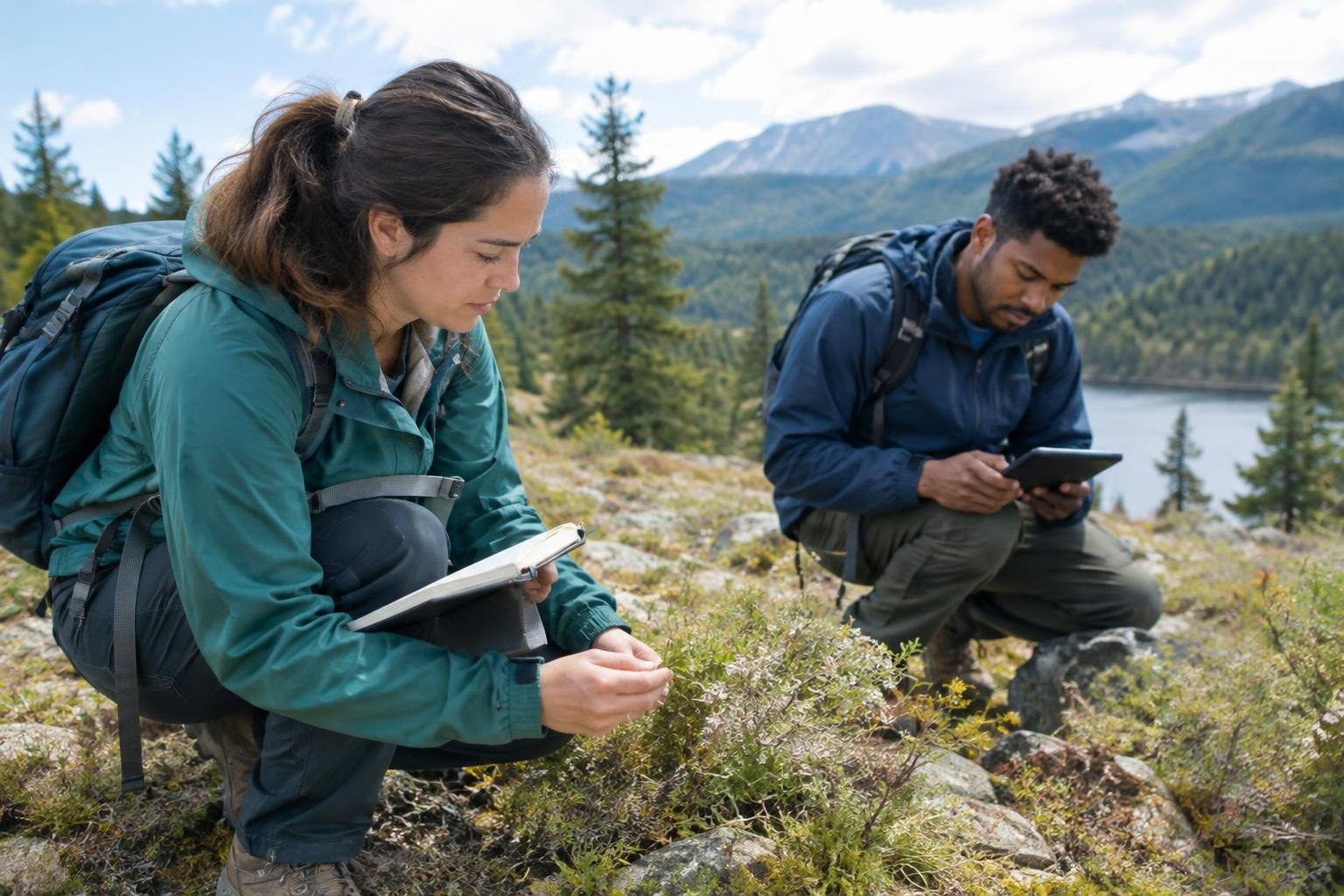
What Is a Natural Resources and Conservation Degree?
Natural resources and conservation is a broad field concerned with the relationship between people and environmental resources. Students learn how to assess ecological conditions, understand competing resource needs, and support decisions about conservation and sustainable management. Depending on the program, study may emphasize science, policy, field techniques, planning, or a combination.
Credential options range from certificates and associate degrees to bachelor’s, master’s, and doctoral study. A program’s title does not always reveal its focus: compare required courses, concentration options, field components, and the kinds of roles graduates pursue. The federal Classification of Instructional Programs includes a category for environmental and natural resources management and policy, but colleges use many related program names.
Natural resources programs overlap with environmental science, forestry, wildlife studies, environmental policy, and conservation biology. Environmental science programs may emphasize environmental processes and analysis; conservation programs may place greater weight on stewardship and resource decisions. The specific curriculum matters more than the label.
What Do Students Study?
Programs commonly build from foundational science and social-science concepts toward applied methods and specialized study. Depending on the college, students may take courses in ecology, environmental policy, wildlife or habitat management, land use, soil and water, conservation, or resource planning. Technical instruction can include plant identification, land surveying, resource measurement, geospatial applications, and monitoring.
Fieldwork and laboratory activities let students practice observation, measurement, and evidence-based reporting. Some programs include internships, research, a capstone, or a project with a community or agency. These experiences are not universal, so ask what is required, where it takes place, and whether students must arrange transportation or equipment.
A two-year environmental and natural resources conservation program, for example, may combine applied ecological and sociopolitical concepts with hands-on technical training. Some graduates enter the environmental sector after an associate program; others use it as preparation for further study. A California community-college example requires the program, a general education pattern, and electives to reach at least 60 units. Requirements differ by institution and state.
Skills You Can Develop
Students can develop scientific literacy, careful observation, data collection, research, and written and spoken communication. Applied courses may build skills in plant and tree identification, field measurement, soil and water monitoring, wildlife techniques, land surveying, and geospatial tools. These abilities can support work in resource monitoring, restoration, consulting, education, or public agencies.
Policy and planning coursework can strengthen the ability to interpret regulations, compare competing needs, explain findings to non-specialists, and contribute to resource decisions. Team projects may also build collaboration, project organization, and public communication skills.
Employers may value experience with relevant software or equipment, but the tools vary by position. Check current job postings for the roles and region that interest you, and ask a program how students gain practice with the technologies employers request.
Who Is This Degree Best For?
This degree may appeal to students who want to understand ecosystems and how human decisions affect land, water, wildlife, and communities. You might enjoy combining outdoor observation with reading, data, writing, and problem-solving. Some roles are field-oriented; others focus on analysis, policy, education, planning, or coordination.
There is no single personality type required. Consider whether you are willing to take science courses, work carefully with evidence, communicate with different audiences, and handle the conditions of the particular jobs you are considering. Fieldwork can be physically demanding or weather-dependent in some roles, while office-based positions may involve more reports, mapping, or policy analysis.
Does Natural Resources and Conservation Match You?
Salary, job growth, and a program’s reputation are only part of a decision. Compare them with your interests, preferred work setting, and willingness to pursue additional education or credentials. The Free MAPP Career Assessment can help you explore motivation and work preferences; Degree Matching and Career Matching can help connect those preferences to possible pathways. Treat assessment results as prompts for further research, not as a guarantee.
Admissions, Length, and Academic Difficulty
Admissions requirements depend on the school and credential. Applicants to undergraduate programs typically need to meet the college’s entry requirements; transfer students should confirm how previous courses apply. Some programs may ask for prerequisite science or math coursework. Graduate admissions may consider prior study, academic records, recommendations, a statement, relevant experience, or other materials, but requirements are institution-specific.
Full-time completion time depends on credits and course sequencing. Associate programs are often designed around roughly two years of full-time study and bachelor’s programs around four, but transfer credits, part-time attendance, accelerated schedules, and course availability can change those estimates. One California A.S. example requires at least 60 units, including the program and general education requirements. Do not assume every associate degree has the same total.
Coursework can be demanding when it combines science, quantitative analysis, reading, writing, and field assignments. Prepare by reviewing prerequisites, refreshing relevant math or science, and asking about tutoring, advising, and equipment before enrollment.
Online vs. On-Campus Programs
Online, hybrid, and campus formats may all be available, but they are not interchangeable. Online study can suit students who need schedule flexibility, while field activities, labs, internships, or research may require in-person participation. Ask whether the college arranges placements, whether students find their own sites, and what travel or equipment is involved.
Before enrolling in an online program, confirm that it offers the courses you need in the right sequence and that practical requirements can be completed near you. Also ask how advising, field supervision, and access to software or lab resources work for distance learners.
Cost, Financial Aid, and Value
There is no single price for a natural resources degree. Total cost can depend on public or private tuition, residency, degree level, online or campus fees, books, supplies, field equipment, transportation, and living expenses. A program with required field activities may have costs beyond tuition, so request a full estimate for the actual course plan.
Compare grants, scholarships, work-study, employer tuition assistance, and other aid for which you may qualify. If beginning at a community college, ask the receiving university to confirm in writing which credits transfer and count toward the intended major. A low initial price is not a saving if credits do not apply or the pathway adds semesters.
To compare career value, look up current pay and employment information for specific occupations through the U.S. Bureau of Labor Statistics and review relevant local job postings. Graduates enter different roles, so a degree-wide salary figure would be misleading. Include further education or credential costs when estimating the full investment.
Careers, Employers, Pay, and Job Outlook
Natural resources graduates pursue a range of paths. The table describes broad examples rather than guaranteed outcomes. Education and credentials vary by employer and job duties; verify current requirements in postings and occupational profiles. Pay also varies by occupation, location, experience, and employer. Consult current BLS data for a specific occupation instead of treating the major as one pay category.
| Career direction | Typical preparation | How the degree may apply |
|---|---|---|
| Environmental scientist or specialist | Often a bachelor’s degree in environmental science or a related subject | Science, sampling, research, and data interpretation |
| Natural resource or conservation technician | Requirements vary; applied associate or bachelor’s study may be relevant | Monitoring, field methods, and resource measurements |
| Ecological restoration or habitat work | Relevant coursework and practical experience; role-specific requirements vary | Ecology, wildlife techniques, and restoration concepts |
| Environmental consultant | Often relevant bachelor’s study and experience; requirements vary | Assessment, reporting, and environmental analysis |
| Land-use or resource planning | Relevant undergraduate preparation; some positions may favor graduate study | Planning, policy, mapping, and resource decisions |
| Environmental education | Requirements depend on employer and audience | Environmental knowledge and public communication |
| Conservation policy or advocacy | Relevant study and experience; advanced study may help for some positions | Policy analysis, research, and communication |
| Research or university teaching | Advanced education is commonly important for independent research or faculty roles | Scientific foundation for specialized study |
Potential employers include public agencies, consulting firms, nonprofit organizations, educational centers, and organizations that manage land, forests, watersheds, or wildlife. An Illinois program lists career directions spanning ecological management, government, consulting, land-use analysis, policy, watershed management, and wildlife conservation. Job demand and hiring conditions differ across occupations and locations. Technology may change how professionals collect and analyze information, but it does not remove the need to interpret evidence, communicate tradeoffs, or understand local resource conditions.
Find out which Career or College Major is right for you!
Take the MAPP free today!Experience, Credentials, and Standing Out
Relevant experience can help students test career interests and show employers that they can apply classroom learning. Look for internships, seasonal positions, field projects, research, volunteer work, student organizations, and opportunities to present or document a project. Build examples of careful data collection, mapping, technical writing, community engagement, or field observation where relevant.
How to Stand Out to Employers
Choose a focused project, keep clear records of your methods and contribution, and be ready to explain what you learned. Ask faculty and career services about employer connections and internships early, since application cycles and field seasons may affect timing. Certifications or licenses are occupation-specific. Completing a degree does not by itself guarantee eligibility for a regulated role; check the relevant employer, state authority, or professional organization.
Graduate School and Advanced Study
A master’s degree may help students specialize in areas such as conservation, sustainability, policy, or resource management, or qualify for certain advanced roles. Doctoral study may suit those pursuing specialized research or academic work. Professional degrees, certificates, and additional training can also be relevant depending on the career goal.
Some universities offer pathways that let students count graduate coursework toward both bachelor’s and master’s programs. The University of New Hampshire describes a route in which graduate-level coursework may count toward both degrees and states that eligible graduate certificate students can earn up to eight graduate credits while completing a bachelor’s degree. Confirm current eligibility, course availability, and financial implications directly with the institution.
Related Degrees and Comparisons
Related degrees can lead to overlapping work, but their coursework may differ. Consider these alternatives:
- Environmental science: Consider this instead if you want a stronger emphasis on environmental processes, measurement, and scientific analysis.
- Environmental policy: Consider this instead if regulation, public decisions, and policy research interest you more than field methods.
- Ecology or conservation biology: Consider this instead if you want deeper study of organisms, ecosystems, and biological research.
- Forestry: Consider this instead if forest ecosystems and forest management are your primary interest.
- Wildlife or fisheries science: Consider this instead if you want to focus on wildlife, fisheries, habitat, or species recovery.
- Geography or GIS: Consider this instead if mapping, spatial data, and land-use patterns are the strongest draw.
- Environmental engineering: Consider this instead if you want an engineering-focused route to environmental systems and solutions.
- Agriculture or soil science: Consider this instead if your interests center on soil, food systems, or land-based production.
Compare required science and math, field and lab expectations, internship opportunities, likely entry roles, and any graduate education needed. A degree title alone cannot establish which option has better earning potential.
Advantages, Drawbacks, and What to Expect
Advantages can include interdisciplinary study, practical field learning, and connections to work in conservation, environmental analysis, resource planning, education, or policy. A program may let students combine scientific understanding with social and management questions.
Drawbacks include varied career requirements, the possibility of needing further education for some roles, and potential extra costs for fieldwork, travel, or equipment. Job options and pay can differ substantially by location and specialization. A degree is not a guarantee of employment in a particular conservation role.
What to Expect: Timing and Outcomes
Expect to spend time on foundational courses before advanced or specialized work. Field seasons, prerequisites, course schedules, and internships can affect completion and job-search timing. Outcomes depend on the student’s experience, location, and target occupation, so ask colleges for program-specific completion and career information and verify it independently.
Choose a Qualified Program
Review institutional and program accreditation as applicable, curriculum, faculty expertise, facilities, field experience, internship support, transferability, career services, and graduate outcomes. Confirm whether the program prepares students for any stated license or credential, and verify requirements with the relevant authority. Ask about safety orientation and supervision for field activities, equipment, transportation, and emergency procedures. For a college program, warranties are not the relevant safeguard; written policies, transparent costs, and clear academic and fieldwork expectations are.
Program-Choice Checklist, Cost-Saving Tips, and Next Steps
Before enrolling, ask each college:
- What accreditation applies to the institution and, if relevant, the program?
- What is the full estimated cost, including fees, field activities, equipment, and transportation?
- What are the course sequence, completion timeline, and prerequisites?
- Which internships, field experiences, labs, or research opportunities are available, and who arranges them?
- What jobs do graduates pursue, and how does the college report outcomes?
- Does the curriculum prepare students for a specific credential or license, and what requirements remain?
- Which courses are online, hybrid, or in person, and where do practical experiences take place?
- Will prior credits transfer and satisfy major requirements?
- What career services, employer connections, scholarships, grants, and other aid are available?
Save Carefully and Avoid Common Mistakes
Request transfer evaluations before paying for courses, compare net cost rather than tuition alone, and apply for aid early. Do not choose solely by program title, assume online means no travel, rely on unverified salary claims, or treat a degree as an automatic license. Get key promises about credits, costs, and field placements in writing.
From Degree to Career
A possible route is associate study → field or technician role → experience in monitoring or resource work → specialization in a resource area → advanced role or further study. Another is a bachelor’s degree → environmental science or consulting entry role → experience with assessment and reporting → specialization or graduate study. These are examples, not guaranteed progressions.
To make a thoughtful choice, compare programs and career pathways against what motivates you. Explore Degree Matching, Career Matching, and Matching Jobs, then use current job postings and occupational information to test your assumptions. Take the Free MAPP Career Assessment to discover careers, related degrees, and jobs connected with your preferences. Compare college options that fit your goals before deciding.
Frequently asked questions
Is a natural resources and conservation degree hard?
Natural resources and conservation programs can be challenging because they combine scientific concepts, data, writing, and sometimes field or laboratory work. The balance depends on the program and concentration. Students who prepare for science and quantitative courses, seek help early, and gain practical experience can better understand the demands before choosing a specialization.
Is a natural resources and conservation degree worth it?
It can be worthwhile for students whose goals align with conservation, environmental research, resource management, policy, or related work. Value depends on tuition, financial aid, location, the level of education required for a target job, and the experience a program provides. Compare those factors with current occupational information rather than assuming one degree guarantees a particular job or salary.
What jobs can I get with a natural resources degree?
Possible paths include conservation and resource management, environmental consulting, ecological restoration, land-use planning, policy, environmental education, and government or nonprofit work. A bachelor’s degree is commonly relevant to environmental scientist roles, while some technical or field jobs may be open to associate-degree graduates. Specific positions can require additional education, experience, or credentials.
How much can you make with a natural resources degree?
There is no single salary for this degree because graduates enter different occupations, sectors, and regions. Compare the latest U.S. Bureau of Labor Statistics pay information for the specific job titles you are considering, and check whether the figures apply to your location and experience level. Also compare entry-level requirements and the cost of any further education.
Can I earn a natural resources degree online?
Some courses or complete programs may be available online, but availability varies. Ask whether fieldwork, labs, internships, or other in-person experiences are required and where students complete them. For online study, also check how advising, equipment, software, field placements, and transfer credits are handled before enrolling.
Does a natural resources degree require a lot of math?
Many programs require science coursework, and some include statistics, research methods, mapping, or other quantitative work. The exact math depends on the degree and specialization. Review the course catalog for prerequisites and required courses, then ask an adviser what preparation is recommended if you have been away from math or science classes.
Do I need graduate school for a career in conservation?
Not every career requires graduate school. A bachelor’s degree may prepare graduates for some environmental science and related roles, while research, advanced technical, policy, or leadership positions may favor additional education or substantial experience. Check education requirements in job postings and occupational profiles for the roles you want before deciding whether to pursue a graduate degree.
What certifications help with natural resources jobs?
Useful credentials depend on the job, employer, and state. Some careers require a specific license or recognized credential, while others prioritize experience, technical skills, or a relevant degree. Ask employers and program advisers what qualifications apply to your intended role, and verify requirements with the relevant licensing or professional organization.
What is the difference between natural resources and environmental science?
Natural resources and conservation programs often focus on ecosystems, land, water, wildlife, and resource stewardship. Environmental science may place more emphasis on environmental processes, sampling, and analysis. The titles and curricula overlap, so compare actual course requirements, field experiences, and career outcomes rather than relying on the degree name alone.
How long does a natural resources degree take?
A two-year associate program may take about two years of full-time study, and a bachelor’s program commonly takes about four years, but transfer credits, part-time attendance, program structure, and course availability can change the timeline. Check the required credits and a term-by-term completion plan with each college.
People Also Ask
What do you study in a natural resources and conservation degree?
Programs commonly combine ecological and environmental concepts with resource-management, policy, and technical coursework. Some include labs, fieldwork, internships, or research, but requirements differ by college.
What can I do with a natural resources degree?
Job options may include conservation, environmental consulting, land and water management, restoration, education, and policy-related work. The roles available depend on degree level, experience, location, and any required credentials.
Are natural resources degrees available online?
Some colleges offer online coursework or online programs, but field experiences, labs, or internships may still require in-person participation. Confirm the delivery format and placement arrangements with the college.
How much does a conservation degree cost?
There is no universal cost. Tuition, residency, degree level, fees, equipment, field activities, and living expenses all affect the total. Ask colleges for a complete cost estimate and compare financial aid and transfer-credit options.
How do I know if conservation is the right major for me?
A program may be a good fit if you are interested in ecosystems, resource decisions, science, field observations, data, or environmental policy. You do not need one particular personality type, but you should review the actual coursework and daily work in target careers.
What degree do environmental scientists need?
Some environmental scientist roles typically require a bachelor’s degree in environmental science or a related subject. Other natural resource jobs have different education requirements, so check job postings and occupational profiles for each target role.
Can I transfer from an associate degree to a bachelor’s program?
Yes, when the college and course plan meet the transfer requirements of the receiving institution. Get written confirmation about which credits will apply to the major, general education, and electives before relying on a transfer plan.
A natural resources and conservation degree can prepare students to study ecosystems, manage land and water, support conservation programs, and help organizations make decisions about environmental resources. The right pathway depends on the work you want to do: field and technical roles, research, policy, education, or management may call for different courses and credentials. Compare curricula, total cost, hands-on experience, transfer options, and career outcomes before committing. If you are unsure which direction fits, use career and degree matching tools to connect your interests with possible paths.
Sources & Official Resources
Sources and references: American River College, Natural Resources program catalog; University of New Hampshire, Natural Resources: Environmental Conservation and Sustainability, M.S.; University of Illinois Urbana-Champaign, Natural Resources & Environmental Sciences, B.S.; SUNY College of Environmental Science and Forestry, Environmental and Natural Resources Conservation, A.A.S.; U.S. Bureau of Labor Statistics, Occupational Outlook Handbook, for current occupation-specific pay and outlook.
- Natural Resources | American River College
- Natural Resources: Environmental Conservation and Sustainability, M.S. - COLSA, UNH | University of New Hampshire
- Natural Resources & Environmental Sciences, BS | 2026-2027 Course Catalog | University of Illinois Urbana-Champaign
- Academic Programs - Environmental and Natural Resources Conservation, A.A.S.
- Natural Resources: Environmental Conservation and Sustainability (M.S.) | Natural Resources and the Environment
- Certificates | Natural Resources & Environmental Sciences | Illinois