Degree Library
Natural Resources and Conservation Degree Guide: Courses, Careers, Costs and Fit
Explore natural resources and conservation degrees, including what students study, program formats, career directions, costs, and ways to choose a course of study that fits your goals.
A natural resources and conservation degree studies how ecological systems work and how people can use, manage, and protect natural resources. Depending on the program, students may focus on ecology, wildlife, forests, water, land management, environmental policy, or a combination of these areas. Coursework may connect scientific concepts with practical questions about conservation and resource decisions. Graduates may pursue environmental careers with public agencies, nonprofit organizations, consulting firms, and other employers. The degree itself does not guarantee a particular job: career options depend on the courses, experience, location, and qualifications required for each position. Some students continue to graduate study or build specialized skills after completing a bachelor's degree. Not sure whether natural resources and conservation fits you? Take the Free MAPP Career Assessment to see how your motivations, interests, and natural preferences align with this degree and the careers it can lead to.
Millions of people Take the MAPP Career assessment to see which Degrees are the best Match!
You can too,
What Is a Natural Resources and Conservation Degree?
Natural resources and conservation is a broad area of study about ecological processes and the ways people make decisions about natural systems and resources. Depending on the college, it may bring together conservation science, resource management, environmental policy, wildlife, forests, water, or land use. A University of Massachusetts Amherst program, for example, describes its goals in terms of ecological processes and systems alongside best practices in resource management.
The name is not a guarantee of identical coursework. Some colleges use “natural resource conservation,” “conservation,” or “natural resources management,” while other majors focus on a particular resource or scientific discipline. Review the curriculum and concentration options, not just the major title. CIP 03.0101 identifies the general natural resources and conservation program area.
It is also useful to distinguish a broad conservation degree from a specialized major. Fisheries, forestry, wildlife, environmental science, and land-use programs may share foundational topics but devote more coursework to one set of systems, methods, or career questions.
What Do You Study? Courses, Fieldwork and Projects
Students commonly build a foundation in ecological systems and learn how conservation and resource management decisions are made. Depending on the school and specialization, classes may address ecology, environmental policy, wildlife management, and land-use planning. A program can combine natural science with management and human dimensions, rather than treating conservation as biology alone.
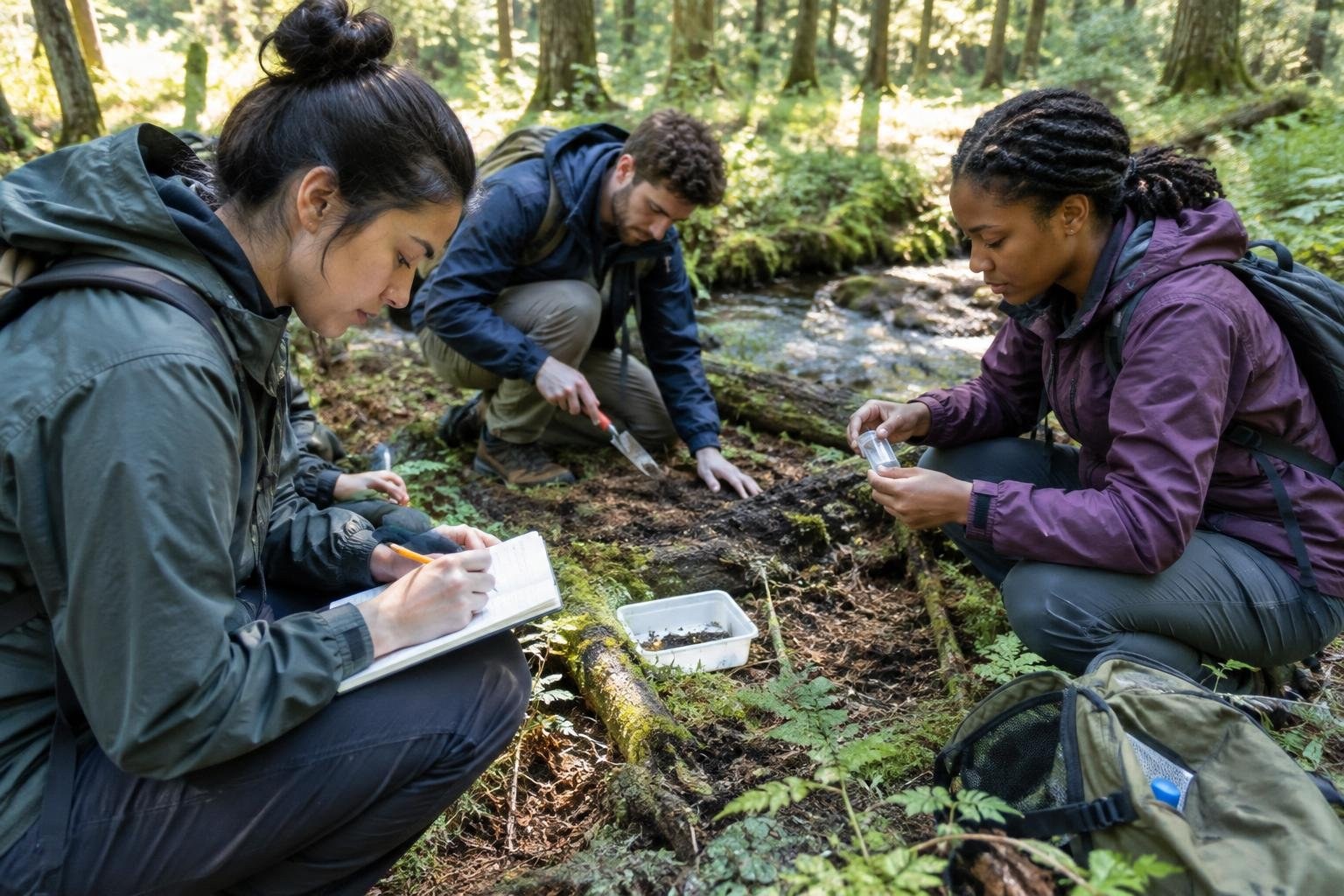
Look for the balance between classroom learning and applied experience. Some programs include fieldwork, internships, research, or a capstone project. Field-based activities can help students apply course concepts to real environments; an internship may expose them to an agency, nonprofit, consulting firm, or other workplace. Ask whether these opportunities are required, how students find placements, and whether travel or seasonal schedules are involved.
Curricula vary by institution and concentration. Compare required courses, electives, field experience, and the final project or capstone. A student interested in analyzing environmental samples, for example, should check whether the program offers relevant scientific coursework and data experience. Environmental scientists and specialists commonly analyze soil, water, and air samples and other research data to identify environmental threats.
Skills You Can Develop
The degree can develop several connected skill sets. Scientific and ecological knowledge helps students understand natural systems. Analytical skills support the interpretation of observations and research data. Writing and communication matter when explaining findings, preparing reports, or engaging with communities and decision-makers.
Practical skills depend on the curriculum and chosen focus. Field methods, resource-management approaches, research, and policy analysis may be part of a student's preparation. Students can strengthen their profile by choosing projects and electives that build toward a target occupation rather than assuming every general program teaches the same tools.
These abilities can be relevant to conservation science, environmental consulting, park or land management, and other environmental work. Employers may also value experience working on teams, communicating with the public, and handling responsibilities safely in field settings. Check job postings for the skills requested in the geographic area where you hope to work.
Who Is This Degree Best For?
This field may appeal to students who are curious about ecosystems and want to connect scientific understanding with practical decisions about land, water, forests, wildlife, or environmental policy. It can suit people who enjoy a mix of reading, analysis, collaboration, and, in some programs, outdoor or field-based learning.
There is no single personality type required. Some students are drawn to collecting and interpreting scientific information; others are more interested in policy, public service, planning, or management. Consider whether you would enjoy the day-to-day tasks of your target career, including its balance of office work, fieldwork, communication, and technical responsibilities.
Does Natural Resources and Conservation Match You?
Salary, job growth, and a college's reputation are useful parts of a decision, but they do not show whether the work itself fits your motivations and preferences. Use the Free MAPP Career Assessment to explore possible career alignments, then use Degree Matching and Career Matching to investigate education and job directions. Treat assessment results as a starting point for research, not a guarantee of success or employment.
Admissions, Program Length and Academic Demands
Admission rules are set by each college. Applicants may need to meet general requirements for undergraduate admission and submit academic records and other materials requested by that institution. Transfer, adult, and graduate applicants may follow different processes. Do not assume that a test, portfolio, interview, or specific high-school course is required unless the college says so.
Completion time depends on the credential and a student's pace. A bachelor's program is commonly planned as a four-year full-time course of study, but transfer credits, part-time attendance, course sequencing, and course availability can change the timeline. Certificates, associate degrees, graduate certificates, master's programs, and doctorates differ in length and purpose. Ask for the current degree map and a transfer-credit evaluation before estimating a completion date.
Students may encounter scientific concepts, research reading, writing, data interpretation, and applied projects. To prepare, review introductory biology or environmental science material, build confidence in quantitative skills, and ask about tutoring and academic advising. Match preparation to the actual course requirements rather than assuming every program has the same academic demands.
Online, Hybrid and On-Campus Options
Natural resources and conservation programs may be offered in different formats, but online availability and hands-on requirements are institution-specific. Some courses may be delivered online or in a hybrid format, while fieldwork, internships, labs, or research may require in-person participation. Before enrolling, ask which required courses are available in your preferred format and where applied requirements take place.
For an online program, confirm whether students arrange local field experiences themselves, whether the college helps secure placements, and whether travel to campus or a designated site is required. Also consider access to advising, faculty, equipment, and career services. A format is only convenient if it allows you to complete the required learning and experience.
Tuition, Costs and Financial Aid
There is no single price for a natural resources degree. Total cost can depend on public or private status, residency, credential level, online or campus format, fees, course materials, field activities, and living expenses. Request a personalized estimate for the entire expected course of study, including likely fees and required experiences, rather than comparing tuition figures alone.
Ask the financial aid office about grants, scholarships, work-study, and payment options for which you may qualify. Students should also check whether employers offer education assistance and whether prior college credits can transfer. A shorter path to completion may reduce costs, but only if transferred courses satisfy degree requirements and do not delay access to required classes.
Compare net cost after aid, not just the listed price. Ask whether scholarships renew, what academic conditions apply, and what costs are not covered. Avoid borrowing based only on a projected career salary: employment and earnings vary by occupation, location, and experience.
Careers, Jobs and Employment Outlook
A natural resources and conservation degree can connect to several career directions. The table lists examples, not guaranteed outcomes. Job titles, minimum education, pay, and outlook differ across employers and locations; use current occupational data and real job postings to verify details before selecting a program.
| Career direction | Education to investigate | How the degree may apply |
|---|---|---|
| Conservation scientist | Review the requirements in current postings; a relevant bachelor's program may be a starting point. | Ecological knowledge and resource-management study can be relevant. |
| Environmental scientist or specialist | A bachelor's degree in environmental science or a related subject is common preparation. | Scientific coursework and research-data skills can support work analyzing environmental samples. |
| Park ranger | Requirements vary by agency and position. | Conservation learning may support resource interpretation and public-facing work. |
| Environmental consultant | Review employer requirements and the technical focus of the role. | Environmental coursework and applied experience may be relevant. |
| Wildlife or land-management worker | Check the specialization and qualifications named in postings. | Wildlife, ecology, or resource-management courses may align with particular duties. |
| Environmental research assistant | Requirements depend on the research setting and project. | Research, data, and field experience can support applications. |
| Nonprofit conservation program staff | Check the employer's education and experience expectations. | Conservation knowledge and communication experience may be useful. |
| Public-agency conservation staff | Requirements depend on agency, role, and jurisdiction. | A conservation degree may provide relevant ecological and management preparation. |
Public agencies, nonprofit conservation organizations, environmental consulting firms, and the green industry are among the settings identified by university program materials as potential employers. A bachelor's degree is a common educational level among workers in the broader field, but that does not mean every role requires one or that a degree guarantees a position.
No salary or job-growth figure should be treated as universal for this degree category. Compare current BLS or O*NET information for specific occupations and verify the year, location, and occupational definition. Entry-level roles may differ from longer-term specialist or leadership paths; additional education, experience, or credentials may be needed for some positions. Ask employers how they are adapting work practices and technologies, including the use of data tools, rather than assuming technology will replace or secure any job.
Find out which Career or College Major is right for you!
Take the MAPP free today!Experience, Certifications and Licensure
Work experience can help turn coursework into evidence of readiness. Ask about internships, field projects, faculty research, volunteer opportunities, and partnerships with agencies or nonprofits. A project portfolio might include a research poster, a written report, a field-methods project, or another piece of work that demonstrates skills relevant to the jobs you want.
How to Stand Out to Employers
- Choose electives and projects that connect to a specific career direction.
- Keep clear records of research, field, teamwork, and communication experience.
- Ask professionals and faculty what qualifications employers in your area request.
- Build relevant technical skills where the curriculum and target roles support them.
- Apply early for seasonal internships and entry-level positions, and tailor materials to each role.
A degree is not the same as a professional license or certification. Requirements depend on occupation and jurisdiction. Before paying for a credential, confirm that employers or licensing authorities recognize it and that you meet any prerequisites.
Graduate School and Advanced Study
Graduate study can help students pursue advanced subject knowledge, research, specialized practice, or roles that call for more education. Options may include a master's degree in natural resources, environmental conservation, sustainability, or a related field, as well as doctoral study for research or academic goals. A University of Florida program describes graduates as either pursuing advanced degrees across a variety of fields or working in environmental careers.
Consider graduate school after identifying the role you want and checking its actual requirements. Compare the additional cost and time with the benefits of specialization, research preparation, or eligibility for a particular position. Some schools offer ways to take graduate-level coursework while completing an undergraduate degree; eligibility, credit limits, and how credits apply are program-specific. Confirm the rules in writing with both departments before relying on a dual-credit pathway.
Related Degrees and Alternatives
Related majors can lead toward overlapping areas of work, but their curricula may point in different directions. Consider these alternatives when comparing degree plans:
- Environmental science. Consider this instead if you want a curriculum centered on scientific study and environmental data.
- Wildlife, fish, and wildlands science and management. Consider this instead if your main interest is wildlife populations, habitat, or wildland management.
- Fishing and fisheries sciences and management. Consider this instead if you want to focus on fisheries and aquatic resources.
- Forestry, general. Consider this instead if forest systems and their management are your main focus.
- Forest sciences and biology. Consider this instead if you want a more forest-science-oriented course of study.
- Water, wetlands, and marine resources management. Consider this instead if water-related ecosystems and resources are the central interest.
- Land-use planning and management. Consider this instead if planning and decisions about land development are more appealing than a broad ecological focus.
- Environmental or natural-resource economics. Consider this instead if you are most interested in economic analysis of environmental and resource decisions.
- Forest technology. Consider this instead if you prefer a more technician-oriented route and its available credential options.
Compare required science courses, fieldwork, policy content, technical depth, and graduate-school implications. The program title alone cannot tell you whether two majors prepare students for the same work. Ask departments which courses are required and review job qualifications for careers you may pursue.
Advantages, Drawbacks and Is It Worth It?
Potential advantages include a broad foundation in ecological systems, the chance to connect science with management and policy, and preparation relevant to several environmental settings. Programs with fieldwork, research, or internships may also let students test career interests before graduation.
Tradeoffs include the need to choose a focus within a broad field, competition for some roles, variable requirements across employers, and the possibility that a desired position calls for further study or experience. Program costs can also be difficult to judge without a full estimate that includes fees, living costs, and applied-learning expenses.
Whether the degree is worth it depends on your goals, affordability, the quality and relevance of the program, and your willingness to gain experience or further credentials. Compare likely career directions and their actual qualifications with the complete cost of study. There is no single answer that applies to every student.
How to Choose the Right Program
Use a consistent checklist when comparing colleges, whether you are choosing a campus program, hybrid option, or online degree:
- Accreditation: Verify institutional accreditation in the U.S. Department of Education's official resources and check any program-specific accreditation relevant to your target occupation.
- Curriculum: Compare required courses, concentrations, field experience, internships, and capstone work.
- Faculty and facilities: Ask about relevant expertise, field resources, labs, and student access to them.
- Cost and aid: Request a complete estimate and review grants, scholarships, renewal conditions, and transfer credit.
- Format and completion: Confirm course availability, field requirements, travel, and a realistic path to graduation.
- Outcomes and career support: Ask how the school defines reported outcomes and what career advising, employer connections, and internship support are available.
- Credential requirements: Check whether target occupations require licensing, certification, or further education.
Ask direct questions before paying a deposit: Can you see a sample degree plan? How are field placements arranged? What is the total expected cost? Which credits will transfer? What roles have recent graduates pursued? Verify answers with the relevant department and, when needed, the employer or licensing authority.
Assessment.com's Degree Matching and Career Matching tools can help you organize possibilities around your interests. Use them alongside official college information and conversations with advisors, students, and professionals.
From Degree to Career: A Possible Pathway
Career development is not automatic, but a student can make intentional choices along the way. One possible sequence is:
- Degree: Build a foundation in ecology and natural-resource management.
- Entry-level role: Pursue a conservation, environmental, research, or public-agency position that matches your coursework and experience.
- Experience: Develop practical knowledge through supervised work, projects, or increasing responsibility.
- Specialization: Focus on a resource, method, or policy area through work or additional study.
- Advanced career: Seek more specialized or senior responsibilities when your experience and qualifications match employer needs.
This is an illustrative pathway, not a promise of promotion or a fixed sequence. The University of Florida notes that graduates may enter a range of environmental careers or pursue advanced degrees in a variety of fields. Research the requirements of each next step rather than assuming the degree alone qualifies you.
Questions to Ask Before Enrolling
Before enrolling, prospective students and families can ask:
- Is the college accredited, and does the program meet any requirements for my intended occupation?
- What is the estimated total cost to completion after aid, fees, and living expenses?
- Which courses and field experiences are required, and when are they offered?
- How are internships, research, and field placements arranged?
- What graduate outcomes does the school track, and how does it define them?
- Can previous coursework transfer, and can I receive a written credit evaluation?
- Does the online or hybrid format include in-person requirements or travel?
- What career services, advising, employer connections, and financial aid support are available?
- For my preferred jobs, do employers require a license, certification, graduate degree, or specific experience?
Write down answers and compare them across schools. If an important answer is unclear, request clarification from the office responsible for that requirement before committing.
Is a Natural Resources and Conservation Degree Right for You?
Choosing a college program can affect years of education and decades of work. Salary, job growth, and school reputation matter, but so does whether the work fits your motivations, interests, and natural preferences.
Take the Free MAPP Career Assessment to discover careers that may match you, how related career paths align with your profile, and degrees and educational pathways connected with those careers. Explore Degree Matching, Career Matching, and Matching Jobs as starting points for comparing possibilities.
Take the Free MAPP Assessment or explore colleges and programs that fit your goals.
Frequently asked questions
What is a natural resources and conservation degree?
Natural resources and conservation is an interdisciplinary field focused on ecological systems and the responsible management and protection of resources such as land, water, forests, and wildlife. Programs may combine science, management, policy, and hands-on learning. The exact emphasis depends on the college and major.
What do you study in a natural resources and conservation major?
It can involve biology, ecology, environmental policy, resource management, and land-use topics. Some programs also include fieldwork, internships, research, or a capstone. Review the required courses and electives at each college because a general conservation major may differ substantially from a fisheries, forestry, or environmental science program.
Is a natural resources and conservation degree hard?
Difficulty depends on your preparation and the program. Students may encounter scientific concepts, data interpretation, writing, and field-based assignments. A program with substantial biology, chemistry, statistics, or GIS coursework may require more quantitative preparation than one emphasizing policy or management. Ask departments for course plans and support resources.
What jobs can I get with a natural resources and conservation degree?
Possible directions include conservation science, park and land management, environmental consulting, and environmental science roles. Employers may include public agencies, nonprofit organizations, consulting firms, and other environmental employers. Specific job qualifications vary, so check current postings and licensing rules for the role and location you want.
How much can you make with a natural resources degree?
Earnings depend on the occupation, location, employer, experience, and education level, not just the degree title. Compare current U.S. Bureau of Labor Statistics or O*NET wage information for the specific occupations you are considering, and look at entry-level postings in your intended region before estimating a likely starting salary.
Can I earn a natural resources and conservation degree online?
Some coursework may be available online, but field courses, internships, labs, or other applied requirements may involve in-person work. Ask each program whether all required courses are offered online, whether field experiences are local or arranged by the college, and whether travel or campus visits are required.
Does a conservation degree require math?
Not every program has the same math requirements. Science-focused courses may involve quantitative reasoning, data, or statistics, while policy and management concentrations may emphasize other skills. Check the degree plan for required math, statistics, chemistry, and data courses, and ask what tutoring or academic support is available.
Do you need graduate school for conservation careers?
Not necessarily for every entry-level job. Some conservation and environmental roles may be accessible with a bachelor's degree, while specialized, research, teaching, or leadership positions can call for graduate study or additional experience. Check qualifications for the exact careers that interest you before deciding whether a graduate degree is worthwhile.
How is natural resources and conservation different from environmental science?
Natural resources and conservation is a broad category; environmental science often places more emphasis on scientific study and analysis, while conservation programs may combine ecology with resource management and policy. Course content differs by school, so compare required classes, field experience, and the occupations each program prepares students to pursue.
People Also Ask
What is natural resources and conservation?
It is an interdisciplinary area of study concerned with ecological systems and the management and protection of natural resources. Individual programs vary in their balance of science, policy, fieldwork, and management.
How long does a natural resources degree take?
Many bachelor's programs are designed around a four-year full-time plan, but actual completion time depends on credits required, transfer work, course availability, and whether a student attends part time. Confirm the published degree map with the college.
How do I choose a conservation program?
Compare the actual degree plans rather than relying on the program title. Look at required science courses, resource specializations, field experience, internships, and the kinds of jobs graduates pursue.
Should I choose a general conservation major or a specialized one?
A general natural resources program may offer a broad foundation, while a focused major can provide more coursework in one area such as fisheries, forestry, wildlife, or environmental science. The right choice depends on the work and subjects that interest you.
Who hires natural resources and conservation graduates?
Possible employers include government agencies, environmental consulting firms, nonprofit conservation organizations, and other environmental employers. Review local job postings to see which qualifications and experience employers request in your region.
What affects the cost of a conservation degree?
Costs depend on the college, residency, degree level, delivery format, fees, and living expenses. Compare the total estimated cost to completion and financial aid offers, not tuition alone. Ask about transfer credits, grants, scholarships, and paid work opportunities.
A natural resources and conservation degree can connect ecological knowledge with practical work in conservation, environmental consulting, public agencies, nonprofits, and related fields. The best choice depends on which resources you want to study, how much fieldwork or science you want, and whether your target role requires further education or credentials. Compare complete program costs, curriculum, experience opportunities, and career outcomes, then consider whether the day-to-day work suits your interests and strengths.
Want to see your options? Try our comprehensive Degree, Program & College Search tool
College Search ToolSources & Official Resources
- Natural Resource Conservation 1 NATURAL RESOURCE CONSERVATION
- Natural Resources: Environmental Conservation and Sustainability, M.S. - COLSA, UNH | University of New Hampshire
- Bachelor of Science in Natural Resources Conservation : College of Natural Sciences : UMass Amherst
- Natural Resources Conservation Major : Department of Environmental Conservation : UMass Amherst