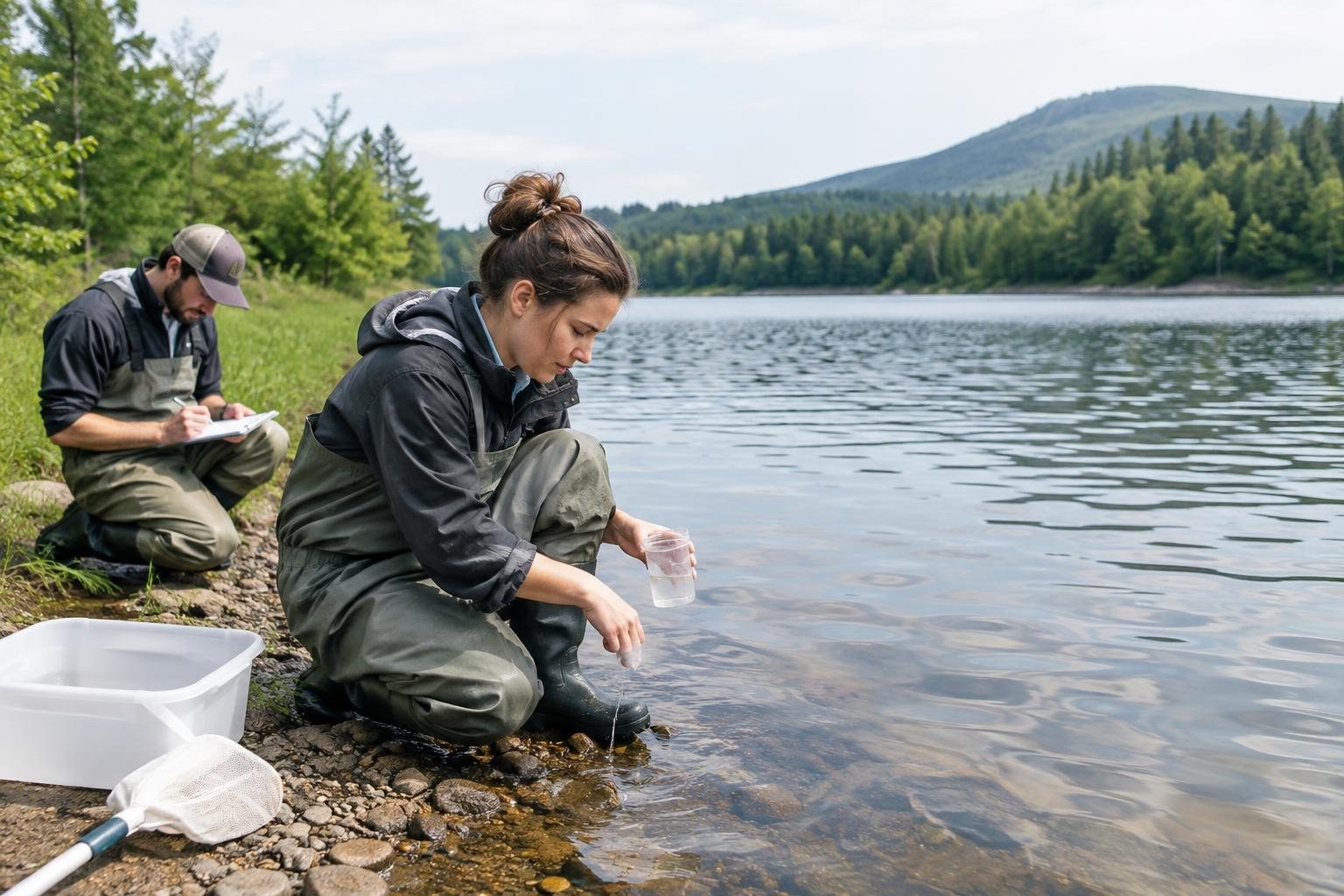
Aquatic Biology and Limnology: A College Program Guide
A practical guide to aquatic biology and limnology degrees, with ways to compare curricula, field and research opportunities, costs, and possible next steps.
By Kieth Nelson · Staff Writer Assessment.com · Published October 12, 2026 · Last updated November 5, 2026
A freshwater-focused degree can lead in several academic directions, from studying organisms and ecosystems to exploring conservation or research. The challenge for prospective students is that similar program names can represent different curricula. Use this guide to identify what you want to learn, evaluate the courses and experiences a college actually offers, and connect those choices to possible next steps without treating any degree as a job guarantee.
Degree & Program Decision Insights
Explore your personal fit, education requirements, career potential and next steps.
01Motivational Fit
Discover whether this program fits you
Explore your preferences against the focus of Aquatic Biology/Limnology. These prompts are not personal MAPP results.
Scientific investigation. Would you enjoy investigating geology and hydrology and explaining your conclusions from evidence?
Breadth of interest. Consider the place of “aquatic ecosystems” in this field. Is this another part you would choose to explore, or mainly a requirement you would tolerate?
Work reality. Related work can involve this task: “Measure or weigh compounds and solutions for use in testing or animal feed.” Would you want that activity to be a regular responsibility?
Interest in studying a field can differ from enjoying its related work.
Which part would you want to do repeatedly, and what would you try before deciding?
Discover Your Personal Program Fit
Before investing your time and money in your education, discover how this program aligns with your natural motivations, work preferences and career goals.
Typical occupational entry: doctoral or professional degree (BLS). Postsecondary teaching is a separate appointment and may require advanced study; this programme alone is not a promise of a teaching post.
U.S. occupational wages are not guaranteed graduate earnings; OEWS excludes self-employed workers.
Projected openings include replacements as well as growth.
U.S. national estimates. A crosswalk does not establish entry-level eligibility; advanced, management and teaching roles can require further qualifications.
Marine Biology and Biological OceanographyCIP 26.1302. Compare its emphasis on chemical, physical, and geological oceanography and molecular, cellular, and biochemical studies with this program’s focus.
Environmental BiologyCIP 26.1305. Compare its emphasis on biodiversity and molecular genetic and genomic evolution with this program’s focus.
Explore your motivations. Use MAPP as a starting point for reflecting on your interest in “geology and hydrology”, then test that interest against a sample learning task.
Examine the work. Compare Biological Technicians and Biological Science Teachers, Postsecondary on daily work and entry qualifications, as well as pay.
Compare actual providers. Ask for the exact credential, course sequence and assessment methods. Compare how each provider teaches “aquatic ecosystems”, its entry criteria and its itemized costs.
Check the evidence before applying. Confirm prerequisites and any recognition or professional requirements for your intended route; ask for applicable rules and published outcome definitions in writing.
Verify the institution’s current offering, admissions requirements and outcomes; a search result does not establish your eligibility.
Start with the question you want your education to help you explore. It might concern organisms in inland waters, ecological relationships, or how habitat change affects species and ecosystems. Those interests can point toward an aquatic or limnology focus, but the same label may not mean the same curriculum at every college.
Instead of choosing by title, compare a program’s required courses with its electives and research areas. A broad biology degree with a small number of aquatic options and a sustained freshwater concentration could serve different goals. Write down which topics must appear in your plan and which are optional, then ask an advisor whether the courses are regularly available.
For comparison, the University of West Florida describes a marine biology curriculum built on genetics, ecology, cell biology, and organismal biology, followed by aquatic and marine electives. That is an example of one related program, not a template for inland-water degrees.
Audit the Curriculum and the Experiences Behind It
A degree plan is more useful than a list of course titles. Mark the foundation courses, courses that explicitly concern aquatic systems, and electives that let you narrow your interest. Then note whether the plan includes field activities, laboratory work, a research project, or an internship. Treat each as a question to verify, not an assumed feature of every program.
Ask for a sample schedule and find out when specialized courses are offered. If a needed elective runs infrequently, it could affect how easily you complete the intended focus. For every experience described as hands-on, ask what students do, whether access is limited, and whether added travel or equipment costs apply.
Texas State’s aquatic resources doctoral catalog provides a specific graduate-level example: its conservation biology course examines habitat alteration and associated biological changes affecting species and ecosystems. Use such examples to understand a course’s subject, while keeping graduate and undergraduate requirements distinct.
Turn Career Ideas Into a Preparation Checklist
Make a short list of work you might enjoy after college, then use it to test the curriculum. For each possible role, record the duties, education, experience, and credentials requested in current postings. Look for overlap between those requirements and what the program actually teaches or makes available.
Skills such as careful observation, clear scientific writing, and interpreting evidence are useful goals to discuss with an advisor. Ask which required assignments provide practice, rather than assuming a degree title proves experience with a particular method or tool. If a role requires specialized preparation, identify how you might gain it and whether that path fits your time and budget.
Do not plan around a job title alone. A practical plan links a subject of interest to courses and experiences, then checks that link against employer requirements.
Test the Fit Beyond a Love of Nature
Interest in freshwater ecosystems is a useful starting point, but consider the whole learning experience. Ask yourself whether you want to investigate organisms and habitats, and whether you are willing to combine that interest with scientific reading, written work, and analysis. The balance will depend on the college and the specific courses you take.
Try a three-column comparison: topics that energize you, tasks you are willing to practice, and conditions that could make study difficult. For example, someone who wants field activity should check whether it is part of required courses or only an optional opportunity. Someone balancing work or family should ask how required courses are scheduled.
A career assessment can help you reflect on preferences, but it cannot establish whether a particular program or occupation is right for you. Use it alongside course plans, conversations with departments, and research into the work itself.
Verify Entry Requirements and the Exact Credential
Admissions requirements and completion timelines belong to the institution, not to the subject label. Check the current rules for your entry route, whether you are applying after high school, transferring credits, or considering graduate study. Ask for written confirmation when a prerequisite or transfer decision affects your plan.
Compare the credential offered with the work or further study you may want. The field can appear across different credential levels, but that does not mean each college offers every level or a dedicated program. Confirm the exact award, required courses, and expected sequence directly with the institution.
For a transfer plan, request a credit evaluation before relying on a completion estimate. For graduate study, ask the department about prior coursework and research expectations. A term-by-term degree plan can reveal timing issues that a broad program description will not.
Check What Each Learning Format Actually Requires
Do not decide from an online or on-campus label alone. Ask which courses are remote, which require campus attendance, and whether any field or laboratory work involves travel. If research access matters to you, ask whether it is available to students in your format and how placements are arranged.
Schedule matters as much as delivery mode. Request a sample term sequence and check whether required classes fit your work, family, and travel constraints. Ask whether a course is offered often enough to avoid delaying progress if you cannot take it in a particular term.
Compare the actual learning activities and total demands of each option. A format is a good fit only if it lets you complete the required curriculum and the experiences you consider important.
Compare the Cost Through Graduation
Build a cost estimate around the entire route to completion. Start with each college’s official tuition and cost information, then ask about course-specific laboratory, field, travel, or equipment charges. Add housing, transport, books, and technology when relevant to your circumstances.
Compare the amount you expect to pay after aid, not just the tuition rate. Ask the financial aid office how your enrollment pace affects eligibility and whether a change in schedule could alter your plan. If you expect to transfer, confirm which credits apply to the target degree before paying for them.
Put schools side by side using the same assumptions: credential, enrollment pace, transfer credits, fees, and expected completion time. A low first-year estimate does not settle which path will cost less overall.
Explore Work by Reading the Requirements Backward
Possible directions associated with aquatic study include biological, environmental, conservation, fisheries-related, and research settings. These are areas to explore, not outcomes promised by a major. Duties and entry requirements depend on the specific job and employer.
Choose two or three roles and read current postings from places where you could realistically work. Record the requested education, experience, methods, and credentials. Then compare those requirements with the curriculum and opportunities at each college. If many postings ask for preparation not included in the degree plan, ask how students can build it.
Do not assume a degree automatically qualifies you for every regulated role. Requirements depend on the occupation and may vary by jurisdiction. Identify the job titles you are considering, then check the relevant authority’s current requirements.
Experience opportunities also need careful comparison. Ask whether internships, faculty projects, or independent research are guaranteed, competitive, paid, or arranged by students. Find out whether participation earns credit and whether travel or equipment costs fall to the student.
When a college says an experience prepares students for a credential or occupation, ask which specific requirement it addresses. Confirm the details with the relevant authority or employer before making an enrollment decision.
Compare Nearby Fields by Their Course Plans
Related programs can be useful alternatives when the questions you want to study are broader or different from freshwater biology. Compare actual course plans rather than assuming degree names define a fixed boundary.
Biology: Explore a broad foundation and check whether aquatic electives can shape your plan.
Marine biology: Consider this if ocean and coastal topics are a stronger draw. The University of West Florida describes a biological science core followed by aquatic and marine electives.
Environmental science: Compare this if you want to study environmental questions beyond aquatic organisms. Assessment.com’s environmental science degree guide can help you explore that direction.
Ecology: Compare course requirements if your interest centers on relationships among organisms and environments across habitats.
Hydrology: Explore this direction if water systems and movement interest you more than biological communities.
Look at required courses, electives, research opportunities, and career preparation side by side. A broad degree with the right electives may fit better than a specialized title with a course plan that does not match your goals.
Build a College Comparison Scorecard
Use a scorecard to compare colleges on the factors that matter to you. Give each program a rating for freshwater coursework, access to relevant research or field learning, course availability, schedule, total cost, transfer policies, and student support. Add notes that explain the rating so you can distinguish a confirmed feature from a possibility.
Ask the department who teaches the courses you care about and how often they run. Ask the admissions office about entry and transfer rules, and ask financial aid staff to review your cost assumptions. If career outcomes are discussed, ask how they are measured and what students are included.
Assessment.com’s college major selection resource can support reflection about fit. Use it as one input alongside the official catalog, written answers from the school, and your own review of potential work.
Map Several Possible Routes, Not One Promised Path
Plan a route as a set of decisions, not a guaranteed career ladder. Begin with an area of study, select courses that build a useful foundation, and seek relevant experience where available. Reassess your direction as you learn more about the work and the requirements employers list.
For a simple planning exercise, choose a few job postings and work backward. Note the education, methods, experience, or credentials requested. Mark which items your prospective program covers and which would require additional coursework or experience. This makes gaps visible before you commit to a degree plan.
Texas State’s doctoral catalog offers one example of advanced study in aquatic resources, including a conservation biology course focused on habitat alteration and biological changes affecting species and ecosystems. It illustrates a graduate-level topic, not a required step for every aquatic career.
Questions to Resolve Before You Commit
Before you enroll, take these questions to the department, admissions office, and financial aid office:
Which required courses specifically address inland waters?
Which aquatic electives are available, and how often are they taught?
What field, laboratory, or research opportunities can students pursue?
Are those opportunities guaranteed, competitive, or independently arranged?
Which activities require travel or extra fees?
How will my existing credits apply to this exact degree?
What is the estimated total cost at my planned enrollment pace?
What education or credentials do employers request for the roles I am considering?
Ask for written answers about anything that affects cost, credit transfer, course availability, or eligibility. Compare the responses across programs, then choose the plan that best matches your learning goals and practical limits.
Frequently asked questions
How do aquatic biology and limnology differ?
Aquatic biology explores organisms and ecological relationships in water environments. Limnology emphasizes inland waters. The terms can overlap, so compare the actual required courses, electives, and research interests at each college instead of relying on the program name.
How can I tell whether a program really focuses on freshwater?
There is no single course plan for every college. Use the catalog to check which biology courses are required, what aquatic electives are offered, and whether field, laboratory, or research learning is available. Ask for a sample degree plan before enrolling.
What can I do with an aquatic biology degree?
A degree may be relevant to biological, environmental, conservation, fisheries-related, or research work, but a specific job is not guaranteed. Compare current job postings with the education and experience each employer requests, then see whether a program offers relevant courses or experience.
How should I compare the cost of aquatic biology programs?
Costs depend on the institution, residency, enrollment, transfer credits, and course-related fees. Compare each college’s official cost information and ask about laboratory, field, travel, or equipment charges. Estimate the total through completion, not just the first term.
Is marine biology the same as limnology?
Marine biology and inland-water study can share biological foundations, but they do not mean the same focus. For example, the University of West Florida describes a marine biology curriculum with a biological science core and aquatic and marine electives. Inspect each program’s own course requirements to see which habitats it covers.
How do I know if this major is a good fit for me?
It depends on your interests and the program. Consider whether you want to study aquatic organisms and ecosystems, and whether you are also ready for scientific reading, analysis, and writing. Review the required courses and ask what students do in field, laboratory, or research experiences.
Do aquatic biology careers require graduate school?
Graduate study can be relevant to some specialized research or academic paths, but requirements vary by role and employer. Check actual postings for the positions that interest you and ask departments what preparation their graduates pursue. Texas State’s aquatic resources doctoral catalog, for example, lists a conservation biology course about habitat alteration and biological changes affecting species and ecosystems.
People Also Ask
What does aquatic biology cover?
Aquatic biology concerns organisms and ecological relationships in aquatic settings. Limnology emphasizes inland waters. The terms overlap in some programs, so a catalog and course plan offer a better guide than the title alone.
What should I look for in a limnology degree plan?
Start with the required courses and electives. Check whether freshwater topics are a continuing part of the curriculum or a small option within a broader biology degree, then ask about field, laboratory, and research opportunities.
What courses might a related aquatic program include?
The published curriculum is the best starting point. The University of West Florida describes a marine biology degree with a biological science core, including genetics, ecology, cell biology, and organismal biology, followed by aquatic and marine electives. Other programs should be checked individually.
How do I estimate the full cost of a freshwater biology degree?
Make a full-cost comparison using each college’s official estimates. Ask whether tuition estimates include laboratory or field fees, how transfer credits apply, and whether required courses are offered on a schedule that fits your planned pace.
Is aquatic biology a good major for nature lovers?
Possibly, if you are interested in aquatic life and ecosystems and are comfortable with the full academic work of the program. Ask the department about required science courses and learning formats so you can judge whether its day-to-day demands fit your interests.
Should I choose aquatic biology or environmental science?
A broad environmental science degree may address questions beyond aquatic organisms and freshwater ecosystems. Compare required courses and electives in each program to find the best match for the topics you want to study.
Choose this field by looking past the major title. Decide which freshwater questions you want to study, then check whether a college’s required courses, electives, and available learning experiences match. Compare cost and course schedules alongside career options, and treat any career pathway as something to investigate, not a promised outcome. Use Assessment.com to explore related degree and career directions as part of that comparison.
Find out which Career or College Major is right for you!
We use cookies to offer you a better browsing experience, analyze site traffic and personalize content.
Read about how we use cookies and how you can control them in our
Privacy Policy.
If you continue to use this site, you consent to our use of cookies.
×
Exciting News!
Be one of the first to Beta Test the new AI-Powered Assessment.com Platform.