Geoarchaeology Programs: Courses, Certificates, Careers, and How to Choose
Explore what geoarchaeology certificates and graduate programs teach, how they connect archaeology with earth science, and how to compare costs, formats, and career pathways.
By Tome Fierre · Staff Writer Assessment.com · Published October 9, 2026 · Last updated November 5, 2026
Geoarchaeology applies earth-science methods to archaeological questions. Students learn to interpret geological processes and landscape evidence alongside artifacts and other remains to investigate how people lived in and moved through past environments. Depending on the program, study may include archaeology, geology, sedimentology, ancient civilizations, and environmental reconstruction. Geoarchaeology is usually a focused area of study rather than one standard degree path. You may encounter it as an undergraduate certificate, graduate study, or coursework integrated with archaeology, anthropology, geography, or geology. The course plan, field experience, and credential offered vary by institution. For prospective students and parents, the key question is not just whether the subject sounds interesting. It is whether a specific program provides the skills, experience, and next-step preparation you need. Not sure whether geoarchaeology fits you? The Free MAPP Career Assessment can help you explore how your motivations, interests, and preferences relate to academic and career directions.
Degree & Program Decision Insights
Explore your personal fit, education requirements, career potential and next steps.
01Motivational Fit
Discover whether this program fits you
Explore your preferences against the focus of Geoarcheaology. These prompts are not personal MAPP results.
Scientific investigation. Would you enjoy investigating geology and explaining your conclusions from evidence?
Understanding people and societies. Would you enjoy investigating anthropology, comparing perspectives rather than expecting a single simple explanation?
Work reality. Related work can involve this task: “Teach or mentor undergraduate and graduate students in anthropology or archeology.” Would you want that activity to be a regular responsibility?
Interest in studying a field can differ from enjoying its related work.
Which part would you want to do repeatedly, and what would you try before deciding?
Discover Your Personal Program Fit
Before investing your time and money in your education, discover how this program aligns with your natural motivations, work preferences and career goals.
U.S. occupational wages are not guaranteed graduate earnings; OEWS excludes self-employed workers.
Projected openings include replacements as well as growth.
U.S. national estimates. A crosswalk does not establish entry-level eligibility; advanced, management and teaching roles can require further qualifications.
Compare the focus and route of these distinct instructional fields; their credentials and admission requirements are not interchangeable.
ArcheologyCIP 45.0301. Compare its emphasis on archeological theory and field methods with this program’s focus.
Linguistics and AnthropologyCIP 30.4701. Compare its emphasis on applied linguistics and data management with this program’s focus.
Human BiologyCIP 30.2701. Compare the official Human Biology field description and actual course requirements; confirm which parts support your intended specialization.
Explore your motivations. Use MAPP as a starting point for reflecting on your interest in “anthropology”, then test that interest against a sample learning task.
Examine the work. Compare Anthropologists and Archeologists and Geoscientists, Except Hydrologists and Geographers on daily work and entry qualifications, as well as pay. Explore Anthropologists and Archeologists.
Compare actual providers. Ask for the exact credential, course sequence and assessment methods. Compare how each provider teaches “ancient civilizations”, its entry criteria and its itemized costs.
Check the evidence before applying. Confirm prerequisites and any recognition or professional requirements for your intended route; ask for applicable rules and published outcome definitions in writing.
Verify the institution’s current offering, admissions requirements and outcomes; a search result does not establish your eligibility.
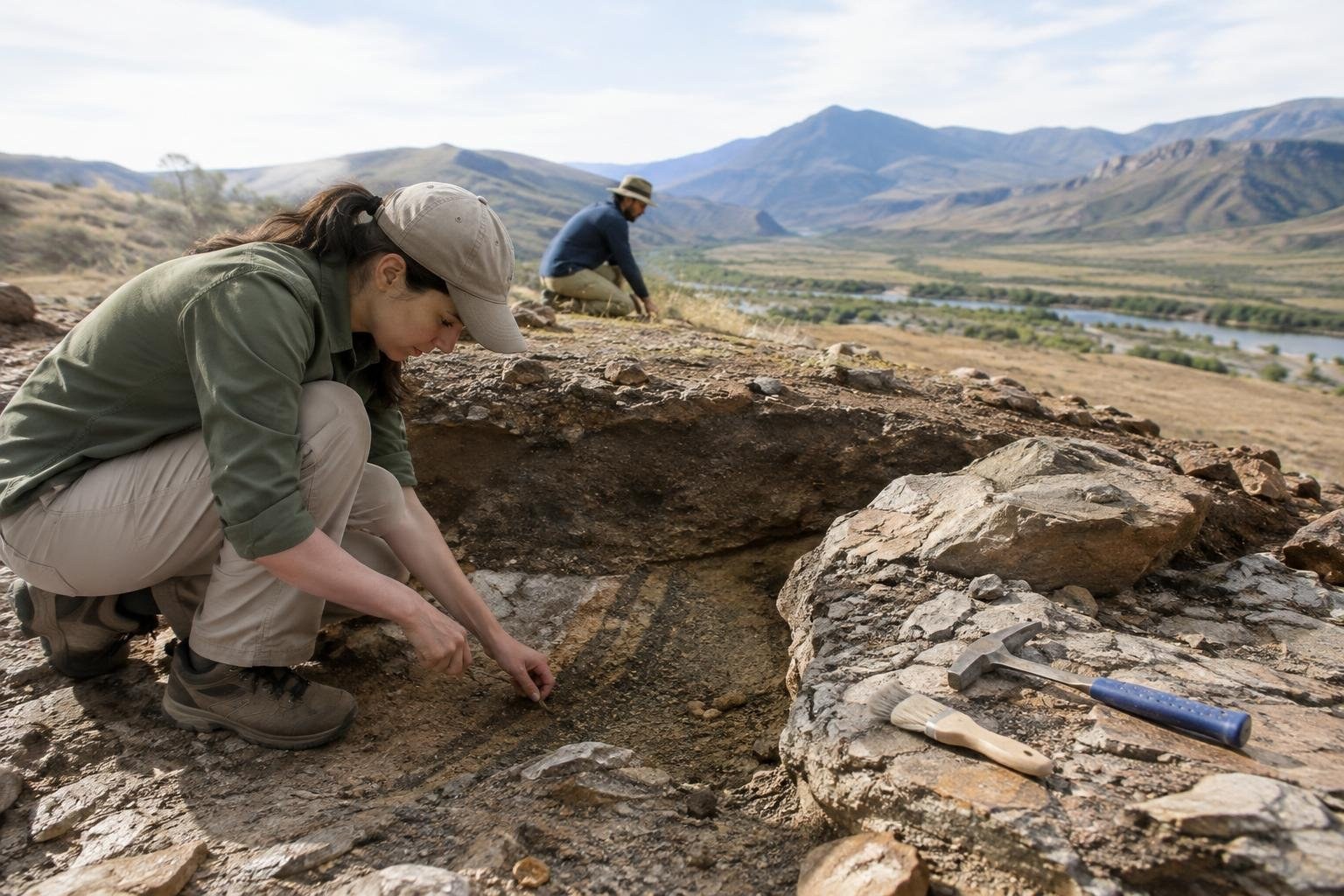
Geoarchaeology fieldwork showing the connection between landscape evidence and archaeological interpretation
What Is Geoarchaeology?
Geoarchaeology brings earth-science methods into the study of the archaeological record. It can help researchers ask how landscapes changed, how people used or moved through them, and how geological processes affected the evidence preserved at a site. Hamilton College describes the field as applying geological processes to archaeological records and examining past human engagement with landscapes.
It is an interdisciplinary focus, not one universally standardized credential. The National Center for Education Statistics places related multidisciplinary study under a broad classification, while specific institutions describe geoarchaeology certificates and graduate study. Programs may use different names or place the subject in anthropology, archaeology, geology, or earth and environmental science departments.
For a concise explanation, see Hamilton College’s description of geoarchaeology and the NCES classification for multidisciplinary studies.
What Do You Study in a Geoarchaeology Program?
A geoarchaeology curriculum links archaeological questions to earth-science evidence. Depending on the program, students may study archaeology, anthropology, geology, sedimentology, past climates, ancient societies, or the formation and preservation of archaeological sites. The aim is to understand what scientific analysis can add to interpretations of human settlement and past environments.
Some programs also introduce scientific techniques used in contemporary archaeology. That list is not a promise that every geoarchaeology certificate teaches every tool. Ask which methods are actually included and whether students practice them.
Look for a curriculum that explains how evidence is gathered, evaluated, and interpreted. A course list can sound interdisciplinary while offering little integration; ask how assignments, field experiences, labs, or research projects connect earth science to archaeological questions.
For examples of the field’s scientific context, consult the University of Georgia’s archaeological sciences resource and the Missouri State geoarchaeology certificate page.
Skills You Can Build
Students may build skills in evaluating evidence, connecting ideas across disciplines, documenting observations, and explaining how a conclusion follows from data. Where offered, field and lab work can add practice with site observations, samples, maps, or analytical tools. The actual methods depend on the curriculum and available facilities.
These skills can be relevant to further education or work connected with archaeology, geography, and geology. Minnesota State University, Mankato describes its geoarchaeology certificate as preparation for further education or the job market in those fields. This is not a guarantee of employment or a claim that every graduate qualifies for every role.
To make your learning easier to demonstrate, keep project reports, maps, research summaries, and other permitted work samples. Employers or graduate programs can then see what methods you have used and how you communicate your findings.
Who Is Geoarchaeology For? Interests and Entry Requirements
Geoarchaeology may appeal to students who want to investigate the past through physical evidence and are curious about landscapes, materials, and environmental change. It can suit people who enjoy asking questions that require more than one academic perspective. You do not need to fit a single personality profile; interest in careful observation, research, and learning scientific methods is more useful than a label.
Consider how comfortable you are with both interpretive and scientific work. Depending on the program, you may read archaeological research, reason about geological processes, and use technical evidence. If field activities or laboratory analysis matter to you, confirm that the courses provide them rather than assuming they are included.
Admissions requirements are set by each institution. A certificate may be designed for students in related undergraduate study, while graduate programs may expect prior academic preparation relevant to their curriculum. Boston University describes its MA program as drawing students from backgrounds such as geology, other natural sciences, anthropology, or archaeology. Treat that as an example of possible academic backgrounds, not a universal admissions rule.
Check the department’s current requirements for prerequisites, transcripts, recommendations, statements, experience, and any required preparation in science or archaeology. Ask an adviser how your existing coursework meets those requirements.
Credential Levels, Study Formats, and Completion Time
Geoarchaeology may be available through more than one credential route. The research examples for this guide include undergraduate certificates and a master’s program. These options are not interchangeable: a certificate may add focused coursework to another degree, while graduate study represents a different academic level and may involve a broader program of study.
Do not assume that the name of a credential tells you its workload, credits, or completion time. Ask for the current catalog, required course sequence, prerequisites, and the number of terms students typically need when attending part time or full time. Transfer credits and scheduling can also change an individual timeline, so request an evaluation before budgeting around an expected finish date.
Online, hybrid, and on-campus availability is program-specific. Even if lectures are online, field research, lab work, or access to equipment may require in-person participation. Ask the program to identify every required campus visit, field session, and residency before accepting an offer.
Tuition, Costs, and Financial Aid
There is no single tuition figure that applies to geoarchaeology. Costs depend on the institution, credential, residency classification, course load, and whether a program includes expenses beyond tuition. Build a complete estimate using the school’s current published charges and ask whether books, equipment, field travel, lab fees, or required technology create additional costs.
Compare the total cost to the specific educational or career step you hope to take. Ask how financial aid applies to the credential, whether scholarships or assistantships are available, and whether credits can transfer into another program. If you are a parent helping a student, discuss the total amount borrowed and monthly repayment expectations alongside the program’s academic plan.
Do not choose based on a low advertised per-credit rate alone. Compare required credits, fees, travel, and the likelihood that your planned course sequence is available when you need it. Request any estimate in writing and confirm it for your student status and start term.
Careers, Jobs, and Employment Outlook
Potential directions connected with geoarchaeology include work or further study related to archaeology, geography, and geology. The specific role depends on your full education, practical experience, and the requirements of an employer. An introductory certificate should not be treated as a guarantee of a professional title or as a substitute for a required advanced degree.
Possible direction
How geoarchaeology may help
What to verify
Archaeology-related work
Connects archaeological questions with geological processes and site evidence.
Employer education expectations, field experience, and required methods.
Geography-related work or study
Offers a way to examine people’s use of landscapes and environmental context.
Whether the role requires geographic information systems or additional geography coursework.
Geology-related work or study
Applies earth-science concepts in archaeological settings.
Whether the job requires a geology degree, technical coursework, or other credentials.
Teaching or research
Can provide an interdisciplinary foundation for later academic work.
Required graduate preparation and the institution’s hiring criteria.
There is no single salary or employment outlook for a field of study that can lead to different occupations. Research current pay and outlook for the specific job title, location, and education level you are considering. The degree alone does not establish what a graduate will earn or whether a particular position will be available.
For a career fit exploration, browse Assessment.com’s life, physical, and social science careers and anthropologist career guide.
Find out which Career or College Major is right for you!
Research the credential separately from the subject. A certificate or degree title does not, by itself, establish program quality or prove that a graduate meets a particular employer’s requirements. Confirm the institution’s current accreditation status through authoritative education resources, and ask the school how credits apply to the next program you may pursue.
The available program descriptions identify geoarchaeology certificates and graduate study, but do not establish one field-wide professional license or certification. Requirements depend on the position and jurisdiction. Before enrolling, examine current job postings for the work you want, then ask employers or relevant professional organizations whether they expect a specific credential, education level, or supervised experience.
Ask the program whether it prepares students for any named certification or licensure process, and request the exact requirements in writing. Do not assume that completing a geoarchaeology course or certificate automatically meets a separate professional standard.
Field Experience, Research, and How to Stand Out
Experience can help you test whether the subject fits before you make a larger education commitment. Ask faculty about supervised research, field opportunities, laboratory access, and projects that let you practice interpreting evidence. If a program does not include the experience you want, ask whether students can pursue it through another department or an approved research project.
Build a clear record of your work. Keep a résumé of relevant coursework and experience, and prepare a short explanation of the question you investigated, the evidence you used, and what you concluded. Follow any site, collection, or research rules about photographs and unpublished data.
Before paying for an optional credential or training course, check whether it is relevant to your intended next step. A specific tool or method is valuable when it supports your project or a documented employer requirement, not simply because it sounds technical.
Graduate School and Further Education
Further study may make sense if your goal requires deeper specialization, research preparation, or qualifications beyond a certificate. A master’s in geoarchaeology is one documented option; related graduate pathways may also sit in archaeology, anthropology, geology, or another earth science. Boston University describes its MA in geoarchaeology as drawing on both geosciences and archaeology and welcoming applicants from several related academic backgrounds.
Before applying, compare the research focus, adviser availability, prerequisites, and expected culminating work. Ask whether the program is designed for your intended next step and whether a certificate can count toward a later degree. Do not assume that credits will transfer or that one graduate credential qualifies you for every research or academic role.
For a student who is still exploring, discussing options with faculty and an academic adviser can clarify whether to begin with related undergraduate courses, pursue a certificate, or plan for graduate school later.
Related Degrees and Alternatives
Compare geoarchaeology with nearby fields by asking which questions and methods you want to spend the most time on. The label alone does not tell you the curriculum.
Archaeology: Consider this instead if you want a broader focus on material remains and archaeological interpretation. Princeton describes its archaeology program as an interdisciplinary foundation using archaeological evidence in other fields of inquiry.
Geology: Consider this instead if you want a broader study of earth sciences rather than applying geological methods mainly to archaeological questions.
Anthropology: Consider this instead if you want a wider study of humans and societies, then choose archaeology or geoarchaeology coursework as a specialization.
Geography: Consider this instead if your primary interest is spatial relationships, landscapes, and how people interact with places.
Environmental or earth science: Consider this instead if you want a broader emphasis on natural systems and environmental processes rather than archaeological applications.
These comparisons are starting points, not fixed boundaries. Review actual required courses, methods, and research opportunities before deciding. Explore other academic pathways through Assessment.com’s degree guides.
Advantages, Drawbacks, and Is Geoarchaeology Worth It?
Geoarchaeology can offer an appealing way to bring together archaeology and earth science, while building an interdisciplinary base for further study or related work. A certificate may let a student add a focused area to an existing academic plan; graduate study may provide a more extensive path. Those potential benefits need to be weighed against tuition, time, course availability, and the qualifications required for the career you want.
It may be less suitable if you want a direct professional credential with a clearly defined job outcome and the program cannot show how it meets that goal. It may also be a poor fit if the required scientific methods, field activities, or research do not interest you. Ask what graduates do next, but distinguish documented outcomes from general promotional language.
Worth depends on your circumstances. Compare total expenses with your educational purpose, likely next step, and alternative routes. Discuss the decision with faculty, an academic adviser, and family members who may help pay, using the current program catalog and cost estimate rather than assumptions.
How to Choose a Geoarchaeology Program
When you compare programs, focus on what a student will actually learn and do. Use the official catalog and ask the department for details that are not clear online.
Credential and accreditation: Confirm the exact award and the institution’s current accreditation status.
Curriculum: Check how courses connect archaeology with geology and whether the scientific methods you want are taught.
Hands-on opportunities: Ask which field, lab, research, or technical experiences are required, optional, or unavailable.
Faculty and facilities: Find out who teaches the relevant courses and what resources students can access.
Format and schedule: Confirm online and in-person requirements, course rotation, and realistic completion time.
Total cost and aid: Request a personalized estimate, including fees and any required travel or equipment.
Transfer and next steps: Ask whether credits can apply to another degree and verify transfer rules with the receiving institution.
Outcomes and career support: Ask for clear information about graduate study, employer connections, advising, and career services.
Assessment.com’s college guidance resources can help students and families think through education choices. A career assessment can also support reflection, but it should complement, not replace, program research and conversations with advisers.
From Education to Career: Example Pathways
Possible routes will differ by student, and no sequence guarantees promotion or employment. Use these examples as planning questions rather than promises:
Related undergraduate study → geoarchaeology certificate → archaeology- or geography-related experience → further study or a specialized role. Ask which experience and additional qualifications are needed for the role.
Geology or another natural-science background → graduate geoarchaeology study → research or technical work connected with archaeological evidence. Verify graduate admissions requirements and the employer’s expectations.
Archaeology or anthropology background → earth-science coursework and methods → research preparation that connects sites with landscape processes. Confirm whether the planned coursework offers the technical depth your goal requires.
Talk with faculty about actual student pathways and seek current job requirements for the roles you are considering. A degree or certificate can build preparation, but does not guarantee a particular outcome.
Questions to Ask Before Enrolling
Before you or your student enrolls, use this checklist to move from interest to a practical decision:
What exact certificate or degree will appear on the transcript?
What are the current admissions prerequisites and application requirements?
How many courses and terms are required for the student’s likely schedule?
What is the full estimated cost, including fees, materials, equipment, and travel?
Which financial aid, scholarships, or other funding options apply to this credential?
Are fieldwork, labs, research, or campus visits required, and when do they occur?
Which scientific and archaeological methods will students actually practice?
How are program quality and institutional accreditation documented?
Will the courses transfer or count toward a later degree, and who must approve that?
What career advising, research support, or employer connections are available?
What education and experience do current employers require for the intended job?
If important answers remain unclear, ask the program for written clarification before paying a deposit or making travel plans.
Frequently asked questions
What is geoarchaeology?
Geoarchaeology applies geological methods and concepts to archaeological evidence. Students may investigate how landscapes formed, how people used them, and what sediments and environmental records can reveal about past human activity. Programs combine ideas and methods from archaeology and the earth sciences; the exact balance varies by institution.
Is geoarchaeology hard?
It can be demanding because it brings together different kinds of evidence and methods, including archaeological interpretation and geological analysis. Students should be ready to read carefully, evaluate evidence, and work with scientific concepts. Fieldwork, labs, and technical tools may be part of a particular program, so review its curriculum rather than assuming every course has the same format.
Can I earn a geoarchaeology certificate?
Geoarchaeology is often offered as a certificate or as part of graduate study, but availability and requirements differ by school. A certificate may supplement another academic focus, while a graduate program may provide more extensive study. Confirm the credential, prerequisites, and expected completion schedule directly with each institution.
Can you study geoarchaeology online?
Some institutions offer online or hybrid coursework, but the research supplied for this guide does not establish that a particular geoarchaeology program can be completed fully online. Ask each department whether field, lab, research, or other in-person work is required before enrolling.
How is geoarchaeology different from archaeology or geology?
Geoarchaeology connects archaeology with geology and other earth sciences. A general archaeology program may emphasize material remains and archaeological interpretation, while a geology program may focus more broadly on Earth materials and processes. Compare course lists and field or research opportunities to see which program supports your goal.
What jobs can I get with a geoarchaeology certificate?
Geoarchaeology can support further education or work related to archaeology, geography, or geology, but a certificate alone does not guarantee a specific job. Research roles and some specialized positions may require additional education or experience. Check the requirements for the actual job or graduate program you have in mind.
How much do geoarchaeologists make?
There is no single salary for geoarchaeology graduates because this is a field of study rather than one occupation. Pay depends on the job, employer, location, experience, and any additional qualifications. Compare current data for specific occupations rather than treating a degree title as a salary estimate.
Is a geoarchaeology certificate worth it?
A certificate may be worthwhile if it adds relevant earth-science or archaeological methods to your existing education at a cost and schedule you can manage. Before committing, compare the curriculum, hands-on opportunities, total expenses, and the qualifications required for your intended next step. Its value depends on your goals, not on the credential name alone.
What is the difference between a geoarchaeology certificate and a master’s degree?
A certificate is a focused credential, while a master’s degree is a graduate academic degree with a broader or deeper program of study. The right choice depends on your prior education and plans. Review the institution’s admissions requirements, courses, research options, and the expectations of employers or graduate programs you may pursue.
People Also Ask
What does a geoarchaeologist do?
Geoarchaeologists use geological evidence and methods to investigate archaeological sites and past human relationships with landscapes. Their work can involve interpreting sediments and environmental records as part of a broader archaeological question.
What subjects are included in geoarchaeology courses?
A geoarchaeology program may combine archaeology and earth sciences, including geology, sedimentology, and the study of past environments. Course requirements differ, so consult the official catalog for the program you are considering.
How long does it take to study geoarchaeology?
Program length depends on the credential, course load, and institution. A certificate and a master’s program are different commitments, and schools set their own credit and completion requirements. Ask departments for a current course sequence and a realistic timeline.
Is geoarchaeology part of archaeology or geology?
Geoarchaeology is interdisciplinary: it uses earth-science methods to address archaeological questions. A traditional archaeology curriculum may focus more broadly on archaeological evidence and interpretation; a geology curriculum may cover Earth processes beyond archaeological contexts.
Do geoarchaeologists need a license?
The materials available for this guide do not establish a standard licensing requirement for geoarchaeology. Requirements depend on the job and jurisdiction. Before enrolling, check the qualifications named in current job postings or ask the relevant employer or professional body.
What should I major in before graduate study in geoarchaeology?
No single undergraduate major is established as a universal prerequisite. Backgrounds in archaeology, anthropology, geology, or another natural science may be relevant, but each graduate program sets its own admissions rules. Check its official admissions page before applying.
Geoarchaeology may be a strong choice if you want to study the past through both archaeological evidence and earth science. A certificate can add focused methods to a related major, while graduate study may offer deeper preparation for research-oriented work. The right option depends on the courses, field and lab experience, cost, and next-step career or education requirements of the specific program. Compare programs carefully, then consider whether their day-to-day work fits your interests and strengths.
Want to see your options? Try our comprehensive Degree, Program & College Search tool
We use cookies to offer you a better browsing experience, analyze site traffic and personalize content.
Read about how we use cookies and how you can control them in our
Privacy Policy.
If you continue to use this site, you consent to our use of cookies.
×
Exciting News!
Be one of the first to Beta Test the new AI-Powered Assessment.com Platform.