Archeology Degree Guide: Courses, Careers, Costs, and Program Fit
Learn what archeology students study, how degree and certificate pathways differ, what field experience can involve, and how to compare programs, costs, and career possibilities.
By David Slack · Staff Writer Assessment.com · Published October 25, 2026 · Last updated November 5, 2026
An archeology degree teaches students to investigate past societies through material evidence, including artifacts, human remains, buildings, and landscapes. Students learn to ask research questions, examine evidence, use field and analytical methods, and explain what the findings suggest about human life in the past. Programs may be offered as certificates, associate or bachelor’s degrees, graduate certificates, master’s degrees, or doctorates, but the options and requirements vary by institution. Archeology can connect to professional archaeology, museum work, preservation, research, and other paths that use evidence and cultural knowledge. The right credential depends on the work you want to pursue; earning a degree alone does not guarantee a particular role. Compare curricula, field experience, costs, and the qualifications employers request before choosing a program. Not sure whether archeology fits you? Take the Free MAPP Career Assessment to explore how your motivations, interests, and natural preferences may align with study and work options. Use it as one input alongside program research, conversations with faculty, and current job requirements.
Degree & Program Decision Insights
Explore your personal fit, education requirements, career potential and next steps.
01Motivational Fit
Discover whether this program fits you
Explore your preferences against the focus of Archeology. These prompts are not personal MAPP results.
Understanding people and societies. Would you enjoy investigating cultural and physical evolution, comparing perspectives rather than expecting a single simple explanation?
Breadth of interest. Consider the place of “archeological theory” in this field. Is this another part you would choose to explore, or mainly a requirement you would tolerate?
Work reality. Related work can involve this task: “Conduct ethnographic field research.” Would you want that activity to be a regular responsibility?
Interest in studying a field can differ from enjoying its related work.
Which part would you want to do repeatedly, and what would you try before deciding?
Discover Your Personal Program Fit
Before investing your time and money in your education, discover how this program aligns with your natural motivations, work preferences and career goals.
Typical occupational entry: doctoral or professional degree (BLS). Postsecondary teaching is a separate appointment and may require advanced study; this programme alone is not a promise of a teaching post.
Anthropologists and ArcheologistsSOC 19-3091 · O*NET 19-3091.00$70,770/year median (May 2025); +6% projected change (2025–2035); 800 projected openings/year.
U.S. occupational wages are not guaranteed graduate earnings; OEWS excludes self-employed workers.
Projected openings include replacements as well as growth.
U.S. national estimates. A crosswalk does not establish entry-level eligibility; advanced, management and teaching roles can require further qualifications.
Compare the focus and route of these distinct instructional fields; their credentials and admission requirements are not interchangeable.
GeoarcheaologyCIP 30.4201. Compare its emphasis on anthropology and ancient civilizations with this program’s focus.
Ancient Studies/CivilizationCIP 30.2201. A program that focuses on Western and Non-Western cultures and related topics in the periods of Pre-history and Antiquity.
Explore your motivations. Use MAPP as a starting point for reflecting on your interest in “archeological theory”, then test that interest against a sample learning task.
Compare actual providers. Ask for the exact credential, course sequence and assessment methods. Compare how each provider teaches “field methods”, its entry criteria and its itemized costs.
Check the evidence before applying. Confirm prerequisites and any recognition or professional requirements for your intended route; ask for applicable rules and published outcome definitions in writing.
Verify the institution’s current offering, admissions requirements and outcomes; a search result does not establish your eligibility.
Archeology Degree Guide: Courses, Careers, Costs, and Program Fit
What Is an Archeology Degree?
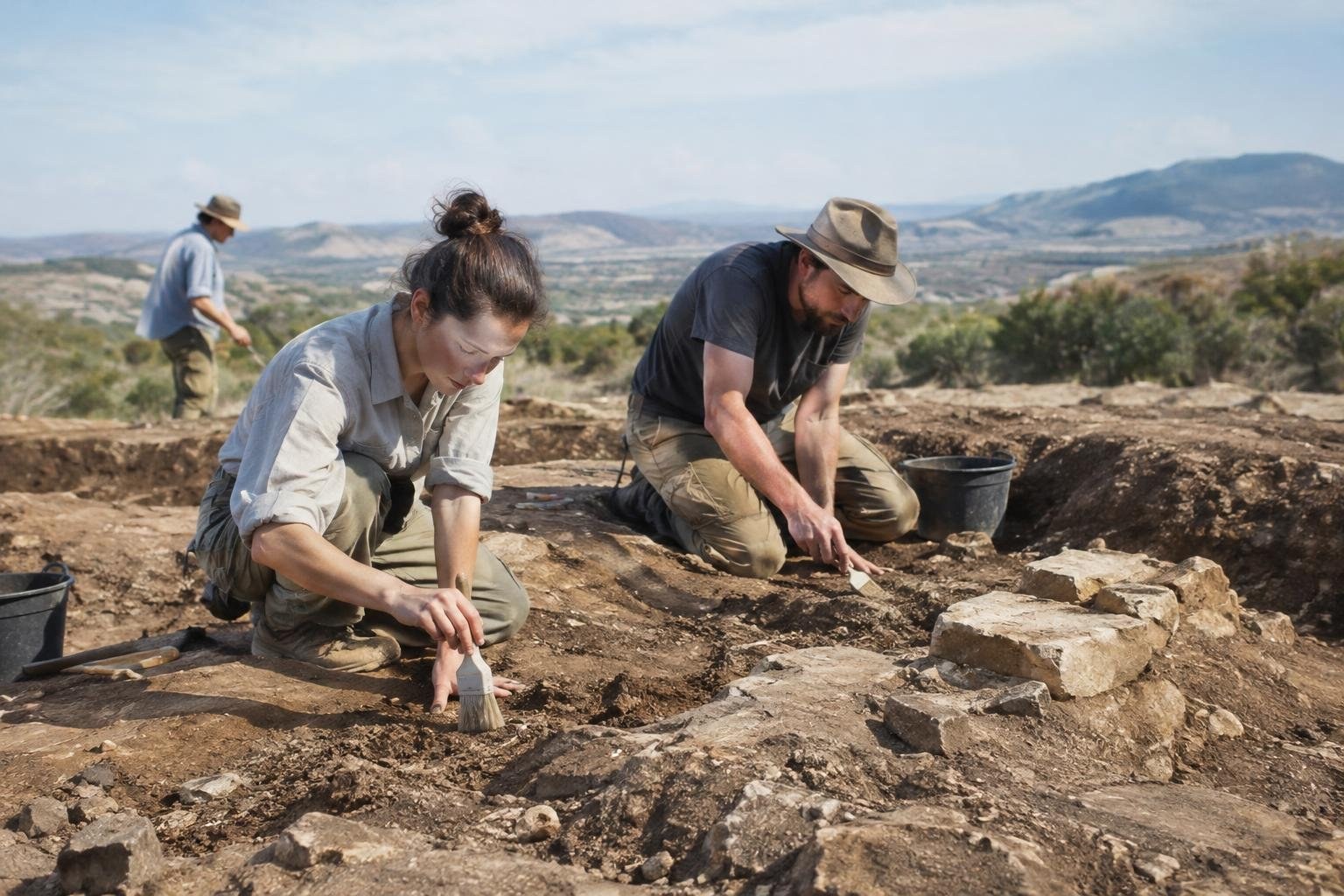
Archeology is the systematic study of past societies through the material traces people left behind. Those traces can include objects, human remains, structures, and the settings in which evidence is found. Students learn to interpret evidence in context rather than treating an artifact as a complete explanation of the past.
Archeology overlaps with anthropology, history, and the physical sciences, but it has a distinct focus on recovering, documenting, analyzing, and interpreting material evidence. A program may be housed in an anthropology department or presented as an archaeological-sciences major. The label alone does not tell you how much fieldwork, laboratory analysis, or historical study a program includes.
The federal Classification of Instructional Programs code associated with this field is 45.0301. Institutions may use different names, and the credential list for a field does not mean every school offers every level. For example, the University of Washington describes an undergraduate archaeological-sciences BA and notes a BS option, while certificate offerings appear at other institutions. See an official example of an archaeological-sciences undergraduate program.
What You Study: Courses, Methods, and Practical Learning
Archeology students learn how to turn physical traces into carefully supported interpretations. A common learning progression starts with foundational coursework on human societies, cultural history, and archaeological concepts. Students then encounter methods for documenting sites and landscapes, studying artifacts, evaluating evidence, and considering how past people lived.
Specific course lists differ. The field’s subject matter can include archaeological theory, field methods, dating methods, conservation, museum studies, cultural and physical evolution, and selected past cultures. At the University of Cincinnati, the program description emphasizes examining sites, landscapes, and material culture to make inferences about people in the past. Cornell describes its major as drawing on humanities, social sciences, and physical sciences.
Practical learning may involve supervised fieldwork, laboratory analysis, collections, research projects, or a capstone, but those experiences should not be assumed for every program. Ask whether field experience is required, where it takes place, how supervision works, and whether students pay extra for travel or supplies. Find out whether the program teaches students to record context and explain uncertainty, not only to identify objects.
When comparing curricula, look for a clear connection between methods courses and opportunities to apply them. The University of Cincinnati’s archaeology major overview and Cornell’s published program description illustrate how institutions describe the field and their academic approach.
Who Archeology Suits and How to Check Entry Requirements
Archeology programs are a good starting point for students curious about people and societies, patient with detail, and willing to build an argument from incomplete evidence. The work can appeal to people who like combining outdoor or hands-on activity with reading, analysis, writing, and careful recordkeeping. It does not require one personality type: curiosity and a willingness to learn methods matter more than a stereotyped image of an archeologist.
Students develop skills in observation, research design, evidence evaluation, data analysis, interpretation, and clear writing. Field or collections work can also require collaboration, careful documentation, and respect for the context in which evidence is found. These skills are useful beyond a single job title, but employers may ask for occupation-specific education or experience.
Entry requirements depend on the school and credential. Check official admissions and program pages for prior coursework, GPA expectations, application materials, transfer rules, and any prerequisites. Do not assume that requirements for an undergraduate certificate, bachelor’s program, graduate certificate, or master’s program are interchangeable. If you are a parent or counselor, help the student compare both admission requirements and what the program asks students to do after enrollment.
For a broader conversation about interests and college decisions, see Assessment.com’s guide to choosing college majors. A career assessment can prompt useful questions, but it should supplement rather than replace curriculum research and conversations with program advisors.
Credential Levels, Study Format, and Time to Finish
There is no single archeology degree length or format. A certificate, associate degree, bachelor’s degree, graduate certificate, master’s degree, and doctorate differ in scope and purpose. A graduate certificate may be designed for people who already have relevant education, while an undergraduate certificate may provide an introduction or complement another major. Confirm each program’s level, credit requirements, and relationship to a larger degree.
Time to completion depends on the required credits, course availability, transfer credit, full-time or part-time pace, and whether the program schedules field experiences only at certain times. Accelerated options may exist at some schools, but do not assume they are available or that they shorten every student’s path. Ask for a sample schedule that accounts for prerequisites and required practical work.
Online and hybrid delivery may work for reading, lectures, and some assignments. Hands-on methods or field experience may require in-person participation, depending on the curriculum. Before choosing an online option, ask how students complete any required field, lab, collections, or supervised research activities. A program’s online label does not by itself tell you what can be completed remotely.
Examples in the supplied university program information range from undergraduate study to certificates, including an 18-credit graduate certificate in archaeology at Monmouth University within its anthropology graduate program. That example is not a standard credit requirement for other programs. Review the university’s certificate description and compare it with the published plan at each school you are considering.
Academic Difficulty and Ways to Prepare
Archeology can be demanding because students must connect observations to conclusions without claiming more than evidence supports. Field and research assignments may call for accurate records, attention to context, sustained reading, and clear written explanations. Students may also need to learn scientific or analytical methods that are new to them.
Common hurdles include discovering that excavation is only one part of the discipline, underestimating how much writing and analysis a course requires, and choosing a program without checking practical learning arrangements. To prepare, strengthen academic reading and writing, ask instructors about introductory methods classes, and seek an opportunity to observe a public lecture, museum program, or supervised field activity where available.
At the application stage, ask how students receive feedback on research and documentation. Ask what support is available for students new to scientific methods or fieldwork. These answers can help you judge whether the program’s teaching structure matches your preparation and learning needs.
Tuition, Total Costs, and Financial Aid
Archeology program costs vary with the institution, state residency, credential level, delivery format, enrollment pace, and individual living arrangements. The available program descriptions do not establish a national tuition figure, so compare current figures directly from schools and use the same time period and attendance assumptions for each estimate.
Request a complete cost picture, not just a tuition rate. Ask about mandatory fees, books, equipment, transportation, fieldwork, housing, and any other required program expenses. Clarify whether a quoted amount is per credit, per term, or for the full credential. For online study, ask whether technology or in-person requirements create additional costs.
Review financial aid options with each institution’s financial-aid office. Depending on eligibility and the specific school, students may investigate federal or state aid, institutional scholarships, outside scholarships, employer assistance, and transfer-credit options. Ask how aid changes with part-time enrollment and what academic progress rules apply. Do not rely on a scholarship or funding option until the responsible office confirms eligibility and terms.
For families weighing affordability, compare the total expected borrowing and time to completion against realistic employment goals. Ask whether required experience is paid, whether students can work while enrolled, and whether credits will transfer if plans change. These details can affect the actual cost more than a headline tuition figure.
Career Possibilities, Jobs, and Employment Outlook
Archeology can prepare students to investigate past societies, but a major is not a job guarantee. Monmouth University describes its archaeology certificate as developing skills for professional archaeology and museum or preservation work. Those are examples of possible directions, not a promise of employment or a universal qualification rule.
Potential career planning areas include professional archaeology and museum or preservation work. Related occupations may include anthropologists and archeologists, museum technicians and conservators, and postsecondary anthropology or archeology teachers. Their work and entry qualifications are not interchangeable. Use the linked Assessment.com profiles to explore the occupations, then confirm current requirements through employers and official occupational resources.
Some roles may call for graduate study, focused experience, or additional training. Postsecondary teaching and advanced research are especially important to investigate early because the credential pathway can extend beyond an undergraduate major. Ask faculty what recent graduates have pursued and what education those goals required.
Salary and employment outlook belong to the occupation and location, not the degree title. Compare current official labor-market data and real job postings for the precise role and region you have in mind. Separate entry-level positions from longer-term roles, and examine whether openings are permanent or project-based. Avoid treating a high salary in a related occupation as the expected result of an archeology degree.
Explore related profiles: anthropologists and archeologists, museum technicians and conservators, and postsecondary anthropology and archeology teachers.
Find out which Career or College Major is right for you!
Accreditation, Certification, and Licensure Questions
A college credential and professional authorization are different things. The available program descriptions do not establish a single national archeology license or certification requirement. Requirements can depend on the job, employer, project, and jurisdiction, so verify them for the specific role rather than assuming that a degree alone authorizes every kind of work.
Ask programs whether their curriculum prepares students for any credential or professional standard relevant to your intended path. If you are considering field, museum, or preservation work, ask local employers what education, supervised experience, and technical abilities they expect. Request written details about any required field placement, internship, or practical component.
Also examine institutional accreditation and program status. Confirm the institution’s accreditation through official school and recognized accreditor information, and ask whether the exact program has any separate approval relevant to your goals. Do not infer specialized accreditation from a program’s name or from a school’s general accreditation status.
Field Experience, Projects, and Building an Early Career
Experience can help students test whether archeology’s day-to-day work matches their expectations. Ask about supervised field opportunities, faculty research, museum or preservation projects, volunteer work, and internships. The exact options depend on the institution and local organizations, so confirm that an opportunity exists before treating it as part of the degree.
Build a record of your work: research questions, methods learned, documentation, presentations, and written analysis. Ask instructors how to present projects ethically and accurately, especially when materials or places have cultural significance. Seek references by doing reliable work in courses and projects rather than waiting until an application deadline.
To stand out to employers, connect your coursework to the actual position. Show that you can follow methods, document evidence, explain findings clearly, and work carefully as part of a team. Include relevant field or collections experience only when you have completed it, and describe your contribution specifically.
Graduate School and Further Study
Graduate study may make sense for students aiming for specialized professional work, advanced research, museum or preservation roles, or postsecondary teaching. The appropriate route depends on the job and employer, not simply on a general belief that more education is always better. Ask faculty and working professionals what credentials are expected in the area you want to enter.
Possible next steps include a master’s degree in anthropology or a related field, a focused graduate certificate, or doctoral study for research and academic goals. Some students may combine archeology with another area of study. Monmouth’s graduate archaeology certificate, for example, is described within an M.A. in Anthropology program; it is one program model, not a rule for all graduate pathways.
Before applying, compare the cost and length of graduate education with the work it is intended to support. Ask about admission prerequisites, research supervision, field experience, funding, and the outcomes of graduates. If your goal is a specific occupation, check current job postings and employer requirements before selecting a graduate concentration.
Related Degrees and Alternatives
Related programs may suit students who want to study human societies, the past, material evidence, or cultural resources but prefer a different emphasis. Review the full course list: departments can use similar labels for curricula with different balances of field methods, social science, history, or scientific analysis.
Anthropology: Consider this instead if you want a broader study of human societies and cultures.
History: Consider this instead if you prefer interpreting the past primarily through written and documentary evidence.
Classics or ancient history: Consider this instead if your main interest is ancient societies, texts, and historical context.
Geology or earth science: Consider this instead if you want to focus more on earth materials, processes, or landscapes.
Museum studies: Consider this instead if your central interest is collections, interpretation, and museum practice.
Geographic information systems: Consider this instead if spatial data, mapping, and landscape analysis are your main interests.
Environmental studies: Consider this instead if you want a wider focus on human-environment questions.
These are comparison prompts, not claims that every institution offers each program or that the fields lead to the same jobs. Assessment.com has related guides to environmental studies and forestry. For archeology versus anthropology, compare which evidence, questions, and methods are central to the courses at your target school.
Advantages, Drawbacks, and Whether Archeology Is Worth It
An archeology program may be worth the investment when its curriculum and practical experiences support a realistic education and career plan at a cost you can manage. It may be a poor fit if you are choosing it mainly for a popular image of excavation, a salary assumption, or a broad promise of job growth that has not been tied to a specific occupation.
Potential advantages: focused study of past societies; training in research and evidence analysis; opportunities to connect classroom learning with field, collections, or preservation work when available; and skills that can transfer to other research-oriented contexts.
Potential drawbacks: the path from major to a particular job may not be direct; practical experience may take additional planning; costs can vary and field participation may involve extra expenses; and some professional or academic goals may require further education. These are factors to investigate, not outcomes that apply equally to all graduates.
Assess value by comparing full program cost, expected time, aid, location, likely qualifications for target jobs, and whether the learning itself interests you. A degree can be meaningful without guaranteeing a specific salary, and a lower-cost pathway can be more practical if it preserves transfer options and includes relevant experience.
How to Choose an Archeology Program
Compare programs on evidence, not only on campus reputation or a major title. A strong decision starts with what students actually learn and what they can do during the program.
Accreditation and recognition: Verify institutional accreditation and ask whether any program-specific recognition matters for your goal.
Curriculum: Compare required courses in theory, field methods, dating, analysis, conservation, and research. Look for a coherent sequence rather than a list of appealing electives.
Practical learning: Ask about field schools, laboratories, collections access, internships, and supervision. Confirm which are required, optional, or unavailable to online students.
Faculty and facilities: Ask about faculty research areas, advising access, and what resources students can use.
Cost and schedule: Compare total cost, aid, transfer policies, full-time and part-time schedules, and the availability of required courses.
Outcomes and career support: Ask for recent graduate destinations and how the school defines and tracks outcomes. Ask how career services support students pursuing specialized roles.
Employer and graduate-school connections: Find out whether employers or graduate programs participate in projects, events, or advising, and verify any specific claim with the organization involved.
Delivery format: Confirm precisely which requirements can be completed online and which require travel or in-person attendance.
Use Assessment.com’s college guidance resources to support conversations with a counselor, and explore the related science and social-science career category as one way to broaden career research.
From Degree to Career: Example Pathways
Career plans become more useful when you map realistic steps rather than treating a degree as a guarantee. These examples are planning routes, not promised outcomes:
Archeology major → supervised field or research experience → relevant entry-level project work → deeper specialization or graduate study if required for the target role.
Archeology coursework → collections, museum, or preservation experience → a role connected to collections or public history → advanced training or graduate study where employers require it.
Undergraduate preparation → strong research and writing sample → graduate program, if appropriate → specialized research or a postsecondary academic pathway.
At each step, check job descriptions and ask employers what qualifications they expect. The sequence, job title, and education level can differ across employers and locations. For a related occupation comparison, see Assessment.com’s anthropologists and archeologists career guide.
Questions to Ask Before Enrolling
Before enrolling, a student and family can use this checklist during school research and admissions conversations:
What credential is awarded, and is it undergraduate or graduate level?
What is the total expected cost, including fees, books, equipment, travel, and any required field experience?
Which courses and practical experiences are required for graduation?
How are fieldwork, labs, collections, or research supervised and scheduled?
Can online students complete every requirement, and what in-person attendance is necessary?
Which credits can transfer, and who confirms that decision?
What financial aid and scholarships might apply, and what conditions do they carry?
What occupations have recent graduates pursued, and what additional qualifications did they need?
Does the school offer advising and career support connected to the student’s intended path?
What is the institution’s accreditation status, and are there any separate program requirements to verify?
Compare the answers in writing. If a school cannot clarify a cost, fieldwork requirement, or pathway claim, ask for the relevant policy or program page before deciding.
Is an Archeology Degree Right for You?
Archeology may be right for you if you are motivated to understand past societies, enjoy careful research, and want to learn how to interpret material evidence. It may be less suitable if you want a guaranteed job title immediately after graduation, are interested only in excavation, or are not prepared to investigate the cost and education requirements of a particular career.
Compare actual programs, ask about practical experience, and check current employer expectations before choosing a credential. Salary, school reputation, and career prospects matter, but so do the questions and working methods you will spend years learning. Assessment.com’s degree resources and career information can help you consider related directions. Use the MAPP assessment as a reflection tool while making your own informed decision.
Frequently asked questions
What is an archeology degree?
Archeology is the systematic study of past societies through material evidence such as artifacts, human remains, structures, and landscapes. Students learn methods for examining and interpreting this evidence, as well as how to build research questions and analyze findings. Programs vary: some are housed in anthropology departments, while others focus on archaeological sciences, public archaeology, or historical preservation.
Is an archeology degree hard?
It can be challenging because it combines close observation, research, evidence-based interpretation, and sustained written work. Depending on the curriculum, students may also take scientific methods courses and participate in field or laboratory learning. The challenge is not just excavation; it is documenting evidence carefully and explaining what conclusions the evidence can and cannot support.
What jobs can I get with an archeology degree?
Possible directions include professional archaeology and museum or preservation work. The work and qualifications differ by employer and role, so check actual job postings and ask programs about alumni pathways. A degree does not guarantee a particular job, and some positions may require graduate education, specialized experience, or additional training.
How much can you make with an archeology degree?
There is no single salary for an archeology degree. Pay depends on the occupation, employer, location, education, experience, and whether work is seasonal, project-based, or permanent. Compare current official occupational data and job postings for the exact role you are considering rather than relying on a degree-wide estimate.
Can you earn an archeology degree online?
Some coursework may be available online, but a fully online option may not provide the field, laboratory, or collections experiences you want. Ask each school whether students must attend field schools, complete in-person labs, or arrange practical experience. Confirm how online students access those opportunities before enrolling.
What are the requirements for an archeology degree?
Requirements vary by school and credential. Undergraduate programs generally set their own admissions standards, while a graduate program typically requires a prior degree and may set additional application requirements. Check the official admissions page and curriculum for the exact program, and ask whether previous coursework or experience can count toward requirements.
Do you need a graduate degree to become an archeologist?
Not every archeology job requires the same education. A bachelor’s degree can provide subject knowledge and research preparation, while some professional, museum, preservation, and academic pathways may require graduate study or specialized experience. Ask employers and faculty in your area of interest what qualifications are commonly expected.
What is the difference between archeology and anthropology?
Archeology focuses on material evidence and the methods used to recover and interpret it. Anthropology is broader and can include the study of human societies and cultures through multiple approaches. Some archaeology programs are offered within anthropology departments, so compare actual course lists and field opportunities rather than relying on the major name alone.
People Also Ask
What do you study in an archeology major?
Archeology students study material evidence from past societies, including artifacts, sites, and landscapes. Coursework can cover archaeological theory, methods, cultural history, and interpretation; the exact mix depends on the institution and program. Some programs include supervised field, laboratory, research, or preservation experience. Review the published course sequence and ask which practical experiences are required or optional.
How long does an archeology degree take?
Completion time depends on the credential, course load, transfer credit, and whether a student attends full time. Certificate and associate programs are different in scope from bachelor’s and graduate programs, and the research provided here does not establish a standard duration for each. Ask schools for the expected credit total and a sample schedule for your intended enrollment pace.
Is archeology a science or a humanities major?
Some archeology programs emphasize field methods and material analysis, while others combine the subject with broader anthropology, humanities, or scientific study. Ask whether students have access to fieldwork, collections, conservation topics, or research supervision. A school’s program title alone does not show how much hands-on experience is included.
Does archeology require math?
Archeology is not necessarily a math-heavy major, but programs can include scientific approaches, measurement, data, or archaeological dating methods. Course requirements vary, so examine the degree plan and ask an advisor which quantitative or science prerequisites apply. Students who build comfort with data interpretation can strengthen their research toolkit.
How much does an archeology degree cost?
Program cost depends on the school, residency, credential, enrollment pace, fees, materials, and travel or fieldwork arrangements. Compare the full estimated cost of attendance, not tuition alone. Ask whether required field experiences add expenses and whether aid, scholarships, transfer credit, or employer support may apply to your circumstances.
Is an archeology certificate worth it?
A certificate can provide focused study or complement another degree, while a full degree offers a broader sequence of coursework. Which is appropriate depends on your prior education and intended work. Confirm whether a certificate is undergraduate or graduate level, how credits apply elsewhere, and whether employers in your target field value that credential.
An archeology degree can suit students who want to investigate the past through evidence, careful research, and hands-on field or collections work. The right pathway depends on the kind of work you hope to do: a certificate may add focused study, while professional archaeology, museum, preservation, or academic goals may call for more education and experience. Before committing, compare the curriculum, field opportunities, total cost, and next-step requirements at specific schools. Assessment.com can help you consider whether the interests and work preferences involved align with your broader education and career goals.
Want to see your options? Try our comprehensive Degree, Program & College Search tool
We use cookies to offer you a better browsing experience, analyze site traffic and personalize content.
Read about how we use cookies and how you can control them in our
Privacy Policy.
If you continue to use this site, you consent to our use of cookies.
×
Exciting News!
Be one of the first to Beta Test the new AI-Powered Assessment.com Platform.