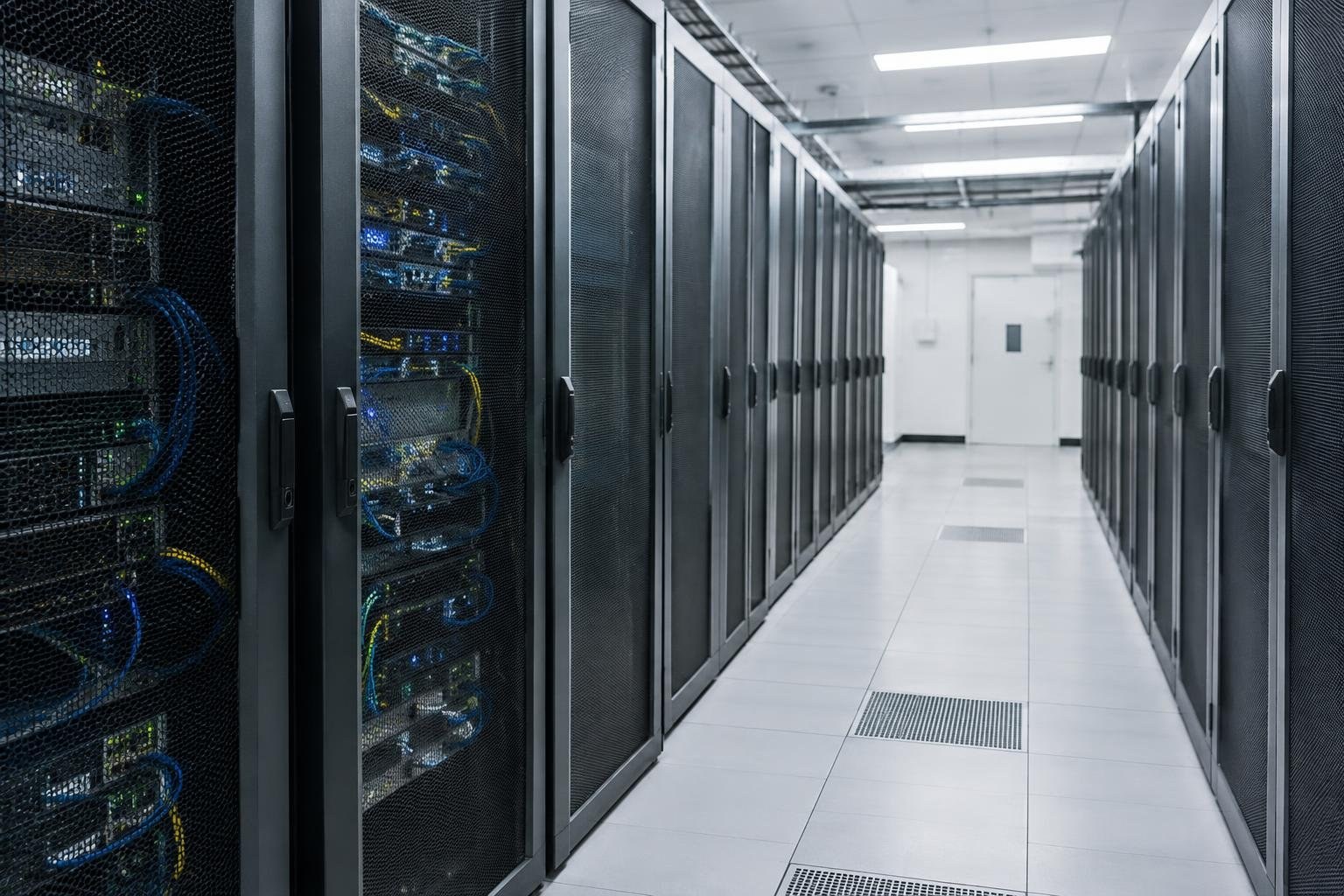
Cyber/Computer Forensics and Counterterrorism Degree Guide
Learn what cyber/computer forensics and counterterrorism programs teach, which credentials and formats may be available, how to compare costs, and what careers the field can connect to.
By David Slack · Staff Writer Assessment.com · Published November 1, 2026 · Last updated November 5, 2026
Cyber/computer forensics and counterterrorism is an interdisciplinary field that combines computer technology, digital evidence analysis, and investigative methods. Students learn ways to identify and analyze digital media and to understand how cyber investigations relate to criminal activity, terrorism, and applicable legal procedures. Programs may cover computer systems and networks, file reconstruction, cryptography, programming, forensic methods, online investigations, and cybercrime. The precise balance differs by school and credential, so the program title alone cannot tell you how technical or investigative the coursework will be. Graduates may pursue technical, investigative, intelligence, security, or records-related work, depending on their education, experience, and employer requirements. If you are a student or parent comparing majors, examine specific course lists and likely job requirements before treating a degree title as a career promise.
Degree & Program Decision Insights
Explore your personal fit, education requirements, career potential and next steps.
01Motivational Fit
Discover whether this program fits you
Explore your preferences against the focus of Cyber/Computer Forensics and Counterterrorism. These prompts are not personal MAPP results.
Subject curiosity. Would you choose to explore “computer boot processes and drives” in depth? Ask for a sample learning activity to test that interest.
Breadth of interest. Consider the place of “jumper setting” in this field. Is this another part you would choose to explore, or mainly a requirement you would tolerate?
Work reality. What would an actual workday connected with Cyber/Computer Forensics and Counterterrorism involve? Investigate the setting and entry requirements separately from your interest in studying the field.
Interest in studying a field can differ from enjoying its related work.
Which part would you want to do repeatedly, and what would you try before deciding?
Discover Your Personal Program Fit
Before investing your time and money in your education, discover how this program aligns with your natural motivations, work preferences and career goals.
Detectives and Criminal InvestigatorsSOC 33-3021 · O*NET 33-3021.00$93,790/year median (May 2025); +0.2% projected change (2025–2035); 7,800 projected openings/year.
Typical occupational entry: high school diploma or equivalent (BLS). BLS lists less than 5 years of related work experience as typical for this occupation; this programme is not a direct promise of entry. BLS lists moderate-term on-the-job training as typical occupational training.
U.S. occupational wages are not guaranteed graduate earnings; OEWS excludes self-employed workers.
Projected openings include replacements as well as growth.
U.S. national estimates. A crosswalk does not establish entry-level eligibility; advanced, management and teaching roles can require further qualifications.
Explore your motivations. Use MAPP as a starting point for reflecting on your interest in “computer boot processes and drives”, then test that interest against a sample learning task.
Examine the work. Compare Computer Occupations, All Other and Detectives and Criminal Investigators on daily work and entry qualifications, as well as pay. Explore Computer Occupations, All Other.
Compare actual providers. Ask for the exact credential, course sequence and assessment methods. Compare how each provider teaches “jumper setting”, its entry criteria and its itemized costs.
Check the evidence before applying. Confirm prerequisites and any recognition or professional requirements for your intended route; ask for applicable rules and published outcome definitions in writing.
Verify the institution’s current offering, admissions requirements and outcomes; a search result does not establish your eligibility.
A student reviewing a forensic evidence workflow at a computer
What Is a Cyber/Computer Forensics and Counterterrorism Degree?
Cyber/computer forensics and counterterrorism is a field of study focused on methods for identifying, searching, seizing, and analyzing digital media, and on conducting cyber investigations involving criminal or terrorist activity. The National Center for Education Statistics lists Cyber/Computer Forensics and Counterterrorism as CIP code 43.0403. A CIP code classifies a field of study; it does not mean every institution uses the same title or curriculum.
Programs may sit at the intersection of computing, security, forensic analysis, and criminal investigation. Related labels include computer forensics, digital forensics, cybercrime, and cybersecurity and digital forensics. Read the course list carefully: a program centered on computer forensics may differ substantially from one focused primarily on network defense or criminal justice.
What Do Students Study?
Expect a combination of technical study and investigative reasoning. A program description for this subject area includes computer boot processes and drives, file access and reconstruction, networks, cryptography, programming, investigative techniques, forensic imagery, web-based investigations, cyberterrorism, and applicable laws and administrative procedures.
That list is a useful guide to possible topics, not a promise that every college teaches all of them. A graduate certificate at the University of Alabama at Birmingham, for example, lists networking and cyber risk management, computer forensics, law evidence and procedure, investigating online crimes, cybercrime and forensics, and elements of forensic science. Ask for the current catalog and course descriptions to see how much time is devoted to hands-on technical work versus law, policy, and investigation.
In practical assignments, students may be asked to reason from digital information, explain how they reached a conclusion, and document work clearly. Where a program includes forensic exercises, ask what tools and lab environments students use and whether projects are individually assessed. Do not assume that an online or classroom course provides access to the same practice opportunities.
Who Is This Program For, and What Are the Entry Requirements?
Programs in this area may suit students who like solving technical problems, working carefully with details, and asking how digital information can support or challenge an investigative explanation. Interest in public safety or security can be relevant, but the field also requires patience with procedures, documentation, and changing technology.
You do not need to arrive as an expert programmer. However, students should be ready to build computer literacy and learn unfamiliar systems. Depending on the curriculum, coursework may involve networks, programming, cryptography, and forensic analysis. Students who prefer fast conclusions may find evidence review demanding because careful work requires checking assumptions and keeping clear records.
Admission rules are institution-specific. A program may require prior coursework or a relevant degree, while another may accept students with different backgrounds. The supplied college pages do not establish a universal GPA, test, essay, interview, or work-experience requirement. Check the admissions page for the exact credential you want and ask whether introductory computer courses are recommended.
For students and parents, a useful fit check is to compare required courses with real interests: Would the student enjoy understanding how systems work, documenting technical findings, and learning investigative rules? Use the Free MAPP Assessment as one input for exploring career and degree options, not as a substitute for reviewing program requirements.
Credential Levels, Online Options, and Time to Complete
Credential options can include certificates, associate and bachelor's degrees, post-bachelor's or graduate certificates, master's degrees, and doctorates. This list describes possible levels in the subject area, not a guarantee that every school offers each one. The NCES classification names the field, while colleges decide what programs to offer and how to title them.
A certificate may provide focused study for someone with prior education or experience; an associate degree may provide a shorter college pathway; bachelor's programs may combine general education with a larger major curriculum; and graduate credentials typically build on prior study. These are broad distinctions, not rules about every program. Ask whether credits can transfer into a later degree and whether an award is designed for entry-level preparation, professional development, or academic progression.
Formats range from campus-based to online or mixed delivery. Towson University describes its computer forensics graduate certificate as available through online and in-person courses. That does not establish that every course can be completed remotely or that another institution has the same arrangement. Check for campus sessions, lab access, proctored assessments, and any required in-person projects.
Completion time depends on the number of required credits, course availability, prior learning or transfer credit, and whether a student studies full-time. UAB lists 21 credit hours for its graduate certificate. Use the program's official degree plan to estimate your own timeline rather than applying one school's credit total to the whole field.
Tuition, Total Cost, and Financial Aid
There is no supported national price figure for this specific field in the supplied sources. Tuition depends on the institution, credential, residency classification, course load, and program fees. Online study is not automatically less expensive once technology, travel for any required campus work, and other charges are included.
Before comparing offers, request a complete cost estimate covering tuition, mandatory fees, books, computer or lab needs, and any program-specific expenses. Ask whether tuition is charged per credit or by term, whether the quoted rate applies to your residency status, and whether fees change when courses are delivered online. Also consider living and commuting costs if attendance requires regular campus visits.
Explore federal and state aid eligibility through official government channels, and ask each college's financial-aid office about grants, scholarships, work-study, payment plans, and employer tuition assistance. Aid eligibility and award amounts vary. Transferable credits or a lower-cost public institution may reduce total expense, but compare course availability and time to completion as well as the listed rate. Do not choose a school using a promotional tuition figure without calculating the full program cost.
Careers, Jobs, and Employment Outlook
A degree can support several directions, but a program title does not guarantee an occupation or salary. Potentially related work includes information security, computer systems, document and records management, web administration, intelligence analysis, and cyber investigation. The day-to-day duties and education requirements differ across employers and job titles.
Career direction
How study may connect
What to verify
Digital-forensics or cyber-investigation support
Forensic procedures, file analysis, online investigations, and evidence-related coursework may be relevant.
Employer selection criteria, experience, background checks, and required technical skills.
Information security analyst
Networking, cyber risk, and systems knowledge may be relevant to security work.
Job-specific experience and whether the role expects broader security training.
Intelligence analyst
Investigative methods and cyber-related knowledge may contribute to analysis work.
Employer and agency qualifications, including any screening requirements.
Document management or records work
Careful handling and interpretation of digital information can be relevant.
Whether the position emphasizes governance, systems administration, or legal records.
Web administrator or systems role
Computer systems and network study can provide related technical foundations.
Required hands-on experience and platform-specific skills.
The program context also identifies possible career connections such as detectives and criminal investigators, police identification and records officers, private investigators, GIS technicians, and IT project managers. Those occupations may require education, experience, or qualifications beyond this field of study. The sources supplied for this guide do not provide comparable current pay or job-growth figures, so salary and outlook should be checked for each exact occupation using current government labor-market data.
Employers may be found across public agencies, private organizations, and technology or security teams, but hiring requirements are not uniform. Review actual job postings in the locations where you may work. The information security analyst career guide and police and detective career guide can help you compare related directions.
Find out which Career or College Major is right for you!
Forensic work depends on more than knowing how to use a tool. Students benefit from practice explaining their process, writing clear technical summaries, organizing project files, and distinguishing observation from interpretation. Ask colleges whether students complete supervised labs, case-based exercises, research, internships, or a capstone. The supplied program pages do not establish that these opportunities are required or available everywhere.
Ways to build experience
Choose class projects that demonstrate careful, repeatable analysis and clear documentation.
Ask faculty about research or lab opportunities that fit the program.
Explore internships or related entry-level work, while checking eligibility and screening requirements.
Participate in relevant student organizations or technical events when available.
Keep a portfolio of permitted, non-sensitive coursework and explain the methods and limits of each project.
Do not include confidential, personal, or unlawfully obtained data in a portfolio. Before pursuing a certification, check whether employers in your intended area actually request it and whether the credential's prerequisites fit your experience.
Graduate School and Further Study
Graduate study may make sense for students seeking advanced technical specialization, research, teaching, or roles that explicitly require a graduate credential. Options may include a focused graduate certificate, master's program, or doctorate, depending on the institution and career goal. The existence of a credential level in a field does not mean it is necessary for all jobs.
One possible step is a computer forensics graduate certificate. UAB lists a 21-credit-hour certificate with courses that include computer forensics, law evidence and procedure, investigating online crimes, cybercrime and forensics, networking and cyber risk management, and elements of forensic science. Compare this focused option with a broader graduate program by looking at course depth, admission prerequisites, credit transfer, and the type of role you want to pursue.
Before applying, review job postings and ask employers or academic advisers whether advanced study is valued for your target work. Consider the added tuition and time alongside the specific skills and opportunities the program offers.
Related Degrees and Alternatives
Related fields can lead toward overlapping work but emphasize different questions. Compare their required courses rather than relying on labels alone.
Cybersecurity: Consider this if your main interest is protecting networks, systems, and information from security risks.
Computer science: Consider this if you want a broader computing foundation, with more emphasis on software, theory, or systems depending on the program.
Information technology: Consider this if you prefer managing and supporting technology systems in organizations.
Criminal justice: Consider this if your primary interest is law enforcement, courts, or the criminal justice system rather than technical evidence analysis.
Information assurance: Consider this if you want to focus on managing security, risk, and protection of information.
Intelligence studies: Consider this if your goal centers on analyzing information for security or public-sector decision-making.
Forensic science: Consider this if you are more interested in scientific evidence methods that may include non-digital evidence.
These are comparison prompts, not claims that every institution offers identical programs or that one major guarantees a particular job. For a student drawn to both technology and investigation, compare the proportion of computing, evidence, law, and policy courses in each plan. Browse Assessment.com's degree guides and use the school's catalog to verify available programs.
Accreditation, Certification, and Licensure
Accreditation and career eligibility are separate issues. Confirm that the institution holds recognized institutional accreditation, and ask whether the specific program has any additional accreditation relevant to your goal. The sources used here do not establish a specialized accreditation that applies to every cyber-forensics program.
Likewise, completing a degree does not automatically confer law-enforcement authority, a professional license, access to restricted work, or eligibility for a particular agency. Requirements can differ by employer, jurisdiction, and position. If you are considering public-sector investigation, ask the agency directly about hiring standards, screening, and any required academy or job training. If a program advertises certification preparation, request the exact credential name and verify its current requirements with the credentialing body.
For each school, check the official catalog, institutional accreditation information, transfer rules, and disclosures about program outcomes. Ask what support is available if a course, technology, or credential requirement changes while you are enrolled.
How to Choose the Right Program
Compare programs using a short list of questions rather than a school's marketing claims. The right fit depends on the student's goals, academic preparation, budget, and preferred learning environment.
Curriculum: Are courses focused on digital evidence, networks, cybersecurity, investigations, law, or a balanced mix?
Practice: What labs, projects, internships, research, or supervised experiences are actually included?
Faculty and facilities: Who teaches the technical and investigative courses, and what learning resources are available?
Format: Are courses online, in person, or mixed? Are campus visits or in-person activities required?
Cost: What is the complete estimated cost through graduation, including fees and required equipment?
Transferability: Will credits apply to a later credential, and what prior learning can the school evaluate?
Outcomes: What completion and career information does the institution publish, and how does it define those measures?
Career preparation: Are career services, employer connections, or internship support available to students in this specific program?
Speak with an adviser and, if possible, a current student. Compare the answers with job postings for roles that interest you. Assessment.com's college-major guidance and MAPP assessment can support exploration, but final decisions should also use official school and employer information.
From Degree to Career: Possible Routes
Possible career development can be viewed as a set of choices, not a guaranteed ladder. For example, a student might pursue an associate degree in cybersecurity and digital forensics, seek an entry-level technical support or security-related position, build experience with systems and evidence-handling practices, and later specialize in forensic analysis or investigation if an employer's requirements and opportunities align.
Another student might complete a bachelor's degree with relevant technical coursework, pursue graduate study or a focused certificate, and seek analytical or security work. A person interested in law enforcement may need to meet separate agency hiring and training requirements. The right sequence depends on prior education, job availability, employer standards, and personal goals. Ask each program what its graduates do, but verify outcomes and job qualifications independently.
Questions to Ask Before Enrolling
Before submitting an application or deposit, discuss these points with the student, admissions staff, and financial-aid office:
What is the institution's current accreditation status, and is any additional program accreditation relevant?
What is the full estimated cost to finish, not just the first term?
Which courses teach digital evidence, networks, forensic methods, investigation, and legal procedures?
Are labs, internships, research, or capstone projects included, optional, or unavailable?
What are the precise admission requirements and recommended prerequisites?
Can courses be completed online, and are any campus visits or in-person activities required?
How do transfer credits apply, and can the credential lead into another program?
What career services and employer connections are available to students in this department?
What job-specific certifications, screening, or licensing requirements should the student investigate?
What grants, scholarships, aid, or employer tuition benefits may be available?
Ask for answers in writing and compare at least two program plans when possible. Families should focus on the student's interests and the concrete learning opportunities, not simply the popularity of a degree label.
Frequently asked questions
What is a cyber/computer forensics and counterterrorism degree?
Cyber/computer forensics and counterterrorism is a field of study focused on identifying, searching, collecting, and analyzing digital media and conducting cyber investigations related to criminal or terrorist activity. Coursework may combine computer systems, forensic methods, investigation, cybersecurity, and legal procedures. Program content varies by institution and credential.
Is cyber/computer forensics hard to study?
It can be challenging because students may need to learn computer systems, networks, forensic procedures, investigative reasoning, and legal rules at the same time. The level of programming and mathematics varies by program. Careful documentation and patient analysis matter as much as technical curiosity. Review course prerequisites and sample syllabi to understand the demands before enrolling.
What jobs can I get with a cyber forensics degree?
Depending on the program and your preparation, possible directions include digital-forensics support, information security, cyber investigations, intelligence analysis, records or document management, and web administration. These are not guaranteed outcomes. Employers may require related experience, additional education, background checks, or other qualifications, particularly for public-sector investigative work.
How much can you make with a cyber forensics degree?
The supplied program and institution information does not provide reliable, comparable salary or employment-outlook figures for these career paths. Pay and demand depend on the specific occupation, employer, location, experience, and credentials. For a useful estimate, identify a precise job title and check current U.S. Bureau of Labor Statistics or O*NET information before making an education decision.
Can I earn a computer forensics credential online?
Some relevant programs offer online study, while other programs combine online and in-person courses. Towson University describes its computer forensics graduate certificate as available through online and in-person courses. Confirm whether a specific program requires campus attendance, supervised labs, or other in-person work before enrolling.
Does computer forensics require math or programming?
There is no single math requirement established for every program in this field. Students should expect technical problem-solving and may encounter programming, networks, or cryptography. The level of math and coding depends on the curriculum. Ask each institution about prerequisites and review the required courses rather than assuming all programs have the same technical emphasis.
Do you need a graduate degree for digital forensics?
Not necessarily. The field includes certificates, associate and bachelor's degrees, and graduate credentials. Some technical roles may consider a relevant degree or experience, while advanced research, teaching, or specialized positions may require further education. Check job postings and the requirements of the employers and agencies you are considering.
What certifications help in digital forensics?
The sources available for this guide do not establish one certification that is required across the field. Credentials may be useful when they match a target employer or technical specialty, but they do not replace a degree, relevant experience, or job-specific requirements. Review current job postings and ask program advisers which credentials align with the curriculum.
How does computer forensics compare with cybersecurity?
Computer forensics focuses more directly on locating, preserving, and interpreting digital evidence. Cybersecurity programs generally emphasize protecting systems and reducing security risks, though the subjects can overlap. Compare course requirements: a forensics curriculum may include evidence, procedure, and online-crime investigation, while a cybersecurity program may place more weight on network defense and risk management.
People Also Ask
What is CIP code 43.0403?
CIP code 43.0403 identifies the field Cyber/Computer Forensics and Counterterrorism in the National Center for Education Statistics program classification. A program's official title and course content may differ by institution, so use the CIP code as a subject classification rather than proof that every program has the same curriculum.
What do you learn in a computer forensics program?
A computer forensics program may teach how to identify, collect, search, and analyze digital media, alongside investigation and legal procedures. Course examples from one graduate certificate include computer forensics, law evidence and procedure, investigating online crimes, cybercrime and forensics, networking, cyber risk management, and forensic science. Other programs will vary.
How long does a computer forensics program take?
There is no universal completion time for this field because certificates and degrees differ in credit requirements, course schedules, and prior-credit policies. For a concrete example, the University of Alabama at Birmingham lists a 21-credit-hour computer forensics graduate certificate. Verify the current plan and expected time directly with each institution.
Are computer forensics degrees available at different levels?
Program availability varies. The supplied institutional examples include an associate-level cybersecurity and digital forensics program and a graduate certificate in computer forensics. A graduate certificate is offered with online and in-person courses at Towson University. Confirm current degree levels, delivery modes, and admissions details on official college pages.
How do I choose a digital forensics program?
Compare a program's digital-evidence content, network and systems instruction, investigative and legal courses, lab or project work, delivery format, total cost, transfer policies, and links to employers or internships. Then check job postings for roles you want and see whether the curriculum builds the skills and qualifications they request.
Does a digital forensics degree qualify you to work in law enforcement?
Program completion and professional eligibility are different questions. The sources used here do not establish a single licensing or certification rule for digital forensic roles. Investigative positions may have employer-specific selection criteria. Confirm requirements with the relevant employer, public agency, or licensing authority before assuming a credential qualifies you for a role.
Cyber/computer forensics and counterterrorism can suit students who want to examine digital evidence, understand cyber investigations, and connect technical findings with legal or security questions. The field includes several credential levels, but program names and curricula vary, and a degree alone does not guarantee a particular job or qualify someone for every investigative role. Compare course content, hands-on learning, total cost, and the requirements of jobs you may want. Before choosing a degree, consider whether the work matches your interests and strengths. Take the Free MAPP Assessment to explore career and degree options with the MAPP career assessment.
Want to see your options? Try our comprehensive Degree, Program & College Search tool
We use cookies to offer you a better browsing experience, analyze site traffic and personalize content.
Read about how we use cookies and how you can control them in our
Privacy Policy.
If you continue to use this site, you consent to our use of cookies.
×
Exciting News!
Be one of the first to Beta Test the new AI-Powered Assessment.com Platform.