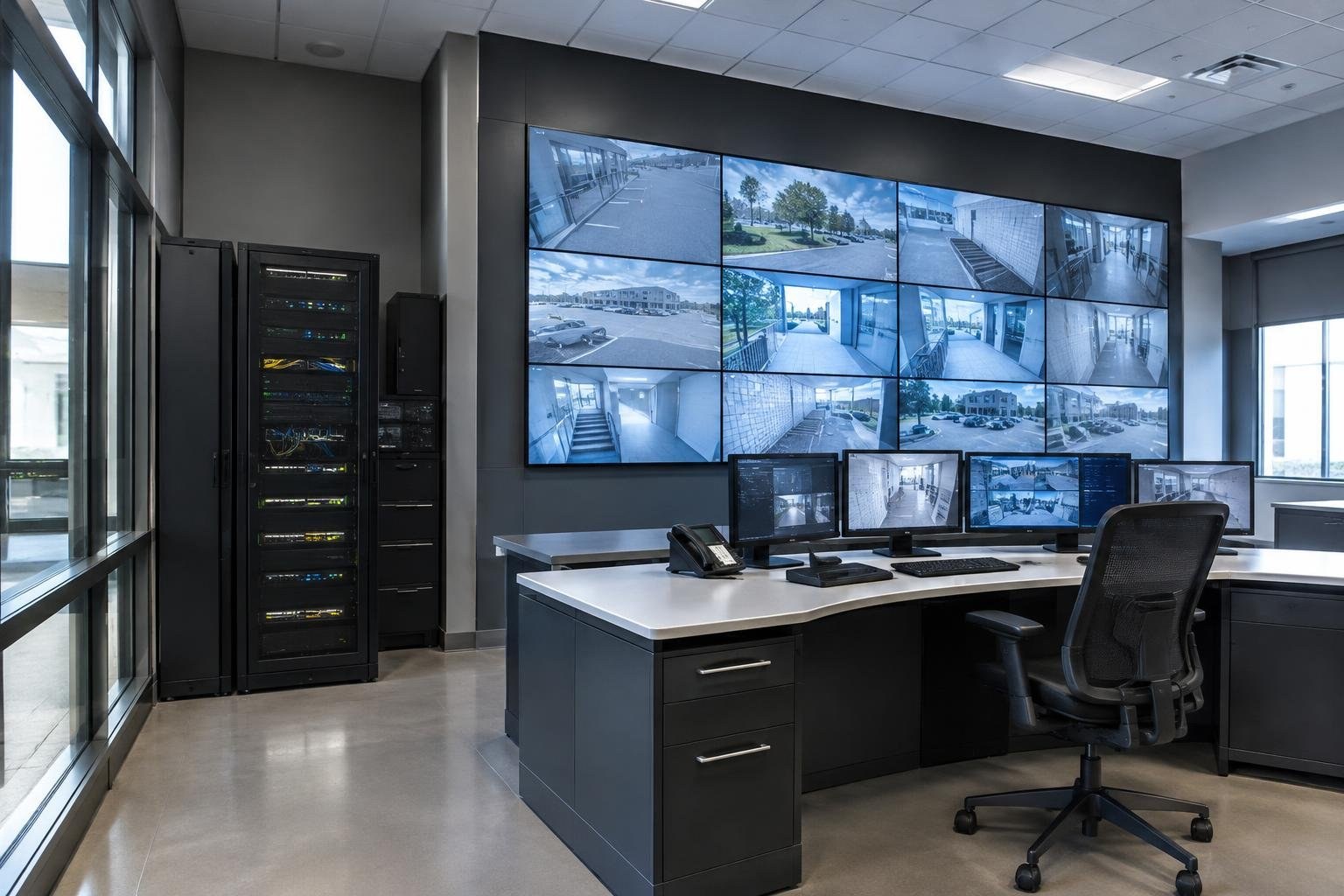
Security Science and Technology Degree Guide: Programs, Courses and Careers
Security Science and Technology programs examine how science and technology relate to security. Learn about program focus, courses, admissions, costs, formats, and possible career directions before choosing a college pathway.
By David Slack · Staff Writer Assessment.com · Published October 26, 2026 · Last updated November 5, 2026
Security Science and Technology is a broad area of study about how science and technology are applied to security. Depending on the program, students may focus on information and systems security, or examine how emerging technologies affect security policy and decision-making. The title alone does not tell you which approach a college teaches. Programs can lead to certificates or degrees at different levels, but availability, admission rules, and course requirements depend on each institution. Some options suit students building technical skills; others are designed for learners interested in policy, public-sector issues, or the relationship between science and security. Compare the actual courses and prerequisites before treating two similarly named programs as equivalent. Not sure whether Security Science and Technology fits you? Take the Free MAPP Career Assessment to see how your motivations, interests, and natural preferences align with this degree and the careers it can lead to.
Degree & Program Decision Insights
Explore your personal fit, education requirements, career potential and next steps.
01Motivational Fit
Discover whether this program fits you
Explore your preferences against the focus of Security Science and Technology, General. These prompts are not personal MAPP results.
Subject curiosity. Would you choose to explore “the general application of science and technology to security” in depth? Ask for a sample learning activity to test that interest.
Choosing a learning environment. Compare actual Security Science and Technology, General offerings. Would their reading, projects or practical work suit how you prefer to learn? Confirm the format rather than assuming one from the field name.
Work reality. Related work can involve this task: “Assign security personnel to posts or patrols.” Would you want that activity to be a regular responsibility?
Interest in studying a field can differ from enjoying its related work.
Which part would you want to do repeatedly, and what would you try before deciding?
Discover Your Personal Program Fit
Before investing your time and money in your education, discover how this program aligns with your natural motivations, work preferences and career goals.
Explore these official instructional-field associations. They describe possible occupational routes, not measured outcomes of this program.
First-Line Supervisors of Security WorkersSOC 33-1091 · O*NET 33-1091.00$55,940/year median (May 2025); +3.7% projected change (2025–2035); 6,800 projected openings/year.
Typical occupational entry: high school diploma or equivalent (BLS). BLS lists less than 5 years of related work experience as typical for this occupation; this programme is not a direct promise of entry.
First-Line Supervisors of Police and DetectivesSOC 33-1012 · O*NET 33-1012.00$106,040/year median (May 2025); +3.3% projected change (2025–2035); 10,600 projected openings/year.
Typical occupational entry: high school diploma or equivalent (BLS). BLS lists less than 5 years of related work experience as typical for this occupation; this programme is not a direct promise of entry. BLS lists moderate-term on-the-job training as typical occupational training.
U.S. occupational wages are not guaranteed graduate earnings; OEWS excludes self-employed workers.
Projected openings include replacements as well as growth.
U.S. national estimates. A crosswalk does not establish entry-level eligibility; advanced, management and teaching roles can require further qualifications.
Compare the actual offering and credential before committing your time or money.
Request the itemized fees, materials and equipment associated with “the general application of science and technology to security”; confirm what tuition includes.
Compare the full attendance budget, course availability and time away from paid work, rather than tuition alone.
No institution- and credential-matched cost, debt or graduate-earnings amount is reported here; occupational pay is not program ROI.
Financial aid depends on the school, program and student’s eligibility.
Explore your motivations. Use MAPP as a starting point for reflecting on your interest in “the general application of science and technology to security”, then test that interest against a sample learning task.
Examine the work. Compare First-Line Supervisors of Security Workers and First-Line Supervisors of Police and Detectives on daily work and entry qualifications, as well as pay.
Compare actual providers. Ask for the exact credential, course sequence and assessment methods. Compare how each provider teaches “Security Science and Technology, General”, its entry criteria and its itemized costs.
Check the evidence before applying. Confirm prerequisites and any recognition or professional requirements for your intended route; ask for applicable rules and published outcome definitions in writing.
Verify the institution’s current offering, admissions requirements and outcomes; a search result does not establish your eligibility.
College student comparing technical and policy-focused security program materials
What Is Security Science and Technology?
Security Science and Technology is a field of study concerned with the general application of science and technology to security. The label covers programs with distinct academic approaches. A technical program may focus on information or systems security; a policy-oriented program may examine the security effects of particular technologies and the role of technical knowledge in policymaking.
These are not automatically interchangeable with criminal justice, law enforcement, or computer science degrees. Criminal justice programs generally center on justice systems and public safety; computing programs center on computing knowledge and practice. A security science program may overlap with either, but its exact balance depends on the curriculum.
Program names also vary. Related offerings may use terms such as information security, systems security, security studies, or science, technology, and security. The Classification of Instructional Programs code associated with this topic is 43.0401, but a field classification does not confirm that a specific school offers every credential level or specialization.
What Do You Study in a Security Science and Technology Program?
There is no universal course sequence for Security Science and Technology. Review the program’s official catalog, because the difference between technical training and policy analysis can change what students learn and what preparation they need.
Technical and information-security study
Some programs are built around information or network security. Course entry may expect programming familiarity. The University of Pittsburgh’s Information and Network Security graduate certificate lists a structured programming language course using Java, Python, C# or C++ as a requirement and recommends an intermediate programming course. That is a program-specific example, not a universal rule for the field.
Science, technology, and security policy
Another model connects technical subjects with security policy. George Mason University describes its graduate certificate as an introduction to the intersection of science and security, including chemical, biological, radiological, and nuclear weapons technology, proliferation, technical countermeasures, and science and technology in policymaking.
When comparing syllabi, identify the balance of technical practice, policy, research, and writing. Ask whether coursework includes applied projects, a capstone, or other experiential work; do not assume these features exist unless the school confirms them.
Skills You May Develop
Students may develop different skills depending on the program’s orientation. A technical pathway that requires programming can build on students’ ability to read and write code, reason through technical problems, and communicate about information or network security. A policy-focused pathway can develop the ability to interpret technical issues, evaluate their security implications, and explain how technical evidence relates to decisions.
Across either approach, useful habits include careful reading, clear writing, research, attention to detail, and explaining complex ideas to people with different backgrounds. Ask faculty or advisers which skills are assessed through assignments and projects, and look at sample course descriptions rather than relying on a program title.
For career planning, connect each skill to a specific job requirement. A technical course is not proof of professional readiness by itself, and policy coursework does not guarantee access to a particular public-sector role. Employers may set their own education, experience, and eligibility standards.
Who Is This Program For? Admissions and Preparation
This field may suit students who are curious about how technical systems, scientific knowledge, and security decisions interact. Some students are drawn to coding and system-oriented problems; others prefer examining policy questions, weighing evidence, and communicating complex topics. Neither style is required across every program.
Entry expectations vary sharply. One undergraduate information-security certificate states that it is open to students with an associate degree or professionals with significant work experience. A technical graduate certificate may expect prior programming, while a student entering a graduate cybersecurity certificate without the required background may need substantial prerequisite coursework. Mississippi College, for example, lists 26 hours of computer science prerequisites for students with a bachelor’s degree but without the specified background for its graduate path.
Before applying, ask whether your academic and work background meets the formal prerequisites, whether prerequisite courses add time or cost, and whether the subject matter matches the way you like to learn. If your interests are still unclear, Assessment.com’s MAPP career assessment can be one step in exploring career and degree options.
Credential Levels, Format, and Time to Completion
Certificate, associate, bachelor’s, post-bachelor’s certificate, graduate certificate, master’s, and doctoral credentials may appear in descriptions of the broad field. That list describes possible credential levels across a subject area, not a promise that one institution offers all of them. Confirm the exact credential from the school.
Completion time depends on credential, course load, prior credits, prerequisites, and whether classes are offered in a sequence. A certificate can be a shorter focused option than a degree, but there is no single reliable timeline for every Security Science and Technology program. Ask the institution for the credit total and a realistic schedule for full-time and part-time students.
Online, hybrid, and campus formats also vary. Verify whether all required classes are remote, whether any campus attendance or in-person component is required, and whether online students can access advising, technical support, and any experiential requirements. Do not assume a program is fully online because some courses are delivered remotely.
Tuition, Total Cost, and Financial Aid
There is no responsible single price for this field. Tuition depends on the institution, credential, residency, course load, and delivery format. Required fees, technology, books, and prerequisite coursework can change the total. Request a program-specific estimate that includes the full sequence, not just the cost of one course.
Compare the net cost after grants, scholarships, and other aid with the amount you would need to borrow or pay out of pocket. Ask the financial aid office about eligibility, deadlines, satisfactory academic progress rules, and whether aid applies to certificate or nondegree study. Some programs permit students to take classes individually through continuing education, but the enrollment route and credit treatment need to be confirmed with the institution.
For a fair comparison, place programs with the same credential level side by side. A short certificate and a full degree do not provide equivalent coursework or credentials. Include costs for required prerequisites and consider whether previously earned credits can transfer before deciding which option is more affordable.
Careers, Jobs, and Employment Outlook
Security Science and Technology can connect with technical, public-sector, policy, supervisory, or academic interests, but a degree title does not guarantee a job or qualify a graduate for every role. The supplied career context identifies postsecondary criminal justice and law enforcement teaching and first-line police and detective supervision as possible related paths. These are not necessarily entry-level outcomes: teaching roles may call for advanced study, and supervisory jobs ordinarily depend on relevant experience and employer requirements.
Information-security study may also be relevant to exploring information security analyst work, but a program’s actual curriculum and an employer’s qualifications determine fit. Compare course content with current job descriptions in the place where you expect to work. Check education, experience, background, and other stated eligibility requirements directly with employers or the relevant agency.
Salary and employment outlook depend on the occupation, location, experience, and qualifications. A broad major name cannot supply a reliable salary estimate. Research the specific job titles you are considering and distinguish entry roles from longer-term pathways.
Find out which Career or College Major is right for you!
Do not treat college admission or degree completion as equivalent to a professional license, certification, security clearance, or employer qualification. Requirements are specific to the occupation, agency, and sometimes the state. The programs described here illustrate different academic offerings; they do not establish a single license or certification required for everyone in the field.
Ask the department whether the program prepares students for a named credential and whether that preparation is formally recognized by the credentialing body. For government or law-enforcement work, confirm hiring and eligibility criteria with the relevant employer or agency rather than relying on general statements about the major.
Accreditation is another separate question. Verify the institution’s accreditation through the school and an appropriate official source, and ask whether any program-specific accreditation is relevant to your intended career. Do not infer accreditation from a program’s subject matter or its location in a university department.
How to Choose the Right Program
To choose a program, compare its academic focus with your goal. A technology-heavy certificate may require computer science preparation; a science-and-security policy certificate may be more relevant to students interested in the relationship between technical subjects and public decisions. Read required courses and prerequisites, not only the program summary.
Curriculum: What subjects are required, and how much is technical versus policy-focused?
Entry requirements: Do you meet them now, or would prerequisite classes add time and tuition?
Credential and format: Is the award a certificate or degree, and are courses available in the format and schedule you need?
Cost and aid: What is the total cost after fees, and which forms of financial aid apply?
Outcomes: What roles do graduates pursue, and what additional qualifications do those roles require?
Transfer and further study: Can coursework count toward another credential? Get any credit agreement in writing.
Ask the department for current catalogs, sample schedules, and details on applied learning. The accelerated master’s pathway at Arizona State University illustrates that eligibility may be program-specific and that students typically seek approval during the junior year of a bachelor’s program. Do not assume accelerated admission is automatic.
Related Degrees and Alternatives
Potential alternatives depend on which part of the field interests you most. Consider comparing the following areas, then inspect actual degree requirements at colleges you might attend.
Cybersecurity or information security: Consider this if your primary interest is protecting information systems and developing technical security knowledge.
Computer science: Consider this if you want a broader computing foundation and prefer programming and software-focused study.
Criminal justice: Consider this if your main interest is justice institutions, policing, courts, or corrections rather than the technology-policy intersection.
Security studies: Consider this if you are more interested in security issues, institutions, and policy analysis.
Public policy: Consider this if you want a wider policy framework and security is one possible topic among several.
Information systems: Consider this if you want to study organizational use of technology and information, with security as a possible focus.
Course names differ across schools, so compare required subjects, technical prerequisites, career preparation, and the level of credential. A graduate certificate may complement previous education or experience; it should not be assumed to replace a degree or satisfy all requirements for a particular occupation.
Ways to Make the Education More Affordable
Affordability is more than tuition per credit. Calculate the entire program cost, including prerequisite classes, required fees, books, equipment or technology, and any travel or campus attendance. Then compare that amount with available grants, scholarships, employer education benefits, and any transfer credits the school will accept.
Ask whether a certificate can be completed course by course, whether individual classes count toward a future credential, and what happens if you pause enrollment. UMass Amherst’s program information notes that students may take classes individually through Continuing and Professional Education; this is an example of an institution-specific option, not a guarantee that other schools permit the same approach.
Families should also discuss how much borrowing is manageable and whether the student can keep working while studying. A lower-cost program is not automatically the best value if its courses do not match the intended pathway; a more expensive option is not automatically worthwhile without clear educational reasons.
From Degree to Career: Next Steps and Fit
Security Science and Technology may connect to different professional paths, but progress is not automatic. A student interested in a technical direction might map a route from relevant coursework to an entry-level information-security position, then build experience and pursue a specialization that fits employer needs. A student drawn to science and security policy might build research and communication experience before considering policy or analytical work. These are planning examples, not promised outcomes.
Teaching criminal justice or law enforcement at the postsecondary level is a longer-term possibility to investigate, including the education and subject expertise employers expect. A supervisory police or detective role is also a progression to research, not a first job to assume from a degree. Confirm actual requirements through job postings and the employer.
Before enrolling, take these questions to an admissions adviser or department chair:
What exact credential will I earn, and which courses are required?
Will I need programming or other prerequisites before starting?
What is the total cost, and what aid can I use?
Which classes are online, hybrid, or in person?
Can credits transfer or apply to further study?
What are graduates’ actual next steps, and what extra qualifications do employers request?
How can I test my interest through an introductory course, student project, or informational interview?
Assessment.com’s college major guidance and career resources can help organize that exploration. Use the MAPP assessment as one input alongside program research and conversations with advisers.
Frequently asked questions
What is a Security Science and Technology degree?
Security Science and Technology is an interdisciplinary field focused on applying science and technology to security. Depending on the program, study may include technical subjects such as information or systems security, or policy-oriented topics such as security implications of chemical, biological, radiological, and nuclear technologies. Program names can be similar while their course content and intended students differ, so review the catalog and prerequisites carefully.
What do you study in Security Science and Technology?
There is no single standard course list for this broad field. A science-and-security policy certificate may examine CBRN weapons technology, proliferation, technical countermeasures, and the use of science and technology in policymaking. Information-security certificates may require prior programming knowledge. Check each program’s current catalog to see whether its curriculum matches your interests and preparation.
Is Security Science and Technology hard?
Difficulty depends on the program’s focus and your background. Technical security courses may require programming preparation, while policy-oriented study may emphasize reading, research, and analysis of complex issues. One university’s security certificate specifies structured programming in a language such as Java, Python, C# or C++ as a requirement, illustrating why prospective students should inspect prerequisites before applying.
Can I earn a Security Science and Technology degree online?
Some colleges offer security-related study as a certificate, while broader credentials may be available across the field at different institutions. The listed credential level is not a guarantee that a particular college offers every option. Confirm the exact degree, admission requirements, delivery method, and expected completion time with the institution before making plans.
How much does a Security Science and Technology program cost?
Costs vary by institution, credential, enrollment pace, residency status, and whether a program requires additional technology or course fees. Compare each school’s published tuition and required fees for the specific program and ask about financial aid, transfer credits, and employer tuition support. Do not compare a short certificate’s tuition with a degree’s total cost without accounting for the different credentials and requirements.
What jobs can I get with a Security Science and Technology degree?
Potential directions depend on the curriculum and on additional qualifications employers require. The field may connect with security analysis, information security, public-sector security work, or teaching and supervisory paths after relevant experience or advanced study. A degree does not by itself qualify every graduate for a regulated, government, or academic role; review actual job announcements and eligibility requirements.
What is the difference between a security certificate and a degree?
A certificate may add focused knowledge or help a student explore a subject, while an associate or bachelor’s degree represents a broader undergraduate credential. Graduate certificates and advanced degrees generally serve different academic or professional purposes and may expect previous college study or technical preparation. Compare the learning outcomes and entry requirements rather than choosing only by credential name.
Is a Security Science and Technology degree worth it?
It can be worthwhile when the program’s coursework supports a defined education or career goal and the total cost is manageable. Because program content varies widely, assess whether it teaches the skills you need, whether employers or graduate programs you are considering recognize the credential, and whether you need further training or experience. Do not assume a particular salary or job outcome from the degree title alone.
People Also Ask
Is Security Science and Technology the same as cybersecurity?
No. Security Science and Technology is a broad program label. Individual programs may emphasize information security, systems security, or the relationship between science and security policy. Compare the curriculum and prerequisites to find the actual focus.
Do security science programs require programming?
It varies. Technical programs may require prior programming study. One information and network security certificate requires a structured programming language course and recommends intermediate programming. Other security programs may have different preparation expectations.
Can I study Security Science and Technology as a certificate?
Not always. Program titles and credential levels differ by college. The broad field includes certificates and degrees, but an institution may offer only one or a few options. Confirm the precise credential and availability directly in the college’s catalog.
What are the entry requirements for a security certificate?
Requirements differ by program. For example, one undergraduate certificate is open to students with an associate degree or professionals with significant work experience. Other technical programs may require programming or additional prerequisites.
Can I take security courses without enrolling in a full degree?
Some information-security coursework can be taken individually through continuing and professional education at one institution, while other programs require formal admission. Ask whether nondegree enrollment is available and whether credits can later apply to a credential.
What careers are related to Security Science and Technology?
Potential routes depend on what you study and what employers require. Technical coursework may support exploration of information security roles, while policy-focused programs examine science and security decision-making. Experience and additional qualifications may be needed for particular positions.
How do I compare Security Science and Technology programs?
Start with the published catalog and confirm prerequisites, course sequence, program format, transfer rules, and all tuition and fees. Ask whether the curriculum includes applied projects or research and whether the credential supports the job or further study you have in mind.
A Security Science and Technology program can suit students who want to understand how technical knowledge intersects with security, public policy, and organizational protection. The title covers different approaches, from computer-focused security to science and security policy, so the best choice depends on the curriculum, your prior preparation, and the work you hope to do afterward. Compare actual courses, prerequisites, total cost, delivery format, and career requirements before enrolling. If you are still weighing this field against other options, use Assessment.com’s career and education resources to explore how your interests connect with possible paths.
Want to see your options? Try our comprehensive Degree, Program & College Search tool
We use cookies to offer you a better browsing experience, analyze site traffic and personalize content.
Read about how we use cookies and how you can control them in our
Privacy Policy.
If you continue to use this site, you consent to our use of cookies.
×
Exciting News!
Be one of the first to Beta Test the new AI-Powered Assessment.com Platform.