Forensic Science and Technology: Compare Programs and Career Paths
Learn how to compare forensic science programs by curriculum, credential, hands-on learning, transfer options, cost, and the work you hope to pursue.
By Tome Fierre · Staff Writer Assessment.com · Published October 26, 2026 · Last updated November 5, 2026
A program called forensic science may be built around laboratory science, crime-scene technology, or a particular credential pathway. Those differences matter more than the name on a brochure. Prospective students and families can make a better comparison by starting with the work they want to explore, then checking whether a college’s required courses, practical learning, transfer options, and costs fit that plan. The examples here illustrate individual programs, not a universal template.
Degree & Program Decision Insights
Explore your personal fit, education requirements, career potential and next steps.
01Motivational Fit
Discover whether this program fits you
Explore your preferences against the focus of Forensic Science and Technology. These prompts are not personal MAPP results.
Understanding people and societies. Would you enjoy investigating anthropology, comparing perspectives rather than expecting a single simple explanation?
Breadth of interest. Consider the place of “forensic medicine” in this field. Is this another part you would choose to explore, or mainly a requirement you would tolerate?
Work reality. Related work can involve this task: “Measure and sketch crime scenes to document evidence.” Would you want that activity to be a regular responsibility?
Interest in studying a field can differ from enjoying its related work.
Which part would you want to do repeatedly, and what would you try before deciding?
Discover Your Personal Program Fit
Before investing your time and money in your education, discover how this program aligns with your natural motivations, work preferences and career goals.
U.S. occupational wages are not guaranteed graduate earnings; OEWS excludes self-employed workers.
Projected openings include replacements as well as growth.
U.S. national estimates. A crosswalk does not establish entry-level eligibility; advanced, management and teaching roles can require further qualifications.
Compare the focus and route of these distinct instructional fields; their credentials and admission requirements are not interchangeable.
Forensic ChemistryCIP 40.0510. Compare its emphasis on analytical, inorganic, organic, and physical chemistry and biochemistry with this program’s focus.
Forensic AnthropologyCIP 45.0205. Compare its emphasis on biological anthropology theory and crime scene investigation with this program’s focus.
Forensic PsychologyCIP 42.2812. Compare its emphasis on the epidemiology of mental/behavioral disorders and risk factors for violence and criminality with this program’s focus.
Explore your motivations. Use MAPP as a starting point for reflecting on your interest in “forensic medicine”, then test that interest against a sample learning task.
Examine the work. Compare Forensic Science Technicians and Life, Physical, and Social Science Technicians, All Other on daily work and entry qualifications, as well as pay. Explore Forensic Science Technicians.
Compare actual providers. Ask for the exact credential, course sequence and assessment methods. Compare how each provider teaches “forensic dentistry”, its entry criteria and its itemized costs.
Check the evidence before applying. Confirm prerequisites and any recognition or professional requirements for your intended route; ask for applicable rules and published outcome definitions in writing.
Verify the institution’s current offering, admissions requirements and outcomes; a search result does not establish your eligibility.
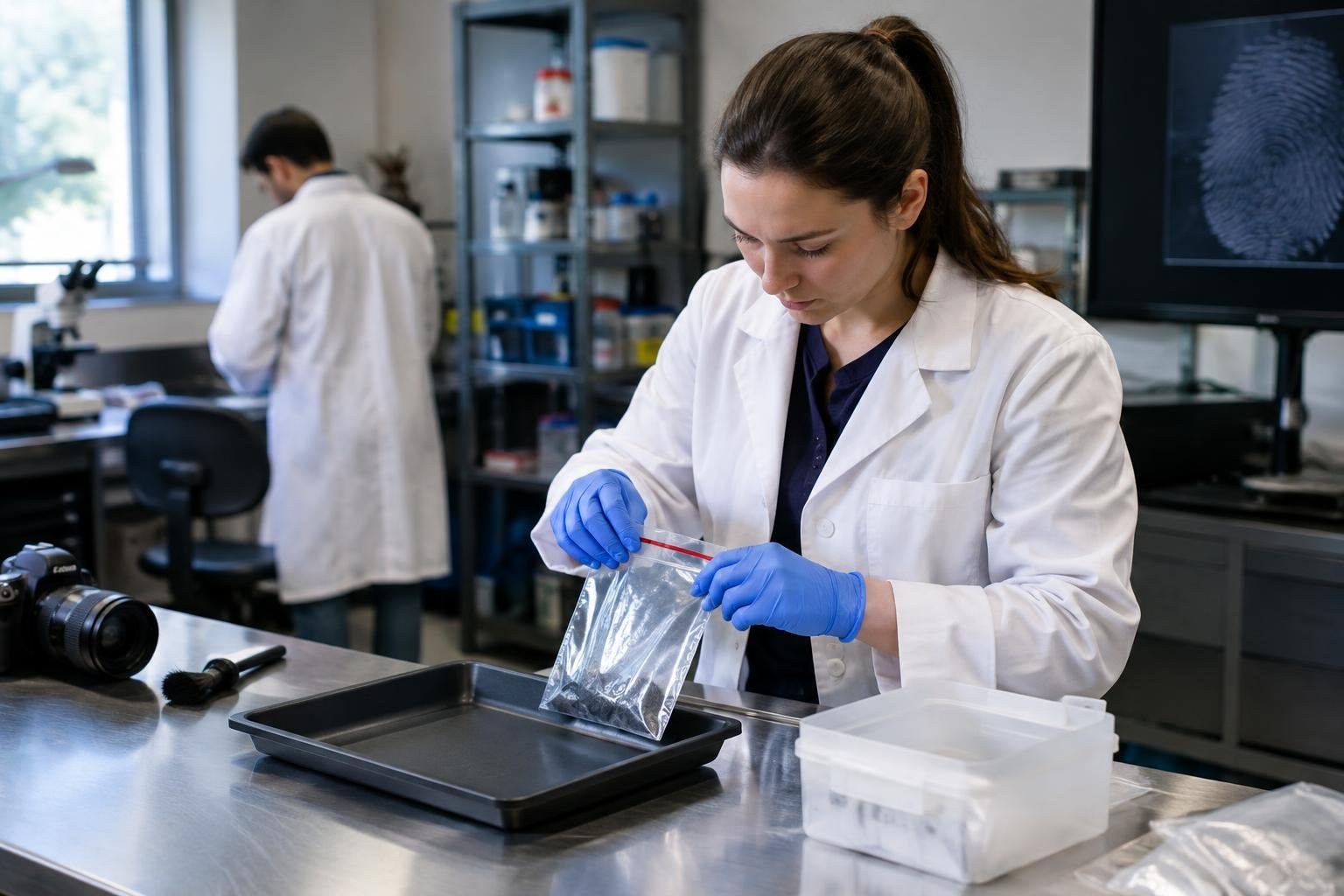
A college forensic science teaching lab with a student using careful evidence-handling procedures
Start With the Program, Not the Degree Label
Think of “forensic science” as a subject label, not a standardized degree. The federal Classification of Instructional Programs assigns Forensic Science and Technology code 43.0406, and Virginia’s community-college directory uses that classification. Neither fact means that colleges using the label teach the same material or award the same credential.
To compare programs, collect three items from each school: its credential name, the required course list, and a description of practical learning. Then ask what the credential is intended to prepare students to do. Virginia’s directory can help you recognize how one public college system groups the subject; the institution’s own catalog and program page should guide your decision.
For broader academic exploration, use Assessment.com’s degree resources alongside the college descriptions.
Read the Course Plan as a Map of the Program
Course lists are the clearest way to see whether a program leans toward foundational science, applied forensic technology, or a combination. The University of North Texas describes extensive biology and chemistry laboratory work in its undergraduate forensic science pathway, regardless of core track. That is useful as a comparison point, not a rule that every program follows.
Read the plan course by course. Separate required classes from electives, note which science courses include labs, and look for the topics that matter to you. The field description covers a wide range, including forensic laboratory technology, DNA and blood-pattern analysis, crime-scene photography, fingerprint technology, document analysis, applicable law, and professional standards. A program’s title alone does not establish that it covers each area.
Ask the department what students actually do in practical components. Alfred State, for example, describes hands-on learning in its Forensic Science Technology program. Compare those details with the experience and curriculum you are seeking.
Test Your Interest Against the Work and Coursework
Instead of asking whether you are the “right type” of person for forensic science, test your interest against the work involved. Would you want to study biology or chemistry? Do you enjoy careful observation and explaining how you reached a conclusion? Would a program with substantial lab work hold your interest? UNT’s undergraduate example includes extensive biology and chemistry labs, while the field description spans laboratory and investigative subjects. Those examples show why it is worth reviewing the actual academic work before committing.
Also separate what attracts you to the subject from what a particular job requires. A course of study does not establish that a graduate qualifies for every position, and one college’s preparation is not a promise of a specific outcome. Ask faculty or advisors about the program’s ordinary coursework and practical components, not only its broad career language.
Assessment.com’s MAPP assessment can support reflection on interests and preferences. Use it as one input alongside course plans and career research, not as a substitute for checking program requirements.
Match the Credential to Your Next Step
Choose a credential by the next step it supports. Certificates, associate degrees, bachelor’s degrees, and graduate credentials are not interchangeable, and the field label does not tell you which choices a school currently offers. Check admissions prerequisites, the catalog year, required courses, and the college’s stated purpose for each credential.
College examples illustrate different designs. St. Petersburg College describes its Crime Scene Technology Certificate as part of an Associate in Science in Public Safety pathway that transfers to its bachelor’s degree in Public Safety Administration. Green River College describes its Forensic Technology associate degree as potentially transferable to four-year institutions. Those arrangements are specific to the institutions; they do not establish transfer acceptance elsewhere.
Before enrolling, request a course-by-course review from the receiving college if transfer is part of your plan. Ask for a term-by-term schedule, whether required courses are offered on a workable sequence, and whether the credential can stand alone or is designed as a stage in a larger pathway.
Check What the Study Format Requires in Practice
Format labels such as online, hybrid, and campus-based do not tell you how students complete a program’s practical work. Ask the institution to identify every activity that requires physical attendance, including laboratories or other practical components, and where those activities take place. Find out whether participation is required for the credential you want.
Then test the format against your own constraints: travel time, work or family schedule, access to equipment, and the dates when required activities are offered. Ask how students receive advising and contact instructors. These are concrete questions that can reveal a mismatch before an application or enrollment decision.
Compare learning activities with the curriculum and employer requirements you have identified. An online label alone does not show whether a program fits your goal, just as a campus label does not establish what a student will learn. Check the current details with the college. Assessment.com’s education resources offer a place to continue exploring academic choices.
Build a Comparable Cost Estimate
There is no single cost that can be assigned to a forensic science degree from the available college examples. Your total depends on the institution, credential, course plan, enrollment pace, and any practical learning arrangements that affect materials or travel. A tuition figure on its own may not be comparable with another school’s full estimate.
Ask each college for a written cost estimate based on your likely course sequence. Have it distinguish tuition, fees, required materials, and other costs the institution identifies. If you expect to transfer, request confirmation of which credits may count and ask how that changes the number of courses you still need.
When reviewing financial aid, compare offers using the same enrollment plan and ask the college’s aid office to explain any conditions attached to aid for which you may qualify. A pathway such as St. Petersburg College’s certificate within a public-safety degree is a structural example, not a calculation of your personal cost. Confirm current prices and requirements directly with the school.
Research Specific Roles Before Choosing a Program
Use job titles and employer requirements, not the phrase “forensic science jobs,” to evaluate career fit. The field may connect with forensic technology, crime-scene work, or laboratory-oriented study and employment, but the supplied program examples do not establish that one credential qualifies someone for every role.
Choose a few current postings in places where you might work. Record the education, coursework, and experience each employer requests. Compare those details with the required courses and practical learning at each college. If a posting asks for a particular science background, ask the program whether its curriculum includes the preparation you need. Verify requirements with the employer rather than inferring them from a school’s general description.
Green River College says its associate program is designed to prepare students for forensic technology and describes limited immediate crime-scene employment or continued university study as possible directions. That is guidance about one program, not a guarantee. Explore Assessment.com’s forensic science technicians career page as one occupation to investigate, then compare it with other roles you identify.
Verify Accreditation and Job-Specific Requirements Separately
Do not treat accreditation, professional certification, and licensure as synonyms. A college credential by itself does not show that a graduate holds a separate professional certification or meets a government licensing rule. The supplied examples do not establish a single authorization requirement for all forensic-related positions.
Start with the exact job you are considering. Ask employers or the responsible official authority whether a qualification is required, preferred, or not requested. Separately, check the institution’s accreditation information and ask which entity granted the status and which credential it applies to.
Finally, review how a program addresses professional standards, ethics, and applicable law. Verify claims with the institution and the body responsible for any job requirement before relying on them.
Decide Whether Advanced Study Adds Value
Consider graduate study only after identifying what it would add to your plan. Compare a target position’s stated education requirements with the time, cost, prerequisites, and course content of another credential. If you are already pursuing a graduate degree, ask whether a forensic certificate complements that study or repeats material you have covered.
Institutional examples differ. Iowa State’s archived 2024–2025 catalog describes its forensic sciences graduate certificate as complementing study toward another graduate degree. Oklahoma State describes graduate certificates made up of four courses totaling 12 credit hours and notes further advanced study as one possible use. These descriptions are school-specific; they do not define a common certificate structure or establish current availability.
Check the current catalog, admissions rules, credit requirements, and relationship to any larger degree directly with the institution. A certificate is not automatically equivalent to a master’s degree, and it should be selected for a defined academic or career purpose.
Compare Adjacent Study Paths by Their Actual Content
Compare alternatives by the kind of study you want, not by which title sounds most similar. If your main interest is a core science, compare the forensic curriculum with biology or chemistry offerings at colleges you are considering. If you are drawn to applied evidence work, compare forensic technology or crime-scene technology credentials. If your interest is public safety, look at how a college situates forensic study within that broader area.
The available examples show that program structure can vary: UNT describes extensive biology and chemistry laboratory work in its undergraduate pathway; St. Petersburg College connects its Crime Scene Technology Certificate to a public-safety degree path; and Green River College describes a potentially transferable Forensic Technology associate degree. These examples do not rank the programs or make them interchangeable.
Build a side-by-side table with credential, required science courses, practical learning, transfer terms, and estimated total cost. Assessment.com’s major-selection guide can help you organize the questions you want to ask.
Use a Program Comparison File Before You Apply
Use a decision file rather than relying on memory or marketing language. For each program, save the current course plan, credential description, admissions requirements, practical-learning information, and written transfer response if relevant. Keep cost estimates beside the same enrollment plan so you can compare like with like.
Then check fit in a practical order: identify tasks that interest you; review job postings for those tasks; mark the education and experience they request; and compare those needs against required courses and practical components. Ask colleges questions that can be answered specifically: Which labs are required? What activities require in-person attendance? Which credits has the receiving school agreed to accept? What is the estimated cost for this course plan?
Recheck information before you commit because catalog and program details can change. If you are still weighing academic options, Assessment.com’s college guidance resources and MAPP assessment can support exploration. Use them alongside direct confirmation from colleges and employers.
Frequently asked questions
What is a Forensic Science and Technology degree?
It is a broad field of study applying scientific methods to evidence and investigative questions. The label does not guarantee a particular course plan or job outcome; compare the specific credential and required courses at each college.
What subjects are covered in forensic science programs?
Course content varies. The field description includes science and evidence topics, while the University of North Texas describes extensive biology and chemistry laboratory work in its undergraduate forensic science pathway. Check each program’s required courses rather than assuming every subject is included.
How long does it take to complete a forensic science degree?
There is no single completion time across credentials and schools. Ask for a term-by-term plan based on your intended enrollment pace, prerequisites, course availability, and transfer credits.
Can I study forensic science online?
The delivery format depends on the school and credential. Ask which laboratories or practical activities require in-person attendance, where they take place, and how often students must attend before deciding whether the format fits your circumstances.
What jobs can a forensic science degree lead to?
Programs may prepare students to explore forensic technology, crime-scene work, or further study, but a degree does not guarantee employment or eligibility for every position. Compare current employer requirements with the curriculum and practical learning offered.
How much do forensic science graduates earn?
There is no single salary associated with a degree title. Pay depends on the occupation and other factors, so research the specific jobs and locations you are considering rather than treating one figure as a degree-wide estimate.
Do I need a graduate degree to work in forensic science?
Not for every possible role. The education needed depends on the position and employer. Identify the jobs that interest you and verify their requirements before choosing a credential or planning further study.
What is the difference between a forensic certificate and a degree?
A certificate is a focused credential; an associate or bachelor’s degree represents a different program of study. Certificates can serve different purposes, including complementing graduate study. Compare the specific curriculum, credit value, and stated purpose before enrolling.
People Also Ask
What does CIP code 43.0406 mean?
The federal field code identifies a subject area, not a shared curriculum or credential. Virginia’s community-college directory lists Forensic Science and Technology under code 43.0406; students still need to review each college’s own program description and course plan.
How do I choose a forensic science program for my career goal?
Write down the tasks you want to explore, then compare them with local job postings and each program’s required coursework, practical learning, and credential. Verify transfer rules, total cost, and course availability with the institutions.
Will an associate degree in forensic technology transfer?
It may transfer, but policies depend on the courses and receiving school. Green River College describes its Forensic Technology associate degree as potentially transferable; ask the institution receiving your credits to confirm what it will accept.
Are accreditation, certification, and licensure the same?
No. Accreditation describes the status of an institution or program; certification and licensure are different credentials or permissions. Check the college’s accreditation information and verify any job-specific requirement with the employer or responsible authority.
What costs should I compare between forensic science colleges?
Request a written estimate for your intended course plan. Compare tuition, fees, materials, and any travel tied to practical learning, and ask how accepted transfer credits could change the number of terms you pay for.
Can a forensic sciences graduate certificate complement another degree?
It can, depending on the program and a student’s goals. Iowa State’s archived 2024–2025 catalog describes its forensic sciences graduate certificate as complementing study toward another graduate degree. Confirm current catalog information directly with the institution.
A useful forensic science plan starts with a specific kind of work, then tests whether the curriculum, credential, practical learning, transfer path, and cost make sense for that goal. Compare evidence from employers with what colleges actually require, and verify details with the institutions before enrolling. Explore degrees and careers on Assessment.com, or use the MAPP assessment as one way to reflect on your interests.
Find out which Career or College Major is right for you!
We use cookies to offer you a better browsing experience, analyze site traffic and personalize content.
Read about how we use cookies and how you can control them in our
Privacy Policy.
If you continue to use this site, you consent to our use of cookies.
×
Exciting News!
Be one of the first to Beta Test the new AI-Powered Assessment.com Platform.