Forensic Chemistry Degree Guide: Courses, Careers, Costs, and Fit
A forensic chemistry degree combines a substantial chemistry foundation with methods for analyzing physical evidence. Learn what students study, which credentials to compare, and how to assess career fit and program value.
By Kieth Nelson · Staff Writer Assessment.com · Published October 26, 2026 · Last updated November 5, 2026
A forensic chemistry degree teaches students to apply chemistry and laboratory methods to physical evidence connected with investigations. The field depends on careful sample handling, measurement, interpretation, and clear communication of results. It is a specialized chemistry pathway, not simply a criminal justice degree with a few science classes. Programs commonly build on core chemistry and add forensic analysis, instrumentation, and evidence-focused learning. Graduates may pursue laboratory roles related to forensic analysis, while some students continue to graduate study or choose broader chemistry work. Actual opportunities depend on the program, experience, employer requirements, and location. For prospective students and parents, the key question is whether the student wants the demanding chemistry and lab work behind evidence analysis, not just the idea of criminal investigation. Compare program details and career paths carefully, and consider how the day-to-day work aligns with the student's interests.
Degree & Program Decision Insights
Explore your personal fit, education requirements, career potential and next steps.
01Motivational Fit
Discover whether this program fits you
Explore your preferences against the focus of Forensic Chemistry. These prompts are not personal MAPP results.
Scientific investigation. Would you enjoy investigating analytical, inorganic, organic, and physical chemistry and explaining your conclusions from evidence?
Breadth of interest. Consider the place of “biochemistry” in this field. Is this another part you would choose to explore, or mainly a requirement you would tolerate?
Work reality. Related work can involve this task: “Measure and sketch crime scenes to document evidence.” Would you want that activity to be a regular responsibility?
Interest in studying a field can differ from enjoying its related work.
Which part would you want to do repeatedly, and what would you try before deciding?
Discover Your Personal Program Fit
Before investing your time and money in your education, discover how this program aligns with your natural motivations, work preferences and career goals.
Typical occupational entry: doctoral or professional degree (BLS). Postsecondary teaching is a separate appointment and may require advanced study; this programme alone is not a promise of a teaching post.
U.S. occupational wages are not guaranteed graduate earnings; OEWS excludes self-employed workers.
Projected openings include replacements as well as growth.
U.S. national estimates. A crosswalk does not establish entry-level eligibility; advanced, management and teaching roles can require further qualifications.
Compare the actual offering and credential before committing your time or money.
Request the itemized fees, materials and equipment associated with “analytical, inorganic, organic, and physical chemistry”; confirm what tuition includes.
Compare the full attendance budget, course availability and time away from paid work, rather than tuition alone.
No institution- and credential-matched cost, debt or graduate-earnings amount is reported here; occupational pay is not program ROI.
Financial aid depends on the school, program and student’s eligibility.
Compare the focus and route of these distinct instructional fields; their credentials and admission requirements are not interchangeable.
Forensic Science and TechnologyCIP 43.0406. Compare its emphasis on forensic medicine and forensic dentistry with this program’s focus.
Chemistry, GeneralCIP 40.0501. Compare the official Chemistry, General field description and actual course requirements; confirm which parts support your intended specialization.
Chemistry, OtherCIP 40.0599. Any instructional program in chemistry not listed above.
Explore your motivations. Use MAPP as a starting point for reflecting on your interest in “analytical, inorganic, organic, and physical chemistry”, then test that interest against a sample learning task.
Examine the work. Compare Forensic Science Technicians and Chemistry Teachers, Postsecondary on daily work and entry qualifications, as well as pay. Explore Forensic Science Technicians.
Compare actual providers. Ask for the exact credential, course sequence and assessment methods. Compare how each provider teaches “biochemistry”, its entry criteria and its itemized costs.
Check the evidence before applying. Confirm prerequisites and any recognition or professional requirements for your intended route; ask for applicable rules and published outcome definitions in writing.
Verify the institution’s current offering, admissions requirements and outcomes; a search result does not establish your eligibility.
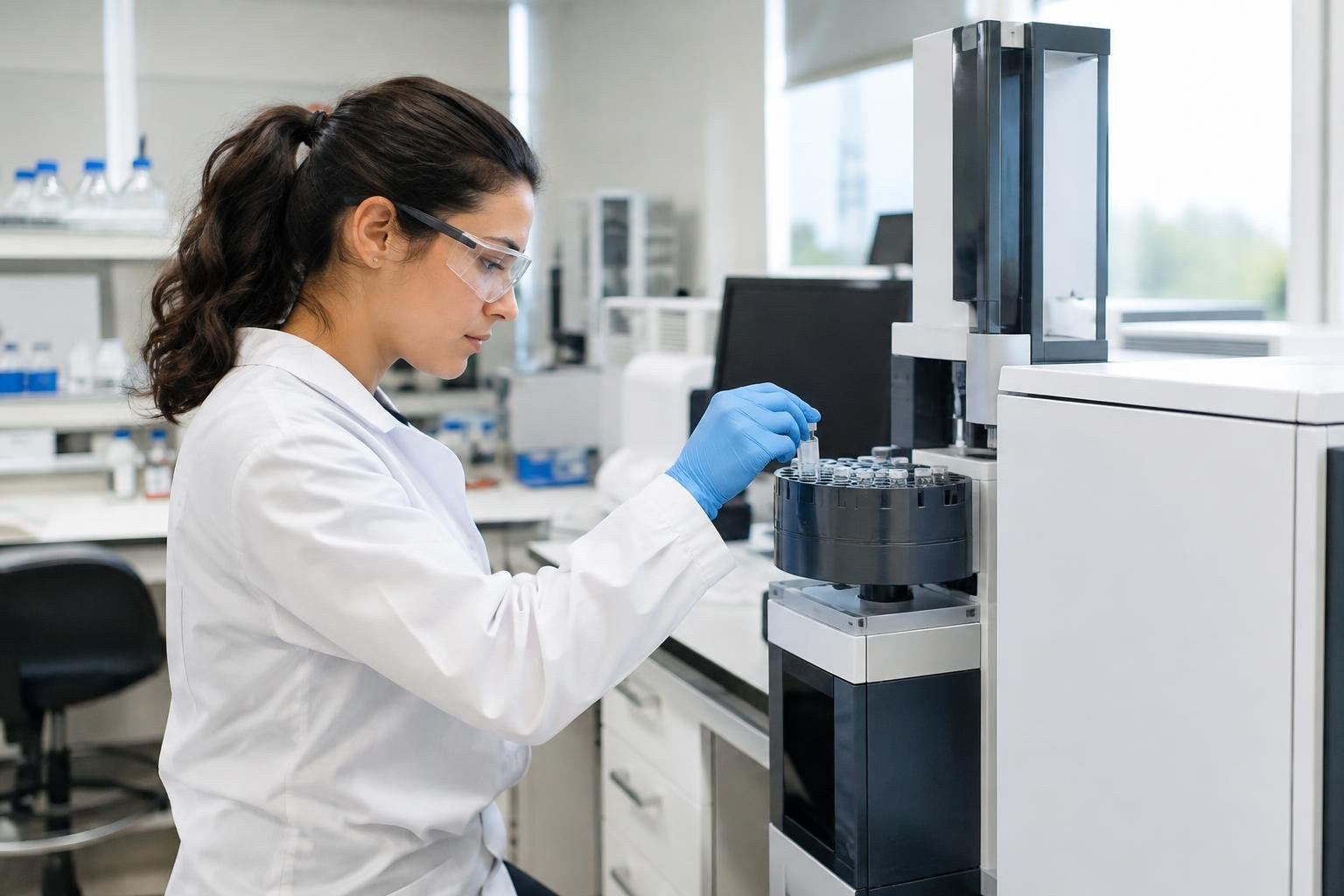
Forensic chemistry student using laboratory instrumentation
What Is a Forensic Chemistry Degree?
Forensic chemistry applies chemical techniques and instrumentation to the analysis and evaluation of physical evidence that may aid criminal investigations. Students learn to use scientific methods to identify and interpret evidence, rather than relying on assumptions about what a sample means. York College of Pennsylvania describes its program as teaching students to identify physical evidence and investigate how it may have come to be at a scene.
At the college level, this subject is usually presented as a chemistry-focused major or as forensic science study with a chemistry emphasis. Program titles and credential options differ. For example, universities in the supplied program information describe a forensic chemistry bachelor's degree, a certificate in forensic science for students with biology, biochemistry, or chemistry backgrounds, and a graduate certificate focused on analytical methods. These examples are not a complete inventory of what every college offers.
Forensic chemistry is distinct from criminal justice: the focus is laboratory science and chemical analysis, though some programs offer a criminal justice minor or other related coursework. It also differs from general chemistry by directing part of the scientific training toward forensic applications.
What Do You Study in Forensic Chemistry?
Expect a science-heavy course plan. The program description for this field includes analytical, inorganic, organic, and physical chemistry; biochemistry; forensic toxicology; instrumental analysis; crime-scene processing; criminal investigation; forensic laboratory technology; and applicable law. Individual colleges select and arrange courses differently, so use the published catalog and degree map rather than assuming every program teaches all areas in the same way.
Core chemistry and laboratory methods
Foundational chemistry courses establish how matter behaves and how chemical evidence can be measured. Advanced courses may extend that foundation into analytical methods and instruments used to examine samples. Laboratory classes give students practice following procedures, documenting observations, interpreting results, and recognizing the limits of a test.
Forensic applications and communication
Forensic-focused coursework connects scientific methods to evidence questions. Students may encounter toxicology, evidence processing, laboratory technology, and legal context, depending on the program. A useful curriculum teaches not only how to obtain a result, but how to keep records and explain the reasoning behind conclusions. Some programs may also provide research, field, or capstone opportunities; confirm whether these are required or available.
Program examples describe a deep chemistry foundation combined with forensic techniques and analytical methodologies. Ask how much of the degree is chemistry, how students access instruments, and whether laboratory practice is integrated throughout the course sequence.
Skills You Develop
Students develop more than knowledge of chemical reactions. They learn to apply scientific reasoning to samples, use analytical tools, and communicate observations in a way another scientist or decision-maker can follow. Those abilities relate most directly to laboratory work in forensic chemistry and broader chemistry roles.
Technical and scientific: understanding chemistry, sample analysis, laboratory instrumentation, and safe, consistent work practices.
Analytical: assessing evidence, interpreting measurements, considering alternative explanations, and distinguishing a finding from an unsupported conclusion.
Documentation: keeping records detailed enough to explain what was tested and how conclusions were reached.
Communication: summarizing technical results clearly for colleagues and people without a chemistry background.
Digital and data skills: working with instrument outputs and organizing or evaluating results. Ask programs which instruments and software students actually use.
These are skills to look for in course descriptions, lab schedules, and internship expectations. A program name alone does not show how much practice students receive.
Who Is Forensic Chemistry Best For?
This major may suit students who enjoy chemistry, careful hands-on work, and questions that require evidence rather than quick guesses. The work calls for patience, attention to detail, comfort with quantitative science, and willingness to explain a result accurately, including uncertainty or limits.
Interest in investigations can be a starting point, but students should also want to study chemistry in depth. The major may be a less natural match for someone primarily seeking field investigation, police work, or courtroom practice without a substantial laboratory science component. Those interests might point toward different programs, depending on the person's goals.
Does forensic chemistry match you?
Salary, reputation, and broad claims about job growth do not show whether a student's everyday work preferences fit a major. Consider whether the student likes structured experiments, detailed written records, scientific problem solving, and sustained study. Assessment.com's free MAPP career assessment can be one input for exploring motivations and career interests; use its results alongside course research, conversations with advisors, and direct exposure to lab work.
Admissions, Completion Time, and Academic Difficulty
Admissions rules are set by each college. Applicants should check whether the program expects prior science or mathematics preparation, minimum grades, essays, placement steps, or other materials. A certificate intended for students already studying biology, biochemistry, or chemistry may have different entry conditions from a first bachelor's program. Do not assume that one school's requirements apply to another.
The time to finish depends on credential level, transfer credit, course availability, enrollment pace, and required labs. Students entering a bachelor's program should request a term-by-term plan that identifies prerequisites and courses offered only at certain times. Part-time study may change the completion schedule; accelerated or transfer routes must be confirmed with the institution.
The common academic pressure points are cumulative chemistry courses, quantitative work, laboratory scheduling, and precise documentation. Prepare by reviewing college-level chemistry and mathematics expectations, using tutoring early, and building a weekly study routine. Students and parents should discuss workload and support services before committing.
Online vs. On-Campus Forensic Chemistry Programs
Online, hybrid, and campus options must be checked program by program. Lecture material may be delivered remotely in some courses, but a chemistry degree also needs practical ways to teach laboratory techniques. Ask whether required labs take place on campus, at an approved site, or through another format, and how the program assesses students' hands-on ability.
Before choosing an online option, request the full list of in-person obligations, lab access arrangements, internship expectations, equipment or technology requirements, and any travel or residency commitments. Confirm that the format supports the student's location and schedule. A program's online label does not by itself establish that all required learning can be completed remotely.
Forensic Chemistry Degree Costs and Financial Aid
The total cost is more than tuition. Compare tuition by residency and credential level, mandatory fees, books, laboratory charges, commuting or housing, and any equipment or technology costs. A student who needs to travel for labs or internships should include those costs in the budget. Prices and aid terms vary by school and academic year, so use each institution's current cost-of-attendance estimate rather than a generic number.
Complete the financial-aid application process that applies to the student, ask each college about grants and scholarships, and compare net price after gift aid rather than headline tuition alone. Also ask about payment plans, work-study eligibility, employer support for adult learners, transfer-credit policies, and whether changing majors could add terms or costs. Do not borrow based only on an assumed future salary.
To make an affordability comparison, build a side-by-side estimate for the full expected program, including likely living and laboratory expenses. Ask the financial-aid office to clarify which estimates are direct charges and which are indirect costs.
Forensic Chemistry Careers, Jobs, and Outlook
Forensic chemistry training can connect to crime-laboratory and law-enforcement agency work. Program descriptions also connect the field to forensic evidence analysis and analytical chemistry methods. The exact role a graduate can pursue depends on the employer's education, experience, and selection requirements. A degree is preparation, not a job placement guarantee.
Career direction
Education to investigate
How the degree may apply
Forensic laboratory analyst or forensic science technician
Review each agency's degree and experience requirements
Chemistry and evidence-analysis preparation can be relevant to laboratory examination of evidence.
Chemist in a laboratory setting
Check the chemistry coursework and experience requested by the employer
Core chemistry and analytical methods provide a scientific foundation.
Further forensic chemistry study
Graduate certificate or other advanced study, when appropriate
Advanced analytical methods can support continued specialization.
The supplied program examples identify crime laboratories and law-enforcement agencies as potential destinations and describe bachelor's and graduate-certificate pathways. They do not establish a single salary, employment outlook, or hiring threshold for all graduates. Compare current official labor data and actual employer postings for the location and job titles under consideration. For broader exploration, see Assessment.com's guides to forensic science technicians and chemists.
Potential employers and settings to research include forensic laboratories and law-enforcement agencies named in program descriptions. Ask about local openings and whether the role involves laboratory analysis, evidence collection, or a combination; titles alone may not make duties clear.
Find out which Career or College Major is right for you!
Experience, Accreditation, Certification, and Licensure
Relevant experience can help students understand the actual work and build a record of practical skills. Ask faculty about supervised laboratory research, internships, co-ops, capstone projects, and opportunities to practice scientific writing. If a program does not require an internship, find out whether students can still pursue one and how it fits the course schedule.
How to stand out to employers
Keep a clear record of laboratory methods and projects that you are permitted to discuss.
Practice explaining results precisely without claiming more than the evidence supports.
Seek supervised practical experience and ask what skills the host organization expects.
Build relationships with instructors and career staff who can help identify appropriate openings.
Review job postings regularly and close skill gaps while still enrolled.
Course completion and professional eligibility are not interchangeable. The supplied program information identifies a specific bachelor's program as FEPAC accredited, but that is a claim about that program, not every forensic chemistry degree. Ask the college to confirm current status and consult prospective employers about any credentials or additional preparation they expect. Do not assume a certificate or degree automatically grants professional licensure.
Graduate School and Advanced Credentials
Further study can make sense when a student has a specific academic or career reason, such as deeper analytical training, a focused graduate credential, or preparation for research-oriented work. A graduate certificate in forensic chemistry is one credential described by a supplied university source; a separate graduate forensic professional concentration is described as 34 credit hours beyond a bachelor's degree. These are individual program examples, not a universal graduate requirement.
Before adding years of study and expense, identify the target role and check whether employers require or prefer an advanced credential. Compare the graduate curriculum with the skills the student already has and consider whether work experience would be a more direct next step.
Related Degrees and Alternatives
Several adjacent paths may fit students who like parts of forensic chemistry but want a different emphasis:
General chemistry: consider this instead if you want a broader chemistry curriculum without a central forensic focus.
Forensic science: consider this instead if you want a wider forensic curriculum and less specialization in chemistry, depending on the college's plan.
Biochemistry: consider this instead if your strongest interest is chemical processes in living systems.
Criminal justice: consider this instead if you want to focus on justice systems, policy, or investigations rather than laboratory chemistry.
Analytical chemistry: consider this instead if you are most interested in measurement methods and chemical analysis across applications.
Biology: consider this instead if you prefer biological evidence and life sciences to a chemistry-centered major.
These are broad comparison prompts, not claims that every college offers the same program structure. Forensic chemistry program examples show both chemistry-focused degrees and a forensic science certificate for students with science backgrounds. Compare required courses, lab time, possible minors, graduate-school routes, and the types of jobs graduates pursue. A program that sounds more specialized is not automatically the best choice if the student wants flexibility.
Advantages, Drawbacks, and Is Forensic Chemistry Worth It?
Possible advantages include a clear connection between chemistry and evidence analysis, intensive practice in scientific methods, and a route toward laboratory work. A chemistry-centered education can also leave room to investigate other chemistry roles if a student's plans change, although the specific flexibility depends on the course plan and later preparation.
Tradeoffs include demanding science coursework, laboratory scheduling, costs that may include lab and travel expenses, and uncertainty about the number or location of suitable openings. Some positions may request experience or additional preparation. The degree may be less useful for a student who is interested in crime stories but not in chemistry, or who expects a bachelor's credential alone to guarantee a specific forensic job.
Is it worth it? There is no universal answer. Weigh the total net cost and time against the student's goals, available local programs, required experience, and the actual work they hope to do. Ask colleges for outcome information and speak with people familiar with the field before making a commitment.
How to Choose a Forensic Chemistry Program
Compare programs using written details, not a title or promotional summary. Review these factors with the student:
Program recognition: ask what institutional and program-specific accreditation applies, who grants it, and how to verify its current status. The supplied example of FEPAC accreditation applies to one named program.
Curriculum: map the required chemistry and forensic courses, prerequisites, electives, and any opportunity to add a minor.
Hands-on learning: ask about lab access, equipment, research, capstones, and internship support.
Total cost: compare net price, fees, living costs, and the expense of required in-person experiences.
Format and schedule: confirm class delivery, lab attendance, course rotation, and realistic completion time.
Outcomes and employer connections: request information on graduate destinations, career services, and how students meet potential employers.
Transferability and aid: get a written evaluation of prior credits and clarify aid eligibility and renewal conditions.
Career preparation: ask whether the program prepares students for requirements named in current local job postings.
Assessment.com's college-major selection resource can support reflection as students compare academic interests with career directions. Use it as one part of a practical review that includes program catalogs, financial-aid offers, and direct questions to colleges.
From Degree to Career: A Realistic Pathway
Career progress is not automatic, but a student can plan possible steps and test assumptions early. For example:
Forensic chemistry degree → seek an entry-level laboratory or evidence-analysis role that matches the employer's stated requirements.
Build relevant experience → develop technical, documentation, and communication skills through supervised work.
Choose a specialization → pursue focused coursework or experience if a target role calls for deeper analytical expertise.
Consider an advanced role → investigate graduate study or supervisory responsibilities only when experience and employer expectations support that next step.
This is an illustrative pathway, not a promise of hiring or promotion. Ask colleges and employers what qualifications are typical for the roles in the student's preferred region.
Questions to Ask Before Enrolling
Before accepting an offer or enrolling, use this checklist with the student and the college:
What is the program's current accreditation status, and where can it be verified?
What is the estimated total cost through completion, including lab fees and living expenses?
What outcomes can the college document for recent graduates?
Are internships, research, or practical laboratory experiences available?
What in-person attendance, travel, or equipment does the format require?
Which credits will transfer, and can the college provide a written evaluation?
How does career services help science students find relevant experience and openings?
Which employers recruit or partner with the program, if any?
What grants, scholarships, and other aid are available, and what are the renewal rules?
Which local job requirements should the student check before choosing this major?
Could the student change to general chemistry or another related program without losing substantial progress?
Then compare the answers with the student's interests, academic preparation, and preferred work style. A useful decision includes both practical details and a realistic picture of what the student will study every week.
Frequently asked questions
What is forensic chemistry?
Forensic chemistry applies chemistry and laboratory analysis to physical evidence that may be relevant to an investigation. Programs generally combine core chemistry with forensic methods, but course plans differ by school. Students should look closely at the balance between chemistry, hands-on laboratory work, forensic topics, and criminal justice coursework.
Is a forensic chemistry degree hard?
It can be demanding because students study multiple areas of chemistry and must apply careful laboratory practices, data analysis, and scientific reasoning. The challenge is not only learning concepts but also producing reliable, clearly documented results. A strong foundation in chemistry and mathematics, plus regular study and practice, can help students prepare.
What jobs can I get with a forensic chemistry degree?
A bachelor's degree in forensic chemistry may prepare graduates to pursue laboratory work involving chemical analysis of evidence. Specific job titles and eligibility vary by employer. Some forensic chemistry programs explicitly prepare students for crime laboratory or law-enforcement agency work, but a degree does not guarantee a position.
How much can you make with a forensic chemistry degree?
There is no single salary for forensic chemistry graduates. Pay depends on the job title, employer, location, experience, and education required. Before making a financial decision, compare current wage data for the exact occupations and locations you are considering, and review job postings to see which qualifications employers request.
Can you earn a forensic chemistry degree online?
Some forensic science or chemistry coursework may be available online, but do not assume a fully online route provides the laboratory practice an employer expects. Ask each college whether required labs are in person, how practical skills are assessed, and whether any internship or other experience must be completed on site.
Does forensic chemistry require a lot of math?
Chemistry programs typically involve quantitative coursework, and forensic chemistry builds on that scientific foundation. The amount and type of mathematics depend on the curriculum and course sequence. Review required chemistry, mathematics, and laboratory courses before enrolling, and ask about tutoring or academic support if you need to strengthen your preparation.
Do you need graduate school for forensic chemistry?
A bachelor's degree is the credential named in several forensic chemistry program examples, while graduate certificates and other advanced study are also available at some institutions. Whether graduate school is necessary depends on the position, employer, and intended specialization. Check job requirements before committing to additional education.
Does forensic chemistry have an accreditation or certification?
Program recognition and professional credentials are separate questions. One supplied university example identifies its forensic chemistry bachelor's program as FEPAC accredited, but that claim applies to that specific program. Ask colleges about current accreditation status and ask employers whether they value any particular certification or additional training for the roles you want.
People Also Ask
What do forensic chemists study?
Forensic chemistry is the use of chemical techniques and instruments to analyze and evaluate physical evidence for investigative purposes. A degree program combines foundational chemistry with forensic applications; the mix of subjects and practical training varies among colleges.
Is forensic chemistry the same as criminal justice?
No. Forensic chemistry centers on chemistry and evidence analysis. Criminal justice may be offered as a minor or supporting area in some programs, but it is not a substitute for the chemistry coursework and laboratory preparation at the core of the major.
How long does it take to earn a forensic chemistry degree?
The time depends on the credential, prior credits, course schedule, and program requirements. A bachelor's plan differs from a certificate or graduate credential, and schools may set different course sequences. Ask the institution for a degree map showing required courses and realistic completion options.
How should I choose a forensic chemistry program?
Compare required chemistry courses, instrumentation, forensic coursework, and supervised lab experience. Also check program recognition, total cost, access to labs, available internships, and whether the program supports the kinds of roles you want. Ask for written answers rather than relying on a program title alone.
Is a forensic chemistry degree worth it?
Forensic chemistry can be valuable for students who want a chemistry-centered education connected to evidence analysis. Its value depends on the student's goals, cost, available practical experience, local employment options, and whether the graduate meets employers' requirements. Compare it with general chemistry and forensic science curricula before deciding.
What is the difference between chemistry and forensic chemistry?
A chemistry major generally provides a broader chemistry education, while a forensic chemistry major adds a stronger focus on applying chemical analysis to evidence. The exact difference is program-specific. Compare required courses, lab opportunities, and the flexibility each degree offers if your career interests change.
Forensic chemistry may be a strong choice if you want to use rigorous chemistry and laboratory methods to examine evidence and explain what the results can show. It is less suited to someone seeking a crime-scene-centered education with little advanced chemistry, or a guaranteed route to a specific job. Compare the curriculum, total cost, hands-on experience, program credentials, and local hiring requirements before enrolling. If you are weighing this path against other science majors, use Assessment.com’s education and career resources to explore options and consider whether the day-to-day work matches your interests.
Want to see your options? Try our comprehensive Degree, Program & College Search tool
We use cookies to offer you a better browsing experience, analyze site traffic and personalize content.
Read about how we use cookies and how you can control them in our
Privacy Policy.
If you continue to use this site, you consent to our use of cookies.
×
Exciting News!
Be one of the first to Beta Test the new AI-Powered Assessment.com Platform.