Microbiological Sciences and Immunology, Other: Degree and Career Guide
Learn what a Microbiological Sciences and Immunology, Other program may cover, how degree levels differ, which career directions to investigate, and how to compare programs.
By Kieth Nelson · Staff Writer Assessment.com · Published October 7, 2026 · Last updated November 5, 2026
Microbiological Sciences and Immunology, Other is a biological and biomedical sciences program classification for study that combines or relates to microbiology and immunology but does not fit a more specific category. Depending on the college and credential, coursework may cover microbes, immune responses, infection, molecular biology, or related biomedical topics. The program name alone does not tell you exactly what you will study, so the curriculum is essential reading. Students and families may encounter this classification while researching certificates, associate and bachelor’s degrees, or graduate study. Program availability and format vary by school. If you are weighing this area against a broader biology major or a focused microbiology program, compare course content, lab experience, total cost, and the education needed for your intended next step. Not sure whether this field fits you? The Free MAPP Career Assessment can help you reflect on how your motivations, interests, and natural preferences relate to possible careers and educational paths.
Degree & Program Decision Insights
Explore your personal fit, education requirements, career potential and next steps.
01Motivational Fit
Discover whether this program fits you
Explore your preferences against the focus of Microbiological Sciences and Immunology, Other. These prompts are not personal MAPP results.
Subject curiosity. Would you choose to explore “the microbiological sciences and immunology not listed above” in depth? Ask for a sample learning activity to test that interest.
Choosing a learning environment. Compare actual Microbiological Sciences and Immunology, Other offerings. Would their reading, projects or practical work suit how you prefer to learn? Confirm the format rather than assuming one from the field name.
Work reality. Related work can involve this task: “Plan or direct research, development, or production activities.” Would you want that activity to be a regular responsibility?
Interest in studying a field can differ from enjoying its related work.
Which part would you want to do repeatedly, and what would you try before deciding?
Discover Your Personal Program Fit
Before investing your time and money in your education, discover how this program aligns with your natural motivations, work preferences and career goals.
Typical occupational entry: bachelor's degree (BLS). BLS lists 5 years or more of related work experience as typical for this occupation; this programme is not a direct promise of entry.
U.S. occupational wages are not guaranteed graduate earnings; OEWS excludes self-employed workers.
Projected openings include replacements as well as growth.
U.S. national estimates. A crosswalk does not establish entry-level eligibility; advanced, management and teaching roles can require further qualifications.
Compare the actual offering and credential before committing your time or money.
Request the itemized fees, materials and equipment associated with “the microbiological sciences and immunology not listed above”; confirm what tuition includes.
Compare the full attendance budget, course availability and time away from paid work, rather than tuition alone.
No institution- and credential-matched cost, debt or graduate-earnings amount is reported here; occupational pay is not program ROI.
Financial aid depends on the school, program and student’s eligibility.
Explore your motivations. Use MAPP as a starting point for reflecting on your interest in “the microbiological sciences and immunology not listed above”, then test that interest against a sample learning task.
Examine the work. Compare Natural Sciences Managers and Microbiologists on daily work and entry qualifications, as well as pay. Explore Natural Sciences Managers.
Compare actual providers. Ask for the exact credential, course sequence and assessment methods. Compare how each provider teaches “Microbiological Sciences and Immunology, Other”, its entry criteria and its itemized costs.
Check the evidence before applying. Confirm prerequisites and any recognition or professional requirements for your intended route; ask for applicable rules and published outcome definitions in writing.
Verify the institution’s current offering, admissions requirements and outcomes; a search result does not establish your eligibility.
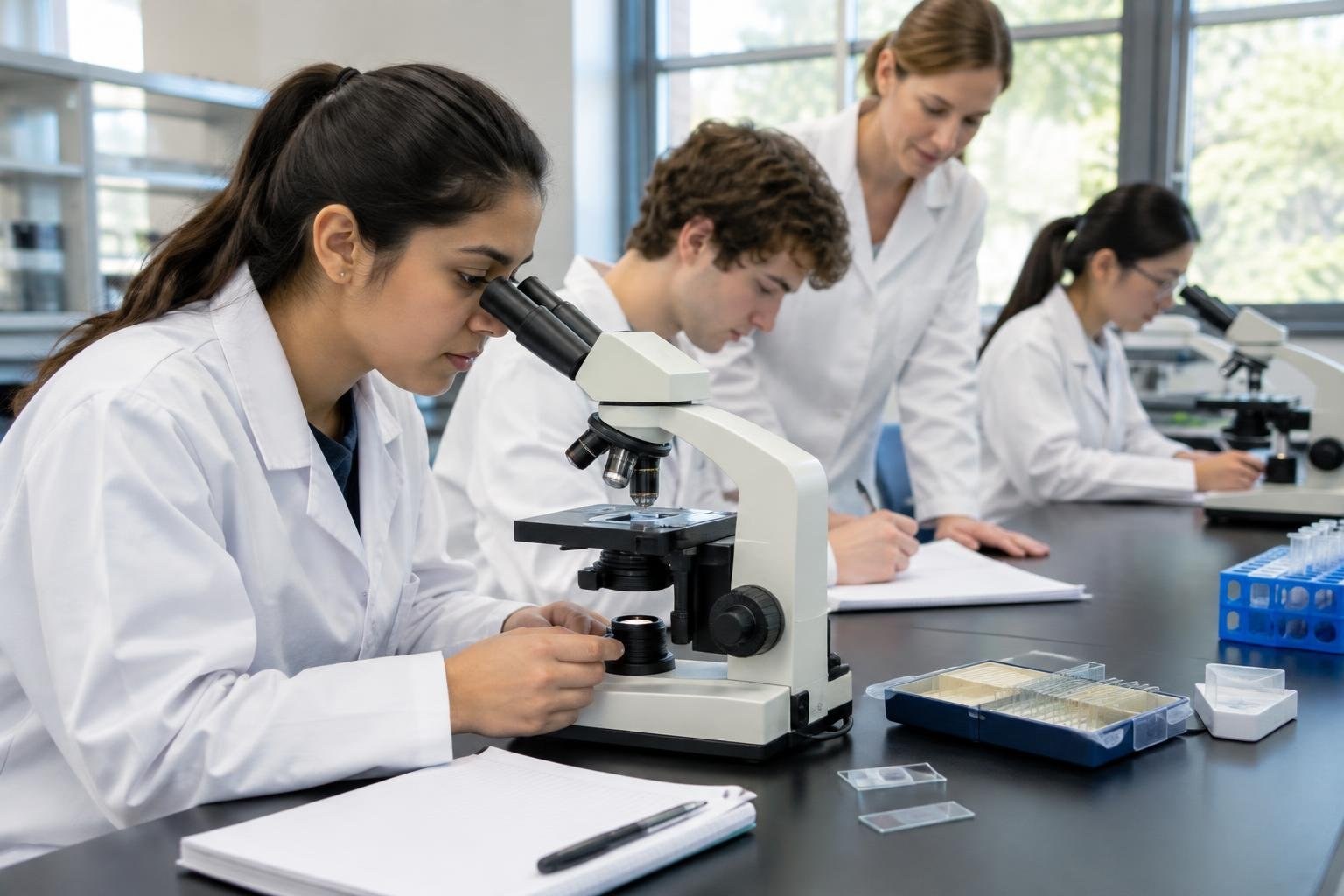
A supervised teaching laboratory with microscopes, sample slides, and students recording observations
What Is This Program?
What Is a Microbiological Sciences and Immunology, Other Degree?
This program classification sits within biological and biomedical sciences. It applies to microbiology- and immunology-related study that is not categorized under a more specific program title. Colleges may use a distinct major, concentration, certificate, or department name, so students should treat the classification as a starting point rather than a complete description of a program.
Microbiology studies microorganisms and their interactions with people, animals, plants, and environments. Immunology examines immune systems and responses. Programs may combine these topics with infection, molecular biology, microbial genetics, or public health. One curriculum may lean toward laboratory science; another may emphasize biomedical concepts or broader biological training.
Related offerings exist at several credential levels, including associate, bachelor’s, master’s, and doctoral degrees, as well as certificates. A graduate certificate, undergraduate minor, and degree are not interchangeable: they differ in purpose, scope, and admission requirements. The classification does not itself award a credential.
What Students May Study
What Do Students Study?
Coursework depends on the school and credential. A student may build foundational knowledge in biology and chemistry, then move into more focused study of microbes, immune responses, infection, or cellular processes. Some biomedical offerings include anatomy and physiology, biochemical principles and metabolic pathways, microbiology, immunology, embryology, cell biology, and development. These examples illustrate possible subject areas, not a universal course list.
At advanced levels, study can include bacteriology, microbial physiology, pathogenesis, molecular biology, biotechnology, environmental microbiology, and symbioses. Other coursework may address infectious-disease epidemiology, microbial genetics, molecular virology, disease mechanisms, antimicrobial resistance, research design, and evaluation. A student should ask how much of the program is lecture-based and how much involves laboratory practice, projects, or research.
Laboratory experience can help students learn to follow protocols, handle samples appropriately, observe results, and interpret evidence. The intensity and setting vary. Review course descriptions and ask for a sample schedule, lab-hour expectations, and details about any capstone, thesis, practicum, or research requirement before choosing a program.
Skills Students May Develop
Skills You Can Build
Courses in these fields can develop scientific reading, careful observation, and the ability to connect biological concepts to evidence. Laboratory study may provide practice following methods, organizing samples or results, and communicating observations. Research-oriented coursework can build skills in asking questions, evaluating evidence, and explaining how a conclusion follows from a study design.
Relevant technical skills depend on the program. The available curricula reference laboratory training, analytical methods, molecular biology, and research design. Do not assume that a program teaches a particular instrument, software package, or laboratory method unless it appears in the course descriptions or the department confirms it.
When comparing programs, look for opportunities to explain findings in writing and presentations, collaborate on lab or research work, and practice responsible handling of data and materials. Ask how students receive feedback and whether projects can help demonstrate their skills to graduate programs or employers.
Who This Program May Suit
Who Might This Program Suit?
This field may appeal to students who are curious about how microorganisms work, how immune responses relate to infection, and how biological evidence is produced. It may also interest people who prefer detailed observation and systematic investigation. The subject is not limited to one personality or learning style: students can explore biological questions through lectures, laboratory work, research, or public-health topics, depending on the program.
Consider how comfortable you are with science prerequisites and the prospect of sustained laboratory or analytical work. If you prefer broad exposure before specializing, a general biology route may be worth comparing. If you already know you want a particular focus, such as microbiology or immunology, check whether a more specific major provides the courses you need.
Does this degree match you? Salary, reputation, and general claims about job demand cannot tell you whether you will enjoy the day-to-day study or work. Think about the questions you like solving and the activities you want to do regularly. Assessment.com’s MAPP assessment, Degree Matching, and Career Matching tools can be used as prompts for reflection; treat results as one input, then verify choices against real curricula and job requirements.
Admissions, Time, and Difficulty
Admissions, Completion Time, and Academic Difficulty
There is no single admissions standard for this classification. Requirements vary by college and credential. Undergraduate applicants should check each institution’s current application requirements and science prerequisites. Graduate programs may expect relevant prior coursework or preparation, while a certificate may be designed for a specific student population. Confirm requirements directly with the program before applying.
Completion time depends on whether you are pursuing a certificate, associate or bachelor’s degree, graduate certificate, master’s, first-professional program, or doctorate. Part-time enrollment, transfer credits, course sequencing, and availability of required classes can also change the timeline. Ask the school for a degree map showing prerequisites, course rotation, and a realistic completion plan.
Students may find the combination of science concepts, laboratory expectations, and research or analytical coursework demanding. Prepare by reviewing prerequisite topics, checking tutoring and advising services, and asking how laboratory sections are scheduled. If you are transferring, request a formal evaluation of credits before relying on an estimated graduation date.
Online and On-Campus Options
Online, Hybrid, and On-Campus Formats
Program format is determined by the institution and the type of instruction. Some content may be available online, while hands-on laboratory courses may require campus attendance or another supervised arrangement. Do not infer that a laboratory-focused curriculum can be completed entirely online just because a college advertises online study.
Ask the program how laboratory learning is delivered, where any in-person sessions take place, and whether students must arrange travel or attend at set times. Confirm whether required courses are offered in the format you need and whether online students have access to the same advising and research opportunities. For a program leading toward a specific job or further education, verify that its format satisfies the relevant employer or admissions prerequisites.
Tuition, Costs, and Financial Aid
There is no single price for a program category. The amount you pay depends on the institution, credential, residency classification, enrollment pattern, and required course or laboratory fees. Budget beyond tuition: ask about books, laboratory supplies, technology, transportation for campus requirements, and any costs tied to research or applied learning.
Request an itemized estimate for the full credential, not just a per-credit figure. Ask which grants, scholarships, work opportunities, payment plans, and employer tuition benefits may apply to your circumstances. Financial aid eligibility and deadlines differ, so review the school’s financial-aid information and confirm whether aid can cover required fees as well as tuition.
To compare affordability, calculate the likely total cost after confirmed aid and consider whether you can complete the program without unnecessary extra terms. Transfer credit may reduce duplicated coursework when accepted, but obtain a formal credit review first. Do not choose a lower published price without checking the program’s course availability, lab access, and fit with your goals.
Career Directions and Job Outlook
Find out which Career or College Major is right for you!
This program classification does not map to one occupation, salary, or employment outlook. Graduates’ options depend on the degree level, laboratory experience, research record, location, and the requirements of the employer or profession. Use current U.S. Bureau of Labor Statistics and O*NET information for specific occupations, and compare it with actual job postings. The research available for this guide describes academic subject areas rather than current wage or employment statistics, so no median-pay or growth figures are listed here.
The table below presents directions to investigate, not guaranteed outcomes. Ask career services and faculty which employers recruit from the program and what alumni do. For any target role, identify required education, experience, and credentials before assuming a particular degree is sufficient.
Career direction to investigate
Education and preparation to verify
Pay and outlook
Laboratory support or biological technician work
Check employer postings for degree level, lab experience, and methods requested.
Compare current occupation-specific BLS data and local postings.
Research assistant in a biological or biomedical setting
Look for research experience, relevant coursework, and any employer-specific qualifications.
Varies by occupation, sector, location, and experience.
Public health laboratory support
Verify the laboratory’s education, training, and any role-specific requirements.
Check current BLS data and public-sector job notices for the exact title.
Biotechnology quality or production support
Review postings for quality procedures, laboratory skills, and required credentials.
Compare pay and outlook for the specific job title and region.
Microbiology or immunology research career
Research roles may require further study or substantial research preparation; verify each position.
Use occupation-specific data rather than a major-wide estimate.
Infectious-disease or global-health work
Check whether roles require public-health education, research methods, or other specialized preparation.
Requirements and pay vary among research, laboratory, and public-health positions.
Science education or outreach
Check the employer and state requirements for the setting and age group.
Compare data for the actual education or outreach occupation.
Advanced scientific research
Investigate graduate or doctoral training and the research record expected for the role.
Pay and openings depend on the position, employer, and qualifications.
Technology and automation may change how laboratories collect, process, and interpret information, but they do not make every scientific task interchangeable. When choosing a program, ask whether students learn to evaluate results and explain limitations as well as follow procedures. Those capabilities are useful across changing tools and work settings.
Experience, Credentials, and Licensure
Experience, Certifications, and Licensure
Hands-on experience can help you test whether laboratory or research work suits you and build evidence of what you can do. Ask about faculty research, supervised laboratory projects, internships, public-health experiences, and opportunities to present or document results. The availability of these options differs across institutions and degree levels.
Do not assume that completing the degree grants a professional license or certification. The program classification does not identify a universal credential. Requirements depend on the occupation and may also depend on state or employer rules. Before paying for an extra certificate, confirm that the credential is recognized by the employers or professional body relevant to your goal.
How to stand out to employers: seek relevant supervised experience, keep a clear record of projects and methods you have learned, practice explaining scientific findings to non-specialists, and tailor applications to the job description. Ask faculty and career services for feedback on a resume and interview preparation.
Graduate School and Further Study
Students may continue into more advanced study in microbiology, immunology, biomedical sciences, or related areas. Graduate certificates can provide advanced coursework for some students, while master’s or doctoral programs may offer deeper specialization and research training. A university example of a graduate certificate in microbiology and immunity focuses on advanced education in basic and clinical aspects of these fields; that is one program model, not a universal requirement.
Before choosing an undergraduate curriculum, review the admissions requirements for graduate programs you might consider. Confirm prerequisite courses, research expectations, and whether the program accepts your credential. Further education can be important for some specialized or research careers, but it is not automatically necessary for every job in a related field.
Related Degrees and Alternatives
Compare the curriculum and outcome you want rather than choosing by title alone. A more focused program may make it easier to build depth in a particular subject, while a broader program can leave room to explore. These related paths are useful starting points for a comparison:
Microbiology: Consider this if you want a program explicitly centered on microorganisms and their study.
Immunology: Consider this if immune systems and responses are your primary academic interest.
General biology: Consider this if you want broad biological study before selecting a narrower specialty.
Biotechnology: Consider this if you want to compare biological science with applied or industry-oriented coursework.
Infectious disease and global health: Consider this if you want to explore infection alongside population-health or international-health topics.
Biochemistry and molecular biology: Consider this if molecular and biochemical processes are more appealing than a broad microbiology-immunology blend.
Public health: Consider this if you are more interested in community health, prevention, and population-level questions; check the exact curriculum and entry requirements.
A curriculum classified as “Other” may include a combination of subjects that a named specialty does not. Compare required courses, laboratory access, research options, and graduate-school prerequisites. Ask departments whether students can take electives or change concentrations if their interests become more specific.
How to Compare Colleges and Programs
How to Choose a Program
Start with the curriculum. List required courses, prerequisites, laboratory expectations, research opportunities, and available electives. Compare those details with the career or graduate-school requirements you are considering. A department’s label is less informative than a clear course plan.
Next, check accreditation and institutional status using the appropriate recognized accreditor and official education resources. Accreditation is not a substitute for confirming that a program meets a particular employer’s, licensing body’s, or graduate school’s requirements. Ask the school how it prepares students for any certification or licensure pathway you have in mind and independently verify the answer with the relevant authority.
Compare total cost and financial aid, course scheduling, online or campus requirements, transfer-credit policies, faculty access, laboratory facilities, career services, and employer connections. Request program-level outcome information and ask how it is measured. If a school shares employment or salary claims, ask for the date, cohort, job definitions, and method behind the figures.
Assessment.com’s Degree Matching and Career Matching tools can help organize your exploration. Use them alongside program catalogs, admissions offices, financial-aid staff, and job requirements rather than as a replacement for direct research.
Advantages, Drawbacks, and Value
Is This Degree Worth It?
The degree may be worthwhile if its curriculum develops the knowledge you want, offers suitable applied experience, and supports a realistic next step at a cost you can manage. A specialized science credential can also be less useful than expected if it does not include courses required by a target graduate program or job. Verify those requirements before enrolling.
Possible drawbacks include the cost of laboratory-based study, the need for additional education for some career goals, and uncertainty when the major title is broad. These are not reasons to rule out the field; they are reasons to ask more precise questions. Compare total cost, time to completion, course availability, hands-on learning, and the qualifications sought in jobs you may pursue.
There is no universal return on investment for this classification. The right decision depends on your goals, finances, location, tolerance for further study, and interest in the actual work. A conversation with current students, faculty, and employers can clarify what the program does and does not prepare graduates to do.
Possible Education-to-Career Paths
From Degree to Career: Possible Pathways
Career paths are not automatic sequences. Use these examples as planning prompts and check the qualifications for each position:
Undergraduate coursework and lab experience → laboratory support role → additional methods or workplace experience → specialized laboratory responsibilities.
Bachelor’s study and a supervised research project → research assistant role → focused research experience → graduate study or a more advanced research position, if required.
Biomedical or microbiology coursework → public-health or infection-related support role → experience with the relevant setting → further education or specialization where needed.
At each stage, compare the actual job description with your preparation. Employers may differ in the degree level, experience, or credentials they request for similar titles.
Questions to Ask Before Enrolling
What credential will I earn, and what is the exact major or concentration name?
Which courses and prerequisites are required, and when are they offered?
How much laboratory learning is included, and where does it take place?
What is the complete estimated cost, including fees and required materials?
What financial aid, scholarships, or employer benefits can I apply for?
How will my previous coursework transfer, and can I receive a written evaluation?
What do graduates do, and how does the school measure and report outcomes?
Does the program meet prerequisites for the graduate programs or roles I may pursue?
Are any licenses or certifications relevant to my target occupation, and who verifies eligibility?
What career advising, internship, research, and employer connections can students access?
Can I complete required courses in my preferred format and on a realistic schedule?
Keep written answers and compare programs side by side. If a response is vague, ask for the catalog, policy, or official source that confirms it.
Frequently asked questions
What is a Microbiological Sciences and Immunology, Other degree?
It is a biological and biomedical sciences program focused on areas such as microbiology, immunology, infection, and related topics that do not fit a more specific program classification. The word “Other” is a classification label, not necessarily the name a college uses for its major. Review the school’s actual curriculum to see what its program emphasizes.
Is microbiology and immunology hard to study?
It can be challenging because programs may combine biology, chemistry, specialized concepts, and laboratory work. The amount of quantitative coursework and hands-on lab time depends on the credential and school. Before enrolling, look at course descriptions and prerequisites, and ask how students are supported when they encounter difficult lab or science material.
How long does it take to earn this degree?
There is no single timeline. A certificate, associate degree, bachelor’s degree, graduate certificate, master’s degree, first-professional program, and doctorate represent different types and levels of study. Transfer credit, enrollment pace, and program requirements also affect completion time. Ask each school for a degree map showing the courses and expected pace for your situation.
Can I study microbiology and immunology online?
Some programs offer online courses, but laboratory instruction or other applied learning may require in-person participation. The format depends on the credential and institution. Ask whether labs are online, campus-based, or arranged at an approved site, and confirm any in-person requirements before comparing a program’s advertised flexibility.
What jobs can I get with this degree?
Possible directions to explore include laboratory support, biological research, public health laboratory work, biotechnology quality work, and further study in microbiology or immunology. Job titles and minimum requirements vary. Check current employer postings and occupational information for the exact role you want rather than assuming the major alone qualifies you for it.
How much can you make with a microbiology and immunology degree?
Pay depends on the specific occupation, location, employer, experience, and education required. A broad program classification does not have one standard salary. Compare current U.S. Bureau of Labor Statistics information for individual occupations and review local job postings, noting whether they require a bachelor’s degree, graduate education, or a professional credential.
Do I need graduate school after this degree?
Not necessarily for every kind of work. Some entry-level support roles may have different education requirements from research leadership, specialized scientific roles, or clinical professions. If you are considering graduate or professional school, check its admissions prerequisites early and make sure your undergraduate courses meet them.
Does this degree lead to a license or certification?
The program title alone does not establish that a graduate has a professional license or a specific certification. Requirements depend on the occupation and, where applicable, state rules. Identify the job first, then check the relevant employer, licensing authority, or certification organization for accepted education and training.
People Also Ask
What does “Other” mean in a microbiology and immunology program name?
It is a classification for programs in microbiology and immunology that do not fall neatly into a more specific category. The college may use a different major name. Compare its required courses and laboratory opportunities rather than relying only on the classification label.
What subjects do microbiology and immunology students study?
Program content varies. Examples from university offerings include anatomy and physiology, biochemistry, microbiology, immunology, infection, embryology, cell biology, development, microbial genetics, molecular virology, and research design. No single program necessarily includes all of these subjects, so check the actual course plan.
Are there online microbiology programs with labs?
Do not assume that a broad online label means every requirement is remote. Ask how the program handles laboratory instruction, supervised practice, and any on-campus or site-based requirements. Get the answer in writing before enrolling if distance learning is important to you.
What degree is similar to microbiology and immunology?
Potential options include related fields such as general biology, microbiology, immunology, biotechnology, or infectious disease and global health. The best comparison depends on whether you want broad biological study, a particular laboratory focus, or a wider public-health context. Compare course requirements and future prerequisites before choosing.
How should I choose a microbiology and immunology program?
First, identify the role or further program you may pursue. Then check job postings and admissions prerequisites for required education, experience, and credentials. Choose a college program whose courses and applied learning support that target, and confirm the full cost and course availability with the school.
Microbiological Sciences and Immunology, Other can suit students who want to study microbes, immune responses, infection, and related biological questions without committing to one narrowly defined specialty. Its value depends on the actual courses, laboratory experience, credential level, and next step you have in mind. Compare programs by total cost and curriculum, then check the education and credentials needed for the jobs you may want. A close fit between your interests, learning preferences, and career plans matters as much as the program’s name.
Want to see your options? Try our comprehensive Degree, Program & College Search tool
We use cookies to offer you a better browsing experience, analyze site traffic and personalize content.
Read about how we use cookies and how you can control them in our
Privacy Policy.
If you continue to use this site, you consent to our use of cookies.
×
Exciting News!
Be one of the first to Beta Test the new AI-Powered Assessment.com Platform.