Degree Library
Environmental Studies Degree Guide: Courses, Careers, and Program Choices
An environmental studies degree examines how people interact with the environment and how natural resources can be understood and managed. Depending on the college, students may combine ecology and conservation with social, policy, technical, and management perspectives. Some programs include applied work such as field measurements, mapping, or resource-monitoring techniques. Graduates may pursue a range of environmental and natural-resources opportunities, but a degree title does not guarantee a specific job. Coursework, practical experience, location, and additional qualifications can all shape career options. Some students continue to graduate study, while others use applied undergraduate training to seek work in the environmental sector. Not sure whether environmental studies fits you? Take the Free MAPP Career Assessment to see how your motivations, interests, and natural preferences align with this degree and the careers it can lead to.
Millions of people Take the MAPP Career assessment to see which Degrees are the best Match!
You can too,
What Is an Environmental Studies Degree?
Environmental studies is a broad academic field exploring environmental systems and the ways communities, institutions, and industries use or manage natural resources. Depending on the college, the degree may combine ecology and conservation biology with social, policy, or management perspectives. A San Francisco State University program, for example, describes a concentration connecting ecology, conservation biology, and natural-resource management. Review its program description as one example, not a universal curriculum.
Programs may be called environmental studies, environmental studies with a natural-resource management concentration, or natural resources and conservation. The CIP classification supplied for this topic is 03.0103, but a classification code does not tell you exactly what a specific college teaches. Read the catalog and course requirements. Environmental science, forestry, fisheries, wildlife management, and environmental policy are related areas that may have more specialized curricula.
What Do Environmental Studies Students Study?
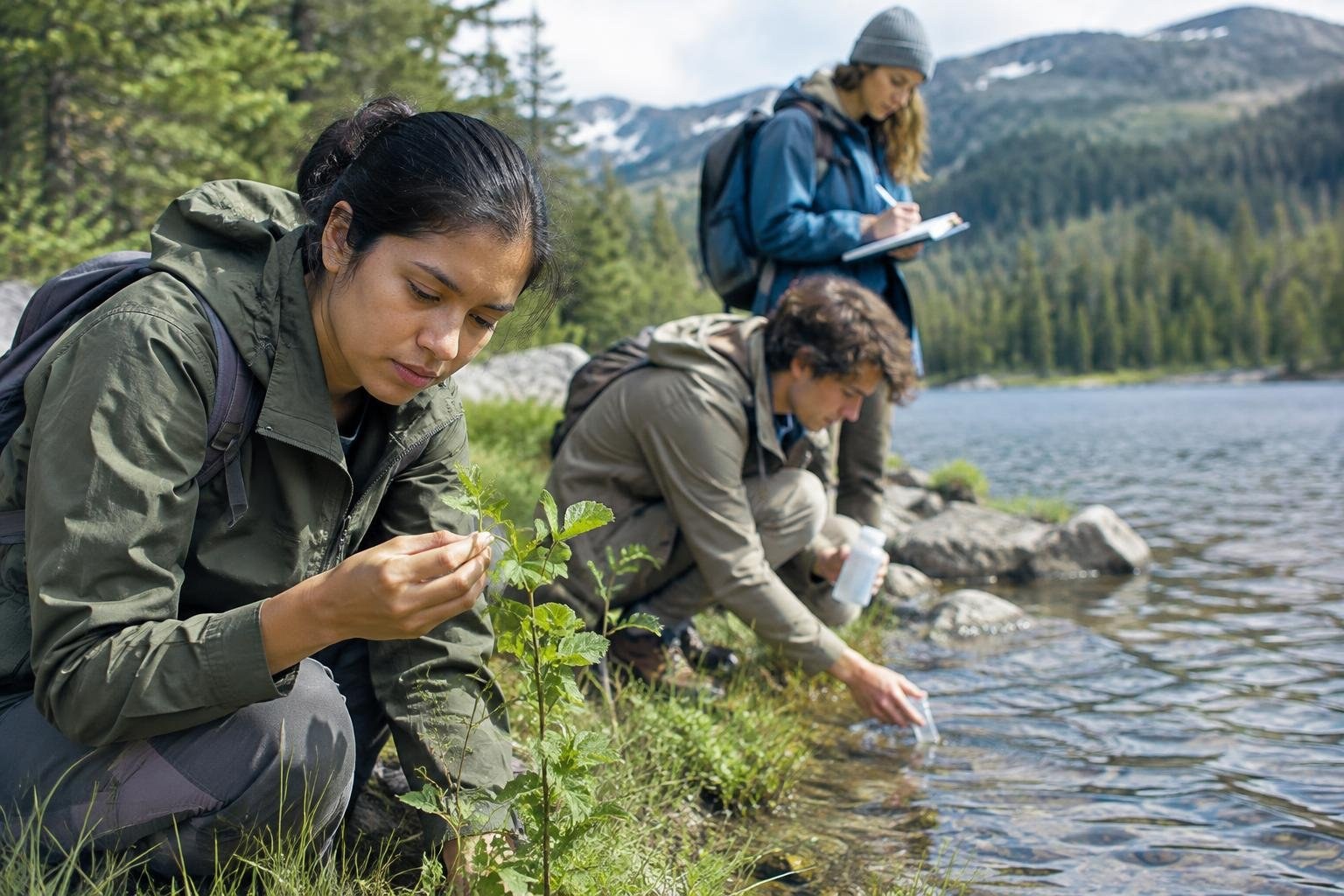
Environmental studies coursework commonly connects natural systems with practical questions about conservation and resource decisions. At the undergraduate level, one example program includes ecological and sociopolitical concepts as well as plant and tree identification, land surveying, natural-resource measurements, geospatial applications, soil and water monitoring, wildlife techniques, and forest recreation. Other programs may place more weight on policy, research, or particular ecosystems.
At advanced levels, options can include graduate certificates and master’s study in natural resources, conservation, and sustainability. A University of Rhode Island certificate describes study in sustainable resource management, GIS, and natural-resource decision frameworks. A University of New Hampshire master’s option combines natural-resource and environmental study with conservation and sustainability; its program information says students typically bring a bachelor’s degree or a strong background in environmental and natural-resource sciences and an interest in combining natural and social sciences. These are examples, not required courses for every degree.
Look for more than course titles. Ask whether students collect and interpret field data, use mapping tools, complete research or projects, and apply concepts to real resource-management questions. Ask how often courses require field visits, lab work, or community and agency collaboration.
See an applied undergraduate curriculum example, and compare it with the actual catalog for colleges you are considering.
Skills You Can Develop
Depending on its courses and practical experiences, an environmental studies degree can help students build skills in understanding ecological concepts, collecting measurements, interpreting data, and explaining resource choices. Training in geospatial applications may introduce GIS, while soil and water monitoring or wildlife techniques develop field-based experience. Resource-management study can also build the ability to consider environmental and social factors together.
- Scientific and field skills: Observe natural systems, identify selected plants or trees, and collect resource measurements where the curriculum provides this training.
- Technical skills: Learn geospatial applications or GIS and practice working with environmental information.
- Analysis and decision-making: Consider evidence alongside social, economic, or policy context when assessing resource questions.
- Communication: Explain findings and tradeoffs to audiences involved in environmental decisions.
Skills depend on courses and practice. A program that lists GIS in a catalog may provide a different level of experience from one that requires multiple applied projects. Ask to see sample assignments or project descriptions.
Who Is This Degree Best For?
Environmental studies may suit students who want to understand nature and also examine how people make decisions about land, water, wildlife, and conservation. It can appeal to learners who like combining scientific evidence with policy, community, or management questions. Some programs include substantial outdoor work; others may be more classroom- or research-focused.
You do not need to match a single personality profile. Consider whether you are comfortable learning scientific concepts, gathering evidence, working with data, and discussing environmental tradeoffs. If you prefer a defined technical specialty, compare forestry, fisheries, environmental science, or GIS-oriented programs. If social policy and planning are your primary interests, compare environmental policy or planning curricula.
Does Environmental Studies Match You?
Salary, job growth, and a college’s reputation matter, but they do not establish whether the daily work will fit your interests and preferences. The Free MAPP Career Assessment can help you explore career alignment; Degree Matching, Career Matching, and Matching Jobs can help you compare education and work directions. Use those tools as starting points, then verify required qualifications and program details with schools and employers.
Admissions, Program Length, and Academic Difficulty
Admissions requirements are set by individual colleges and degree levels. The supplied program examples do not establish one standard GPA, test, essay, portfolio, or prerequisite rule for all environmental studies programs. Check each institution’s admissions page and ask whether science preparation, transfer credits, or previous coursework is expected.
Completion time also varies. Certificate, associate, bachelor’s, and graduate programs differ in credit requirements and pace, and part-time, transfer, and accelerated options depend on the institution. Do not assume that an online or interdisciplinary program is shorter. Request a degree plan showing required credits, course availability, and the likely sequence through graduation.
Academic demands may include natural-science concepts, data, field measurement, and applied technical work, depending on the curriculum. Students can prepare by reviewing introductory science material, strengthening quantitative skills, and asking advisers about tutoring or field-course expectations.
Online vs. On-Campus Environmental Studies
Environmental studies may be available in campus, hybrid, or online formats, but offerings and hands-on requirements are school-specific. Online delivery does not automatically mean that field learning is absent, and a campus program does not guarantee extensive field experience. Ask whether required labs, monitoring activities, field trips, internships, or research projects are offered in a format you can complete.
Before enrolling in a remote program, confirm how students access equipment, complete any in-person requirements, and get supervision for field or project work. If you are comparing programs from different states, verify that you can complete all requirements from your location and that the degree supports your intended next step.
Cost, Financial Aid, and Affordability
There is no single reliable tuition figure for environmental studies in the supplied research. Total cost depends on the school, public or private status, residency, degree level, delivery format, and individual fees. Books, transportation, field activities, equipment, and living costs may also affect a student’s budget; ask each college which of these apply to its program.
Compare the full estimated cost of attendance, not just a per-credit price. Request a written estimate for the expected time to completion and ask how transfer credits affect the bill. Complete the Free Application for Federal Student Aid (FAFSA) if eligible, then review grants, scholarships, work-study, loans, and any employer education benefit for which you qualify. Ask financial-aid offices about program-specific awards and payment deadlines.
Transfer pathways and lower-cost public options may be worth comparing, but verify that credits will apply to your intended degree before enrolling. An associate-level applied program, for example, may offer preparation for environmental-sector work or further study; transfer arrangements depend on the receiving college.
Careers, Jobs, and Employment Outlook
Environmental studies can support several directions, but the title alone does not guarantee eligibility for a particular occupation. A program description from SUNY ESF says graduates may continue to a bachelor’s degree or go directly to work in the environmental and natural-resources sector. Check the U.S. Bureau of Labor Statistics and O*NET for current occupation-specific information before relying on pay or growth estimates.
| Career direction to investigate | How related study may apply | What to verify |
|---|---|---|
| Environmental or natural-resources technician roles | Field measurements, resource monitoring, and applied ecological training may be relevant. | Employer requirements, field experience, and any required credentials. |
| GIS or geospatial support work | Geospatial applications and GIS training can connect to mapping-related tasks. | Software proficiency, portfolio expectations, and technical requirements. |
| Conservation and resource-management roles | Ecology, conservation biology, and resource-management coursework provide related foundations. | Whether the role requires a specialized degree, experience, or additional credentials. |
| Environmental science roles | Science and data coursework can be relevant to environmental analysis. | The BestColleges overview notes that environmental scientists and specialists usually have a bachelor’s degree in environmental science or a related subject; confirm qualifications for each employer. |
| Environmental planning, outreach, or interpretation | Some programs include social, communication, public-land, or resource-interpretation perspectives. | Writing, public engagement, planning, and policy requirements in job postings. |
| Graduate research or advanced specialization | Graduate study may extend scientific, conservation, or sustainability preparation. | Prerequisites, research experience, and whether the target role needs an advanced degree. |
Employers and opportunities can vary across public agencies, consulting organizations, nonprofits, education, and resource-dependent industries. Treat these as sectors to investigate, not a guarantee of openings. Technology such as GIS can support environmental work, while professional judgment, field knowledge, and communication remain important parts of many resource decisions. Ask programs for current graduate examples and internship partners rather than relying on broad career promises.
Find out which Career or College Major is right for you!
Take the MAPP free today!Experience, Certifications, and Licensure
Environmental studies is an academic degree, not automatically a professional license. Requirements depend on the occupation, employer, and state or other jurisdiction. Before choosing a program, identify the qualifications listed for jobs you want and ask the school whether its coursework prepares students for them.
Internships, field projects, research, volunteer work, and student organizations can help students apply concepts and build examples of their work. Ask whether the program helps arrange placements and whether students can complete projects using field measurements, GIS, or resource-monitoring methods. Save maps, reports, presentations, and project summaries when you are allowed to share them.
How to Stand Out to Employers
- Build practical experience related to a target role, not just a list of courses.
- Develop examples of field, data, mapping, writing, or public-engagement work.
- Read real job postings and identify skills or credentials you still need.
- Ask faculty and career services about employer contacts, internships, and alumni paths.
Graduate School and Further Study
Graduate options can include a certificate, master’s degree, or doctorate in areas such as natural resources, environmental conservation, or sustainability. Students may pursue advanced study to deepen a specialty, prepare for research, or meet an employer’s education expectations. The right credential depends on the career goal; more education does not automatically improve employment prospects for every role.
Some colleges offer pathways that allow undergraduates to complete graduate-level coursework early. The University of New Hampshire program information describes eligible master’s students earning up to 12 graduate credits while completing a bachelor’s degree. Confirm current eligibility, course rules, and whether credits apply to the degree you plan to pursue.
Related Degrees and Alternatives
Compare environmental studies with alternatives by reading required courses rather than relying on degree names alone.
- Environmental science: Consider this if you want a curriculum more centered on scientific investigation and environmental data.
- Natural resources management: Consider this if your main interest is planning and managing natural resources.
- Forestry: Consider this if you want a more focused path involving forests and land management.
- Wildlife or fisheries science: Consider this if you want coursework centered on particular animal populations or aquatic systems.
- Environmental policy: Consider this if regulation, institutions, and public decisions interest you more than field science.
- Geography or GIS: Consider this if spatial data and mapping are your central interests.
- Environmental economics: Consider this if you want to examine resource decisions through economic analysis.
- Environmental and natural-resources technology: Consider this if you prefer applied measurement, surveying, monitoring, and field techniques.
These are comparison directions, not claims that every institution offers the same programs. Environmental studies may be broader and combine scientific and sociopolitical ideas; a specialized major may provide greater depth in one discipline. Compare graduate-school prerequisites and job qualifications for the roles you want.
Advantages, Drawbacks, and Is It Worth It?
The value of an environmental studies degree depends on your goals, college costs, available experience, and the qualifications expected in your target field. A broad interdisciplinary curriculum may be useful if you want to connect environmental knowledge with social and management questions. A specialized major may be a better fit if you already know you want focused scientific or technical preparation.
Possible drawbacks include variation in program content, uncertainty about which jobs a broad degree qualifies you for, and the need to build experience or continue studying for certain roles. Reduce that uncertainty by reviewing real job postings, asking colleges for graduate outcomes, and estimating the total cost through completion. There is no universal answer to whether the degree is worth it; compare likely pathways with your personal circumstances.
How to Choose the Right Environmental Studies Program
Program names and promises can obscure important differences. Use these questions to compare colleges and reduce the risk of choosing a program that does not match your goals:
- What courses are required, and how much study focuses on science, policy, management, or technology?
- Is the institution appropriately accredited, and are any relevant professional or programmatic accreditations important for my target role?
- What is the full estimated cost through completion, including fees, field expenses, and living costs?
- Which scholarships, grants, transfer arrangements, and financial-aid options could apply?
- Are fieldwork, GIS, internships, research, or applied projects required or optional?
- Can online students complete every field or in-person requirement?
- What are the program’s completion and graduate outcomes, and how are those figures defined?
- Does the program prepare students for any credential or license needed for my target job?
- Will transfer credits apply to my degree plan, and can the school confirm that in writing?
- What career services, employer connections, and internship support can students actually access?
Check accreditation through the institution and recognized accreditation resources; do not assume a program has a specialized accreditation unless the school and relevant accreditor confirm it. Ask for specific, current answers and compare at least two or three programs.
From Degree to Career: Possible Pathways
Career development is not automatic, but a degree can be one stage in a longer path. Examples to research include:
- Applied natural-resources program → entry-level environmental-sector work → field or technical experience → a resource-management specialty → possible supervisory or advanced technical responsibilities.
- Environmental studies bachelor’s → an environmental or related role that accepts the degree → experience with data, fieldwork, or community projects → a conservation or sustainability focus → possible graduate study for roles that require it.
- Environmental studies bachelor’s → graduate certificate or master’s study → deeper training in GIS, conservation, or resource decision-making → specialized work aligned with employer requirements.
These are illustrative sequences, not promised promotions or standard requirements. Job titles, credentials, and advancement differ by employer and location. Use the MAPP Career Assessment and related Degree Matching, Career Matching, and Matching Jobs tools to explore fit, then validate your choices with program advisers and current job postings.
Next Steps: Questions to Ask Before Enrolling
Before committing, write down the answers to these questions and compare them across schools:
- What will the degree teach, and which courses directly connect to my interests?
- What qualifications do employers require for jobs I might want?
- What is the realistic total cost, and which aid options can I confirm?
- How much fieldwork, lab work, GIS, or applied project experience will I complete?
- Can I finish in my expected time while balancing work or family responsibilities?
- Are online and transfer-credit arrangements clear and documented?
- What evidence can the college provide about completion, internships, and graduate outcomes?
- Do I need a license, certification, or graduate education for the roles I am targeting?
- What alternatives would provide a closer match to my preferred work?
Talk with an academic adviser, financial-aid office, and current or recent students. If possible, review a sample project or visit a field course. Explore college and program options that fit your goals, and use the Free MAPP Career Assessment as one tool for considering personal fit.
Frequently asked questions
Is environmental studies a hard degree?
Environmental studies can be challenging because it combines natural-science concepts with social, policy, and management questions. Some programs also require fieldwork, data analysis, GIS, or quantitative coursework. The balance varies by school and concentration, so review actual course lists and ask about field or lab expectations before applying.
Is an environmental studies degree worth it?
It may be worthwhile if the curriculum supports your career plans, the total cost is manageable, and you are prepared to build relevant experience. Outcomes depend on specialization, location, internships, and whether a target role requires graduate education. Compare programs and likely career paths rather than assuming the degree alone guarantees a particular job or salary.
What jobs can I get with an environmental studies degree?
Potential directions include work in environmental and natural-resources organizations, conservation, resource management, GIS-supported work, and environmental science. A specific job may require additional coursework, experience, certification, or a graduate degree. Ask each program for examples of graduate roles and how its coursework connects to them.
How much can you make with an environmental studies degree?
Pay varies substantially by occupation, experience, location, employer, and education. The research available for this guide does not provide current, comparable salary figures for environmental studies graduates, so it would be misleading to give one degree-wide salary. Look up wage data for specific occupations and compare local job postings before deciding.
Can you earn an environmental studies degree online?
Some environmental studies courses and programs are offered online, but availability and hands-on requirements differ. Ask whether the program includes field labs, in-person activities, internships, or local placements, and confirm whether remote students can complete them. Review the course delivery details rather than relying on the program’s online label alone.
Does environmental studies require a lot of math?
The amount of math varies by program and career direction. Environmental work can involve measurements, data, mapping, and quantitative analysis, while some curricula emphasize policy, communication, or management. Review required courses in statistics, mathematics, and research methods, and ask advisers how much quantitative work is expected in your chosen concentration.
Do I need a graduate degree after environmental studies?
Graduate school is not automatically required for every environmental or natural-resources role. It can be relevant for advanced specialization, research, or some professional positions. Requirements vary by occupation and employer. Identify the jobs you want, check their stated qualifications, and then decide whether a bachelor’s degree, graduate certificate, master’s, or doctorate fits your plan.
What is the difference between environmental studies and environmental science?
Environmental science programs generally emphasize scientific study of environmental conditions, while environmental studies may combine natural sciences with social, policy, and management perspectives. Actual curricula vary, and program names are not perfectly standardized. Compare required courses, field training, and graduate outcomes to see which program better matches your intended work.
People Also Ask
What do you learn in environmental studies?
Environmental studies programs may be interdisciplinary, bringing together natural sciences with social, policy, or management perspectives. Check the specific course plan because the balance differs between colleges.
Can you get a job with an environmental studies degree?
It can lead toward work in environmental and natural-resources organizations, but the particular roles available depend on skills, experience, employer requirements, and region. Ask programs for graduate examples and internship options.
How much does an environmental studies degree cost?
Environmental studies is a broad program area, so tuition depends on the college, residency, degree level, and format. Compare each school’s full cost of attendance and aid offer rather than assuming a single national price.
Are environmental studies programs available online?
Yes, some programs offer online study, but field and lab components may require in-person or locally arranged activities. Confirm the delivery of every required course before enrolling.
Is GIS part of an environmental studies degree?
GIS skills can be useful in natural-resource decision-making and are included in some environmental and natural-resources training. Look for actual GIS coursework and opportunities to use mapping tools in projects.
Who should major in environmental studies?
Environmental studies may suit students interested in both environmental systems and the human decisions affecting them. Students who want a more concentrated scientific or technical curriculum should compare environmental science and other specialized programs.
Environmental studies can prepare students to understand natural systems and the choices people make about managing them. The degree’s value depends on the program’s science and applied training, the experience a student gains, the roles available in their region, and whether further education is needed for their goals. Compare curriculum, total cost, field opportunities, and graduate outcomes before enrolling. If you enjoy connecting environmental questions with practical decisions, investigate programs and careers closely; if you prefer a narrower scientific or technical focus, compare specialized alternatives first.
Sources & Official Resources
The program and career descriptions in this guide draw on these supplied references. Their examples illustrate how curricula can differ; they are not a substitute for a current college catalog or occupation-specific labor-market research.
- SUNY College of Environmental Science and Forestry: Environmental and Natural Resources Conservation, A.A.S.
- San Francisco State University: Environmental Studies, Natural Resource Management and Conservation concentration
- University of Rhode Island: Natural Resources and the Environment Graduate Certificate
- University of New Hampshire: Natural Resources, Environmental Conservation and Sustainability, M.S.
- University of New Hampshire: Natural Resources and Environmental Conservation and Sustainability program information
- BestColleges: Natural Resources and Conservation overview
- College Factual: Natural Resources Conservation Degree Guide
- Michigan Technological University: CIP 03 Natural Resources and Conservation
For current wages and employment projections, consult official occupation-level sources such as the U.S. Bureau of Labor Statistics and O*NET, then match the occupation to the duties and qualifications described by employers.
- Natural Resources and the Environment Graduate Certificate – Department of Natural Resources Science
- Natural Resources: Environmental Conservation and Sustainability, M.S. - COLSA, UNH | University of New Hampshire
- Bachelor of Science in Environmental Studies: Concentration in Natural Resource Management and Conservation | San Francisco State University Bulletin
- Natural Resources: Environmental Conservation and Sustainability (M.S.) | Natural Resources and the Environment
- Academic Programs - Environmental and Natural Resources Conservation, A.A.S.
- CIP 03 Natural Resources and Conservation | ASPIRE