Degree Library
Forestry Degree Guide: Courses, Careers, Costs, and Program Fit
A forestry degree is a college program focused on forests, natural resources, and ways people manage and conserve them. Depending on the program, students may study forest ecology, silviculture, wildlife, field inventory, and fire or fuels management, with hands-on work complementing classroom learning. Forestry education ranges from certificates and associate degrees to bachelor's and graduate study. Graduates may pursue forest technician or management roles, conservation work, and other jobs connected to public or private lands. The right pathway depends on the occupation you have in mind, the amount of fieldwork you want, and the education employers expect. Not sure whether forestry fits you? Take the Free MAPP Career Assessment to explore how your motivations, interests, and natural preferences may align with forestry and related careers.
Millions of people Take the MAPP Career assessment to see which Degrees are the best Match!
You can too,
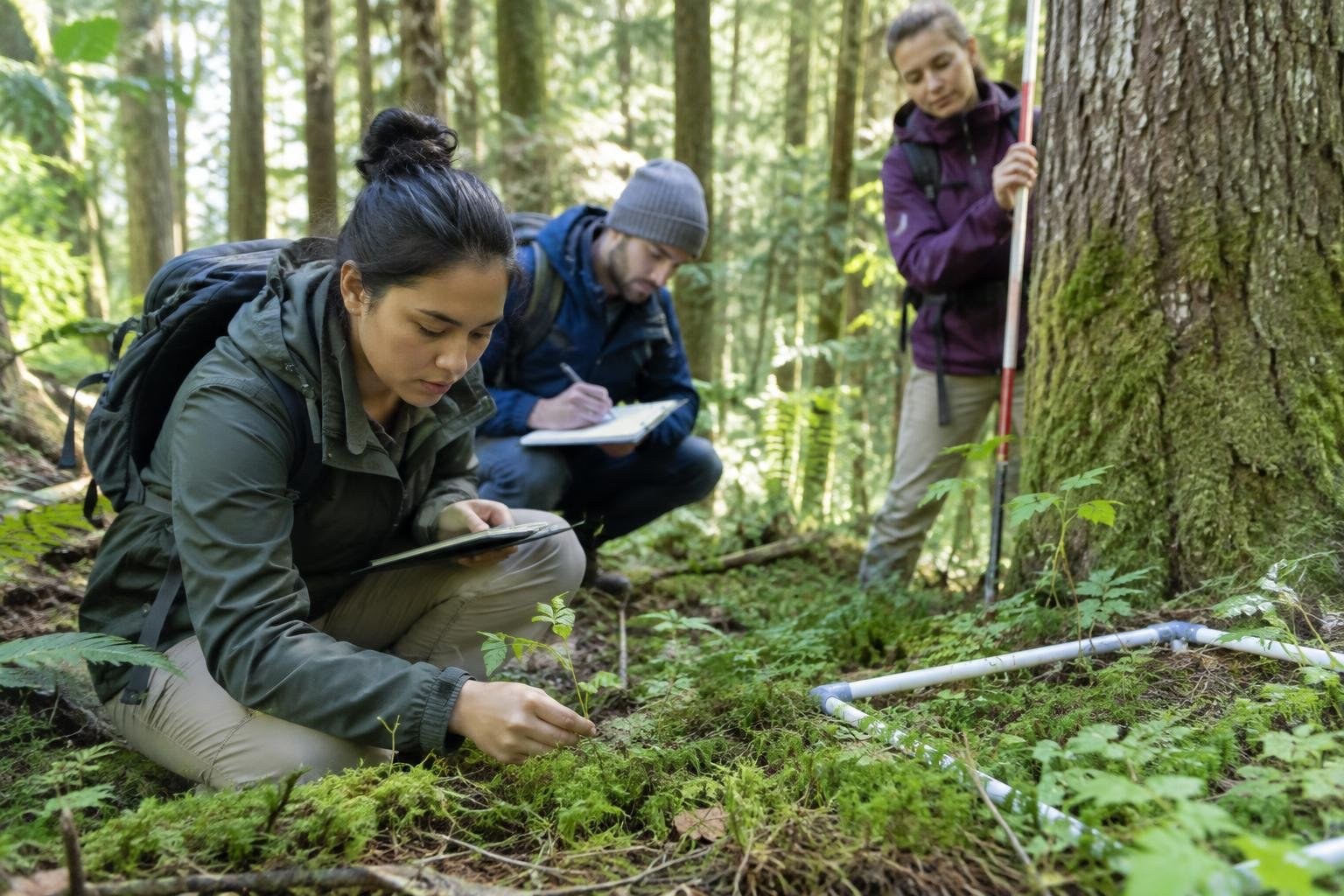
What Is a Forestry Degree?
Forestry is the study and practice of understanding, managing, and conserving forest resources. A forestry program may combine forest ecology and silviculture with wildlife topics, field inventory, fire and fuels management, or broader natural-resources coursework. The balance between conservation, recreation, and economic uses depends on the specific program.
Program names are not perfectly interchangeable. Some schools call the field forestry, forest resources, or forestry and natural resources. The label “Forestry, Other” can be a useful way to describe a related program that does not fit a more specific category, but students should look at actual course requirements rather than the title alone. Forest management, forest sciences, wildlife management, and general natural resources programs may share courses while preparing students for different emphases.
For example, the University of Florida's Forest Resources and Conservation bachelor's curriculum includes forest ecology, silviculture, and wildlife, and describes preparation for managing public or private land. Oregon State University's College of Forestry lists programs in forestry, natural resources, wood science, engineering, and outdoor recreation. Those examples show why a degree name is only a starting point for comparison.
Sources: University of Florida catalog; Oregon State University College of Forestry.
What Do You Study in a Forestry Major?
Forestry curricula vary by degree level and school, but many programs connect scientific foundations to practical resource decisions. Look for courses that explain how forest ecosystems function and how management choices affect forest conditions and uses.
- Foundations: Programs may introduce forest ecology, natural resources, and the scientific concepts used to understand forest systems.
- Management topics: Silviculture addresses forest growth and management practices. Other coursework may cover wildlife, forest inventory, fire and fuels, or resource planning.
- Field learning: Fieldwork can help students apply classroom ideas to forests and land-management questions. The Forestry and Natural Resources program at College of the Redwoods describes extensive fieldwork alongside classroom discussion of forest ecology, fire and fuels management, and inventory.
- Advanced work: Graduate-level study may offer specialized coursework or research, while certificates can focus on a particular professional subject. Requirements vary, so ask whether a capstone, thesis, internship, or other applied project is part of the program.
Ask for a current course sequence and examples of field assignments. A program with a relevant name may not offer the specialization, location-based experience, or practical training you need.
Sources: College of the Redwoods Forestry and Natural Resources; University of Florida catalog.
Who Is a Forestry Program Best For?
Forestry study may suit students who are curious about forests, wildlife, land management, and the choices involved in balancing conservation with public or private land uses. Some students are drawn to outdoor, field-based work; others are more interested in planning, research, or resource decisions. A single personality type is not required, and students should investigate the daily work behind specific careers.
Expect to engage with science and evidence. The amount of mathematics, laboratory work, technical tools, and outdoor activity varies by curriculum. Review prerequisites and required courses, then ask an adviser how to prepare if you have not taken recent science or quantitative classes.
Typical admission considerations
Admission requirements are set by each college and may differ for certificates, two-year programs, bachelor's study, and graduate programs. Check each school's current application rules, prerequisites, transfer-credit policies, and deadlines. Do not assume that a requirement at one university applies to every forestry program.
Does forestry match you?
Salary and job availability matter, but they do not show whether you will enjoy the tasks, settings, and tradeoffs of a career. Consider whether you want to collect and interpret field information, work with land-management questions, or pursue another natural-resources focus. The Free MAPP Assessment, Degree Matching, and Career Matching can help you reflect on fit; use the results as a starting point for research, not as a substitute for comparing curricula and occupations.
Credential Levels, Program Format, and Completion Time
Forestry credentials and program formats vary by school. For example, community colleges offer forestry, wildlife, or natural-resources certificates and degrees, while Oregon State University lists undergraduate and graduate study in forestry and related fields. Colorado State University offers an online graduate certificate in silviculture for professionals in forest management and conservation roles. Compare the actual award, courses, and preparation each program provides rather than assuming credentials with similar names serve the same purpose.
Time to finish also varies. Enrollment pace, transfer credits, prerequisites, course availability, and field components can affect a student's schedule. Request a term-by-term degree map and ask how many transfer credits the college will accept before committing.
Campus programs may include in-person field instruction, while some coursework or certificates can be completed online. An online option does not necessarily provide the field experience a particular job may require, so ask about practical training and any in-person requirements.
Forestry Degree Costs and Financial Aid
There is no single tuition price for a forestry degree. Your total depends on the college, residency status, credential level, study format, and fees. Include books, transportation to field sites, equipment, and any program-specific expenses in your estimate. Compare the total amount you would pay to finish, not only the advertised cost per credit.
Ask every school for a personalized cost breakdown and financial-aid estimate. Review grants, scholarships, work-study, employer tuition support, and payment plans where available. Students considering a two-year college can ask whether credits transfer into a bachelor's program and whether the receiving school will apply them to the major rather than only electives.
Ways to make the pathway more affordable
- Compare public and private options, including the cost difference between resident and nonresident tuition.
- Ask about scholarships for natural-resources students and whether field-related costs are included in the estimate.
- Check transfer agreements before starting coursework elsewhere.
- For online study, compare tuition and fees with any required travel or in-person sessions.
- Review financial-aid eligibility and renewal conditions before accepting an offer.
Calculate net cost alongside the credential required for your intended role. A less expensive pathway is only a good value if it provides the courses, experience, and transfer options you need.
Forestry Careers, Jobs, and Employment Outlook
Forestry-related programs may support work connected to forest management, conservation, field inventory, wildlife management, and forestry technology. The College of the Redwoods describes preparation for managing public or private forested lands for economic, recreational, and conservation purposes. The University of Arkansas at Monticello describes its natural-resources major as offering general and professional coursework, including a Forestry option focused on managing forest resources and a Wildlife Management and Conservation option.
Possible areas to explore include:
- Forest management: Study and work related to managing public or private forests for conservation, recreation, and economic purposes.
- Wildlife management and conservation: Compare programs with wildlife-focused options against forestry curricula.
- Field inventory and monitoring: Review course plans to see what field methods and resource topics students practice.
- Silviculture: Specialized study may be relevant to professionals working in forest management or conservation roles.
- Research or teaching: Check the education and experience requirements for the specific role or institution.
Work settings and opportunities vary by location, hiring needs, experience, and qualifications. Check current job postings for the places where you want to work, and verify the education and experience employers request before choosing a program.
Find out which Career or College Major is right for you!
Take the MAPP free today!Experience, Certification, Licensure, and Accreditation
Coursework alone may not show an employer that you can apply forestry concepts in a real setting. Ask programs how students gain practical experience through fieldwork, internships, research, projects, or work with public and private land organizations. Build relevant experience before graduation when possible, and keep a record of projects, methods used, and skills practiced.
How to stand out to employers
- Choose field or research projects that connect to the work you want.
- Ask faculty and advisers about internships, seasonal roles, and professional networks.
- Develop clear communication skills alongside technical knowledge; resource work often involves explaining observations and decisions.
- Investigate job-specific certifications or credentials only after checking employer expectations and the issuing organization's requirements.
- Ask whether the program helps students document field experience or build a portfolio of projects.
A degree is not automatically the same as a professional license or certification. Requirements can depend on the occupation, employer, and state. Before enrolling, contact the relevant licensing or credentialing authority if a job you want appears to require a regulated qualification.
Some forestry options have program-level accreditation. The University of Arkansas at Monticello identifies its Forestry option as accredited by the Society of American Foresters. Confirm the current status and precise scope of accreditation directly with the school and accreditor; do not assume that every program at a college has the same accreditation.
Source: University of Arkansas at Monticello natural-resources degrees.
Graduate School and Specialization Options
Further study may be useful if you want a more specialized role, research training, or advanced study in forestry or a related field. Options include a master's degree, doctorate, or graduate certificate. Oregon State University's College of Forestry lists both undergraduate and graduate study across forestry, natural resources, wood science, engineering, and outdoor recreation. Colorado State University's online silviculture graduate certificate is an example of focused post-bachelor's learning for people in forest management and conservation roles.
Graduate school is not automatically necessary after a bachelor's degree. Start with the roles you are considering and determine whether employers ask for a graduate credential, specific experience, or a different specialization. Ask graduate programs about prerequisites, research or project expectations, funding, and whether the credential builds on your existing experience.
Sources: Oregon State University College of Forestry; Colorado State University online silviculture certificate.
Related Degrees and Alternatives to Forestry
Related degrees can lead toward overlapping natural-resources work, but their course plans may emphasize different subjects. Compare the required classes and applied experience rather than choosing by the most appealing program name.
- Natural resources: Consider this if you want a broader mix of resource-management topics. Some programs offer separate forestry and wildlife management options.
- Wildlife, fish, and conservation: Consider this if wildlife or conservation coursework is more central to your goals than forest management.
- Forest sciences or biology: Consider this if you want a stronger scientific focus on forest systems.
- Environmental science: Consider this if you want to study environmental questions beyond forests; compare science requirements and field topics.
- Environmental studies: Consider this if you prefer a broader social, policy, or interdisciplinary lens; check whether it includes the technical field preparation you need.
- Forestry technology: Consider this if you are seeking a more applied or technician-oriented pathway and have verified employer requirements.
- Natural-resource economics: Consider this if you are drawn to economic analysis of land and resource decisions.
- Silviculture certificate: Consider this if you already work in forestry or conservation and need focused additional study rather than a full degree.
These are comparison prompts, not guarantees about what every named program teaches. Review course catalogs and ask about transfer credit, graduate-school prerequisites, and the career roles the program supports.
Sources: University of Arkansas at Monticello natural-resources degrees; Oregon State University College of Forestry; Colorado State University online silviculture certificate.
Advantages, Drawbacks, and Is a Forestry Degree Worth It?
A forestry degree may be a good investment for students whose goals align with its curriculum and who can complete the required education at a manageable cost. Potential advantages include focused study of forests, access to field learning in some programs, and pathways into natural-resources work. A two-year option may also provide a starting point for students who want to explore the field before pursuing additional study.
There are tradeoffs. Programs differ in field access, specialty courses, transferability, and connection to employers. A credential may not qualify you for every job carrying a forestry-related title, and additional training or education may be expected for some paths. Work preferences also matter: someone who wants a primarily indoor role or a different environmental focus may prefer another major.
Evaluate value by comparing the full cost and time commitment with the qualifications for your target jobs. Check job postings, speak with program advisers, and ask recent graduates about the experiences that helped them find work. Neither a degree title nor a broad labor-market claim can guarantee an individual outcome.
How to Choose the Right Forestry Program
Use a consistent checklist when comparing colleges. A school should be able to explain what students learn, how they practice it, and what the program costs. Ask:
- Is the college institutionally accredited, and does the specific forestry option hold any relevant program accreditation?
- Which courses are required, and what areas of forestry or natural resources can students focus on?
- How much fieldwork is included, where does it take place, and are travel costs included in the estimate?
- Are internships, research, or employer connections available, and how are students supported in finding them?
- What is the full estimated cost after fees and aid, and what financial aid can renew in later years?
- Can credits transfer to another college or into a bachelor's program?
- Does the format fit your needs, and are any in-person activities required?
- What career services, graduate pathways, or licensing and certification guidance does the school provide?
Look beyond promotional descriptions. Compare the current course catalog, written cost information, program accreditation details, and career support. If you are choosing between forestry and related fields, use Assessment.com's Degree Matching and Career Matching tools to explore options, then verify each pathway with colleges and employers.
From Forestry Degree to Career: Practical Next Steps
Consider how a forestry education could connect to a career without treating one step as guaranteed. A possible sequence might be: associate-level forestry or natural-resources study → forestry technician role → additional field experience → a specialized forest-management or conservation focus. Another pathway might be: bachelor's study in forest resources → entry-level role connected to public or private land management → added project or research experience → graduate study or specialized professional work.
The actual route depends on hiring requirements, location, experience, and the program's curriculum. Confirm that your chosen degree level aligns with real job postings before deciding how much education to pursue.
Questions to ask before enrolling
- What is the total cost to completion, including field-related expenses?
- Which employers and job titles do graduates pursue?
- What fieldwork, internship, or research experience can students access?
- Is accreditation specific to this program, and how can I verify it?
- Will the format, schedule, and location work for me?
- How will credits transfer if I change schools or continue to a bachelor's degree?
- What financial aid is available, and what are its renewal conditions?
Before choosing a degree, consider whether forestry work matches your interests and preferences. The Free MAPP Career Assessment can help you explore career fit, while Degree Matching and Career Matching can support comparison of related educational and job pathways.
Frequently asked questions
What do you study in a forestry degree?
Forestry study focuses on understanding and managing forests and related natural resources. Depending on the program, coursework may include forest ecology, silviculture, wildlife, field inventory, and fire or fuels management. Students may also complete fieldwork or other hands-on learning. Course requirements and emphasis vary by school and credential level.
Is a forestry degree hard?
The difficulty depends on the curriculum and your preparation. Forestry programs can combine science, field activities, resource management, and written or quantitative work. Review course requirements and ask about fieldwork expectations before enrolling. If you are unsure about science or outdoor work, compare course plans and talk with an adviser about introductory preparation.
What jobs can you get with a forestry degree?
Forestry-related programs may prepare students for work connected to forest management, conservation, inventory, or wildlife management. The degree title alone does not determine eligibility: employers may look for specific coursework, field experience, credentials, or additional education. Ask programs about the roles their graduates pursue and verify requirements in the places where you want to work.
How long does it take to earn a forestry degree?
Forestry programs and related credentials are available at different levels, but completion time depends on the credential, enrollment pace, transfer credits, and program structure. Ask each school for a degree map and a written estimate of your time to completion.
Can you earn a forestry degree online?
Some forestry-related coursework and certificates are available online. For example, Colorado State University offers an online graduate certificate in silviculture. Online study may not replace field experience or other hands-on learning needed for a particular role, so check how a program handles practical skills and any in-person requirements.
What is the difference between forestry and natural resources?
Forestry focuses on forests and their management, while natural resources programs may address a wider mix of land, wildlife, and conservation topics. The exact difference depends on each school's curriculum and options. Compare required courses, field experiences, and the occupations each program is designed to support rather than relying on the degree name alone.
Is a bachelor's degree required for forestry work?
The appropriate credential depends on the target occupation and employer expectations. Compare job postings with program curricula, and ask schools which qualifications graduates pursue for the roles you are considering.
Is a forestry degree worth it?
Value depends on total cost, financial aid, the level of education required for your goals, and the program's practical and career preparation. Compare actual net cost and outcomes rather than assuming one credential pays off for every student.
People Also Ask
What classes are in a forestry major?
Forestry programs can include forest ecology, silviculture, wildlife topics, and resource inventory. Many pair classroom learning with practical fieldwork, though course plans vary. Compare the required courses and field components at each school.
Do forestry students spend time outdoors?
Forestry coursework can involve scientific observation, resource management, and field activities. The balance varies by program, so review course prerequisites and ask whether students need to travel to field sites or complete practical assignments.
Are forestry programs available online?
Some forestry programs offer online courses or certificates, including an online graduate certificate in silviculture at Colorado State University. Confirm whether an online option includes or expects practical field experience relevant to your goals.
What can I do with an associate degree in forestry?
The qualifications for forestry-related work depend on the job and employer. Compare local job postings with the program curriculum and ask whether the courses and experience offered align with the roles you want.
Does forestry include wildlife and conservation?
Forestry programs may include field inventory, forest ecology, wildlife, or fire and fuels management. Coursework differs by school, and students should compare required classes with the kinds of resources and work settings they want to pursue.
How much does it cost to study forestry?
Costs depend on school, residency, credential, fees, and whether you study on campus or online. Request a total cost estimate that includes books, field-related expenses, and fees, then compare financial aid and transfer-credit policies.
A forestry degree can prepare you to work with forests and other natural resources through field-based, scientific, and management-focused study. The right program depends on the work you hope to do, how much education it requires, and whether the curriculum fits your interests and circumstances. Compare costs, hands-on learning, transfer options, accreditation, and career preparation before enrolling. If you are still weighing choices, explore related degrees and use career and degree matching to identify pathways that fit your motivations.
Sources & Official Resources
- Forest Resources and Conservation | University of Florida Catalog
- Academic Programs and Study Abroad | OSU Forestry
- Academics | College of Forestry - Oregon State University
- Online Forestry & Silviculture Graduate Certificate | CSU Online
- Forestry and Natural Resources
- Forestry Degree Programs - Monticello
- Earn a two-year degree in Forestry, Wildlife, and Natural Resources