Power Plant Technology/Technician Degree Guide: Courses, Careers & Program Choices
Learn what Power Plant Technology/Technician programs teach, which credentials they offer, what jobs they may support, and how to compare programs, costs, and career paths.
By Kieth Nelson · Staff Writer Assessment.com · Published October 7, 2026 · Last updated November 5, 2026
Power Plant Technology/Technician programs teach students to apply technical skills and basic engineering principles to the operation and maintenance of electricity-generating plants. Depending on the school, students may be able to pursue a certificate or associate degree, study online or on campus, and complete an internship or practical training. Curricula, employer connections, and credential options differ, so the program title alone cannot tell you what a particular course of study includes. Graduates may pursue roles connected with power plant operations, nuclear technology, or radiation protection, or continue their education. The right route depends on the job, employer, and any additional preparation required. This guide explains how to compare programs and evaluate whether the work interests you. Not sure whether this field fits you? Take the Free MAPP Career Assessment to explore how your motivations, interests, and natural preferences may align with related careers and education paths.
Degree & Program Decision Insights
Explore your personal fit, education requirements, career potential and next steps.
01Motivational Fit
Discover whether this program fits you
Explore your preferences against the focus of Power Plant Technology/Technician. These prompts are not personal MAPP results.
Subject curiosity. Would you choose to explore “basic electricity” in depth? Ask for a sample learning activity to test that interest.
Breadth of interest. Consider the place of “electrical power” in this field. Is this another part you would choose to explore, or mainly a requirement you would tolerate?
Work reality. Related work can involve this task: “Control generator output to match the phase, frequency, or voltage of electricity supplied to panels.” Would you want that activity to be a regular responsibility?
Interest in studying a field can differ from enjoying its related work.
Which part would you want to do repeatedly, and what would you try before deciding?
Discover Your Personal Program Fit
Before investing your time and money in your education, discover how this program aligns with your natural motivations, work preferences and career goals.
Typical occupational entry: postsecondary nondegree award (BLS). BLS lists less than 5 years of related work experience as typical for this occupation; this programme is not a direct promise of entry. BLS lists moderate-term on-the-job training as typical occupational training.
U.S. occupational wages are not guaranteed graduate earnings; OEWS excludes self-employed workers.
Projected openings include replacements as well as growth.
U.S. national estimates. A crosswalk does not establish entry-level eligibility; advanced, management and teaching roles can require further qualifications.
Compare the focus and route of these distinct instructional fields; their credentials and admission requirements are not interchangeable.
Power Plant EngineeringCIP 14.4802. Compare its emphasis on alternative/renewable energy systems and calculus with this program’s focus.
Hydroelectric Energy Technology/TechnicianCIP 15.1705. Compare its emphasis on hydroelectric energy principles and energy storage and transfer technologies with this program’s focus.
Geothermal Energy Technology/TechnicianCIP 15.1706. Compare its emphasis on geothermal energy principles and energy storage and transfer technologies with this program’s focus.
Explore your motivations. Use MAPP as a starting point for reflecting on your interest in “basic electricity”, then test that interest against a sample learning task.
Examine the work. Compare Power Plant Operators and Electrical and Electronics Repairers, Powerhouse, Substation, and Relay on daily work and entry qualifications, as well as pay.
Compare actual providers. Ask for the exact credential, course sequence and assessment methods. Compare how each provider teaches “electrical power”, its entry criteria and its itemized costs.
Check the evidence before applying. Confirm prerequisites and any recognition or professional requirements for your intended route; ask for applicable rules and published outcome definitions in writing.
Verify the institution’s current offering, admissions requirements and outcomes; a search result does not establish your eligibility.
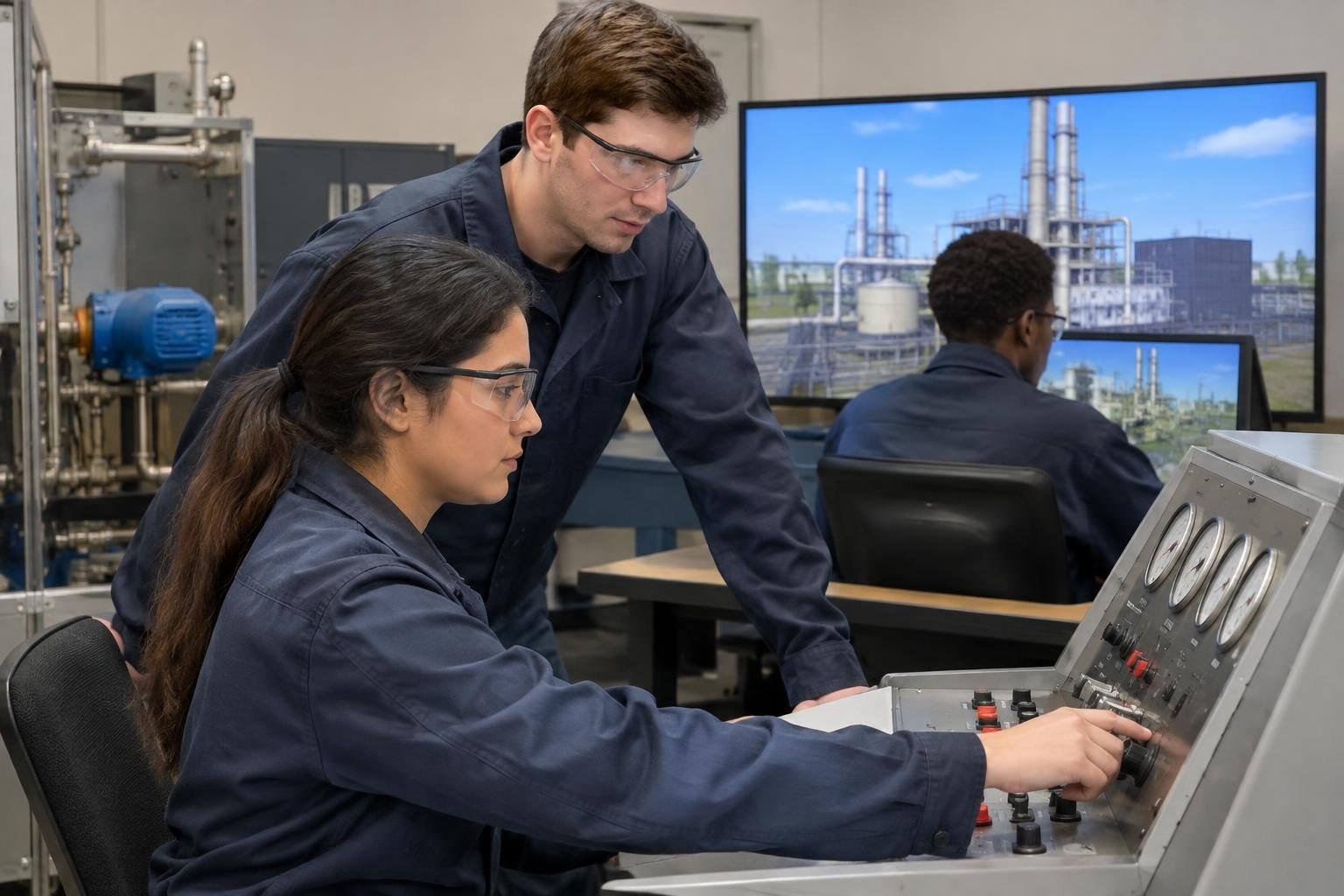
Power plant technology students working with equipment or a training simulator
What the Program Covers
What Is a Power Plant Technology/Technician Program?
Power Plant Technology/Technician is an applied technical field focused on supporting the operation and maintenance of electricity-generating facilities. This is different from assuming that every program is an engineering degree or qualifies a graduate for the same job.
Schools may use names such as Power Plant Technology, Power Plant Technology/Technician, or a more specialized nuclear technology title. At one college, the program offers a technical certificate and an Associate of Applied Science option. Other schools may structure the subject differently, so compare the actual award and course list.
For a broader related perspective, the U.S. Department of Energy describes engineering technicians as working with engineers to plan, design, evaluate, and improve equipment, processes, and facilities. That description concerns hydropower and engineering technician work generally; it should not be read as a promise that every power plant technology curriculum covers hydropower.
Sources: Flint Hills Technical College program options; U.S. Department of Energy engineering technician overview.
Courses, Practical Learning, and Internships
What Do You Study?
Coursework depends on the school and the kind of facility its program addresses. The available program descriptions point to a mix of engineering fundamentals, equipment operation and maintenance, and practical preparation. Nuclear-focused coursework may introduce basic nuclear physics and nuclear engineering, monitoring and safety procedures, radioactive materials handling and disposal, equipment maintenance and operation, and record keeping.
Ask colleges to show you a term-by-term curriculum. Look for how students move from foundational technical concepts to equipment, operations, and safety topics. Find out whether learning uses laboratory exercises, a training simulator, a working facility, an internship, or another applied format. Do not assume that a program includes a specific lab or course unless it appears in the current catalog or the school confirms it.
Some programs include an internship. Flint Hills Technical College lists an internship and offers courses face-to-face or online. Williamson College of the Trades describes practical experience through operation of its college power plant and maintenance of utilities. These are examples of distinct program approaches, not a standard requirement across all colleges.
Sources: Nuclear technology subject overview; Flint Hills Technical College; Williamson College of the Trades.
Personal Fit and Entry Requirements
Who Might Find This Program a Good Fit?
This program may appeal to students who want to understand how electricity-generating facilities operate and who prefer applied, equipment-oriented study to a curriculum focused only on theory. It may also interest adults considering a technical career change or students who want a college credential connected with power and utilities.
Consider whether you are curious about how systems work, willing to learn and follow operating and safety procedures, and comfortable developing technical knowledge over time. You do not need to decide on a personality type to explore the field. Instead, compare what the program teaches with the kinds of tasks and work environments you want.
Does Power Plant Technology match you? Salary, employer reputation, and career headlines are only part of a decision. Consider whether the subject matter and likely work appeal to you, what education you are willing to complete, and whether the roles you are exploring have requirements beyond graduation. The Free MAPP Assessment, Degree Matching, and Career Matching can help you reflect on options; use them alongside college catalogs and conversations with employers.
Before applying, ask each school for its current admissions criteria, prerequisite courses, placement steps, transfer policies, and deadlines. Requirements are program-specific; the sources available for this guide do not establish one national GPA or test standard.
Credential Levels, Online Study, and Duration
Credentials, Format, and Time to Completion
Credential choices can include a technical certificate or associate degree. Flint Hills Technical College lists both a technical certificate and an Associate of Applied Science option. FirstEnergy describes an associated program as a two-year associate degree, but its employer-linked arrangement is specific to that program and should not be treated as the duration or hiring policy of other schools.
Online availability also varies. Flint Hills Technical College says courses are available face-to-face or online and includes an internship. Ask how online students complete any practical work, whether the internship must be local, and whether equipment access or campus attendance is required. Confirm the number of credits, course sequence, transfer-credit rules, and likely completion time for your own enrollment pace.
When comparing credentials, check whether the certificate can be applied toward an associate degree and whether credits transfer to a bachelor’s program. Get answers in writing from both institutions if you expect to transfer.
Sources: Flint Hills Technical College program details; FirstEnergy power plant technology program.
Cost, Affordability, and Funding
Tuition, Costs, and Financial Aid
There is no single price for a power plant technology credential. Ask each school for a complete cost estimate covering tuition, mandatory fees, books, tools or supplies, technology, transportation, and any housing costs relevant to your situation. A program with internships or in-person practice may also require travel or schedule flexibility; confirm these details rather than assuming they are included in tuition.
Compare the total cost of completing the credential, not only the price per credit or advertised tuition. Ask the financial aid office about grants, scholarships, federal student aid, payment plans, and whether you may qualify for employer tuition support. If you are transferring credits or starting with a certificate, request an individualized degree audit so you can see which credits will count.
Before borrowing, compare your expected payments with current occupation-specific pay information and the qualifications employers seek. Do not use an old wage figure as a forecast of your own earnings. Costs and aid eligibility depend on the college, student circumstances, and applicable rules.
Career Paths, Pay, and Outlook
Find out which Career or College Major is right for you!
Possible career directions named in the sources include nuclear technician, radiation protection technician, reactor operator, power plant operator, and engineering technician roles related to hydropower. The best match depends on the facility, the job’s duties, employer requirements, and any further education or workplace preparation. A degree title by itself does not guarantee eligibility for every occupation.
Career direction
How the program may relate
Pay and outlook context
Power plant operator
Program content can prepare students for technical support of plant operation and maintenance. Some school or employer programs are specifically organized around power plant operations.
A secondary source reported a May 2020 median annual wage of $84,650 and a 2019–2029 employment decline projection of 15% for operators in non-nuclear facilities. These historical figures are not current estimates; check current BLS data by occupation and location.
Nuclear technician
A nuclear technology program may cover nuclear fundamentals, equipment, monitoring, safety procedures, and records.
Pay and outlook depend on the specific occupation and should be checked in current BLS data.
Radiation protection technician
A nuclear-focused program may provide related coursework in monitoring, safety, and radioactive materials handling.
Confirm job-specific qualifications and current labor-market data with employers and BLS.
Reactor operator
Some nuclear power technology programs identify this as a possible direction for graduates.
Ask employers what additional selection, training, or qualifications apply to the role.
Engineering technician in energy settings
Technicians may support engineers with planning, evaluating, and improving equipment or processes; the Department of Energy describes this work in the hydropower context.
Use current occupational profiles for the exact job title rather than applying one salary or outlook figure to all technicians.
Power and utilities employers, power plants, research facilities, and government agencies appear in the career settings described by the supplied program sources. One employer describes considering successful graduates of its two-year program for full-time positions at plants operated by its subsidiary. That is a program-specific opportunity, not a job guarantee or a general hiring promise.
Automation, equipment upgrades, and changes in energy generation can affect the work, but the research available here does not establish a current outlook for every job listed. Investigate each occupation separately, including its current duties, local openings, and requirements. Sources: Wharton County Junior College career paths; FirstEnergy program information; Department of Energy engineering technician overview; historical wage and outlook figures reported for operators.
Practical Experience and Job Qualifications
Licensing, Certifications, and Experience
Completing a college program and meeting the requirements for a particular power plant job are not necessarily the same thing. Ask prospective employers about qualifications for the exact job, facility, and state, and ask colleges which credentials, if any, their program prepares students to pursue.
Experience can help you understand the work and show practical learning. Compare options such as an internship, hands-on operation of a training facility, maintenance practice, or projects tied to plant equipment. If a program advertises an employer connection, ask what participation means, whether selection is competitive, and what happens if a student does not meet its conditions.
How to stand out: Build a record of reliable attendance and safe, careful work; document technical projects; seek relevant internship or practical opportunities; and ask instructors and employers what entry-level candidates need to demonstrate. The value of these steps depends on the role and employer, so use job postings and direct conversations to prioritize them.
Sources: Flint Hills Technical College internship information; Williamson practical learning description; FirstEnergy program and employment consideration details.
How to Choose a Program
Accreditation and Program Quality
Do not judge a program by its title or a single employer statement. Ask the college which institutionally and programmatically recognized accreditations apply, and verify the status with the relevant accreditor. Confirm that the exact certificate or degree is included in the institution’s current catalog and that the program is currently offered in the format you need.
Review curriculum details, instructor experience, equipment access, internship arrangements, transfer agreements, completion information, and career services. Ask for outcomes by program where available, including how the school defines employment and how many graduates are included. For employer-linked training, get the selection and hiring terms in writing. A program-specific possibility should not be confused with guaranteed placement.
Related Programs and Pathways
Related Degrees and Alternatives
Compare programs by the work you want to do, not just by similar-sounding titles:
Nuclear Power Technology: Consider this if you want a curriculum explicitly focused on nuclear topics and related roles such as nuclear technician or radiation protection technician.
Engineering Technology: Consider this if you want a broader technical foundation supporting engineers across equipment, processes, or facilities.
Electrical or electronic engineering technology: Consider this if your priority is electrical and electronic systems rather than power plant operations specifically. Verify the program’s actual curriculum.
Mechanical engineering technology: Consider this if you want to explore mechanical equipment and systems across industries. Compare hands-on requirements and transfer options.
Energy systems or power generation study: Consider this if you want a broader energy focus, while checking whether the program includes plant operations and practical training.
Engineering bachelor’s degree: Consider this if you are aiming for a broader engineering education or a pathway that requires a bachelor’s degree. Ask about mathematics, science, admission, and transfer requirements.
These are comparison directions, not claims that all such programs have standardized curricula. The sources specifically identify nuclear technology and engineering technician work as related options, and one source notes that graduates may continue toward a bachelor’s degree in a related field.
Sources: Wharton County Junior College nuclear power technology; U.S. Department of Energy engineering technician overview.
Further Education and Career Progression
Graduate Study and Moving Beyond the First Credential
Some students may continue from a certificate or associate degree to a bachelor’s degree in a related field. Request a written transfer evaluation before assuming that completed courses will apply.
Further education can make sense if a target role or employer asks for a higher credential, or if you want to broaden your technical preparation. First identify the job you want, then check its stated education requirements and compare the additional tuition and time with the likely benefit. A higher credential is not automatically necessary for every plant-related job.
Enrollment Decision Checklist
Questions to Ask Before Enrolling
What credential will I earn, and is it listed in the current college catalog?
What is the total expected cost, including fees, equipment, transportation, and any internship expenses?
Which courses cover plant systems, maintenance, safety, or nuclear topics?
What practical learning is available, and where does it take place?
Can online students complete every requirement without regular campus visits?
Is an internship included, arranged by the college, or something students must find themselves?
What are the written transfer agreements and credit-acceptance policies?
What current qualifications do local employers request for the jobs I want?
What financial aid, scholarships, or employer assistance may be available to me?
How does the school calculate and report completion and employment outcomes?
Use the answers to compare at least two programs when feasible. Favor clear, written details over broad assurances.
Possible Routes from Study to Work
From Degree to Career: Possible Routes
Career movement is not automatic, but these examples can help you ask targeted questions:
Power plant technology associate degree → apply for an entry-level plant or utilities role → build facility-specific experience → pursue a specialized operating or maintenance path if qualified.
Nuclear power technology program → explore nuclear technician or radiation protection work → gain experience in an appropriate facility → consider related bachelor’s study if it supports your goals.
Engineering technology credential → seek technician work supporting engineers → develop expertise in a type of equipment or process → evaluate additional education for roles that require it.
These are illustrative pathways, not guaranteed outcomes. The program, employer, job market, and qualifications required all matter. Discuss concrete next steps with a program advisor and employers in your area.
Sources: Wharton County Junior College program paths; Department of Energy engineering technician overview.
Frequently asked questions
What is a Power Plant Technology/Technician degree?
Power Plant Technology/Technician programs prepare students to apply engineering principles and technical skills to the operation and maintenance of electricity-generating plants. Depending on the program, study may cover plant equipment, operating procedures, safety, and practical experience. Course requirements and hands-on opportunities vary by school.
Is power plant technology hard to study?
It can involve technical concepts, equipment, operating procedures, and safety practices. Some programs also include an internship or practical work with a power plant. Whether a particular program feels difficult depends on your preparation, comfort with technical subjects, and the support and practice the school provides.
Can you study power plant technology online?
Some schools offer a technical certificate, an associate degree, or both. One program in the supplied research offers face-to-face or online courses and includes an internship. Online availability does not establish that every practical requirement can be completed remotely, so ask each school how its internship and equipment-based learning work.
What jobs can I get with a power plant technology degree?
Potential directions include power plant operations, nuclear technician work, and radiation protection technician work. The roles available to you depend on the employer, the plant, your experience, and any additional qualifications required. Some graduates may continue to a bachelor’s degree in a related field.
How much do power plant operators make?
The available research includes an older BLS-derived figure reported by a secondary source: power plant operators in non-nuclear facilities had a median annual wage of $84,650 in May 2020. That figure is not a current salary estimate. Check current BLS data for the specific occupation and location you are considering.
What are the requirements for a power plant technology program?
Power plant technology programs vary in their admissions requirements. Check the official program page for prerequisites, placement requirements, transfer rules, and any additional steps. Ask whether prior technical coursework or work experience can count toward the credential before you enroll.
Should I choose a certificate or associate degree in power plant technology?
A certificate may provide focused technical training, while an associate degree represents a broader college credential; exact course content and employment preparation depend on the school. Compare each program’s curriculum, practical training, transfer options, cost, and links to employers before choosing.
What is the job outlook for power plant technology graduates?
No current, program-wide salary or employment outlook applies to every job associated with this field. Power plant operator, nuclear technician, and radiation protection technician are different occupations. Research each job title separately using current BLS information, and check qualifications with potential employers.
People Also Ask
What does a power plant technology program teach?
Power plant technology is applied training for work connected with operating and maintaining electricity-generating facilities. Program content may combine technical principles and practical learning. For example, one program description focuses on supporting engineers with plant operation and maintenance; another emphasizes hands-on experience through operation of a college power plant.
How long does it take to earn a power plant technology degree?
Program time depends on the credential and enrollment pace. The research includes one employer-linked program structured as a two-year associate degree and a separate school that offers a certificate and an associate degree. Verify credit requirements and a realistic completion plan with each college.
How much does a power plant technology program cost?
Compare tuition, required fees, books, equipment or technology costs, and any travel or living costs. Ask whether the quoted amount covers the full credential and whether an internship or other practical component has additional expenses. Review federal and state aid eligibility with the college’s financial aid office.
How does power plant technology differ from engineering technology?
A power plant technology credential is focused on plant operations and maintenance. Engineering technology is a broader category that can prepare technicians to support engineers in different settings. Compare specific courses and practical requirements: broad labels do not guarantee that two programs cover the same material.
What should I ask a college before enrolling in power plant technology?
Ask about the exact credential, required courses, practical learning, internship arrangements, online and in-person requirements, total cost, transfer options, and graduate outcomes. If a school describes an employer partnership or hiring opportunity, confirm the conditions directly and do not assume that completing a program guarantees a job.
Do power plant technicians need a license or certification?
The supplied program information does not establish a single license or certification requirement for every power plant technology graduate. Requirements depend on the job and employer. Ask prospective employers what qualifications they expect for the specific plant or role, and have the college explain how its program relates to those expectations.
Power Plant Technology/Technician programs can suit students who want practical preparation for operating and maintaining electricity-generating equipment. Programs differ in credential, delivery format, hands-on access, and connection to employers, so compare the actual curriculum and total cost rather than relying on the program name. Explore the work settings and job requirements that interest you, check current occupational information, and consider whether the subject matter and daily work fit your strengths and goals.
Want to see your options? Try our comprehensive Degree, Program & College Search tool
We use cookies to offer you a better browsing experience, analyze site traffic and personalize content.
Read about how we use cookies and how you can control them in our
Privacy Policy.
If you continue to use this site, you consent to our use of cookies.
×
Exciting News!
Be one of the first to Beta Test the new AI-Powered Assessment.com Platform.