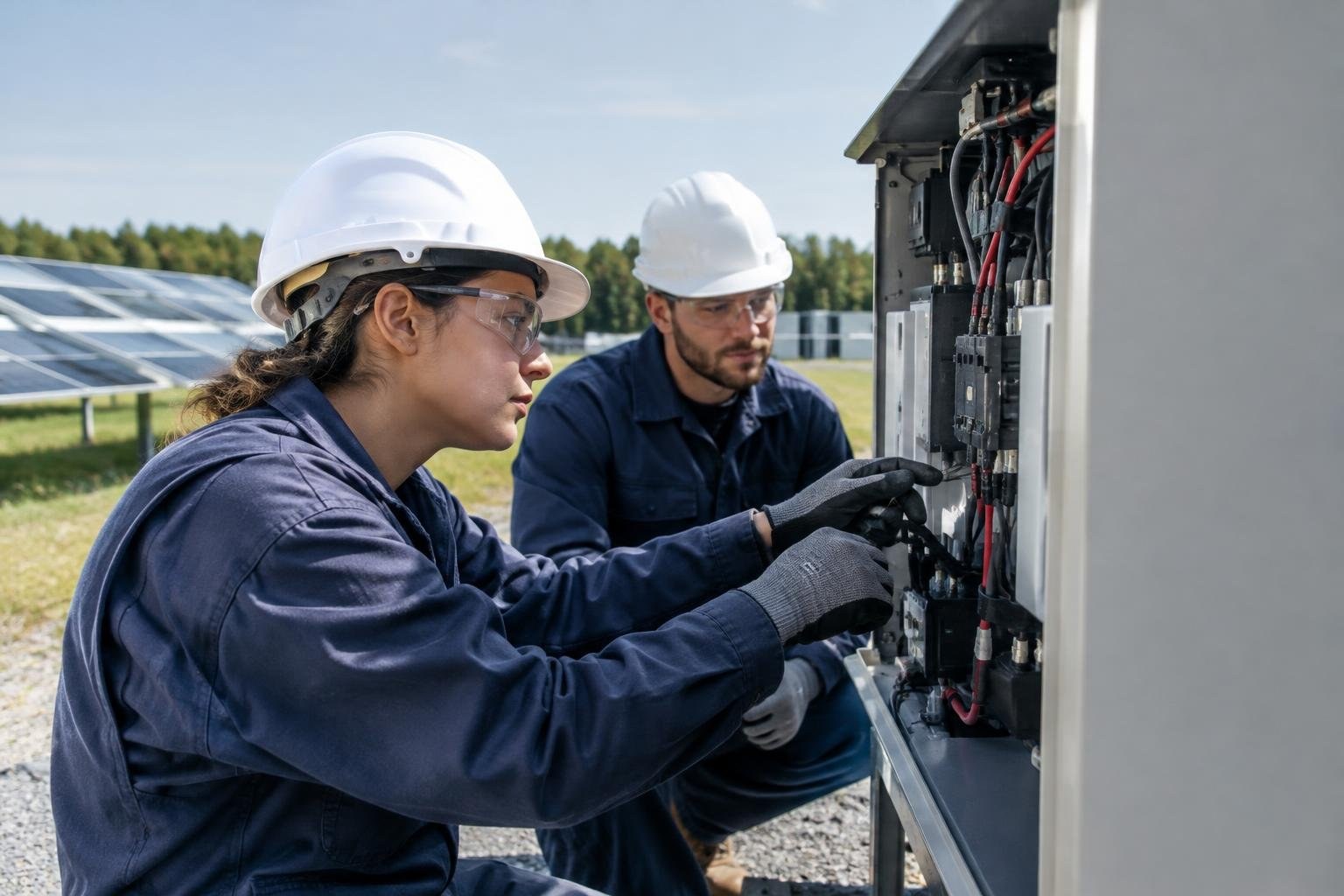
Energy Systems Technology/Technician: Programs, Careers, Costs & Fit
Explore what Energy Systems Technology/Technician programs teach, the credentials they offer, typical costs to investigate, and technical career paths to consider.
By David Slack · Staff Writer Assessment.com · Published October 26, 2026 · Last updated November 5, 2026
Energy Systems Technology/Technician programs teach students to apply engineering principles and technical skills to energy efficiency, energy-use monitoring, and related systems. Coursework may cover energy conservation, instruments and calibration, monitoring and testing, energy-loss inspections, and technical reporting. The aim is practical preparation for supporting engineers and other professionals, not a single guaranteed job title. Programs may be offered at different credential levels, and course content, hands-on training, and entry requirements vary by school. Students and families should compare the actual curriculum and career preparation rather than assuming that similar program names mean identical outcomes.
Degree & Program Decision Insights
Explore your personal fit, education requirements, career potential and next steps.
01Motivational Fit
Discover whether this program fits you
Explore your preferences against the focus of Energy Systems Technology/Technician. These prompts are not personal MAPP results.
Subject curiosity. Would you choose to explore “principles of energy conservation” in depth? Ask for a sample learning activity to test that interest.
Breadth of interest. Consider the place of “instrumentation calibration” in this field. Is this another part you would choose to explore, or mainly a requirement you would tolerate?
Work reality. Related work can involve this task: “Present designs and reports to customers or design committees for approval and discuss need for modification.” Would you want that activity to be a regular responsibility?
Interest in studying a field can differ from enjoying its related work.
Which part would you want to do repeatedly, and what would you try before deciding?
Discover Your Personal Program Fit
Before investing your time and money in your education, discover how this program aligns with your natural motivations, work preferences and career goals.
Engineering Technologists and Technicians, Except Drafters, All OtherSOC 17-3029
The official crosswalk associates this instructional field with the broad Engineering Technologists and Technicians, Except Drafters, All Other group. It does not establish a particular detailed specialty or a direct programme-to-job outcome.
U.S. SOC 17-3029 Engineering Technologists and Technicians, Except Drafters, All Other is a broad occupational group. Its statistics are not estimates for a particular specialty, starting role or this programme’s graduates.
U.S. occupational wages are not guaranteed graduate earnings; OEWS excludes self-employed workers.
Projected openings include replacements as well as growth.
U.S. national estimates. A crosswalk does not establish entry-level eligibility; advanced, management and teaching roles can require further qualifications.
Energy Systems Engineering, GeneralCIP 14.4801. Compare its emphasis on conventional and alternative/renewable energy systems and electrical power systems with this program’s focus.
Energy and Environmental PolicyCIP 03.0209. Compare its emphasis on climate change and clean energy technologies with this program’s focus.
Explore your motivations. Use MAPP as a starting point for reflecting on your interest in “principles of energy conservation”, then test that interest against a sample learning task.
Examine the work. Compare Commercial and Industrial Designers and Engineering Technologists and Technicians, Except Drafters, All Other on daily work and entry qualifications, as well as pay. Explore Commercial and Industrial Designers.
Compare actual providers. Ask for the exact credential, course sequence and assessment methods. Compare how each provider teaches “instrumentation calibration”, its entry criteria and its itemized costs.
Check the evidence before applying. Confirm prerequisites and any recognition or professional requirements for your intended route; ask for applicable rules and published outcome definitions in writing.
Verify the institution’s current offering, admissions requirements and outcomes; a search result does not establish your eligibility.
Energy Systems Technology/Technician is an applied engineering technology field. It prepares students to use technical skills and basic engineering principles to support professionals working on energy-efficient systems and energy-use monitoring. The program description for CIP 15.1701 includes conservation principles, calibration, monitoring systems, test procedures, energy-loss inspections, conservation techniques, and report preparation.
The credential name does not identify one universal course plan or career outcome. Institutions may use different titles and emphasize different energy applications. Review the listed learning outcomes and course sequence for each program.
It is also useful to distinguish an engineering technology program from a conventional engineering program. This field emphasizes applying technical knowledge in support of system development, monitoring, testing, or operation. Confirm the scope of practice and qualifications for a particular job with its employer.
What Do You Study? Courses and Practical Learning
Expect a mix of energy concepts and applied technical work. The program description identifies energy conservation, instrumentation calibration, monitoring systems, test procedures, inspection for energy losses, conservation methods, and technical reports as relevant areas of instruction. These topics connect measurements and equipment observations to practical recommendations or documentation.
In a hands-on course, students may practice using instruments, following a test procedure, recording results, and explaining what the data show. However, the specific labs, software, equipment, and project requirements are institution-dependent. Ask for course syllabi or a sample program map instead of assuming that every program includes the same practical experience.
Ask whether the curriculum includes a capstone, internship, cooperative experience, or applied project. Those experiences can help students demonstrate how they work with technical information and communicate findings, but they are not guaranteed features of every program.
Skills You Can Develop
Students build a combination of technical and workplace skills. Depending on the program, these may include understanding energy conservation principles, using and calibrating instruments, monitoring systems, following test procedures, identifying possible energy losses, and preparing clear reports.
Those abilities are relevant to technical support roles where workers collect or interpret measurements, help evaluate equipment or processes, and communicate findings to engineers, managers, or clients. The Department of Energy describes engineering technicians in hydropower as working with engineers to plan, design, evaluate, and improve equipment, processes, and facilities. That is an example of technician work in one energy setting, not a definition of every job associated with this program.
Written communication matters because measurements are useful only when results and procedures are recorded clearly. Students should also expect to practice careful, methodical work and collaboration with people who have different technical responsibilities.
Who Might Enjoy This Program?
This field may appeal to students who like practical problem-solving and want to understand how energy systems work. You may enjoy investigating why a system uses energy in a particular way, taking measurements, following technical procedures, and turning observations into a useful report.
You do not need to arrive with one fixed personality or career plan. Consider whether you are willing to work with technical concepts, numbers, tools, and structured procedures. If you prefer broad theory, policy, or design work over equipment and measurement, compare this program with other energy-related pathways before choosing.
Does this program match you? A job title or broad growth claim cannot tell you whether daily technical tasks will feel satisfying. Use the MAPP career assessment as one way to reflect on work motivations and interests, then compare those results with course plans, job descriptions, and conversations with program advisers. Treat an assessment as a starting point for exploration, not a guarantee of fit.
Admissions, Credential Levels, and Time to Complete
Admission rules are set by each institution. Before applying, check high school or prior-college prerequisites, placement requirements, application deadlines, and whether the school recommends particular math or science preparation. Do not assume that test scores, a specific GPA, an interview, or work experience are required unless the institution says so.
Credential and completion time vary. The CIP field may appear at certificate, associate, bachelor's, post-bachelor's certificate, graduate certificate, master's, and doctoral levels, but that list does not mean every school offers every award. A certificate or associate-level route may suit a student seeking focused preparation, while a bachelor's or graduate pathway involves additional study. Confirm the expected credits and schedule with the school.
Full-time, part-time, accelerated, transfer, and online options are program-specific. Ask how many credits can transfer, whether courses are offered every term, and whether any practical instruction must take place on campus or at a work site.
Online, Hybrid, and On-Campus Options
Some lecture-based learning may be delivered online, but energy technology is applied study. Depending on the institution, students may need access to instruments, lab facilities, equipment, or supervised practice. A hybrid program can combine remote coursework with in-person technical instruction.
Ask for a course-by-course explanation of the format. Find out whether lab attendance is required, where practical assessments take place, whether equipment can be borrowed or accessed locally, and whether travel or schedule commitments add expense. If you are considering a fully online option, request clear details on how the program teaches and assesses hands-on skills.
For students balancing work or family responsibilities, compare the actual course calendar and required attendance with your available time. “Online” does not necessarily mean self-paced or free of in-person requirements.
Tuition, Total Cost, and Financial Aid
There is no single reliable tuition figure for this program category. Costs depend on the institution, public or private status, residency, credential level, course load, and online or campus delivery. Add books, fees, equipment, technology, transportation, and living expenses where applicable. Ask schools for a complete estimate for the specific program and year you plan to attend.
Review grants, scholarships, federal or state aid eligibility, work-study where available, employer tuition support, and payment plans. If you plan to begin at a community college or transfer credits, confirm in writing which courses the receiving institution will accept and how they apply to the degree. A lower initial tuition bill may not reduce total cost if credits do not transfer.
Compare net cost after aid, not just the advertised tuition rate. Ask whether program-specific fees or required equipment are included in the cost estimate.
Careers, Jobs, and Employment Outlook
Energy systems technology can be relevant to technical positions in energy, utilities, industrial operations, consulting, and other service settings. For example, Cincinnati State describes its separate Electrical Engineering Technology – Power Systems associate program as preparing graduates for technical and management career paths and identifies utilities, industrial organizations, consultants, and service providers as possible employers. That is an example from one related program, not a guarantee about this CIP or any particular graduate.
Potentially related work may include engineering technician or technologist roles and specialized technical jobs connected to instrumentation, testing, energy monitoring, or system performance. The Department of Energy describes engineering technicians in hydropower as supporting engineers who plan, design, evaluate, and improve equipment, processes, and facilities. The job requirements depend on the specific occupation and employer.
Do not rely on a degree title to predict pay or employment outlook. No occupation-level salary or growth figure is established by the available program evidence. Research current Bureau of Labor Statistics data and local job advertisements for each occupation you are considering, checking the date, geographic area, education requirements, and experience expectations.
Some workforce material from College of Eastern Idaho reports a need for technicians with mechanical, electrical, instrumentation, and control skills in its discussion of energy systems maintenance. This is a workforce observation, not a national projection or promise of employment. Ask local employers and program staff about current opportunities.
Find out which Career or College Major is right for you!
Energy Systems Technology/Technician is an educational field, not by itself a professional license. A degree or certificate confirms completion of a program; it does not automatically confer permission to perform work regulated by a state or other authority.
Requirements depend on the occupation, task, employer, and location. Before enrolling, identify the jobs you want and ask employers or relevant public agencies whether any license, safety training, industry credential, or supervised experience is expected. Ask the college which credentials its curriculum prepares students to pursue, and verify requirements directly with the credentialing body.
Also check institutional and program accreditation. Confirm the accreditor’s recognized status and whether accreditation matters for transfer, financial aid, or a career pathway you have identified. Do not assume that a program’s use of engineering terminology means it is accredited by a particular body.
Experience, Projects, and Preparing for Employers
Internships, job shadowing, employer projects, campus labs, and part-time technical work can help you test whether the field suits you and build evidence of practical skills. Availability differs by school, so ask whether the program arranges placements or expects students to find them independently.
Keep a record of projects, procedures followed, instruments used, data gathered, and reports completed, while respecting employer or school rules about confidential information. A concise portfolio can help explain how your training applies to a specific opening. Join relevant student or professional groups when accessible, and use informational interviews to learn what local employers expect.
How to stand out: connect course work to the actual job description, show that you can document results clearly, and describe how you approached a technical problem. Do not present classroom exercises as professional experience; explain accurately what you did and the level of supervision involved.
Related Degrees and Alternatives
Related pathways include electrical engineering technology, broader engineering technology, energy studies, and engineering. The best alternative depends on what you want to do each day. Energy systems technology centers on energy efficiency and monitoring; a more focused electrical technology program may suit a student chiefly interested in electrical systems; an engineering degree may be a better fit for someone seeking deeper mathematical and design study.
Certificates and associate degrees may offer a more focused route into technical study. A bachelor's degree can support further study or different technologist pathways, depending on the institution and employer. Cincinnati State’s power-systems program, for example, identifies an associate credential and a route for graduates to continue toward a bachelor's degree. Transferability and eligibility depend on the receiving school.
Electrical engineering technology: consider it if electrical systems are your main interest.
Engineering: consider it if you want a more theory- and design-intensive pathway.
Energy studies or policy: consider it if your interests lean toward systems, planning, or policy rather than instrument-based technical work.
Engineering technology, general: consider it if you want a broader applied technical foundation before selecting a specialty.
Compare required courses, transfer plans, and the qualifications listed in real job postings before choosing between these options.
How to Choose a Program
Start with the jobs you might want, then work backward to the program. Search current openings in the region where you expect to work. Note the required education, technical skills, experience, travel, and any stated credentials. If a job commonly requests a qualification the program does not address, ask an adviser how students obtain it.
Next compare the curriculum line by line. Look for instruction that matches the program’s stated aims: energy conservation, instrumentation, monitoring, testing, inspections, and reporting. Ask about equipment access, faculty experience, employer partnerships, work-based learning, student support, and how the program evaluates practical skills.
For cost, compare full attendance estimates and likely transfer credits. For format, clarify in-person requirements and scheduling. For outcomes, ask the school what data it tracks, how it defines employment related to the program, and whether results refer to this specific credential. Avoid treating a general institutional claim as a program-specific outcome.
Use Assessment.com’s college major guidance and degree exploration as additional starting points for comparing educational directions.
From Program to Career: Possible Pathways
Career paths are not automatic promotions, but a student can use these examples to plan what to investigate:
Energy systems certificate or associate study → apply for an entry-level technical support role that matches the training → build supervised experience with monitoring, testing, or maintenance → specialize in a system or technical function valued by employers.
Associate degree in engineering technology → pursue a technician position → add relevant experience and credentials where employers require them → consider transfer to a bachelor's program if it supports a chosen next step.
Energy-focused bachelor's study → seek a technologist or related role aligned with the curriculum → deepen expertise in a technical area or move toward coordination and leadership as experience grows.
Each sequence depends on the credential, job market, employer requirements, and the student's skills. The Department of Energy describes engineering technicians as supporting engineers, while Cincinnati State notes that its power-systems graduates may continue into bachelor's study. Neither example guarantees a particular job or career progression.
Questions to Ask Before You Enroll
What exact credential will I earn, and how many credits does it require?
What are the full tuition, fees, equipment, and attendance costs?
Which prior credits will transfer, and can I get the decision in writing?
What equipment, laboratories, projects, or work experiences are included?
Which courses must be attended on campus or at an employer site?
What jobs do local employers hire this program's graduates for, and what qualifications do they request?
What accreditation applies to the institution and program, and why does it matter for my plan?
Are professional licenses or certifications relevant to my target roles, and does the curriculum prepare me for them?
What financial aid, scholarships, employer assistance, and student support are available?
How does the school measure program completion and career outcomes?
Ask for specific answers and written documentation where appropriate. Speak with both an academic adviser and people familiar with the jobs you hope to pursue.
Frequently asked questions
What is an Energy Systems Technology/Technician program?
Energy Systems Technology/Technician is a technical field focused on applying engineering principles to energy efficiency and energy-use monitoring. Programs may cover conservation, instrumentation, monitoring systems, testing, inspections, and technical reporting. The exact curriculum and credential depend on the institution.
Is Energy Systems Technology/Technician hard?
Course difficulty depends on your preparation and the program. Expect applied technical work that can involve measurements, calculations, instruments, and careful interpretation of results. Ask the program for sample course plans and math prerequisites, and use tutoring or academic support early if you need it.
How much does an energy systems technology program cost?
Program costs vary with institution, credential, residency, delivery format, and added expenses such as lab fees, tools, books, and transportation. Request a written estimate of total attendance costs from each school and compare financial aid and transfer-credit policies before deciding.
What jobs can I get with an energy systems technology credential?
Programs can lead toward technical work supporting energy systems, monitoring, maintenance, and efficiency efforts, but the available jobs depend on the credential and employers in your area. Related roles may include engineering technician or technologist positions. Review actual job postings to confirm education and experience requirements.
How much can I make with an energy systems technology degree?
There is no single salary for this field or credential. Pay depends on occupation, location, employer, experience, and qualifications. Use current U.S. Bureau of Labor Statistics information for the specific occupation you are considering, and compare it with local job postings rather than treating a degree title as a salary guarantee.
Can I earn an energy systems technology credential online?
Some coursework may be available online, but the hands-on content of a particular program can require in-person labs, equipment access, or workplace experience. Ask the institution which courses are online, how practical skills are assessed, and whether any required activities involve travel to campus or an employer site.
Does energy systems technology require a lot of math?
The level of math varies by curriculum and role. Applied technical study can involve measurements, calculations, and interpreting system data. Ask for course descriptions and prerequisites, then consider whether you are comfortable strengthening your math skills as part of the program.
Do I need a bachelor's degree to work in energy systems technology?
Not necessarily for every technician or technologist role. A certificate or associate degree may prepare students for some entry-level technical positions, while higher-level roles may require a bachelor's degree, additional experience, or further study. Check the requirements of the occupations and employers you are targeting.
How is energy systems technology different from electrical engineering technology?
The name and focus of an energy systems technology program may differ from electrical engineering technology. Energy systems study emphasizes energy efficiency and monitoring; electrical engineering technology programs may focus more specifically on electrical systems. Compare course plans, practical training, and job requirements rather than relying on titles alone.
People Also Ask
What do you learn in energy systems technology?
Energy Systems Technology/Technician prepares students to apply technical and engineering principles to energy efficiency and monitoring. Coursework may include conservation, instrumentation, testing, inspection procedures, and reporting. Program emphasis varies by school.
How long does an energy systems technology program take?
Completion time depends on the credential, course load, transfer credits, and program schedule. A certificate, associate degree, or bachelor's degree represents a different level of study. Confirm the expected timeline with the institution and ask how part-time enrollment affects it.
How do I choose an energy systems technology program?
Compare program learning outcomes, hands-on instruction, total cost, transfer options, and the qualifications employers request for jobs you want. Ask whether the school offers relevant labs, projects, internships, or employer connections, and verify details directly with the institution.
What does an energy systems technician do?
Engineering technicians support engineers in planning, evaluating, or improving technical systems. The U.S. Department of Energy notes that engineering technicians in hydropower work with engineers on equipment, processes, and facilities, and that an associate degree or certification in engineering technology is typical for these technician roles.
Is an energy systems technology credential worth it?
A credential can build technical knowledge, but employment depends on the program, relevant experience, local opportunities, and employer requirements. Review current job postings for the roles you want and ask schools for transparent information about student outcomes and work-based learning.
What degree levels are available in energy technology?
Yes, credentials in the broader energy field may range from undergraduate certificates and associate degrees to bachelor's and graduate study. Availability is institution-specific. Confirm the actual award, prerequisites, and course sequence with each school.
Energy Systems Technology/Technician can be a practical route into work that measures, maintains, and improves energy systems. Its value depends on the specific program, the hands-on experience it offers, the roles available where you plan to work, and whether you enjoy technical problem-solving. Compare credentials and total costs carefully, and check current job requirements before enrolling. If the field interests you but you are unsure which pathway fits, use career and degree exploration to compare options before making a commitment.
Want to see your options? Try our comprehensive Degree, Program & College Search tool
We use cookies to offer you a better browsing experience, analyze site traffic and personalize content.
Read about how we use cookies and how you can control them in our
Privacy Policy.
If you continue to use this site, you consent to our use of cookies.
×
Exciting News!
Be one of the first to Beta Test the new AI-Powered Assessment.com Platform.