Orthopedic Technology Degree Guide: Programs, Training, Careers, and Fit
Learn what orthopedic technology programs teach, how certificates and associate degrees compare, what hands-on training involves, and how to evaluate program cost, admissions, and career fit.
By Kieth Nelson · Staff Writer Assessment.com · Published November 1, 2026 · Last updated November 5, 2026
Orthopedic technology programs prepare students to support orthopedic care by learning practical skills such as casting, splinting, fitting orthopedic equipment, and assisting patients under physician supervision. Depending on the college, the program may lead to a certificate or an associate degree and may include lab practice or an externship. The field can appeal to students who want a focused route into a hands-on healthcare setting. Before choosing a program, compare what students actually practice, how clinical or externship learning is arranged, admission requirements, total cost, and the credential employers in your area expect. A degree title alone does not tell you the full scope of training or the duties a graduate may perform.
Degree & Program Decision Insights
Explore your personal fit, education requirements, career potential and next steps.
01Motivational Fit
Discover whether this program fits you
Explore your preferences against the focus of Orthopedic Technology/Technician. These prompts are not personal MAPP results.
Care and responsibility. Would you want to develop the skills involved in patient assessment, while taking the other person’s needs and professional boundaries seriously?
Breadth of interest. Consider the place of “casting, splinting, and orthopedic appliances” in this field. Is this another part you would choose to explore, or mainly a requirement you would tolerate?
Work reality. Related work can involve this task: “Prepare course materials, such as syllabi, homework assignments, and handouts.” Would you want that activity to be a regular responsibility?
Interest in studying a field can differ from enjoying its related work.
Which part would you want to do repeatedly, and what would you try before deciding?
Discover Your Personal Program Fit
Before investing your time and money in your education, discover how this program aligns with your natural motivations, work preferences and career goals.
Explore these official instructional-field associations. They describe possible occupational routes, not measured outcomes of this program.
Health Specialties Teachers, PostsecondarySOC 25-1071 · O*NET 25-1071.00$107,310/year median (May 2025); +17.9% projected change (2025–2035); 24,900 projected openings/year.
Typical occupational entry: doctoral or professional degree (BLS). BLS lists less than 5 years of related work experience as typical for this occupation; this programme is not a direct promise of entry. Postsecondary teaching is a separate appointment and may require advanced study; this programme alone is not a promise of a teaching post.
Health Technologists and Technicians, All OtherSOC 29-2099
The official crosswalk associates this instructional field with the broad Health Technologists and Technicians, All Other group. It does not establish a particular detailed specialty or a direct programme-to-job outcome.
U.S. SOC 29-2099 Health Technologists and Technicians, All Other is a broad occupational group. Its statistics are not estimates for a particular specialty, starting role or this programme’s graduates.
Typical occupational entry: postsecondary nondegree award (BLS). Check the exact professional credential and jurisdiction requirements for this occupation; the classification association alone does not establish eligibility.
U.S. occupational wages are not guaranteed graduate earnings; OEWS excludes self-employed workers.
Projected openings include replacements as well as growth.
U.S. national estimates. A crosswalk does not establish entry-level eligibility; advanced, management and teaching roles can require further qualifications.
Electrocardiograph Technology/TechnicianCIP 51.0902. Compare its emphasis on basic anatomy and physiology and the cardiovascular system with this program’s focus.
Explore your motivations. Use MAPP as a starting point for reflecting on your interest in “patient assessment”, then test that interest against a sample learning task.
Examine the work. Compare Health Specialties Teachers, Postsecondary and Health Technologists and Technicians, All Other on daily work and entry qualifications, as well as pay. Explore Health Specialties Teachers, Postsecondary.
Compare actual providers. Ask for the exact credential, course sequence and assessment methods. Compare how each provider teaches “casting, splinting, and orthopedic appliances”, its entry criteria and its itemized costs.
Check the evidence before applying. Confirm prerequisites and any recognition or professional requirements for your intended route; ask for applicable rules and published outcome definitions in writing.
Verify the institution’s current offering, admissions requirements and outcomes; a search result does not establish your eligibility.
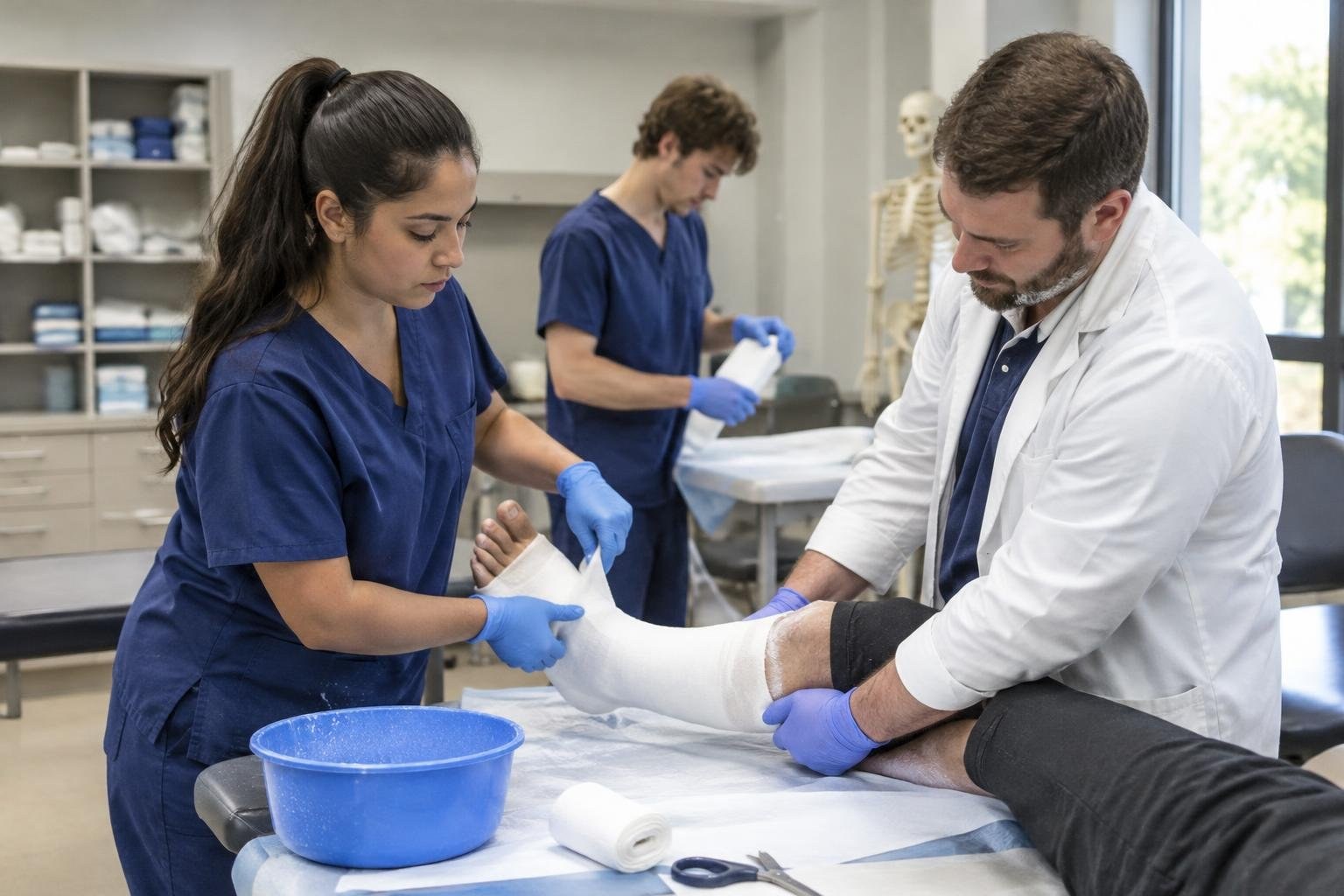
Orthopedic technology students practicing casting and splinting skills in a supervised lab
What Is an Orthopedic Technology Program?
Orthopedic technology, also called orthopedic technician or orthopaedic technology at some institutions, is a healthcare field focused on practical support for patients with orthopedic needs. The federal Classification of Instructional Programs identifies Orthopedic Technology/Technician as CIP 51.0923. Its description includes preparation to cast, splint, and brace orthopedic injuries under physician supervision, with instruction that can include patient assessment, orthopedic appliances, radiographic interpretation, traction, and wound care. The NCES CIP listing classifies the field; it does not establish that every college offers every credential level.
At individual colleges, related program names and awards differ. Some examples use “Orthopedic Technology,” “Orthopedic Technician,” or “Orthopaedic Technology.” Do not assume that similar titles mean identical curricula or professional scope. Review the catalog and ask what graduates are prepared to do in the state and employment settings you are considering.
What Do You Study? Courses, Labs, and Practical Skills
Orthopedic technology coursework connects basic knowledge of the body with practical techniques used in orthopedic settings. A cited Cincinnati State catalog archive, for example, lists a course combining anatomy and physiology with radiology for orthopedic technicians. Since that catalog is an archived example, use it to understand the kinds of topics that may appear, not to infer current requirements at another school.
Program descriptions also identify casting and splinting, fitting or adjusting equipment, assisting patients with walking aids, and setting up certain types of traction under physician guidance. These tasks require more than memorizing steps: students need to understand instructions, work carefully, communicate with patients, and know when to seek direction from a supervising clinician.
Ask for a current course sequence. Check which classes are lecture-based, which involve lab practice, and whether patient-facing experience is part of the program. A program title alone does not confirm that a student will practice every skill in the CIP description.
Skills You Can Build
Students develop a blend of technical, interpersonal, and professional skills. Hands-on work may include applying and removing plaster or synthetic casts, helping patients use canes, walkers, or crutches safely, and fitting or adjusting equipment. Those activities call for controlled hand movements, attention to detail, and a willingness to follow established directions.
Technical: practice with casting, splinting, mobility aids, and orthopedic equipment, as included in the program.
Foundational: anatomy, physiology, and radiology concepts where offered.
Communication: explain steps clearly, listen to patient concerns, and coordinate with the supervising care team.
Professional judgment: recognize when a task or patient concern needs guidance from a physician or other authorized professional.
These are transferable abilities, but they do not expand a graduate’s legal scope of practice. Ask the college how its curriculum defines supervision and what tasks students are authorized to perform during training.
Who Is This Program Best For?
This pathway may be worth exploring if you are interested in the musculoskeletal system and prefer learning by doing. Students should be prepared to work closely with people who may be injured or in discomfort, perform practical tasks carefully, and learn within a physician-led healthcare environment. Interest in anatomy and the ability to follow technical directions can help, but there is no single personality type required for success.
Consider how you feel about patient contact, repeated practice, and tasks where small details matter. If you prefer a role focused mainly on general patient navigation, broad healthcare administration, or a different diagnostic specialty, compare alternatives before committing.
Does orthopedic technology match you?
Pay, reputation, and a program’s advertised outcomes are only part of the decision. The daily work and training format matter too. Assessment.com’s MAPP career assessment can help you reflect on motivations and preferences; use its results as one input alongside program research, conversations with practitioners, and your own goals. You can also review guidance on choosing a college major.
Admissions, Program Entry, and Academic Demands
Admission requirements are set by individual colleges. The Grossmont-Cuyamaca catalog directs applicants to a separate section for special admission procedures and criteria, but those requirements should not be assumed to apply elsewhere or to remain unchanged. Review the current admissions page and ask an advisor to explain application steps, prerequisites, deadlines, and any additional screening.
Before applying, confirm whether you need prior coursework, placement or advising, an interview, health documentation, or other program-specific items. Ask whether admission to the college is separate from admission to the orthopedic technology program. If you have previous college credits, request an official transfer-credit review before building a completion plan.
Coursework may combine science foundations with applied skills. Students can prepare by strengthening study habits, reading course descriptions carefully, and asking how the program supports students who need help with anatomy, technical vocabulary, or practical skills.
Credential Levels, Format, and Time to Completion
Available credentials and completion times depend on the institution. Grossmont College describes an associate degree in science in Orthopedic Technology that may be completed in four semesters, and a certificate of achievement that may be completed in two semesters after successful completion of the orthopedic technology courses. Treat those timelines as examples from that college, not as a national standard or a promise that every student will finish on schedule.
Other schools may structure their certificates differently. For example, NHTI’s catalog describes a certificate with an on-campus lab and externships. These examples illustrate why students should check the current catalog for required courses, placement availability, scheduling, and whether a certificate can be applied toward an associate degree.
Ask whether part-time enrollment is possible, which courses are offered each term, how transfer credits are evaluated, and what happens if a required class or placement is delayed.
Online, Hybrid, or On Campus?
Because orthopedic technology includes practical skills, investigate how students learn procedures rather than choosing a program based on online convenience alone. Some instruction may be delivered remotely, but the program should clearly explain how students complete any hands-on lab, externship, or clinical learning it requires. NHTI describes an on-campus lab and externships for its certificate program; other schools may organize experiential learning differently.
Ask these format questions before enrolling:
Which lectures, labs, and assessments are online, hybrid, or in person?
Where will you practice casting and splinting?
Does the school arrange externships, and where might placements take place?
Are there travel, scheduling, or attendance expectations that could affect work or family commitments?
Get the answers in writing from the program, especially if you live far from campus or need a predictable part-time schedule.
Tuition, Total Cost, and Financial Aid
There is no single tuition price for orthopedic technology. The amount you pay depends on the school’s published tuition and fees, your enrollment status, the courses you need, and any costs associated with lab work, transportation, equipment, or required placements. Compare the full program cost, not just the per-credit figure or a headline tuition estimate.
Request a written estimate covering tuition, mandatory fees, books and supplies, lab expenses, travel to campus or placement sites, and the number of credits you must complete. Ask the financial aid office which forms of aid may apply to your specific credential and enrollment level, and whether you can use employer education benefits or scholarships. Eligibility and award amounts are not guaranteed.
To manage expenses, compare public and private institutions, ask how transfer credits affect your plan, and avoid borrowing before you understand the total amount required to finish. Check the current official college cost and aid pages rather than relying on an old estimate.
Careers, Jobs, and Employment Considerations
Orthopedic technology programs can lead toward work as an orthopedic technician or technologist, but exact job titles, duties, and hiring expectations vary by employer. Program descriptions identify medical clinics, medical offices, and hospitals as possible work settings. Before enrolling, compare the curriculum with current job postings in the area where you plan to work and ask local employers what credential and experience they expect.
Career direction
How training may relate
What to verify
Orthopedic technician or technologist
Program skills may include casting, splinting, orthopedic equipment, and mobility aids.
Employer title, duties, supervision, and entry requirements.
Patient representative
Patient communication and familiarity with healthcare settings may be relevant, but this is a distinct job path.
Whether the employer requires separate experience or training.
Healthcare educator or instructor
Orthopedic experience may inform later teaching work.
Required education and experience for the specific teaching position.
Compare pay and hiring prospects for the exact job title, location, and experience level you are considering. A degree does not guarantee a particular job or wage.
Accreditation, Certification, and Scope of Practice
Separate program completion from professional authorization. The program description frames orthopedic tasks as performed under physician supervision; earning a certificate or degree does not by itself establish that a graduate may perform every task independently. Rules and employer policies can differ, so ask the college and prospective employers which duties require supervision and whether any state or facility-specific conditions apply.
Ask each school whether its program has relevant institutional or program accreditation, what that status means, and whether an employer or a later educational pathway requires a specific approval. Do not rely on a general claim that a program is “accredited” without confirming the accrediting organization, scope, and current status through official sources.
Ask whether graduates commonly pursue optional credentials, what eligibility requirements apply, and whether the program prepares students for them.
Related Degrees and Alternative Pathways
Related pathways can help clarify what you want from a healthcare program. An orthopedic technology curriculum emphasizes practical support for orthopedic patients, while other programs may focus on diagnostic testing, eye care, rehabilitation, nursing, or general patient support. A related title does not mean the courses, training, or career requirements are interchangeable.
Medical assisting: consider a broader outpatient clinical-support focus.
Radiologic technology: consider a path centered on diagnostic imaging and its separate training requirements.
Physical therapist assistant: consider a rehabilitation-focused role and verify its distinct education and licensure pathway.
Orthotics and prosthetics: consider a focus on designing, fitting, or managing assistive devices, with separate education expectations.
Nursing: consider a broader patient-care profession with its own credential and licensing route.
These are comparisons to investigate, not claims that one option is a substitute for another. Explore healthcare practitioner and technical careers and discuss program differences with an advisor before changing direction.
Experience, Externships, and How to Stand Out
Hands-on experience can help you understand whether this work fits and give you examples to discuss with employers. Ask about observation opportunities, volunteer roles that do not involve performing clinical tasks, student projects, and the process for securing an externship. Follow all site rules and do not attempt procedures outside authorized training or supervision.
To stand out, document the practical skills you have actually practiced, describe how you communicate with patients, and be specific about your role in labs or placements. Build relationships with instructors and supervisors who can speak to your reliability and care with detail. Do not list procedures as professional experience if you only observed them or practiced in a classroom model.
Before accepting a placement, clarify its schedule, location, supervision, learning goals, and any costs or prerequisites. Ask whether the college or student is responsible for finding a site.
How to Choose a Program: A Comparison Checklist
Use a structured comparison instead of choosing only by the shortest advertised timeline or lowest quoted tuition. Start with the current catalog and program admissions page, then speak with an advisor and, where possible, an employer or practicing orthopedic technician.
What credential is awarded, and what courses are required?
How much casting, splinting, and equipment practice is supervised?
Are labs, clinicals, or externships required, and who arranges them?
What is the complete estimated cost, including fees, supplies, travel, and placement-related expenses?
What are the actual admission criteria and application deadlines?
What do local employers expect from applicants?
Can credits transfer, and can the certificate count toward an associate degree?
What student support, advising, and job-search assistance are available?
Assessment.com offers education resources and college guidance resources to support exploration. Use them alongside official program catalogs and direct conversations with schools.
From Program to Career: Possible Pathways
Possible career development depends on opportunities, experience, employer requirements, and further education; it is not automatic. A realistic path might look like this:
Certificate or associate degree with hands-on practice → seek an entry-level orthopedic technician or technologist role that matches the employer’s requirements.
Early-career experience → strengthen practical skills, patient communication, and understanding of team procedures under the supervision required by the role.
Focused development → pursue additional training or credentials only after confirming that employers value them and that you meet eligibility requirements.
Later options → consider a related healthcare program, supervisory work, or teaching only after checking the additional education and experience each path requires.
For a teaching path, the Assessment.com guide to postsecondary health specialties teachers can be a starting point for exploration, not a claim that this credential alone qualifies someone to teach.
Questions to Ask Before Enrolling
Before you enroll, put the answers to these questions in one place. This helps students and parents compare programs on the same terms.
What exact certificate or degree will I earn?
What are the current admission criteria, deadlines, and prerequisites?
What is the full estimated cost through completion, and what financial aid may apply?
Which courses and practical skills are included, and how much supervised practice is provided?
Are externships required? Who finds the placement, and where might it be?
What accreditation or approval applies to this particular program?
What duties may graduates perform, and what supervision do local employers require?
Can I attend part time or online for any portion, and which activities must be in person?
Will credits transfer or count toward another credential?
What job titles do local employers use, and what do they expect from applicants?
Compare responses from more than one school and verify important details in the current catalog or in writing before paying a deposit.
Frequently asked questions
What does an orthopedic technology program teach?
Orthopedic technology programs prepare students to assist with orthopedic care under physician supervision. Training may cover casting and splinting, orthopedic equipment, patient assessment, anatomy, radiology, traction, and wound care. The exact curriculum and hands-on requirements depend on the college. Examples of programs include certificates and associate degrees, so check the school catalog for the credential and clinical experience it actually offers.
Is orthopedic technology a hard program?
It can be challenging for students who are uncomfortable with hands-on practice, careful procedures, or direct patient interaction. Coursework can include anatomy and radiology, while practical training requires attention to detail and following instructions in a supervised healthcare setting. Ask a program about lab expectations and externships before applying so you can judge the day-to-day learning demands.
How long does it take to complete an orthopedic technology program?
Some colleges offer a certificate, while others offer an associate degree and a certificate option. One college example lists a certificate that may take two semesters and an associate degree that may take four semesters. These are examples, not national timelines. Transfer credits, program schedules, and admission steps can affect an individual student’s completion time.
What jobs can I get with an orthopedic technology certificate?
A program may prepare graduates for orthopedic technician or technologist work in settings such as medical clinics, offices, and hospitals. The specific duties and job titles depend on the employer and local requirements. Ask each school what roles recent graduates seek, what experience is included, and whether employers in your area recognize the credential.
Can I earn an orthopedic technology certificate online?
Some coursework may be available online, but casting and splinting are hands-on skills. A program that prepares students to perform these tasks should explain how it provides supervised practice, lab work, and any required externship or clinical experience. Confirm which activities require campus attendance and whether placements are available within a reasonable distance.
How much do orthopedic technicians make?
There is no single salary for an orthopedic technology degree because pay depends on the job title, employer, region, experience, and responsibilities. Compare current local job postings and official labor-market information for the exact role you are considering. Also ask programs how they define relevant jobs and what graduate outcome data they can share.
People Also Ask
What is orthopedic technology?
Orthopedic technology focuses on practical support for orthopedic patient care, including casting, splinting, and assisting with orthopedic appliances under physician supervision. Programs may also teach anatomy, radiology, patient assessment, traction, and wound care. Course details and hands-on requirements vary by school.
What is the CIP code for orthopedic technology?
The CIP classification 51.0923 identifies Orthopedic Technology/Technician as a field of study. It does not mean every listed credential level is available at every college. Check the specific institution’s catalog for its offered credential and program requirements.
Is orthopedic technology a certificate or associate degree?
Program examples include a certificate or an associate degree. A particular college may offer only one option, or may allow students to complete a certificate within a longer associate-degree pathway. Confirm exact awards and whether credits apply toward another credential with the institution.
Where do orthopedic technicians work?
Orthopedic technology work is described as taking place in settings such as medical clinics, medical offices, and hospitals. Actual employer settings and job duties vary. Ask local employers and college career services which titles they use for entry-level roles.
What classes are in an orthopedic technology program?
Orthopedic technology programs may include anatomy and radiology, casting and splinting, orthopedic equipment, traction, and wound care. Programs differ, so compare required classes, practical labs, and externship arrangements rather than relying on the program name alone.
Do orthopedic technology programs require clinical or lab work?
Some programs include on-campus lab work and externships, so they are not necessarily fully online. Ask whether lectures can be completed remotely, where skills practice takes place, and how the school arranges supervised experience.
Orthopedic technology can suit students who want practical, hands-on work supporting orthopedic care while working under physician supervision. The most important choice is not simply certificate versus associate degree; it is whether a program provides the supervised skills, lab practice, and clinical or externship experience that fit your goals and the jobs available near you. Compare the full cost, admission process, curriculum, and employer expectations before enrolling. Explore degree and career options on Assessment.com, and use the MAPP assessment to reflect on whether this kind of patient-facing, detail-oriented work fits your interests.
Find out which Career or College Major is right for you!
We use cookies to offer you a better browsing experience, analyze site traffic and personalize content.
Read about how we use cookies and how you can control them in our
Privacy Policy.
If you continue to use this site, you consent to our use of cookies.
×
Exciting News!
Be one of the first to Beta Test the new AI-Powered Assessment.com Platform.