Environmental Geosciences Degree Guide: Courses, Careers, Costs, and Fit
Environmental geosciences connects geology and other Earth sciences with environmental systems, human activity, and applied problem-solving. Learn what programs teach, how to compare formats and costs, and which career paths may fit your goals.
By Kieth Nelson · Staff Writer Assessment.com · Published November 1, 2026 · Last updated November 5, 2026
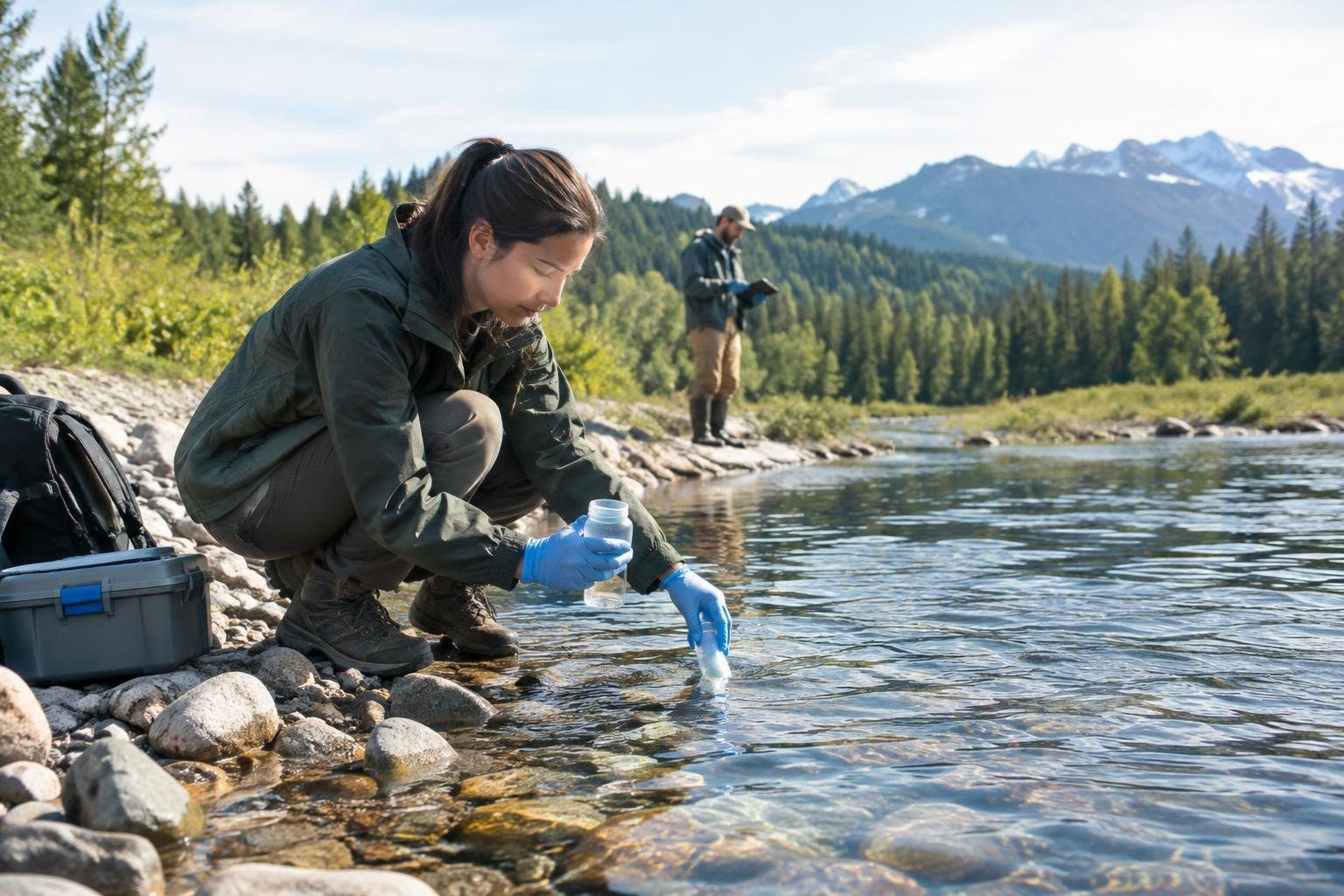
Environmental geosciences is an interdisciplinary field that examines how geological processes and human activities affect Earth’s environmental systems. Depending on the program, students may combine geology, hydrology, chemistry, biology, geographic information systems (GIS), resource management, and environmental policy. A degree may support paths in environmental science, geoscience, mapping, compliance, resource planning, or further study. Program names and course emphases vary, so prospective students should compare the curriculum and practical learning opportunities, not just the title. If you are weighing several directions, Assessment.com’s MAPP career assessment can help you explore how career and degree options relate to your interests and preferences.
Degree & Program Decision Insights
Explore your personal fit, education requirements, career potential and next steps.
01Motivational Fit
Discover whether this program fits you
Explore your preferences against the focus of Environmental Geosciences. These prompts are not personal MAPP results.
Scientific investigation. Would you enjoy investigating geology and explaining your conclusions from evidence?
Breadth of interest. Consider the place of “environmental/natural resource management” in this field. Is this another part you would choose to explore, or mainly a requirement you would tolerate?
Work reality. Related work can involve this task: “Monitor environmental impacts of development activities.” Would you want that activity to be a regular responsibility?
Interest in studying a field can differ from enjoying its related work.
Which part would you want to do repeatedly, and what would you try before deciding?
Discover Your Personal Program Fit
Before investing your time and money in your education, discover how this program aligns with your natural motivations, work preferences and career goals.
U.S. occupational wages are not guaranteed graduate earnings; OEWS excludes self-employed workers.
Projected openings include replacements as well as growth.
U.S. national estimates. A crosswalk does not establish entry-level eligibility; advanced, management and teaching roles can require further qualifications.
Explore your motivations. Use MAPP as a starting point for reflecting on your interest in “environmental/natural resource management”, then test that interest against a sample learning task.
Examine the work. Compare Environmental Scientists and Specialists, Including Health and Environmental Science and Protection Technicians, Including Health on daily work and entry qualifications, as well as pay. Explore Environmental Scientists and Specialists, Including Health.
Compare actual providers. Ask for the exact credential, course sequence and assessment methods. Compare how each provider teaches “geographic information systems (GIS)”, its entry criteria and its itemized costs.
Check the evidence before applying. Confirm prerequisites and any recognition or professional requirements for your intended route; ask for applicable rules and published outcome definitions in writing.
Verify the institution’s current offering, admissions requirements and outcomes; a search result does not establish your eligibility.
Environmental geosciences applies Earth science to questions about environmental systems and human influence. The University of Florida describes its curriculum as interdisciplinary, integrating physical, chemical, and biological aspects of the environment. At different colleges, this subject may appear as a major, a concentration within geosciences, an interdisciplinary program, or a graduate specialization.
The field overlaps with environmental science, geology, geography, and environmental studies, but the balance can differ. A geosciences program may emphasize Earth materials, landforms, water, and processes; an environmental studies program may devote more attention to policy or social systems. The title alone does not settle the distinction. Read required courses and electives to see what students actually study.
The federal Classification of Instructional Programs code associated with this topic is 30.4101. A CIP code classifies fields of study; it does not guarantee that colleges use identical program titles or requirements.
For comparison, see Assessment.com’s environmental science degree guide and environmental studies degree guide. The University of Florida catalog provides an example of an environmental geosciences curriculum.
What Do Environmental Geosciences Students Study?
Students may encounter geology, hydrology, environmental systems, and concepts from chemistry and biology. Depending on the curriculum, other topics can include natural-resource management, GIS, hazard identification, environmental regulation, law, policy, and sustainability. The objective is to understand environmental questions through more than one scientific lens and to connect evidence with practical decisions.
Look for courses that teach methods as well as concepts. A GIS class, for example, can introduce ways to organize and interpret spatial information. A hydrology course may focus on water systems, while a geology course helps students understand the physical processes shaping landscapes. Course titles and depth vary, so consult syllabi or ask departments for sample assignments.
Some programs include field observations, laboratory exercises, research, internships, or a final project. Do not assume these experiences are required or available in a particular program. Ask which are part of the degree plan, whether students compete for placements, and whether travel or equipment adds expense.
Environmental geosciences is not only outdoor fieldwork. Students may also read technical material, analyze data, write reports, use mapping tools, and present findings. A useful course plan should show how these activities build over time.
Skills You Can Develop
Coursework can develop scientific reasoning, evidence evaluation, and the ability to explain environmental processes. GIS and mapping courses may build spatial-analysis skills. Lab, field, or research assignments can help students practice observation, documentation, and interpretation. Policy or regulatory content can help them understand how scientific information relates to management decisions.
These skills may be useful in settings such as government, nonprofits, consulting, and industry. The University of Pennsylvania describes professional master’s programs in environmental and applied geosciences as preparation for a range of environment-related careers, with concentrations spanning areas such as environmental management, policy, sustainability, engineering geology, and consulting. That is an example of graduate program breadth, not a guarantee of employment for every student.
Build evidence of your skills while studying. Keep maps, reports, research posters, field notes, and project summaries when permitted. For confidential work, create a sanitized description of the problem, your role, methods, and results. Employers can better understand your preparation when you connect a skill to a concrete project.
Who Is This Degree Best For?
This field may appeal to students curious about landscapes, water, natural resources, environmental change, or how human decisions affect Earth systems. It can suit people who enjoy investigating complex questions and are comfortable combining scientific evidence with practical considerations. Interest in outdoor work can be helpful for some paths, but not every role or course is field-based.
Students should be ready to read technical material, reason from evidence, and work with data. Quantitative expectations vary by program, as do laboratory and field requirements. Ask admissions staff which high-school or college courses prepare applicants for the first year, and whether students can begin with introductory science or mathematics courses.
Does environmental geosciences match you?
Do not choose a major only because a career sounds prestigious, pays well, or is described as growing. The day-to-day work, learning style, and subjects you want to study matter too. Assessment.com’s MAPP assessment can be one tool for reflecting on preferences and exploring career and degree options. Treat assessment results as a starting point for discussion, not a replacement for reviewing program requirements and job duties.
Admissions, Preparation, and Academic Demands
Admission requirements are set by each institution and credential. Applicants to an undergraduate program may need to meet the college’s general admission standards; graduate applicants may also need a prior degree or relevant academic preparation. The supplied program examples do not establish one standard GPA, test score, essay, portfolio, or prerequisite for all environmental geosciences programs. Confirm current requirements with each admissions office.
For a fair comparison, ask whether the program requires specific science or mathematics courses, whether transfer courses count toward the major, and how previous coursework is evaluated. Graduate applicants should ask about expected preparation and whether faculty review applications for a particular concentration or research area.
Environmental geosciences can be challenging when students must integrate several disciplines, interpret evidence with uncertainty, or manage field and lab assignments alongside written work. Prepare by reviewing introductory geology and environmental science material, refreshing math skills, and using tutoring or office hours early. Check that the proposed course sequence fits your academic background and schedule.
Credential Levels, Online Options, and Time to Completion
Environmental geosciences is offered through different credential types, but availability depends on the institution. Programs may be embedded in a bachelor’s degree, appear as a concentration, or be offered at the graduate level. Mississippi State describes a 30-credit, non-thesis M.S. in geosciences with an environmental geosciences concentration and an online format. That is one program example, not a standard length or structure for every master’s degree.
Online study can help students manage coursework around work or family responsibilities, but check the delivery details. Ask whether every class is online, whether attendance is scheduled, and whether fieldwork, laboratory learning, research, or a campus visit is required. A course that uses GIS or other specialized software may also have technology requirements.
Full-time and part-time completion times depend on credit requirements, course availability, transfer credit, and the student’s pace. Request a written degree map for your intended enrollment status. Confirm how many courses are offered each term and whether required courses rotate less often than electives.
See the Mississippi State online M.S. program information as an example of a graduate option.
Tuition, Total Cost, and Financial Aid
There is no single tuition price for environmental geosciences. Total cost depends on the college, public or private status, residency classification, degree level, course load, and whether the student lives on campus or commutes. Add fees, books, equipment, software, transportation for field activities, and living expenses to the tuition estimate. Online study may change some costs, but it does not automatically make a program less expensive.
Ask each school for its current cost-of-attendance estimate and calculate the amount you would pay after grants and scholarships. Complete the Free Application for Federal Student Aid (FAFSA) if eligible, and ask the college about institutional aid, state programs, assistantships for graduate study, employer education benefits, and payment plans. Eligibility and award terms vary; review them before making assumptions.
Transfer credit can reduce repeated coursework when accepted, but confirm the number of credits that apply to the major and any residency requirement. Compare the net cost to completion, not only a per-credit price or first-year estimate.
Careers, Jobs, Salary, and Employment Outlook
Environmental geosciences can connect to several kinds of work, but a degree title does not guarantee qualification for a particular job. Possible directions include environmental science, geoscience, hydrology, GIS, compliance, resource planning, and environmental policy. Employers may include public agencies, nonprofits, consulting firms, research settings, and industry. The preparation needed depends on the role, employer, and level of responsibility.
Possible career direction
How the study may apply
Pay and outlook
Environmental scientist or specialist
Environmental systems, field or lab methods, data interpretation, and reporting may be relevant.
No single degree-wide median; use current occupation-specific data.
Geoscientist or geologist
Earth science and geological processes are central areas to examine in a program.
Varies by occupation, location, experience, and employer.
Hydrologist or water-resource specialist
Hydrology and environmental systems may provide relevant academic preparation.
Role-specific; verify current wage and outlook information.
GIS or mapping technician
GIS and spatial-data coursework can support mapping-related work.
Role-specific; verify current wage and outlook information.
Environmental compliance inspector
Regulatory, environmental, and technical knowledge may be useful.
Requirements and labor-market conditions vary.
Environmental restoration planner
Environmental assessment and planning may relate to restoration projects.
Role-specific; check employer and public-sector requirements.
Environmental policy or program analyst
Policy, environmental systems, and research skills may be relevant.
Requirements and pay depend on role and employer.
Researcher, postsecondary educator, or specialist
Advanced study and research preparation may be important for some positions.
Often a longer education pathway; check the exact job requirements.
These are career directions to investigate, not assured placements. Graduate study may be useful or required for some specialized, research, teaching, or leadership positions. Career fields also change as employers adopt new data and mapping tools; build adaptable skills in analysis, communication, and responsible use of technology rather than relying on a single software name.
Explore Assessment.com’s guides to environmental scientists, geologists, hydrologists, GIS technicians, and environmental compliance inspectors. For a specific salary or outlook, compare current data for the exact occupation and year rather than applying one number to the degree.
Find out which Career or College Major is right for you!
Use projects, internships, research, or field experiences to test whether you prefer data analysis, outdoor observation, laboratory work, policy research, or client-facing consulting. Ask whether the department helps students find opportunities and whether placements are paid, credit-bearing, or competitive. Keep a record of project methods and your contribution so you can describe them clearly to employers.
Consider GIS coursework or other credentials only after checking job descriptions in your intended region. A credential is useful when employers recognize it and the skills match actual responsibilities. Do not assume that completing a degree automatically grants a professional license or qualifies you for regulated work. Requirements depend on the job and jurisdiction; verify them with the relevant public authority or employer.
How to stand out to employers
Build a portfolio of nonconfidential maps, reports, research summaries, and project work.
Practice explaining methods and findings in plain language to technical and nontechnical audiences.
Seek supervised experience connected to the career direction you want to test.
Ask faculty and career staff about professional organizations and local networking opportunities.
Check job postings to identify repeated skills, software, and education requirements.
Environmental graduate programs may offer applied concentrations. Penn’s professional programs, for example, describe concentrations across environmental management, policy, sustainability, engineering geology, and consulting. Compare those offerings with your own goals before choosing an advanced credential.
Graduate School and Further Study
Graduate study can deepen technical knowledge, add a specialization, or support a move toward research, advanced analysis, policy, or management. Options include a master’s in environmental or applied geosciences, environmental management, or a related discipline. Some schools also offer graduate certificates for students and working professionals seeking a focused, multidisciplinary course of study.
The University of South Florida describes a graduate certificate in environmental policy and management intended for professionals, practitioners, citizens, and students seeking to strengthen environmental knowledge. Mississippi State’s online M.S. concentration is another example. A dual bachelor’s-to-master’s route is available in a partnership at the University of North Carolina, but its structure and eligibility are specific to that program.
Consider a graduate credential when it clearly supports a target role or a skill gap. Compare its cost, thesis or non-thesis expectations, format, and prerequisites. For academic research or postsecondary teaching, investigate the qualifications listed for actual positions; a master’s may not be sufficient for every role.
Official examples: USF graduate certificates, UNC’s dual bachelor’s–master’s partnership, and Penn environmental graduate programs.
Related Degrees and Alternatives
Compare environmental geosciences with neighboring fields by asking what problems you want to study and which methods you want to use. Catalogs can reveal meaningful differences that program names hide.
Environmental science: Consider this if you want a broad study of environmental questions and do not want your curriculum centered as strongly on geological processes.
Environmental studies: Consider this if policy, society, culture, and interdisciplinary analysis are more central to your interests.
Geology or geosciences: Consider this if you want deeper study of Earth materials and processes, with less required environmental policy content.
Geography or GIS: Consider this if spatial analysis, mapping, and place-based questions are your main focus.
Hydrology or water resources: Consider this if water systems are the specific scientific area you want to pursue.
Forestry or natural resources: Consider this if you want a more focused path in land, forest, or resource management.
Environmental engineering: Consider this if you want an engineering-centered curriculum and are prepared for its technical requirements.
Environmental policy or management: Consider this if planning, regulation, and organizational decisions matter more to you than field science.
Environmental geosciences may be a useful bridge across science and application, but breadth can also mean fewer required courses in a single specialty. If a job has strict technical or licensure expectations, choose a program that directly prepares you for them. Compare Assessment.com’s forestry guide and environmental studies guide.
Advantages, Drawbacks, and Is the Degree Worth It?
There is no universal answer to whether an environmental geosciences degree is worth the investment. Its value depends on the program’s total cost, the student’s learning goals, the experiences available, and the occupations being considered. A lower tuition price may not be the best value if required courses or field experiences do not support the student’s plans; a higher-priced program needs a clear rationale and a manageable financing plan.
Potential advantages: an interdisciplinary perspective, exposure to Earth and environmental science, opportunities to combine technical and policy topics, and preparation that can be tailored through electives or concentrations.
Potential drawbacks: broad program titles can make comparisons difficult; career outcomes are not automatic; some specialized paths may require graduate study or additional experience; and field, laboratory, software, or travel requirements can affect time and cost.
Before deciding, compare the program against at least two alternatives. Ask graduates or department staff what students typically do after completion, but treat anecdotes as examples rather than guarantees. Review actual job postings and educational requirements in locations where you may want to work.
How to Choose an Environmental Geosciences Program
Program quality is more than a department’s name or a college’s general reputation. Start by checking the institution’s recognized accreditation status and whether any career-specific accreditation applies to your intended occupation. The supplied program examples do not establish a universal program-level accreditor for environmental geosciences, so verify claims directly with the school and the relevant accrediting organization.
Then compare the following:
Curriculum: Do required courses match your interests in geology, hydrology, GIS, policy, or resource management?
Applied learning: Are fieldwork, laboratory access, research, internships, or projects clearly described?
Faculty and facilities: Can students access relevant advising, equipment, software, and research opportunities?
Format and schedule: Are required courses available in your chosen online, hybrid, or campus format?
Cost and transfer: What is the estimated net cost to completion, and which credits will count?
Career preparation: Does the department explain career services, employer connections, and graduate outcomes with enough detail to evaluate?
Licensure preparation: If your target role is regulated, does the program meet the requirements in the state where you plan to work?
Assessment.com’s college-major guidance and education resources can support exploration, but confirm degree details with the institution.
From Degree to Career: Possible Pathways
Career development is not a guaranteed ladder, but a student can plan for gradual skill-building. Examples might include:
Degree coursework → entry-level environmental or mapping support role → field, reporting, or GIS experience → specialization in a technical or regulatory area.
Geosciences degree → assistant or technician role → additional project and field experience → advanced geoscience or resource-focused position.
Environmental geosciences study → policy or program support role → experience with research and regulation → more specialized environmental planning work.
Bachelor’s study → graduate certificate or master’s → deeper concentration in management, policy, sustainability, or applied geosciences.
Actual progression depends on employer expectations, performance, location, additional education, and available openings. Review job descriptions at each stage and identify the skills or credentials that recur.
Questions to Ask Before Enrolling
Before accepting an offer or paying a deposit, use this checklist with a parent, counselor, or college adviser:
What is the full estimated cost through graduation, including fees, housing, equipment, and field expenses?
Which courses are required, and when are they offered?
What science or mathematics preparation is expected?
Are fieldwork, labs, research, or internships required, optional, or competitive?
Can the entire program be completed in my preferred format and schedule?
How will transfer credits be evaluated, and what is the residency requirement?
What career services, advising, and employer connections can students access?
What do graduates do next, and how were those outcomes measured?
Does my intended occupation require a license, certification, or graduate degree?
Which grants, scholarships, aid programs, and employer benefits can reduce my net cost?
Write down answers and compare them across schools. If a claim about outcomes, accreditation, or professional preparation is important to your decision, ask for the official policy or documentation in writing.
Frequently asked questions
What is environmental geosciences?
Environmental geosciences studies how Earth processes and human activities affect environmental systems. Programs may combine geology, hydrology, chemistry, biology, GIS, natural-resource management, hazards, policy, and regulation. Course choices differ by school, so review the catalog and degree plan to see whether a program leans toward field science, mapping, resource management, or environmental policy.
Is environmental geosciences hard?
It can be academically demanding because students may need to interpret scientific evidence, work with data and maps, and connect physical, chemical, and biological processes. The balance of mathematics, laboratory work, fieldwork, and policy depends on the curriculum. Ask departments for sample course sequences and find out what support is available for students entering with different science backgrounds.
How much can you make with an environmental geosciences degree?
There is no single salary for an environmental geosciences degree. Graduates may pursue different occupations, and pay depends on the job, experience, location, employer, and education required. Compare current wage information for specific roles you are considering, rather than using one figure as a prediction of what a particular degree will earn.
What jobs can I get with an environmental geosciences degree?
Potential directions include environmental science, geoscience, hydrology, GIS, compliance, resource planning, and environmental policy. These are possibilities rather than guaranteed outcomes. Some roles may require a relevant graduate degree, specialized experience, or credentials, so check job postings and applicable state requirements for the exact occupation.
Can you earn an environmental geosciences degree online?
Some environmental geosciences study can be completed online. Mississippi State, for example, describes an online M.S. concentration in environmental geosciences. Online availability does not mean every program or learning activity is fully remote; ask whether fieldwork, lab work, research, or other in-person requirements apply to your chosen degree.
Does environmental geosciences require math?
It depends on the program. Environmental geosciences may involve quantitative work such as interpreting measurements, analyzing data, or using spatial information, but the exact mathematics requirements vary. Review prerequisites and required courses, and ask whether the department offers introductory or placement support if you are concerned about math preparation.
Do you need a graduate degree for environmental geosciences jobs?
Not for every environmental geosciences career. A bachelor’s degree may be relevant to some entry-level science, mapping, compliance, or support roles, while advanced research, specialized technical work, or some professional positions may favor or require graduate education. Check the education requirements for the specific jobs you want before deciding whether to pursue a master’s degree.
What certifications or licenses help in environmental geosciences?
There is no single certification requirement for the degree as a whole. Requirements depend on the occupation, the work performed, and sometimes the state. Before paying for a credential, identify the roles it supports and verify requirements with the relevant employer or public licensing authority.
What is the difference between environmental science and environmental geosciences?
Environmental science often focuses broadly on environmental problems and their scientific or management dimensions. Environmental geosciences emphasizes geological processes and Earth systems while connecting them with environmental effects. The two areas overlap, and schools use program names differently. Compare actual course requirements, fieldwork, and concentrations instead of relying on the title alone.
People Also Ask
What does environmental geosciences study?
It is an interdisciplinary study of the environmental effects of geological processes and human activity. Programs may connect geology and other Earth sciences with biology, chemistry, hydrology, GIS, resource management, and environmental policy.
What courses are in an environmental geosciences major?
Coursework varies, but may include geology, hydrology, environmental systems, GIS, natural-resource management, hazards, regulation, and policy. Review each school’s catalog to see the required subjects and available concentrations.
What degree levels are available in environmental geosciences?
Credential availability varies by college. Environmental geosciences may be offered through different undergraduate and graduate pathways, including concentrations, certificates, and master’s programs. Confirm the credential and requirements directly in the institution’s catalog.
Are there online environmental geosciences programs?
Some programs offer online study. Mississippi State lists an online M.S. concentration in environmental geosciences. Ask whether your program has any in-person field, lab, research, or residency requirements before enrolling.
What can I do with an environmental geosciences degree?
Potential directions include environmental science, geoscience, hydrology, GIS, environmental compliance, and resource planning. The appropriate education level depends on the role. A degree does not guarantee a job or qualify a graduate for every occupation.
How do I choose an environmental geosciences program?
Compare program requirements, course depth, field and lab work, GIS access, faculty, format, transfer policies, and total cost. Then check whether the degree’s practical experiences align with the kinds of roles you are considering.
Environmental geosciences can suit students who want to connect Earth science with environmental questions, mapping, resources, hazards, or policy. The program’s emphasis and career preparation vary by institution, so examine the courses, field and lab experiences, and graduate options rather than relying on the degree name alone. Compare total cost and likely career pathways, then consider whether the work matches your interests and preferred way of learning. Assessment.com’s MAPP assessment can help you reflect on career and degree options as part of that decision.
Want to see your options? Try our comprehensive Degree, Program & College Search tool
We use cookies to offer you a better browsing experience, analyze site traffic and personalize content.
Read about how we use cookies and how you can control them in our
Privacy Policy.
If you continue to use this site, you consent to our use of cookies.
×
Exciting News!
Be one of the first to Beta Test the new AI-Powered Assessment.com Platform.