Clinical/Medical Laboratory Science Degree Guide: Programs, Careers & Fit
Learn what Clinical/Medical Laboratory Science and Allied Professions programs cover, how credentials and clinical experience vary, what careers to explore, and how to compare programs before enrolling.
By Tome Fierre · Staff Writer Assessment.com · Published October 12, 2026 · Last updated November 5, 2026
Clinical/Medical Laboratory Science and Allied Professions programs prepare students to study the laboratory work that supports healthcare and related fields. Depending on the program, students may learn about areas such as hematology, microbiology, immunology, clinical chemistry, transfusion services, urinalysis, and molecular diagnostics. The broad program category also includes allied areas that do not fit a more specific classification, so curricula and job preparation can differ substantially from one school to another. Students considering this field often enjoy science, precise procedures, and interpreting results. Career directions to investigate include medical laboratory technician and technologist roles and specialized laboratory work. The education required depends on the particular occupation, employer, and state; completing a degree does not automatically provide a separate professional certification or license. Not sure whether this field fits you? The MAPP career assessment can help you explore how your motivations and preferences relate to career and degree options. Use it as one reflection tool alongside program research, conversations with advisors, and a close look at the day-to-day work.
Degree & Program Decision Insights
Explore your personal fit, education requirements, career potential and next steps.
01Motivational Fit
Discover whether this program fits you
Explore your preferences against the focus of Clinical/Medical Laboratory Science and Allied Professions, Other. These prompts are not personal MAPP results.
Scientific investigation. Would you enjoy investigating clinical/medical laboratory science and allied professions not listed above and explaining your conclusions from evidence?
Choosing a learning environment. Compare actual Clinical/Medical Laboratory Science and Allied Professions, Other offerings. Would their reading, projects or practical work suit how you prefer to learn? Confirm the format rather than assuming one from the field name.
Work reality. Related work can involve this task: “Set up, clean, and maintain laboratory equipment.” Would you want that activity to be a regular responsibility?
Interest in studying a field can differ from enjoying its related work.
Which part would you want to do repeatedly, and what would you try before deciding?
Discover Your Personal Program Fit
Before investing your time and money in your education, discover how this program aligns with your natural motivations, work preferences and career goals.
Check the exact professional credential and jurisdiction requirements for this occupation; the classification association alone does not establish eligibility.
Check the exact professional credential and jurisdiction requirements for this occupation; the classification association alone does not establish eligibility.
Some wage or projection fields are unavailable; no missing values are inferred.
U.S. national estimates. A crosswalk does not establish entry-level eligibility; advanced, management and teaching roles can require further qualifications.
Compare the actual offering and credential before committing your time or money.
Request the itemized fees, materials and equipment associated with “clinical/medical laboratory science and allied professions not listed above”; confirm what tuition includes.
Compare the full attendance budget, course availability and time away from paid work, rather than tuition alone.
No institution- and credential-matched cost, debt or graduate-earnings amount is reported here; occupational pay is not program ROI.
Financial aid depends on the school, program and student’s eligibility.
Compare the focus and route of these distinct instructional fields; their credentials and admission requirements are not interchangeable.
Clinical/Medical Laboratory TechnicianCIP 51.1004. Compare its emphasis on general laboratory procedures and skills and laboratory mathematics with this program’s focus.
Explore your motivations. Use MAPP as a starting point for reflecting on your interest in “clinical/medical laboratory science and allied professions not listed above”, then test that interest against a sample learning task.
Examine the work. Compare Medical and Clinical Laboratory Technologists and Medical and Clinical Laboratory Technicians on daily work and entry qualifications, as well as pay. Explore Medical and Clinical Laboratory Technologists.
Compare actual providers. Ask for the exact credential, course sequence and assessment methods. Compare how each provider teaches “Clinical/Medical Laboratory Science and Allied Professions, Other”, its entry criteria and its itemized costs.
Check the evidence before applying. Confirm prerequisites and any recognition or professional requirements for your intended route; ask for applicable rules and published outcome definitions in writing.
Verify the institution’s current offering, admissions requirements and outcomes; a search result does not establish your eligibility.
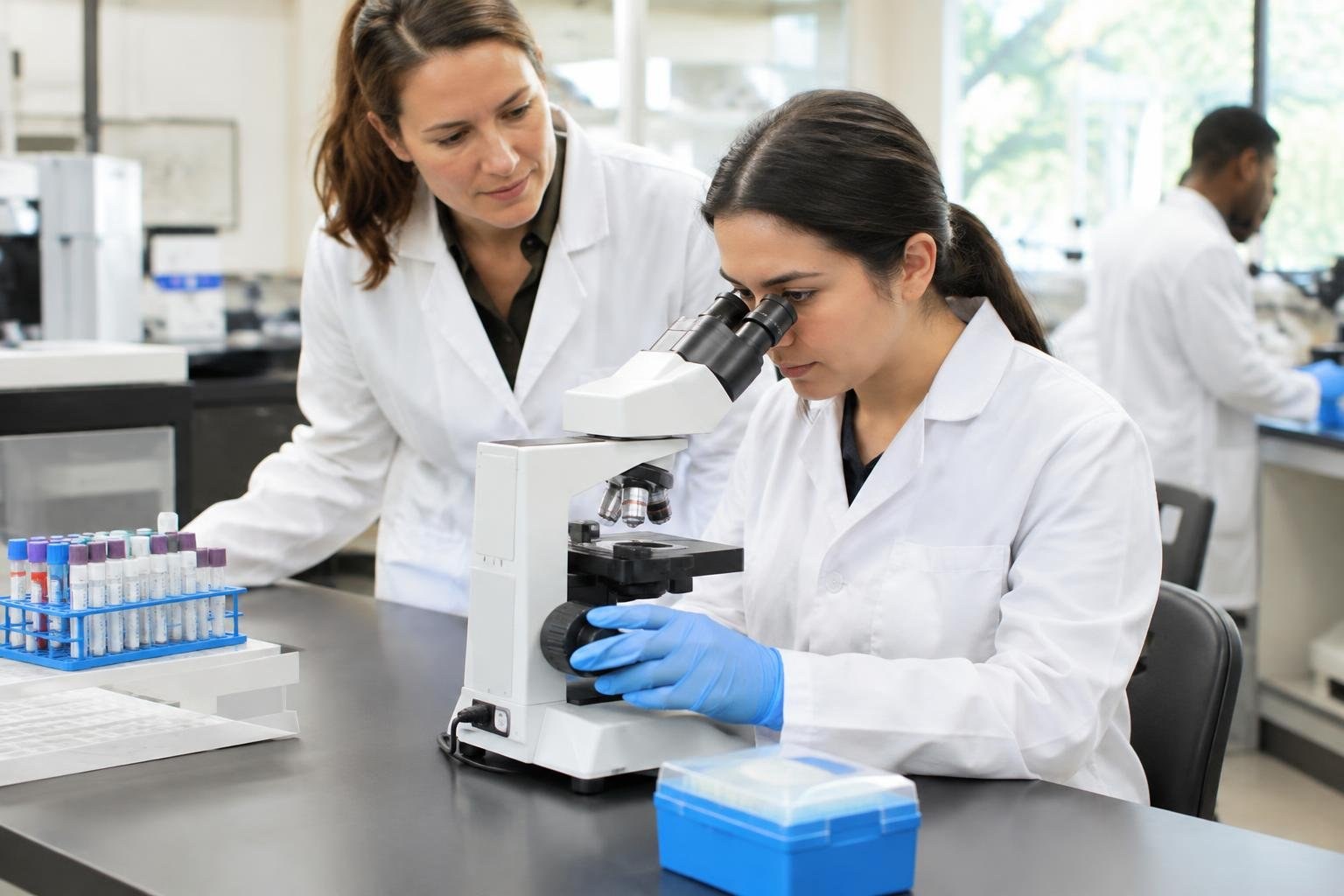
A supervised clinical laboratory learning environment
What Is a Clinical/Medical Laboratory Science Program?
Clinical and medical laboratory science focuses on laboratory analysis that contributes to healthcare and related professional work. The federal Classification of Instructional Programs (CIP) identifies code 51.1099 as a category for clinical or medical laboratory science and allied professions not listed in a more specific category. That broad definition is a classification, not a promise that every program teaches the same subjects or prepares graduates for the same occupation.
Program titles can include clinical laboratory science, medical laboratory science, or allied professions. Similar names do not guarantee equivalent coursework, accreditation, or job eligibility. For example, university program descriptions identify laboratory areas including hematology, immunology, microbiology, chemistry, transfusion services, urinalysis, and molecular diagnostics. Use the NCES description of CIP 51.1099 to understand the category, then read the school’s own catalog for its specific program.
Certificates, associate degrees, bachelor’s degrees, and graduate study may all appear in this broad field, but availability and purpose vary. A credential level listed for a field does not mean every institution offers that award.
What Do Students Study?
Programs may combine general science preparation with focused study of clinical laboratory areas. The University of Connecticut’s post-baccalaureate certificate description, for example, lists hematology, immunology, microbiology, chemistry, transfusion services, urinalysis, and molecular diagnostics. Another university’s clinical certificate options focus on blood banking, hematology, and microbiology. These examples show why the course list matters more than a broad program label.
Depending on the program, learning may involve scientific concepts, hands-on laboratory practice, and preparation for professional entry-level competencies. One clinical laboratory science bachelor’s program describes competency areas that include chemistry, hematology, immunohematology, immunology, and microbiology. A school may also use microscopes, cell counters, automated equipment, and computerized instruments in laboratory instruction.
Ask for a current course sequence and identify which courses involve practical work, supervised clinical experience, or other in-person requirements. Find out where clinical learning takes place, how students are evaluated, and whether the program’s learning outcomes connect to your preferred occupation. Course names alone may not reveal how much practice a student receives.
Skills and Learning You Can Apply
Laboratory-focused study can help students build scientific understanding, accuracy, organization, and the ability to work with technical equipment. Students may encounter microscopes, cell counters, and automated or computerized instruments. The training environment described by the program should make clear which tools and procedures students actually practice with.
Work in this field also calls for communicating observations and following established procedures carefully. When comparing schools, ask how students learn to handle data, document work, recognize when a result or process needs review, and explain laboratory findings in a professional setting. These are practical questions for assessing the learning experience, not a claim that every program teaches identical competencies.
To connect skills to a career, read job descriptions for occupations you are considering and compare their requirements with course outcomes. A program should be able to explain what laboratory skills students practice and how clinical or practical learning is assessed. Do not assume a course title alone establishes job readiness.
Who Is This Program Best For?
This field may appeal to students who are curious about biology and chemistry, like solving structured problems, and are comfortable with careful, repeatable work. Some people are drawn to behind-the-scenes contributions to healthcare rather than frequent direct patient interaction. Others enjoy technology and the challenge of interpreting scientific information.
There is no single personality type required. Consider whether you can focus on detail, follow procedures consistently, and stay engaged when work is precise and methodical. If you prefer broad creative projects, frequent changes in tasks, or constant face-to-face interaction, compare other programs and work settings before deciding.
Does This Field Match You?
Salary, prestige, and projected job growth are not enough to establish personal fit. Think about what you want your day to involve: laboratory practice, patient contact, research, teamwork, or a mix. The MAPP career assessment can help you explore motivations and preferences alongside your own research. Treat results as a starting point, not a substitute for reviewing curricula, job requirements, and clinical experiences.
Admissions, Preparation, and Academic Demands
Admission rules depend on the institution and credential. A post-baccalaureate clinical laboratory certificate may require a completed bachelor’s degree, relevant biological science and chemistry coursework with labs, and mathematics preparation. One university’s certificate page lists a bachelor’s degree and specified subject prerequisites; another clinical certificate program describes a combined 30 semester hours (or 45 quarter hours) of biological science and chemistry with laboratory plus a three-credit mathematics course.
These are examples from particular programs, not nationwide entry rules. Applicants may also need to provide official transcripts or meet other requirements set by the school. Before applying, ask an admissions advisor to review your transcript and identify missing prerequisites. Clarify whether prerequisite courses must be completed within a certain period and whether transfer or equivalent coursework is accepted.
Academic challenges may include learning scientific terminology, applying concepts in laboratory settings, and keeping up with sequences of prerequisite courses. Useful preparation includes reviewing required science subjects, planning time for lab work, and asking the department how students get support when they need help.
Credential Levels, Study Format, and Completion Time
The CIP category covers multiple credential levels, from certificates and associate degrees to bachelor’s and graduate-level study. The time required depends on the award, prior coursework, transfer credit, course availability, and any practical or clinical requirements. The supplied program examples do not establish one standard completion time for all students, so request a term-by-term schedule from each school.
Some programs are designed for students who already hold a bachelor’s degree in biology, chemistry, molecular and cell biology, or a related subject. Those post-baccalaureate pathways can be different from an undergraduate major. Do not assume that a certificate is an entry-level credential or that it can be completed in a particular number of months.
Online, hybrid, and campus formats also vary. Even if lectures are online, laboratory instruction or clinical placements may require in-person participation. Ask about attendance, clinical locations, scheduling, and any travel or technology expectations before enrolling.
Tuition, Costs, and Financial Aid
There is no single tuition figure for this broad field. Total cost depends on the institution, credential, residency and delivery arrangements, required fees, supplies, and any travel or living expenses associated with attendance or clinical learning. Request a written estimate for the full program rather than comparing tuition alone.
Build a term-by-term budget that includes tuition, mandatory fees, books, laboratory materials, transportation, and any costs tied to clinical participation. Ask the financial aid office which grants, scholarships, work-study options, or payment arrangements may apply to you. Students who already have college credit should ask how transfer evaluation works and whether accepted credits change both cost and time to completion.
Do not rely on an advertised per-credit rate until you confirm which fees are excluded and how many credits are required for your individual plan. Ask whether financial aid eligibility depends on enrollment intensity or program status, and compare the net cost after aid rather than only the published sticker price.
Careers, Jobs, and Employment Questions
Potential career directions associated with laboratory science include medical and clinical laboratory technician, medical and clinical laboratory technologist, cytotechnologist, cytogenetic technologist, and health specialties educator. The right preparation depends on the specific job and employer. The broad CIP classification does not establish salary, job outlook, or a universal education requirement for these occupations.
Career to investigate
What to verify before choosing a program
Medical and clinical laboratory technician
Required education, clinical preparation, and any employer or state credential requirements
Medical and clinical laboratory technologist
Degree expectations, professional certification preferences, and program outcomes
Cytotechnologist
Specialized coursework, practical training, and credential requirements
Cytogenetic technologist
Specialty preparation and current employer or professional requirements
Health specialties teacher, postsecondary
Required graduate education, subject expertise, and teaching experience
Use current official labor-market and licensing resources to check pay and outlook for the exact occupation and geography you have in mind. Distinguish roles that may be attainable after a specific program from longer-term work that may require further education, experience, or credentials. Explore related technician and technologist career guides.
Accreditation, Certification, and Licensure
Program accreditation, a degree, professional certification, and a state license are different things. A university describes its medical laboratory science program as accredited by the National Accrediting Agency for Clinical Laboratory Sciences (NAACLS). Another program description notes that its bachelor’s degree is awarded separately from external certification or licensing examinations. These examples make it important to check both the status of the program and the requirements for the job you want.
Ask the school for the current accreditation status of the exact program and verify it directly with the accrediting organization. Then check relevant state rules and employer postings for the occupation you are considering. Some employers prefer certification from a recognized professional association, but a preference is not the same as a universal legal requirement.
Before enrolling, ask whether graduates meet the academic eligibility requirements for any relevant certification examination and whether exam preparation is included. Confirm who is responsible for application fees, clinical documentation, and renewal requirements. Do not assume program completion itself grants a professional credential.
How to Choose a Program That Fits
Program quality is more than a name or delivery format. Compare the curriculum and specialty options with the duties and qualifications listed for your target job. Ask about lab equipment, faculty expertise, access to practical learning, and whether clinical placements are arranged by the school or require students to find their own. For programs that publish outcomes, ask how the figures are calculated and which graduating classes they cover.
Check accreditation for the specific program, not only the institution. Review how the school handles transfer credit, whether courses are offered in the sequence you need, and how online students complete required practical work. If you are considering a post-baccalaureate certificate, confirm that your previous science courses satisfy the program’s prerequisites before paying an application fee.
For each program, write down the total estimated cost, expected schedule, credential awarded, clinical arrangements, and the occupations its faculty say the curriculum is designed to support. Compare answers side by side. Use major-selection guidance and education resources to support your exploration, then verify details with the institution.
Related Degrees and Alternatives
Several adjacent paths may be worth comparing, depending on the kind of work you want. A medical laboratory technician program may offer a more focused route toward technician roles; a medical laboratory science or clinical laboratory science bachelor’s program may provide broader laboratory preparation; and a biology or chemistry degree may emphasize foundational or research science rather than a defined clinical laboratory sequence. These distinctions vary by school, so inspect actual course plans rather than assuming a title settles the comparison.
Biology: Consider this if you want a broad study of living systems and are open to multiple career or graduate-school pathways.
Chemistry: Consider this if chemical analysis and laboratory science are your central interests.
Microbiology: Consider this if microorganisms and related laboratory study are a particular focus.
Medical laboratory technician: Consider this if you want to investigate technician-level preparation and its specific job requirements.
Clinical or medical laboratory science: Compare program depth, clinical practice, and eligibility for the roles you are targeting.
Ask how each alternative affects further study, certification eligibility, and the range of jobs you can pursue. You can also browse Assessment.com’s degree exploration resources and career information while confirming requirements with official schools and employers.
Experience, Credentials, and Standing Out to Employers
Relevant experience can help you understand whether laboratory work suits you and show what you have practiced. Ask programs about supervised laboratory or clinical experiences, research opportunities, and whether students may complete projects tied to a specialty. If you already work in healthcare or science, find out whether prior experience can count toward admission, but do not assume it replaces required coursework or clinical learning.
When applying for jobs, describe specific equipment, procedures, course projects, and supervised settings you have worked with. Be accurate about your level of independence and do not represent a class exercise as professional employment. Keep copies of course descriptions and training records that may help document your background for employers or credential applications.
Professional certification may strengthen an application where relevant, but the appropriate credential and eligibility rules depend on the occupation. Ask the program which certifications graduates commonly pursue and verify requirements with the certifying organization. Degree completion and certification are separate steps in at least some program structures.
Graduate School and Further Study
Advanced study may make sense for students aiming at a specialized laboratory area, leadership, teaching, or research, but the appropriate next credential depends on the goal. Post-baccalaureate certificates can provide focused clinical laboratory study for students with relevant prior degrees and prerequisites. Some schools also offer graduate study in medical laboratory science.
Before pursuing graduate education, identify the role or responsibility you want it to support. Review admission prerequisites, clinical expectations, costs, and whether employers require or prefer the additional credential. If your goal is teaching at the postsecondary level or research, ask prospective employers and graduate departments what education and experience they expect rather than assuming a particular degree is sufficient.
Map the route in order: current education, missing prerequisites, desired program, potential certification, and the target job’s requirements. A clear sequence can prevent paying for coursework that does not advance your intended pathway.
Is This Degree Worth It? Questions Before Enrolling
A program can be worthwhile when its education supports work you want to do and the financial and time commitments are manageable. The answer is personal: weigh tuition and fees, how much prior credit applies, whether the program provides relevant laboratory and clinical preparation, and what additional credentials your intended occupation may require. Avoid deciding from a job title or promotional outcome statistic alone.
Before applying, use this checklist:
Is this exact program currently accredited, and by which organization?
Which courses, lab experiences, and clinical placements are required?
What is the full estimated cost, including fees and travel?
What prerequisites do I still need, and which transfer credits will count?
Which occupations does the curriculum prepare me to pursue, and what else do those jobs require?
Can I complete the schedule in my preferred format and timeframe?
What outcome information is available, and how is it measured?
What financial aid and career services can I access?
Discuss answers with an academic advisor and, where possible, professionals in the roles you are considering. Students and parents can also use Assessment.com’s college guidance resources as part of a broader decision process.
From Education to a Career: Plan the Steps
Build your decision around a specific career direction rather than a general promise of opportunity. For example, a student might complete a relevant laboratory program, apply for an entry-level laboratory role that accepts that preparation, gain experience, and later pursue specialty training or an advanced credential if required for a chosen next step. This is an example of a possible sequence, not a guaranteed progression.
To make the path concrete, choose two or three occupations and collect current job postings from employers in the places where you might work. Note degree levels, clinical experience, certification, and licenses mentioned. Bring that list to program admissions and ask which parts of the curriculum address each requirement. If answers are unclear, contact the employer or relevant professional organization.
Prospective students can explore related careers through Assessment.com’s healthcare practitioner and technical career category, then verify the details with authoritative occupational and licensing resources.
Frequently asked questions
What is Clinical/Medical Laboratory Science and Allied Professions?
Clinical/Medical Laboratory Science and Allied Professions is a broad category for instructional programs in clinical or medical laboratory science and related professions that do not fit more specific CIP categories. Programs may focus on different laboratory specialties, so review the actual course plan and outcomes rather than relying only on the category name.
Is medical laboratory science hard to study?
It can be demanding for students who are new to biology, chemistry, laboratory procedures, or careful recordkeeping. The academic work and level of hands-on practice vary by credential and school. Review prerequisites and ask programs how laboratory and clinical work are assessed so you can identify preparation needs before applying.
What jobs can you get with a clinical laboratory science degree?
Potential directions to investigate include medical and clinical laboratory technician or technologist roles, cytotechnology, and cytogenetic technology. The appropriate qualification depends on the specific job, employer, and location. Compare job requirements with the courses, clinical experience, and credentials offered by each program.
How much can you make with a medical laboratory science degree?
Pay varies by occupation, employer, experience, and location. This degree category includes varied programs and does not establish one typical salary. Look up current wage information for a specific job title and geography, then confirm whether the program meets that job’s education and certification requirements.
Can you earn a medical laboratory science degree online?
Some programs offer online coursework, but laboratory and clinical learning may require in-person participation. The sources available for this guide do not establish which programs are fully online or how often students must attend a campus or clinical site. Ask each school for its complete delivery schedule before enrolling.
Does clinical laboratory science require math?
Laboratory science coursework includes science subjects, and some certificate programs have specific mathematics prerequisites. For example, one university’s clinical certificate admissions information lists a mathematics course alongside biology and chemistry prerequisites. Requirements differ by program, so check the course catalog and admission checklist.
Do medical laboratory scientists need certification or a license?
Not always. Entry requirements depend on the job, state, and employer. Some programs issue an academic degree separately from external certification or licensing examinations, while some employers prefer professional certification. Check the rules for your intended role and location before choosing a program.
What is the difference between medical laboratory science and a biology degree?
An associate program may be a better fit for someone seeking a shorter or more technician-focused educational route, while a bachelor’s program may include broader preparation for technologist-level work. These are not universal rules. Compare the specific curricula, clinical components, and employer requirements for the jobs you want.
People Also Ask
What do you learn in clinical laboratory science?
Clinical and medical laboratory science programs teach scientific concepts and laboratory skills used in testing biological samples. Specific content varies, but university program descriptions name areas such as hematology, immunology, microbiology, chemistry, transfusion services, urinalysis, and molecular diagnostics.
How do I choose a medical laboratory science program?
Start with the job you want, then check its education, certification, and state requirements. Compare those requirements with the program curriculum, clinical experience, accreditation, and graduate outcomes before applying.
How long does a clinical laboratory science program take?
The CIP category does not specify a standard program length. Time to completion depends on credential level, transfer credit, course sequencing, and whether required lab or clinical experiences are available on your schedule. Ask schools for a term-by-term plan based on your background.
Can I get a clinical laboratory science certificate after a biology degree?
Some clinical laboratory certificate programs are designed for people who already hold a bachelor’s degree and have completed specified science prerequisites. Others may have different entry routes. Confirm the exact prerequisites with the school offering the program.
Is NAACLS accreditation the same as certification?
A program’s accreditation and a graduate’s professional certification are not the same thing. Check whether the specific program is accredited by the relevant accrediting body and separately confirm what certification or license a target job may require.
How much does a medical laboratory science program cost?
The sources here do not establish a typical tuition amount for this broad program category. Compare each school’s tuition and mandatory fees with additional expenses such as supplies, travel to clinical placements, and living costs, then review financial aid and transfer-credit policies.
Do medical laboratory scientists use automated equipment?
They may work in automated and computerized testing environments as well as use laboratory instruments such as microscopes and cell counters. Students should ask programs which equipment and procedures they practice with because training resources differ across schools.
A Clinical/Medical Laboratory Science and Allied Professions program may suit students who want to use science and careful laboratory work to support healthcare, but program names alone do not tell you which jobs or credentials a specific course of study prepares you for. Compare the curriculum, clinical experience, accreditation, total cost, and the requirements of jobs in your state before committing. If you enjoy precise, methodical work but want a different balance of patient contact, research, or technology, compare related programs as well. A career assessment can be one input as you weigh those choices.
Find out which Career or College Major is right for you!
We use cookies to offer you a better browsing experience, analyze site traffic and personalize content.
Read about how we use cookies and how you can control them in our
Privacy Policy.
If you continue to use this site, you consent to our use of cookies.
×
Exciting News!
Be one of the first to Beta Test the new AI-Powered Assessment.com Platform.