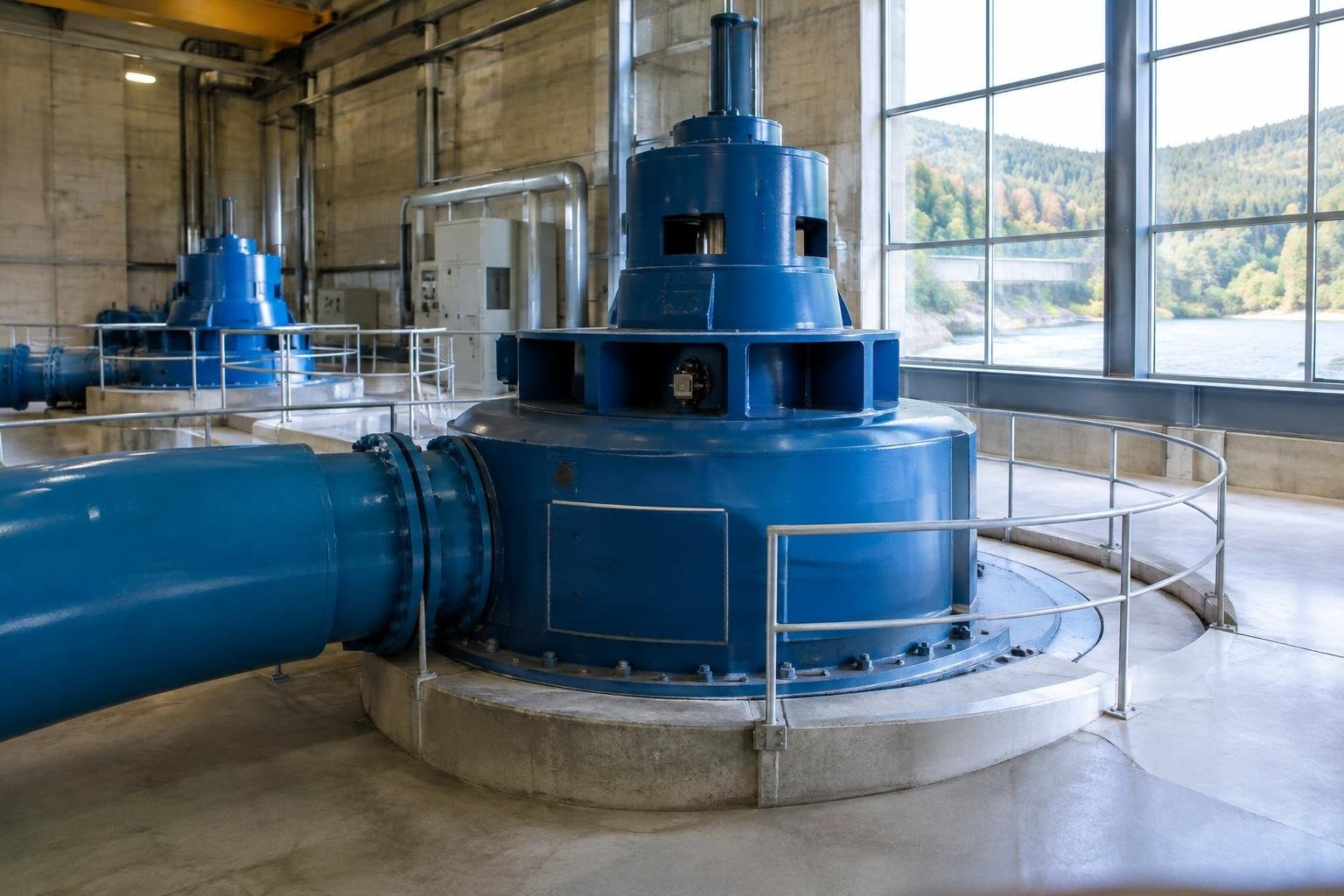
Hydroelectric Energy System Installation and Repair Technology: Degree Guide
Learn what hydroelectric energy system installation and repair programs teach, what technician careers involve, and how to compare program options, costs, and fit.
By Tome Fierre · Staff Writer Assessment.com · Published October 26, 2026 · Last updated November 5, 2026
A hydroelectric energy system installation and repair technology program prepares students to work with the equipment used to assemble, operate, maintain, test, and repair hydroelectric systems. The field is hands-on and links mechanical and electrical equipment with power generation. Program titles and credentials vary, so students should review the actual curriculum and award offered by each institution. Graduates may pursue technician or plant-operator pathways, but education alone does not guarantee employment or replace employer training. The U.S. Department of Energy describes hydroelectric plant technicians as installing, inspecting, maintaining, operating, and repairing plant machinery and associated water-passage equipment. Before choosing a school, compare hands-on learning, program costs, and the requirements of jobs in your target region.
Degree & Program Decision Insights
Explore your personal fit, education requirements, career potential and next steps.
01Motivational Fit
Discover whether this program fits you
Explore your preferences against the focus of Hydroelectric Energy System Installation and Repair Technology/Technician. These prompts are not personal MAPP results.
Subject curiosity. Would you choose to explore “installing” in depth? Ask for a sample learning activity to test that interest.
Breadth of interest. Consider the place of “maintaining and testing various types of equipment” in this field. Is this another part you would choose to explore, or mainly a requirement you would tolerate?
Work reality. What would an actual workday connected with Hydroelectric Energy System Installation and Repair Technology/Technician involve? Investigate the setting and entry requirements separately from your interest in studying the field.
Interest in studying a field can differ from enjoying its related work.
Which part would you want to do repeatedly, and what would you try before deciding?
Discover Your Personal Program Fit
Before investing your time and money in your education, discover how this program aligns with your natural motivations, work preferences and career goals.
Typical occupational entry: high school diploma or equivalent (BLS). BLS lists long-term on-the-job training as typical occupational training.
U.S. occupational wages are not guaranteed graduate earnings; OEWS excludes self-employed workers.
Projected openings include replacements as well as growth.
U.S. national estimates. A crosswalk does not establish entry-level eligibility; advanced, management and teaching roles can require further qualifications.
Compare the focus and route of these distinct instructional fields; their credentials and admission requirements are not interchangeable.
Hydroelectric Energy Technology/TechnicianCIP 15.1705. Compare its emphasis on hydroelectric energy principles and energy storage and transfer technologies with this program’s focus.
Explore your motivations. Use MAPP as a starting point for reflecting on your interest in “installing”, then test that interest against a sample learning task.
Compare actual providers. Ask for the exact credential, course sequence and assessment methods. Compare how each provider teaches “maintaining and testing various types of equipment”, its entry criteria and its itemized costs.
Check the evidence before applying. Confirm prerequisites and any recognition or professional requirements for your intended route; ask for applicable rules and published outcome definitions in writing.
Verify the institution’s current offering, admissions requirements and outcomes; a search result does not establish your eligibility.
What Is Hydroelectric Energy System Installation and Repair Technology?
This field combines practical equipment skills with knowledge of how hydroelectric systems operate. The program description associated with this field focuses on assembling, installing, operating, maintaining, testing, and repairing hydroelectric energy systems. A student should expect a program oriented toward equipment and its performance rather than a broad study of energy policy alone.
The Department of Energy describes hydroelectric plant technicians as working on plant machinery and related water-passage equipment, including spillway gates. Work can involve finding equipment problems and communicating findings to team members. See the Department of Energy’s hydropower career map for a description of technician work.
Do not rely on a title alone. Schools may name programs differently, and a similar-sounding credential may focus on general mechanical maintenance, electrical systems, or engineering technology. Compare courses, practical instruction, and the specific award before deciding whether a program matches your goals.
What Do You Study in a Hydroelectric Energy Systems Program?
Coursework should build understanding of the equipment students may encounter in hydroelectric operations. Based on the program’s stated purpose, relevant topics may include equipment installation, operation, inspection, maintenance, testing, and repair. A student should ask for a current course list rather than assume every school covers the same machines or systems.
Hydroelectric work can involve turbines, pumps, valves, gates, fans, electric control boards, and battery banks. The O*NET occupational profile for hydroelectric plant technicians describes monitoring and controlling generation activities, operating equipment, and adjusting operations based on performance. That gives prospective students a practical way to assess whether a curriculum covers the kinds of equipment and monitoring tasks that interest them.
Ask whether the program includes supervised equipment practice, troubleshooting exercises, projects, or an internship. The available program description does not establish that any one of these is required at every institution. A clear answer about what students practice, and on what equipment, is more useful than a broad promise of “hands-on learning.”
See the O*NET profile for hydroelectric plant technicians and the Department of Energy’s hydroelectric plant technician overview when comparing program content with work duties.
Skills You Can Develop
Students in this area aim to develop the ability to work carefully with equipment and respond to technical problems. The program’s stated focus supports practical capabilities such as installing and testing equipment, carrying out maintenance, and repairing systems. A strong foundation also includes communicating observations clearly so that colleagues can understand equipment status and work performed.
Technician work is not only about using tools. Department of Energy descriptions include inspection, operation, maintenance, repair, problem identification, and communication with relevant team members. Operator duties described by O*NET include monitoring equipment operation and performance and making adjustments. That combination points to the value of careful observation, procedural discipline, troubleshooting, and teamwork.
Ask schools how they assess these abilities. Projects that require students to document a fault, explain a repair approach, or report test results can help make technical learning visible to prospective employers. Do not assume that specific software, certifications, or equipment brands are part of a program unless the institution confirms them.
Who Is This Program Best For?
This program may interest students who like understanding how machines work, prefer applied problem-solving, and want to work with equipment rather than study energy topics only in theory. It may also appeal to students who are comfortable following procedures, checking details, and explaining technical findings to others.
No single personality type is required. However, prospective students should think honestly about their interest in mechanical and electrical equipment, practical work, and learning technical systems. If you prefer design planning, environmental analysis, or policy research over maintaining equipment, compare other academic paths before committing.
Students and parents should look beyond the program name. Ask whether the curriculum has the right balance of technical instruction and supervised practice for the student’s goals.
Use the MAPP career assessment as one tool for exploring motivations and career interests. Treat any assessment as a starting point for reflection, not as a substitute for reviewing coursework, speaking with program advisers, and learning about the daily work.
Credential Levels, Program Format, and Time to Completion
Credential level and availability are school-specific. The field information supplied for this topic lists certificate, associate, master’s, and doctoral levels, but that does not verify that a particular institution currently offers each one. Confirm the named award, credit requirements, and curriculum in an official school catalog before applying.
There is no single completion timeline established for all programs. Time depends on credential level, course load, transfer credit, and whether a student studies full time or part time. Ask admissions for a written degree plan that shows required courses, course sequencing, and any practical components that affect the schedule.
Online, hybrid, and campus delivery must also be checked school by school. Since the field concerns working with equipment, ask how students gain practical experience, whether any activities must be completed on campus or at a worksite, and whether the school’s advertised format applies to every required course.
Admissions and Preparation
Admission rules vary by institution and credential. Check the current catalog for academic prerequisites, minimum grades, placement requirements, application materials, and any prior experience expectations. Do not assume a high school diploma is the sole admission requirement for a college program simply because it is commonly noted for plant operator employment.
The Department of Energy says hydroelectric power plant operators typically need a high school diploma or equivalent and extensive training, often through an apprenticeship or several years of on-the-job training. Some employers prefer a college, associate, vocational, or technical degree in a related engineering field. Operators may begin as mechanical or electrical technicians. These are employment preparation details, not universal college admissions rules.
Before enrolling, ask whether the program is intended for students with no technical experience, workers seeking additional training, or people preparing for a specific employer pathway. If you are an adult learner, ask how prior learning or transfer credits are evaluated and whether class schedules can accommodate work responsibilities.
Read the Department of Energy’s overview of hydroelectric plant operators and compare its employment-training context with the school’s admissions information.
Tuition, Costs, and Financial Aid
Tuition cannot be summarized accurately without knowing the school, credential, residency status, and year. Compare each program’s published tuition and fees, then add likely course materials, equipment or lab fees if listed, transportation, and living costs where applicable. Ask for the estimated total to completion, not only the per-credit price.
Check each school’s financial aid office for grants, scholarships, federal aid eligibility, payment plans, and employer tuition assistance. Eligibility and funding terms differ, so get details in writing before making a decision.
Cost comparisons should account for completion time and transferability. A lower per-credit price may not be the lowest total cost if credits do not transfer or required courses are offered infrequently. Ask whether credits from another institution apply to the program and what happens to aid if you change enrollment status.
How to Choose a Program
Keep the comparison grounded in the actual program and the student’s career plans. A useful review includes the credential awarded, course content, practical training, schedule, total cost, and the kind of work graduates hope to pursue.
Curriculum: Does it cover equipment installation, operation, inspection, maintenance, testing, and repair?
Practice: What equipment will students use, and how is practical work supervised?
Career preparation: Does the institution explain how coursework relates to technician or operator duties?
Schedule and delivery: Can students complete required courses in the format and timeframe advertised?
Cost: What is the likely total, including fees and required materials?
Outcomes: What information can the school provide about completion and employment, and how are those outcomes measured?
Department of Energy material describes plant technicians working on machinery and water-passage equipment, while its operator overview notes that extensive training and employer preferences can vary. Use those details to ask specific questions instead of relying on broad claims about job readiness.
Accreditation, Licensure, and Employer Training
Accreditation, academic completion, and permission to perform a particular job are different questions. Confirm the institution’s accreditation status through official resources and ask whether it affects transfer or aid eligibility. Then check whether employers for the roles you want require additional training, experience, or credentials.
Requirements may depend on a specific employer and position. The Department of Energy indicates that plant operators generally receive extensive training, often through apprenticeships or on-the-job learning. A college credential should not be assumed to replace this training.
Ask a school whether its program prepares students for a named credential or employer requirement, and ask for the official details. Verify any licensing or certification claim with the relevant government or professional authority before treating it as a reason to enroll.
Ways to Make Training More Affordable
For many students, affordability depends on more than tuition. Compare the total cost of attendance, likely time to completion, the amount of aid that does not need to be repaid, and any loan terms. Ask financial aid staff how enrollment level, transfer credits, or changes in schedule could affect eligibility.
Potential funding sources to investigate include federal or state student aid, institutional scholarships, employer assistance, and payment plans. Availability and eligibility vary. Avoid making a decision based on an award estimate until the school explains the conditions and confirms the net price for your situation.
Transfer planning can also help control cost. Request an evaluation of prior college coursework before enrolling, and keep copies of course descriptions and transcripts. If an employer may support training, confirm whether the program and credential qualify under its policy before counting that assistance in your budget.
Careers, Jobs, Pay, and Employment Prospects
Hydroelectric plant technician is the closest named occupation in the supplied career information. The Department of Energy says technicians install, inspect, maintain, operate, and repair machinery at hydroelectric plants and associated water-passage equipment. Plant operator work may involve monitoring and controlling generation and operating equipment such as turbines, pumps, valves, and gates.
Related occupations may include industrial machinery mechanic, geothermal technician, or a supervisor of mechanics, installers, and repairers. These are related paths, not automatic outcomes of completing this program. A supervisor position may involve experience beyond an entry-level credential; check individual job postings for stated requirements.
One California state job bulletin lists a monthly pay range for a specific Hydroelectric Plant Technician 1 posting, dated December 8, 2023. That dated, location-specific figure should not be treated as a current national median. Compare current public employer postings and official occupation data for the location you are considering.
See the Department of Energy’s hydropower engineering technician description for a related, more engineering-support-oriented path. Engineering technicians work with engineers to plan, design, evaluate, and improve hydropower equipment, processes, and facilities.
Experience, Certifications, and Standing Out to Employers
Ask whether the program connects students with internships, cooperative education, employer projects, or supervised practice. The sources describe the work technicians do, but do not confirm that any particular college program provides an internship or placement. Treat internships and job placement as program features to verify, not promises.
Students can strengthen their preparation by keeping a record of practical projects, equipment they have worked with, troubleshooting steps, and safety procedures learned through formal instruction. When appropriate, be ready to explain how you identified a problem, followed a process, and communicated findings. Do not claim independent experience with machinery unless you have it.
Ask employers and instructors which technical or safety credentials matter for the specific jobs you are targeting. No universal certification requirement for this field is established in the available sources. Employer requirements should guide credential choices.
How to stand out to employers
Keep a clear record of coursework and supervised practical experience.
Practice explaining equipment checks and findings in plain language.
Ask about apprenticeships and on-the-job training opportunities.
Read job descriptions to identify the experience and qualifications employers actually request.
Graduate School and Other Further Study
Further study may make sense for students who want a broader technical, engineering, or research direction, but the right path depends on the intended work. The Department of Energy describes engineering technicians as working with engineers to plan, design, evaluate, and improve hydropower equipment, processes, and facilities. A student interested in that work should compare engineering technology and engineering programs, their prerequisites, and their course content.
The available sources do not define required graduate-school pathways for hydroelectric plant technicians, nor do they establish that a master’s or doctoral degree is needed for technician or operator work. Do not pursue a graduate credential just because the field description lists advanced credential levels. First identify jobs that interest you, then check their education requirements and ask schools how their programs support those routes.
Related Programs and Alternatives
Compare related options by the work they prepare you to do, not simply by the program name.
Mechanical or industrial maintenance: Consider this if you want equipment repair skills that may apply beyond hydroelectric facilities. Compare the actual equipment and curriculum.
Electrical or electronics technology: Consider this if electrical systems and controls interest you more than broad mechanical maintenance.
Engineering technology: Consider this if you want more emphasis on technical support for planning, evaluation, and improvement of equipment and facilities.
Engineering: Consider this if your goals center on design and analysis; check mathematics prerequisites and the exact curriculum.
Geothermal or other energy technology: Consider this if you want to explore energy-related equipment work beyond hydropower.
Apprenticeship or employer training: Consider this if a target employer offers a structured path and the job requirements do not call for the college program you are considering.
The Department of Energy distinguishes plant technician work involving installation and maintenance from engineering technician work supporting planning, design, evaluation, and improvement. Review the engineering technician description alongside job postings before choosing a pathway.
Advantages, Drawbacks, and Is It Worth It?
Potential advantages: The program has a focused connection to equipment used in hydroelectric facilities. Its practical subject matter may appeal to students who want to learn how systems are installed, operated, maintained, tested, and repaired. The related work includes identifiable technician and operator duties.
Potential drawbacks: A specialized title may not be available nearby, and the exact program content, credential, practical training, and employer connections can vary. Completing a course of study does not guarantee a job or replace employer training. Costs and likely employment outcomes also need to be assessed for the student’s location and situation.
Whether the program is worth it depends on total cost, financial aid, available hands-on preparation, the student’s career goals, and whether local employers hire for related roles. Compare current postings and ask employers about required education and experience. A program can be a strong personal fit and still be a poor financial choice if its cost or schedule does not match the student’s plans.
Questions to Ask Before Enrolling
Before applying, use these questions to test whether the program matches both the student’s interests and practical needs:
What exact credential does the school award, and is it currently available?
What are the total estimated costs through completion, including required fees and materials?
Which courses cover installation, operation, testing, maintenance, and repair?
What equipment do students use, and how much supervised practice is included?
Are internships, apprenticeships, or employer relationships available, and are they guaranteed or optional?
What is the delivery format, and are there in-person requirements?
Can previous coursework transfer, and can the school confirm the credit evaluation in writing?
What outcomes does the school track, and how does it define placement?
What financial aid is available, and what is the likely net cost?
Which employers or job postings can help verify the program’s relevance?
Compare answers across schools and discuss them as a family. A clear program catalog, realistic cost estimate, and transparent explanation of practical training are more useful than a general claim that a program leads to a career.
Frequently asked questions
Is hydroelectric energy system installation and repair technology hard?
It can be demanding for students who are new to mechanical systems, electrical equipment, or troubleshooting. The work described for this field involves installing, inspecting, operating, maintaining, and repairing equipment, so students should expect technical learning and practical problem-solving. Ask programs how much hands-on instruction they provide and what preparation they recommend.
What jobs can I get with a hydroelectric energy system installation and repair credential?
Programs in this field prepare students to work with hydroelectric systems and related equipment, but job eligibility depends on the employer and position. The U.S. Department of Energy says plant operators typically need a high school diploma or equivalent and extensive training; some employers prefer related technical or college education. Confirm requirements for the roles you want before enrolling.
How much can hydroelectric plant technicians make?
There is no reliable single salary figure for every graduate or job in this field. Pay depends on the specific role, employer, location, experience, and qualifications. Review current public-employer postings and official labor-market data for the job titles and region you are considering. A dated California state job bulletin should not be treated as a current national pay estimate.
Can I earn a hydroelectric energy system installation and repair credential online?
The supplied information does not establish that this specific field of study is available online or that any particular school offers it remotely. Because the work involves equipment, ask each institution whether labs, equipment practice, or other in-person requirements are part of its program. Verify the delivery format directly with the school before applying.
Does a hydroelectric energy system installation and repair program require math?
The available program description does not specify a required math sequence. Technical equipment programs may include measurement and applied calculations, but course requirements differ by institution. Ask for the current program catalog, course descriptions, and any placement or prerequisite information so you can judge the quantitative preparation required.
Do hydroelectric plant technicians need a license or certification?
Employer requirements can differ by position. Ask potential employers and the school about any role-specific credentials, safety training, or experience they expect, and distinguish those requirements from earning an academic credential.
How long does a hydroelectric energy system program take?
No single completion time is established by the available sources. It depends on the credential, institution, course load, and whether a student transfers credits or studies part time. Ask schools for the published credit requirements and a realistic completion plan for your intended schedule.
How is hydropower technician training different from engineering technology?
Compare the subjects and intended work. Hydroelectric energy system installation and repair focuses on practical knowledge and skills for working with hydroelectric equipment. Engineering pathways may put more emphasis on planning, design, evaluation, and improvement of equipment and facilities. The Department of Energy describes engineering technicians as working with engineers in those areas. Check each program’s curriculum rather than relying on its title.
People Also Ask
What do you learn in a hydroelectric energy systems program?
Programs prepare learners to apply technical skills to hydroelectric system equipment, including installation, operation, maintenance, testing, and repair. The precise course list and hands-on requirements depend on the institution. Review the catalog and ask what equipment students actually work with.
What does a hydroelectric plant technician do?
Potentially relevant roles include hydroelectric plant technician and plant operator. The Department of Energy describes technician duties involving plant machinery and water-passage equipment. Operator preparation may also involve extensive employer training or an apprenticeship, so a college credential is not a guaranteed substitute for job-specific training.
What is the job outlook for hydroelectric technicians?
Pay and hiring conditions vary by employer, location, experience, and position. Look up the specific job title in official labor-market resources and check current employer postings in the region where you plan to work.
Find out which Career or College Major is right for you!
Can I earn an associate degree in hydroelectric energy system repair?
Do not assume that a credential is offered at every level or by every school. Check institution catalogs to verify whether a certificate, associate degree, or another credential is currently available, what courses it requires, and whether it is designed for entry-level preparation or further study.
Are there online hydroelectric technician programs?
A classroom-only format may not be enough for a hands-on equipment field. Ask schools whether equipment labs or other in-person practice are required, whether any online coursework is paired with campus sessions, and how students get practical experience. Verify delivery details directly with each institution.
Do hydroelectric power plant operators need a degree?
Training may support work with hydroelectric generating equipment, but job requirements vary. The Department of Energy notes that operators typically need a high school diploma or equivalent and extensive training, often through an apprenticeship or years of on-the-job learning. Some employers prefer related technical or college education.
Hydroelectric energy system installation and repair technology may suit students who want practical, equipment-focused work connected to power generation. The training can point toward plant technician and operator roles, but a specific credential does not guarantee a job, a salary, or eligibility for every employer. Before enrolling, confirm the program’s hands-on training, total cost, credential availability, and connections to employers in the places where you may want to work. Compare these details with your own interests and goals, and explore related careers and programs through Assessment.com.
Want to see your options? Try our comprehensive Degree, Program & College Search tool
We use cookies to offer you a better browsing experience, analyze site traffic and personalize content.
Read about how we use cookies and how you can control them in our
Privacy Policy.
If you continue to use this site, you consent to our use of cookies.
×
Exciting News!
Be one of the first to Beta Test the new AI-Powered Assessment.com Platform.