Music Degree Guide: Programs, Careers, Costs, and How to Choose
A guide to music programs, credential options, admissions, costs, career directions, and questions to ask before choosing a college program.
By David Slack · Staff Writer Assessment.com · Published October 12, 2026 · Last updated November 5, 2026
A music degree is a college credential centered on the study and practice of music. Depending on the program, students may prepare for performance, composition, directing, education, research, or related creative work. Music programs range from certificates and associate degrees to bachelor’s and graduate credentials, and the name of a credential alone does not tell you exactly what it teaches. For prospective students and families, the main decision is not simply whether a student loves music. It is whether a particular program’s training, cost, performance expectations, and career connections make sense for that student’s goals. Curriculum and admission requirements vary by institution, so compare actual courses and expectations before applying.
Degree & Program Decision Insights
Explore your personal fit, education requirements, career potential and next steps.
01Motivational Fit
Discover whether this program fits you
Explore your preferences against the focus of Music, Other. These prompts are not personal MAPP results.
Subject curiosity. Would you choose to explore “music not listed above” in depth? Ask for a sample learning activity to test that interest.
Choosing a learning environment. Compare actual Music, Other offerings. Would their reading, projects or practical work suit how you prefer to learn? Confirm the format rather than assuming one from the field name.
Work reality. Related work can involve this task: “Study scores to learn the music in detail, and to develop interpretations.” Would you want that activity to be a regular responsibility?
Interest in studying a field can differ from enjoying its related work.
Which part would you want to do repeatedly, and what would you try before deciding?
Discover Your Personal Program Fit
Before investing your time and money in your education, discover how this program aligns with your natural motivations, work preferences and career goals.
Explore these official instructional-field associations. They describe possible occupational routes, not measured outcomes of this program.
Music Directors and ComposersSOC 27-2041 · O*NET 27-2041.00$73,710/year median (May 2025); +1.2% projected change (2025–2035); 4,200 projected openings/year.
Typical occupational entry: bachelor's degree (BLS). BLS lists less than 5 years of related work experience as typical for this occupation; this programme is not a direct promise of entry.
Typical occupational entry: master's degree (BLS). Postsecondary teaching is a separate appointment and may require advanced study; this programme alone is not a promise of a teaching post.
U.S. occupational wages are not guaranteed graduate earnings; OEWS excludes self-employed workers.
Projected openings include replacements as well as growth.
U.S. national estimates. A crosswalk does not establish entry-level eligibility; advanced, management and teaching roles can require further qualifications.
Compare the focus and route of these distinct instructional fields; their credentials and admission requirements are not interchangeable.
Music Performance, GeneralCIP 50.0903. A program that generally prepares individuals to master musical instruments and performing art as solo and/or ensemble performers.
Music Theory and CompositionCIP 50.0904. Compare its emphasis on aural theory and melody with this program’s focus.
Music TechnologyCIP 50.0913. Compare its emphasis on music theory and music history with this program’s focus.
Explore your motivations. Use MAPP as a starting point for reflecting on your interest in “music not listed above”, then test that interest against a sample learning task.
Examine the work. Compare Music Directors and Composers and Art, Drama, and Music Teachers, Postsecondary on daily work and entry qualifications, as well as pay. Explore Music Directors and Composers.
Compare actual providers. Ask for the exact credential, course sequence and assessment methods. Compare how each provider teaches “Music, Other”, its entry criteria and its itemized costs.
Check the evidence before applying. Confirm prerequisites and any recognition or professional requirements for your intended route; ask for applicable rules and published outcome definitions in writing.
Verify the institution’s current offering, admissions requirements and outcomes; a search result does not establish your eligibility.
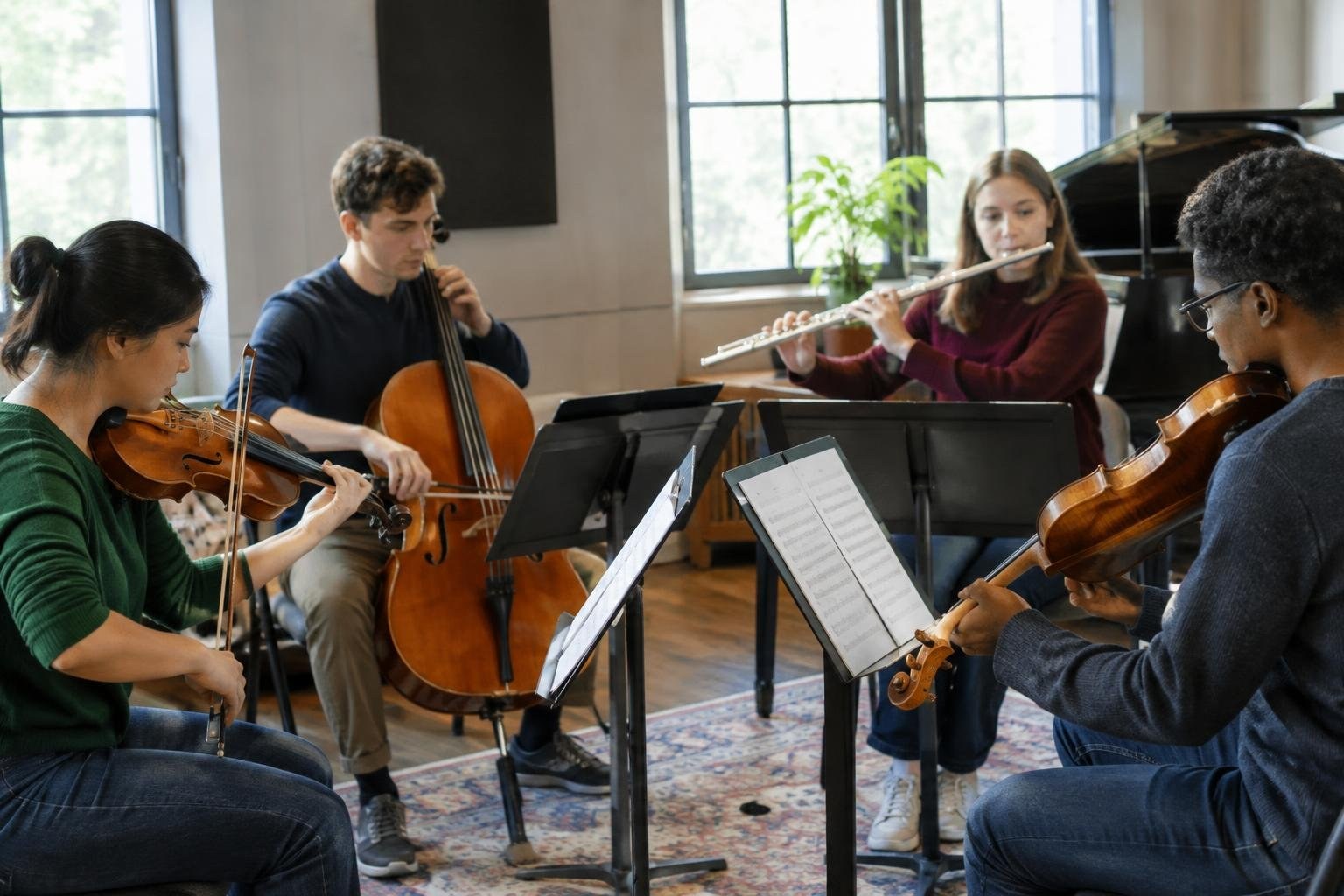
A small student ensemble rehearsing with sheet music and instruments
What Is a Music Degree?
A music degree is a postsecondary credential in music study. The program description for the “Music, Other” field covers instructional programs in music that are not classified elsewhere, so this category can encompass different approaches rather than one standard curriculum.
Music departments may distinguish among performance, composition, music education, musicology, or other areas. These labels indicate different emphases, but a school’s actual required courses and outcomes are the best guide to what students will study. For example, Old Dominion University describes its Master of Music Education with concentration areas in Applied Studies or Conducting, Research, and Pedagogy. Review Old Dominion University’s graduate music program details.
Related fields may lead to different preparation. Musicology is a scholarly path; music education focuses on teaching; a performance-focused program places greater emphasis on developing performance practice. Compare program requirements rather than assuming that similar titles mean similar training.
What Do You Study in a Music Program?
There is no single course list for every music major. Depending on the program’s purpose, the curriculum may combine music coursework with applied or ensemble study, individual projects, performance, research, or teaching preparation. Ask for the current degree plan and identify which activities are required, which are electives, and how students demonstrate progress.
For a performance-oriented path, examine the amount and structure of applied study, opportunities to perform, and how auditions or juries are handled. For a research-oriented path, ask about scholarly methods, faculty advising, and the final research requirement. For music education, review preparation in pedagogy and whether a separate educator credential is needed for the roles you want.
Graduate programs can offer focused options. ODU’s Master of Music Education lists concentrations in Applied Studies or Conducting, Research, and Pedagogy. Treat this as one university’s example, not a universal curriculum. Read each institution’s course catalog and speak with an academic advisor before assuming a concentration includes particular classes or experiences.
Skills You Can Develop Through Music Study
Music study can build skills through repeated practice, structured feedback, and collaboration. The relevant mix depends on the concentration and course plan. Before enrolling, look for evidence in the curriculum that students will develop the abilities their intended careers require.
Musical and technical: Ask how the program develops skills in the student’s instrument, voice, composition, conducting, or other chosen area.
Listening and analysis: Consider whether students study musical structure, interpret performances, or research musical questions.
Communication: Performance, teaching, and collaborative work can call for clear communication with audiences, students, faculty, and fellow musicians.
Planning and follow-through: Practice schedules, rehearsals, performances, and longer projects require organization and preparation.
Technology: Ask which music or production tools, if any, are used in required courses. Software exposure varies by program.
Connect each claimed skill to a course, project, or experience in the program. That makes it easier to judge whether the degree helps build a portfolio of evidence rather than simply adding a credential to a résumé.
Who Is a Music Program Best For? Admissions and Fit
A music program may suit students who enjoy sustained musical study and want to develop a specific creative, performance, educational, or scholarly direction. Interest in music is a starting point, not a guarantee that every music major will enjoy every program. Some paths involve public performance and frequent collaboration; others emphasize teaching, analysis, or research.
Students and parents should discuss how the learner responds to practice routines, critique, performance settings, independent work, and group responsibilities. There is no single personality type required. Instead, consider which activities energize the student and which they are willing to work on over time.
Check entry requirements early
Admission rules are set by individual schools and may vary by program. Ask whether the application requires an audition, portfolio, interview, prior coursework, or other materials. Get the exact deadlines and standards from the program rather than relying on assumptions based on another college.
Certificate eligibility can also differ. Indiana University’s Jacobs School of Music describes undergraduate certificates for undergraduate music majors and non-majors, students at other institutions, and others without a bachelor’s degree. It also describes graduate certificates for graduate students and others who hold a bachelor’s degree. Check Indiana University’s certificate program information and confirm rules for any program you are considering.
Credential Levels, Online Options, and Time to Completion
Music credentials include certificates and degrees at different levels, but the exact offerings depend on the institution. Curtis Institute of Music, for example, lists a Diploma, Bachelor of Music, Master of Music, Post-Baccalaureate Diploma, and Professional Studies Certificate. Its offerings are an institutional example, not a list available at every college. Review Curtis Institute’s credential options.
Other schools offer music certificates alongside undergraduate and graduate degrees. Berklee Online lists online courses and certificate programs, a Bachelor of Arts degree, a Master of Music degree, and a Master of Arts degree. See Berklee Online’s music study options.
There is no reliable single completion time for “a music degree” across all credentials, transfer histories, and enrollment schedules. Ask each school for the expected full-time sequence and how part-time study, transfer credits, prerequisites, auditions, or required course rotations could affect the timeline. Online delivery does not automatically mean a shorter program or fewer requirements.
Tuition, Cost Planning, and Financial Aid
Music education requires resources and regular participation beyond the course title. The total cost may include tuition and fees, books, instruments or equipment, technology, travel, and housing or other living expenses. Which items apply depends on the student and program. Request a school-specific cost estimate for the entire planned course of study, not only the advertised tuition rate.
Compare net cost after grants and scholarships, and ask whether aid can be renewed in later years and what academic or enrollment conditions apply. Explore federal student aid through the official federal aid process, institution-based awards, state aid, and employer assistance when relevant. Do not assume a music scholarship is available or guaranteed; ask about eligibility, audition requirements, award amounts, renewal rules, and application dates.
Transfer credits or a certificate may fit some learners’ goals, but a shorter credential is not automatically cheaper or sufficient for a target career. Compare the total cost and career relevance of each pathway. For online study, include required equipment and any travel or in-person costs in the budget.
Music Careers, Jobs, and Employment Considerations
Music study connects to a range of occupations, but the degree alone does not guarantee a position, income, or employment growth. Relevant career categories include musicians and singers, music directors and composers, and postsecondary art, drama, and music teachers. Their daily work, hiring standards, and education expectations are not identical.
Career direction
Possible preparation to investigate
Questions to verify
Musician or singer
Performance-centered study, experience, and a portfolio or record of work
What performance evidence do employers or collaborators expect?
Music director or composer
Relevant music study and experience directing, composing, or arranging
Which skills and work samples appear in current opportunities?
Postsecondary music teacher
Advanced study may be expected, depending on institution and role
What degree and experience do target colleges require?
Use current U.S. Bureau of Labor Statistics information and actual job postings to compare pay and outlook for the exact occupation and location. Do not use a broad “music salary” figure to predict an individual outcome: employment arrangements, experience, location, and role all matter. Explore Assessment.com’s guides to musicians and singers, music directors and composers, and postsecondary arts teachers.
How to Compare Music Programs
Look beyond the degree name when comparing institutions. A useful program for one student may be a poor match for another because of differences in concentration, admissions expectations, learning format, cost, and access to performance or research opportunities.
Curriculum: Do required courses match the intended direction, or is the desired area only an elective?
Faculty and facilities: Ask who teaches the relevant courses and what spaces, instruments, or technology students can access.
Experience: Find out whether performance, ensemble participation, research, internships, or teaching practice is part of the program.
Delivery: Confirm how online, campus, and hybrid courses work and whether any activities require attendance in person.
Cost and aid: Compare total cost after aid, renewal requirements, and the costs of materials and travel.
Outcomes and support: Ask what graduates do, how the school gathers that information, and what career advising or employer connections are available.
Request written answers where possible. A clear comparison sheet can help families weigh the same factors across schools rather than choosing based on reputation or one appealing feature.
Accreditation, Licensure, and Certificates
Accreditation, degree status, and professional qualification are different questions. Verify an institution’s accreditation using official resources, then check whether a specific program or career has additional requirements. Do not assume that completing a music degree automatically grants permission to teach in a public school or qualifies someone for every music-related role.
Requirements depend on employer, state, and occupation. Students considering school teaching should ask whether the program includes educator preparation and independently verify state licensure rules. Prospective postsecondary teachers should review hiring requirements at the types of colleges where they hope to work.
Certificates can provide focused study, but the credential’s value depends on its curriculum and the intended next step. For instance, UNCW describes a post-baccalaureate certificate in music education for in-service music teachers, with a general/classroom music education focus and an undergraduate degree in music education or a closely related area listed among admission considerations. Review UNCW’s certificate requirements and confirm current eligibility with the school.
Graduate School and Further Music Study
Graduate study can deepen a student’s specialization, support research goals, or prepare for certain teaching and professional roles. It is not automatically required after a bachelor’s degree. Decide based on the actual qualification expected for the desired job and the additional time and expense involved.
Options can include a Master of Music, Master of Music Education, musicology master’s, graduate certificate, or doctoral study. ODU provides one example of a Master of Music Education with concentrations in applied studies or conducting, research, and pedagogy. Indiana University describes both undergraduate and graduate music certificate routes with different eligibility conditions.
Check whether a graduate degree is a terminal credential for the intended purpose or a step toward doctoral work. Ohio State states that its MA in musicology is a terminal degree and that students intending to continue to a doctorate should enroll in its post-baccalaureate PhD program. This is school-specific guidance, so confirm the pathway directly with the program you are considering.
Related Degrees, Pathways, and Alternatives
Related paths can be better choices when a student wants a different balance of practice, scholarship, teaching, or career flexibility. Compare these options against the required curriculum and job qualifications, not only their names.
Music education: Consider this instead if preparing to teach is the main goal.
Music performance: Consider this instead if intensive performance development is the priority.
Musicology: Consider this instead if scholarly research and the study of music are the primary interests.
Music production or technology: Consider a program with verified production and technology coursework if the student wants technical studio or media work.
Arts administration: Consider broader arts or business study if the goal is managing programs, venues, or organizations rather than performing.
General liberal arts study with music electives: Consider this if the student wants broader academic options alongside continued musical involvement.
A certificate or focused study: Consider this when additional targeted training is the goal and a full degree is not needed.
These labels are broad. Schools may organize the same subject differently, and not every option is available at every institution. A program’s official course list and the requirements for the student’s intended career should drive the comparison.
Experience, Projects, and Career Preparation
Relevant experience can help students test career interests and show what they can do. Seek opportunities that match the intended direction: performances, ensembles, composition projects, research, music teaching practice, internships, or volunteer work with arts organizations. Availability depends on the institution and community.
How to stand out to employers
Keep a focused portfolio or record of performances, compositions, arrangements, or projects that is appropriate for the target role.
Describe the student’s specific contribution to collaborative work, not only the group’s result.
Seek feedback from faculty, mentors, and working professionals, then use it to improve materials and technique.
Build practical experience alongside coursework and learn the work expectations of the relevant sector.
Check job postings for recurring requirements and target learning or experience gaps before graduation.
Experience is not a substitute for a required degree, license, or credential. It is one way to strengthen preparation and determine whether the day-to-day work fits.
Questions to Ask Before Choosing a Program
Before applying, make a short list of desired careers and compare their qualifications with the programs under consideration. Then contact departments and ask specific questions. Families can help by reviewing cost and deadlines, while the prospective student should evaluate the daily study and work that each path involves.
What are the required courses, performance or research milestones, and total credits?
Do applicants need an audition, portfolio, interview, or prerequisite coursework?
What is the full estimated cost, including fees and materials, and what aid is renewable?
Are the program and institution appropriately accredited?
What in-person activities, performance commitments, or travel are required?
Can credits transfer, and how will transfer work affect time to completion?
What career advising, internships, ensemble work, or employer connections are available?
For a teaching or academic career, what further credentials or degrees may be needed?
How does the program track graduate outcomes, and what does the evidence include?
To explore whether music-related careers and degree paths fit personal motivations and interests, use Assessment.com’s MAPP career assessment alongside discussions with counselors, faculty, and working musicians. An assessment can inform exploration; it should not replace careful program and career research.
From Music Degree to Career: Example Pathways
Career pathways are not guaranteed progressions, but mapping possible steps can reveal which experience and credentials to investigate. For example:
Music study → performance opportunities → a focused portfolio and professional experience → musician or singer roles.
Music study → composition or conducting projects → experience with ensembles or productions → music director or composer opportunities.
Music education study → supervised teaching preparation and any required state credential → classroom experience → further specialization or graduate study.
Music scholarship → research projects and advanced study where needed → academic or postsecondary teaching opportunities.
For each route, check actual employer requirements and local rules. Students can use the pathway map to identify questions for advisors and to decide which experiences they should seek while enrolled.
Frequently asked questions
Is a music degree hard?
A music degree may be challenging because it can combine sustained individual practice with coursework, performance, collaboration, and deadlines. The balance differs by school and program. Applicants should ask how much practice is expected, how performances are assessed, and whether their current preparation matches the program’s entrance requirements.
Is a music degree worth it?
Music can be a worthwhile degree when its learning opportunities and likely career paths match your goals and the cost is manageable. Outcomes depend on the program, specialization, experience, location, and job requirements. Compare total expenses and likely next steps with alternatives before deciding; there is no universal return on investment for every student.
What jobs can I get with a music degree?
Possible directions include performing, composing, directing, teaching, and further study in music or music education. The occupations listed for this field include musicians and singers, music directors and composers, and postsecondary art, drama, and music teachers. Some roles may require graduate study, teaching credentials, or substantial experience, so check requirements for the specific job.
Can I earn a music degree online?
Music programs are offered at different credential levels and in varied formats. Berklee Online, for example, lists online courses, certificates, and undergraduate and graduate degree options. Availability and requirements vary by program, so confirm whether online study includes any in-person expectations and whether the credential matches your goals.
Does a music degree require math?
Music study is not uniformly math-intensive, but some programs or areas of study may involve analytical work. The specific balance depends on curriculum and specialization. Review required courses and ask a department what quantitative work students complete rather than relying on the general label “music.”
Do I need graduate school for a music career?
Not every music-related career requires graduate school. Advanced degrees may be relevant to specialized performance, research, or some teaching paths. Requirements differ by job and institution; examine current job postings and the relevant institution’s hiring criteria before choosing whether to continue beyond an undergraduate credential.
What certifications help with a music degree?
There is no single certificate that is useful for every music graduate. Credentials are program- and career-specific. For example, music education, performance, and other focused study areas may offer certificates, but earning a certificate does not automatically grant a teaching license or qualify someone for a particular job. Verify employer and state requirements.
How is a music degree different from musicology or music education?
Musicology focuses on the scholarly study of music, while music education focuses on teaching and learning. Performance-centered programs emphasize developing musical practice and performance. These fields can overlap, but their coursework and career aims differ. Compare required courses, auditions, research expectations, teaching preparation, and graduate-school pathways at each institution.
People Also Ask
What do you learn in a music degree program?
Music degree programs cover different areas, which can include performance, composition, music education, and music scholarship. A specific curriculum depends on the institution and credential. Compare course requirements, applied study, performance expectations, and final projects before choosing a program.
What types of music degrees are available?
Music study is available through more than one credential route. Examples in the supplied university program information include certificates, bachelor’s degrees, master’s degrees, and doctoral study. Not every school offers every level or concentration, so verify each program directly with the institution.
Do music majors have to audition for college?
Admission requirements are set by each institution and may depend on the credential and area of study. Ask whether an audition, portfolio, interview, prior coursework, or other preparation is required, and confirm deadlines and evaluation criteria with the admissions office or music department.
How much does a music degree cost?
Program costs vary by institution, location, credential, enrollment status, and additional expenses. Request a full cost estimate that includes tuition, fees, books, instruments or equipment, travel, and any performance-related costs. Ask the financial aid office about grants, scholarships, and payment options before committing.
Are online music degree programs available?
An online format may work for some music courses and programs, but the learning experience and any in-person expectations vary. Review whether the program includes live instruction, performance assessment, ensemble work, or required campus visits. Berklee Online lists online courses and several types of credentials, but applicants should verify details for the specific offering.
Can you become a music teacher with a music degree?
A music degree is one possible foundation for teaching, but it does not by itself establish eligibility for every teaching job. Requirements depend on the job, employer, and state. Ask programs whether they include teacher preparation and verify any required educator credential with the relevant state authority.
What is the difference between music performance, music education, and musicology?
Music performance emphasizes musical practice and performance, while musicology centers on scholarly study. Music education prepares students for teaching-focused work. Institutions may offer overlapping coursework or concentrations, so compare the curriculum and the qualifications associated with the career you want.
A music degree can support a life in performance, teaching, composition, research, or related creative work, but the right route depends on the skills and roles you want to pursue. Before enrolling, compare program requirements, total cost, learning format, and opportunities to perform or gain experience. Talk with current students and faculty, review the work expected in the program, and check the education requirements for careers that interest you. If you are still deciding, use Assessment.com’s career and degree resources, including the MAPP career assessment, to explore whether music and its related career paths fit your interests and motivations.
Find out which Career or College Major is right for you!
We use cookies to offer you a better browsing experience, analyze site traffic and personalize content.
Read about how we use cookies and how you can control them in our
Privacy Policy.
If you continue to use this site, you consent to our use of cookies.
×
Exciting News!
Be one of the first to Beta Test the new AI-Powered Assessment.com Platform.