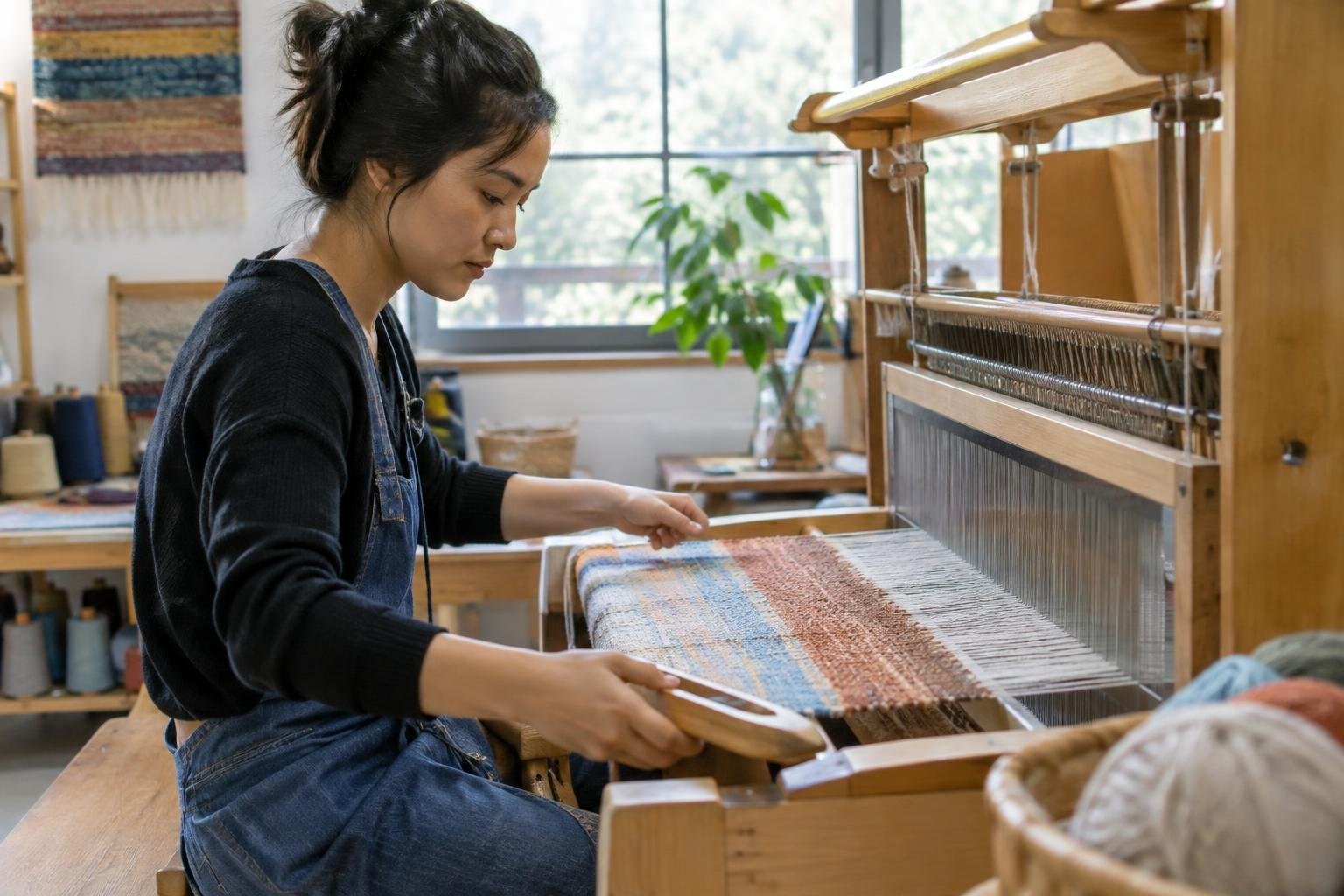
Fiber, Textile and Weaving Arts Degree Guide: Courses, Careers and Program Fit
A practical guide to studying fiber arts: compare studio approaches, credentials, costs, and career directions before choosing a program.
By David Slack · Staff Writer Assessment.com · Published October 12, 2026 · Last updated November 5, 2026
Fiber study is not one fixed curriculum. One program may center on woven textiles and intensive technique, while another may place making within contemporary art, textile history, or materials research. That difference matters when you are comparing schools: the same broad field can lead to quite different studio experiences. This guide helps prospective students and families assess program emphasis, credentials, practical questions, and possible career directions. Use school-specific information to make the comparison, since the sources describe individual programs rather than a universal course plan.
Degree & Program Decision Insights
Explore your personal fit, education requirements, career potential and next steps.
01Motivational Fit
Discover whether this program fits you
Explore your preferences against the focus of Fiber, Textile and Weaving Arts. These prompts are not personal MAPP results.
Subject curiosity. Would you choose to explore “weaving techniques and loom operation” in depth? Ask for a sample learning activity to test that interest.
Breadth of interest. Consider the place of “non-woven techniques such as knitting, coiling, netting, and crocheting” in this field. Is this another part you would choose to explore, or mainly a requirement you would tolerate?
Work reality. Related work can involve this task: “Fabricate patterns or templates to guide craft production.” Would you want that activity to be a regular responsibility?
Interest in studying a field can differ from enjoying its related work.
Which part would you want to do repeatedly, and what would you try before deciding?
Discover Your Personal Program Fit
Before investing your time and money in your education, discover how this program aligns with your natural motivations, work preferences and career goals.
Typical occupational entry: master's degree (BLS). Postsecondary teaching is a separate appointment and may require advanced study; this programme alone is not a promise of a teaching post.
U.S. occupational wages are not guaranteed graduate earnings; OEWS excludes self-employed workers.
Projected openings include replacements as well as growth.
U.S. national estimates. A crosswalk does not establish entry-level eligibility; advanced, management and teaching roles can require further qualifications.
Compare the focus and route of these distinct instructional fields; their credentials and admission requirements are not interchangeable.
Apparel and Textile ManufactureCIP 19.0902. Compare its emphasis on functional and aesthetic design and human factors research with this program’s focus.
Jewelry ArtsCIP 50.0713. Compare its emphasis on design concepts and electroforming with this program’s focus.
Metal ArtsCIP 50.0714. Compare its emphasis on aesthetics and anodizing with this program’s focus.
Explore your motivations. Use MAPP as a starting point for reflecting on your interest in “weaving techniques and loom operation”, then test that interest against a sample learning task.
Examine the work. Compare Craft Artists and Art, Drama, and Music Teachers, Postsecondary on daily work and entry qualifications, as well as pay. Explore Craft Artists.
Compare actual providers. Ask for the exact credential, course sequence and assessment methods. Compare how each provider teaches “non-woven techniques such as knitting, coiling, netting, and crocheting”, its entry criteria and its itemized costs.
Check the evidence before applying. Confirm prerequisites and any recognition or professional requirements for your intended route; ask for applicable rules and published outcome definitions in writing.
Verify the institution’s current offering, admissions requirements and outcomes; a search result does not establish your eligibility.
Think of fiber arts as a field defined by materials and making, not by one standard course plan. The formal classification lists Fiber, Textile and Weaving Arts as CIP 50.0712, but that label does not specify what a particular school teaches or awards.
For example, one curriculum describes fiber and textiles within a contemporary art context, alongside historical and theoretical discussion. Another program presents fiber study through an interdisciplinary lens that includes critical attention to textile history, production, and materials research. These examples show why the course descriptions matter more than the title alone.
When reviewing a program, note whether it emphasizes technique, product creation, independent studio work, or critical study. The mix is a key part of deciding whether a school fits your goals.
Read the Curriculum Through the Work It Enables
Instead of assuming every student follows the same sequence, look at the kinds of work each curriculum makes possible. One department lists weaving, textile construction, print, dye, collage, papermaking, sewing, and quilting among its techniques. A professional crafts program describes an intensive focus on woven textiles, with opportunities for dyeing, stitching, and surface design. These are examples of distinct approaches, not a universal checklist.
Questions about context matter too. Some study connects making with contemporary art, historical traditions, or theory. Other programs bring attention to textile materials, techniques, histories, or politics. If you want to investigate a particular method, find out whether it is a required course, an elective, or simply mentioned in the program description.
Ask to see recent student projects or a course sequence. That evidence can help you judge whether the curriculum matches the balance of technique and independent exploration you want.
What the Studio Experience Can Develop
Fiber projects ask students to make decisions about materials and process as well as appearance. A woven piece, a dyed surface, and a constructed textile involve different methods, so a program’s range of studio work can influence what you learn to do. Review which techniques are actually taught before treating a broad program title as evidence of particular training.
Study can also involve interpreting what materials and textile practices mean. Some programs explicitly bring textile histories, production, and materials research into their approach; others describe work in relation to historical traditions and contemporary discussion. This can help students connect a finished object with the questions that shaped it.
For a useful comparison, write down three desired outcomes: techniques to practice, types of work to make, and ideas or contexts to explore. Use those priorities when reviewing course lists and speaking with faculty.
Test Your Fit Before You Apply
This field may appeal to students who want sustained hands-on work and are curious about how technique, material, and meaning meet. You might enjoy trying a process, seeing how the material responds, and adjusting your approach as a project develops. Some programs combine technical development with critical discussion, so interest in both making and reflection may be useful.
You do not have to decide on a single job title before exploring the major. Start by asking whether you prefer the pace and open-endedness of studio projects, whether you want to study textile histories or production, and whether you are more interested in finished textile products or contemporary art.
Admissions and portfolio expectations are set by each institution. Check the current requirements for your application level and ask whether the school expects prior studio experience or a portfolio. For help comparing college directions, see Assessment.com’s guide to choosing college majors.
Compare Credentials, Credits, and Study Format
Program names do not tell you how much study is required. One university describes a BFA in Textiles + Fiber as a four-year, 120-credit course. Treat this as one institution’s structure, not a completion-time rule for other bachelor’s programs.
Fiber-related study also appears in different kinds of credentials. A specialized certificate is one example; other schools may offer degree programs at different levels. Confirm what is currently available at each institution, how many credits are required, and whether the course sequence suits your schedule.
Format needs the same close reading. If studio work is central to a course plan, ask what equipment and workspace are available, how students complete practical assignments, and whether a course requires campus attendance. Do not infer the learning experience from an online or hybrid label alone.
Build a Realistic Cost Comparison
The research available here does not establish a standard tuition price for fiber arts programs. Ask each school for its current cost estimate and clarify what the figure includes. In particular, ask whether materials, equipment use, studio access, course fees, or documentation needs involve separate costs.
Compare like with like: the credential, expected number of terms, enrollment plan, and the expenses not included in tuition. If you are considering more than one school, record the answers in a table rather than relying on a per-credit figure alone.
Ask the institution about its financial aid process, scholarships, and transfer-credit review. Eligibility and terms are school-specific, so request current details directly. A program’s emphasis on equipment or studio practice is also a reason to ask what students can access and what they must supply themselves.
A Program-Comparison Checklist
Compare programs by the experiences they provide, not by a ranking or a shared label. Start with course content: does the curriculum focus on woven textiles, a wider set of fiber techniques, textile products, contemporary art, or critical study? Then ask how those priorities show up in required classes and student work.
Studio access: Ask what equipment, workspace, and instruction students can use.
Choice: Find out how much room there is to explore techniques beyond the core sequence.
Context: Check whether textile history, materials research, or production are part of the curriculum.
Student work: Review examples and ask how students develop and present projects.
Practical fit: Compare admissions requirements, schedule, credential, and full estimated cost.
Use the answers to identify tradeoffs. A school’s strength in one area does not mean it offers every method or outcome you have in mind.
Browse Assessment.com’s degree directory for broader education exploration, then verify program details with the institution.
Connect Study to Work Without Assuming a Job Guarantee
Career planning is clearer when it begins with a type of work rather than a promise attached to a degree. SUNY Buffalo State describes its Fiber Arts Certificate as specialized study that provides a foundation for artist, designer, and fiber manufacturing or business-related paths. That description identifies possible directions; it does not guarantee a particular job.
Consider what you would need to show an employer or client. A portfolio can make your methods, decisions, and finished work visible. Ask programs how students document projects and what opportunities exist to develop work beyond class assignments.
If teaching interests you, research the specific setting and qualifications expected. Assessment.com lists postsecondary art, drama, and music teaching as a career area to explore. For other creative possibilities, browse arts and design careers. Verify each role’s requirements with potential employers.
Check Requirements for Your Intended Role
A fiber credential and a professional qualification are not automatically the same thing. The supplied program descriptions do not establish a single license or certification for fiber arts. If your goal is teaching or another role with specific qualifications, identify the exact job and location, then check requirements with the employer or responsible authority.
When a school describes accreditation or recognition, ask what body applies and what the status covers. Verify that information with the relevant organization rather than assuming a program title or marketing statement establishes professional eligibility.
This is especially important when your plan includes further study or a regulated occupation. Confirm the requirements before enrolling so you can evaluate whether the curriculum and credential align with your next step.
Choose a Neighboring Field by the Work You Want to Do
An alternative major may fit better if you want to change the balance between making, design, and research. The supplied program examples distinguish textile and fiber study from other areas through their attention to fiber processes, products, contemporary art, or textile history. Think about the work you want to spend time doing, then compare the actual curricula.
Fashion design: Explore if clothing and apparel design are your main interests. See Assessment.com’s fashion designer career information.
Graphic design: Consider if visual communication is a stronger draw. Explore graphic design careers.
Product or industrial design: Compare this direction if you want to focus on designed objects and their function. See commercial and industrial design.
Broader art study: Look for curricula that include media beyond fiber.
These are comparison prompts, not interchangeable credentials. Compare courses, studio work, and admission requirements before choosing.
Weigh the Learning Opportunity Against the Tradeoffs
The value of a program depends on whether its learning experience justifies its cost for your goals. A studio-intensive curriculum may appeal if you want close work with materials and techniques. A program centered on research or contemporary art may be a stronger match if you want to connect making with interpretation and context. A certificate and a bachelor’s degree should be compared by their actual requirements, not treated as automatic substitutes.
Possible tradeoffs include the time involved in project work, access to facilities, and uncertainty about which role you will pursue afterward. Before committing, ask what students make, what the credential requires, and how the program supports portfolio development. Compare those answers with your financial limits and preferences.
Assessment.com’s college guidance resource and free MAPP career assessment can help you reflect on education and career directions. Use them as aids to exploration, not as a substitute for school-specific research.
Map a Possible Route From Coursework to Next Steps
It can help to sketch a route from learning to a possible next step, while keeping the distinction between preparation and employment clear. A specialized certificate may offer focused coursework; one certificate description connects that study with foundations for artist, designer, and fiber-related business or manufacturing paths. A different program may provide a bachelor’s-level studio experience, while graduate study may deepen work with technique, materials, histories, or critical inquiry.
For any route, ask what evidence you will leave with: completed projects, photographs, written reflections, or a portfolio. Then identify the experience and qualifications that target employers request. The available program descriptions indicate possible directions, not guaranteed hiring outcomes.
Use Assessment.com’s career exploration and education resources to consider options alongside conversations with advisors and faculty.
Questions to Take to Admissions and Faculty
Use a conversation with admissions staff or faculty to test whether the program’s description matches what students experience. Ask focused questions and record the answers so you can compare schools on the same terms.
Which techniques and materials are required, and which are elective?
How does the program balance studio production with research or critical study?
What credential is awarded, and how many credits and terms are typical?
What facilities and equipment can students use, and what costs are separate?
What are the current admissions and portfolio requirements for my applicant type?
How do students document or present their work?
What can the program share about graduates’ directions, without implying a guaranteed outcome?
What additional qualifications do employers in my intended field expect?
Compare answers against your priorities, not just the school’s promotional language. Assessment.com’s college counselor resource can be another starting point for education planning.
Frequently asked questions
What do students make in a fiber arts program?
It is a studio-focused field in which students work with fibers, fabrics, and textile processes. Depending on the program, projects may involve weaving, textile construction, printing, dyeing, sewing, quilting, or other methods. Some curricula also connect studio practice with textile history, production, and critical discussion.
Which credentials can I earn in fiber arts?
No single credential or schedule applies across institutions. Available choices may include focused certificate study, associate or bachelor’s degrees, and graduate education, but each school determines its own offerings. Ask the institution about the current program, total credits, course sequence, and likely completion plan.
What kinds of work might follow fiber arts study?
The available evidence describes several potential directions, including artist and designer work and occupations connected with fiber manufacturing or business. These are possible paths, not guaranteed placements. Investigate actual job duties and employer requirements, and ask the program what it can share about graduates’ work.
Should I choose a certificate or a degree?
Not necessarily. A certificate may provide a focused group of specialized courses, while a degree may involve a different scope and sequence. Compare the precise curriculum and award at each school rather than assuming credentials with similar names offer the same preparation.
How can I tell whether a fiber arts program fits me?
Start with the courses and studio methods you want to learn. Then ask about equipment access, project expectations, admissions requirements, total cost, and the work students produce. Compare those answers with your goals and check any additional qualifications required for a career you are considering.
People Also Ask
How long does it take to study fiber arts?
There is no universal time frame. Completion depends on the credential, institution, course load, and a student’s academic plan. One university describes its BFA in Textiles + Fiber as a four-year, 120-credit course of study; that example should not be treated as the standard for all programs.
What techniques are taught in textile arts classes?
Course content varies. One program describes weaving, textile construction, print, dye, collage, papermaking, sewing, and quilting in a contemporary art context. Other programs may emphasize different techniques, materials, or critical study, so review the actual course list.
Can I study fiber arts through a certificate program?
The available research describes both certificate and degree-level examples, but it does not establish which credentials every school offers. Check current program pages and ask admissions staff to confirm the award and its requirements.
Is fiber arts more about craft or fine art?
The balance differs among programs. Some emphasize making textile products and developing technical skills; others connect studio work to contemporary art, textile history, or materials research. Compare projects, course descriptions, and faculty guidance rather than relying on program names.
What should I ask about the cost of a fiber arts degree?
Ask each institution for a current cost estimate and an itemized explanation of fees, supplies, equipment access, and any other program expenses. Compare the total for your expected plan of study, and ask how financial aid and transfer-credit review apply to your situation.
Fiber study may be a good fit if you want to make work with materials, learn techniques through practice, and connect creative choices with the histories and ideas surrounding textiles. The right path depends on the kind of work you want to pursue and the program’s actual curriculum, facilities, credential, and cost. Compare these details directly with each institution, then consider how the program would help you build and present a body of work. To explore how your interests connect with education and career possibilities, take the free MAPP career assessment on Assessment.com.
Find out which Career or College Major is right for you!
We use cookies to offer you a better browsing experience, analyze site traffic and personalize content.
Read about how we use cookies and how you can control them in our
Privacy Policy.
If you continue to use this site, you consent to our use of cookies.
×
Exciting News!
Be one of the first to Beta Test the new AI-Powered Assessment.com Platform.