Anthropology Degree Guide: Courses, Careers, Costs, and Program Fit
An anthropology degree explores human societies, cultures, language, biology, and the past. Learn about courses, degree levels, online study, career pathways, costs, and how to evaluate program fit.
By Kieth Nelson · Staff Writer Assessment.com · Published October 25, 2026 · Last updated November 5, 2026
An anthropology degree is an academic program focused on humans: how people live, communicate, organize societies, adapt biologically, and change across time. Depending on the program, students may study culture, language, archaeology, human evolution, primates, or research methods, often drawing connections between the past and present. Anthropology is offered at multiple credential levels, from associate and bachelor’s degrees to master’s and doctoral programs. Graduates may explore research, education, museums, cultural heritage, public service, and other fields where understanding people and evidence is useful. The best path depends on the work you hope to do and whether that work requires advanced study or additional experience.
Degree & Program Decision Insights
Explore your personal fit, education requirements, career potential and next steps.
01Motivational Fit
Discover whether this program fits you
Explore your preferences against the focus of Anthropology, General. These prompts are not personal MAPP results.
Language and interpretation. How interested are you in the close attention to meaning and expression involved in anthropological linguistics?
Understanding people and societies. Would you enjoy investigating biological/physical anthropology, comparing perspectives rather than expecting a single simple explanation?
Work reality. Related work can involve this task: “Conduct ethnographic field research.” Would you want that activity to be a regular responsibility?
Interest in studying a field can differ from enjoying its related work.
Which part would you want to do repeatedly, and what would you try before deciding?
Discover Your Personal Program Fit
Before investing your time and money in your education, discover how this program aligns with your natural motivations, work preferences and career goals.
Typical occupational entry: doctoral or professional degree (BLS). Postsecondary teaching is a separate appointment and may require advanced study; this programme alone is not a promise of a teaching post.
Anthropologists and ArcheologistsSOC 19-3091 · O*NET 19-3091.00$70,770/year median (May 2025); +6% projected change (2025–2035); 800 projected openings/year.
U.S. occupational wages are not guaranteed graduate earnings; OEWS excludes self-employed workers.
Projected openings include replacements as well as growth.
U.S. national estimates. A crosswalk does not establish entry-level eligibility; advanced, management and teaching roles can require further qualifications.
Compare the focus and route of these distinct instructional fields; their credentials and admission requirements are not interchangeable.
Sociology and AnthropologyCIP 45.1301. A program that combines sociology and anthropology to study how society is organized, the origins and development of social institutions, social change, social organizations, race, class, gender and culture.
Linguistics and AnthropologyCIP 30.4701. Compare its emphasis on applied linguistics and data management with this program’s focus.
Cultural AnthropologyCIP 45.0204. Compare its emphasis on cultural anthropology and anthropological theory with this program’s focus.
Explore your motivations. Use MAPP as a starting point for reflecting on your interest in “biological/physical anthropology”, then test that interest against a sample learning task.
Compare actual providers. Ask for the exact credential, course sequence and assessment methods. Compare how each provider teaches “primatology”, its entry criteria and its itemized costs.
Check the evidence before applying. Confirm prerequisites and any recognition or professional requirements for your intended route; ask for applicable rules and published outcome definitions in writing.
Verify the institution’s current offering, admissions requirements and outcomes; a search result does not establish your eligibility.
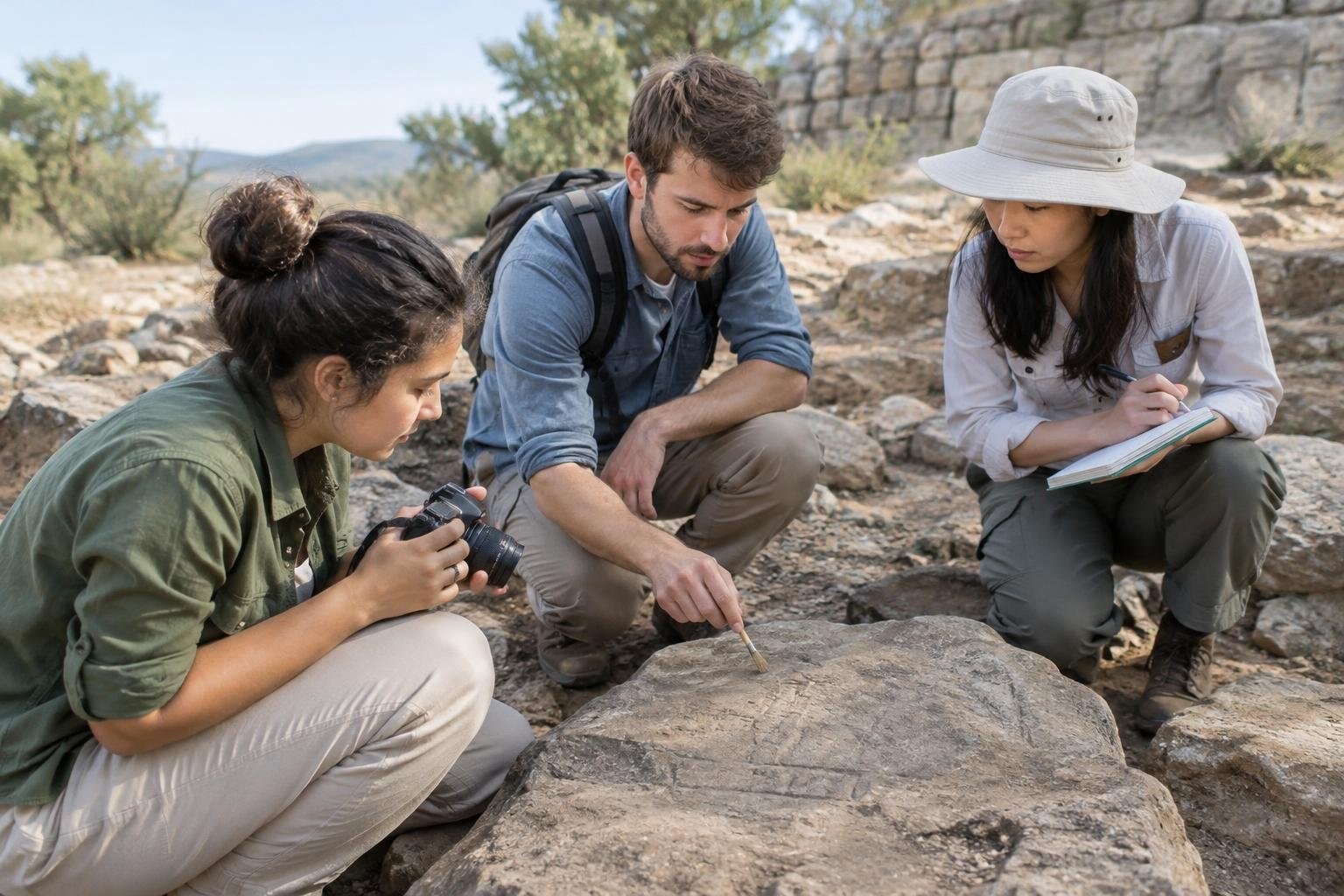
Students learning how anthropologists document material culture
What Is an Anthropology Degree?
Anthropology is the systematic, comparative study of human beings, their development, and their cultural behavior and institutions. The field can examine contemporary communities as well as evidence about earlier populations and related primates. Its breadth is one reason an anthropology major may look different from one college to another.
Common areas include cultural or sociocultural anthropology, biological anthropology, archaeology, and anthropological linguistics. Some programs combine these perspectives; others let students emphasize one area. The University of Pennsylvania describes anthropology as an interdisciplinary study of human cultural, linguistic, and biological diversity and its development from the prehistoric past to the present. Review one university’s general anthropology program description.
Related terms can include anthropology major, general anthropology, cultural anthropology, and applied anthropology. A program title does not tell the whole story: review the course list and concentrations. Anthropology overlaps with sociology, history, linguistics, biology, and archaeology, but its comparative focus on human life across different contexts helps distinguish it.
The federal Classification of Instructional Programs code associated with this guide is 45.0201. That classification identifies a field of study, not a guarantee that every institution offers every credential level or specialization.
What Do You Study in an Anthropology Program?
Anthropology coursework teaches students to ask focused questions about human life, choose a research approach, interpret evidence, and explain findings clearly. A program may introduce all four broad subfields or concentrate on a selected area. The official curriculum determines what students actually study.
Common academic themes
Cultural anthropology: how people form meaning, relationships, institutions, and shared practices.
Biological anthropology: human biological variation, evolution, primates, and related evidence.
Archaeology: how material remains can help explain earlier human communities and lifeways.
Anthropological linguistics: language in social and cultural contexts.
Research methods: how to frame a question, gather information, assess sources, and communicate conclusions.
The field’s program description also identifies topics such as human paleontology, hominid evolution, ethnography, ethnology, ethnohistory, and psychological anthropology. These are potential subjects, not a promise that every degree includes a course in each one.
Applied and advanced work
Some programs connect anthropology to medicine, forensic pathology, museum studies, conservation, sustainable development, or international affairs. A University of Georgia certificate, for example, describes interdisciplinary preparation related to conservation and sustainable development. Utah State describes hands-on opportunities in laboratories, museums, and field settings for students in anthropology-related study. These examples show why students should ask about actual projects and experiences, not just course titles.
At advanced levels, students may pursue focused research, a thesis or non-thesis option, or preparation for doctoral study. The University of Florida lists both thesis and non-thesis master’s routes, while New York University describes a holistic doctoral approach across traditional subfields. Requirements vary by institution.
Skills You Can Develop
Students develop ways to investigate questions about people and communicate what they find. The specific balance of skills depends on electives, projects, field experience, and degree level.
Research and evidence evaluation: assess sources, collect information, and distinguish evidence from assumption.
Writing and presentation: explain complex ideas for academic or public audiences.
Cross-cultural understanding: consider how context shapes behavior and institutions.
Observation and interviewing: document experiences or practices carefully when a project includes field research.
Critical analysis: compare explanations and recognize limits in available evidence.
Collaboration: contribute to projects involving classmates, faculty, community partners, or other disciplines.
These abilities can be useful in research, education, museums, conservation, community work, and other settings. Students should build evidence of applied skills through projects, internships, language study, or practical experience aligned with their target roles. Anthropology programs may offer different research and field opportunities, so verify what is available before enrolling.
Who Is an Anthropology Degree Best For?
Anthropology may appeal to students who are curious about how people live, communicate, organize communities, and adapt over time. It can suit learners who enjoy open-ended questions, careful reading, comparing viewpoints, and making evidence-based arguments. Students do not need to fit one personality profile to study the field.
Consider whether you enjoy both broad questions and detailed evidence. Some coursework may ask you to interpret texts or cultural practices; other paths can involve biological science, archaeological materials, language, statistics, lab work, or field research. If hands-on learning matters to you, ask whether the specific program offers field, museum, laboratory, or community-based experiences.
Does anthropology match you?
Salary, prestige, and job-growth headlines are only part of a college decision. Also consider the kinds of questions and tasks you want to spend time on, the amount of education a target role may require, and whether you are prepared to build experience beyond coursework. Assessment.com’s MAPP career assessment can help you explore how your motivations and preferences relate to career and degree options. Treat assessment results as a prompt for reflection, not a fixed label or a substitute for checking program requirements.
Admissions, Program Length, and Academic Demands
Entry requirements, application materials, and academic expectations differ by college and credential. Undergraduate applicants should check each institution’s current admissions page for prerequisites, transcripts, GPA guidance, test policies, essays, and transfer-credit rules. Graduate programs may ask for prior academic work, research interests, writing samples, recommendations, or other materials; the provided university examples establish that graduate routes exist but do not set a universal admissions standard.
Length and study pace
Completion time depends on credential level, course load, transfer credits, program structure, and whether a student attends full or part time. Associate and bachelor’s programs, certificates, master’s degrees, and doctorates are not interchangeable timelines. Ask the department for the required credits and a term-by-term plan, including any thesis, fieldwork, language, or residency expectations.
Students returning to school or transferring can ask how previous coursework will count. Colorado State’s online program describes a student who earned an associate degree in anthropology and transferred to complete a bachelor’s degree in cultural anthropology. This is an example of one student’s route, not a guarantee that credits will transfer elsewhere.
What may feel difficult?
Common academic demands can include sustained reading, analytical writing, research design, and interpreting evidence that does not yield simple answers. Depending on concentration, science, quantitative methods, language learning, or fieldwork may also be demanding. Prepare by reviewing sample syllabi, asking about academic support, and identifying any prerequisites before the first term.
Online vs. On-Campus Anthropology Programs
Anthropology can be available in online, hybrid, and campus-based formats, but availability depends on the institution and degree. Arizona State describes an online undergraduate anthropology degree, demonstrating that an online option exists. That does not establish that every concentration or credential can be completed remotely.
Before choosing an online program, ask whether required activities include fieldwork, labs, museum work, internships, in-person meetings, or travel. Verify how students access faculty advising, research supervision, library resources, and any practical experiences. Campus programs may make in-person collaboration easier, while online formats may offer more scheduling flexibility; compare the actual course calendar and support services rather than relying on the format label alone.
Also confirm that the program awards the exact credential you need. An online bachelor’s program, graduate certificate, and doctoral program serve different academic purposes and are not interchangeable.
Anthropology Degree Costs and Financial Aid
There is no single anthropology tuition price. Total cost depends on the school, residency classification, credential, attendance pattern, course fees, and living or travel costs. Programs involving field or laboratory work may have additional expenses; ask the institution which charges apply to the specific curriculum.
Build a complete cost comparison
Tuition and mandatory campus or online fees for the full degree.
Books, software, supplies, and any field, lab, or travel expenses.
Housing, transportation, and the income a student may give up while studying.
Costs of further education if the target role typically requires graduate preparation.
Compare estimated total program cost, not just a per-credit rate or advertised first-term price. Ask each financial aid office about grants, scholarships, federal aid eligibility, work-study, employer tuition assistance, payment plans, and transfer-credit evaluation. Eligibility and availability vary, so confirm details directly with the school and relevant official aid providers.
To improve affordability, compare public and private institutions, local and online options, transfer pathways, and part-time schedules. A lower tuition figure is not automatically the least expensive route if extra terms, travel, or nontransferable credits increase the final cost.
Anthropology Careers, Jobs, and Employment Outlook
An anthropology degree can connect to several career directions, but a major alone does not guarantee a specific job, salary, or employment outcome. The graduate program at the CUNY Graduate Center describes preparation for research, teaching, and nonacademic sectors where anthropological knowledge is useful. The program description also identifies applications such as museum studies, medicine, forensic pathology, and international affairs. These examples are directions to investigate, not promises of eligibility.
Pay and job outlook attach to occupations, not to a degree title. Because earnings and projected employment depend on the exact occupation, education, experience, and location, compare current U.S. Bureau of Labor Statistics data for the job you plan to pursue. Avoid treating one salary estimate as the expected outcome for every anthropology graduate.
Career direction
Typical preparation to investigate
Pay and outlook
How anthropology may connect
Anthropologist or related researcher
Relevant degree level, research experience, and any employer-specific requirements
Check current occupation-specific data
Research methods and human-focused inquiry are central to the field.
Postsecondary anthropology instructor
Graduate education is commonly part of the academic pathway; verify employer requirements
Check current occupation-specific data
Subject knowledge and research experience can support teaching pathways.
Museum or collections work
Relevant experience and any specialized training requested by the institution
Check the specific occupation
Anthropology programs may connect to museum study and material culture.
Cultural heritage or archaeology support
Field experience and role-specific education requirements
Check the specific occupation
Archaeological study examines material evidence and past communities.
Community or applied research
Research practice, communication, and experience with the population or topic
Check the specific occupation
Anthropological perspectives can inform research in nonacademic settings.
Conservation and sustainable development projects
Interdisciplinary preparation relevant to the project
Check the specific occupation
Some certificates link anthropology with conservation and development.
International or cross-cultural program work
Role-specific experience; language or graduate study may be relevant
Check the specific occupation
Comparative cultural and social knowledge may be useful.
Medical or forensic-related research settings
Additional scientific, professional, or graduate qualifications may be required
Check each regulated or specialized occupation
Anthropology program descriptions identify related applications, not automatic qualification.
Potential employers can include colleges, museums, cultural or conservation organizations, public agencies, and research or community organizations, depending on the role and local opportunities. To explore linked career resources, start with the anthropologist career guide and compare it with the broader life, physical, and social science career area.
Find out which Career or College Major is right for you!
Anthropology degree completion is not the same as receiving a professional license. Requirements depend on the job, employer, and state. Do not assume that an anthropology credential authorizes practice in a regulated profession or qualifies a graduate for every forensic, medical, teaching, or conservation role.
Ask departments what supervised research, fieldwork, internships, laboratory or museum experience students can complete. Consider building a portfolio of research papers, project summaries, presentations, language skills, or data work where appropriate. Volunteer or community-based experience may help students understand the work and develop relevant references, but confirm that any opportunity is ethical, supervised, and connected to genuine learning.
How to stand out to employers
Connect coursework to a clear area of interest, such as archaeology, culture, language, or conservation.
Describe research questions, methods, and findings in plain language.
Seek faculty guidance on projects and appropriate experiential learning.
Review job postings early to identify recurring education and experience requirements.
Build relevant skills without claiming credentials or field expertise you do not have.
Ask the program whether it provides internships or research supervision, and whether those opportunities are guaranteed, competitive, or arranged independently by students.
Graduate School and Further Study
Graduate study may make sense for students pursuing advanced research, university teaching, or specialized work that requires deeper preparation. Available routes can include a master’s degree, a doctoral program, or a graduate certificate related to a particular focus. The right choice depends on a career goal, not simply a desire to collect another credential.
Program structures vary. The University of Florida lists master’s study with thesis and non-thesis options and doctoral study. NYU describes a doctoral program spanning traditional subfields. Utah State’s catalog material connects advanced language and historical methods with preparation for doctoral programs. Ask about funding, teaching or research responsibilities, time to completion, thesis expectations, and how graduates use the credential.
A certificate may add focused interdisciplinary learning without replacing a degree. For example, the University of Georgia describes a certificate in conservation and sustainable development. Confirm whether a certificate is open to students in your situation and how it fits your intended pathway.
Related Degrees and Alternatives
Compare anthropology with related fields by asking what questions you want to study, which methods you want to learn, and what education your target work requires. Titles and boundaries vary between institutions.
Sociology: consider it if you are more focused on social institutions, group relationships, and contemporary social patterns.
Archaeology: consider a focused program if material evidence and past societies are your main interest.
History: consider it if you want to emphasize written records, historical interpretation, and change over time.
Linguistics: consider it if language structure, use, and change are your primary questions.
Psychology: consider it if you want to focus more directly on individual behavior and mental processes.
Biology: consider it if you prefer a stronger emphasis on biological systems and scientific methods.
International or area studies: consider it if you want a region-focused interdisciplinary curriculum.
Environmental studies: consider it if your central interest is the interaction of people, policy, and environmental issues. Compare an environmental studies degree guide.
Forestry or conservation: consider these fields if you are more interested in forests, natural resource management, or applied conservation. Explore the forestry degree guide.
Before switching majors, compare required courses, available research experiences, graduate-school implications, and the actual job requirements for careers that interest you. Anthropology can be interdisciplinary, but that does not mean it replaces technical preparation required in another field.
Is an Anthropology Degree Worth It? Pros and Cons
An anthropology program can be worthwhile when its curriculum, cost, and experiences support goals that matter to the student. It is not a universal route to a particular salary or occupation. Consider tuition, the time needed to complete the credential, potential graduate study, access to relevant experience, and the types of work you want to pursue.
Potential advantages
Study of human life from multiple perspectives.
Practice in research, writing, interpretation, and communication.
Possible opportunities to connect learning with museums, fieldwork, conservation, or other applications, depending on the program.
Flexibility to explore questions across cultural, biological, linguistic, and historical topics.
Potential drawbacks
The major does not guarantee a job title, salary, or employment outcome.
Some specialized career paths may call for graduate education or substantial related experience.
Broad programs may require students to make their focus clear through electives, projects, or experience.
Practical opportunities can differ by institution and may involve additional time or costs.
For families, the useful question is not whether anthropology is simply “worth it,” but whether a specific program is a reasonable investment for the student’s intended pathway. Compare cost and likely requirements against alternatives, and revisit the plan as the student learns more.
How to Choose an Anthropology Program
Program names alone do not show whether a degree offers the preparation you need. Review the official catalog and speak with an academic adviser before committing.
Accreditation: check the institution’s recognized accreditation status and whether any target profession requires a specific program approval.
Curriculum: compare required courses, electives, concentrations, research methods, and the balance among subfields.
Faculty and facilities: ask whether faculty expertise, labs, collections, or other resources match your interests.
Experience: clarify access to fieldwork, museum work, internships, research, or community projects.
Cost and aid: request an estimated total cost and review available financial support.
Format and timeline: confirm online, hybrid, or campus requirements and a realistic completion plan.
Outcomes and career support: ask how the school reports graduate outcomes and what career advising or employer connections are available.
Transferability: get written confirmation of how prior credits apply to the degree.
Further credentials: if a career requires graduate study or a license, confirm how the program supports preparation for that next step.
Assessment.com’s degree exploration resources can help you compare fields, while its college-major guidance offers another way to think through interests and fit. A MAPP assessment can add reflection on motivations, but admissions and career decisions should also use program facts and direct conversations with schools.
From Anthropology Degree to Career
Career steps are not automatic, and employers set their own qualifications. These examples show how students might connect a degree with additional preparation rather than assuming a guaranteed promotion path.
Anthropology bachelor’s degree → assistant or support role related to research, collections, or community programs → build relevant project experience → specialize through additional training or graduate study if the target role requires it.
Anthropology bachelor’s degree → entry-level work in a cultural or conservation organization → develop experience with a specific project area → pursue an advanced credential only if it supports the next role.
Anthropology master’s degree → research or teaching-related opportunities, depending on employer criteria → build a focused record of research and communication → consider doctoral study for roles that require it.
Anthropology doctorate → compete for research, teaching, or other specialized roles → develop a defined area of expertise and experience. Academic and nonacademic openings vary.
The CUNY Graduate Center identifies research, teaching, and nonacademic sectors as areas its doctoral training serves. Treat this as an example of possible directions, not a promise of employment or advancement.
Questions to Ask Before Enrolling
Before enrolling, students and parents can use this checklist during program research:
What is the institution’s accreditation status, and does my intended career require additional program approval?
What is the full estimated cost, including fees, supplies, travel, and living expenses?
How many credits will transfer, and can the school confirm the decision in writing?
Which anthropology subfields and methods are required?
Are internships, fieldwork, museum experiences, or research available, and how are places assigned?
Does the format require campus attendance, travel, or in-person experiences?
What graduate study, certification, or licensing requirements apply to my target occupation?
What academic advising, career services, and employer connections are available?
How does the program report completion and career outcomes, and what do those measures include?
Which scholarships, grants, aid programs, or employer benefits might apply to me?
Write down answers from each school and compare them side by side. Ask for official catalog or financial aid information rather than relying on general promotional claims.
Frequently asked questions
What is an anthropology degree?
Anthropology is the comparative study of humans, human societies, cultures, language, biology, and development over time. Programs may include cultural, biological, archaeological, and linguistic perspectives, along with research methods. The exact mix depends on the institution and degree level.
Is anthropology a hard major?
It can be challenging because students must read closely, assess evidence, write clearly, and learn research methods. Some programs also include biological science, statistics, language study, lab work, or field research. The difficulty depends on your strengths and the program’s requirements, not on one universal standard.
What jobs can I get with an anthropology degree?
Anthropology graduates may pursue research, education, museums, cultural heritage, public service, community organizations, or other work that values research and cross-cultural understanding. A degree does not guarantee a particular role, and many specialized positions require graduate study, relevant experience, or additional credentials.
How much can you make with an anthropology degree?
Anthropology salaries depend on the occupation, education, experience, employer, and location. The degree itself does not have one salary figure. Compare the current U.S. Bureau of Labor Statistics data for the specific jobs you are considering, and check which positions require graduate education or specialized experience.
Can I earn an anthropology degree online?
Some colleges offer anthropology programs online, while others require campus attendance or in-person experiences. Online availability and any fieldwork, lab, internship, or residency requirements vary by program. Confirm the actual degree requirements with the institution before enrolling.
Does anthropology require a lot of math?
Anthropology is not exclusively a math-focused major, but research may involve data, statistics, or measurement. Biological anthropology can include scientific coursework, while cultural and linguistic pathways may emphasize reading, writing, language, and qualitative research. Review the course plan for the particular program.
Do you need a graduate degree to work in anthropology?
Not every anthropology-related job requires graduate school. However, advanced research, university teaching, and some specialized positions may require a master’s or doctoral degree. Check the education requirements for the specific occupation and determine whether your intended career justifies the additional time and cost.
How is anthropology different from sociology?
Anthropology examines humans across cultural, linguistic, biological, and historical contexts. Sociology concentrates more directly on social relationships, institutions, and group behavior. The fields overlap, but course offerings and research approaches vary by institution. Compare the specific curricula and likely career pathways rather than relying on the degree names alone.
What certifications help anthropology graduates?
There is no single anthropology credential that every graduate needs. Employers may value experience, language ability, research methods, fieldwork, or other training relevant to a role. If a position involves a regulated profession, check that profession’s official licensing requirements separately from the anthropology program.
People Also Ask
What do you learn in anthropology?
Anthropology studies humans across cultural, linguistic, biological, and historical contexts. Students learn to examine people and societies comparatively and use research methods to interpret evidence.
How long does an anthropology degree take?
Program length depends on the credential, enrollment pace, transfer credits, and school requirements. Ask each institution for its credit total and a sample plan showing full-time and part-time completion routes.
Are anthropology degrees available online?
Yes, some institutions offer online anthropology degrees. Verify the format for the exact program and whether any field, lab, or other in-person work is required.
What can you do with an anthropology major?
Anthropology majors can explore roles in research, teaching, museums, cultural heritage, community organizations, or public service. The degree alone does not qualify someone for every role; education and experience requirements vary.
Is a bachelor’s degree enough for an anthropology career?
A bachelor’s degree may support entry into some related jobs, while research leadership and university teaching commonly involve graduate-level preparation. Check requirements for the specific role before choosing a degree level.
Who should study anthropology?
Anthropology may suit students who like asking questions about people, cultures, history, and human variation and who are willing to read, write, and evaluate evidence. Interests vary, so no single personality type is required.
An anthropology degree can be a strong choice for students who want to understand human cultures, histories, biology, and social life and who are willing to build practical experience alongside academic study. The best program depends on the questions you want to investigate, the level of education your target work requires, and the cost and format you can manage. Compare curricula and career requirements before enrolling, then use Assessment.com’s MAPP career assessment to explore how your interests and motivations connect with degree and career options.
Want to see your options? Try our comprehensive Degree, Program & College Search tool
We use cookies to offer you a better browsing experience, analyze site traffic and personalize content.
Read about how we use cookies and how you can control them in our
Privacy Policy.
If you continue to use this site, you consent to our use of cookies.
×
Exciting News!
Be one of the first to Beta Test the new AI-Powered Assessment.com Platform.