Children and Youth Library Services: Programs, Careers, Costs, and Fit
Learn what children and youth library services programs teach, how certificates compare with an MLIS, what careers they support, and how to evaluate program cost, format, and fit.
By Kieth Nelson · Staff Writer Assessment.com · Published November 1, 2026 · Last updated November 5, 2026
Children and youth library services programs prepare students to connect children, teens, and families with information, literature, and learning opportunities. Depending on the credential, coursework may cover youth literature, storytelling, information needs, program design, community services, and how libraries organize and deliver resources. The field can lead toward youth-focused work in public and school library settings, but the credential needed depends on the position and employer. Programs range from graduate certificates in a focused specialty to library and information science master’s degrees with youth-services coursework. A certificate may add expertise for someone with an existing graduate degree or library background; an MLIS may be the broader professional pathway to investigate for librarian roles. Compare the exact curriculum and job requirements rather than assuming that similarly named programs lead to identical qualifications. Not sure whether children and youth library services fits you? Take the Free MAPP Career Assessment to explore how your motivations, interests, and natural preferences may align with this field and related careers.
Degree & Program Decision Insights
Explore your personal fit, education requirements, career potential and next steps.
01Motivational Fit
Discover whether this program fits you
Explore your preferences against the focus of Children and Youth Library Services. These prompts are not personal MAPP results.
Language and interpretation. How interested are you in the close attention to meaning and expression involved in literature for youth?
Breadth of interest. Consider the place of “information needs of children and young adults” in this field. Is this another part you would choose to explore, or mainly a requirement you would tolerate?
Work reality. Related work can involve this task: “Select and obtain materials and supplies, such as textbooks.” Would you want that activity to be a regular responsibility?
Interest in studying a field can differ from enjoying its related work.
Which part would you want to do repeatedly, and what would you try before deciding?
Discover Your Personal Program Fit
Before investing your time and money in your education, discover how this program aligns with your natural motivations, work preferences and career goals.
Typical occupational entry: doctoral or professional degree (BLS). Postsecondary teaching is a separate appointment and may require advanced study; this programme alone is not a promise of a teaching post.
U.S. occupational wages are not guaranteed graduate earnings; OEWS excludes self-employed workers.
Projected openings include replacements as well as growth.
U.S. national estimates. A crosswalk does not establish entry-level eligibility; advanced, management and teaching roles can require further qualifications.
Library and Information ScienceCIP 25.0101. Compare the official Library and Information Science field description and actual course requirements; confirm which parts support your intended specialization.
Explore your motivations. Use MAPP as a starting point for reflecting on your interest in “information needs of children and young adults”, then test that interest against a sample learning task.
Examine the work. Compare Library Science Teachers, Postsecondary and Librarians and Media Collections Specialists on daily work and entry qualifications, as well as pay.
Compare actual providers. Ask for the exact credential, course sequence and assessment methods. Compare how each provider teaches “resources and services for children and young adults”, its entry criteria and its itemized costs.
Check the evidence before applying. Confirm prerequisites and any recognition or professional requirements for your intended route; ask for applicable rules and published outcome definitions in writing.
Verify the institution’s current offering, admissions requirements and outcomes; a search result does not establish your eligibility.
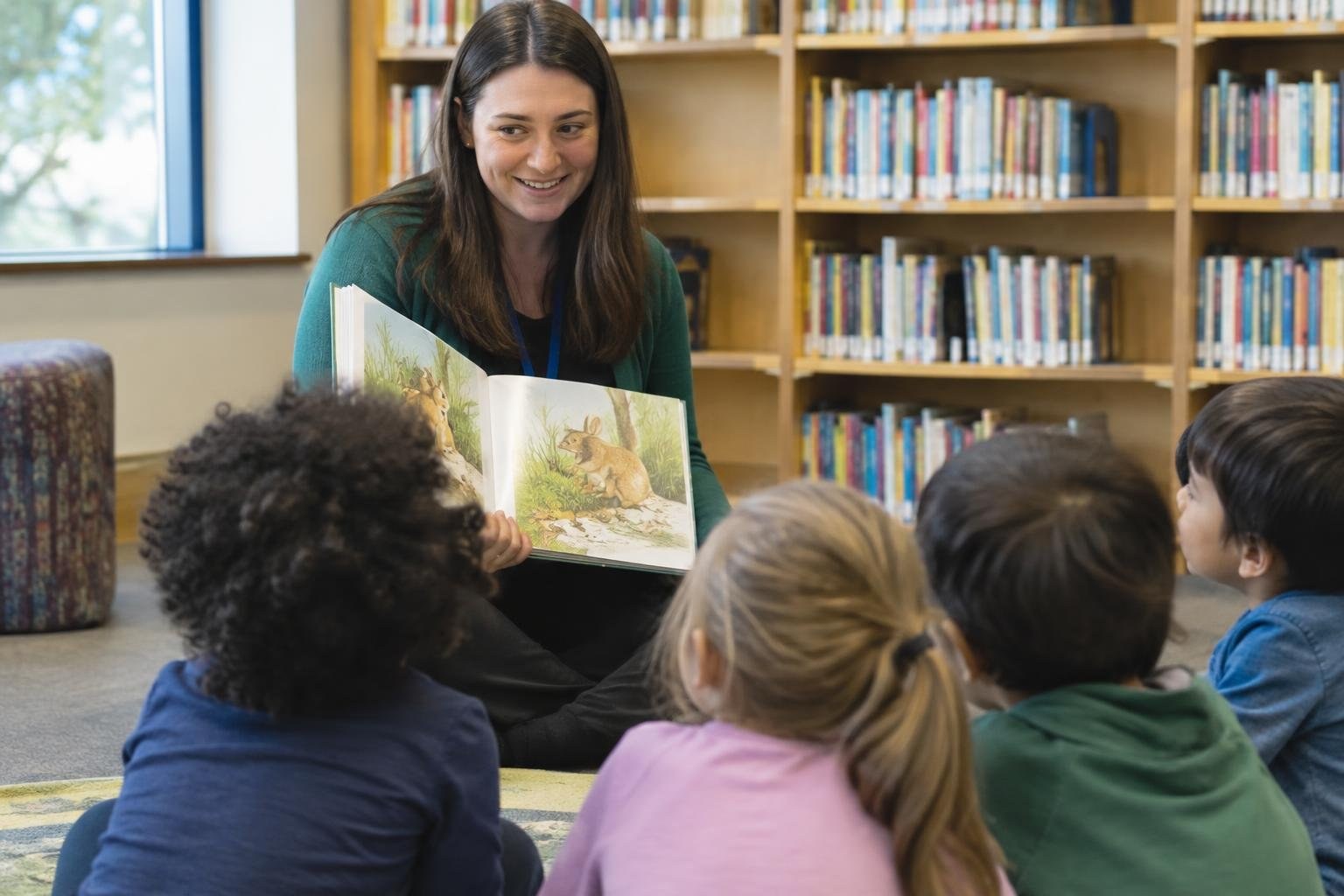
Youth librarian facilitating a storytime in a public library
What Children and Youth Library Services Means
Children and youth library services is a specialized area of library and information science focused on how libraries meet the information, reading, learning, and community needs of young people. Programs may prepare students to select youth resources, plan events, support literacy, and connect children, teens, and families with library services.
The field is not limited to reading books aloud. Youth services can involve understanding different age groups, selecting materials that represent varied experiences, organizing information so it can be found, and designing services that respond to community needs. The University of North Texas describes its graduate academic certificate as covering programs, literature, and information organization for youth, while the University of Southern Mississippi describes a certificate focused on youth literature, programs, and services from birth through age 18.
Names and credentials vary
Related program names include children’s services, youth services librarianship, children’s and young adult library services, and public library services to children and young adults. These titles may represent a course concentration, graduate certificate, advanced certificate, or broader library and information science degree. Read the catalog and course list; a matching title alone does not establish that two programs have equivalent requirements.
What You Study in Youth Library Services
Students study how to select and organize age-appropriate resources and how to turn those resources into useful services. The exact curriculum differs, but youth literature, information organization, program planning, and services for children and young adults are recurring themes in the programs described by the University of North Texas and the University of Southern Mississippi.
Common learning areas
Youth literature: Explore books and other materials for children and teens, and consider how selection can serve different interests and communities.
Information needs: Learn to think about the questions and information-seeking needs of young people and their caregivers.
Programs and storytelling: Study ways to plan and deliver activities, reading programs, and other library services for youth.
Information organization: Build an understanding of how resources are described and arranged so people can discover them.
Community-centered practice: Consider the public library’s role in literacy, community-building, and family well-being, topics identified in the Pratt advanced certificate description.
Some programs also include applied projects, collaborative work, or opportunities to connect course concepts with real library issues. Ask each department whether internships, practicum work, a capstone, or other supervised experience is required or available; the provided descriptions do not establish a single requirement across programs.
Because these curricula are specialized, prospective students should request recent syllabi. A course title such as “youth services” may not reveal how much time is devoted to literature, community programming, technology, or management.
Who This Program May Suit
This area may suit students who like reading, finding reliable information, explaining ideas, and working with children, teens, families, or community partners. Youth library work blends service and planning: a program may require selecting materials, anticipating participants’ needs, communicating clearly, and coordinating details. Enjoying children’s books is helpful, but the work also involves organization, inclusive service, and follow-through.
Interests and work preferences to consider
Do you enjoy helping people find information without assuming you already know what they need?
Are you interested in books and learning, while also willing to plan programs and handle routine organizational tasks?
Would you like work that combines individual assistance with group activities and collaboration?
Can you adapt communication to different ages and work respectfully with families and community members?
Do you like balancing creative program ideas with schedules, budgets, collections, and service goals?
No one personality type is required. Some students are drawn to the community-facing side; others prefer collection development, information organization, or research. Consider the daily tasks of the specific role, not just the appealing parts of the field.
Does this field match you?
Salary, reputation, and job growth are only part of a career decision. Also consider whether the everyday work fits your motivations and interests, and whether the education required is realistic for your circumstances. The MAPP assessment can help you explore possible career and degree connections, but use the results as one input alongside program research, conversations with practitioners, and job postings.
Explore career and degree options with MAPP, then compare what you learn with your own experience of working or volunteering with young people.
Admissions, Credential Levels, and Completion Time
There is no single admissions rule for children and youth library services programs. Entry depends on the credential. A graduate certificate may require applicants to hold a relevant master’s degree, be enrolled in a graduate program, or have professional experience; the University of Southern Mississippi describes a youth services certificate that can be earned with an MLIS or related master’s degree and also outlines a post-master’s route. Pratt’s advanced certificate application information includes two recommendation letters from people able to assess graduate-study potential.
For an MLIS, review the program’s current graduate admissions page for degree prerequisites, transcripts, GPA expectations, recommendations, writing materials, and any interview or test requirements. These are school-specific, so do not assume that one institution’s rules apply elsewhere.
Credentials and possible timelines
Available pathways in the field include focused certificates and graduate library and information science degrees. Examples in the supplied university descriptions include a 15-credit online youth services certificate at Southern Miss and a 36-credit MLIS program with youth librarianship coursework at Long Island University. Credit totals are examples, not universal standards, and do not by themselves tell you how many semesters a student will need. Enrollment pace, course availability, transfer decisions, and program rules matter.
Ask whether courses are offered every term, whether part-time study is possible, and whether the certificate can be completed alongside or after a master’s degree. Verify the current catalog before planning around a published credit total.
Online, Hybrid, and Campus Options
Online study can make a focused certificate accessible without relocating, but the word “online” does not answer every practical question. The University of Southern Mississippi describes its 15-credit youth services and literature certificate as online. Confirm whether classes are asynchronous or scheduled live, whether students must attend campus, and whether any practicum or field activity has a location requirement.
For campus and hybrid degrees, consider travel, work schedules, caregiving, and access to libraries or community organizations where you might gain experience. Ask how online students work with faculty and classmates, access course materials, and receive career support. If you need to keep working, compare the actual weekly schedule and course rotation rather than relying only on a program’s format label.
Online availability does not guarantee that a program is a fit for a specific job. Check employer requirements and any state or district rules relevant to school library positions before enrolling.
Tuition, Total Cost, and Financial Aid
Total cost depends on the institution, residency classification where applicable, number of credits, course fees, books, technology, and whether you need to travel or reduce work hours. A graduate certificate’s credit total can be lower than a master’s program’s, but cost per credit and financial aid eligibility vary. Do not compare only advertised tuition or the number of credits.
Build a realistic cost estimate
Request a term-by-term estimate of tuition and mandatory fees for your residency and enrollment status.
Ask about extra costs for books, software, technology, background checks, travel, or required field experiences.
Confirm whether transfer credits are accepted and whether they reduce tuition or only the number of courses.
Ask how financial aid, scholarships, assistantships, or employer tuition support apply to the specific certificate or degree.
Include the cost of living and any lost income if attending school changes your work schedule.
Compare grants and scholarships with loans, and read eligibility and renewal terms before counting an award in your budget. If a certificate is intended for people who already hold a graduate degree, consider whether your existing education already meets the qualification for your target role. A short program can still be a poor value if employers require a different credential.
Careers and Employment Directions
The most directly aligned career paths named in the program context are youth-services librarianship and library and media collections work. The Long Island University program description connects its MLIS youth librarianship coursework with youth-services departments, while the degree descriptions from Southern Miss, North Texas, and Wayne State focus on services, programs, literature, and community services for children and young adults.
Career direction
How the study may apply
What to check before choosing a credential
Youth services librarian
Study of youth literature, information needs, collections, and youth programs may support specialized work with children and teens.
Check the education and experience specified in actual employer postings; a focused certificate and an MLIS are not interchangeable by default.
Children’s or teen program coordinator in a library
Program planning and services coursework can relate to reading activities and other youth-focused services.
Ask employers whether they require a library degree, prior youth-program experience, or other qualifications.
School library services
Knowledge of youth resources and information needs can be relevant to school library settings.
Verify state and district requirements, including any educator credential requirements, directly with official authorities.
Library and media collections specialist
Library and information science study can build relevant foundations in resources and information organization.
Review the specific role’s required education, technical skills, and experience.
Children’s literature or publishing-related work
Literature-focused study may support a related direction, particularly when combined with relevant writing, editing, or publishing experience.
Compare the program’s literature component and build work samples or practical experience relevant to the employer.
These are possible directions, not job-placement promises. Earnings and employment outlook depend on the occupational title, region, employer, experience, and education. Before choosing a program, identify several real job postings in the places where you might work and record the stated qualifications and pay ranges. Do not treat a program credential as a guaranteed route to a particular job or salary.
Technology may change how people discover, access, and use information, but it does not remove the need to evaluate resources, understand community needs, and plan useful services. Ask programs how students learn current information technologies and responsible resource selection.
Accreditation, Licensure, and Certification
A certificate is an academic credential; it does not automatically grant a professional license or meet every employer’s hiring standard. This distinction matters especially when comparing public library and school library roles. Requirements can differ by state, district, library system, and job title.
One Long Island University program description identifies its 36-credit MLIS as accredited by the American Library Association. Treat that as a program-specific statement, not a claim about every library science degree or every program at the institution. Confirm the program’s current status directly with the university and the accrediting organization before enrollment.
Questions about qualification
Does the target employer require an MLIS, a particular accreditation, a teaching credential, or relevant experience?
Does the school program prepare students for any state-specific certification or endorsement?
Are the requirements different for public, school, academic, or special library settings?
Will a certificate add a qualification you do not already have, or is it primarily professional development?
For regulated or school-based roles, verify rules with the relevant state education authority or employer. Do not rely on a general program description to determine eligibility.
Experience and Ways to Stand Out
Experience can help you test whether youth-facing library work is a good fit and give you examples to discuss with an employer. Look for volunteering or part-time opportunities with a library, literacy program, youth organization, or community event. Ask about the actual duties and supervision, and follow the organization’s policies for working with minors.
Ways to strengthen your preparation
Help with a reading, storytelling, or learning activity and reflect on what made it accessible to different ages.
Create a sample program plan with a clear audience, purpose, materials, schedule, and way to gather feedback.
Build familiarity with youth literature and explain how you would select resources for a varied community.
Practice clear writing, public speaking, collaboration, and reliable follow-through.
Ask a local librarian about the daily balance of public service, planning, collection work, and administrative duties.
Do not assume an unpaid placement is required or available. Ask programs whether field experience is part of the curriculum, how it is arranged, and whether students must find their own placement.
Related Degrees and Alternatives
The related routes serve different goals. An MLIS provides broader library and information science study; a youth-services certificate focuses more narrowly on services, literature, and programming for young people. The University of Southern Mississippi describes a certificate that may be earned with an MLIS or related master’s degree, while Wayne State describes its graduate certificate as intended for practicing professionals and graduate students pursuing youth-services competency.
MLIS with youth-services coursework: Consider this route if job postings for your desired professional librarian role call for a library and information science master’s degree.
Graduate certificate in youth services: Consider it if you already meet the prerequisites and want targeted learning in children’s or young adult services.
Children’s literature: Consider this if your strongest interest is literary study, publishing, or research on children’s books. Simmons describes an integrated option connecting children’s literature and library services.
School library or education pathway: Investigate this if you want to work in schools; verify state and district requirements before selecting a program.
Library technician or assistant path: Consider gaining library experience in a support role while learning what education future positions require.
A dual degree can combine two areas of study, but may involve additional coursework and cost. Simmons describes tailoring combined study to goals such as youth or school librarianship, doctoral work in children’s literature, or children’s book publishing. Compare credit requirements, schedules, and career relevance before deciding that a combined route is worthwhile.
How to Choose a Program
Program choice is a decision about both education and the work you hope to do afterward. Compare the course plan, credential prerequisites, total cost, delivery method, faculty expertise, and access to practical experience. Ask for recent graduate outcome information and how the school defines those outcomes; do not rely on broad claims that do not identify the program or cohort.
Program comparison checklist
Does the curriculum cover the youth age groups, services, and settings that interest you?
Is the credential a certificate, a concentration within an MLIS, or a full graduate degree?
Do you meet admissions requirements, and can you complete prerequisites while working?
Are course offerings and online or campus schedules workable for your life?
What is the full expected cost, including fees and any experience-related expenses?
Is relevant accreditation current, and does the target employer ask for it?
Are internships, practicum work, projects, or community partnerships available?
Can credits transfer, and are there limits or conditions?
What career services and employer connections are offered to students in this specific program?
What qualifications appear in current job postings for the roles you want?
Use Assessment.com’s education resources to continue exploring education decisions and the career section to compare possible directions. Consider the MAPP assessment as a reflection tool, then validate your choices against course plans and employer requirements.
Questions to Ask Before Enrolling
These questions can help prospective students and parents move from general interest to a more informed enrollment decision:
What exact job or group of jobs am I preparing for, and what education do those employers request?
Does this program’s credential meet that requirement, or does it add specialized knowledge to a credential I already have?
What is the complete cost after tuition, fees, books, travel, and lost work time?
Which courses teach youth literature, information organization, and program design?
Can I speak with a current student, graduate, or local youth services librarian?
How are internships or projects arranged, and what time commitment should I expect?
What accreditation does the program hold, and have I verified its current status?
If I want a school library role, have I checked official state and district requirements?
What financial aid or employer support applies to this specific credential?
What is my alternative if I decide a full degree is not necessary for my target role?
Write down the answers and compare at least two pathways. A careful comparison can reveal when a focused certificate is enough for professional development, when a broader degree is worth investigating, or when gaining experience first is the wiser next step.
From Study to Career: Example Pathways
A possible path might begin with youth-services coursework, continue into a library or community role, and then develop through hands-on program experience or additional specialization. For example, an MLIS student could focus on youth librarianship, seek supervised experience, pursue an entry-level library position, and later take on more responsibility for programs or collections. A certificate holder who already works in a library might use focused study to strengthen youth-services practice.
These are planning examples, not guaranteed promotions or job sequences. Employers set their own qualifications, and local opportunities differ. Use current job postings to map the education and experience required at each stage, and revisit the plan as your interests develop.
Frequently asked questions
What are children and youth library services?
Children and youth library services is a specialized area of library and information science focused on programs, resources, and information services for children and young adults. Study may include youth literature, information needs, storytelling, program design, community services, and information organization. Specific course requirements depend on the institution and credential.
Is a children and youth library services program hard?
The academic challenge depends on your program and prior experience. Students may need to read widely, assess information needs, organize resources, design programs, and explain ideas clearly to varied audiences. Graduate study also requires sustained reading and writing. Ask programs for a sample course plan and assignments to judge whether the workload suits you.
Is a children and youth library services certificate worth it?
A focused certificate may be a useful way to build youth-services knowledge, while an MLIS can provide broader library and information science preparation. Whether either is worth the cost depends on your target job, the education employers require, program quality, and your ability to complete relevant experience. Compare total cost and job requirements before enrolling.
What jobs can I get with a children and youth library services credential?
Possible pathways include youth-services work in public libraries, school library services, community programming, and work related to youth literature. The specific jobs open to you depend on the credential, relevant experience, local employer requirements, and any additional education or authorization required for a particular role.
How much do youth services librarians make?
There is no single salary for this field or credential. Pay depends on the job title, employer, location, experience, and education requirements. Before choosing a program, identify likely job titles and compare their current pay information using authoritative occupational data and local public-sector or school district job postings.
Can I study children and youth library services online?
Some youth-services courses and certificates are offered online. For example, the University of Southern Mississippi describes a 15-credit online youth services and literature certificate. Confirm whether the entire program can be completed remotely and whether any fieldwork, internship, or in-person requirement applies to your specific program.
Does library science require a lot of math?
The field is not defined by advanced mathematics, but students should expect organized research, clear writing, careful information management, and possibly basic assessment of program results. Review course descriptions and sample syllabi to see how much research methods, technology, or quantitative work a particular curriculum includes.
Do I need an MLIS to work with children in a library?
Some advanced certificates are designed for people who already hold a graduate degree, and some professional librarian pathways use an MLIS. Requirements differ by program and job. Check both the admissions rules for the credential and the qualifications specified by employers for the roles you want.
How is children’s literature different from youth library services?
Children’s literature programs tend to emphasize books and literary study, while library and information science programs also address information organization, services, and library practice. Combined or dual-degree options exist. Compare actual course lists and career outcomes rather than relying on the program title alone.
People Also Ask
What can you do with a children’s library services certificate?
A certificate may deepen knowledge of youth literature, programs, and library services. It does not automatically replace a broader professional degree when an employer requires one. Match the certificate’s prerequisites and outcomes to the job qualifications you plan to pursue.
Who qualifies for a youth library services graduate certificate?
Some certificates are designed for people who already hold an MLIS or another related master’s degree; other graduate certificates may be available to enrolled graduate students or practicing professionals. Eligibility varies, so confirm the exact requirements with the university.
How long does a youth library services program take?
There is no single completion time for the field. One cited online certificate is 15 credits, while one MLIS program with youth librarianship coursework is 36 credits. Course load, transfer credit, and the school’s schedule affect how long an individual takes to finish.
How do I choose a children and youth library services program?
Compare course content, credential prerequisites, tuition and fees, online access, field experience, and whether the program matches your target employers’ requirements. Ask for written details about total cost and completion rules before enrolling.
Should I study children’s literature or library science?
Children’s literature can be a closer match for students primarily interested in books, literary study, or publishing. Library and information science adds preparation in organizing and providing information services. Combined study may be available for people who want both perspectives.
Are youth librarians required to have a teaching license?
School library positions may have requirements beyond a subject-focused certificate, which can vary by state and employer. Check the school district’s job postings and the applicable state education authority’s requirements before selecting a program.
How can I gain experience before becoming a youth services librarian?
Useful preparation can include volunteering or working with young people, assisting with reading or community programs, and becoming familiar with youth books and digital resources. Such experience can help you test your interest and build practical examples for applications.
Children and youth library services may be a strong fit if you want to connect young people and families with books, information, learning opportunities, and community programs. The best route depends on the role you want: a focused certificate can add youth-services knowledge, while an MLIS or related graduate degree may be the relevant pathway for professional librarian positions. Compare programs by curriculum, cost, format, practical experience, and the requirements of employers where you hope to work. If you are unsure whether the work fits your interests, use Assessment.com’s MAPP career assessment to explore career and degree options before committing.
Find out which Career or College Major is right for you!
We use cookies to offer you a better browsing experience, analyze site traffic and personalize content.
Read about how we use cookies and how you can control them in our
Privacy Policy.
If you continue to use this site, you consent to our use of cookies.
×
Exciting News!
Be one of the first to Beta Test the new AI-Powered Assessment.com Platform.