Nuclear Medical Technology Degree Guide: Courses, Careers, Requirements and Program Fit
Learn what nuclear medical technology programs teach, how to compare credentials and clinical training, and what to check before pursuing work as a nuclear medicine technologist.
By Tome Fierre · Staff Writer Assessment.com · Published October 26, 2026 · Last updated November 5, 2026
Nuclear medical technology programs prepare students to help deliver diagnostic imaging and therapeutic applications that use radioactive materials. Students learn how to work with imaging instruments, follow radiation-safety procedures, and support patients before, during, and after examinations. Programs combine science and technical training with supervised clinical experience, though specific courses and credential options differ by school. Graduates commonly pursue work as nuclear medicine technologists, a role that combines equipment operation, attention to detail, patient communication, and safety-focused procedures. If you are comparing programs as a student or parent, look beyond the degree title: clinical placement, certification eligibility, total cost, and the entry requirements for your intended career all matter. Not sure whether this program fits you? The Free MAPP Career Assessment can help you explore how your motivations, interests, and preferences relate to possible career directions. Use it as one input alongside course research, conversations with advisers, and first-hand exposure to the work.
Degree & Program Decision Insights
Explore your personal fit, education requirements, career potential and next steps.
01Motivational Fit
Discover whether this program fits you
Explore your preferences against the focus of Nuclear Medical Technology/Technologist. These prompts are not personal MAPP results.
Quantitative reasoning. Does working carefully with instrumentation and statistics appeal to you, including checking assumptions rather than only arriving at an answer?
Scientific investigation. Would you enjoy investigating nuclear physics and explaining your conclusions from evidence?
Work reality. Related work can involve this task: “Record and process results of procedures.” Would you want that activity to be a regular responsibility?
Interest in studying a field can differ from enjoying its related work.
Which part would you want to do repeatedly, and what would you try before deciding?
Discover Your Personal Program Fit
Before investing your time and money in your education, discover how this program aligns with your natural motivations, work preferences and career goals.
Explore these official instructional-field associations. They describe possible occupational routes, not measured outcomes of this program.
Nuclear Medicine TechnologistsSOC 29-2033 · O*NET 29-2033.00$101,370/year median (May 2025); +4.4% projected change (2025–2035); 800 projected openings/year.
Typical occupational entry: associate's degree (BLS). Check the exact professional credential and jurisdiction requirements for this occupation; the classification association alone does not establish eligibility.
Health Specialties Teachers, PostsecondarySOC 25-1071 · O*NET 25-1071.00$107,310/year median (May 2025); +17.9% projected change (2025–2035); 24,900 projected openings/year.
Typical occupational entry: doctoral or professional degree (BLS). BLS lists less than 5 years of related work experience as typical for this occupation; this programme is not a direct promise of entry. Postsecondary teaching is a separate appointment and may require advanced study; this programme alone is not a promise of a teaching post.
U.S. occupational wages are not guaranteed graduate earnings; OEWS excludes self-employed workers.
Projected openings include replacements as well as growth.
U.S. national estimates. A crosswalk does not establish entry-level eligibility; advanced, management and teaching roles can require further qualifications.
Compare the focus and route of these distinct instructional fields; their credentials and admission requirements are not interchangeable.
Cardiovascular Technology/TechnologistCIP 51.0901. Compare its emphasis on reviewing and recording patient histories and clinical data and patient care with this program’s focus.
Cardiopulmonary Technology/TechnologistCIP 51.0915. Compare its emphasis on cardiopulmonary pharmacology and anatomy and physiology of the heart, peripheral vascular system, and lungs with this program’s focus.
Surgical Technology/TechnologistCIP 51.0909. Compare its emphasis on instrument and equipment sterilization and handling and surgical supplies management with this program’s focus.
Explore your motivations. Use MAPP as a starting point for reflecting on your interest in “nuclear physics”, then test that interest against a sample learning task.
Examine the work. Compare Nuclear Medicine Technologists and Health Specialties Teachers, Postsecondary on daily work and entry qualifications, as well as pay. Explore Nuclear Medicine Technologists.
Compare actual providers. Ask for the exact credential, course sequence and assessment methods. Compare how each provider teaches “health physics”, its entry criteria and its itemized costs.
Check the evidence before applying. Confirm prerequisites and any recognition or professional requirements for your intended route; ask for applicable rules and published outcome definitions in writing.
Verify the institution’s current offering, admissions requirements and outcomes; a search result does not establish your eligibility.
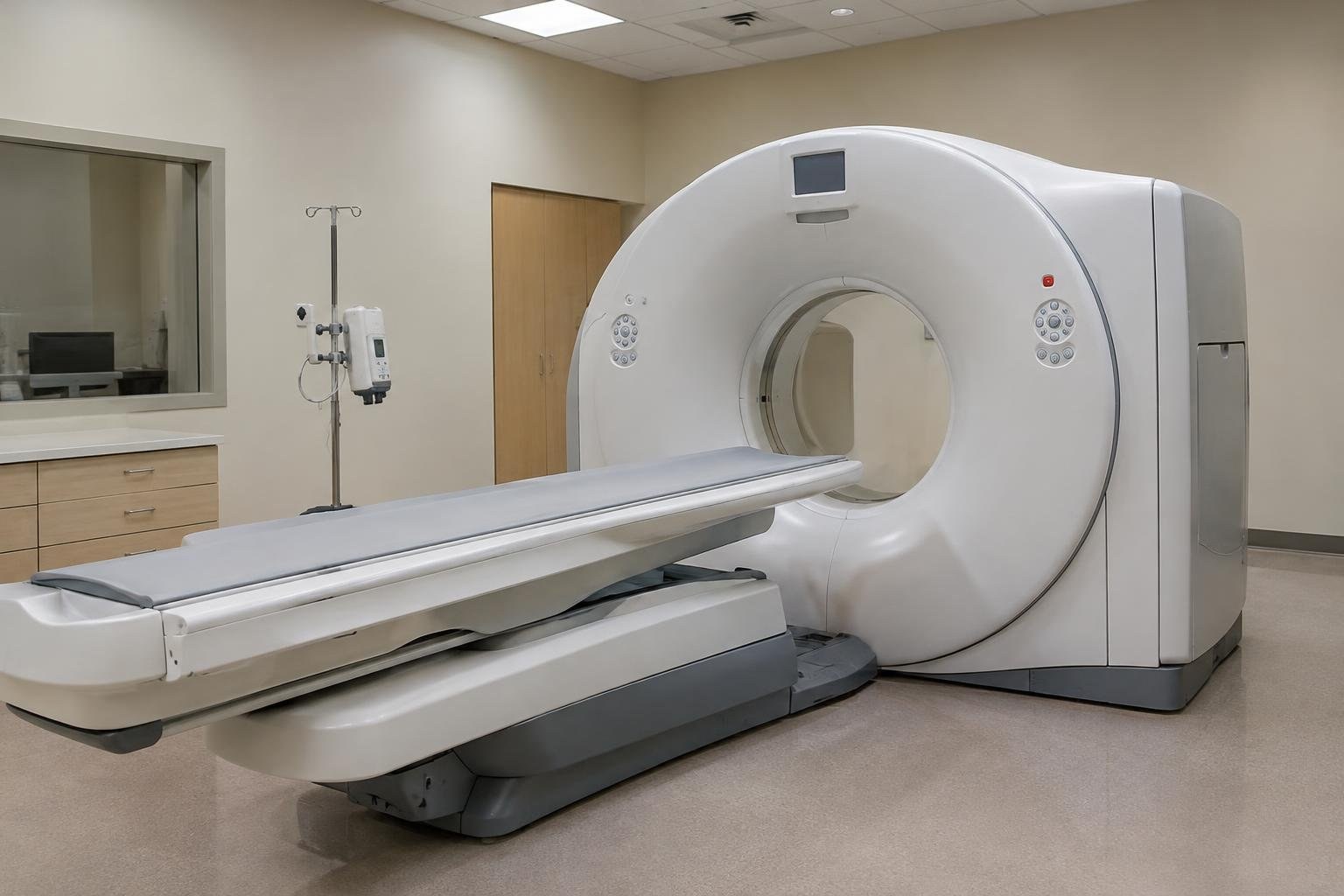
A supervised learning setting showing the balance of technology and patient care
What Is Nuclear Medical Technology?
Nuclear medical technology, also called nuclear medicine technology in many program and career descriptions, prepares students to use radioactive and stable nuclides in healthcare applications under physician supervision. The field brings together imaging, radiation safety, instrumentation, patient evaluation, and clinical procedures. A student is learning both how to operate technical systems and how to help protect and communicate with patients.
Program names and awards are not uniform. A school may offer a certificate, associate degree, bachelor’s degree, or a certificate for people who already have a degree. Those labels describe different education routes, not a guarantee that every institution offers every credential. The U.S. Bureau of Labor Statistics describes formal education routes that can lead to a certificate, associate degree, or bachelor’s degree. Review the BLS overview of nuclear medicine technologists alongside the program’s own catalog.
This is not the same as studying nuclear engineering or becoming a physician. Nuclear medicine technologists work in a technical healthcare role; physicians oversee clinical diagnosis and treatment. When comparing related imaging fields, check the actual procedures and equipment included in each curriculum rather than assuming similar-sounding degrees lead to identical work.
What Do Students Study?
Coursework typically builds from science foundations toward clinical application. The program description for this field includes nuclear physics, health physics, instrumentation, statistics, biochemistry, immunology, radiopharmacology, radiation biology, computer applications, and clinical nuclear medicine. These subjects explain how the relevant materials and equipment work, how images and measurements are produced, and why safety and quality checks are part of routine practice.
Technical study is only part of the preparation. Students may learn laboratory procedures, equipment operation, quality control, patient history-taking, patient evaluation and monitoring, emergency first aid, record-keeping, and radionuclide therapy. Clinical learning gives students a chance to connect the concepts to patient care in a supervised setting. The specific balance of classroom, lab, and clinical hours depends on the school.
Ask for a course sequence and a plain-language explanation of when clinical experience begins. Find out whether the program provides placement support, what settings are available, and how students are evaluated. For an example of a school describing preparation for the technologist role, see Indiana University School of Medicine’s program overview. Treat any one institution’s curriculum as an example, not a universal template.
Skills You Develop
This field asks students to develop a combination of technical accuracy and interpersonal skill. Instrumentation and quality-control study support careful equipment use. Radiation-safety learning encourages attention to procedures. Science and statistics help students interpret information in context, while clinical instruction develops the ability to follow protocols and respond appropriately to patient needs.
Communication also matters. A technologist needs to explain steps in understandable language, listen to concerns, and work with a healthcare team. Patient histories and monitoring require clear questions and careful observation; record-keeping requires accuracy and discretion. These habits connect directly to the work described in nuclear medicine technology education, where students prepare for technical procedures and patient-facing duties.
When reviewing a program, ask how it assesses practical competence as well as exams. Look for opportunities to practice equipment use, patient interaction, documentation, and safety routines under supervision. Students should expect to be accountable for consistent procedures, not just memorization.
Who Is This Program For?
The program may be a good match if you are curious about applied science, interested in healthcare, and comfortable combining hands-on technical tasks with patient contact. It can appeal to people who like precise procedures, structured responsibilities, and practical problem-solving. Students do not need one fixed personality type, but they should be willing to learn science, follow detailed protocols, and treat patients with care.
Consider the daily realities, not only the subject name. The work involves technical equipment and radioactive materials, as well as interaction with people who may be anxious or unwell. If you prefer a healthcare role with less equipment use, or a science path with little patient contact, compare alternatives before deciding.
Entry requirements are school-specific
Prerequisites, GPA expectations, application materials, and selection processes vary by institution. Ask admissions staff for the current requirements in writing, including prerequisite science courses, any required health documentation, and the timing of clinical eligibility checks. Do not assume that meeting general college admission standards also qualifies you for a competitive clinical program.
Admissions, Completion Time and Academic Demands
Nuclear medicine technology can be academically challenging because students must understand scientific concepts and apply them accurately in clinical and technical settings. Nuclear physics, radiation biology, instrumentation, and quantitative coursework may feel unfamiliar, particularly for students who have been away from school. Patient-care demands add another layer: students must communicate respectfully while staying focused on procedures and safety.
Plan ahead by reviewing prerequisite expectations and asking whether the school offers tutoring, science refreshers, or academic advising. Talk with an adviser about how transfer credits are evaluated before assuming previous coursework will count. If possible, attend an information session or speak with a current student about the rhythm of classes and clinical learning.
Full-time, part-time, and accelerated availability is determined by each institution. A certificate may serve students who already have prior college education, while other learners may enter through associate or bachelor’s routes. Purdue describes one route in which a student first completes a health-science bachelor’s degree and then undertakes a 12-month nuclear medicine technology certification program; this is an example, not a universal timeline. Ask schools for the actual calendar, prerequisite sequence, and expected time to completion.
Online, Hybrid and Campus Options
Online availability does not mean every part of a clinical healthcare program can be completed remotely. Some instruction may be delivered online or in a hybrid format, but equipment practice and supervised clinical experience may require in-person participation. The specific design differs by program.
Before applying, ask which classes are online, which activities require campus attendance, and whether the school arranges clinical placements. Confirm the location and scheduling of those placements, whether students need to travel, and whether the program serves learners who live outside its immediate area. Also ask how the school handles a placement delay or a change in clinical availability.
For adult learners and families comparing schedules, request a sample term calendar. A program that looks flexible in an online listing may still require fixed clinical hours. Clarify those commitments before making work, childcare, or transportation plans.
Tuition, Costs and Financial Aid
There is no single tuition figure that applies across nuclear medical technology programs. The total depends on the institution, credential, residency classification where relevant, course load, and whether additional clinical or technology expenses apply. Ask each school for a written estimate covering tuition, mandatory fees, books, equipment or supplies, transportation to clinical learning, and any costs related to program completion.
Compare total cost to completion rather than the price of one term. Transfer credit policies can affect how many courses remain, but a school must confirm which credits it will accept. Ask the financial aid office to explain grants, scholarships, federal aid eligibility, payment plans, and any employer tuition assistance you may qualify for. Eligibility and award amounts are individual; do not treat a possible award as guaranteed funding.
Families should also plan for indirect costs such as time away from paid work and travel to required learning sites. Request the program’s typical sequence and ask whether students are expected to maintain outside employment during clinical periods. Choose a route based on a realistic budget, not an advertised starting price alone.
Accreditation, Certification and Licensure Questions
For a career-focused clinical program, accreditation and credential eligibility deserve early attention. Do not assume that a school’s general institutional status or a program’s title establishes eligibility for a particular certification. Ask the program which professional certification routes its curriculum is designed to support and verify the current rules with the certifying organization.
University of Wisconsin’s health-career guidance states that the ARRT Nuclear Medicine pathway it describes requires an associate degree or higher and completion of an ARRT-approved associate, bachelor’s, or certificate program in nuclear medicine technology. Requirements can change, and other routes or credentials may have different conditions. Review the current University of Wisconsin nuclear medicine technologist guidance and confirm details directly with the credentialing body before enrolling.
Certification and state authorization or licensure are not interchangeable concepts. Ask the school what graduates are eligible to pursue, then independently check the rules that apply where you plan to work. Obtain clear answers about program approval, examination eligibility, and any additional requirements.
Affordability and Ways to Fund Your Education
Funding a program usually requires combining several sources rather than relying on one award. Complete the appropriate financial aid application, compare institutional grants and scholarships, and ask whether local organizations or employers offer support for healthcare education. Students changing careers can check with a current employer about tuition assistance, but should read any repayment or employment conditions carefully.
Community-college and transfer routes may be worth comparing with direct entry into a four-year program, provided the eventual course plan still meets your clinical and credential goals. A post-associate certificate is another possible route for some students: the University of Cincinnati describes its nuclear medicine technology certificate as an option for post-associate students who may not pursue a second bachelor’s or advanced degree. Contact the institution to verify current admission, progression, and total-cost details.
Keep a cost worksheet for each option. Include remaining prerequisite courses, tuition and fees, transportation, clinical scheduling, and the likely time before completion. Compare aid offers after you receive them, and distinguish grants and scholarships from loans that must be repaid.
Careers, Jobs, Salary and Employment Outlook
The most directly aligned occupation is nuclear medicine technologist. These professionals use radioactive drugs and imaging procedures to help detect abnormalities and support diagnosis; the precise duties and scope depend on workplace protocols and supervision. The Bureau of Labor Statistics occupation profile is the authoritative place to check current national pay and employment-outlook data, including the year those figures represent. Pay and outlook are not included here because they should be checked against the latest official data when you compare programs.
Career direction
How the education may apply
Pay and outlook research
Nuclear medicine technologist
Directly aligned clinical and technical role; employer and credential requirements still apply.
Use the current BLS profile and compare local job postings.
Postsecondary health specialties teacher
A possible longer-term education direction for people who build relevant expertise; the degree alone does not establish teaching eligibility.
Check current BLS data and the hiring requirements of the school or employer.
Healthcare employers and job titles differ, and a course of study does not guarantee employment. Ask programs what kinds of roles graduates pursue, how outcomes are counted, and whether they can explain the methods behind any placement statistics. For an occupation overview, see Assessment.com’s nuclear medicine technologist career guide.
Digital systems may support image processing, record-keeping, and workflow, but technology does not remove the need for trained human judgment, patient communication, and safety-minded practice. When evaluating a program, ask how students learn the software and equipment used in current clinical settings.
Find out which Career or College Major is right for you!
Clinical Experience, Certifications and How to Stand Out
Clinical learning is central to preparing for patient-facing technical work. Beyond required courses, students can strengthen their preparation through supervised projects, research, volunteer work, and professional networking where available. Ask faculty or program advisers which opportunities are appropriate and whether outside experience can be arranged without interfering with required coursework.
To stand out to employers, be prepared to describe how you handle detailed procedures, communicate with patients, work with a team, and maintain accurate records. Keep evidence of relevant training and clinical competencies in a professional format, while protecting patient privacy. Ask a program how it prepares students for interviews and whether it maintains relationships with clinical sites or employers.
A degree is not the same as a professional credential. Verify the current certification and any state-specific requirements for the exact job and location you want. Use official credentialing and state resources for final decisions rather than relying on a school’s broad statement that graduates are “career ready.”
Graduate Study and Further Education
Graduate education is not automatically necessary for every nuclear medicine technologist role. The education routes described by the BLS include certificate, associate, and bachelor’s-level programs. Some students already hold a degree in a related health or science field and then pursue a focused certificate. Purdue describes a bachelor’s degree in a health-science field followed by a 12-month certification program as one such pathway.
Consider advanced study when it clearly supports a goal, such as a specialized role, teaching, research, or leadership. Verify the education and experience employers require before investing in a graduate credential. For a post-associate option, the University of Cincinnati describes a certificate pathway intended for students who may not pursue a second bachelor’s degree or advanced degree. Program availability and entry criteria are institution-specific, so contact the school directly.
Related Degrees and Alternative Pathways
Related education routes can lead to different kinds of work. Compare a nuclear medical technology program with broader health-science study, a related science bachelor’s degree followed by a focused certificate, and other diagnostic-imaging programs. The right alternative depends on whether you want specialized preparation, a broader science foundation, or training for a different imaging modality.
Health science: Consider this if you want a broader health foundation and may pursue nuclear medicine training afterward.
Biology: Consider this if you prefer a broad life-science degree and are prepared to add professional nuclear medicine training later.
Chemistry: Consider this if you want a stronger chemical-science focus before exploring a clinical technology pathway.
Radiologic technology: Consider this if you are interested in diagnostic imaging but want to compare modalities, procedures, and program requirements.
Medical laboratory science: Consider this if you prefer laboratory testing and analysis over a role centered on imaging procedures and direct patient interaction.
These are comparison prompts, not claims that each degree alone qualifies a graduate for a particular job. Purdue’s pathway example illustrates how a biology or chemistry bachelor’s degree may be followed by a focused nuclear medicine certification program. Compare course lists, clinical work, credential eligibility, and career requirements before choosing.
How to Choose the Right Program
Choosing a program is a comparison of readiness, learning experience, and value. Confirm the exact credential awarded and how it fits your intended employment and certification route. Examine the required science courses, clinical practice, patient-care instruction, and equipment experience. Ask who teaches the technical courses, what learning facilities students can use, and how clinical placements are arranged.
Compare total cost and financial aid, then ask for completion and graduate-outcome information with the definitions behind each measure. Check whether courses transfer to another institution if plans change. For online or hybrid options, verify the in-person obligations and whether clinical sites are accessible from where you live.
Also assess advising and career support. Ask whether students receive help with clinical placement, credential applications, interviews, and employer connections. A useful program comparison is specific: written course maps, clear cost estimates, transparent eligibility explanations, and direct answers about the practical experience students receive.
Assessment.com’s college-major guidance can help you think about academic fit alongside program research. Use career matching as a way to explore options, not as a replacement for verifying school and credential requirements.
From Degree to Career
Career development is not automatic, and job titles or promotion routes depend on an individual’s education, experience, employer, and credentials. A realistic pathway might look like this:
Education: Complete a suitable nuclear medicine technology program with the required academic and clinical learning.
Entry-level role: Apply for nuclear medicine technologist positions for which you meet the employer’s education and credential requirements.
Build experience: Develop competence in patient communication, equipment procedures, safety routines, and documentation.
Choose a focus: Explore further training or responsibilities only after confirming the requirements with employers and relevant credentialing organizations.
Consider teaching: Postsecondary health-specialty education may be a longer-term option for professionals who meet institution-specific qualifications.
Use this as a planning model, not a promise of progression. Ask program advisers and working professionals what additional preparation is expected for roles that interest you.
Questions to Ask Before Enrolling
What credential will I earn, and which courses are required?
What are the current prerequisites, application deadlines, and selection rules?
How much will the full program cost, including fees, supplies, and clinical travel?
What financial aid, scholarships, employer support, or payment options may apply to me?
How are clinical placements arranged, and where might they take place?
Which certification pathways does the curriculum support, and how can I verify eligibility?
Which courses are online, and what on-campus or clinical attendance is required?
How does the school evaluate transfer credits and prior learning?
What graduate outcomes does the program track, and how are those outcomes defined?
What advising, career services, and employer connections are available?
Bring the answers together in a side-by-side comparison. If a school cannot explain a cost, clinical requirement, or certification claim clearly, pause and seek written clarification before paying a deposit.
Frequently asked questions
What does a nuclear medical technology program teach?
Nuclear medical technology programs prepare students to support diagnostic imaging and therapeutic care using radioactive materials, specialized equipment, and patient-safety procedures. Coursework may include nuclear physics, instrumentation, radiopharmacology, radiation biology, clinical nuclear medicine, quality control, and patient care. The exact curriculum and clinical requirements depend on the institution and credential.
Is nuclear medical technology hard to study?
It can be demanding because students must learn scientific concepts, operate specialized equipment accurately, follow safety procedures, and communicate with patients. Clinical learning adds practical expectations beyond exams and lectures. Students who need support in chemistry, physics, or math can ask about tutoring and prerequisite courses before applying; program admissions and academic standards vary by school.
What jobs can I get with a nuclear medical technology degree?
Graduates may pursue nuclear medicine technologist roles if they meet employer, certification, and applicable state requirements. A related route is postsecondary teaching in a health specialty, generally after gaining relevant education and experience. A degree by itself does not guarantee a particular job or qualify every graduate for every credential.
How much do nuclear medicine technologists make?
A single salary figure is not appropriate for every graduate because pay can vary by location, experience, employer, and job title. For a current national median and employment outlook for nuclear medicine technologists, consult the U.S. Bureau of Labor Statistics occupation profile and check its data year. Compare local job postings as well, since national figures do not predict an individual offer.
Can I earn a nuclear medical technology degree online?
Some course content may be available online, but nuclear medicine technology is a clinical healthcare field. Ask each program whether labs, equipment practice, clinical placements, or other supervised learning must happen in person. Confirm where clinical sites are located, who arranges them, and whether students must travel or meet specific schedules.
Does nuclear medical technology require math?
Expect science and quantitative coursework, including nuclear physics and instrumentation; some program descriptions also include statistics. The amount and level of math varies. Review the course sequence and prerequisites, then ask an adviser which math and science preparation students need before beginning the technical courses.
Do I need a graduate degree to become a nuclear medicine technologist?
Not every entry-level technologist pathway requires graduate school. Formal programs may lead to certificates, associate degrees, or bachelor’s degrees, and some certificates are designed for students who already hold a degree. Advanced study may be useful for particular goals, but confirm the education and experience expected for each job before committing to it.
What certification is useful for nuclear medicine technologists?
Certification is distinct from earning a degree. The eligibility route depends on the certifying organization’s current rules and the program completed. For example, the supplied University of Wisconsin health-career guidance describes an ARRT Nuclear Medicine pathway requiring an associate degree or higher and completion of an ARRT-approved nuclear medicine technology program. Verify current eligibility directly before enrolling.
How is nuclear medicine technology different from radiologic technology?
Nuclear medicine technology focuses on radioactive materials used in diagnostic evaluations and therapeutic applications, alongside radiation safety and nuclear medicine instrumentation. Other imaging programs may focus on different equipment and procedures. Compare course requirements, clinical settings, certification eligibility, and the kinds of patient care involved rather than choosing based on the program name alone.
People Also Ask
What do you learn in nuclear medical technology?
Nuclear medical technology programs combine science, equipment, safety, and patient-care instruction. Check the curriculum for nuclear physics, instrumentation, radiopharmacology, clinical practice, and supervised experience.
How long does it take to become a nuclear medicine technologist?
Program timelines depend on the credential and your prior education. Some schools offer certificates for students who already hold a related degree; ask institutions for the full-time and part-time sequence and clinical schedule.
Does a nuclear medicine technology program need to be ARRT approved?
Yes, but verify the specific program’s approval status and whether it meets the eligibility rules for the certification you plan to pursue. A program’s marketing language is not a substitute for checking the credentialing organization’s requirements.
Are nuclear medicine technology programs available online?
Some theoretical coursework may be online, but clinical and equipment training can require in-person attendance. Ask about clinical-site placement, travel, scheduling, and any on-campus labs before enrolling.
How do I choose a nuclear medicine technology program?
Compare the program’s credential, curriculum, supervised clinical learning, certification eligibility, admissions requirements, total cost, and graduate support. Ask for clear answers in writing before committing.
What is the difference between nuclear medicine and radiologic technology?
Nuclear medicine technology focuses on using radioactive materials for diagnostic and therapeutic applications, while other imaging programs train for different modalities and procedures. Compare coursework and clinical experiences to understand the actual work.
Nuclear medical technology may suit students who want a patient-facing healthcare role that combines imaging equipment, careful procedures, and applied science. The pathway requires more than classroom study: compare programs for supervised clinical training, radiation-safety instruction, eligibility for certification, and total cost before enrolling. Because program formats and employer requirements differ, confirm the route in your state and with organizations that may certify you. Then weigh career goals against the day-to-day work and whether the field matches your interests. Assessment.com’s career and education resources can help you explore that fit.
Want to see your options? Try our comprehensive Degree, Program & College Search tool
We use cookies to offer you a better browsing experience, analyze site traffic and personalize content.
Read about how we use cookies and how you can control them in our
Privacy Policy.
If you continue to use this site, you consent to our use of cookies.
×
Exciting News!
Be one of the first to Beta Test the new AI-Powered Assessment.com Platform.