Clinical/Medical Laboratory Assistant Programs: Courses, Careers, Costs and Fit
Learn what clinical and medical laboratory assistant programs teach, how long they may take, what credentials to compare, and how the training can connect to lab careers and further study.
By Kieth Nelson · Staff Writer Assessment.com · Published October 26, 2026 · Last updated November 5, 2026
A clinical or medical laboratory assistant program prepares students to support laboratory teams that handle patient specimens and testing. Depending on the curriculum, students may learn phlebotomy, specimen processing, waived testing, safety, quality control, data entry, and how to communicate in a clinical setting. The training is practical: students need to follow procedures carefully and understand how their work supports reliable laboratory operations. Programs range from short certificates to broader allied-health or laboratory pathways. An assistant credential may be a starting point for entry-level work, while additional study can open a route toward medical laboratory technology or science. Course titles, hands-on requirements, job expectations, and transfer options vary by school. Not sure whether this field fits you? Take the Free MAPP Career Assessment to explore how your motivations and interests may align with laboratory work and related careers.
Degree & Program Decision Insights
Explore your personal fit, education requirements, career potential and next steps.
01Motivational Fit
Discover whether this program fits you
Explore your preferences against the focus of Clinical/Medical Laboratory Assistant. These prompts are not personal MAPP results.
Quantitative reasoning. Does working carefully with laboratory mathematics appeal to you, including checking assumptions rather than only arriving at an answer?
Scientific investigation. Would you enjoy investigating various laboratory tests and explaining your conclusions from evidence?
Work reality. Related work can involve this task: “Perform quality control analyses to ensure accuracy of test results.” Would you want that activity to be a regular responsibility?
Interest in studying a field can differ from enjoying its related work.
Which part would you want to do repeatedly, and what would you try before deciding?
Discover Your Personal Program Fit
Before investing your time and money in your education, discover how this program aligns with your natural motivations, work preferences and career goals.
Check the exact professional credential and jurisdiction requirements for this occupation; the classification association alone does not establish eligibility.
Health Specialties Teachers, PostsecondarySOC 25-1071 · O*NET 25-1071.00$107,310/year median (May 2025); +17.9% projected change (2025–2035); 24,900 projected openings/year.
Typical occupational entry: doctoral or professional degree (BLS). BLS lists less than 5 years of related work experience as typical for this occupation; this programme is not a direct promise of entry. Postsecondary teaching is a separate appointment and may require advanced study; this programme alone is not a promise of a teaching post.
U.S. occupational wages are not guaranteed graduate earnings; OEWS excludes self-employed workers.
Projected openings include replacements as well as growth.
Some wage or projection fields are unavailable; no missing values are inferred.
U.S. national estimates. A crosswalk does not establish entry-level eligibility; advanced, management and teaching roles can require further qualifications.
Compare the focus and route of these distinct instructional fields; their credentials and admission requirements are not interchangeable.
Clinical/Medical Laboratory TechnicianCIP 51.1004. Compare its emphasis on general laboratory procedures and skills and medical computer applications with this program’s focus.
Medical/Clinical AssistantCIP 51.0801. Compare its emphasis on basic anatomy and physiology and medical terminology with this program’s focus.
Pharmacy Technician/AssistantCIP 51.0805. Compare its emphasis on medical and pharmaceutical terminology and principles of pharmacology and pharmaceutics with this program’s focus.
Explore your motivations. Use MAPP as a starting point for reflecting on your interest in “clinical procedures”, then test that interest against a sample learning task.
Examine the work. Compare Medical and Clinical Laboratory Technicians and Health Specialties Teachers, Postsecondary on daily work and entry qualifications, as well as pay. Explore Medical and Clinical Laboratory Technicians.
Compare actual providers. Ask for the exact credential, course sequence and assessment methods. Compare how each provider teaches “various laboratory tests”, its entry criteria and its itemized costs.
Check the evidence before applying. Confirm prerequisites and any recognition or professional requirements for your intended route; ask for applicable rules and published outcome definitions in writing.
Verify the institution’s current offering, admissions requirements and outcomes; a search result does not establish your eligibility.
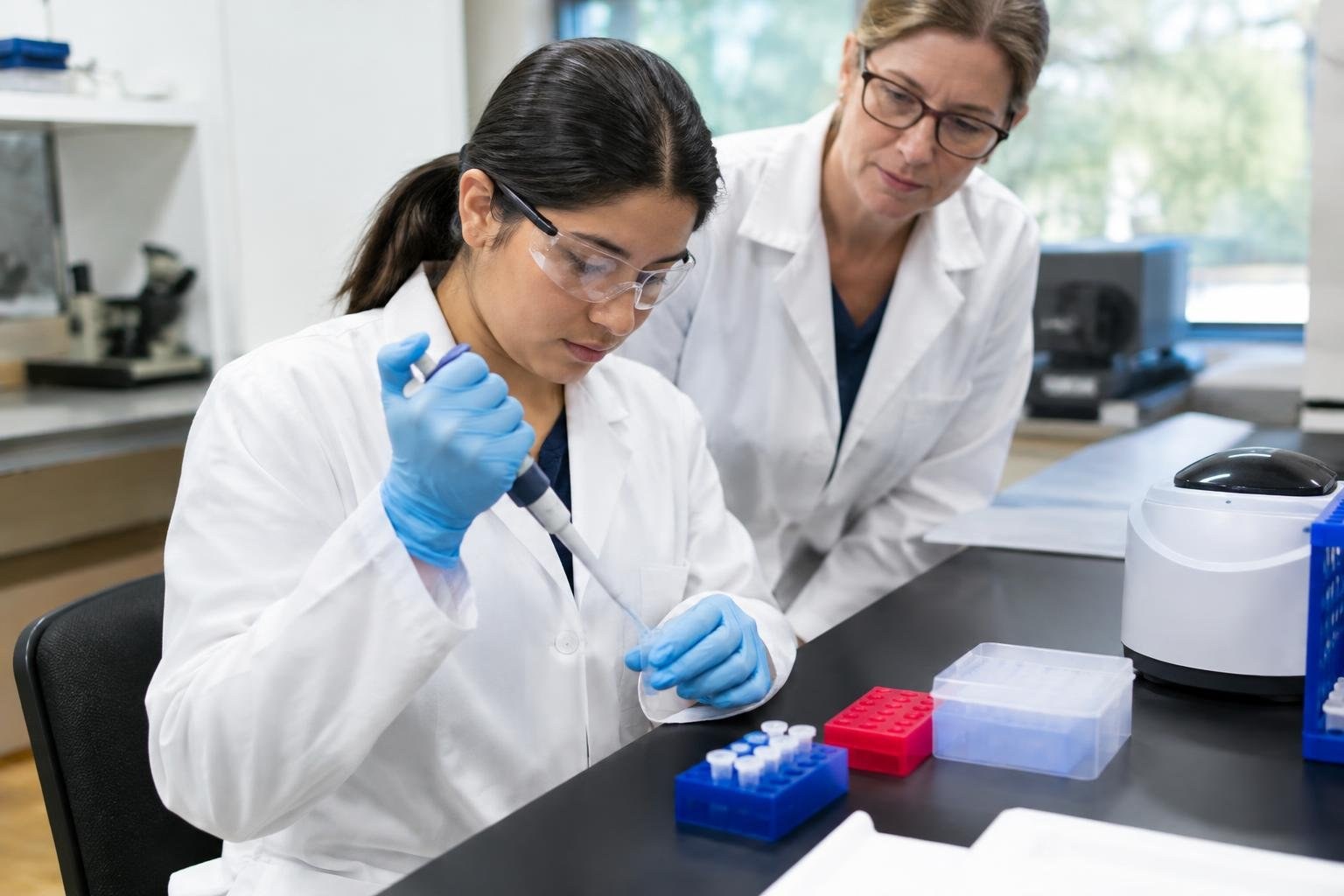
A student working with laboratory tools at a supervised teaching bench
What Is a Clinical or Medical Laboratory Assistant Program?
A clinical or medical laboratory assistant program prepares students to perform support tasks in a clinical laboratory under appropriate supervision. The field connects patient specimens and routine laboratory processes with the work of laboratory professionals. Depending on the program and workplace, duties may include specimen collection or processing, waived testing, data entry, equipment support, and laboratory safety.
Program names vary. Colleges may use labels such as clinical laboratory assistant, medical laboratory assistant, or clinical/medical laboratory assistant. Similar names do not guarantee identical training or eligibility for the same jobs. A short certificate is distinct from an associate degree in medical laboratory technology or a four-year laboratory science pathway. Review the actual curriculum and intended job outcomes, not only the title.
The federal Classification of Instructional Programs code supplied for this subject is 51.0802. The range of credential levels associated with a field classification does not mean every college offers every credential in this subject. Verify a specific award with the institution.
What Do You Study? Courses and Hands-On Skills
Students learn how to contribute to a laboratory workflow while following written procedures, protecting specimen integrity, and communicating clearly with patients and colleagues. Program content can include phlebotomy, specimen processing, waived testing, laboratory safety, quality control, data entry, result retrieval, laboratory information systems, basic microbiology, and transfusion support services. Not every program covers every topic.
Some curricula include practice with pipettes, patient dilutions, and preparation of reagents, controls, standards, or other materials used by laboratory personnel. These exercises build precision and familiarity with the support work that surrounds testing. Laboratory mathematics and technology may also feature in the program.
Expect practical work, not just lectures
Because assistant work can involve direct patient contact and physical handling of specimens, ask how students practice blood collection, specimen identification, processing, and safe equipment use. Find out whether skills are taught in a campus lab, through an externship or clinical placement, or in another supervised setting. A program page may describe the subject areas, but the college should explain the actual practice schedule and assessment methods.
Examples illustrate how much programs can differ: Mercer County Community College lists subjects including phlebotomy, waived testing, specimen processing, quality control, laboratory information systems, and basic microbiology; Lake Superior College describes skills such as pipetting and preparing laboratory materials. These examples are not a universal curriculum. Review the Mercer County Community College program outline and Lake Superior College's certificate description.
Who Is This Program For? Fit, Interests and Entry Requirements
This path may appeal to students who want a practical role in healthcare but are especially interested in what happens behind the scenes of testing. It can suit people who enjoy following detailed procedures, working with instruments and records, and contributing to a team. Some assistant training also involves patient contact, especially for phlebotomy or specimen collection, so it is not necessarily a fully back-room occupation.
There is no single personality type required. Students should consider whether they can maintain focus during repetitive steps, handle biological specimens, respect privacy, and ask questions when a result or process seems unclear. Accurate communication matters because laboratory support involves both people and precise records. The program description includes laboratory mathematics and computer technology, so comfort with measurement, basic calculations, and learning new software is useful.
Admissions and preparation
Admission requirements are set by each institution. Before applying, ask about prerequisite courses, placement or assessment requirements, minimum grades, health documentation, background checks, immunization requirements, and deadlines if practical placements are part of the program. Do not assume these are identical across colleges. If you are still in high school, build a foundation in biology, chemistry, math, reading, and computer use where available. Adult learners can ask whether prior healthcare experience or coursework may count toward prerequisites.
Parents and students should distinguish admission eligibility from readiness for the day-to-day work. A campus visit, information session, or conversation with a program advisor can clarify the amount of patient interaction, lab practice, and record handling involved.
Credential Levels, Format and Completion Time
There is no single completion time for all clinical laboratory assistant programs. Bellevue College describes one certificate as approximately 26 credits and usually completed in three quarters. Treat that as an example, not a national standard: other programs may use different credit totals, calendars, prerequisites, and placement schedules.
Ask how many terms the published plan assumes and whether it reflects full-time enrollment. Part-time study, course availability, transfer credits, prerequisite completion, or delays arranging hands-on experience can affect an individual timeline. If you need to work while studying, request a term-by-term schedule and confirm which courses meet on campus.
Credential level matters when planning beyond the first job. Some certificates focus on entry-level assistant positions. Other colleges describe coursework that can connect to additional allied-health certificates, an associate degree, or later study in medical laboratory science. Confirm in writing which credits transfer, which courses are required next, and whether a receiving institution will accept them. See Bellevue College's certificate information and review an example of allied-health progression options.
Online vs. On-Campus Study
Online availability is program-specific. A college may offer some learning online while requiring in-person practice for tasks such as phlebotomy, specimen handling, or equipment use. The sources available for examples describe hands-on skills and laboratory training, but they do not establish that every program has the same delivery format. Ask the institution exactly which courses are online, which require campus attendance, and where any placement takes place.
Before choosing a remote or hybrid option, confirm that the program provides supervised opportunities to demonstrate practical skills. Ask who arranges a clinical placement, whether the student must find a site, what travel may be involved, and whether the placement schedule can fit work or caregiving responsibilities. Do not rely on a general label such as “online” to infer that every part of the training can be completed from home.
Tuition, Costs and Financial Aid
Program prices depend on the institution and the student's circumstances. Compare the complete cost, not just the tuition rate: include mandatory fees, books, lab supplies, required clothing or equipment, transportation, technology, and any travel or time away from work for practical training. Ask the financial aid office for a written estimate for the exact program and enrollment pace.
Potential funding routes include federal or state student aid when eligible, institutional grants, scholarships, employer tuition assistance, and payment plans. Eligibility and availability vary. Ask whether the program participates in the aid option you are considering and what happens if you enroll part time or transfer credits. For adult learners, employer support may be worth checking before taking on borrowing.
Compare net cost and credit value
Request a term-by-term cost estimate and identify which credits apply to the credential. If the program is a possible first step toward a longer degree, verify transferability with the next institution before paying for courses. A low initial price may not be the best value if credits do not advance your intended pathway; a higher-cost option is not automatically better without evidence of relevant training and support.
Careers, Jobs and Employment Pathways
Clinical or medical laboratory assistant training can connect to assistant-level roles in clinical or medical laboratory settings. Program materials describe graduates as prepared for entry-level lab assistant positions, while the tasks and titles vary by employer. Work may take place in medical settings where laboratory teams process specimens and support testing. Some programs emphasize patient-facing collection; others give more attention to processing, records, or bench support.
The assistant credential should not be treated as interchangeable with a medical laboratory technician or technologist qualification. Mercer County Community College describes a path from its assistant certificate into its Medical Laboratory Technology associate degree and possible later study in medical laboratory science. This is one institution's stated progression route, not a promise of admission, credit acceptance, employment, or advancement. Explore related occupations such as medical and clinical laboratory technicians, medical and clinical laboratory technologists, and phlebotomists.
Career direction
How the program may relate
What to verify
Clinical or medical laboratory assistant
Entry-level certificate programs may prepare graduates for assistant duties in laboratory settings.
Employer requirements, practical experience, and the job title used locally.
Phlebotomy-focused work
Some curricula teach blood collection as part of laboratory support training.
State rules, employer requirements, and any credential expected for the role.
Medical laboratory technician
May require additional education beyond an assistant certificate; some colleges describe a progression pathway.
Prerequisites, transfer credit, program admission, and the exact job requirements.
Medical laboratory technologist or laboratory scientist pathway
Can involve further study beyond an assistant credential.
Education level, clinical training, and any relevant state or employer requirements.
Pay and employment outlook depend on the occupation, location, employer, and experience. Do not use an assistant-program title as a substitute for researching the precise job title you hope to hold. Ask local hospitals, clinics, and laboratories what they require for entry-level openings and whether they hire graduates from the program you are considering.
Accreditation, Licensure and Certification
Completing a school program and earning a professional license or certification are not necessarily the same thing. Requirements can depend on job duties, the state, the employer, and the credential sought. Ask the college which exams or credentials its coursework is designed to support, whether graduates meet eligibility rules, and what additional experience or testing may be needed. Confirm answers directly with the relevant credentialing organization and state authorities.
New York State Education Department guidance states that phlebotomists are not certified or licensed in New York State and discusses how phlebotomy training can support later education as a licensed clinical laboratory professional. That is a state-specific statement; do not apply it to another state. The guidance also identifies technical assessment and certification opportunities for programs to consider. Read the New York State Education Department's guidance and verify current requirements wherever you plan to study or work.
For any program, be cautious if marketing language implies that a certificate automatically grants a license, qualifies you for all laboratory jobs, or guarantees certification. Request the exact credential name and written explanation of what the program does and does not qualify graduates to do.
How to Choose the Right Program
When comparing programs, look for a clear match between the advertised outcome and the training provided. A practical checklist can help:
Curriculum: Does it cover the procedures and tasks named in the jobs you want?
Hands-on practice: How are phlebotomy, specimen processing, safety, and equipment skills practiced and assessed?
Clinical or work experience: Is a placement included? Who arranges it, and where can it occur?
Faculty and facilities: Can you learn about instructors' relevant experience and the equipment students use?
Credential and eligibility: What exact certificate or degree is awarded, and what credentials can graduates pursue?
Progression: Will credits count toward a related associate or bachelor's pathway? Get confirmation from the receiving school.
Outcomes: Ask how the college tracks completion, placement, and graduate outcomes, and how it defines each measure.
Format and schedule: Confirm campus attendance, placement location, course rotation, and part-time options.
Check institutional and program accreditation status with the relevant recognized accreditor rather than relying on a general claim on a marketing page. Accreditation, program approval, certification eligibility, and state licensure are different questions. Ask which one applies to your intended next step.
Related Degrees, Pathways and Alternatives
A certificate may be appropriate if you want focused preparation for assistant-level work and have confirmed that local employers accept that training. If you want broader technical responsibilities, compare an associate degree in medical laboratory technology. If your long-term interest is a laboratory scientist or technologist role, ask about four-year study and the prerequisites for that route. A phlebotomy-only course may suit someone chiefly interested in blood collection, while a broader assistant curriculum may cover additional specimen and laboratory support tasks.
These pathways differ in scope, length, and possible roles. Do not assume that completing a shorter credential will automatically shorten a longer degree; transfer credit is determined by the receiving institution. Ask for a course-by-course evaluation and a written sequence of required next steps.
Students who prefer direct patient care may also compare other allied-health programs. Those seeking laboratory work should compare the amount of patient contact, practical bench work, record handling, and additional education involved in each option.
Experience, Further Study and Preparing for Employers
Useful experience can come from supervised practice, a relevant placement, or a project that demonstrates careful procedure-following and communication. Ask whether the program includes clinical or work-based experience and whether students receive feedback on specimen handling, patient interaction, documentation, and safety. If a placement is not built in, ask how students can gain appropriate experience without representing themselves as qualified to perform duties they have not been trained or authorized to do.
How to stand out to employers
Be ready to explain how you follow written procedures and maintain attention to detail.
Describe practical skills only when you have actually performed them in training or work.
Show that you understand the importance of clear communication and accurate records.
Ask instructors about references, career services, and employer connections.
Keep a record of completed coursework and practical competencies, while protecting patient privacy.
Some students use an assistant credential as a first step toward more education. Mercer County Community College describes progression from its assistant certificate to its medical laboratory technology associate program and later laboratory science study. Edmonds College describes coursework that may apply toward additional allied-health credentials and degrees. Confirm current articulation and admissions details directly with each institution.
Is a Clinical Laboratory Assistant Program Worth It?
The value of a program depends on what you hope to do afterward, the full cost, and the quality of the practical preparation. A focused certificate may offer a defined entry point without committing immediately to a longer degree. Some college programs also describe ways to build on assistant coursework through further allied-health or laboratory study.
There are tradeoffs. A certificate may not qualify you for every laboratory position, and a short program can still involve demanding practical work, required attendance, and costs beyond tuition. If your goal is a technician or technologist career, starting with an assistant credential may add time unless credits transfer and the pathway is planned. The best decision is individual: compare job requirements, total cost, time away from work, further education plans, and your interest in the actual tasks.
Salary, job titles, and employment prospects should be part of the decision, but so should personal fit. Consider whether you want precise procedural work, some potential patient contact, and a team-based laboratory environment. The Free MAPP Assessment can help you explore interests and related career directions alongside the practical information you gather from colleges.
Questions to Ask Before Enrolling
Before paying a deposit, get answers to these questions from the program and, where needed, the relevant state authority:
What exact credential will I earn, and what duties does the curriculum prepare me to perform?
What is the total estimated cost, including fees, supplies, books, and travel?
Which courses require campus attendance or supervised placement?
Is a clinical or externship experience included, and who secures the site?
What admission prerequisites and application deadlines apply?
What are recent completion and employment outcomes, and how are they measured?
Which credits can transfer to a related degree, and has the receiving institution confirmed this?
Does the program prepare students for any particular certification or state requirement?
What financial aid, scholarships, grants, or employer funding may be available?
What career advising, employer introductions, or job-search support can students access?
Write down answers and compare colleges on the same criteria. If an answer affects licensure, certification, transfer, or employment eligibility, verify it with the organization that sets the relevant requirement.
Frequently asked questions
What do you learn in a clinical or medical laboratory assistant program?
Clinical and medical laboratory assistant programs teach practical support skills for patient testing and laboratory work. Depending on the curriculum, topics may include specimen collection and processing, phlebotomy, waived testing, laboratory safety, quality control, data entry, equipment use, and communication. The exact mix varies by institution, so review course lists and hands-on requirements before applying.
How long does it take to become a clinical laboratory assistant?
Some certificate programs can be completed in less than a year. Bellevue College, for example, describes one certificate as approximately 26 credits and usually completed in three quarters. That is a school-specific example, not a standard for every program. Part-time study, prerequisites, clinical scheduling, and transfer credits can change the time required.
What jobs can I get with a medical laboratory assistant certificate?
Training may prepare graduates for entry-level laboratory assistant positions, but job titles and employer requirements vary. Possible duties include supporting specimen collection and processing, waived testing, data entry, and laboratory operations. A laboratory technician or technologist role may require additional education, so compare the job requirements in your area with the curriculum before choosing a credential.
How much does a clinical laboratory assistant program cost?
Costs depend on the school, location, credit load, fees, supplies, travel, and any required in-person training. Compare the full program cost rather than tuition alone, and ask about grants, scholarships, employer assistance, and transfer credit. Check current tuition and aid details directly with each college because prices and eligibility can change.
Can I earn a clinical laboratory assistant certificate online?
Some lessons may be available online, but hands-on skills and practical experience may require in-person sessions or a supervised work placement. Delivery varies by school and course. Ask whether the program includes laboratory practice, phlebotomy training, specimen handling, and any required clinical or externship hours, and whether those requirements can be completed near you.
Does a medical laboratory assistant program require math?
Programs commonly include practical procedures, specimen handling, safety, and laboratory mathematics. The level and amount of math vary, but students should expect to follow procedures accurately and handle measurements or calculations where required. Ask for a course list and sample program plan if you want to understand the quantitative workload before enrolling.
Do I need an associate degree to work in a medical laboratory?
Not always. A certificate may prepare a student for entry-level assistant work, while a medical laboratory technology associate degree or a four-year laboratory science program can support a different scope of preparation and career options. Confirm the education required for the particular job and state where you plan to work; an assistant credential does not automatically qualify someone for every laboratory occupation.
Do clinical laboratory assistants need a license or certification?
Certification and licensing rules depend on the occupation and location. Do not assume that completing an assistant program grants a professional license or a national certification. Ask the school which credentials its curriculum prepares students to pursue, verify eligibility with the credentialing organization, and check applicable state rules. New York State’s education guidance makes a distinction between phlebotomy training and licensed professions in that state.
What is the difference between a lab assistant and a medical laboratory technician?
A laboratory assistant program is generally focused on support tasks such as specimen processing, phlebotomy, waived testing, and laboratory operations. Medical laboratory technology and medical laboratory science programs provide a broader pathway into more advanced laboratory work, with additional study. Program names are not enough to establish equivalency; compare course content, clinical experience, and the requirements of jobs you want.
Is a clinical laboratory assistant certificate worth it?
It can be worthwhile when the program’s cost, schedule, and hands-on training fit your goals and the jobs available to you. A short credential may provide a defined starting point, and some colleges describe pathways into further allied health or laboratory study. Before committing, confirm current employer requirements, program costs, transfer options, and whether the day-to-day work suits you.
People Also Ask
What classes are in a clinical laboratory assistant program?
Many assistant programs cover phlebotomy, specimen processing, waived testing, safety, quality control, data entry, and laboratory information systems. Course content depends on the institution.
Can I become a lab assistant in one year?
Some certificate programs are designed for completion in about three quarters, but schedules differ. For example, Bellevue College describes one certificate as approximately 26 credits and usually completed in three quarters.
Is a lab assistant certificate the same as a medical laboratory technician degree?
An assistant certificate may prepare graduates for entry-level support work, but it does not automatically qualify them for medical laboratory technician or technologist positions. Check the education and credential requirements for your intended job.
Are medical laboratory assistant programs fully online?
Some programs offer online coursework, but practical laboratory skills may require in-person training or supervised experience. Confirm format and location requirements with the college before applying.
What can I do after a clinical laboratory assistant certificate?
A program may be a useful starting point for students who want to support laboratory work or explore further allied-health study. Value depends on cost, employer expectations, practical experience, and the student's longer-term goals.
What expenses should I budget for in a lab assistant program?
Program costs vary by institution and may include tuition, fees, books, supplies, and travel for hands-on requirements. Ask colleges for a current full-cost estimate and compare financial aid options.
Is a medical laboratory assistant a licensed profession?
Requirements vary by employer and state. Completing a school program does not by itself establish professional licensure or certification. Verify job-specific and state-specific rules before enrolling.
A clinical or medical laboratory assistant program may suit students who want practical, detail-focused work supporting patient testing and laboratory teams. The right choice depends on the specific credential, hands-on training, total cost, and whether you want an entry-level role or a longer route toward laboratory technology or science work. Compare program outcomes and career steps before enrolling, and consider whether the day-to-day tasks fit your interests as well as your education goals.
Find out which Career or College Major is right for you!
We use cookies to offer you a better browsing experience, analyze site traffic and personalize content.
Read about how we use cookies and how you can control them in our
Privacy Policy.
If you continue to use this site, you consent to our use of cookies.
×
Exciting News!
Be one of the first to Beta Test the new AI-Powered Assessment.com Platform.