Automation Engineering Technology: Program and Career Guide
Considering automation engineering technology? Explore the work, compare credential pathways, and use practical questions to evaluate programs, costs, and career fit.
By Kieth Nelson · Staff Writer Assessment.com · Published October 7, 2026 · Last updated November 5, 2026
Automation engineering technology is a practical field of study for people interested in how connected machines and control systems work. Programs may prepare students to support engineers and other professionals working with automated systems, but the credential, curriculum, and career options depend on the college. This guide focuses on how to assess the work and compare programs before committing: what systems a course sequence addresses, what hands-on access is available, which credentials fit your plans, and what to verify about cost and transfer. Use the examples as starting points for questions, not as promises about every school or job.
Degree & Program Decision Insights
Explore your personal fit, education requirements, career potential and next steps.
01Motivational Fit
Discover whether this program fits you
Explore your preferences against the focus of Automation Engineer Technology/Technician. These prompts are not personal MAPP results.
Subject curiosity. Would you choose to explore “computer systems” in depth? Ask for a sample learning activity to test that interest.
Breadth of interest. Consider the place of “electronics and instrumentation” in this field. Is this another part you would choose to explore, or mainly a requirement you would tolerate?
Work reality. Related work can involve this task: “Supervise the installation or operation of electronic equipment or systems.” Would you want that activity to be a regular responsibility?
Interest in studying a field can differ from enjoying its related work.
Which part would you want to do repeatedly, and what would you try before deciding?
Discover Your Personal Program Fit
Before investing your time and money in your education, discover how this program aligns with your natural motivations, work preferences and career goals.
U.S. occupational wages are not guaranteed graduate earnings; OEWS excludes self-employed workers.
Projected openings include replacements as well as growth.
U.S. national estimates. A crosswalk does not establish entry-level eligibility; advanced, management and teaching roles can require further qualifications.
Instrumentation Technology/TechnicianCIP 15.0404. Compare its emphasis on instrumentation design and maintenance and calibration with this program’s focus.
Robotics Technology/TechnicianCIP 15.0405. Compare its emphasis on the principles of robotics and design and operational testing with this program’s focus.
Explore your motivations. Use MAPP as a starting point for reflecting on your interest in “computer systems”, then test that interest against a sample learning task.
Compare actual providers. Ask for the exact credential, course sequence and assessment methods. Compare how each provider teaches “electronics and instrumentation”, its entry criteria and its itemized costs.
Check the evidence before applying. Confirm prerequisites and any recognition or professional requirements for your intended route; ask for applicable rules and published outcome definitions in writing.
Verify the institution’s current offering, admissions requirements and outcomes; a search result does not establish your eligibility.
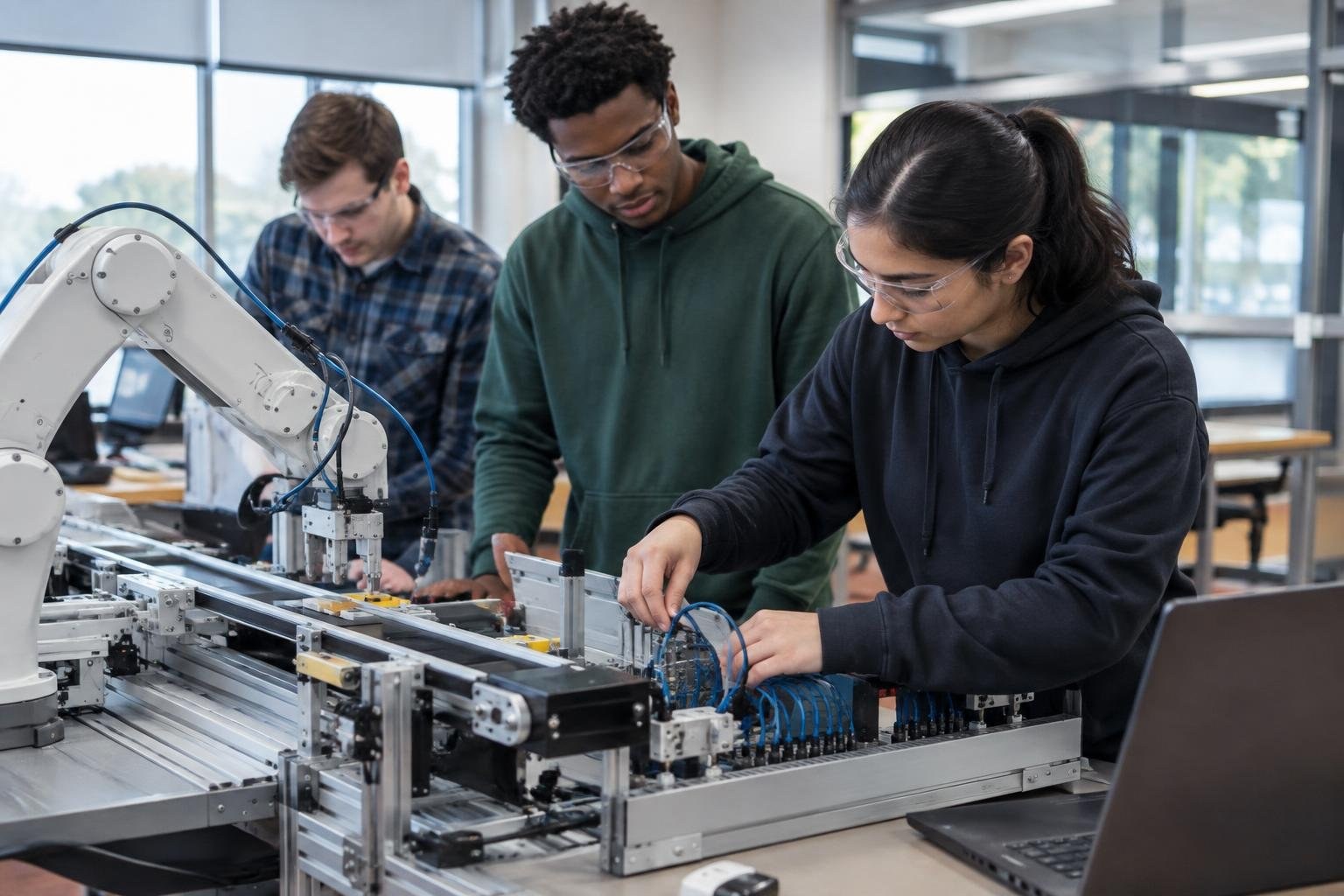
College learners working with automation equipment and controls
Start With the Work the Field Supports
Think of this field as learning to support a system, not just a single machine part. The program classification defines the work as applying basic engineering principles and technical skills in support of professionals who develop, install, calibrate, modify, and maintain automated systems. That scope can bring mechanical equipment, electronics, computers, robotics, and industrial communications together.
Program names are not reliable substitutes for reading the curriculum. One classification uses the title Automation Engineer Technology/Technician and CIP code 15.0406. Use the classification to recognize the subject area, then inspect the award and required courses at each school. See the Kansas program definition.
Read the Curriculum as a Systems Map
Read a course list as a map of what you will learn to connect. A program example describes integrated machine systems involving industrial automation, robotics, mechanics, computers, industrial communications, and electronics technology. The useful question is not whether a school uses the same list of subjects, but whether its curriculum gives you a coherent view of systems that combine them.
Before applying, request a current course sequence and ask which courses involve equipment, projects, or troubleshooting. Check whether the program concentrates on a few components or exposes students to integrated systems. Those details help you decide whether its learning experience suits your goals. Review one college’s description of the systems its graduates may work with.
Judge Skills by What Students Practice
Rather than relying on a generic list of skills, trace each skill to an activity in the program. If you want to learn how systems are installed, calibrated, modified, or maintained, ask which classes address those tasks and how students practice them. The field’s program definition names those kinds of work, but it does not prescribe one universal software package or set of competencies.
Look for evidence in course descriptions, lab access, and project expectations. Ask what students are expected to explain or demonstrate at the end of a course, and how their work is assessed. A clear answer is more useful than a broad promise that a program is hands-on. For related career exploration, see robotics technician roles and electromechanical engineering technologist roles.
Test Your Interest Against the Daily Learning
Fit is easier to assess when you imagine a normal learning week rather than an idealized job title. Would you enjoy studying several connected technologies and working through practical technical problems? Would you prefer that kind of applied learning to a program with a different balance of study? These are questions to explore, not traits a prospective student must already possess.
Ask for an introductory course description or a chance to learn about the learning environment. Then compare your reaction with the actual course sequence and the kind of work listed for possible careers. Program examples name technician and controls-related directions, but they do not guarantee a job or establish that every graduate will prefer the same tasks. Assessment.com’s MAPP assessment can be one tool for exploring career and degree options.
Plan the Schedule Before Counting the Years
Completion time depends on the specific program plan and your enrollment choices. One college describes a two-year Associate of Applied Science degree in automation and engineering technology. A Wisconsin technical college example places an electro-mechanical maintenance technician technical diploma in the first year of an associate-degree pathway. These are examples of program structure, not a universal timetable.
Request a term-by-term plan before you build a schedule around work, family, or other commitments. Ask which courses are prerequisites for later classes, whether courses are offered often enough to keep you on sequence, and how transfer credit changes the plan. Review official admissions information for prerequisites and placement details rather than assuming another school’s rules apply.
One college describes its program as a two-year AAS degree.
Choose a Credential for Your Next Step
Compare credentials by the next decision they enable. A certificate, technical diploma, and associate degree are different awards, and a program may sequence more than one of them. In one Wisconsin example, students earn an electro-mechanical maintenance technician technical diploma during the first year while pursuing an associate degree. Do not assume that another college offers the same milestone.
If you want to continue to a bachelor’s program, verify the transfer path before enrolling. One college reports articulation agreements that may allow credits to apply toward a Bachelor of Science degree. Ask for the current agreement, eligible courses, and receiving institution’s evaluation in writing. A credential’s name alone cannot establish how many credits will transfer.
Compare technical pathways with related options such as electromechanical engineering technology or electrical engineering technician careers, while checking specific college catalogs for available programs.
Verify How Practical Learning Is Delivered
Do not treat “online,” “hybrid,” or “on campus” as a complete description of how you will learn. Ask what portions of the program require access to equipment, where any practical work takes place, and whether you must attend at set times. The program information describes work with integrated automated systems, but does not establish one delivery format for all colleges.
For each school, get the format and location of required activities in writing. If travel is part of the plan, include it in your time and cost comparison. If a course is remote, ask how students gain the practical experience the program says it provides. Make the decision using the actual format of the credential you intend to pursue.
Build a Cost Estimate for the Whole Pathway
Compare the full cost of completing the credential, not a single tuition figure. Request an estimate from each college that includes tuition, mandatory fees, books, equipment or technology expenses, and any travel associated with practical learning. Ask whether the estimate covers the whole program or one term or year, and how costs may differ if you attend part time.
Then compare the amount you would actually pay after aid. Ask about eligibility, deadlines, payment arrangements, and whether prior credits can reduce the required coursework. If you plan to earn a shorter credential and continue, confirm that its credits apply to the later award. The supplied college examples show that pathways can combine credentials, but do not provide a comparable national price.
Turn Career Titles Into Questions for Employers
Use job titles as a shortlist for research, not as a prediction of what a degree automatically qualifies you to do. A college program lists controls designer, automation technician, controls technician, engineering technician, controls engineer in training, and automation engineer in training as potential directions. The duties and requirements behind a title can differ by employer and location.
Start with a few current local postings. Note the credential, experience, and technical tools employers actually request, then ask the college how its courses relate to those requirements. Program information also places automation technicians in manufacturing, engineering services, and research and development. Explore the broader architecture and engineering career area and industrial maintenance technician roles as adjacent exploration, not guaranteed outcomes.
Pay and hiring prospects require current occupation-specific evidence; the supplied program examples do not establish a universal salary or job-growth figure.
Ask What Evidence of Learning You Will Leave With
Ask what evidence of applied work you will have when you finish. That might be a project, lab work, or an employer-connected experience if the college offers one. The supplied program descriptions do not establish a universal internship, license, or external certification requirement, so do not assume one is included or necessary.
Separate a college award from an external professional credential. If employers mention a named certification or license, ask which jobs require it, who issues it, and whether the curriculum prepares students for it. Keep examples of completed work and be ready to explain your role, the system involved, and the problem addressed. Match that evidence to actual job requirements rather than relying on generic résumé advice.
Make Transfer Plans With Both Colleges
Continuing education is a separate decision from completing an applied technical credential. For a student who wants a bachelor’s degree, one college reports articulation agreements that may allow credits from its associate program to apply toward a Bachelor of Science. That example does not mean all programs have an agreement or that all credits transfer.
Before you choose a starting program, name a possible receiving institution and request an evaluation of the courses you expect to take. Confirm admission requirements, accepted credits, remaining study, and likely total cost with both schools. If you are exploring related work and education choices, Assessment.com’s degree exploration can help organize your research, but institutional transfer decisions must come from the colleges.
Compare Nearby Paths by the Work You Want
Compare alternatives by the system or task you want to spend more time on, not by the similarity of degree names. A student drawn to automation may want to investigate electrical or electronic technology, electromechanical study, robotics, or industrial maintenance. Each option can have a different curriculum and job connection; confirm what is offered locally and what the credential covers.
For a stronger electrical focus, explore electrical engineering technician careers.
For combined mechanical and electronic interests, explore electromechanical engineering technology careers.
For robotics-related work, explore robotics technician careers.
For equipment upkeep, explore industrial maintenance technician careers.
Compare actual course sequences and local employer requirements before treating any option as a substitute.
Use the Same Comparison Questions at Each School
Use a two-pass comparison. First, decide whether a program teaches the systems and tasks that interest you. Then test whether its credential, schedule, cost, and transfer terms are workable. Ask every college the same questions so differences are visible rather than buried in marketing language.
What exact award will I earn, and which courses are required?
Which systems and technologies appear in the curriculum?
What practical work is required, and where does it happen?
What is the complete cost after aid and any necessary travel?
What credentials and transfer options are documented?
Which local job requirements does the program help students address?
Can I speak with an instructor about course expectations?
For college exploration, use Assessment.com’s college search alongside official school catalogs. Verify all program details with the college.
Decide Whether the Investment Fits Your Plan
Whether a program is worth the investment depends on the relationship among its cost, the credential it awards, the learning it delivers, and the jobs you intend to pursue. A shorter award earned within a longer pathway can be useful if it fits your goals and the institution confirms how it works. It is not automatically the best choice for every student.
Reduce uncertainty before enrolling: compare the whole cost, verify practical learning, check local postings for qualifications, and obtain transfer terms in writing if further study matters. A program’s published career list can help you identify questions, but it cannot promise employment or establish your likely pay. Consider the fit of the work as well as the price.
A Final Readiness Check Before Applying
Before you submit an application, write down the answers to three questions: What work do I want this education to help me explore? What specific credential and courses will I complete? What evidence shows the program can deliver the learning and pathway I need?
Then check your answers against official college information and current local job postings. Confirm the credential title, expected course sequence, practical requirements, total cost, and any transfer arrangement. For career fit, compare the kind of study involved with your interests and preferred way of learning. Assessment.com offers tools to explore career options and degree options; use them to broaden your questions, not replace direct confirmation from schools or employers.
Frequently asked questions
What is automation engineering technology?
It is applied study for supporting engineers and other professionals who develop, install, calibrate, modify, or maintain automated systems. The systems can combine mechanical equipment, electronics, computers, robotics, and industrial communications.
What should I look for in an automation engineering technology curriculum?
Course content and practical learning vary by college. Review the catalog and ask how the program teaches students to work with integrated systems, including which equipment students use and what projects or labs are required.
What careers can an automation engineering technology program lead to?
Program examples include automation technician, controls technician, controls designer, and engineering technician. These are possible directions, not guaranteed outcomes; check the qualifications in local postings and discuss them with employers or college career staff.
Can I earn a technical diploma while working toward an associate degree?
Examples include certificates and associate degrees. A specific Wisconsin technical college pathway awards an electro-mechanical maintenance technician technical diploma during the first year of an associate degree. Confirm the credential and sequence at the school you are considering.
How do I compare the cost of these programs?
There is no single cost established by the supplied program information. Ask each college for your complete estimated cost, including tuition, fees, books, equipment, and any travel for practical work, then compare the net cost after aid.
Can automation engineering technology be studied online?
Ask the institution how practical skills are taught, whether any labs or projects must be completed in person, and how students access equipment. Delivery arrangements depend on the program, so verify the requirements directly.
Does automation engineering technology require math?
Check admission requirements and the course sequence for the exact credential, and ask about placement support or preparation if needed.
Will an associate degree transfer to a bachelor’s program?
Some college pathways describe articulation agreements that may let students apply associate-level credits toward a bachelor’s degree. The receiving institution and agreement determine which credits count, so request a current written evaluation before planning a transfer.
People Also Ask
What does automation engineering technology mean?
It is a practical field focused on applying technical skills to automated systems. A program definition includes support for developing, installing, calibrating, modifying, and maintaining those systems.
How long might an automation engineering technology program take?
A program example describes a two-year Associate of Applied Science degree, while other examples include certificates and an associate-degree pathway with a first-year technical diploma. Check the schedule for the specific school and credential.
Can a shorter credential be part of an associate-degree pathway?
Not necessarily. A college example describes a technical diploma awarded during the first year of an associate-degree pathway. That is one school’s structure, so confirm the available award and requirements with your chosen college.
Can credits from this program count toward a bachelor’s degree?
Some programs report articulation agreements that may apply credits toward a Bachelor of Science degree. Ask both institutions to identify the agreement and eligible courses before counting on transfer credit.
How is automation engineering technology different from other engineering programs?
The field applies engineering principles and technical skills to automated systems. To distinguish it from another engineering or technology program, compare the actual courses, learning activities, credentials, and job requirements you are targeting.
What affects the cost of an automation engineering technology program?
No comparable tuition figure is established by the supplied program information. Request an individualized estimate covering the entire credential, fees, books, equipment, and required travel, then compare aid and net cost.
A useful decision about automation engineering technology starts with the work you want to try, not the degree title alone. Picture the practical tasks: learning how connected machine systems operate, building technical skills, and preparing to support installation, calibration, modification, or maintenance. Then test that picture against actual program courses, equipment access, total cost, and the qualifications employers request. Program examples range from certificates to associate degrees, and one college pathway includes a technical diploma during the first year. Those options are not universal, so confirm every detail with the institution. If you are still weighing whether this direction fits your preferences, use Assessment.com’s MAPP assessment to explore career and degree options, then compare the programs that match your goals.
Find out which Career or College Major is right for you!
We use cookies to offer you a better browsing experience, analyze site traffic and personalize content.
Read about how we use cookies and how you can control them in our
Privacy Policy.
If you continue to use this site, you consent to our use of cookies.
×
Exciting News!
Be one of the first to Beta Test the new AI-Powered Assessment.com Platform.