Biomedical Technology Degree Guide: Courses, Careers and Program Choices
Explore biomedical technology and biomedical equipment technician programs, including what students learn, credential choices, career paths, certification, cost considerations, and how to compare schools.
By Kieth Nelson · Staff Writer Assessment.com · Published October 7, 2026 · Last updated November 5, 2026
A biomedical technology program prepares students to work with medical equipment used in settings such as hospitals and clinics. Students learn how to inspect, maintain, calibrate, troubleshoot, and repair equipment, as well as support its safe and proper use. Depending on the school, the program may be a certificate, associate degree, or part of a broader engineering technology pathway. Graduates may pursue biomedical equipment technician and field-service roles, among other technical and support positions. The work is a practical intersection of healthcare and technology: technicians help keep equipment functioning, while clinical staff use that equipment to care for patients. Program titles and course plans differ, so compare the curriculum and hands-on preparation, not just the name. Not sure whether biomedical technology fits you? Take the Free MAPP Career Assessment to see how your motivations, interests, and natural preferences align with this degree and the careers it can lead to.
Degree & Program Decision Insights
Explore your personal fit, education requirements, career potential and next steps.
01Motivational Fit
Discover whether this program fits you
Explore your preferences against the focus of Biomedical Technology/Technician. These prompts are not personal MAPP results.
Practical problem solving. Does learning design and installation testing appeal to you, with patient practice and careful checks of the result?
Breadth of interest. Consider the place of “instrument calibration” in this field. Is this another part you would choose to explore, or mainly a requirement you would tolerate?
Work reality. Related work can involve this task: “Write and submit reports about the results of calibration tests.” Would you want that activity to be a regular responsibility?
Interest in studying a field can differ from enjoying its related work.
Which part would you want to do repeatedly, and what would you try before deciding?
Discover Your Personal Program Fit
Before investing your time and money in your education, discover how this program aligns with your natural motivations, work preferences and career goals.
Medical Equipment RepairersSOC 49-9062 · O*NET 49-9062.00$61,660/year median (May 2025); +12.6% projected change (2025–2035); 8,200 projected openings/year.
Typical occupational entry: associate's degree (BLS). BLS lists moderate-term on-the-job training as typical occupational training.
U.S. occupational wages are not guaranteed graduate earnings; OEWS excludes self-employed workers.
Projected openings include replacements as well as growth.
U.S. national estimates. A crosswalk does not establish entry-level eligibility; advanced, management and teaching roles can require further qualifications.
Compare the focus and route of these distinct instructional fields; their credentials and admission requirements are not interchangeable.
Instrumentation Technology/TechnicianCIP 15.0404. Compare its emphasis on instrumentation design and maintenance and calibration with this program’s focus.
Robotics Technology/TechnicianCIP 15.0405. Compare its emphasis on the principles of robotics and design and operational testing with this program’s focus.
Explore your motivations. Use MAPP as a starting point for reflecting on your interest in “instrument calibration”, then test that interest against a sample learning task.
Examine the work. Compare Calibration Technologists and Technicians and Medical Equipment Repairers on daily work and entry qualifications, as well as pay. Explore Calibration Technologists and Technicians.
Compare actual providers. Ask for the exact credential, course sequence and assessment methods. Compare how each provider teaches “design and installation testing”, its entry criteria and its itemized costs.
Check the evidence before applying. Confirm prerequisites and any recognition or professional requirements for your intended route; ask for applicable rules and published outcome definitions in writing.
Verify the institution’s current offering, admissions requirements and outcomes; a search result does not establish your eligibility.
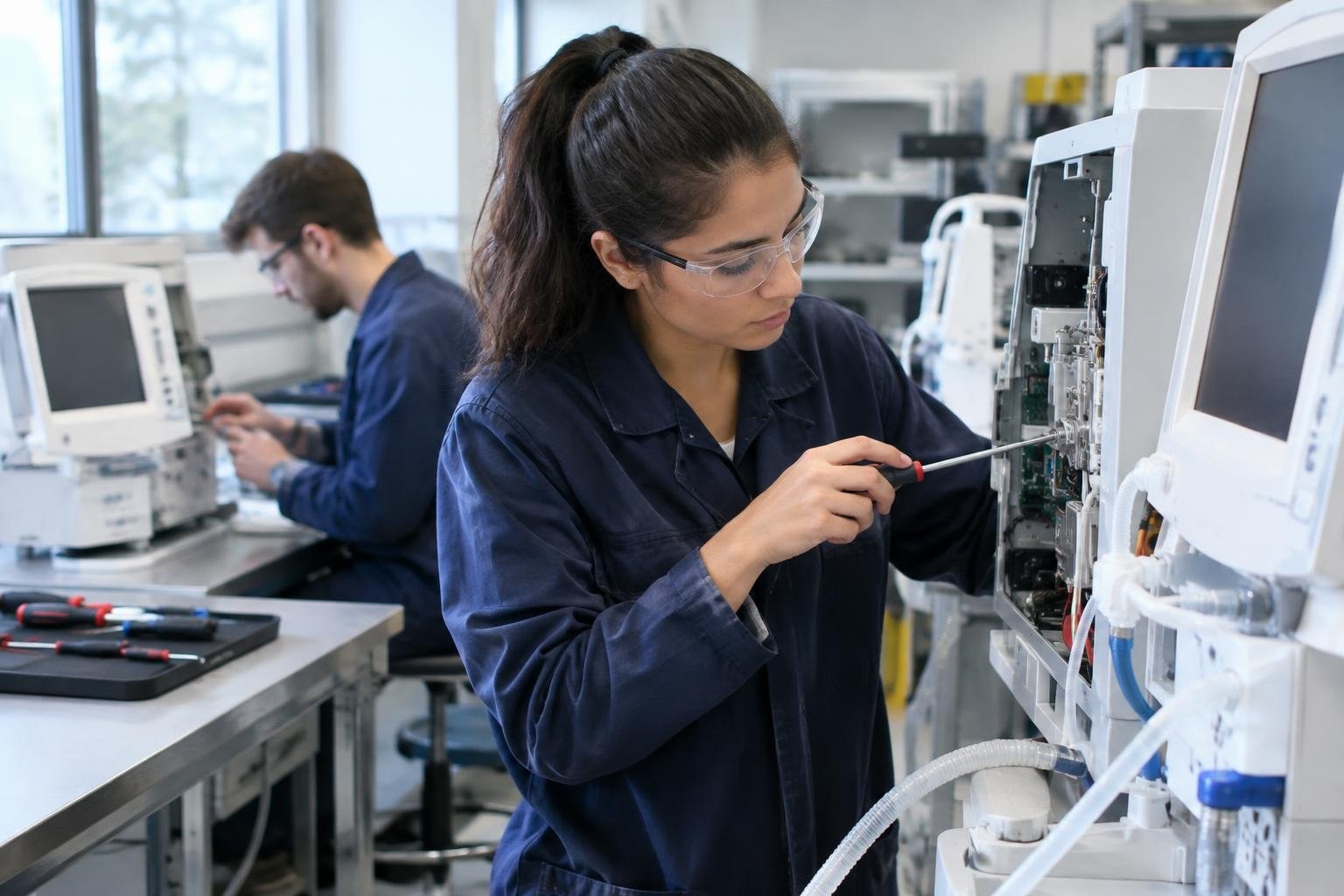
Hands-on medical equipment inspection and troubleshooting in an instructional lab
What Is a Biomedical Technology Degree?
A biomedical technology program applies technical skills to medical equipment. Biomedical equipment technicians may perform functional and safety inspections, preventive maintenance, calibration, troubleshooting, repairs, and staff training in safe equipment use.
Related programs may use titles such as biomedical equipment technology or biomedical engineering technology. Credentials and curricula vary. Compare the courses, practical learning, and intended roles rather than relying on a program name alone.
What Do Students Study in Biomedical Technology?
Students learn how to understand, inspect, maintain, calibrate, troubleshoot, and repair medical equipment. Safety and communication matter too: biomedical engineering technology technicians may train hospital personnel in the safe and proper use of equipment.
Course sequences and equipment access vary. Review each college’s current catalog and ask what practical work students complete. One certificate program describes preparation for entry-level troubleshooting, repair, and maintenance of equipment used in hospitals, clinics, and home healthcare settings.
Who Is Biomedical Technology a Good Fit For?
This field may interest students who enjoy practical problem-solving, equipment, and healthcare settings. The work centers on medical devices rather than direct patient care. Technicians may inspect, maintain, troubleshoot, and repair equipment and help clinical staff use it safely.
Compare the daily tasks and working environments of roles you are considering. A career assessment can help you reflect on whether those activities match your interests. Explore career and degree options with the MAPP career assessment.
Credential Levels, Format, and Completion Time
Biomedical equipment education includes certificate and associate-degree options, and some institutions describe bachelor’s-level progression routes. One school describes an associate program that may be completed in as little as 1.5 years; that estimate applies to that program, not all students or schools.
Ask each college for its course sequence, expected completion plan, and transfer-credit review. Penn State describes a pathway from its 2BET degree to an associate degree in electrical engineering technology and identifies related bachelor’s programs that eligible graduates may pursue. Verify current admission and transfer requirements with the receiving institution.
Tuition, Total Cost, and Ways to Pay
Program costs depend on the college, credential, location, fees, materials, and time to completion. Ask each school for a current written estimate of the full cost, including any lab or equipment charges, books, and other required expenses.
Compare total costs and ask the financial-aid office about aid and payment options. If you may transfer, request written confirmation of which credits will count toward your intended degree. A lower price or shorter timeline is not necessarily the best value if the program does not provide the coursework and practical preparation you need.
Skills Biomedical Technology Students Develop
Students can develop skills in equipment inspection, preventive maintenance, calibration, troubleshooting, and repair. Technicians may also train hospital personnel in safe and proper equipment use, so clear communication and careful work are relevant alongside technical knowledge.
Ask programs how students practice diagnosing problems and explaining equipment procedures. Course titles alone may not show how much hands-on learning a program provides.
Biomedical Technology Careers and Jobs
Potential career directions include biomedical equipment technician, medical equipment and instrumentation technician, specialized equipment field service, technical support, sales, consulting, and management. Titles and employer requirements vary. Explore related roles such as medical equipment repairers and calibration and instrumentation technicians.
Career direction
Related preparation
What to verify
Biomedical equipment technician
Inspection, maintenance, calibration, troubleshooting, and repair
Employer education and experience expectations
Medical equipment and instrumentation technician
Technical work involving medical devices and instrumentation
Equipment focus and qualifications
Specialized field service
Equipment service and repair
Travel, customer contact, and product training
Technical support or sales
Technical knowledge applied to customer assistance or equipment sales
Communication skills and employer requirements
Some technicians may pursue more specialized or supervisory work as they gain experience, but progression is not guaranteed. Compare current local job postings and ask employers what qualifications they seek. Program sources identify hospitals, clinics, home healthcare providers, and medical equipment organizations as possible work settings.
Certification, Accreditation, and Licensure
Certification is separate from completing a degree. Some program descriptions state that coursework is aligned with the Certified Biomedical Equipment Technician credential, or CBET. Alignment does not mean a student automatically earns the credential.
Ask the program what credential preparation it provides and verify current certification requirements with the credentialing organization. Check the institution’s accreditation information and ask whether any program-specific recognition applies to the exact program you are considering.
How to Gain Experience and Stand Out
Ask whether a program includes projects, internships, supervised practice, or other opportunities to apply equipment-service skills. One program describes development with input from clinical engineers, healthcare organizations, and medical device companies; check directly whether comparable experiences are available in the program you are considering.
Keep a record of equipment-related tasks you have practiced and how you approached troubleshooting and safety. Use instructor feedback to identify areas to strengthen. Completing a program does not guarantee certification or employment, so check credential expectations and current employer postings.
Related Programs and Alternatives
Compare alternatives based on the work and coursework you want. A biomedical equipment technology certificate may offer focused preparation for equipment maintenance and repair. An associate degree may provide a broader technical credential, while some institutions describe routes to further engineering technology study.
Electrical engineering technology: Explore this option if electrical systems interest you. Find related electrical engineering technologist and electronics engineering technician career information.
Electro-mechanical technology: Explore related electro-mechanical technician and electromechanical engineering technologist careers.
Biomedical engineering: Compare actual course plans and job requirements if you are interested in an engineering-focused path rather than primarily servicing equipment.
Transfer and progression options are institution-specific. Get a written course review from the receiving school before relying on a transfer pathway. Browse degree options on Assessment.com as you compare possible directions.
How to Choose the Right Program
Compare programs using verifiable details. Ask each school for its current curriculum, practical equipment experience, total estimated cost, course schedule, transfer policies, credential preparation, career support, and the way it documents graduate outcomes.
What equipment and service tasks do students practice?
How much hands-on work is required, and where does it take place?
What does any CBET preparation include?
What is the estimated total cost through completion?
Which credits transfer, and can the receiving institution confirm this in writing?
What career support and employer connections are available?
Compare the same factors across colleges and verify details with the program department. Browse career options and degree options on Assessment.com as part of your exploration.
Advantages, Tradeoffs, and Program Value
The value of a biomedical technology program depends on its fit with your goals, the preparation it provides, and the cost. A certificate may offer focused preparation, while an associate degree may provide a broader technical credential and, at some institutions, a possible route to further study.
Weigh total cost and time against the coursework, hands-on learning, and qualifications employers request for the roles you are considering. If your priority is direct patient care or a different engineering focus, compare other programs as well. No credential guarantees a job or career progression.
Possible Routes From Degree to Career
Career progression varies with experience, qualifications, employer needs, and available opportunities. Possible routes include:
Certificate: Focused equipment-service study followed by a search for entry-level technician work.
Associate degree: Technical study followed by a search for biomedical equipment or medical equipment and instrumentation roles.
Associate degree: A transfer review and eligible admission may create a route to related engineering technology study.
These are possibilities, not promised outcomes. Confirm transfer options with the college and check credential and hiring expectations with the relevant organizations and employers.
Questions to Ask Before You Enroll
What credential will I earn, and which courses are required?
What is the estimated total cost, including fees and materials?
How much hands-on equipment practice is included?
What certification preparation is offered, if any?
Which credits may transfer, and can the receiving school confirm this in writing?
What career services and employer connections are available?
How does the school document graduate outcomes?
Which employers in my area hire for the roles I want, and what qualifications do they request?
Keep written answers and compare them side by side. Consider academic fit, career duties, cost, and practical experience before choosing a program.
Frequently asked questions
What does a biomedical technology degree teach?
Biomedical technology programs teach students to inspect, maintain, calibrate, troubleshoot, and repair medical equipment. Depending on the school and credential, coursework may prepare students for entry-level biomedical equipment technician work or further study. The field combines technical equipment knowledge with the responsibility to support safe and reliable use of devices in healthcare settings.
Is a biomedical technology degree worth it?
It can be a good fit if you like hands-on troubleshooting, equipment, electronics, and practical problem-solving, and you are interested in healthcare without necessarily providing direct patient care. Before enrolling, compare tuition, program content, hands-on learning, employer connections, and the requirements of local jobs. Value depends on those factors and your career goals, not on the degree title alone.
What jobs can I get with a biomedical technology degree?
Possible roles include biomedical equipment technician, medical equipment and instrumentation technician, and specialized equipment field-service technician. Some programs also identify technical support, sales, consulting, and management as possible directions. Specific job qualifications differ by employer; advanced or supervisory work may require additional experience or specialized knowledge.
How long does a biomedical technology program take?
There is no single completion time for every program. The research includes a certificate, associate-degree routes, and a school describing an associate program that may be completed in as little as 1.5 years. Actual time depends on the credential, course sequence, enrollment pace, transfer credit, and individual circumstances. Check the current catalog and ask the school for a plan based on your record.
Can I study biomedical technology online?
Some biomedical technology programs are offered online or in flexible formats, but format and hands-on requirements vary. Ask whether equipment labs, practical assessments, internships, or other in-person work are part of the curriculum. A program's delivery label alone does not establish that it provides the practical preparation you want for equipment service work.
How much does biomedical technology school cost?
Costs depend on the college, credential, residency status, fees, equipment or lab requirements, and how long you attend. Compare the full estimated cost rather than tuition alone, and ask about grants, scholarships, payment plans, employer assistance, and transfer credit. The sources available for this guide do not establish a single current nationwide price for these programs.
Does a biomedical equipment technician need certification?
The Certified Biomedical Equipment Technician credential, commonly called CBET, is relevant to this field. Some programs state that their coursework aligns with CBET, but alignment is not the same as earning the certification. Confirm current eligibility, examination requirements, and any experience or education conditions with the credentialing organization before planning around certification.
What is the difference between biomedical technology and biomedical engineering?
Biomedical technology focuses on applying technical skills to equipment used in healthcare, such as inspection, maintenance, calibration, troubleshooting, and repair. Biomedical engineering is a related but distinct academic and professional area. Compare actual course plans and job requirements: program names can vary, and the curriculum is a more useful guide than a title alone.
People Also Ask
What does a biomedical equipment technician do?
Biomedical equipment technicians perform functional and safety inspections, preventive maintenance, calibration, troubleshooting, and repairs. They may also train healthcare personnel in safe and proper equipment use. Day-to-day responsibilities depend on the employer and equipment served.
What degree do you need to become a biomedical equipment technician?
Certificate, associate-degree, and bachelor’s-level pathways are available, though offerings vary by institution. Some certificates focus on entry-level equipment maintenance and repair; associate programs provide a longer technical study route, and some associate graduates may be able to pursue related bachelor’s programs. Confirm transfer terms directly with the receiving college.
What affects the cost of a biomedical technology degree?
Program costs vary by school, location, credential, fees, and time to completion. Build a complete estimate that includes tuition, required materials, transportation or housing, and any lab or technology charges. Ask each college for its current cost of attendance and financial-aid options before comparing offers.
What should I look for in a biomedical technology program?
Look for coursework and practical learning connected to inspecting, maintaining, calibrating, troubleshooting, and repairing medical equipment. Ask how students gain experience with equipment, what certification preparation is included, and whether the program has input from employers or clinical engineering professionals. Check the current course catalog and program outcomes directly.
Does a biomedical technology program include CBET certification?
Certification is distinct from completing a degree. Some programs report alignment with the Certified Biomedical Equipment Technician credential, but students should verify current requirements and whether the program prepares them for the credential's examination. Employers may have their own education, experience, or certification preferences.
Where do biomedical technology graduates work?
Potential workplaces include hospitals, clinics, home healthcare providers, and companies that support or supply medical equipment. Programs also identify specialized field service, sales, technical support, consulting, and management as possible career directions. Actual openings and qualifications depend on employer needs and location.
Biomedical technology may suit students who want hands-on technical work supporting healthcare. Programs vary in credential, course content, cost, and practical experience, so compare the details and confirm what local employers expect. To reflect on whether this direction fits your interests, explore career and degree options with the MAPP career assessment on Assessment.com.
Find out which Career or College Major is right for you!
We use cookies to offer you a better browsing experience, analyze site traffic and personalize content.
Read about how we use cookies and how you can control them in our
Privacy Policy.
If you continue to use this site, you consent to our use of cookies.
×
Exciting News!
Be one of the first to Beta Test the new AI-Powered Assessment.com Platform.