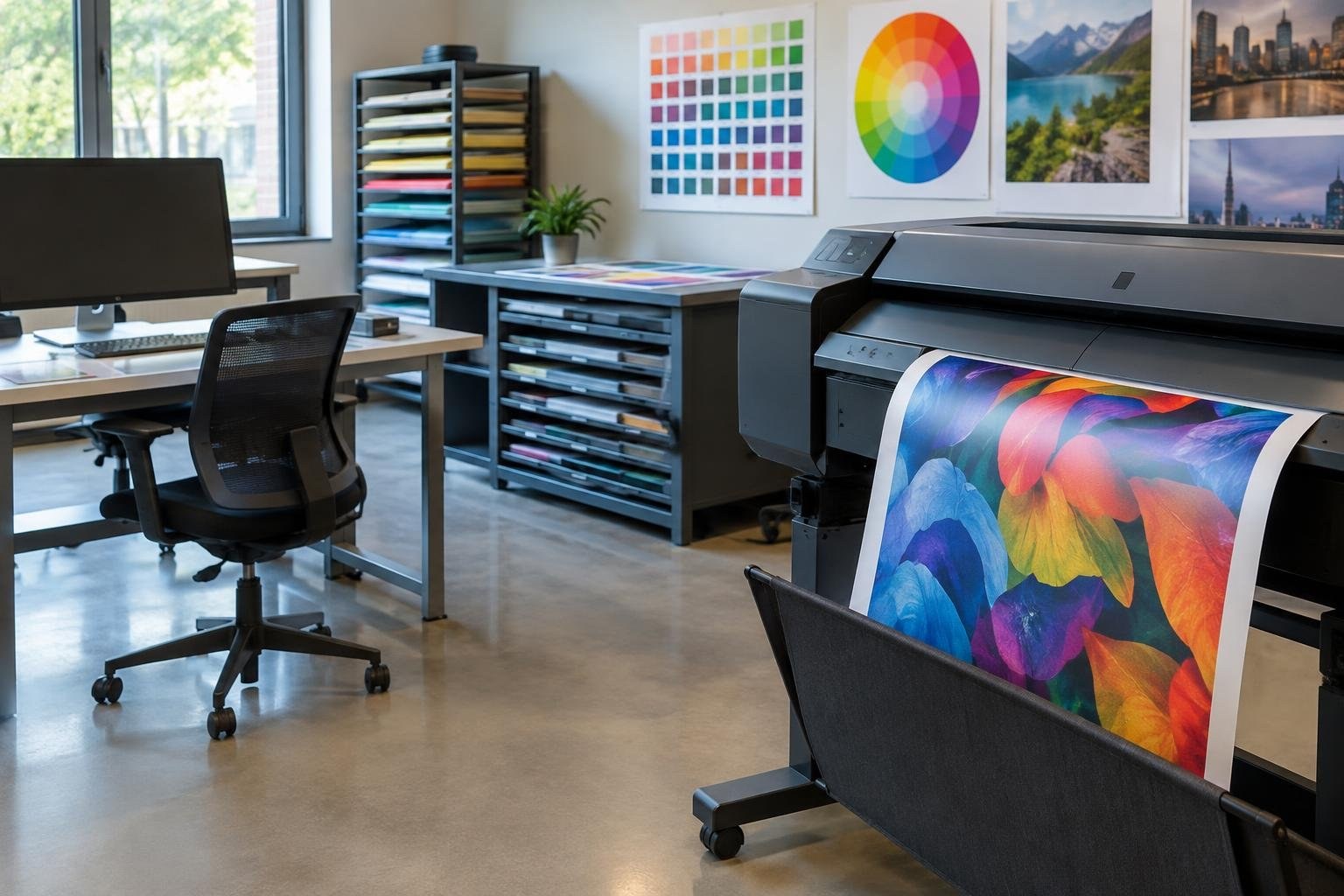
Prepress/Desktop Publishing and Digital Imaging Design Degree Guide
Explore Prepress/Desktop Publishing and Digital Imaging Design: what you may study, credentials and timelines to compare, related careers, program costs, and ways to decide if this visual communications field fits you.
By David Slack · Staff Writer Assessment.com · Published October 7, 2026 · Last updated November 5, 2026
Prepress/Desktop Publishing and Digital Imaging Design is a program area focused on using technical knowledge and skills to arrange graphic and text content for printed or electronic products. Depending on the school and credential, students may explore page layout, typography, image preparation, and production workflows. The exact name and curriculum can differ across colleges, so compare course requirements rather than relying on the title alone. This field may appeal to students who like visual communication, careful editing, and preparing materials for publication. It can connect to desktop publishing and prepress work, as well as related graphic communications roles. Before deciding, look at the kinds of assignments students complete and the qualifications employers request for jobs you may want. Not sure whether this degree fits you? Take the Free MAPP Career Assessment to explore how your motivations, interests, and preferences may relate to this field and its career paths.
Degree & Program Decision Insights
Explore your personal fit, education requirements, career potential and next steps.
01Motivational Fit
Discover whether this program fits you
Explore your preferences against the focus of Prepress/Desktop Publishing and Digital Imaging Design. These prompts are not personal MAPP results.
Subject curiosity. Would you choose to explore “printing and lithographic equipment and operations” in depth? Ask for a sample learning activity to test that interest.
Breadth of interest. Consider the place of “computer hardware and software” in this field. Is this another part you would choose to explore, or mainly a requirement you would tolerate?
Work reality. Related work can involve this task: “Prepare sample layouts for approval, using computer software.” Would you want that activity to be a regular responsibility?
Interest in studying a field can differ from enjoying its related work.
Which part would you want to do repeatedly, and what would you try before deciding?
Discover Your Personal Program Fit
Before investing your time and money in your education, discover how this program aligns with your natural motivations, work preferences and career goals.
Typical occupational entry: associate's degree (BLS). BLS lists short-term on-the-job training as typical occupational training.
Prepress Technicians and WorkersSOC 51-5111 · O*NET 51-5111.00$48,690/year median (May 2025); -15.3% projected change (2025–2035); 2,100 projected openings/year.
Typical occupational entry: postsecondary nondegree award (BLS).
U.S. occupational wages are not guaranteed graduate earnings; OEWS excludes self-employed workers.
Projected openings include replacements as well as growth.
U.S. national estimates. A crosswalk does not establish entry-level eligibility; advanced, management and teaching roles can require further qualifications.
Compare the actual offering and credential before committing your time or money.
Request the itemized fees, materials and equipment associated with “printing and lithographic equipment and operations”; confirm what tuition includes.
Compare the full attendance budget, course availability and time away from paid work, rather than tuition alone.
No institution- and credential-matched cost, debt or graduate-earnings amount is reported here; occupational pay is not program ROI.
Financial aid depends on the school, program and student’s eligibility.
Compare the focus and route of these distinct instructional fields; their credentials and admission requirements are not interchangeable.
Computer Typography and Composition Equipment OperatorCIP 10.0308. Compare the official Computer Typography and Composition Equipment Operator field description and actual course requirements; confirm which parts support your intended specialization.
Printing Press OperatorCIP 10.0307. A program that prepares individuals to apply technical knowledge and skills to set up, operate, and maintain printing presses.
Platemaker/ImagerCIP 10.0306. Compare its emphasis on platemaking and stripping with this program’s focus.
Explore your motivations. Use MAPP as a starting point for reflecting on your interest in “printing and lithographic equipment and operations”, then test that interest against a sample learning task.
Examine the work. Compare Desktop Publishers and Prepress Technicians and Workers on daily work and entry qualifications, as well as pay. Explore Desktop Publishers.
Compare actual providers. Ask for the exact credential, course sequence and assessment methods. Compare how each provider teaches “computer hardware and software”, its entry criteria and its itemized costs.
Check the evidence before applying. Confirm prerequisites and any recognition or professional requirements for your intended route; ask for applicable rules and published outcome definitions in writing.
Verify the institution’s current offering, admissions requirements and outcomes; a search result does not establish your eligibility.
A student working on graphic and text layout at a computer
What Is Prepress/Desktop Publishing and Digital Imaging Design?
Prepress/Desktop Publishing and Digital Imaging Design is an instructional program area for applying technical knowledge and skills to the layout, design, and typographic arrangement of printed or electronic graphic and text products. The federal Classification of Instructional Programs identifies this field as CIP 10.0303. The classification identifies a subject area; it does not mean every college uses the same program name or teaches an identical curriculum. See the NCES CIP 10.0303 listing.
Program titles may refer to prepress, desktop publishing, digital imaging, or graphic communications. These labels can overlap, but the emphasis is set by each institution. Check the catalog description, required courses, and examples of student work to understand what a particular college means by its title.
This is a focused field within communications and publishing technology. It is not automatically the same as a broad graphic design degree, a printing management program, or a general communications major. Compare course requirements and intended outcomes rather than assuming similar-sounding names are interchangeable.
What Do Students Study?
The core subject is arranging graphic and text content for publication. Based on the program definition, students may encounter layout, design, typography, and preparation of content for print or electronic formats. A course list can show how those ideas are taught: look for the skills students practice, the deliverables they produce, and how work is reviewed.
Depending on the program, assignments might ask students to organize text and images on a page, create a visual hierarchy, or prepare a publication file according to production requirements. These are examples of activities to ask a school about, not a promise that every program includes them. A college may also require general education courses or electives, and the balance between creative and technical work can vary.
Ask whether students complete an applied project, portfolio, internship, or other work sample. Find out how much of the curriculum involves individual production versus group assignments, what equipment or software access is available, and whether students learn about print and electronic outputs. Reviewing a course syllabus or student project can make the curriculum easier to evaluate than a program title alone.
NCES describes CIP 10.0303 as including printing and lithographic instruction. That classification is a guide to the program category, not a guarantee that a given college offers a particular production course. Confirm course content with the institution. See the NCES program classification.
Skills and Personal Fit
Skills You May Develop
A program in this area is intended to build the ability to work with graphic and text layouts and prepare them for publication. Depending on course design, useful learning goals may include visual organization, attention to detail, typographic decision-making, technical problem-solving, and communication about production work. These skills connect the program's subject matter to publishing and prepress tasks.
Ask instructors how students get feedback and revise projects. In a production setting, a person may need to follow a brief, check content and formatting, respond to review, and complete work to a defined specification. Practice with real assignments can help students learn to balance visual quality with accuracy and consistency. The specific tools and workflows taught are school-dependent, so check current course descriptions rather than assuming a particular software package is included.
Does This Program Match You?
You may enjoy exploring this field if you are curious about how words and images work together, like improving the clarity of a page, and are patient with detailed tasks. You do not need to arrive with a fixed artistic identity. Consider whether you are willing to learn unfamiliar tools, accept constructive feedback, and refine work through multiple drafts.
Salary, job titles, and the reputation of a college are only part of a decision. Your interests, preferred work style, learning needs, and tolerance for technical detail matter too. The Free MAPP Career Assessment can help you reflect on fit; Degree Matching and Career Matching can support further exploration. Treat assessment results as prompts for research, not as a substitute for reviewing programs or talking with people in the field.
Planning Your Credential and Timeline
Credential Levels, Admissions, and Completion Time
Programs associated with this field may be offered at different credential levels, including certificates, associate degrees, bachelor's degrees, and post-bachelor's or graduate credentials. Availability and naming differ among institutions. A higher credential is not automatically necessary for every job, and the right level depends on your previous education, target role, budget, and how much study you want to undertake.
There is no single admissions rule or completion time for all CIP 10.0303 programs. Each school sets its own entry requirements, credit requirements, course sequence, and rules for transfer credit. Before applying, check prerequisites, application materials, placement requirements, and whether prior coursework or work experience can be considered. Ask for a written degree map showing required and elective courses.
Full-time, part-time, accelerated, and transfer options may affect how long you spend in school. Rather than relying on a general estimate, ask the college to calculate a timeline based on your transcript and intended course load. Confirm whether required courses are offered often enough to support that plan and whether online courses have fixed meeting times.
Potential academic challenges include learning new production concepts, balancing technical accuracy with design choices, and managing detailed assignments. You can prepare by reviewing sample coursework, strengthening basic computer skills, and asking about tutoring, lab access, and faculty support. These are planning steps, not formal prerequisites unless a college explicitly lists them.
Choosing a Study Format
Online, Hybrid, and On-Campus Options
Ask each institution which delivery formats are available for the specific credential you want. Online study may offer more schedule flexibility, while campus or hybrid courses may provide access to facilities or equipment. Do not assume that every class, assignment, or production activity can be completed remotely just because a program is advertised as online.
Before enrolling online, ask how students access required software, whether technical support is available, how instructors assess production work, and whether any activities require campus attendance. If you are considering an in-person program, compare travel time, equipment access, class schedules, and the cost of commuting. The best format is the one that enables you to complete the required work and fits your circumstances.
Confirm the program's delivery method in writing, including any campus visits, internships, or other experiential requirements. Ask whether the format changes the course sequence or completion timeline. The CIP description defines the subject area, but does not specify how individual colleges deliver their programs.
Budgeting for Tuition and Other Costs
Tuition, Total Cost, and Financial Aid
Costs depend on the college, credential, location, residency rules, enrollment pattern, and the fees attached to a program. Tuition is only one part of the budget. Ask about books, software, equipment, printing or project materials, technology fees, transportation, and any other course-specific expenses. Request an estimated total cost for the time you expect to attend, not just a per-credit price.
Compare net cost as well as published tuition. Ask the financial aid office which grants, scholarships, loans, work-study options, and payment plans may apply to you. Eligibility and award amounts depend on individual circumstances and school policies, so verify each offer directly. If you are employed, ask your workplace whether it offers education assistance and whether the program qualifies.
Transfer credits can reduce repeated coursework when accepted, but policies vary. Request a transcript review before making a deposit. You can also compare community college pathways, part-time study, and lower-cost public options, while checking that credits will apply to your intended credential. Do not choose a program based on tuition alone if its course schedule, format, or career preparation does not meet your needs.
No reliable cost figure applies to every student or institution in this program category. Build a side-by-side budget using current, written estimates from the colleges you are considering.
Exploring Careers and Employment
Careers, Jobs, and Employment Outlook
The program's focus on layout and preparation of graphic and text products can relate to desktop publishing and prepress work. Potential job titles to research include desktop publisher, prepress technician, publishing production assistant, and graphic production assistant. Employers use titles differently, and a degree does not guarantee eligibility for a role. Check postings in your area to see which credentials, work samples, and technical skills are requested.
Career direction to explore
Preparation to compare
How the program may relate
Desktop publisher
Relevant coursework, practical work samples, and employer-specific technical skills
Page layout and typographic arrangement are directly connected to the program's stated subject area.
Prepress technician or worker
Production-focused training and demonstrated file-preparation abilities
Prepress is part of the program's subject focus; confirm the courses offered by a specific college.
Publishing production assistant
Evidence of organization, accuracy, and familiarity with publishing workflows
Projects can help demonstrate the ability to prepare graphic and text materials.
Graphic production assistant
Portfolio work and skills that match a particular employer's production process
Layout and design study may provide related preparation, depending on the curriculum.
The listed roles are examples to investigate, not guaranteed outcomes. The supplied program classification does not provide current wage figures, employment projections, or placement rates. For a meaningful pay and outlook comparison, search current U.S. Bureau of Labor Statistics and O*NET data by exact occupation, then check local job listings. Compare education and experience requirements as well as pay, and note the year and geography attached to every figure.
Graduates may consider employers involved in publishing, print production, or organizations that create materials for print and electronic use. Verify local demand through current listings and conversations with employers. Technology and production workflows can change, so ask programs how they keep course content current and how students gain experience with tools used in target roles.
Find out which Career or College Major is right for you!
Experience, Portfolios, and Professional Credentials
Practical work can help you show what you can do. Ask whether a program includes a portfolio, client-style project, internship, co-op, or other opportunity to apply classroom learning. If it does not, consider building a collection of class projects or independent work that demonstrates layout decisions, attention to detail, and your ability to prepare material for a stated purpose.
Before sharing any work publicly, confirm that you have permission to use it and remove private or confidential information. Label each project clearly, explain your role, and be prepared to discuss how you approached revisions. Seek feedback from instructors and compare your work with the requirements in current job postings.
Ask employers and faculty which professional organizations, short courses, or software credentials are valued for the specific positions you are considering. A credential may be useful in some contexts, but do not assume one is required or universally recognized. Verify its cost, renewal conditions, and relevance before paying for it.
Licensure Is Not the Same as Program Completion
Finishing a degree or certificate does not, by itself, establish that an occupation requires a license or that you hold one. The research available for this program describes an instructional subject area, not a profession-specific licensing rule. If a job posting mentions licensing or certification, confirm the requirement with the relevant employer or authority in your location.
Comparing Related Programs
Related Degrees and Alternatives
Compare adjacent programs by their required coursework and student projects. Names alone do not reliably show how much time a program devotes to design, production, management, or other topics. These alternatives can help you frame questions for colleges:
Graphic design: Consider this if you want to compare a broader visual design curriculum with a program centered on publication layout and preparation.
Graphic communications: Consider this if you want to explore a wider communications-production focus; verify what the specific college includes.
Printing management: Consider this if you are more interested in managing print operations than arranging graphic and text content.
Digital media or interactive design: Consider this if you want to compare programs focused on digital experiences rather than print-oriented production.
Communications: Consider this if your interests are broader than technical layout and publishing work.
Photography or imaging: Consider this if image-making and image preparation interest you more than page composition.
Animation or motion graphics: Consider this if you prefer moving images and visual effects to page-based publishing work.
These are comparison prompts, not claims that every college offers the same curriculum under these labels. Review catalogs, transfer pathways, student portfolios, and career guidance from each department. If you might continue to graduate school, ask whether the courses satisfy prerequisites for the programs you may later consider.
Evaluating Your Program Options
How to Choose a Program
Start by identifying the work you want to explore, then compare colleges against that goal. Look for a clear curriculum that covers the subject areas you want to learn, and ask how students practice those skills. Request sample assignments or a portfolio showcase. If a program's website lists only broad outcomes, ask an adviser to explain what graduates actually complete.
Program recognition and transfer: Ask what institutional and program accreditation applies, who recognizes it, and whether credits transfer to your next school. Verify claims with the accreditor and receiving institution.
Curriculum: Compare required courses, electives, project work, and the balance between print and electronic publishing.
Faculty and facilities: Ask about instructor expertise, access to tools, and technical support for the format you plan to study.
Career preparation: Ask whether internships, employer projects, career advising, or portfolio reviews are available. Request information about how outcomes are measured and what data covers.
Cost and schedule: Compare total estimated expenses, course availability, class times, and options for part-time or transfer students.
Licensing and certification: Ask whether a target role has requirements in your location and whether the program prepares students for them.
Accreditation is an important item to verify, but do not treat a label as a substitute for investigating fit. Confirm the status and scope of any claimed accreditation directly with the accrediting organization. The NCES CIP classification identifies the field of study; it is not an accreditation or quality rating for an individual program.
Assessment.com's education and career matching tools can help you organize interests and options. Pair those results with direct conversations with colleges, current students, graduates, and employers.
Value, Tradeoffs, and Career Pathways
Is This Degree Worth It?
Whether the program is worth the investment depends on the specific school, the credential you need, your total cost, and the jobs you want to pursue. A focused program may make sense if its courses match your goals and you can afford the time and expense. It may be less suitable if you want a different kind of design work, need a broader degree, or cannot access the tools and experience required by your target roles.
Potential benefits include focused study of layout and publication preparation, structured feedback, and opportunities to produce work samples. Possible drawbacks include variation in course offerings, uncertainty about job outcomes, and the need to supplement classes with practical experience. These considerations make it important to ask for specifics rather than relying on general claims about the field.
Do a simple return-on-investment review: total program cost, time away from work or other responsibilities, likely borrowing, and the job requirements you see in current local postings. Compare several schools and alternatives. Do not assume a credential guarantees a job or a particular salary.
Possible Pathways From Study to Work
A realistic path could be: program coursework and projects → an entry-level publishing or prepress position that matches your preparation → additional experience and stronger work samples → a more specialized production or design role if employers need those skills. This is an example, not a promised progression. Job titles, promotion paths, and qualifications depend on employers and individual experience.
Questions for College Advisers
Questions to Ask Before Enrolling
Use this checklist when speaking with an admissions adviser, program chair, or financial aid office:
What exact credential will I earn, and what is the current course sequence?
Can I see sample assignments and recent student portfolios?
Which courses teach layout, typography, and preparation for print or electronic publication?
What software, equipment, or materials are required, and who pays for them?
Can I complete the program online, and are any activities on campus or at an internship site?
How will you evaluate my transfer credits, and which credits apply to the major?
What is my estimated total cost, including fees and course materials?
What grants, scholarships, work-study, employer assistance, or payment plans could I explore?
What career services, portfolio reviews, internships, and employer connections are available?
How are graduate outcomes reported, and what time period and student group do the figures cover?
Does my intended occupation require a license or credential where I plan to work?
What happens if a required course is not offered in the term I need it?
Take notes and request written answers when a response could affect your finances, transfer plan, or graduation timeline. Use the same questions for each school to make comparisons fair.
Frequently asked questions
What is Prepress/Desktop Publishing and Digital Imaging Design?
This program focuses on preparing students to arrange and prepare graphic and text products for print or electronic publication. Coursework can combine design principles with technical production topics, but course requirements differ by school. Ask for a current course list and examples of student projects before choosing a program.
Is a prepress or desktop publishing degree hard?
It can be demanding if you find detailed visual work, typography, layout, and production requirements difficult or uninteresting. The subject combines creative decisions with technical precision. Review sample assignments, ask about software and production expectations, and compare the curriculum with your interests before deciding.
What jobs can I get with this degree?
Possible directions include desktop publishing and prepress work, along with related production or graphic communications roles. Employers may also consider your portfolio, relevant experience, and specific technical skills. A credential does not guarantee a particular job, so review current local job postings and the qualifications they request.
How much can you make with a desktop publishing or prepress degree?
There is no single salary for this program because pay depends on the occupation, experience, employer, location, and other factors. Compare current U.S. Bureau of Labor Statistics or O*NET information for specific job titles, then check local postings. Do not use a degree title alone to estimate earnings.
Can I earn this degree online?
Some schools may offer online or hybrid study, but the format and access to production tools vary. Before enrolling, find out whether classes require specialized software, print-production facilities, in-person projects, or other on-campus activities. Confirm that the delivery format supports the technical practice you want.
Does desktop publishing or prepress require math?
The program's central focus is graphic and text layout and production rather than a specific level of mathematics. Quantitative requirements depend on the institution and the credential. Check the catalog for general education requirements and ask whether production courses involve measurements, file specifications, or other technical tasks.
Do I need graduate school for a career in prepress or desktop publishing?
Graduate school is not automatically required to study this field or pursue related entry-level work. Whether additional education helps depends on your target role and the qualifications employers request. Compare job descriptions before committing to a further credential.
What certifications help in prepress or desktop publishing?
A portfolio of relevant work, production experience, or software training may help demonstrate your abilities, but the best preparation depends on the role and employer. Ask program faculty which tools and credentials appear in current local job postings, and verify whether any credential is required rather than simply preferred.
People Also Ask
What does a prepress and desktop publishing program teach?
The program prepares students to apply technical knowledge to layout, design, and typographic arrangement of graphic and text products for print or electronic publication. Individual curricula differ, so use the college catalog to confirm course content.
How long does a desktop publishing degree take?
Credential level and school requirements determine the timeline. Compare the published program map, required credits, transfer evaluation, and part-time options with each college rather than assuming a standard completion time.
What can I do with a prepress degree?
Potential occupations include desktop publishing and prepress roles, with adjacent opportunities in graphic communications and production. The fit depends on your portfolio, technical preparation, experience, and employers' requirements.
How does prepress differ from graphic design?
The right choice depends on your goals. This program area emphasizes technical layout and production of graphic and text products, while broader graphic design programs may have a different balance of visual design and production. Compare required courses and student work at specific colleges.
How much does a desktop publishing program cost?
Tuition varies by institution, credential, residency status, and enrollment format. Ask each college for an estimated total cost that includes fees, course materials, equipment or software, and any costs tied to required in-person activities.
Does prepress or desktop publishing require a license?
Do not assume that completing a degree or certificate grants a professional license. Ask the school whether any target occupation has licensing or certification requirements in your location, and distinguish required credentials from optional training.
A Prepress/Desktop Publishing and Digital Imaging Design program may suit students who want to prepare visual and text content for print or digital use, enjoy detail-oriented design work, and are willing to build practical skills through projects. Program names, credentials, course plans, and career outcomes vary, so compare the actual curriculum, total cost, student work, and employer expectations before enrolling. If the field interests you but you are unsure whether its day-to-day work fits, consider your motivations and preferences alongside job and salary research.
Want to see your options? Try our comprehensive Degree, Program & College Search tool
We use cookies to offer you a better browsing experience, analyze site traffic and personalize content.
Read about how we use cookies and how you can control them in our
Privacy Policy.
If you continue to use this site, you consent to our use of cookies.
×
Exciting News!
Be one of the first to Beta Test the new AI-Powered Assessment.com Platform.