Neuroanatomy Guide: Courses, Programs, Careers, and How to Choose
Explore what neuroanatomy study covers, common education pathways, online options, costs to investigate, and how to evaluate programs and career goals.
By Kieth Nelson · Staff Writer Assessment.com · Published October 7, 2026 · Last updated November 5, 2026
Neuroanatomy is the study of the structure of the nervous system, including the brain, spinal cord, and nerves. Students may encounter it through neuroscience, anatomy, or biomedical sciences programs, or through a focused certificate or concentration. Coursework can connect anatomical structures with neurobiology, histology, and the function of the nervous system. The right route depends on what you want to do next. Some programs are designed to deepen scientific knowledge or support preparation for further health-professions study; others offer advanced training in anatomy or neuroscience. A neuroanatomy course or certificate alone should not be assumed to qualify you for a licensed profession. Check the award, curriculum, admissions rules, and next-step requirements of each school and professional program you may pursue.
Degree & Program Decision Insights
Explore your personal fit, education requirements, career potential and next steps.
01Motivational Fit
Discover whether this program fits you
Explore your preferences against the focus of Neuroanatomy. These prompts are not personal MAPP results.
Practical problem solving. Does learning cellular and circuit anatomy appeal to you, with patient practice and careful checks of the result?
Breadth of interest. Consider the place of “mapping of neuronal pathways” in this field. Is this another part you would choose to explore, or mainly a requirement you would tolerate?
Work reality. Related work can involve this task: “Write and publish articles in scientific journals.” Would you want that activity to be a regular responsibility?
Interest in studying a field can differ from enjoying its related work.
Which part would you want to do repeatedly, and what would you try before deciding?
Discover Your Personal Program Fit
Before investing your time and money in your education, discover how this program aligns with your natural motivations, work preferences and career goals.
Typical occupational entry: bachelor's degree (BLS). BLS lists 5 years or more of related work experience as typical for this occupation; this programme is not a direct promise of entry.
U.S. occupational wages are not guaranteed graduate earnings; OEWS excludes self-employed workers.
Projected openings include replacements as well as growth.
U.S. national estimates. A crosswalk does not establish entry-level eligibility; advanced, management and teaching roles can require further qualifications.
Compare the focus and route of these distinct instructional fields; their credentials and admission requirements are not interchangeable.
Neurobiology and AnatomyCIP 26.1503. Compare its emphasis on molecular and cellular studies of neuronal and glial cells and circuits and neural transmitters and receptors with this program’s focus.
Neurobiology and BehaviorCIP 26.1504. Compare its emphasis on neuronal systems and circuits and higher level studies of behavior and cognition with this program’s focus.
Explore your motivations. Use MAPP as a starting point for reflecting on your interest in “cellular and circuit anatomy”, then test that interest against a sample learning task.
Examine the work. Compare Medical Scientists, Except Epidemiologists and Natural Sciences Managers on daily work and entry qualifications, as well as pay. Explore Medical Scientists, Except Epidemiologists.
Compare actual providers. Ask for the exact credential, course sequence and assessment methods. Compare how each provider teaches “mapping of neuronal pathways”, its entry criteria and its itemized costs.
Check the evidence before applying. Confirm prerequisites and any recognition or professional requirements for your intended route; ask for applicable rules and published outcome definitions in writing.
Verify the institution’s current offering, admissions requirements and outcomes; a search result does not establish your eligibility.
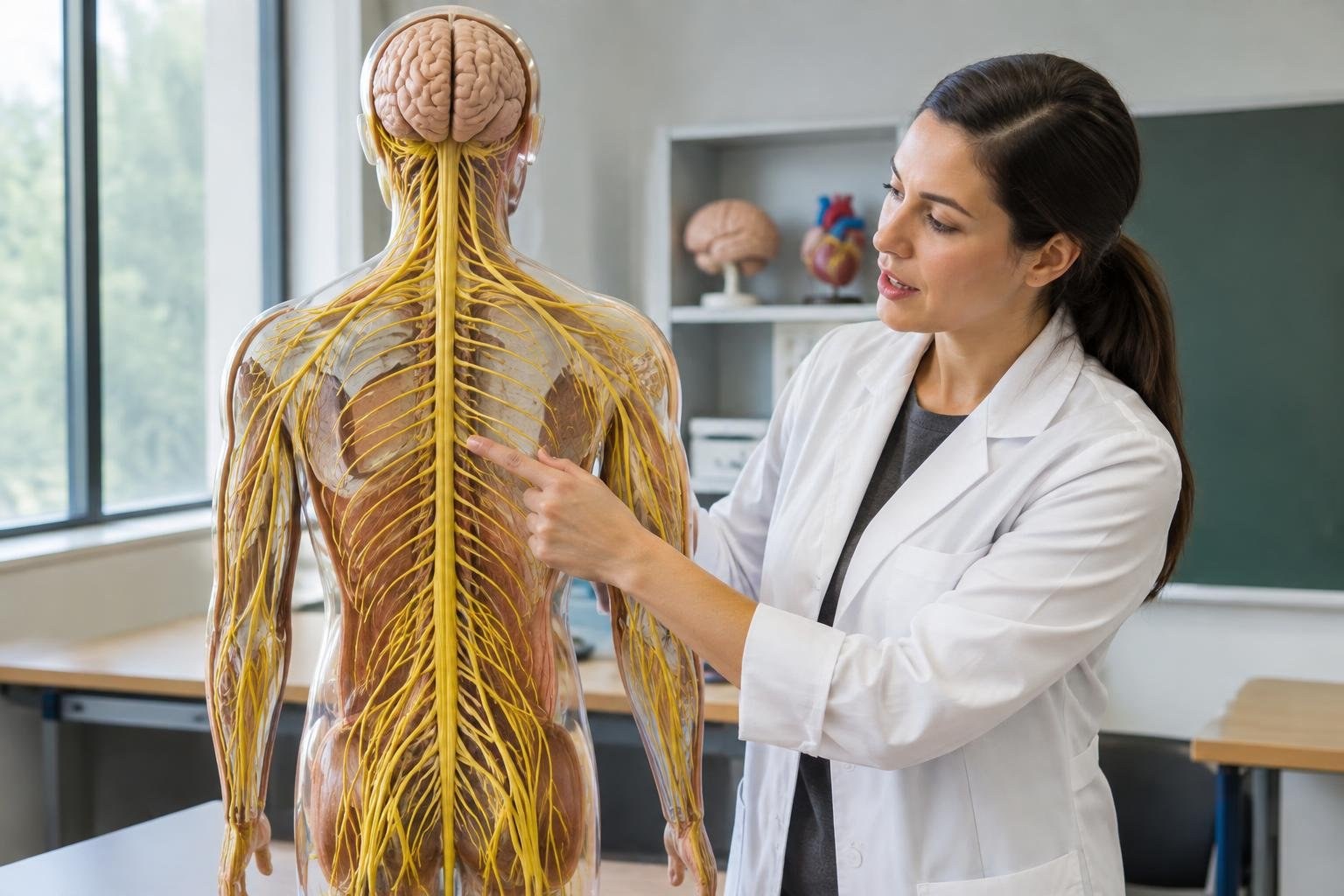
Clearly labeled overview of nervous system anatomy
What Is Neuroanatomy?
Neuroanatomy examines the physical organization of the nervous system. It is closely related to neuroscience, anatomy, and biomedical sciences, but program names do not guarantee identical course content. A concentration may place anatomy within a broader graduate curriculum; a certificate may offer a defined set of courses without awarding a degree.
Examples in the available program information include advanced study of human anatomy, histology, neuroanatomy, embryology, cell biology, and neurophysiology. The Southern Illinois University graduate catalog describes an Anatomy & Neurobiology concentration with opportunities for advanced training in several of these areas. The University of South Florida describes a graduate anatomy certificate that uses online and on-ground learning tools. These are examples, not a universal curriculum.
Before treating an option as a “neuroanatomy degree,” establish what the school actually awards: a bachelor’s or graduate degree, a certificate, or a concentration within another program. That distinction affects admissions, course choice, transfer questions, and what you can accurately claim on a résumé.
What You May Study
Expect the curriculum to depend on the program’s purpose and level. A focused anatomy option may cover gross anatomy, histology, neuroanatomy, or embryology. A broader biomedical sciences curriculum may include human physiology, cell biology, clinical biochemistry, immunology, hematology, and microbiology. A neuroscience route can place neuroanatomy beside neurobiology and other areas of neuroscience.
For one undergraduate starting point, Learn.org describes a neuroscience bachelor’s path with core subjects that typically include biology, general and organic chemistry, physics, statistics, and calculus, followed by intensive study in neurobiology, systems neuroscience, and cognitive neuroscience. This description is a pathway example, not a required checklist for every neuroanatomy program.
Some learning may involve anatomical models, laboratory work, or direct examination of anatomy. A University of Utah certificate requirement includes a two-week, in-person anatomy boot camp with cadaver dissection under instructor supervision. Do not assume that every online or classroom program includes dissection, laboratory work, or the same facilities. Ask what students actually do and whether participation is required.
Useful learning also includes reading and evaluating scientific information and communicating it clearly. Utah’s certificate information identifies literature evaluation, presentations, and résumé preparation among its learning opportunities. Look for these practical elements alongside subject coverage, particularly if you expect to apply to another program afterward.
Who This Program May Suit
Neuroanatomy may appeal to students who are curious about the structure of the brain and nervous system and who are willing to work carefully with detailed biological material. It can suit learners who like connecting physical structures to scientific explanations. There is no one personality type required: interest, preparation, learning preferences, and the reason for studying matter more than a label.
Consider how comfortable you are with science courses and technical vocabulary. The neuroscience undergraduate path described by Learn.org includes math and laboratory-science subjects such as statistics, calculus, chemistry, physics, and biology. Your chosen program may require fewer or different prerequisites, so check its published admissions criteria rather than assuming that all applicants need the same coursework.
Ask yourself what you want the study to make possible. Are you exploring a scientific subject, strengthening preparation for another program, or seeking advanced anatomy training for an existing education or career path? For example, a University of North Carolina at Charlotte graduate certificate in biomedical sciences is described as helping prepare students for biomedical professional schools, including medical, veterinary, and dental schools. That purpose is not the same as guaranteeing admission to those schools.
Does neuroanatomy match you? Salary, reputation, and broad claims about job demand cannot tell you whether you will enjoy the subject or the work it supports. Compare the daily tasks and education requirements of possible careers with your interests and preferred way of learning. Assessment.com’s MAPP assessment, Degree Matching, and Career Matching can help you reflect on fit; use the results as a starting point for research, not as a substitute for program or career requirements.
Credential Levels, Format, and Completion Time
Neuroanatomy-related study can appear in different credential settings. The supplied examples include graduate certificates, a graduate concentration, and neuroanatomy coursework within a neuroscience bachelor’s pathway. A post-baccalaureate certificate is another possible format: Baylor College of Medicine describes a 12-month Biomedical Sciences and Health Equity certificate for college graduates seeking to strengthen applications to medical or health-professions programs. Its stated length applies to that program, not to neuroanatomy certificates generally.
Online delivery is available for some related study. The University of Florida describes its Graduate Biomedical Neuroscience Certificate as fully remote for postbaccalaureate students and working professionals. USF describes anatomy courses with online and on-ground learning tools, and the Utah certificate example includes an in-person anatomy boot camp. These examples illustrate why “online” should be checked course by course.
Ask each school for the number and level of courses, expected pace, start dates, attendance format, and any required in-person activity. Confirm whether credits can be transferred or applied to a later degree; do not assume that a certificate will transfer or satisfy another institution’s prerequisites.
Admissions, Academic Demands, and Preparation
Admission requirements vary with credential level and institution. Check the program’s current application page and ask whether it expects prior coursework in biology, chemistry, or another field. For graduate certificates, verify whether applicants need a completed bachelor’s degree and whether prerequisite courses must be completed before enrollment.
Prepare by reading the course descriptions, noting required science and math subjects, and comparing them with your transcript. If you have been away from school, ask whether a prerequisite refresher or advising appointment is available. A program’s pace and assessment style matter too: determine whether classes rely on exams, lab work, presentations, research, or a combination.
For an option with lab or anatomy activity, ask about attendance, safety training, accessibility, and what happens if you cannot attend a required session. For online programs, confirm how exams, group work, and any practical components are handled. Get answers in writing before paying a deposit.
Tuition, Costs, and Financial Aid
No single tuition figure applies to neuroanatomy study. The total depends on the school, credential, number of courses, and delivery format. Request a program-specific estimate rather than relying on a broad average. Ask whether the quote includes tuition, mandatory fees, course materials, laboratory or anatomy expenses, technology charges, and any travel or lodging for in-person requirements.
When comparing schools, calculate the cost for the full credential, not just the first term or a per-course price. Ask how the price changes if you study part time or need to repeat a course. If a certificate is meant to support a later application, include the possibility that additional education may still be necessary.
Explore financial aid, scholarships, employer education assistance, and payment arrangements directly with the school. Ask which options apply to your specific credential and enrollment status; eligibility can vary. If you are considering a certificate before a degree, compare that sequence with enrolling directly in a degree program so you can understand total cost and whether credits may count later.
Careers, Further Study, and Employment Outlook
Neuroanatomy is a subject area, not a job title or professional license. The available program examples support several education-related pathways: neuroscience study with neuroanatomy coursework; advanced anatomy and neurobiology training; and biomedical sciences certificates intended to provide exposure or preparation for further professional education. One source discusses a potential goal of becoming a professional neuroanatomist, but the available information does not specify a standard credential, job market, or route into that occupation.
Before enrolling, write down three roles or next steps you would realistically consider. For each, verify the typical education, experience, and any required license or certification with the relevant school, employer, or professional authority. Ask program staff for graduate-school placement information and employer connections, but request the definition, time period, and denominator behind any outcome figures they provide.
Do not use a neuroanatomy course or certificate as evidence that you are qualified to practice medicine, veterinary medicine, dentistry, or another licensed profession. The Charlotte certificate describes preparation for professional biomedical schools; the certificate itself is not described as a professional license. Likewise, do not assume that a particular salary or job-growth estimate applies to all graduates. Compare current occupational information for the specific job you want and the location where you may work.
Treat each possibility as a question to verify, not a promised outcome.
Find out which Career or College Major is right for you!
Do not confuse a school’s institutional standing, a program’s accreditation, a certificate of completion, and a professional license. They serve different purposes. The available examples describe academic certificates and graduate training but do not establish a neuroanatomy-specific professional license or universal program accreditation requirement.
If your goal involves a licensed health profession, identify the professional school and licensing authority that govern that pathway. Ask them whether the neuroanatomy program’s courses meet any prerequisites. For a certificate, ask whether it is credit-bearing, who awards it, what appears on the transcript, and whether another institution will recognize its credits. Verify claims about accreditation through the accreditor and school, not just a marketing page.
Related Degrees, Pathways, and Alternatives
Compare neighboring fields by required courses and the next step each is designed to support. A similar-sounding program may offer a very different balance of anatomy, cellular science, and broader neuroscience.
Neuroscience: Consider this if you want a broader study path that may include neurobiology, systems neuroscience, and cognitive neuroscience alongside anatomy.
Anatomy: Consider this if your priority is detailed study of structures, with options that may include gross anatomy, histology, neuroanatomy, and embryology.
Biomedical sciences: Consider this if you want a wider range of biomedical subjects or preparation for further professional-school study.
Biology: Consider this if you want a wider biological-science foundation before choosing a more focused area.
Neurobiology: Consider this if you want to examine the nervous system within a biological-science concentration.
These descriptions are starting points, not strict definitions. The neuroscience course examples come from Learn.org, the anatomy topics from USF, and the broader biomedical subject examples from the University of New England. Compare course lists at the schools you are considering; titles alone are not enough to judge depth or fit.
How to Choose a Program
Compare programs against your next-step goal, not just their names or promotional language. A useful shortlist should make the credential and its practical value clear.
Credential: Is this a degree, certificate, or concentration? Who awards it?
Curriculum: Which courses are required? How much anatomy, neurobiology, laboratory work, and research is included?
Admissions: What prior degree or science courses are required? Are there application materials beyond transcripts?
Format: Which courses are remote, hybrid, or on campus? Are any in-person sessions mandatory?
Cost: What is the estimated total price, including fees, materials, and travel?
Transfer and progression: Can credits apply to another program? Confirm with the receiving institution.
Outcomes: What do graduates do next? Ask how the school measures and reports those results.
Support: Is academic advising available? Can staff discuss preparation for your intended graduate or professional program?
Check curriculum and format against your actual schedule and budget. A fully remote course can be useful for a working learner, while an in-person anatomy component may matter to someone seeking direct practical experience. Neither format is automatically better; the right choice depends on the learning you need and can complete.
Questions to Ask Before Enrolling
Use this checklist with an admissions adviser, program director, or financial-aid office:
What credential will I earn, and what will appear on my transcript?
What are the current admissions prerequisites and application requirements?
Which courses are required, and how much time should I plan for each term?
Are labs, cadaver sessions, exams, or other activities required in person?
What is the estimated total cost, including fees, materials, and travel?
What financial aid or employer assistance can apply to this credential?
Will credits transfer or count toward a later degree? Who can confirm that in writing?
What do recent students do after completion, and how are outcomes measured?
Does the program meet prerequisites for the specific graduate or professional schools I may apply to?
Who can answer questions about advising, career services, and next steps?
Keep the answers and the course catalog for the year you plan to enroll. Program format, course availability, and admissions details can change, so reconfirm them before making a financial commitment.
Practical Next Steps
Start with the outcome you want, then work backward. If you hope to enter a professional school, check its admissions requirements first and compare them with the courses in a certificate or degree. If you want advanced anatomy study, compare concentrations and certificates by subject coverage, format, and hands-on learning. If you are still exploring, consider whether a broad neuroscience or biomedical sciences route would preserve more options.
Make a comparison sheet with the same questions for every school: credential, prerequisites, course list, total cost, delivery format, completion plan, transfer policy, and graduate or career outcomes. Discuss the list with a parent, counselor, or academic adviser. Assessment.com’s career and degree-matching tools can help you reflect on personal fit while you independently verify program requirements and possible career pathways.
Frequently asked questions
What is neuroanatomy?
Neuroanatomy focuses on the structure of the nervous system, including the brain, spinal cord, and nerves. Depending on the program, study may include anatomy, histology, neurobiology, and related subjects. Some available options are concentrations or certificates rather than standalone degrees, so review the exact credential and curriculum before applying.
Is neuroanatomy hard?
It can be challenging if you are new to detailed anatomy, biological terminology, or science coursework. Requirements differ by program. A neuroscience bachelor’s pathway described in the available material includes biology, chemistry, physics, statistics, and calculus, while advanced anatomy programs may cover subjects such as histology and neuroanatomy. Ask for the actual course sequence and prerequisites.
Can you earn a degree in neuroanatomy?
The available program examples include graduate certificates and graduate concentrations, as well as neuroscience undergraduate study that can include neuroanatomy. They do not establish one standard neuroanatomy degree or a single completion time. Check whether each option awards a degree, certificate, or concentration, and confirm its duration with the school.
Can I study neuroanatomy online?
Online options exist for some related graduate study. The University of Florida describes its Graduate Biomedical Neuroscience Certificate as fully remote, while USF describes anatomy certificate courses using online and on-ground learning tools. Online availability does not establish that every course, program, or practical activity is remote, so ask the school about delivery and any in-person requirements.
How much does a neuroanatomy program cost?
Costs depend on the institution, credential, course load, fees, and delivery format. Request a written estimate of total charges, including required course materials and any in-person components, then compare financial aid and payment options before enrolling.
Can neuroanatomy prepare me for medical or veterinary school?
A neuroanatomy-focused education can support preparation for further study, but the available program examples do not establish that completing a neuroanatomy certificate qualifies someone for medical, veterinary, dental, or other licensed practice. Verify admission prerequisites with the professional school and licensing requirements with the relevant authority.
Does neuroanatomy require math and science?
The cited neuroscience undergraduate pathway includes biology, general and organic chemistry, physics, statistics, and calculus among typical core requirements. Individual neuroanatomy certificates or graduate programs may have different expectations. Review the admission checklist and sample curriculum for the specific program you are considering.
How is neuroanatomy different from neuroscience or anatomy?
Compare neuroanatomy with neuroscience, anatomy, and broader biomedical sciences by looking at the required courses and the credential awarded. A neuroscience curriculum may include neurobiology and systems or cognitive neuroscience, while anatomy certificates can emphasize gross anatomy, histology, neuroanatomy, and embryology. Choose according to the subject depth and next step you want.
What jobs and salary can I expect with neuroanatomy study?
Career outcomes depend on the role, additional education, experience, and location. Identify job titles you would consider, then check current occupational data and the qualifications employers request before using salary projections to judge a program’s value.
People Also Ask
What is the difference between neuroanatomy and neuroscience?
Neuroanatomy studies the physical organization of the nervous system. Neuroscience is broader and may also examine how the nervous system functions, develops, and relates to behavior or disease. The boundary depends on the program, so compare required courses rather than relying only on the major or certificate name.
How do I choose a neuroanatomy program?
Look at the credential awarded, required anatomy and neuroscience courses, any lab or in-person components, admission prerequisites, and how the program fits your intended next step. Ask for the total cost and completion plan in writing, and verify whether the curriculum satisfies prerequisites set by any graduate or professional school you hope to attend.
Are neuroanatomy certificates available fully online?
The available examples show varied formats. The University of Florida describes a fully remote graduate biomedical neuroscience certificate, while USF describes anatomy certificate courses using online and on-ground tools. Confirm the format of each course and ask whether any practical learning, exams, or other requirements must be completed on campus.
How long does neuroanatomy study take?
There is no single completion timeline established by the available program examples. A certificate, undergraduate major, and graduate degree have different structures, and individual schools set course schedules and enrollment options. Ask the program for its typical full-time and part-time completion plans before comparing options.
Can a biomedical sciences certificate help with professional school preparation?
Neuroanatomy can be one part of preparation for further health-professions education, but it is not a substitute for admission to or completion of a professional program. One biomedical sciences graduate certificate is described as preparation for professional schools such as medical, veterinary, and dental schools. Check each target school’s prerequisites and admissions guidance directly.
What subjects are included in anatomy and neurobiology programs?
The available sources describe a range of coursework, including anatomy, histology, cell biology, neuroscience, neuroanatomy, neurophysiology, and embryology. Exact subjects depend on the credential and concentration. Request a current course list and ask which classes are required, elective, online, or taught in person.
Neuroanatomy can be a compelling focus for students who want to understand how the structure of the nervous system relates to its function. The key decision is not just whether the subject sounds interesting, but whether a specific program’s credential, coursework, learning format, cost, and next-step opportunities fit your goals. Compare programs carefully, confirm requirements directly with schools and relevant professional programs, and consider whether your preferred career requires education or credentials beyond a neuroanatomy-focused course of study.
Want to see your options? Try our comprehensive Degree, Program & College Search tool
We use cookies to offer you a better browsing experience, analyze site traffic and personalize content.
Read about how we use cookies and how you can control them in our
Privacy Policy.
If you continue to use this site, you consent to our use of cookies.
×
Exciting News!
Be one of the first to Beta Test the new AI-Powered Assessment.com Platform.