Ecology, Evolution, Systematics and Population Biology: Program Guide
Understand what the CIP field covers, how ecology, evolution, systematics and population biology differ, and what to check in a program before you enroll.
By Tome Fierre · Staff Writer Assessment.com · Published October 7, 2026 · Last updated November 5, 2026
Ecology, Evolution, Systematics and Population Biology, Other is a broad classification for instructional programs in this area that are not listed under a more specific field. That breadth can be useful if you want to connect questions about organisms, populations, biological diversity and change, but it also means the degree title alone tells you little about a college's course plan. Compare the catalog, practical learning options and preparation for your intended next step. Related programs are organized differently across universities: one may be a concentration within biological sciences, while another is a separate ecology and evolutionary biology degree. Use the details of each program, not the shared subject label, to decide whether it fits.
Degree & Program Decision Insights
Explore your personal fit, education requirements, career potential and next steps.
01Motivational Fit
Discover whether this program fits you
Explore your preferences against the focus of Ecology, Evolution, Systematics and Population Biology, Other. These prompts are not personal MAPP results.
Subject curiosity. Would you choose to explore “ecology, evolution, and systematics not listed above” in depth? Ask for a sample learning activity to test that interest.
Choosing a learning environment. Compare actual Ecology, Evolution, Systematics and Population Biology, Other offerings. Would their reading, projects or practical work suit how you prefer to learn? Confirm the format rather than assuming one from the field name.
Work reality. What would an actual workday connected with Ecology, Evolution, Systematics and Population Biology, Other involve? Investigate the setting and entry requirements separately from your interest in studying the field.
Interest in studying a field can differ from enjoying its related work.
Which part would you want to do repeatedly, and what would you try before deciding?
Discover Your Personal Program Fit
Before investing your time and money in your education, discover how this program aligns with your natural motivations, work preferences and career goals.
U.S. occupational wages are not guaranteed graduate earnings; OEWS excludes self-employed workers.
Projected openings include replacements as well as growth.
U.S. national estimates. A crosswalk does not establish entry-level eligibility; advanced, management and teaching roles can require further qualifications.
Compare the actual offering and credential before committing your time or money.
Request the itemized fees, materials and equipment associated with “ecology, evolution, and systematics not listed above”; confirm what tuition includes.
Compare the full attendance budget, course availability and time away from paid work, rather than tuition alone.
No institution- and credential-matched cost, debt or graduate-earnings amount is reported here; occupational pay is not program ROI.
Financial aid depends on the school, program and student’s eligibility.
Compare the focus and route of these distinct instructional fields; their credentials and admission requirements are not interchangeable.
EcologyCIP 26.1301. Compare its emphasis on biogeochemistry and landscape and/or marine/aquatic dynamics with this program’s focus.
Ecology and Evolutionary BiologyCIP 26.1310. Compare its emphasis on animal, plant, population, functional, evolutionary, and ecosystem ecology and ecological and evolutionary genetics with this program’s focus.
Population BiologyCIP 26.1306. Compare its emphasis on biostatistics and population dynamics with this program’s focus.
Explore your motivations. Use MAPP as a starting point for reflecting on your interest in “ecology, evolution, and systematics not listed above”, then test that interest against a sample learning task.
Examine the work. Compare Life Scientists, All Other and Conservation Scientists on daily work and entry qualifications, as well as pay.
Compare actual providers. Ask for the exact credential, course sequence and assessment methods. Compare how each provider teaches “Ecology, Evolution, Systematics and Population Biology, Other”, its entry criteria and its itemized costs.
Check the evidence before applying. Confirm prerequisites and any recognition or professional requirements for your intended route; ask for applicable rules and published outcome definitions in writing.
Verify the institution’s current offering, admissions requirements and outcomes; a search result does not establish your eligibility.
This program label is a broad category, not a recipe for a fixed set of courses. The subjects it brings together offer different lenses: ecological questions concern relationships between organisms and their surroundings; evolutionary questions concern change in populations over time; systematics examines biological diversity and relationships; and population biology considers populations and their patterns. An individual program may combine these topics or focus more narrowly.
That variation is visible in official university examples. North Carolina State University places ecology, evolution and conservation biology within a biological sciences concentration. The University of Arizona offers a separate B.S. in ecology and evolutionary biology. Neither structure defines every program using this broader field label. Read each catalog and course sequence before comparing schools.
For context, this field's CIP description is for ecology, evolution and systematics programs not listed under a more specific category. Treat the classification as a way to identify an area of study, not as a curriculum, credential level or career guarantee.
Read the Curriculum as a Map of Questions
Because the classification spans several disciplines, the most useful first question is not simply, “What courses are included?” It is, “Which biological questions does this particular program teach students to investigate?” Look at required courses and electives for signs of emphasis: organism-environment relationships, change over time, classification and biological relationships, or populations.
Then check how courses fit together. A catalog can reveal whether students move from introductory study toward advanced topics, whether quantitative preparation is included, and whether electives let them build a focus. Do not infer a requirement from a course that is merely listed as an option. Ask an adviser which sequence students typically follow and whether prerequisites limit access to advanced classes.
Examples from North Carolina State University and the University of Arizona demonstrate that related study can be packaged differently. Use them as reminders to compare actual requirements, not as templates to expect at every college.
Judge Practical Work by What You Will Do
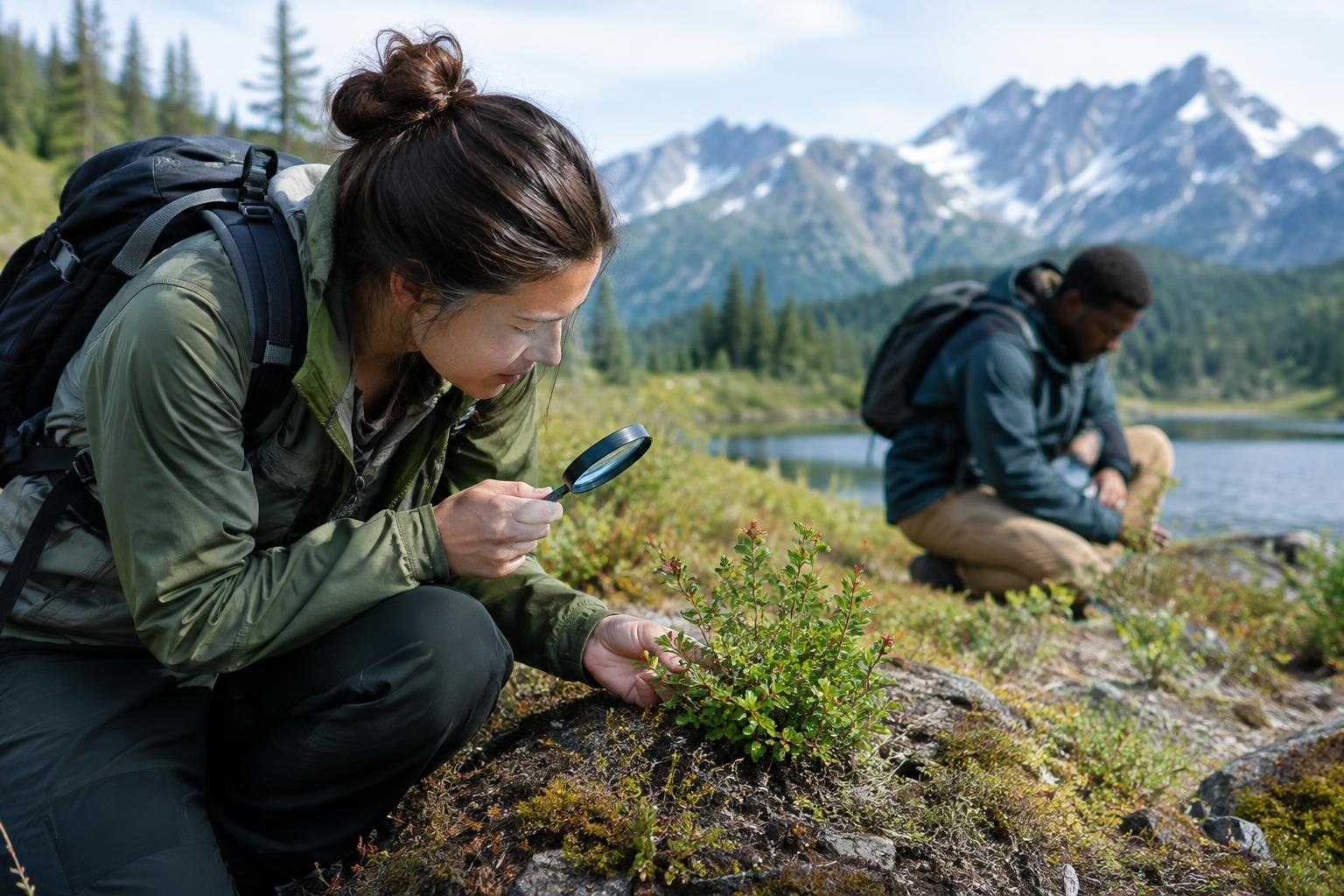
In a field built around understanding biological patterns, practical learning is a way to test whether classroom concepts translate into careful inquiry. Ask whether the program offers research, field or laboratory work, and whether any such opportunities are required, optional or limited.
When you evaluate an opportunity, focus on what a student actually does. Can you help frame a question, observe or collect information, interpret evidence, and explain a conclusion? Will you receive supervision and feedback? Can the work connect to a subject you may pursue later? These questions help distinguish an appealing activity from experience that builds a useful account of your contribution.
Ask about timing as well. If an opportunity depends on a course, faculty availability or an application, find out when students can participate and what preparation they need. Record the answers alongside the course plan so you can compare programs on the learning they make accessible, not just on their descriptions.
Choose an Emphasis by the Questions You Want to Ask
Different emphases within this field can point toward different questions. A student drawn to relationships between organisms and surroundings may prefer a program with substantial ecological study; a student intrigued by biological change may look for evolutionary courses; a student interested in organizing and understanding diversity may look closely at systematics; and population-focused study centers attention on patterns involving populations. These are ways to compare academic interests, not claims that every program offers separate tracks.
Make a short list of subjects you want to study, then use it to assess required courses and electives. If you are undecided, ask whether the program leaves room to explore before committing to a focus. If you already have a direction, check that relevant courses are offered often enough to fit your intended schedule.
Related study may sit inside a broader biology degree or appear as its own degree, as the North Carolina State University and University of Arizona examples illustrate. Compare the available choices at the institutions you are considering rather than assuming the name predicts the structure.
Connect the Study Plan to a Next Step
Use your intended next step to decide which preparation to prioritize. North Carolina State University describes graduates of its biological sciences program as prepared for varied positions in government agencies and private industries, and as able to continue into advanced biological study. That is one university's description, not a placement promise for every program in this field.
The University of Arizona describes its ecology and evolutionary biology B.S. as designed primarily for students planning graduate studies or scientific careers. Taken together, these examples show why a student aiming for further study should ask about preparation for graduate applications, while a student exploring applied work should compare the program's learning opportunities with the requirements in real job postings.
Potential areas to investigate include zoologists and wildlife biologists, forest and conservation workers, and water resource specialists. These are exploration links, not claims that this degree alone qualifies a graduate for those jobs. Confirm each employer's stated requirements.
Check Credential Level, Prerequisites and Progression
Do not assume that the broad field label establishes the credential level or time needed to finish. The classification can apply to several credential levels, but availability depends on the institution. Check whether the school offers the program at the level you want, its admissions requirements, required credits and expected course sequence.
For an undergraduate plan, ask which earlier courses are prerequisites for advanced classes and whether a transfer evaluation will preserve your intended sequence. If graduate study is your goal, ask prospective graduate departments what preparation they expect. The University of Arizona's related B.S. is explicitly oriented toward graduate studies or scientific careers; use that as an example of a program's stated purpose, not as a universal admissions rule.
Academic challenge also depends on the individual course plan and the student. Review course descriptions and requirements in advance. Ask advisers which subjects build on earlier work and what support is available if you need to strengthen a particular area.
Test the Format Against the Work You Need to Complete
Format matters when a program's subject matter and practical opportunities need to work with your schedule and location. Do not treat “online,” “hybrid” or “on campus” as a full description of how you will learn. Ask which required courses are available in your preferred format and whether any research, field or laboratory activity involves in-person participation.
Ask the department how students access practical opportunities, whether participation is required, and whether travel or other costs may apply. If you expect to pursue graduate study, ask the relevant departments whether they expect particular preparation and confirm that the courses you need are available in the format offered.
Compare a program's format against your real constraints before enrolling. A course plan that looks flexible on a web page may not fit if a needed class is offered only at a particular time or location. Get answers about the actual sequence, not just the delivery label.
Build a Cost Estimate Around the Actual Course Plan
The field name does not set a standard price. Build an estimate for each specific college using its tuition, fees, living expenses and the time required to complete the program. If field, research or laboratory opportunities may involve travel, supplies or equipment, ask whether those costs apply and whether they are included in the school's estimate.
Compare the amount you expect to pay after grants with the preparation and opportunities the program provides. Ask financial aid staff about eligibility, deadlines and renewal conditions, and ask the department whether a planned course sequence could affect your time to completion. Do not assume that an internship, research activity or scholarship is available or paid without confirmation.
For a useful comparison, put total estimated cost, credits, course availability and practical learning options side by side. If transfer credit is relevant, request a written evaluation before relying on a shorter completion estimate.
Explore Roles Without Treating Them as Promises
There is no single job outcome for this field. North Carolina State University describes government agencies and private industries as settings for its biological sciences graduates and lists advanced study as another possible direction. The University of Arizona describes its related ecology and evolutionary biology B.S. as aimed primarily at graduate study or scientific careers. These examples help frame possibilities, but neither establishes a universal job list or outcome rate.
Work backward from a role that interests you. Review current job postings for the degree, experience and skills employers request. Compare those requirements with the courses and practical work available in your program. For additional exploration, browse Assessment.com's pages on zoologists and wildlife biologists, forest and conservation workers, water resource specialists, environmental scientists, natural sciences managers, and postsecondary biological science teachers. These career pages are starting points for exploration, not guarantees that a particular degree meets an employer's requirements.
For any position, check the actual job title and employer. A broad degree name cannot establish eligibility, pay or demand, and the sources provided do not support a degree-wide salary or employment forecast.
Verify Any Separate Credential Requirements
Do not enroll expecting the field label itself to grant a professional credential. Requirements depend on the occupation and employer. If a career you are considering involves a license, certification or other credential, identify the relevant official authority and check its current rules before selecting a program.
Ask an employer or graduate department which coursework, experience or credentials it recognizes. Confirm whether a specific program meets those requirements, rather than assuming that a related course or degree title will do so. Keep written records of the information you receive and review requirements again as you approach graduation.
This approach is especially important when comparing an academic interest with a regulated occupation. The supplied program examples describe biological study and further study options, not a universal license or certification pathway.
Plan Further Study from Its Prerequisites
Further study is one route to deeper specialization, research or scientific work. North Carolina State University lists advanced study by its biological sciences graduates in areas that include ecology, evolutionary biology, microbiology, genetics, zoology and neurobiology, among others. This describes possible areas for that program's graduates; it does not mean every undergraduate program prepares students equally for each one.
The University of Arizona says its related B.S. is designed primarily for students planning graduate study or scientific careers. If that direction interests you, compare research preparation, relevant courses and advising at the undergraduate level, then check prospective graduate departments' admissions requirements directly.
Before committing, compare a graduate program's subject matter, prerequisites, cost and funding information with your intended work. Ask faculty advisers what preparation is needed, and do not assume that a graduate degree is necessary for every job in biological sciences.
Compare Neighboring Subjects by Their Questions
Nearby fields can help you identify what you want to study, but a related title does not guarantee a similar curriculum. If you want a wider environmental focus, compare environmental science and environmental studies. If you are drawn toward forest systems and management, review forestry. For a computational direction, explore bioinformatics scientist career information, while recognizing that a career page is not a degree plan.
Compare course requirements, practical work and intended next steps. North Carolina State University's concentration and the University of Arizona's separate B.S. illustrate two different ways related ecology and evolutionary study can be organized. Use each college's catalog to determine whether it offers the focus you want.
Choose by Fit, Not by the Degree Label Alone
Begin by writing down the biological questions that hold your interest and the next step you are considering. Use that list to compare each program's required courses, electives, prerequisites, practical opportunities and format. The best fit is the program whose actual plan supports your goals, not necessarily the one whose title sounds closest.
Ask which subjects are required and which are optional.
Find out when students can access research, field or laboratory experiences.
Check whether course availability supports the schedule and completion plan you need.
Compare total estimated cost, including any practical-work expenses.
Ask how the department advises students considering employment or graduate study.
North Carolina State University and the University of Arizona offer useful examples of different program structures, but neither should substitute for comparing schools on your own list. For help reflecting on personal preferences alongside program research, Assessment.com offers its MAPP career assessment. Treat reflection as one input, then verify course and career requirements with the institutions and employers involved.
Weigh the Fit Against the Investment
Potential benefits: the field brings together several perspectives on living systems, and related programs can be organized within broader biological study or as a more focused degree. Official university examples also show routes toward advanced study and scientific careers.
Tradeoffs to weigh: a broad title may not show which topics dominate the curriculum, and practical opportunities, course availability and costs differ by institution. Students targeting a particular job or graduate program may need to pursue specific preparation beyond the general field label.
Whether a program is worth its cost depends on its actual course plan, the opportunities it provides, your intended next step and the requirements of that next step. Compare those details before committing. Avoid relying on a generalized salary expectation or the degree title as evidence of a guaranteed outcome.
Questions to Take to the Department
Use a focused checklist when speaking with admissions, faculty and financial aid:
Which courses and topics define this program at this institution?
What is the difference between required courses, electives and optional concentrations?
When can students participate in research, field or laboratory work, and what does participation involve?
Which courses or experiences are prerequisites for advanced study or opportunities I am considering?
What is my estimated total cost, and could practical work add travel or supply expenses?
How will transfer credits affect the course sequence and time to completion?
What do recent graduates do, and what information supports the department's description?
Which employers or graduate departments should I contact to confirm their requirements?
Ask for current written answers when policies, course availability or costs affect your decision. If you are helping a student compare options, encourage them to discuss the day-to-day curriculum with an adviser or faculty member, not just compare program names.
Frequently asked questions
What does Ecology, Evolution, Systematics and Population Biology, Other mean?
CIP 26.1399 identifies an ecology, evolution and systematics program not listed under a more specific related category. The label describes a field of study, not a uniform curriculum or a promise of a particular job. Check the institution's catalog to see what its program actually emphasizes.
How do ecology, evolution, systematics and population biology differ?
The field connects several ways of studying living systems: ecology examines relationships between organisms and their surroundings; evolution considers change over generations; systematics addresses biological diversity and relationships; and population biology focuses on populations. A program may emphasize only some of these areas, so compare courses rather than relying on the title.
What should I look for in the curriculum?
There is no single course plan for this broad field. Compare required courses, electives, quantitative preparation, and opportunities for research or field and laboratory work. Official university examples show that related subjects can appear as a concentration within biological sciences or as a separate ecology and evolutionary biology degree.
What careers can this degree lead to?
The work depends on the role and employer. The North Carolina State University source describes its biological sciences graduates as prepared for varied government and private-industry positions, as well as advanced study in biological sciences. Check job postings for the education and experience needed for the specific work you want.
Do I need a graduate degree to work in this field?
Not necessarily. North Carolina State University describes a range of employment settings and advanced study options for graduates of its biological sciences program. The University of Arizona says its related ecology and evolutionary biology B.S. is designed primarily for students planning graduate studies or scientific careers. These are examples, not requirements for every job or program.
Can I study this subject online?
Do not assume that an online label means every requirement can be completed remotely. Ask the department whether the courses and experiences you need, such as research or practical work, are available in your preferred format and whether any in-person participation is required.
How should I compare the cost of programs?
Estimate the full cost at the specific institution, including tuition, fees, living expenses and any travel or equipment costs associated with a course or project. Compare that estimate with the preparation required for your next step. The field name itself does not establish a tuition price or financial-aid package.
People Also Ask
What is CIP 26.1399?
CIP 26.1399 is the classification for ecology, evolution and systematics programs not listed in a more specific related category. It classifies a field of study; it does not specify a standard course list.
Is ecology and evolutionary biology always a separate major?
Not necessarily. At North Carolina State University, ecology, evolution and conservation biology is a concentration within a biological sciences B.S. The University of Arizona offers a B.S. in ecology and evolutionary biology. Those examples show that related study may be structured in different ways.
How can I tell whether a program offers practical learning?
Look for evidence that students can move from a biological question to an informed explanation: course projects, research opportunities, field or laboratory experiences, and ways to communicate findings. Ask what is required and what is optional at the college you are considering.
Which related degrees should I compare?
Start with the actual curriculum and decide whether you want broad biological study or a more focused subject. For nearby directions, compare the specific requirements of related programs such as environmental science, environmental studies or forestry.
What graduate fields are related to this degree?
Ask the department how graduates use the program and what further study options it prepares them to consider. North Carolina State University lists advanced study in fields including ecology, evolutionary biology, microbiology, genetics, zoology and neurobiology for its biological sciences graduates.
Why do programs with similar names differ?
The same title can cover different course plans. Review required classes, concentrations and practical opportunities in each college's catalog, then ask an adviser how those choices relate to the work or further study you have in mind.
This field is best approached as a set of connected questions about biological diversity, change and populations, not as a guarantee of one job or one standard curriculum. Choose a program by examining its actual courses, the kind of supervised work students can pursue, and the preparation required for your next step. Compare the full cost with the qualifications sought in relevant jobs or graduate programs, then use Assessment.com to explore how your interests connect with degree and career options.
Find out which Career or College Major is right for you!
We use cookies to offer you a better browsing experience, analyze site traffic and personalize content.
Read about how we use cookies and how you can control them in our
Privacy Policy.
If you continue to use this site, you consent to our use of cookies.
×
Exciting News!
Be one of the first to Beta Test the new AI-Powered Assessment.com Platform.