Degree Library
Water, Wetlands, and Marine Resources Management Degree Guide
Explore what students study in Water, Wetlands, and Marine Resources Management, how programs vary, possible career directions, costs, and how to compare degree options.
A Water, Wetlands, and Marine Resources Management degree prepares students to apply aquatic biology, oceanography, natural resource economics, and management principles to freshwater and saltwater environments. Study may cover wetlands, rivers, lakes, coasts, oceans, water use, aquatic ecology, conservation, and pollution control. Curricula differ by school, so the degree title alone does not tell you how much science, fieldwork, or policy a program includes. Possible career directions include wetland and watershed work, ecological restoration, environmental consulting, and natural resource management. The best starting point is to connect the topics you want to study with the actual tasks and qualifications in jobs that interest you.
Millions of people Take the MAPP Career assessment to see which Degrees are the best Match!
You can too,
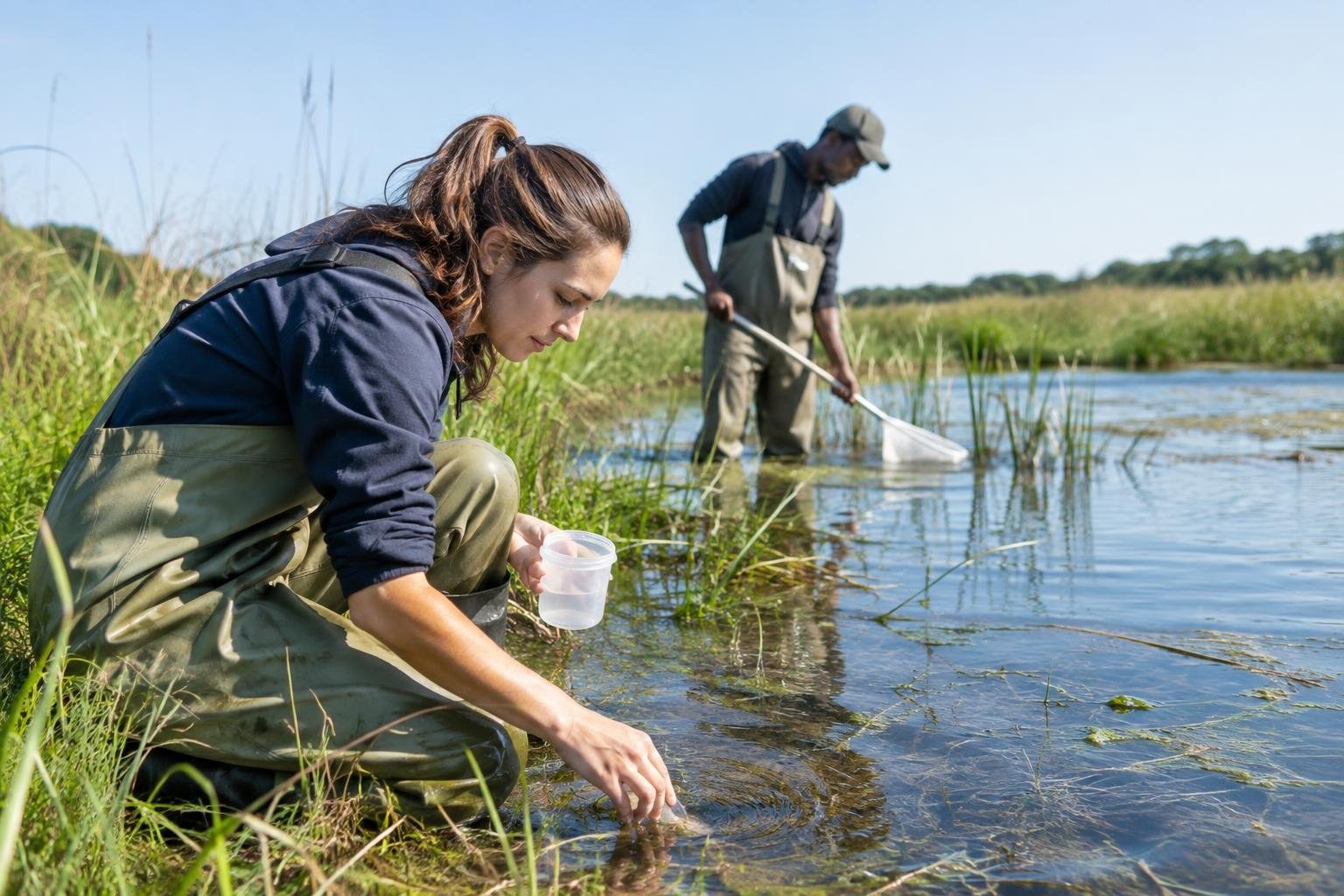
What Is a Water, Wetlands, and Marine Resources Management Degree?
This interdisciplinary field applies aquatic biology, oceanography, natural resource economics, and management to freshwater and saltwater environments. Topics may include wetlands, rivers, lakes, coasts, oceans, water conservation, pollution control, aquatic ecology, and the human uses of water. Colleges may place related programs in different departments or use different names, so compare course requirements and learning experiences rather than relying on the degree title alone. The key question is whether the curriculum matches the water and habitat issues you want to study.
What Do Students Study?
Programs may combine scientific foundations with applied management. Coursework can cover aquatic and marine ecology, wetland and watershed systems, water conservation and use, flood control, pollution control, water supply, wastewater management, aquatic life conservation, and economic or recreational uses of water resources.
Ask whether the program includes labs, field observations, research, internships, or a capstone. Course descriptions and degree plans can clarify what is required, how field experiences are arranged, and whether travel or equipment costs apply. Do not assume that each institution offers the same hands-on components.
Compare the balance of classroom learning and practical experience with the tasks you hope to pursue after graduation.
Skills You Can Build
Coursework in this area can develop scientific literacy, environmental observation, and an understanding of how aquatic systems and resource decisions connect. Study of water use, pollution control, and resource management can also build skills in evaluating environmental problems and explaining management choices.
Practical skills depend on the program. Ask whether students practice field sampling, data interpretation, technical writing, mapping, or research methods, and which tools they use. Do not assume a degree includes particular software or equipment training unless the department confirms it.
For career planning, connect each skill to a task in real job postings. For example, compare the stated duties of wetland, watershed, restoration, or environmental consulting positions with the courses and experiences offered by a college. That exercise can reveal whether a program needs more fieldwork, quantitative study, or communication practice.
Who Is This Degree Best For?
This major may appeal to students curious about aquatic habitats and the decisions involved in conserving and managing water resources. It connects scientific study with issues such as water use, pollution, restoration, and aquatic life. Before applying, check each college’s own admissions rules and preparation recommendations, including any science or math expectations.
Does This Degree Match You?
Think about the environmental questions you want to work on and whether scientific coursework, field activities, research, or planning appeal to you. Assessment.com’s MAPP assessment can help you reflect on interests and explore career and degree options. Explore the MAPP career assessment as one part of your research.
Credential Levels, Admission, and Time to Completion
Credentials and program availability vary by institution. A degree or certificate’s name does not establish its admission requirements, transfer rules, or completion time, so confirm those details with the college. Ask whether a certificate is a stand-alone credential or intended to supplement prior study, and whether its credits can apply toward another program.
One specific example is the University of Illinois Wetland Science and Conservation graduate certificate. The university lists 12 credit hours and 24 weeks of coursework, with a 2025–2026 credential cost of $9,336. These details describe that certificate and rate period only, not a typical timeline or price for other programs.
Online, Hybrid, or On Campus?
Study format varies by institution and credential. A program’s title does not establish whether it requires labs, field activities, research, or campus visits. Ask for a written explanation of any in-person requirements, including travel, equipment, and how students complete practical work if courses are online.
The University of Illinois describes its Wetland Science and Conservation graduate certificate as Coursera-based, with 12 credit hours over 24 weeks. This is an example of one certificate’s delivery, not evidence that other programs are fully online.
Tuition, Costs, and Financial Aid
Total cost depends on the institution, credential, residency classification, delivery format, and fees. Request an estimate that includes tuition and any books, technology, laboratory, field, travel, or research expenses that apply to your plan.
For a dated program-specific reference, the University of Illinois lists a $9,336 cost for its Wetland Science and Conservation graduate certificate at the 2025–2026 rate. It is not an estimate for other programs or degree levels. Confirm current charges directly with the institution.
Ask the financial aid office which aid options may apply, and compare the estimated amount you would pay after aid rather than tuition alone. Get a school-specific estimate before deciding that a particular schedule or transfer plan will reduce your costs.
Careers, Jobs, and Employment Outlook
Potential career directions include restoration ecology, natural resource management, environmental science, environmental consulting, wildlife or fire ecology, watershed management, wetland science, and wetland restoration. The University of Florida lists these as areas connected with its ecological restoration graduate certificate; this does not mean every credential qualifies graduates for every role.
Job titles and requirements vary. Compare current postings with the courses and experience offered by programs. Assessment.com has information on environmental scientists, hydrologists, and water resource specialists to help you explore related career directions. Check each employer’s stated education, field experience, skills, and credential requirements.
There is no single salary or employment outlook for this major as a whole. Pay and hiring depend on the occupation and individual circumstances. Research a specific role and location, and avoid treating a major-wide earnings claim as a promised salary.
Find out which Career or College Major is right for you!
Take the MAPP free today!Accreditation, Licensure, and Certifications
The degree title alone does not determine whether a role requires a license, certification, or other professional qualification. Requirements can differ by job and location. When a job posting names a credential, verify its requirements with the responsible licensing agency or professional organization. Ask the college whether its curriculum prepares students for any credential relevant to your goals, and whether separate coursework, exams, or experience are required.
Also confirm the college’s institutional accreditation and ask whether any relevant program-specific accreditation applies. Verify transfer and employer requirements directly before enrolling.
Experience and Ways to Stand Out
Look for internships, research projects, field courses, restoration work, and volunteer opportunities that relate to your intended career direction. The University of Florida identifies ecological restoration training in areas such as wetland restoration, watershed management, environmental consulting, and natural resource management. That list can help you identify experience areas to ask about, but it does not promise that every program offers placements in them.
Build evidence of what you can do: document class projects, research contributions, field methods, and writing samples where appropriate. Ask faculty and career services about employer connections and how students find supervised experience. When reviewing a certificate, clarify whether it supplements a degree or work history rather than assuming it replaces other job requirements.
How to Stand Out to Employers
- Choose projects that relate to a specific type of water or habitat work.
- Keep clear records of your methods, contribution, and results.
- Practice explaining technical findings to non-specialists.
- Use job postings to identify skill gaps and seek relevant coursework or experience.
Graduate School and Related Credentials
Graduate study can deepen knowledge in a specialized area or support research goals, but the right next step depends on the work you want to pursue. The University of Massachusetts Amherst describes a water, wetlands, and watersheds concentration leading to MS and PhD degrees in Environmental Conservation. Its stated areas include wetlands, hydrology, pollution, modeling, ecosystems, water-resource management, watershed science, economics, climate impacts, and water-related policy.
Focused graduate certificates are another option. The University of Illinois offers a Wetland Science and Conservation graduate certificate, and the University of Florida describes ecological restoration certificate training connected with wetland science, watershed management, restoration ecology, and related work. Compare admission requirements, costs, course content, and the qualifications employers request.
Related pathways may include environmental science, environmental studies, forestry, fisheries, or wildlife management. Assessment.com’s guides to environmental science, environmental studies, and forestry can help you compare broader subject areas. Choose based on the curriculum and the systems or work you want to focus on.
How to Choose the Right Program
Compare programs using details you can verify. Start with required courses and check how much the curriculum emphasizes aquatic science, management, economics, and practical experience. Then confirm credential level, course availability, transfer policies, delivery format, and total cost for your likely schedule.
- Curriculum: Compare required classes and electives with the work you may want to pursue.
- Experience: Ask about fieldwork, research, internships, and how opportunities are arranged.
- Cost: Request estimates for tuition, fees, travel, and equipment.
- Outcomes: Ask how the department reports graduate outcomes and what its figures include.
- Career preparation: Check job postings for relevant education, experience, and credentials.
- Flexibility: Confirm online attendance expectations, transferability, and part-time options.
For broader comparisons, explore Assessment.com’s guides to environmental science, environmental studies, and forestry. Use these as starting points, then verify program details with colleges and requirements with employers.
Is the Degree Worth It?
The value depends on your goals, total cost, time commitment, and intended career direction. A focused curriculum may make sense if you want substantial study of aquatic environments and can identify relevant opportunities. A broader environmental or natural-resources program may suit you better if you want to explore a wider range of topics.
Compare job requirements with documented course offerings, practical experiences, and the full cost of a program. For instance, the University of Illinois certificate’s published cost applies to that specific credential and rate period, not to other programs. Ask schools for current, program-specific information before deciding.
A sound choice connects your education to realistic next steps and fits your circumstances. Explore degree and career options with Assessment.com, then confirm costs and program details directly with colleges.
Questions to Ask Before Enrolling
- What credential will I earn, and what courses are required?
- What are the total tuition, fees, field costs, and technology expenses for my plan?
- Which courses or activities must be completed in person?
- Are internships, fieldwork, research, or employer connections available, and how are placements arranged?
- What are the transfer-credit rules and part-time options?
- How does the school document graduation and employment outcomes?
- What accreditation applies, and will the credential transfer or meet my target employer’s requirements?
- What financial aid, scholarships, grants, or employer benefits may apply?
- What education or certification do local job postings request?
Write down answers and compare schools using the same questions. This makes differences in cost, delivery, and career preparation easier to see.
Frequently asked questions
What is a Water, Wetlands, and Marine Resources Management degree?
Water, Wetlands, and Marine Resources Management is interdisciplinary. Programs may combine aquatic biology, oceanography, natural resource economics, and resource management, with topics such as wetlands, water conservation, aquatic ecology, and pollution control. Course requirements and field opportunities vary by institution, so review each program’s current curriculum.
What jobs can I get with this degree?
Potential directions include wetland science, watershed management, aquatic and marine ecology, restoration, natural resource management, and environmental consulting. A degree does not guarantee a particular job. Check job postings in the places where you may want to work and compare their education, experience, and credential requirements with the program’s curriculum.
How much can you make with a Water, Wetlands, and Marine Resources Management degree?
There is no single salary for this major because graduates may pursue different occupations, and pay varies by role, location, experience, and education. Compare current wage data for specific jobs rather than relying on a major-wide estimate. The research available for this guide does not provide comparable current wage figures across the possible career paths.
Is Water, Wetlands, and Marine Resources Management hard?
Difficulty depends on your preparation and the program’s requirements. The subject spans scientific and management topics, and some curricula may include biology, ecology, quantitative work, or field experiences. Review sample course plans and ask departments about prerequisites, lab or field expectations, and available academic support before enrolling.
Can I study Water, Wetlands, and Marine Resources Management online?
Online and hybrid options may be available, but delivery varies by program. Before enrolling, ask whether courses require in-person fieldwork, labs, research, or other campus activities. A graduate certificate in wetland science and conservation at the University of Illinois is described as Coursera-based and lists 12 credit hours over 24 weeks; that format should not be assumed for other programs.
Do I need a graduate degree for this field?
A bachelor’s degree is one possible path, while some specialized roles or research goals may lead students to graduate study. The right level depends on the specific job and employer. Review job postings and speak with program faculty or career services to learn what education is commonly requested for the roles you are considering.
How does this major compare with environmental science?
Water, Wetlands, and Marine Resources Management centers on freshwater and saltwater environments, including aquatic ecology and water-resource use. Environmental science is a broader label that may cover many environmental systems and issues. Programs vary, so compare actual courses and practical experiences rather than deciding from degree titles alone.
People Also Ask
What do you learn in water and wetlands management?
Students may study aquatic biology, oceanography, natural resource economics, and resource management. Topics can include wetlands, rivers, lakes, coasts, water conservation, wastewater, aquatic ecology, and the economic and recreational uses of water. Specific courses and field components depend on the college.
How do I choose a water resources management program?
Start with the careers you are considering, then check their job postings for typical education and experience expectations. Compare those expectations with program curricula, internships or field opportunities, and graduate options. A degree name alone does not establish eligibility for every job in conservation or environmental management.
How much does a wetland science certificate cost?
Costs depend on the school, residency, credential level, and fees. For one specific reference point, the University of Illinois lists a $9,336 cost for its Wetland Science and Conservation graduate certificate for 2025–2026. That amount applies to that certificate and rate period, not to other degrees or colleges.
How long does a wetland science certificate take?
The University of Illinois describes its Wetland Science and Conservation graduate certificate as 12 credit hours and 24 weeks of coursework. Degree completion time varies by credential, institution, and whether a student attends full time, part time, or transfers credits. Confirm the schedule directly with each program.
Can I work in conservation with an online degree?
Possibly, depending on the program and the type of work you want to do. An online format can offer flexibility, but ask whether fieldwork, labs, research, or other activities take place in person. Verify how online requirements apply to your intended career and location.
What majors are similar to water, wetlands, and marine resources management?
Some related pathways include environmental science, wildlife or fisheries management, natural resource management, watershed management, and ecological restoration. Compare course requirements and practical experience, since similarly named programs may prepare students for different kinds of work.
Water, Wetlands, and Marine Resources Management can suit students who want to understand aquatic ecosystems and help manage freshwater or marine resources. Programs connect biology, oceanography, economics, and resource management, but curricula and career routes differ. Compare course plans, field or research opportunities, total cost, and the education required for your intended work before choosing. A degree is a significant investment, so consider whether both the subject matter and the day-to-day work fit your interests and goals.
Want to see your options? Try our comprehensive Degree, Program & College Search tool
College Search ToolSources & Official Resources
- RUReadyND - Explore Programs and Majors
- Wetland Science and Conservation Certificate | College of Agricultural, Consumer & Environmental Sciences | Illinois
- Certificates - School of Forest, Fisheries, & Geomatics Sciences - Institute of Food and Agricultural Sciences - University of Florida, Institute of Food and Agricultural Sciences - UF/IFAS
- Wetland Science and Conservation Certificate | ACES
- Wetland and Water Protection Resource Guide
- Assessment Of Wetland Resources: Manual For A Workshop
- RUReadyND - Explore Programs and Majors
- Water, Wetlands, and Watersheds : Department of Environmental Conservation : UMass Amherst
- Water Resources Management, MS - Guide
- Water, Wetlands, and Marine Resources Management
- What Is Marine Resources Management? A Plain-English Guide | Everglades University
- Detail for CIP Code 03.0205
- Water Resources Management, MS 1 WATER RESOURCES MANAGEMENT, MS
- Marine Resource Management (CERT) | Office of Graduate Education | Oregon State University
- Water: Resources, Policy, and Management | Forest Resources and Environmental Conservation | Virginia Tech