Classical and Ancient Studies Degree Guide: Courses, Careers, and Program Fit
Learn what classical and ancient studies programs teach, how certificates and degrees differ, what careers may connect to the field, and how to compare programs and costs.
By Tome Fierre · Staff Writer Assessment.com · Published October 26, 2026 · Last updated November 5, 2026
A classical and ancient studies degree is an interdisciplinary program focused on the languages, literature, history, archaeology, and cultures of ancient societies. Depending on the college, students may concentrate on ancient Greek and Roman civilization, study an ancient language, explore archaeological evidence, or combine these approaches with other humanities fields. The label can cover different program designs, so the course catalog matters more than the name alone. Students consider this major for many reasons: a sustained interest in antiquity, preparation for further study, or a desire to develop research, writing, and interpretive skills. The degree is not a direct license for one occupation, and career outcomes depend on the student’s chosen specialization, experience, and any further education required for a particular role. Not sure whether classical and ancient studies fits you? Take the Free MAPP Career Assessment to explore how your motivations, interests, and preferences may align with study and career options.
Degree & Program Decision Insights
Explore your personal fit, education requirements, career potential and next steps.
01Motivational Fit
Discover whether this program fits you
Explore your preferences against the focus of Classical and Ancient Studies, Other. These prompts are not personal MAPP results.
Subject curiosity. Would you choose to explore “classical and ancient studies not listed above” in depth? Ask for a sample learning activity to test that interest.
Choosing a learning environment. Compare actual Classical and Ancient Studies, Other offerings. Would their reading, projects or practical work suit how you prefer to learn? Confirm the format rather than assuming one from the field name.
Work reality. Related work can involve this task: “Teach or mentor undergraduate and graduate students in anthropology or archeology.” Would you want that activity to be a regular responsibility?
Interest in studying a field can differ from enjoying its related work.
Which part would you want to do repeatedly, and what would you try before deciding?
Discover Your Personal Program Fit
Before investing your time and money in your education, discover how this program aligns with your natural motivations, work preferences and career goals.
Typical occupational entry: doctoral or professional degree (BLS). Postsecondary teaching is a separate appointment and may require advanced study; this programme alone is not a promise of a teaching post.
U.S. occupational wages are not guaranteed graduate earnings; OEWS excludes self-employed workers.
Projected openings include replacements as well as growth.
U.S. national estimates. A crosswalk does not establish entry-level eligibility; advanced, management and teaching roles can require further qualifications.
Ancient Studies/CivilizationCIP 30.2201. A program that focuses on Western and Non-Western cultures and related topics in the periods of Pre-history and Antiquity.
Holocaust and Related StudiesCIP 30.2101. Compare the official Holocaust and Related Studies field description and actual course requirements; confirm which parts support your intended specialization.
Explore your motivations. Use MAPP as a starting point for reflecting on your interest in “classical and ancient studies not listed above”, then test that interest against a sample learning task.
Examine the work. Compare Anthropologists and Archeologists and Area, Ethnic, and Cultural Studies Teachers, Postsecondary on daily work and entry qualifications, as well as pay. Explore Anthropologists and Archeologists.
Compare actual providers. Ask for the exact credential, course sequence and assessment methods. Compare how each provider teaches “Classical and Ancient Studies, Other”, its entry criteria and its itemized costs.
Check the evidence before applying. Confirm prerequisites and any recognition or professional requirements for your intended route; ask for applicable rules and published outcome definitions in writing.
Verify the institution’s current offering, admissions requirements and outcomes; a search result does not establish your eligibility.
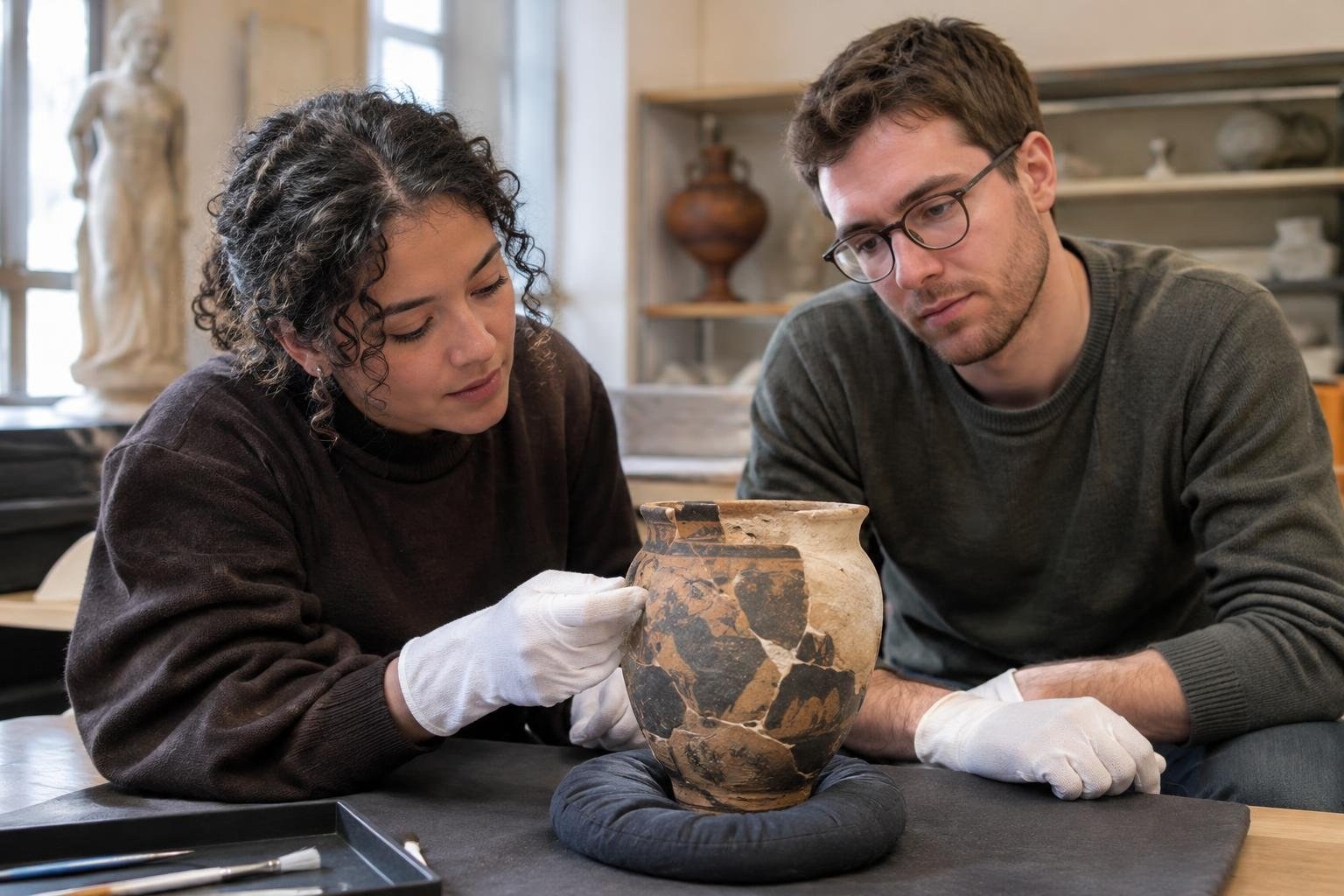
Students studying an ancient artifact in a university setting
What Is a Classical and Ancient Studies Degree?
Classical and ancient studies is an interdisciplinary field that investigates the people, texts, languages, material evidence, and cultural traditions of ancient societies. A program may be called Classical Studies, Classics, Classical and Ancient Studies, or another institution-specific name. The label does not guarantee identical content.
For a concrete example, the University of Florida’s Classical Studies major describes specializations in ancient language, classical civilization, and teacher certification, with study of ancient Greek and Roman history, literature, and culture. That is one program model, not a universal template.
The classification for this topic, CIP 30.2299, describes other classical and ancient studies programs that are not listed in more specific categories. In practice, colleges determine their own program titles, course structures, and credentials. Compare what students actually study rather than relying on a broad label.
What Do You Study? Courses, Research, and Specializations
Coursework commonly centers on interpreting evidence: reading texts closely, placing ideas in historical context, and asking how sources were produced and preserved. Depending on the program, students may encounter ancient languages, literary works, historical periods, archaeology, and art or material culture. Check the catalog to see which areas are required and which are electives.
The University of Florida’s listed specializations offer a useful illustration of variation within one department: students may orient their study toward ancient language, classical civilization, or teacher certification. A broader plan might combine historical and literary study, while a language-focused plan can devote substantial attention to grammar, vocabulary, and translation.
At advanced levels, students may pursue deeper research. The University of Missouri describes graduate work in three main areas: Languages and Literature, Archaeology, and Arts and Humanities. Its graduate program page shows how one institution organizes advanced study across related disciplines. Do not assume every college offers all these specializations, labs, fieldwork, or capstones; ask departments for the current curriculum and sample projects.
Skills You Can Build and How to Demonstrate Them
Students in this field can practice careful reading, evidence-based interpretation, research, clear writing, and oral explanation. These abilities are useful in many settings, but employers usually look for evidence that a graduate can apply them to a concrete task. A research paper, presentation, translation exercise, internship, or public-facing project can help demonstrate that connection.
Language study, when included, develops attention to how words and texts work. Archaeology or material-culture coursework may ask students to interpret physical evidence alongside written records. The actual balance varies: the UF program’s listed specializations, for example, include ancient language and classical civilization rather than prescribing the same emphasis for every student.
Build skills that match your intended direction. A student interested in collections might seek experience with cataloging or public interpretation; someone considering teaching can ask about certification requirements; a future researcher can prioritize methods, languages, and supervised research. These are planning ideas, not guarantees of qualification for a job.
Who Is This Program Best For?
This major may appeal to students who enjoy history, languages, literature, archaeology, and questions about how societies change. Much of the work may involve reading, close analysis, research, and writing. Students who like connecting evidence from different sources may find the interdisciplinary approach engaging.
You do not need to arrive with a fixed career plan or a particular personality type. You do need to be willing to investigate unfamiliar contexts, revisit interpretations when evidence changes, and complete sustained academic work. If ancient-language study is part of your intended pathway, ask about placement, prerequisites, and the amount of language coursework before enrolling.
Does Classical and Ancient Studies Match You?
Salary, prestige, and broad labor-market claims cannot tell you whether you will enjoy the day-to-day study or work. Consider your interest in the subject, tolerance for extended reading and writing, preferred learning style, and willingness to pursue additional training for some careers. Assessment.com’s MAPP assessment can be one prompt for exploring fit; use it as a starting point alongside course review, advising, and conversations with people in relevant roles.
Admissions, Preparation, and Academic Demands
Admissions rules are set by each institution and credential. A college may consider prior academic work and other application materials, but there is no single GPA, test, essay, language background, or portfolio requirement that applies to every classical and ancient studies program. Check the official admissions page for the exact program and year.
Before applying, ask whether students enter the major directly or declare it after admission, whether language courses have prerequisites, and whether transfer credits can satisfy particular requirements. If you are considering an accelerated bachelor’s-to-master’s route, verify eligibility and timing in writing. Arizona State University’s classical studies certificate information notes that program eligibility requirements apply and that students typically seek approval for an accelerated master’s during the junior year; this is an example of a school-specific process, not a general rule.
Preparation can be practical: read course descriptions, sample a relevant history or language course if available, and speak with an academic adviser. Parents can help students compare the written requirements and costs without assuming that one college’s policy applies elsewhere.
Credential Levels, Format, and Time to Completion
Credential levels in the field can include undergraduate study, certificates, master’s degrees, and doctorates, but availability is institution-specific. A certificate may offer a focused course sequence, while a degree may involve a broader set of requirements; confirm the purpose and transcript designation with the school. The research supplied for this guide identifies examples including the University of Florida undergraduate major, an ASU classical studies certificate, and graduate programs at Missouri and Chicago.
There is no single completion timeline that applies across all these options. It depends on the credential, credits accepted, course sequencing, full- or part-time enrollment, and whether required courses are offered when you need them. Ask for a term-by-term plan and confirm how online, hybrid, or campus attendance affects your choices.
Online availability cannot be assumed from a program title. Ask whether courses are fully online, whether language classes or research experiences require campus participation, and how students access advising and faculty support. The available institutional examples do not establish a universal online format or completion time.
Tuition, Costs, and Financial Aid
Tuition and total cost depend on the institution, residency classification, credential, enrollment pace, course fees, materials, and living or commuting expenses. Because those figures are school- and date-specific, compare current official cost estimates rather than relying on a broad average for the major.
Request a term-by-term estimate that includes tuition, mandatory fees, books, travel, housing if applicable, and the expected time to completion. Ask the financial-aid office about grants, scholarships, work-study, loans, payment plans, and any employer or community support for which you may qualify. Confirm renewal rules and whether aid applies to the credential and course format you plan to take.
To manage costs, compare public and private options, investigate transfer-credit policies, and avoid taking courses that do not advance your degree plan without checking with an adviser. The key comparison is the net cost for your specific pathway, not a general price claim detached from your state and enrollment situation.
Careers, Jobs, and Employment Outlook
Classical and ancient studies graduates may explore work connected to research, collections, education, writing, public history, or cultural institutions. These are possible directions, not jobs guaranteed by the degree. The appropriate qualification depends on the position, employer, and jurisdiction.
Possible direction
How the study may apply
What to verify
Archaeology or anthropology-related work
Historical interpretation and study of ancient societies can provide relevant subject context.
Required degree level, field experience, methods training, and employer criteria.
Museum or collections support
Knowledge of historical objects and cultural context may inform collection or interpretation work.
Whether the role requires specialized collections, conservation, or graduate training.
History or humanities education
Subject knowledge can support further preparation in teaching or academic work.
State teaching rules, subject credentials, and the education level required by the employer.
Research, writing, or communications
Research and writing assignments can provide a foundation for evidence-based communication.
Writing samples, experience, and any technical or subject expertise requested.
For longer academic pathways, the University of Missouri lists MA and PhD study in languages and literature, archaeology, and arts and humanities. The University of Chicago offers a doctoral program in Classical Studies and allows a humanities master’s concentration in Classics. Those institutional examples show routes for advanced study, not a promise of admission or employment.
No current occupation-specific salary or outlook data is established by the sources available for this guide. For a realistic comparison, identify exact job titles and check current U.S. labor data and local employer requirements before making a financial decision. Automation and AI tools may affect research, writing, and information tasks, but their impact depends on the job; focus on sound research judgment, source evaluation, and the ability to explain findings.
Find out which Career or College Major is right for you!
Completing a degree is not the same as receiving professional licensure. Whether a license, teaching credential, certification, or additional qualification is needed depends on the occupation and state. The University of Florida lists teacher certification as one specialization in its Classical Studies major, but students should confirm precisely what the option covers and whether it satisfies current state requirements.
Look for experience that produces evidence of your abilities: a research project, supervised work with collections, an internship, a public presentation, a language portfolio, or a writing sample. Ask faculty about undergraduate research, department events, relevant professional organizations, and opportunities to present or publish work. Availability varies by institution.
How to Stand Out to Employers
Choose a coherent area of focus and explain why it matters to your target role.
Keep strong writing and research samples that show how you use evidence.
Pair subject knowledge with practical experience or additional skills relevant to the job.
Ask employers or professional organizations which credentials they actually require.
Graduate School and Further Study
Graduate study may make sense for students who want advanced research, a specialized academic focus, or a career whose entry requirements call for a graduate credential. It is not automatically necessary for every job related to ancient studies. Decide by reviewing actual job descriptions and speaking with faculty, advisers, and people working in the field.
The University of Missouri describes MA and PhD programs across Languages and Literature, Archaeology, and Arts and Humanities. The University of Chicago describes a doctoral graduate program in Classical Studies and a Classics concentration within its Master of Arts Program in the Humanities. These examples demonstrate that graduate structures vary; compare research expectations, language preparation, funding, faculty expertise, and career support directly with each institution.
If a graduate credential is being considered, ask how it changes career eligibility and total cost. Do not enroll solely because a bachelor’s degree feels incomplete; identify the specific work or research goal the next credential is meant to support.
Related Degrees and Alternatives
Related options include history, archaeology, anthropology, art history, religious studies, philosophy, literature, languages, and broader humanities programs. Choose an alternative when its course focus or professional preparation fits your goal more directly.
History: Consider this if you want a broader study of past societies across periods and regions.
Archaeology: Consider this if you want a stronger focus on material evidence, field methods, and excavation-related study.
Anthropology: Consider this if your main interest is human societies and cultures across time and place.
Art history: Consider this if visual objects, artistic traditions, and interpretation are central to your interests.
Religious studies: Consider this if your primary questions concern religious traditions, texts, and institutions.
Philosophy: Consider this if you want to focus on arguments, ethics, and intellectual traditions.
Language or literature: Consider this if sustained language acquisition or literary analysis is your priority.
General humanities: Consider this if you want to combine several humanities disciplines without centering antiquity.
Compare required courses, methods, language expectations, faculty specialties, and graduate-school implications. Department labels can overlap, so use degree audits and course catalogs rather than relying only on a program’s name.
Advantages, Drawbacks, and Is It Worth It?
Advantages: The field can let students connect texts, languages, history, and material evidence; explore more than one humanities approach; and develop research and communication skills. Some programs offer distinct specializations, and graduate options exist at some institutions.
Tradeoffs: Program titles and course depth vary, and the major does not map to one licensed occupation. Students targeting specialized roles may need more education, relevant experience, or credentials. Costs and potential earnings should be evaluated against the actual career plan, not the subject’s appeal alone.
Whether the degree is worth it depends on net cost, time, educational goals, location, and the work you hope to do. Compare a classical and ancient studies path with alternatives that offer more direct preparation for your target occupation. A clear plan for experience and skills can make an interdisciplinary degree easier to explain to employers.
How to Choose the Right Program
Compare programs by reviewing evidence, not just promotional descriptions. Ask about:
Curriculum: Which languages, periods, regions, and research methods are required?
Specializations: Can you pursue language, civilization, archaeology, teaching, or another focus?
Faculty and learning resources: Are faculty interests aligned with yours, and what research or collection resources are accessible?
Experience: Are internships, supervised research, teaching preparation, or public projects available?
Cost and aid: What is the full net cost for your expected enrollment plan?
Format and access: Are needed courses offered in your preferred format and on a schedule you can manage?
Outcomes: What do recent graduates do, and how does the department support career exploration?
Transferability: Which prior credits will count toward this specific degree?
Credential rules: Does a teaching or other professional pathway meet the requirements where you intend to work?
Ask for written answers and a degree plan before committing. Assessment.com’s education resources and MAPP career assessment can support exploration, but they do not replace institutional advising or official program requirements.
From Degree to Career: Possible Pathways
There is no guaranteed career ladder from a major. These examples show how students might connect education with experience and later specialization:
Classical and ancient studies → undergraduate research or collections support → relevant work experience → specialization in cultural materials or public interpretation.
Classical and ancient studies → teaching-related coursework or experience → verify state and employer requirements → pursue a teaching role if qualified.
Classical and ancient studies → research assistant or related entry-level work → graduate study in archaeology or humanities → pursue research or academic opportunities.
Each path depends on hiring requirements, experience, further education, and local opportunities. Use career conversations and real job postings to test whether a plan is realistic before paying for additional credentials.
Questions to Ask Before Enrolling
Before applying or accepting an offer, ask the college and department these questions:
What is the full estimated cost, and what grants, scholarships, or other aid may apply?
Which courses and specializations are required, and when are they offered?
How much ancient-language study is expected for my chosen path?
Are research, internship, fieldwork, or teaching experiences available?
What are the exact admissions and prerequisite rules for this credential?
Can I complete the program online, in person, or through a hybrid schedule?
Which transfer credits will apply to degree requirements?
What do graduates do, and what career services are available?
If I am interested in teaching or another regulated role, which official requirements must I meet?
What happens to my plan if a required course is not offered in a given term?
Parents and students can compare answers in a shared worksheet and revisit the total cost, course plan, and career goal together. Ask for official documentation whenever an answer affects admission, funding, or credential eligibility.
Frequently asked questions
What is a classical and ancient studies degree?
Classical and ancient studies examines the languages, literature, history, archaeology, and cultures of ancient societies. Some programs focus on Greek and Roman antiquity; others may offer broader interdisciplinary approaches. Course choices vary by institution, so review the curriculum and confirm which ancient regions, periods, and methods a program actually covers.
Is classical and ancient studies hard?
It can be demanding if you are unfamiliar with close reading, historical research, or ancient languages, but the level and type of challenge depend on the program and your course plan. Some pathways emphasize language study; others emphasize civilization, archaeology, or humanities. Ask departments about prerequisites and sample course expectations before you apply.
What jobs can I get with a classical and ancient studies degree?
Potential directions include museum or cultural-heritage work, research support, writing, education, and further study in fields such as archaeology or history. A degree title alone does not qualify someone for every occupation. Check the education, experience, and any license or certification required for the particular job and location.
How much can you make with a classical and ancient studies degree?
There is no single reliable salary figure for this broad field. Earnings depend on the occupation, education level, experience, employer, and location. Compare specific job titles rather than treating the major as one occupation, and use current occupational data for the career you are considering.
Can I earn a classical and ancient studies degree online?
Some coursework may be offered online, but availability depends on the institution and credential. Confirm that the courses you need are available in your preferred format and ask whether language instruction, research, fieldwork, or other requirements involve in-person participation.
Does classical and ancient studies require math?
Math is not necessarily the defining feature of this field, but quantitative requirements depend on the institution’s general-education rules and the program’s electives. The more important academic demands may include sustained reading, research, writing, and, in some pathways, ancient-language study. Check degree requirements rather than assuming all programs are alike.
Do I need graduate school for a career in classical studies?
Graduate study is not required for every job connected to the subject, but some specialized research, university teaching, or advanced academic paths call for graduate credentials. The University of Missouri lists MA and PhD study in classics, archaeology, and religion, while the University of Chicago offers doctoral study in Classical Studies. Requirements differ by career and institution.
What is the difference between classical studies and ancient studies?
Classical studies often focuses on the languages, literature, history, and cultures of the ancient Greek and Roman worlds. Classical and ancient studies may be a broader or differently structured program, but names and course offerings vary across colleges. Compare required language courses, geographical and historical scope, research methods, and available concentrations.
People Also Ask
What do you study in classical and ancient studies?
Classical and ancient studies explores ancient societies using subjects such as language, literature, history, archaeology, and cultural study. Programs differ in their focus and may emphasize ancient Greece and Rome or offer broader interdisciplinary coursework.
What courses are required for a classical studies major?
The name alone does not determine the course plan. Review required courses, language options, specializations, and any archaeology or research components at each college. For example, the University of Florida describes a Classical Studies major with specializations in ancient language, classical civilization, and teacher certification.
What degree levels are available in classical studies?
Credential options vary by school. The field may be offered through undergraduate programs as well as certificates and graduate study. Confirm that the specific institution offers the credential and concentration you want; examples include a University of Florida undergraduate major and graduate programs at the University of Missouri and University of Chicago.
How long does a classical and ancient studies degree take?
The length depends on the credential, credit requirements, transfer credits, enrollment pace, and course availability. Ask each institution for a written degree plan showing required courses, sequencing, and the effect of any prior credits before estimating a completion date.
How much does a classical and ancient studies degree cost?
There is no single price for the major. Compare each college’s tuition and fees, required course materials, housing or commuting costs, financial aid, and time to completion. Ask the financial-aid office for a student-specific estimate and calculate the full program cost rather than relying only on a per-credit rate.
Does classical studies focus only on Greece and Rome?
A concentration in ancient Greek and Roman subjects is common in classical studies, but program scope differs. Check course descriptions and faculty areas to learn whether a program covers other ancient societies, languages, or archaeological traditions that interest you.
Classical and ancient studies can suit students who want to investigate ancient societies through texts, languages, history, archaeology, and culture. The field’s flexibility is a strength, but it also means students should build a clear academic focus and connect it with practical experience. Before enrolling, compare actual courses, costs, available credentials, and career preparation at each institution. Assessment.com’s MAPP assessment can help you explore how your interests and preferences relate to degree and career options.
Want to see your options? Try our comprehensive Degree, Program & College Search tool
We use cookies to offer you a better browsing experience, analyze site traffic and personalize content.
Read about how we use cookies and how you can control them in our
Privacy Policy.
If you continue to use this site, you consent to our use of cookies.
×
Exciting News!
Be one of the first to Beta Test the new AI-Powered Assessment.com Platform.