Geothermal Energy Technology Degree Guide: Courses, Careers and Program Fit
Learn what geothermal energy technology programs teach, how certificates and associate degrees may prepare students, and what to investigate before choosing a program or career path.
By Kieth Nelson · Staff Writer Assessment.com · Published October 7, 2026 · Last updated November 5, 2026
A geothermal energy technology program prepares students to apply technical skills and basic engineering principles in support of professionals who develop and operate geothermal energy systems. Depending on the program, students may study geothermal energy, system testing, energy storage and transfer, and equipment used in heating, cooling, or power generation. Graduates may pursue technician work involving geothermal HVAC equipment or technical operations and maintenance at geothermal power facilities. Program names, credential levels, and hands-on learning opportunities vary, so compare the curriculum and practical training before applying. Not sure whether geothermal energy technology fits you? Take the Free MAPP Career Assessment to see how your motivations, interests, and natural preferences align with this degree and the careers it can lead to.
Degree & Program Decision Insights
Explore your personal fit, education requirements, career potential and next steps.
01Motivational Fit
Discover whether this program fits you
Explore your preferences against the focus of Geothermal Energy Technology/Technician. These prompts are not personal MAPP results.
Subject curiosity. Would you choose to explore “geothermal energy principles” in depth? Ask for a sample learning activity to test that interest.
Breadth of interest. Consider the place of “energy storage and transfer technologies” in this field. Is this another part you would choose to explore, or mainly a requirement you would tolerate?
Work reality. What would an actual workday connected with Geothermal Energy Technology/Technician involve? Investigate the setting and entry requirements separately from your interest in studying the field.
Interest in studying a field can differ from enjoying its related work.
Which part would you want to do repeatedly, and what would you try before deciding?
Discover Your Personal Program Fit
Before investing your time and money in your education, discover how this program aligns with your natural motivations, work preferences and career goals.
Explore these official instructional-field associations. They describe possible occupational routes, not measured outcomes of this program.
Engineering Technologists and Technicians, Except Drafters, All OtherSOC 17-3029
The official crosswalk associates this instructional field with the broad Engineering Technologists and Technicians, Except Drafters, All Other group. It does not establish a particular detailed specialty or a direct programme-to-job outcome.
U.S. SOC 17-3029 Engineering Technologists and Technicians, Except Drafters, All Other is a broad occupational group. Its statistics are not estimates for a particular specialty, starting role or this programme’s graduates.
U.S. occupational wages are not guaranteed graduate earnings; OEWS excludes self-employed workers.
Projected openings include replacements as well as growth.
U.S. national estimates. A crosswalk does not establish entry-level eligibility; advanced, management and teaching roles can require further qualifications.
Explore your motivations. Use MAPP as a starting point for reflecting on your interest in “geothermal energy principles”, then test that interest against a sample learning task.
Examine the work. Compare Engineering Technologists and Technicians, Except Drafters, All Other on daily work and entry qualifications, as well as pay.
Compare actual providers. Ask for the exact credential, course sequence and assessment methods. Compare how each provider teaches “energy storage and transfer technologies”, its entry criteria and its itemized costs.
Check the evidence before applying. Confirm prerequisites and any recognition or professional requirements for your intended route; ask for applicable rules and published outcome definitions in writing.
Verify the institution’s current offering, admissions requirements and outcomes; a search result does not establish your eligibility.
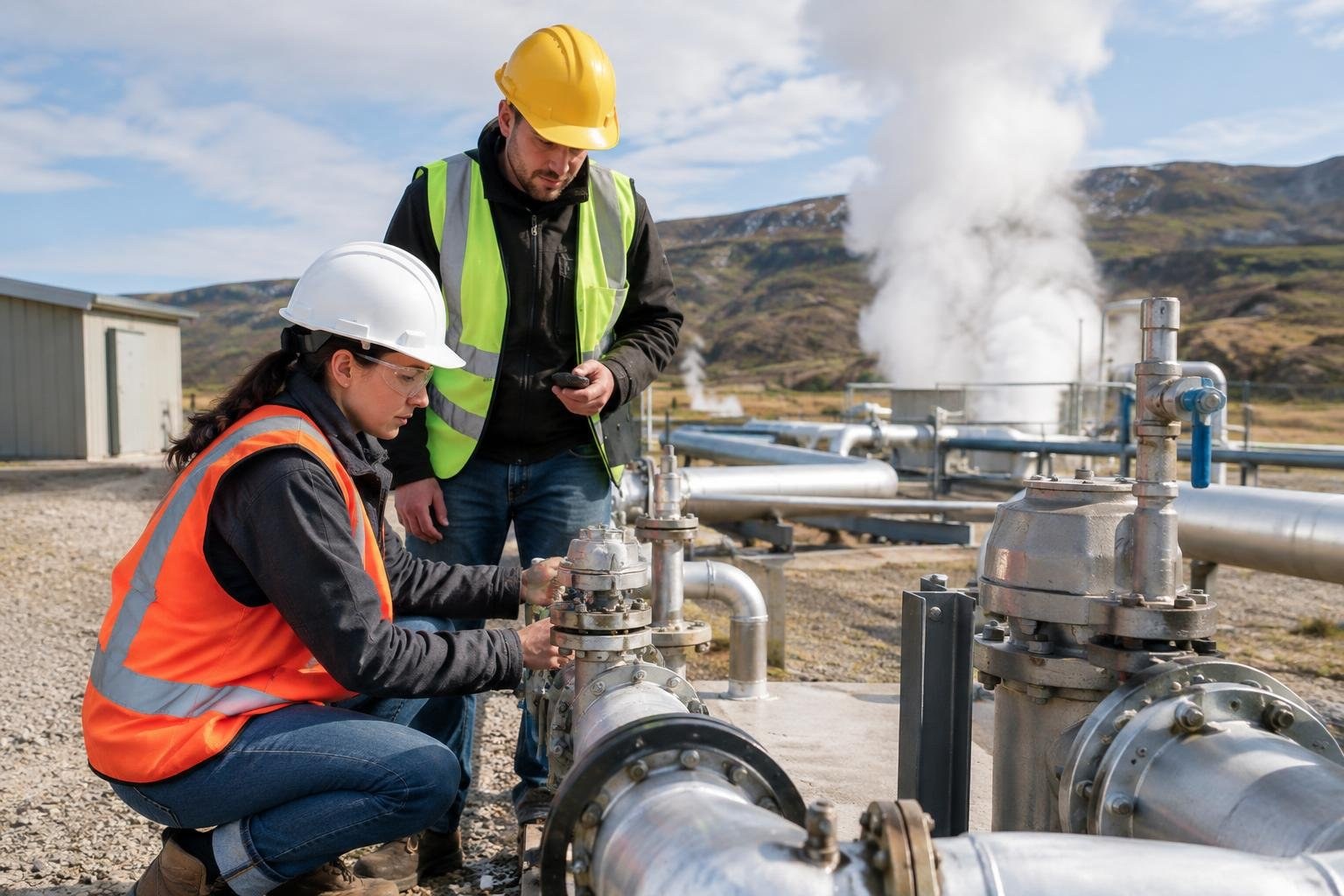
Hands-on technical training related to geothermal energy systems
What Is Geothermal Energy Technology?
What Is a Geothermal Energy Technology Program?
Geothermal energy technology is a technical field focused on applying engineering principles and practical skills to geothermal energy systems. Students prepare to support the professionals who develop, test, operate, and maintain these systems. The field can connect to two distinct settings: geothermal heating and cooling equipment in buildings, and installations or power plants that generate electricity from geothermal sources.
The name may appear as geothermal energy technology, geothermal technician training, or geothermal plant operations. These titles do not guarantee identical coursework or career preparation. A program description identifies the subject area; the school’s curriculum shows what students actually study. A program may emphasize geothermal system fundamentals, equipment, or energy generation operations. Ask how its coursework maps to the type of work you hope to pursue.
Geothermal training is a specialized part of the wider engineering-technology and energy-training landscape. It is not automatically equivalent to a mechanical engineering, HVAC, or general energy degree. The focus, technical depth, and credential depend on the institution. In the United States, the supplied program classification identifies geothermal energy technology/technician under CIP code 15.1706, but classifications do not confirm that a college currently offers a program.
What Do You Study in a Geothermal Technology Program?
What Students Study
Coursework varies, but the subject is meant to connect energy-system concepts with technical application. Program descriptions identify geothermal energy principles, energy storage and transfer technologies, and testing as relevant areas. These subjects can help students understand how a system is designed and evaluated, and how technical work supports engineers and other professionals.
A documented geothermal plant operator program at Truckee Meadows Community College lists well design and construction, fluid mechanics, hydraulics and hydrology, and fundamentals of process controls among its geothermal-specific technical courses. Those topics point to the practical systems involved: wells, fluid movement, and the processes used to monitor or control equipment. Treat this curriculum as an example, not a universal course list or a guarantee of current availability.
For HVAC-oriented work, training may involve inspecting and testing equipment, diagnosing problems, following manufacturer specifications, and carrying out preventive maintenance and repairs. At power-generation installations, technical tasks can include monitoring operating activities and performing necessary maintenance or repairs. Ask whether a program includes labs, equipment practice, field experience, or a capstone. The available evidence describes relevant technical tasks and coursework, but does not establish that every program offers each form of hands-on instruction.
Skills to look for in the curriculum
Understanding geothermal energy principles and energy transfer.
Testing equipment and interpreting whether it is functioning properly.
Following technical specifications and operational procedures.
Recognizing maintenance or repair needs and communicating findings.
Working with system processes such as fluids and controls.
These skills are relevant to practical technician work, but employers may also value previous training or experience. NYSERDA notes that some employers like to see vocational school training, a related associate degree, or prior on-the-job training for geothermal technician work.
Who Is a Geothermal Technology Program Best For?
Who Might This Program Suit?
This path may interest students who like understanding how equipment works, solving practical technical problems, and connecting energy concepts to real systems. A geothermal technician may inspect equipment, test its performance, refer to manufacturer specifications, maintain or repair systems, and communicate with customers or coworkers about safety and project timelines. Power-generation work may involve monitoring operations and responding to maintenance needs.
Those examples suggest a mix of careful observation, procedural work, troubleshooting, and communication. Students who prefer applying concepts to equipment may find the subject more appealing than a program focused mainly on abstract theory. The work is not exclusively hands-on: understanding energy systems and technical principles matters too. No single personality type is required, and students can build skills through study and practice.
Before applying, review the admissions page for the exact school and credential. Ask admissions staff about placement tests, high-school preparation, transfer credit, and whether prior technical experience is expected or simply helpful. If you are changing careers or returning to school, ask whether the program offers academic support and flexible scheduling.
Does geothermal energy technology match you?
Salary or the appeal of working in energy should not be the only reasons to choose a program. Consider whether the tasks described in actual job postings interest you: maintaining equipment, diagnosing faults, following specifications, working safely, and monitoring operating systems. The Free MAPP Career Assessment can help you reflect on motivations and preferences; Degree Matching and Career Matching can help you consider related education and work options. Use an assessment as a starting point for research, not a substitute for checking program and employer requirements.
How Long Does It Take, and Can You Study Online?
Credentials, Program Length, and Format
Credential choices depend on the institution. A geothermal plant operator program documented at Truckee Meadows Community College was designed as either a two-year Associate of Applied Science degree or a one-year certificate. Those timelines describe that program guide, not a national standard or a promise about current offerings. Confirm present-day length, course sequencing, prerequisites, and availability with the college.
Certificate and associate-level training can provide focused preparation, but program titles alone do not show how much practical experience students receive. Ask whether courses run every term, whether labs take place on campus, and whether internships or field placements are available. Part-time study, transfer credit, and scheduling can change how long an individual takes to finish. Do not assume an online format is available or that online coursework includes equipment practice.
Before choosing distance learning, request a clear explanation of how students access relevant tools, testing, or supervised practice. If a program is hybrid, find out how often travel is required and whether students arrange field experience themselves. An online course may teach concepts effectively, but the program should explain how it prepares students for the physical equipment and procedures found in their intended work setting.
What Does Geothermal Training Cost?
Cost and Financial Aid
No single tuition figure applies to geothermal energy technology. Total cost depends on the school, location, residency, credential, course load, and whether a student needs to travel or relocate. Ask each college for a written estimate that includes tuition, mandatory fees, books, course materials, equipment or lab charges, and any transportation or housing costs connected with campus or field requirements.
Compare the full cost of completing the credential, not just the price per credit or a headline tuition rate. A shorter program may cost less overall, but only if it fits the student’s preparation and goals. Ask whether credits can transfer into a later degree and whether the certificate shares coursework with an associate program. Confirm any transfer agreement in writing before relying on it.
Explore federal and state financial aid eligibility, school-based scholarships, grants, work-study, and employer tuition assistance where available. Ask the financial aid office for a personalized estimate of grants, loans, and out-of-pocket expense. Families should compare borrowing needs alongside likely job duties and local employment opportunities, rather than assuming a particular salary or return.
Practical ways to keep education affordable
Compare public and private options, residency rates, and fees.
Ask about transfer credits and whether a certificate can count toward an associate degree.
Check whether required lab materials, tools, or travel are included in estimates.
Complete financial aid forms and ask the school to explain grants separately from loans.
Compare part-time and full-time schedules, including the cost of extending enrollment.
What Jobs Can You Get With Geothermal Technology Training?
Careers, Jobs, and Employment Outlook
Geothermal technology training is connected to technician work, but a credential does not guarantee a specific job. The best-known role in the available sources is geothermal technician. Duties depend on whether a person works with heating and cooling equipment or at a geothermal power-generation facility. Employers may value vocational training, a related associate degree, or prior on-the-job experience.
Career direction
Typical preparation to investigate
Work described in the evidence
Pay and outlook
Geothermal HVAC technician
Vocational training, related associate-level education, or on-the-job training may be valued by employers; confirm each posting.
Inspect, test, maintain, troubleshoot, and repair geothermal HVAC equipment; communicate with customers and coworkers.
No geothermal-specific median wage or outlook figure is established in the supplied evidence.
Geothermal plant technician or operator
Review employer requirements and the relevant plant-operations training; experience expectations vary.
Monitor geothermal power-generation operations and perform maintenance and repairs as needed.
No occupation-specific pay or employment projection is established in the supplied evidence.
Geothermal systems support technician
Technical training in geothermal principles, testing, and system technologies may be relevant; match preparation to the employer’s job description.
Support engineers and other professionals engaged in developing geothermal energy systems.
Pay and outlook depend on the actual occupation and location; no specific figure is established here.
Do not treat a broad occupational wage as a geothermal technician salary. One source notes that geothermal technicians are included within the broader Installation, Maintenance, and Repair Workers, All Other occupational group, but that is not a geothermal-specific median. For salary research, compare current postings by job title and location and check official labor statistics for the closest occupational category. Clearly note when a category covers many kinds of workers.
Energy technology and employer demand can vary by region and project. Check local job boards, employers, and workforce agencies before choosing a location or specialization. Relevant employers may include geothermal HVAC service companies and operators or contractors connected with geothermal power facilities, but verify the roles and hiring needs in your area.
Automation and control technologies may change how equipment is monitored, but the available evidence does not quantify the effect on geothermal technician jobs. Students can prepare by learning to test systems, follow specifications, communicate safety information, and adapt to the equipment used by employers. These are practical competencies reflected in the described work, not a promise about future job security.
Find out which Career or College Major is right for you!
Geothermal work can involve inspecting, testing, maintaining, and repairing HVAC equipment, or monitoring and maintaining power-generation operations. Employers may look for vocational training, a related associate degree, or on-the-job experience. Practical exposure can therefore help students connect coursework to work expectations. Ask programs about equipment access, internships, employer projects, and opportunities to practice troubleshooting and technical communication.
A degree or certificate is not the same as a professional license. Requirements can depend on the specific tasks, employer, and location, especially when a job includes work governed by HVAC or other local rules. Before enrolling, ask employers and the relevant state or local authority whether any credential is required for the work you want to do.
How to stand out to employers
Build a record of relevant lab, field, project, or work experience.
Be ready to explain how you inspect equipment, identify a problem, and follow specifications.
Practice communicating maintenance needs, safety concerns, and timelines clearly.
Review job postings and ask employers which certifications or prior experience matter for their specific roles.
Keep a portfolio of permitted project work, diagrams, or troubleshooting exercises without sharing confidential employer information.
Related Degrees: What Else Should You Compare?
Related Degrees and Alternatives
Geothermal energy technology is specialized. A nearby field may be a better fit if you want broader training, a different work setting, or a different balance of theory and equipment practice. Compare course plans and job requirements, since similar-sounding programs can lead to different preparation.
HVAC or HVAC engineering technology: Consider this if you are primarily interested in heating, cooling, and refrigeration equipment rather than geothermal systems specifically.
Mechanical engineering technology: Consider this if you want broader applied study of mechanical systems and equipment.
Mechanical engineering: Consider this if you want broader engineering study and are prepared to investigate a more extensive engineering curriculum.
Electrical or electronics engineering technology: Consider this if your interests center on electrical systems, electronics, controls, or communications.
Energy systems technology: Consider this if you want to explore energy technologies beyond geothermal systems.
Construction technology: Consider this if you prefer construction work and project delivery over energy-system operations.
General engineering technology: Consider this if you want a wider technical foundation before choosing a specific energy niche.
These are comparison directions, not claims that every college offers a program with those exact names or that the credentials are interchangeable. For each option, compare technical depth, hands-on components, transfer options, and the jobs named in local employer postings. A geothermal program may be more directly relevant to geothermal systems; a broader program may offer different subject coverage. Ask whether the curriculum supports future study if you may continue to a higher credential.
How to Choose the Right Program
How to Choose a Geothermal Energy Technology Program
Start with the work you want to do, then test whether the program prepares you for it. A curriculum aimed at geothermal plant operations may not be identical to training focused on building HVAC equipment. Request a course list and ask faculty or program staff to explain which equipment, systems, and job tasks students encounter.
Check institutional accreditation and confirm any program-level accreditation that matters for your plans. Verify claims through the accreditor and the relevant U.S. Department of Education resources instead of relying on marketing language. If you may transfer or continue your education, ask the receiving institution whether credits will count.
Compare class format, lab access, field placements, faculty experience, employer connections, completion time, student support, and total cost. Ask for outcomes information and how the school defines employment or completion rates. If the school cannot provide a geothermal-specific outcome, request the closest available data and understand what it includes. Do not assume a program’s association with an energy field proves that local employers recruit from it.
Questions to ask before enrolling
Is the school institutionally accredited, and what agency accredits it?
What geothermal subjects and technical courses are required?
What equipment, labs, field work, or internships will students actually access?
How much will the full credential cost, including fees and materials?
What jobs have recent graduates obtained, and how is that information measured?
Can credits transfer to a related associate or bachelor's program?
Does the program explain any certification or local licensing requirements relevant to its target jobs?
What financial aid, scholarships, and payment options may be available?
Assessment.com’s Free MAPP Career Assessment, Degree Matching, and Career Matching can help you explore personal fit and compare education paths. Use those tools alongside program documents, financial aid information, and direct conversations with employers.
Is a Geothermal Energy Technology Credential Worth It?
Is Geothermal Energy Technology Worth It?
Whether the training is worthwhile depends on the student’s goals, cost, location, and access to relevant jobs. A focused credential may appeal to someone who wants technical preparation related to geothermal systems. It may be less suitable for a student seeking a broad engineering education or a guaranteed route into a particular occupation.
Potential advantages include specialized subject matter and a direct connection to described technician tasks. A certificate or associate pathway may be available in some settings, as illustrated by the TMCC program guide. Considerations include limited program availability, the need to verify hands-on learning, employer-specific experience expectations, and uncertainty about local openings. These are reasons to investigate carefully, not reasons to rule out the field.
Possible education-to-career steps
Certificate or associate training → entry-level geothermal HVAC or plant-support role → equipment and operational experience → deeper specialization based on employer needs. This is one possible route, not a guaranteed progression. A student may need additional training, employer experience, or another credential to qualify for particular jobs. Ask employers what advancement looks like in their organization and whether they value further education.
For a personalized decision, compare the program’s total cost with realistic local job postings and your alternatives. Discuss financing with the school, talk with people who work in the field when possible, and assess whether the core tasks appeal to you. A strong fit involves more than energy-sector interest; it includes day-to-day work preferences and the education commitment you are ready to make.
Frequently asked questions
What is a geothermal energy technology program?
A geothermal energy technology program teaches technical principles and skills used to support professionals working on geothermal energy systems. Subject matter may include geothermal energy, energy storage and transfer, testing, well design, fluid mechanics, and process controls. Course offerings depend on the school and credential, so compare actual program plans rather than relying on the title alone.
Is geothermal energy technology hard to study?
It can be technically demanding because students may need to learn engineering principles and apply them to energy systems, equipment, testing, and operational tasks. The work can combine classroom learning with practical skills. Ask programs what math, science, lab, and field components they require, then compare those expectations with your preparation and interests.
What jobs can you get with geothermal energy technology training?
Training may prepare graduates for technical work supporting geothermal systems, including geothermal HVAC equipment maintenance and repair or operating and maintaining geothermal power-generation facilities. The exact job depends on the program, employer, and your experience. Ask schools for specific graduate job titles and whether their training includes the equipment and practical skills employers in your area seek.
How much do geothermal technicians make?
A cited wage reference points to the broader Installation, Maintenance, and Repair Workers, All Other group, which includes geothermal technicians, rather than reporting a geothermal-specific figure. Compare current local job postings and clearly identify the occupation and geography behind any wage estimate.
Can I earn a geothermal energy technology credential online?
Some technical and classroom material may be deliverable online, but a student should confirm how a program provides any hands-on equipment practice, testing, or field experience. Ask for details before enrolling.
Does geothermal energy technology require math?
Geothermal technology includes technical study and the available program descriptions mention engineering principles, fluid mechanics, hydraulics, hydrology, and process controls. The supplied research does not set out specific math prerequisites. Ask admissions offices for placement requirements and course syllabi so you can gauge the quantitative preparation a particular program expects.
Do you need a bachelor's degree to become a geothermal technician?
Not necessarily for every technician-level role. The sources describe certificate and associate-level geothermal training, including an example of a one-year certificate and a two-year Associate of Applied Science program. Requirements vary by employer and position, so review job postings for your target roles and ask programs what graduates are prepared to do.
Do geothermal technicians need a license or certification?
The evidence provided does not establish a required geothermal-specific license or a universal certification. Requirements can depend on the particular work, employer, and jurisdiction, especially when a job involves HVAC systems or other regulated tasks. Confirm rules with the relevant state or local licensing authority and ask employers which credentials they require.
How is geothermal energy technology different from HVAC or engineering?
Geothermal energy technology focuses on applying technical skills and engineering principles to geothermal energy systems. HVAC training is a broader path focused on heating, ventilation, and air-conditioning equipment, while an engineering degree may emphasize broader or more theoretical engineering study. Compare course content, hands-on work, career goals, and the credentials employers request for the jobs you want.
People Also Ask
What do you learn in geothermal energy technology?
It prepares students to use technical skills and engineering principles in support of people developing or operating geothermal energy systems. Courses and practical training vary by school.
How long does geothermal energy technology training take?
A certificate may offer a shorter, focused route into technical training, while an associate degree generally represents a longer program of study. One documented program offers a one-year certificate and a two-year Associate of Applied Science option. Verify current availability and requirements with schools.
What courses are in a geothermal technician program?
A documented geothermal program includes subjects such as well design and construction, fluid mechanics, hydraulics and hydrology, and process controls. Other curricula may emphasize geothermal system principles, energy storage and transfer, and testing.
What does a geothermal technician do?
Potential work includes maintaining and repairing geothermal HVAC equipment, inspecting and testing systems, and technical work at geothermal power-generation facilities. Duties depend on employer and setting.
Where can I study geothermal energy technology?
Program and credential availability should be confirmed directly with colleges. One documented example offers a geothermal plant operator program as a two-year Associate of Applied Science degree or one-year certificate, but this does not establish availability at other schools.
How much does a geothermal energy technology program cost?
Compare tuition, fees, equipment or lab charges, and any travel or relocation costs directly with each school. Ask for the full program cost and available financial aid before deciding.
What industries hire geothermal technicians?
Geothermal systems are used in heating and cooling as well as power generation. The research describes technicians working on geothermal HVAC equipment and technical operation, maintenance, and repair at geothermal power facilities.
Geothermal energy technology may suit students who want to apply engineering principles to energy systems and are comfortable combining technical study with hands-on equipment work. The field connects to geothermal heating and cooling as well as power generation, but program availability, credential options, and employer expectations can differ. Compare actual course plans, practical training, total cost, and local opportunities before enrolling. Most importantly, consider whether the day-to-day work of inspecting, maintaining, testing, and monitoring systems fits your interests and goals.
Want to see your options? Try our comprehensive Degree, Program & College Search tool
We use cookies to offer you a better browsing experience, analyze site traffic and personalize content.
Read about how we use cookies and how you can control them in our
Privacy Policy.
If you continue to use this site, you consent to our use of cookies.
×
Exciting News!
Be one of the first to Beta Test the new AI-Powered Assessment.com Platform.