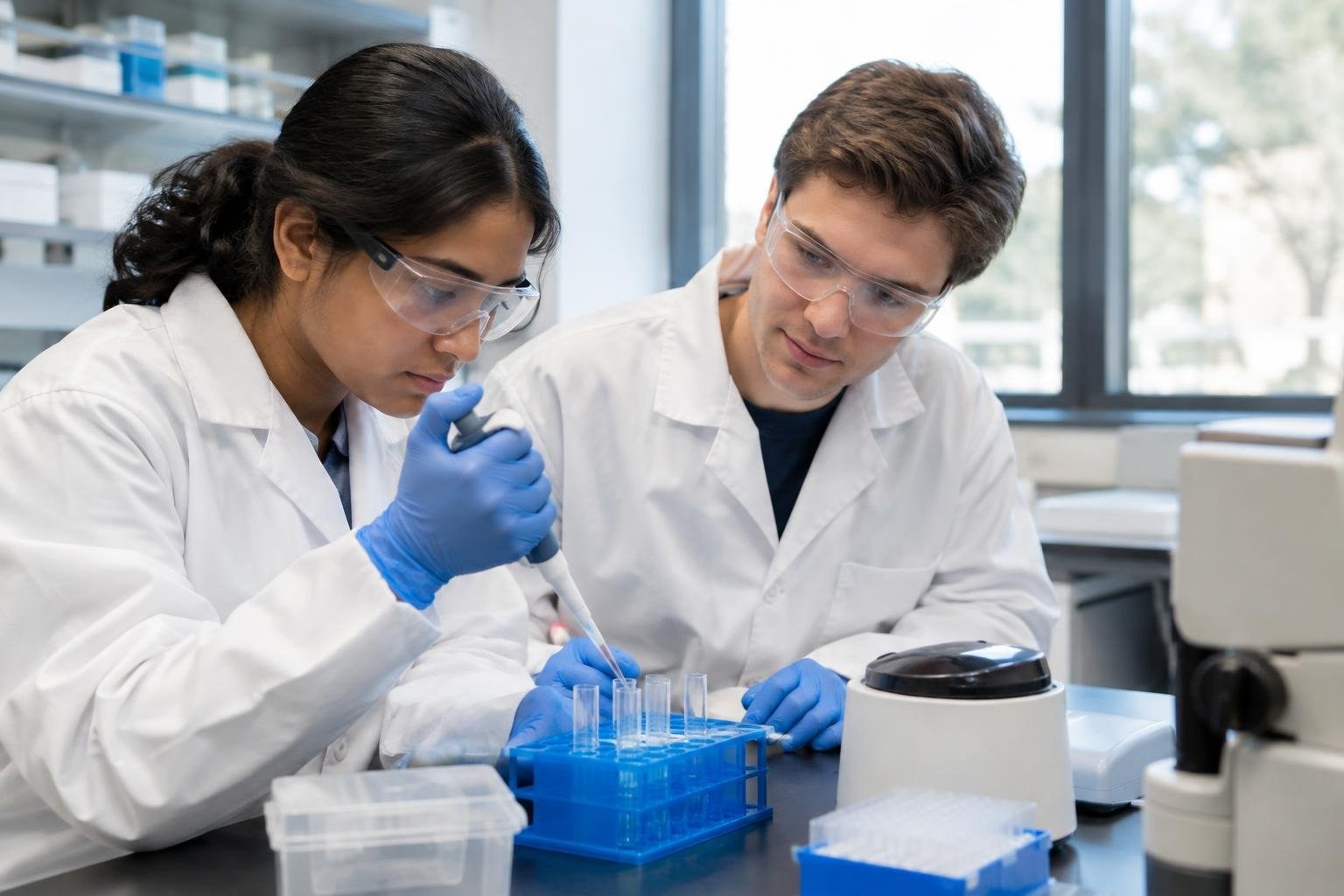
Biological and Biomedical Sciences, Other: Degree Guide, Courses, Careers and Program Fit
Biological and Biomedical Sciences, Other is a broad classification for programs in biological or non-clinical biomedical science that do not fit a more specific category. Learn what programs may cover, how to compare them, and what to investigate before choosing a college.
By Kieth Nelson · Staff Writer Assessment.com · Published October 12, 2026 · Last updated November 5, 2026
Biological and Biomedical Sciences, Other is a broad college program category for biological and non-clinical biomedical science programs that are not classified under a more specific field. Students may study living systems, laboratory methods, research, or interdisciplinary topics, but course content varies widely by institution. Potential directions can include research support, biological science, clinical research, or further study. The program name alone is not enough to predict a graduate’s job options, salary, or eligibility for professional work. Not sure whether this field fits you? Explore how your motivations and interests align with science-focused study and related career possibilities through Assessment.com’s MAPP career assessment.
Degree & Program Decision Insights
Explore your personal fit, education requirements, career potential and next steps.
01Motivational Fit
Discover whether this program fits you
Explore your preferences against the focus of Biological and Biomedical Sciences, Other. These prompts are not personal MAPP results.
Subject curiosity. Would you choose to explore “the biological and biomedical sciences not listed above” in depth? Ask for a sample learning activity to test that interest.
Choosing a learning environment. Compare actual Biological and Biomedical Sciences, Other offerings. Would their reading, projects or practical work suit how you prefer to learn? Confirm the format rather than assuming one from the field name.
Work reality. Related work can involve this task: “Evaluate and grade students' class work, laboratory work, assignments, and papers.” Would you want that activity to be a regular responsibility?
Interest in studying a field can differ from enjoying its related work.
Which part would you want to do repeatedly, and what would you try before deciding?
Discover Your Personal Program Fit
Before investing your time and money in your education, discover how this program aligns with your natural motivations, work preferences and career goals.
Typical occupational entry: doctoral or professional degree (BLS). Postsecondary teaching is a separate appointment and may require advanced study; this programme alone is not a promise of a teaching post.
Typical occupational entry: bachelor's degree (BLS). BLS lists 5 years or more of related work experience as typical for this occupation; this programme is not a direct promise of entry.
U.S. occupational wages are not guaranteed graduate earnings; OEWS excludes self-employed workers.
Projected openings include replacements as well as growth.
U.S. national estimates. A crosswalk does not establish entry-level eligibility; advanced, management and teaching roles can require further qualifications.
Compare the actual offering and credential before committing your time or money.
Request the itemized fees, materials and equipment associated with “the biological and biomedical sciences not listed above”; confirm what tuition includes.
Compare the full attendance budget, course availability and time away from paid work, rather than tuition alone.
No institution- and credential-matched cost, debt or graduate-earnings amount is reported here; occupational pay is not program ROI.
Financial aid depends on the school, program and student’s eligibility.
Compare the focus and route of these distinct instructional fields; their credentials and admission requirements are not interchangeable.
Biology/Biological Sciences, GeneralCIP 26.0101. A general program of biology at the introductory, basic level or a program in biology or the biological sciences that is undifferentiated as to title or content.
Biomedical Sciences, GeneralCIP 26.0102. Compare its emphasis on any of the basic medical sciences at the research level and biological science research in biomedical faculties with this program’s focus.
Explore your motivations. Use MAPP as a starting point for reflecting on your interest in “the biological and biomedical sciences not listed above”, then test that interest against a sample learning task.
Examine the work. Compare Biological Science Teachers, Postsecondary and Natural Sciences Managers on daily work and entry qualifications, as well as pay. Explore Biological Science Teachers, Postsecondary.
Compare actual providers. Ask for the exact credential, course sequence and assessment methods. Compare how each provider teaches “Biological and Biomedical Sciences, Other”, its entry criteria and its itemized costs.
Check the evidence before applying. Confirm prerequisites and any recognition or professional requirements for your intended route; ask for applicable rules and published outcome definitions in writing.
Verify the institution’s current offering, admissions requirements and outcomes; a search result does not establish your eligibility.
What Is Biological and Biomedical Sciences, Other?
Biological and Biomedical Sciences, Other is a classification for instructional programs focused on biological sciences and non-clinical biomedical sciences that do not fit a more specific program category. The federal Classification of Instructional Programs (CIP) places it within the broader biological and biomedical sciences field. See the NCES description of the biological and biomedical sciences field.
It is not one standardized major with a single national curriculum. One college might use the label for an interdisciplinary science program; another may use it for a narrower topic not separately listed in the classification. Ask what the title means at that institution.
Related labels can include biological sciences, biomedical sciences, or an institution-specific interdisciplinary program. Compare catalog descriptions and required courses, not names alone.
What Do Students Study?
There is no single course list for this category. Programs may begin with core science classes and progress to advanced topics connected to the college’s focus. A catalog might show coursework in biology and related sciences, while upper-level study can involve specialized subjects, research methods, or an interdisciplinary concentration. Specific offerings must be confirmed with the school.
Look for laboratory courses and ask what students practice: following protocols, handling data, documenting observations, and explaining results. Where offered, research, internships, and capstone projects can help connect classroom concepts to scientific work. They are not guaranteed features of every program.
Before choosing, request the current degree plan and ask whether classes include laboratory fees, fieldwork, a thesis, or other requirements. Check whether a student can join faculty research and how positions are assigned.
Skills You May Develop
Skills depend on the curriculum and practical experience, but a science-focused program may help students develop skills in:
Scientific reasoning: asking testable questions and judging conclusions against evidence.
Laboratory practice: following procedures, keeping records, and handling samples or equipment when lab work is part of the program.
Data interpretation: organizing observations and explaining what results do, and do not, show.
Communication: writing reports and presenting findings clearly to classmates, instructors, or research teams.
Collaboration and reliability: coordinating work, following safety practices, and meeting project deadlines.
Ask which skills students demonstrate in required courses and whether the program provides supervised practice. These competencies can be relevant to research-support, laboratory, or science communication work, but employers set their own qualifications.
Who Might This Program Suit?
This field may appeal to students curious about living systems, health-related science, or how research questions are investigated. It can also suit students who enjoy careful observation, detailed reading, structured procedures, and communicating evidence. Different programs can be more laboratory-oriented, computational, research-focused, or broadly interdisciplinary.
Science coursework can involve quantitative reasoning and prerequisite chemistry or mathematics. The level varies, so review required courses before applying. You do not need to fit a particular personality type to study science; the important question is whether the work and learning environment are a reasonable match for your interests and goals.
Does this degree match you?
Salary, prestige, and projected job growth matter, but they do not tell you whether you will enjoy the coursework or daily work. Think about the problems you want to solve and the work settings you prefer. Assessment.com’s MAPP assessment can be one input as you explore interests alongside academic preparation, program details, and career requirements.
Admissions, Preparation and Academic Difficulty
Admission rules are set by each college. Applicants to undergraduate programs commonly need to meet the institution’s general admission standards; some programs may also have science prerequisites, minimum grades, essays, or other requirements. Graduate certificates and degrees can require a bachelor’s degree and relevant preparation. Do not assume a general rule applies to every school or award.
Ask admissions staff for the current requirements for the exact program, including required transcripts, prerequisite courses, test policies, application dates, and transfer-credit review. Students returning to school should ask how prior coursework and work experience are evaluated.
Difficulty is also program-specific. Lab scheduling, dense science material, and cumulative prerequisites can make planning important. Meet with an academic advisor early and map prerequisite sequences before choosing a course load.
Credential Levels, Format and Completion Time
The field includes certificate, associate, bachelor’s, post-bachelor’s certificate, graduate certificate, master’s, first professional, and doctoral credential categories. This describes the range of levels associated with the field, not a promise that every institution offers each one. The National Center for Education Statistics identifies biological and biomedical sciences as a broad program family; individual catalog entries describe the actual award.
Completion time depends on credential, course load, transfer credit, and required prerequisites. For a reliable estimate, request a term-by-term plan from the college. Ask whether part-time enrollment is possible and whether required courses are offered every term.
Online, hybrid, and campus delivery can vary by course. Confirm whether labs, research, internships, or other practical experiences require in-person attendance. A fully online lecture schedule does not necessarily mean every program requirement can be completed remotely.
Tuition, Costs and Financial Aid
There is no single tuition price for this program category. Total cost depends on the institution, residency status, degree level, credit load, and whether the student must relocate. Budget for tuition and mandatory fees as well as books, lab supplies, equipment, transport, housing, and any program-specific expenses the college identifies.
Ask each school for its current cost-of-attendance estimate and compare the amount you would actually pay after grants and scholarships. Review aid eligibility and deadlines with the financial-aid office. Depending on your circumstances, possible funding sources may include federal or state aid, institutional scholarships, employer tuition assistance, or transfer credits that reduce the number of courses needed. Confirm eligibility and terms directly; availability differs.
Compare total cost to completion, not just the advertised price per credit. Include the possibility that prerequisite sequencing or limited course availability could extend the time to finish.
Careers, Jobs and Employment Outlook
Graduates may explore laboratory or research support, biological science, clinical research coordination, bioinformatics, and further study. The program name does not guarantee eligibility for any particular position. Job titles, duties, and minimum qualifications vary by employer and may require additional education, experience, technical skills, or credentials.
Use current job postings in the region where you plan to work to identify the qualifications that appear repeatedly. Then ask the program whether its courses and experiences help students build those skills. Roles such as bioinformatics scientist, biological science teacher at the postsecondary level, clinical research coordinator, and biologist represent distinct pathways, not automatic outcomes of this degree.
There is no meaningful single median salary or job outlook for this broad category. Pay and employment projections must be checked for each occupation using current official labor-market data. See Assessment.com’s career guides for bioinformatics scientists, clinical research coordinators, and biological science teachers.
Possible direction
Typical preparation to investigate
How study may apply
Laboratory or research support
Review employer requirements; practical lab experience may matter.
Relevant science coursework and supervised lab or research practice.
Biologist or related life-science work
Requirements depend on specialization and employer; advanced roles may require further study.
Foundational biological science and experience related to the job.
Clinical research coordination
Employers may specify relevant experience or training.
Science background may support understanding of research settings and study information.
Bioinformatics
Check postings for computing, statistics, and biological data skills.
Relevant only when the curriculum includes adequate quantitative and computational preparation.
Postsecondary teaching or research
Often involves graduate study; verify expectations for the institution and role.
Graduate education can provide deeper subject expertise and research preparation.
Universities, research organizations, healthcare-related research settings, and other employers may hire people with relevant science preparation. Confirm requirements for each role rather than assuming that a sector-wide credential rule exists.
Find out which Career or College Major is right for you!
Separate earning a degree from being qualified or licensed to perform a regulated occupation. A general biological or biomedical science credential does not itself establish eligibility for clinical practice or a professional license. Requirements depend on the job and, where applicable, the state or professional regulator.
Ask the college whether the program is designed to meet any stated certification or licensing requirements, and verify the answer with the relevant authority. For research and laboratory positions, examine employer postings for preferred training, experience, or credentials. Do not enroll based only on a general claim that a program leads to a professional role.
Accreditation also needs careful checking. Confirm the institution’s accreditation status through official sources and investigate any program-specific accreditation required for your intended occupation. This broad program label alone does not identify a particular accreditor.
Experience, Research and Ways to Stand Out
Practical experience can make a broad science education more concrete. Ask about undergraduate research, internships, course projects, laboratory access, and opportunities to present or explain work. If a program has no formal internship, ask whether students can pursue a faculty-supervised project or relevant volunteer experience.
To stand out to employers, connect your coursework to the skills in a specific job description. Keep examples of permitted, non-confidential work such as project summaries, methods learned, data-analysis exercises, or presentations. Describe your contribution accurately and follow laboratory safety and research rules.
Certificates or other credentials may be useful for particular jobs, but their value is occupation-specific. Verify employer demand before spending money on an optional credential.
Graduate School and Further Study
Some students continue into a master’s or doctoral program to develop deeper expertise in a scientific specialty, prepare for research, or meet an employer’s education expectations. The right next step depends on the role, not simply on the fact that the undergraduate program is science-focused.
Graduate certificates can provide focused coursework. For example, UNC Charlotte describes a biomedical sciences certificate whose credit may be applied toward a biology master’s or doctoral program, subject to admission to that program and the certificate’s conditions. This is an institution-specific example, not a universal transfer policy. Review each school’s catalog and ask whether credits will count toward a future degree before enrolling.
Southern Illinois University’s graduate catalog describes a multidisciplinary biomedical and biological sciences program offering master’s and doctoral degrees across disciplines. These examples show why students should identify the particular field, research area, and admissions requirements they intend to pursue.
Related Degrees and Alternatives
Consider alternatives if you want a more clearly defined course plan or career connection. Compare each program’s curriculum, practical requirements, and the qualifications employers request:
General biology: consider it if you want a broader, clearly named biological science major.
Biochemistry or molecular biology: consider it if you want a stronger focus on chemical and molecular processes.
Microbiology: consider it if you are especially interested in microorganisms and related laboratory work.
Biotechnology: consider it if you want a program explicitly organized around applied biological technologies.
Bioinformatics: consider it if you want biological study combined with substantial computing and data analysis.
Biological engineering: consider it if your interests lean toward engineering design and quantitative problem-solving.
Environmental science or ecology: consider these if you prefer organisms, ecosystems, and environmental questions.
Health-profession programs: consider a defined clinical pathway if your goal is direct patient care, and verify its separate admissions and licensing requirements.
A related degree is not automatically better. Choose the curriculum that supports your interests and the next step you have identified.
Advantages, Drawbacks and Is It Worth It?
A broad major can offer room to explore, but its name may be less familiar to employers than a specific discipline. Other tradeoffs include the possibility of needing further education for specialized scientific work and the need to plan carefully for prerequisites and practical experience.
It may be worth pursuing when the program’s courses match your interests, the cost is manageable, and you can explain how the education connects to a realistic next step. It may be a poor fit if you expect the degree title alone to qualify you for a regulated clinical role or a specialized job without additional preparation.
Ask for outcome information and how the institution defines it. Look at total cost, time to completion, course availability, graduate-school preparation, and the actual requirements of jobs that interest you. No single answer applies to every student.
How to Choose the Right Program
When comparing colleges, request the same information from each program so that you can make an informed comparison:
What does the official catalog say the program covers?
Which courses, labs, and prerequisites are required, and how often are they offered?
What is the institution’s accreditation status, and is any additional accreditation relevant to your goal?
Can undergraduates participate in research, internships, or supervised projects?
What is the full estimated cost through completion, including fees and lab expenses?
Are online courses available, and which requirements must be completed in person?
How are transfer credits reviewed, and will they satisfy program prerequisites?
What career advising, internship support, and employer connections are available?
What outcomes does the program track, and how are those outcomes measured?
What financial aid, scholarships, or payment options may apply to your circumstances?
Assessment.com provides education and career resources to help students consider possible pathways. Use them alongside direct conversations with colleges, current students, and academic advisors.
From Degree to Career: Example Pathways
Possible career development can take more than one direction, and no sequence is guaranteed. Examples to investigate include:
Science coursework → laboratory or research-support role → focused technical experience → specialized research work or graduate study.
Biological science coursework → research or teaching support → advanced degree and research experience → postsecondary teaching or scientific research.
Biology plus computing and statistics coursework → data-focused project or research support → deeper computational training → bioinformatics work.
Science coursework → research administration support → experience with study operations → clinical research coordination.
Use these as planning examples, not promised pathways. Check the qualifications in current job postings and discuss prerequisite or graduate requirements with an advisor.
Questions to Ask Before Enrolling
Before making a deposit or accepting an offer, ask the college and yourself:
What exact degree or certificate will appear on my transcript?
Which courses and practical experiences are required to finish?
What is the total estimated cost, and which aid is confirmed rather than estimated?
Can I complete the program in my preferred format and schedule?
How will transfer credits apply to prerequisites and graduation requirements?
Does this program meet any verified requirements for the career I want?
What research, internship, or career-service support can students actually access?
What are my backup options if I change interests or need to study part time?
Have I compared the program with a more specific major that may fit my goals?
For students and parents, reviewing these answers together can surface practical concerns about cost, commute, support, and the next educational step before a commitment is made.
Frequently asked questions
Is Biological and Biomedical Sciences, Other a hard major?
It can be challenging because biology programs commonly involve detailed scientific concepts, laboratory procedures, and careful analysis of evidence. The difficulty depends on the program’s focus, course sequence, and the student’s preparation. Before applying, review sample course requirements and ask whether the program includes chemistry, statistics, computing, or extensive lab work.
Is a Biological and Biomedical Sciences, Other degree worth it?
The degree’s value depends on the specific program and the work or further education you want. This broad title does not guarantee a particular job or salary. Compare total cost, course content, hands-on experience, and the education required for target roles. A clearly defined specialization and relevant experience can help make the degree more useful to employers or graduate programs.
What jobs can I get with a Biological and Biomedical Sciences degree?
Possible directions include laboratory and research support, biological science, clinical research coordination, bioinformatics, and graduate study. These are possibilities, not guaranteed outcomes: employers set their own requirements, and some scientific or professional roles require graduate education, experience, or additional credentials. Match the specific courses and practical experience in a program to the job postings you hope to pursue.
How much can you make with a Biological and Biomedical Sciences degree?
There is no single salary for this degree because it covers a range of fields and occupations. Pay and job outlook depend on the actual job, employer, location, experience, and education level. Use current U.S. Bureau of Labor Statistics data for each occupation you are considering rather than relying on one salary figure for this broad degree category.
Can I earn this degree online?
Some courses may be available online, but the format depends on the institution and curriculum. Ask whether lab courses, research, internships, or other experiential requirements must be completed in person. Confirm the delivery format for every required course and whether online students have access to appropriate facilities and academic support.
Does this degree require math?
Expect quantitative work in many science programs, but the amount and type of math depend on the curriculum. Programs may include statistics, quantitative data analysis, or mathematics required for related science courses. Review course requirements and ask an advisor which math prerequisites apply before choosing a program.
Do I need graduate school after this major?
Not for every job, but some research, specialist, teaching, and leadership positions may require graduate study or substantial experience. The degree category includes multiple credential levels, from certificates and associate degrees through doctorates, but a college may not offer every level. Check the requirements for specific careers and the admissions requirements of graduate programs you might consider.
How does this major compare with general biology?
A general biology program usually has a defined curriculum in biological sciences, while Biological and Biomedical Sciences, Other is a classification for programs that do not fit a more specific category. The name alone does not reveal the actual differences. Compare required courses, labs, concentrations, and graduate or career pathways at the colleges you are considering.
People Also Ask
What does Biological and Biomedical Sciences, Other mean?
It is a classification for biological and non-clinical biomedical science programs that do not fit another, more specific category. Because the category is broad, course requirements and career preparation differ by college. Read the catalog description and curriculum for the exact program before deciding what it covers.
What classes are in a Biological and Biomedical Sciences major?
There is no universal curriculum. Depending on the program, students may take biology and related science courses, use laboratory methods, study research design, or complete a project. Some programs are specialized or interdisciplinary. Request the current degree plan and syllabi for required courses to understand what students actually learn.
How long does a Biological and Biomedical Sciences degree take?
There is no standard time for every credential in this broad category. Completion depends on the credential level, course load, transfer credits, and program requirements. Ask the college for a term-by-term plan, including any prerequisites, labs, internships, or research requirements, before estimating how long your own path will take.
What degree levels are available in this field?
The category can include multiple credential levels, but that does not mean every college offers all of them. Search individual college catalogs for the exact award, admissions requirements, and course plan. Confirm whether the credential is designed for entry-level preparation, transfer, graduate study, or another purpose.
Does this major prepare students for clinical jobs?
A broad science degree may support several directions, but it does not by itself qualify someone for every research, clinical, or professional position. Employers and licensing authorities set requirements for specific jobs. Check job descriptions and state or professional requirements before assuming that a particular degree is sufficient.
What does a biological science degree cost?
Compare program-specific tuition, fees, books, supplies, housing, and other living costs. Prices depend on the school, residency, format, and the student’s circumstances. Request a current cost-of-attendance estimate and a written financial-aid offer, then calculate the likely total cost for the time needed to finish.
Biological and Biomedical Sciences, Other may suit students who want a science-focused education but whose interests do not fit a single established biology or biomedical major. The label is broad, so the value of a particular program depends on its actual courses, laboratory or research opportunities, cost, and connection to a career or further study. Before enrolling, compare specific curricula and talk with an academic advisor about how graduates use the credential. Explore Assessment.com’s education and career resources, and consider whether the field’s day-to-day work fits your motivations and interests.
Want to see your options? Try our comprehensive Degree, Program & College Search tool
We use cookies to offer you a better browsing experience, analyze site traffic and personalize content.
Read about how we use cookies and how you can control them in our
Privacy Policy.
If you continue to use this site, you consent to our use of cookies.
×
Exciting News!
Be one of the first to Beta Test the new AI-Powered Assessment.com Platform.