Cell/Cellular Biology and Anatomical Sciences, Other: Degree Guide
Learn what Cell/Cellular Biology and Anatomical Sciences, Other programs may teach, how to compare college options, and which research, lab, and biomedical pathways graduates may explore.
By David Slack · Staff Writer Assessment.com · Published October 12, 2026 · Last updated November 5, 2026
Cell/Cellular Biology and Anatomical Sciences, Other is a broad program category for study of cells, biological structures, and related anatomical sciences that does not fit a more specifically named instructional category. Depending on the college, students may explore cell systems, anatomy, physiology, molecular biology, laboratory methods, and research. Programs in this area can connect with further study or work in laboratories, biotechnology, biomedical research, and clinical research, but the degree title alone does not determine a graduate’s job options. The category includes several credential levels; check the exact degree and curriculum offered by each institution. Not sure whether this field fits you? Take the Free MAPP Career Assessment to reflect on how your motivations, interests, and preferences may align with related degrees and careers.
Degree & Program Decision Insights
Explore your personal fit, education requirements, career potential and next steps.
01Motivational Fit
Discover whether this program fits you
Explore your preferences against the focus of Cell/Cellular Biology and Anatomical Sciences, Other. These prompts are not personal MAPP results.
Scientific investigation. Would you enjoy investigating cell/cellular biology and anatomical sciences not listed above and explaining your conclusions from evidence?
Choosing a learning environment. Compare actual Cell/Cellular Biology and Anatomical Sciences, Other offerings. Would their reading, projects or practical work suit how you prefer to learn? Confirm the format rather than assuming one from the field name.
Work reality. Related work can involve this task: “Plan or direct research, development, or production activities.” Would you want that activity to be a regular responsibility?
Interest in studying a field can differ from enjoying its related work.
Which part would you want to do repeatedly, and what would you try before deciding?
Discover Your Personal Program Fit
Before investing your time and money in your education, discover how this program aligns with your natural motivations, work preferences and career goals.
Typical occupational entry: bachelor's degree (BLS). BLS lists 5 years or more of related work experience as typical for this occupation; this programme is not a direct promise of entry.
Biochemists and BiophysicistsSOC 19-1021 · O*NET 19-1021.00$127,410/year median (May 2025); +12.3% projected change (2025–2035); 2,900 projected openings/year.
Typical occupational entry: doctoral or professional degree (BLS).
U.S. occupational wages are not guaranteed graduate earnings; OEWS excludes self-employed workers.
Projected openings include replacements as well as growth.
U.S. national estimates. A crosswalk does not establish entry-level eligibility; advanced, management and teaching roles can require further qualifications.
Compare the actual offering and credential before committing your time or money.
Request the itemized fees, materials and equipment associated with “cell/cellular biology and anatomical sciences not listed above”; confirm what tuition includes.
Compare the full attendance budget, course availability and time away from paid work, rather than tuition alone.
No institution- and credential-matched cost, debt or graduate-earnings amount is reported here; occupational pay is not program ROI.
Financial aid depends on the school, program and student’s eligibility.
Explore your motivations. Use MAPP as a starting point for reflecting on your interest in “cell/cellular biology and anatomical sciences not listed above”, then test that interest against a sample learning task.
Examine the work. Compare Natural Sciences Managers and Biochemists and Biophysicists on daily work and entry qualifications, as well as pay. Explore Natural Sciences Managers.
Compare actual providers. Ask for the exact credential, course sequence and assessment methods. Compare how each provider teaches “Cell/Cellular Biology and Anatomical Sciences, Other”, its entry criteria and its itemized costs.
Check the evidence before applying. Confirm prerequisites and any recognition or professional requirements for your intended route; ask for applicable rules and published outcome definitions in writing.
Verify the institution’s current offering, admissions requirements and outcomes; a search result does not establish your eligibility.
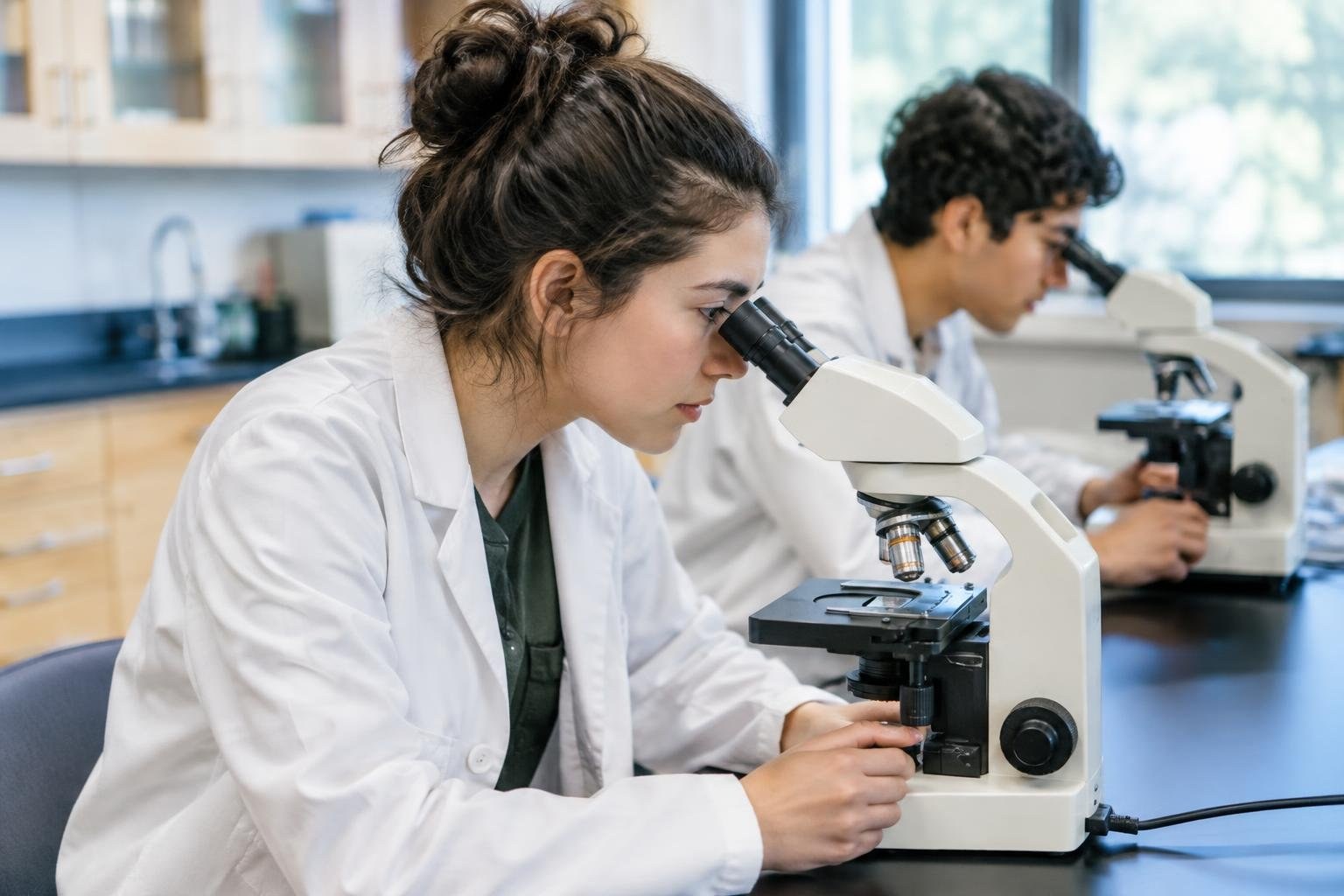
College students using a microscope in a biology laboratory
What Is Cell/Cellular Biology and Anatomical Sciences, Other?
Cell biology examines cells: their components, activities, and relationships within living organisms. Anatomical sciences focus on biological structure. The “Other” label is a classification for instructional programs that are not separately listed in the field taxonomy; it does not guarantee a standard curriculum shared by every college.
Programs can sit within biology, biomedical sciences, or a related department. Colorado State University describes biomedical science as applying core biological sciences to human and animal health and disease, while particular schools may offer more focused cell and molecular biology programs. Review the exact program description, courses, and credential rather than choosing by label alone.
This guide concerns the program category Cell/Cellular Biology and Anatomical Sciences, Other, CIP 26.0499. It is distinct from a claim that every such program includes the same anatomical specialization or professional preparation.
For an example of how one institution frames a related undergraduate major, see Augusta University’s Cell and Molecular Biology program description. It describes coursework, laboratory training, and research projects, but it is an example rather than a national curriculum standard.
What Do You Study in a Cell Biology Program?
Expect foundational work in biology and related sciences, followed by more focused study that depends on the college. Potential subject areas include cell biology, anatomy and physiology, biochemical principles, microbiology, immunology, infection, embryology, and development. A biomedical sciences certificate at the University of North Carolina at Charlotte lists options across several of these topics, while specific offerings differ by program.
In a lab, students may practice following protocols, handling samples, recording observations, and interpreting results. Research courses or projects can add experience with a scientific question, evidence, and communication of findings. Some programs integrate hands-on research into the major; others may require students to seek an opening with a faculty lab or research group.
Ask whether the program includes required labs, elective labs, research credit, an internship, or a capstone. A list of course titles is not enough: find out what students actually do, what equipment or methods they use, and whether practical work is guaranteed or competitive.
Skills You Can Develop
Students can build scientific reasoning by learning to compare explanations with evidence, interpret data, and recognize the limits of an experiment. Lab training can develop careful observation, consistency, recordkeeping, and the ability to follow detailed procedures.
Writing and speaking matter, too. Researchers and laboratory staff need to document work clearly, explain results, and collaborate with people who may have different specialties. Depending on electives and projects, students may also gain experience with data analysis or scientific software. Ask each program which tools and methods are taught instead of assuming a named major guarantees a particular technical skill.
These abilities can be relevant to research support, laboratory work, biotechnology, and clinical research. Matching a skill set to an occupation still requires checking job descriptions, education requirements, and the experience employers request.
Who Is This Program Best For?
This field may suit students curious about how biological structures work, how cells develop or change, and how laboratory evidence can answer a question. It can appeal to learners who enjoy close observation, scientific reading, practical experiments, or connecting small-scale biological processes with health and disease.
You do not need to arrive with one fixed “science personality.” You do need to be willing to work through challenging material, revise an explanation when evidence changes, and learn careful procedures. Consider whether you prefer hands-on lab activity, reading and analysis, or a mix. Also think about how comfortable you are with biology, chemistry, data, and the time required for lab preparation and reports.
Does this degree match you?
Salary, prestige, or broad claims about job demand cannot tell you whether you will enjoy the daily work. Compare your interests with specific tasks: preparing samples, reviewing data, writing reports, assisting research, or pursuing additional study. Assessment.com’s MAPP career assessment can offer a starting point for exploring motivations and career directions; treat an assessment as a reflection tool, not a final decision. You can also review the site’s education resources and career resources.
Admissions, Preparation, and Academic Difficulty
Admission rules are set by each college. Applicants may need prior coursework in science or mathematics, transcripts, and an application. A transfer student should ask how previous courses will count toward both general education and major requirements. Graduate programs may have separate academic prerequisites and application materials; do not assume that a certificate, bachelor’s program, or graduate program shares the same admission standard.
Ask admissions staff for the current prerequisite list, minimum academic standards if applicable, required documents, and any placement or transfer-credit review. If you are missing a course, ask whether it must be completed before entry or can be taken alongside the program.
Cell-focused study can require sustained reading, memorization of structures and processes, laboratory accuracy, and interpreting results. Build preparation with foundational biology and chemistry, consistent study time, and early use of tutoring or instructor office hours. The course catalog and program advisor are the best sources for school-specific requirements.
Credential Levels, Formats, and Time to Completion
The broader field includes associate, bachelor’s, certificate, graduate certificate, master’s, first-professional, and doctoral credential categories. That does not mean every institution offers each type for this exact specialization. Confirm the award name and level on the school’s official program page.
Completion time depends on the credential, enrollment pace, transfer credits, course availability, and any research or laboratory sequence. Ask for a sample term-by-term plan for full-time and part-time study. Students considering an associate degree as a starting point should verify transfer agreements in writing: Montgomery College, for example, lists cellular biology and related fields among possible transfer destinations for its biological science associate program.
Online, hybrid, and campus formats may be available, but laboratory and research requirements can affect whether a program is fully remote. Ask how labs are completed, whether students must travel to campus, and whether any required research or practical experience is arranged by the college. A program’s marketing label is not a substitute for a written format and attendance schedule.
Tuition, Costs, and Financial Aid
There is no single tuition figure for this field. A student’s total cost depends on the college, credential, residency classification, course fees, required laboratory materials, technology, books, transportation, and housing. Compare the full estimated cost through graduation, not just the advertised tuition rate.
Ask each financial aid office for an itemized estimate that reflects your circumstances. Explore federal and state aid eligibility, institutional grants and scholarships, work-study where available, employer tuition assistance, and community-college transfer routes. Check deadlines and renewal conditions, and distinguish gift aid from loans that must be repaid.
For a transfer route, verify which credits will apply to the major and whether the receiving school requires additional labs or prerequisites. A lower initial cost may not save money if credits do not transfer or extend the time to finish. Use the college’s official cost and aid pages for current figures rather than relying on general estimates.
Careers, Jobs, and Employment Pathways
Cell and anatomical sciences can connect with laboratory support, biological research, biotechnology, and clinical research, as well as further study. Augusta University describes its related undergraduate cell and molecular biology major as preparing students for graduate and professional healthcare programs or immediate employment in biomedical and biotechnology industries. That example does not promise a job or establish requirements across employers.
Possible directions associated with the broader field include biochemist, bioinformatics scientist, biological scientist, clinical research coordinator, geneticist, microbiologist, molecular or cellular biologist, and postsecondary biological science teacher. These titles do not all represent entry-level outcomes. Some research and faculty positions may require advanced degrees, specialization, or substantial experience; requirements vary by role and employer.
Use a role-specific approach to career research: search current job postings, note the education and experience they ask for, and speak with program graduates or career services. Employment outlook and pay cannot be inferred from a major name alone. Biological research increasingly uses data and specialized tools, so building quantitative and computational experience may be useful where it fits your goals, but confirm which methods employers in your intended area actually seek.
Browse Assessment.com’s guides to biochemist, microbiologist, and bioinformatics scientist careers for related pathways.
Accreditation, Licensure, and Certifications
The degree itself is not a professional license. The sources describing these programs do not establish one universal license or certification required for all graduates. Requirements depend on the job, employer, and jurisdiction, particularly when work involves regulated clinical or laboratory responsibilities.
Before enrolling, identify the job you want and ask employers or the relevant state or professional authority whether a specific license, certification, or approved program is required. Then confirm that the college’s curriculum satisfies any prerequisite. Do not treat a program’s science coursework as automatic qualification for clinical practice or a regulated occupation.
For research-oriented goals, ask about lab access, faculty projects, internships, and opportunities to present or document work. Practical experience can help you test whether the work suits you and show employers what you have learned, but it does not replace a credential when one is required.
Related Degrees and Alternatives
Related options include biology, general; biochemistry and molecular biology; biotechnology; microbiology; genetics; anatomy or physiology; bioinformatics; and biomedical sciences. These subjects overlap, but they can put different weight on organisms, molecules, laboratory applications, computation, or health and disease. Montgomery College’s biological science transfer information lists several such destinations, illustrating how a broad foundation may connect with specialized study.
Choose broader biology if you want to keep more organism and ecology topics in view.
Consider biochemistry or molecular biology if you are especially interested in chemical processes and molecules such as proteins or nucleic acids.
Consider biotechnology if you want a program framed around applying biological methods and concepts.
Consider microbiology or genetics if you prefer a focused subject area.
Consider bioinformatics if you want to combine biology with computational or quantitative work.
Consider biomedical sciences if your interest centers on biological science applied to health and disease.
Compare actual course requirements and practical experiences. A degree title can sound specialized while leaving room for electives, or sound broad while requiring a focused sequence. Ask what graduate programs accept the curriculum if further study is part of your plan.
How to Choose a Cell Biology Program
Program quality is not established by a major title or a single claim about career readiness. Check the institution’s accreditation status through official channels and ask whether the program meets any requirements relevant to your intended occupation or graduate application.
Compare course sequence, lab access, faculty research areas, and the availability of supervised research, internships, or capstone work. Ask whether every student can apply for these experiences or whether places are limited. Review the transfer-credit policy, class scheduling, support for students who work, and how the college explains graduate or employment outcomes.
When comparing cost, include fees and required materials and ask about aid renewal rules. If you need online study, request details about required campus visits, lab arrangements, and in-person research. Get key answers in writing, especially transfer decisions and any claims about licensing preparation.
From Degree to Career: Example Pathways
Career routes are not guaranteed ladders, but mapping possible next steps can help you choose useful experiences:
Biology degree → laboratory or research support role → additional lab experience → specialized research responsibilities.
Cell-focused degree → clinical research support role → experience coordinating studies → more advanced research operations work.
Biological science foundation → computational or bioinformatics coursework → entry role supporting biological data work → deeper specialization.
Bachelor’s degree → graduate study in a focused biological science → research or teaching roles that require advanced preparation.
Each route depends on hiring requirements, experience, additional education, and the opportunities available in a student’s location. Discuss realistic role titles with faculty and career services before planning around an assumed promotion path.
Questions to Ask Before Enrolling
Before you commit, ask the college and yourself:
What exact credential will I earn, and how is this program classified?
Which biology, chemistry, mathematics, and laboratory prerequisites apply?
What is the complete cost, including fees, materials, and travel?
Which grants, scholarships, or other aid may apply, and what are the renewal conditions?
How many credits will transfer, and which will count toward this major?
Are labs, research, internships, or capstone projects required, optional, or competitive?
Can I complete the program in my intended format and schedule?
Does the curriculum satisfy prerequisites for the graduate program or occupation I may pursue?
What do graduates do next, and how are those outcomes measured?
What advising, tutoring, career services, and employer connections can students use?
Bring the answers together in a comparison sheet. Include practical fit, not only the school’s reputation: note which program lets you study the subjects you care about, get relevant experience, and finish at a cost you can manage.
Is Cell/Cellular Biology and Anatomical Sciences, Other Right for You?
Cell/Cellular Biology and Anatomical Sciences, Other may be a strong option to investigate if you enjoy biological questions, careful lab work, and learning how cells and structures contribute to living systems. It may be less suitable if you want a direct occupational license from a degree alone, prefer a program with a clearly defined professional route, or do not want substantial science coursework.
Compare alternatives, ask specific questions, and check each program’s official requirements. Assessment.com offers degree resources and career information to help you explore paths. A MAPP assessment may also help you reflect on personal fit alongside academic preparation, cost, experience, and the work you hope to do.
Frequently asked questions
What is Cell/Cellular Biology and Anatomical Sciences, Other?
Cell and cellular biology study cells as the basic units of living systems, including their structures, functions, and interactions. Anatomical sciences focus on the structure and organization of organisms. A program labeled “Other” is a classification for instructional programs not separately listed in the corresponding field category. Specific course content and degree options vary by institution.
Is cell biology a hard major?
It can be demanding because students may need to combine biology and chemistry concepts with careful laboratory work, detailed reading, and data interpretation. The level of difficulty depends on your preparation, course sequence, instructors, and available academic support. Ask to review sample course requirements and lab expectations before enrolling.
What jobs can I get with a cell biology degree?
Possible directions include laboratory or research support, biotechnology, clinical research coordination, and further study in biological or biomedical sciences. The exact roles available depend on the degree level, practical experience, employer requirements, and any additional training or credentials. Confirm the education requirements for a specific job before choosing a program.
How much can you make with a cell biology degree?
A degree does not have one standard salary. Pay depends on the occupation, degree level, experience, employer, location, and additional credentials. Compare current wage data for the specific roles you are considering rather than relying on a single estimate for the major. The research for this guide does not provide occupational wage figures.
Can I earn a cell biology degree online?
Online coursework may be available, but laboratory training, research, or other hands-on requirements may need an in-person component. The format differs among programs, so check whether labs are delivered on campus, through approved local arrangements, or in another format. Confirm that the program supports your intended next step.
Does cell biology require a lot of math?
Many programs in cellular and biomedical sciences include quantitative coursework, and some include chemistry, statistics, or other math-related requirements. Exact requirements depend on the institution and degree level. Review the published course sequence and ask an advisor whether your previous math and science courses meet prerequisites.
Do I need graduate school after a cell biology degree?
Not every role requires graduate school, but research scientist, university faculty, and some specialized biomedical positions may require advanced education or substantial research experience. Entry-level support roles may have different requirements. Work backward from the job you want and check employers’ stated qualifications before deciding whether to pursue graduate study.
What is the difference between cell biology and molecular biology?
It depends on your goal. Cell biology centers on cellular structures and processes; molecular biology often emphasizes molecules such as DNA, RNA, and proteins; anatomy focuses on organism structure. These areas overlap, and program names do not always map to identical curricula. Compare required courses, lab work, and research opportunities rather than relying only on a major’s title.
People Also Ask
What do you study in a cell biology major?
Cell biology programs examine cells and related biological structures through coursework and, depending on the program, laboratory training or research. Check the catalog to see which areas are emphasized.
How do I choose a cell biology program?
Program names and course plans vary. Compare required courses, lab experiences, research options, and the degree level rather than assuming similarly named programs are interchangeable.
Are cell biology programs available online?
Some programs offer online classes, but hands-on lab or research requirements may call for in-person participation. Ask the college how each requirement is completed.
What can I do with a cellular biology major?
Potential pathways include lab and research support, biotechnology, and clinical research, as well as graduate study. Job eligibility depends on the employer’s requirements and the student’s education and experience.
What classes are required for a cell biology degree?
A cell-focused program may include biology and chemistry sequences, lab work, and quantitative coursework. Exact prerequisites are school-specific, so review the degree map before applying.
Is a cell biology degree worth it?
A degree may be worthwhile when its curriculum, practical experiences, total cost, and further-study options line up with a student’s goals. Compare likely pathways and individual program outcomes before making a decision.
Cell/Cellular Biology and Anatomical Sciences, Other is a flexible biological-sciences pathway for students drawn to cells, tissues, anatomy, and the processes that connect living systems. It can support lab, research, biotechnology, clinical-research, and further-study directions, but a degree alone does not guarantee a particular job, salary, or professional license. Before enrolling, check the curriculum, hands-on opportunities, total cost, transfer rules, and requirements for your intended career. Also consider whether the day-to-day work fits your interests and strengths. Explore Assessment.com’s degree and career resources, and use the MAPP assessment as one tool for considering which education and career paths may fit you.
Find out which Career or College Major is right for you!
We use cookies to offer you a better browsing experience, analyze site traffic and personalize content.
Read about how we use cookies and how you can control them in our
Privacy Policy.
If you continue to use this site, you consent to our use of cookies.
×
Exciting News!
Be one of the first to Beta Test the new AI-Powered Assessment.com Platform.