Geological and Geophysical Engineering Degree Guide
Learn what geological and geophysical engineering programs cover, which credentials are available, how to compare schools, and what career pathways to explore.
By Tome Fierre · Staff Writer Assessment.com · Published October 7, 2026 · Last updated November 5, 2026
Geological and geophysical engineering applies engineering methods to questions about the Earth, its materials, and conditions below the surface. Students build a foundation in engineering and earth science, then may focus on areas such as geotechnical engineering, geophysics, hydrogeology, mining, petroleum, or mineral exploration. Program emphasis and credential options vary by university. The University of Wisconsin–Madison describes geological engineering as integrating geology and engineering. Prospective students and parents should compare the actual course plan, field or research opportunities, and graduate outcomes rather than rely on a program label alone.
Degree & Program Decision Insights
Explore your personal fit, education requirements, career potential and next steps.
01Motivational Fit
Discover whether this program fits you
Explore your preferences against the focus of Geological/Geophysical Engineering. These prompts are not personal MAPP results.
Quantitative reasoning. Does working carefully with apply mathematical and geological principles to the analysis and evaluation of engineering problems appeal to you, including checking assumptions rather than only arriving at an answer?
Breadth of interest. Consider the place of “including the geological evaluation of construction sites” in this field. Is this another part you would choose to explore, or mainly a requirement you would tolerate?
Work reality. Related work can involve this task: “Inspect mining areas for unsafe structures, equipment, and working conditions.” Would you want that activity to be a regular responsibility?
Interest in studying a field can differ from enjoying its related work.
Which part would you want to do repeatedly, and what would you try before deciding?
Discover Your Personal Program Fit
Before investing your time and money in your education, discover how this program aligns with your natural motivations, work preferences and career goals.
Architectural and Engineering ManagersSOC 11-9041 · O*NET 11-9041.00$171,270/year median (May 2025); +5.5% projected change (2025–2035); 14,900 projected openings/year.
Typical occupational entry: bachelor's degree (BLS). BLS lists 5 years or more of related work experience as typical for this occupation; this programme is not a direct promise of entry.
U.S. occupational wages are not guaranteed graduate earnings; OEWS excludes self-employed workers.
Projected openings include replacements as well as growth.
U.S. national estimates. A crosswalk does not establish entry-level eligibility; advanced, management and teaching roles can require further qualifications.
Compare the actual offering and credential before committing your time or money.
Request the itemized fees, materials and equipment associated with “apply mathematical and geological principles to the analysis and evaluation of engineering problems”; confirm what tuition includes.
Compare the full attendance budget, course availability and time away from paid work, rather than tuition alone.
No institution- and credential-matched cost, debt or graduate-earnings amount is reported here; occupational pay is not program ROI.
Financial aid depends on the school, program and student’s eligibility.
Explore your motivations. Use MAPP as a starting point for reflecting on your interest in “apply mathematical and geological principles to the analysis and evaluation of engineering problems”, then test that interest against a sample learning task.
Compare actual providers. Ask for the exact credential, course sequence and assessment methods. Compare how each provider teaches “including the geological evaluation of construction sites”, its entry criteria and its itemized costs.
Check the evidence before applying. Confirm prerequisites and any recognition or professional requirements for your intended route; ask for applicable rules and published outcome definitions in writing.
Verify the institution’s current offering, admissions requirements and outcomes; a search result does not establish your eligibility.
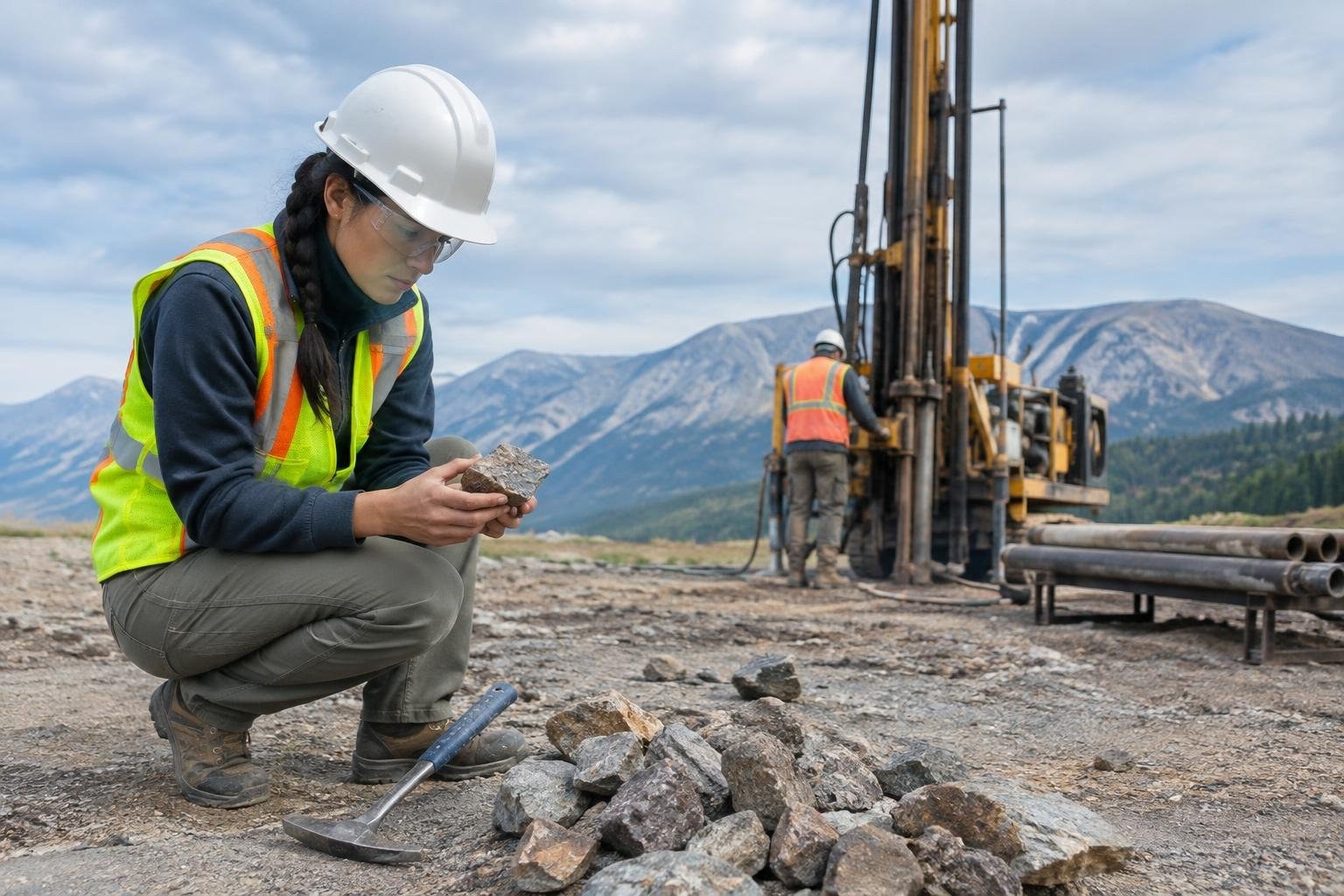
Geological engineering fieldwork and subsurface investigation
What Is Geological and Geophysical Engineering?
What Is a Geological and Geophysical Engineering Degree?
Geological and geophysical engineering is an interdisciplinary area that applies engineering approaches to the study and practical use of Earth materials and subsurface conditions. It draws on geology, engineering, and, depending on the program, geophysics and related sciences. The subject is relevant when decisions depend on understanding what lies beneath a site or how geological conditions affect a project.
The title is not used identically at every institution. Schools may offer geological engineering, geological and mining engineering, geophysical engineering, or closely related graduate programs. Compare actual requirements rather than assuming two similar program names have identical content. Geological engineering is also distinct from a general geology degree: engineering programs include an applied engineering framework, while geology programs may emphasize understanding Earth systems. Departments can explain the balance in their own curriculum.
The supplied university examples include a bachelor’s program at Montana Tech, graduate master’s and doctoral study at several institutions, and a graduate certificate related to geoanalytics and geointelligence at Missouri S&T. This variety does not mean every credential is offered at every school. Montana Tech lists undergraduate and graduate geological engineering options, while graduate pathways appear at Wisconsin, Missouri S&T, Michigan Tech, and the University of Nevada, Reno.
What Students Study
What Do Students Study?
Coursework depends on the degree level and department. Broadly, expect study that connects engineering practice with geology or geophysics. An undergraduate plan may establish fundamentals before students move toward specialized topics. Graduate programs commonly allow more focused coursework, research, or professional study. Ask for the current catalog and degree map; a program name alone does not reveal how much time is devoted to each area.
Possible advanced subject areas are visible in specific program descriptions. Colorado School of Mines, for example, lists mineral deposits, mineral exploration, applied geophysics, applied geochemistry, structural geology, petrology, field geology, and economic evaluation among the core areas for its non-thesis professional master’s in mineral exploration. This is a program-specific example, not a standard course list for every geological engineering degree.
Some departments emphasize research. Wisconsin describes graduate training leading to an MS and PhD, and Missouri S&T says its graduate degrees pair advanced coursework with research. Nevada Reno identifies research-oriented MS and PhD degrees, including interdisciplinary hydrologic sciences programs. Ask whether your intended pathway includes a thesis, project, field experience, laboratory work, or other practical requirements, and whether those activities are available to students in your chosen format.
Questions to ask about the curriculum
Which engineering, geology, geophysics, and quantitative courses are required?
Can students choose a focus such as geotechnical work, hydrogeology, mining, or mineral exploration?
What field, laboratory, research, or project work is expected?
How does the department help students find supervised experience relevant to their goals?
Skills Developed in Geological Engineering
Skills You Can Develop
Because programs bring together engineering and Earth science, students can develop ways to connect physical conditions with practical decisions. The exact skill set follows the courses and specialization. A research-oriented degree may emphasize forming questions, analyzing evidence, and communicating results; a professional program may place more weight on applying selected technical topics to practice.
Scientific and technical reasoning: interpreting geological or geophysical information in the context of an engineering question.
Analytical thinking: comparing evidence and explaining the limits of a conclusion.
Communication: presenting technical findings clearly to colleagues, project teams, or decision-makers.
Research and project skills: developing a focused investigation or completing advanced coursework where the program requires it.
Specialized knowledge: building depth in areas such as geotechnical engineering, hydrogeology, mining, geophysics, or mineral exploration when those options are available.
When comparing departments, ask students and faculty which tools, methods, and deliverables are taught. Do not assume that a particular software package, field method, or professional competency is standard unless it appears in the curriculum or is confirmed by the department.
Who Is This Degree For?
Who Might This Program Suit?
This field may appeal to students who are curious about how Earth materials and subsurface conditions affect engineering decisions. It can be a fit for people who enjoy connecting scientific evidence to practical problems and who are open to combining more than one discipline. Students interested in geotechnical topics, geophysics, water, mining, petroleum, or mineral exploration can investigate whether a school has relevant coursework or research.
You do not need to arrive with a fixed specialization. But you should be ready to explore both engineering and Earth science and to check the academic demands of the specific curriculum. Talk with an advisor about required preparation in mathematics, science, and any technical subjects before applying. The research supplied here does not establish universal admission prerequisites or a single required personality profile.
Does Geological Engineering Match You?
Salary, perceived prestige, and broad claims about demand cannot tell you whether you will enjoy the day-to-day subject matter. Consider whether you want to work with technical evidence about the Earth, whether you are comfortable with a cross-disciplinary degree, and whether you can see yourself pursuing the additional study or experience required for your target role. Assessment.com’s MAPP assessment, Degree Matching, and Career Matching can help you reflect on interests and preferences alongside program research. Use those tools as prompts for exploration, not as substitutes for reviewing course requirements and speaking with professionals.
Admissions, Length, and Difficulty
Admissions, Time to Completion, and Academic Difficulty
Admission rules vary by institution and credential. For undergraduate programs, review the school’s application requirements and ask whether there are prerequisites or recommended preparation for the major. For graduate study, confirm whether applicants need a related bachelor’s degree, particular coursework, research interests, or other application materials. The evidence shows that one Colorado School of Mines doctoral program welcomes applicants from geophysics as well as allied fields including geology, physics, mathematics, computer science, and electrical engineering. That example applies to that program; it does not guarantee admission or establish a rule for all departments.
Completion time depends on the credential, enrollment pace, prior credits, research or thesis requirements, and the university’s structure. The available information establishes examples of bachelor’s, master’s, PhD, and certificate offerings but does not support a universal timeline. Request a degree map showing the usual sequence and ask how transfer credits, part-time study, and prerequisites affect time to finish.
The challenge is the combined disciplinary focus. Graduate students may also face advanced coursework and sustained research. Before enrolling, review sample course descriptions, ask about math and science preparation, and speak with an advisor about tutoring or academic support. If possible, attend an information session or talk to current students about how they manage field, laboratory, project, or research expectations.
Online vs. On-Campus Programs
Online, Hybrid, and On-Campus Study
Do not assume that a geological or geophysical engineering program can be completed entirely online. Delivery format and practical requirements depend on the school, credential, and course selection. A program might have online coursework while still requiring campus-based laboratories, field experiences, research access, or in-person milestones. The supplied program descriptions do not establish which offerings are fully online.
Before choosing a remote or hybrid option, ask the department to identify every in-person requirement, where it takes place, and whether students arrange and pay for travel. Confirm how distance students access advising, equipment, research supervision, and any required field or laboratory learning. Get the answer for your intended course plan, not just the department’s general statement about online learning.
Cost and Financial Aid
Cost, Financial Aid, and Affordability
There is no single reliable price for a geological engineering degree. Total cost depends on the school, credential, residency classification, enrollment pace, delivery format, fees, and the length of study. A field-based or research pathway may also involve costs that are not obvious in tuition alone. Ask each institution for a complete estimate for your specific plan, including tuition, mandatory fees, books, equipment, travel, and living expenses where applicable.
Build a side-by-side comparison that separates the published tuition rate from your estimated out-of-pocket cost after grants, scholarships, assistantships, employer support, or other aid. Ask about renewal requirements and whether funding is guaranteed for the full program or awarded one term at a time. Graduate applicants should ask departments directly about research or teaching assistantships and which costs an award actually covers. Do not treat an advertised award as guaranteed aid until you receive the terms in writing.
Ways to manage the cost
Compare public and private institutions and ask how residency affects the estimate.
Check whether previous coursework can transfer before enrolling, and obtain a written credit evaluation.
Ask whether part-time study changes total fees, aid eligibility, or the time needed to finish.
Review scholarships, grants, assistantships, and employer education benefits with the financial-aid office.
Include commuting, field travel, equipment, and the cost of any required in-person sessions.
Affordability is more than the lowest quoted tuition. Compare the likely total cost with your education goals, available support, expected completion path, and the additional credentials or experience your intended career may require.
Careers and Employment Outlook
Find out which Career or College Major is right for you!
A geological or geophysical engineering degree can connect to work involving the Earth and subsurface, but the title alone does not guarantee access to a job or establish a salary. The supplied program descriptions identify possible areas of study and specialization, not employment rates, median wages, or projected job growth. Research current occupation-specific data before making a financial decision, and distinguish a degree’s subject area from the qualifications an employer lists for a particular opening.
Career direction to investigate
How the study may connect
What to verify
Geotechnical engineering-related work
Some geological engineering programs offer geotechnical specialization.
Required degree, experience, and any applicable professional credential.
Geophysics-related work
Programs may combine engineering with geophysical study and methods.
Technical methods, software, and degree level requested by employers.
Hydrogeology and water-related study
Some departments offer hydrogeology or interdisciplinary hydrologic sciences.
Whether roles require graduate study or particular applied experience.
Mining or mineral exploration
Some programs offer mining focus areas or mineral exploration coursework.
Employer requirements, location, work setting, and relevant field experience.
Petroleum-related work
Petroleum is listed as a potential specialization at one undergraduate department.
Current hiring patterns and the specific qualifications for each role.
Research or university study
MS and PhD programs may include advanced coursework and research.
Whether the position requires a doctorate, research record, or other credentials.
For each target occupation, search current postings and authoritative U.S. labor-market sources for pay and outlook by job title and region. Evaluate the duties, education level, experience, and credentials employers request. Technology and tools can change how technical work is performed; ask departments and employers which methods are currently used rather than assuming that automation will eliminate or guarantee work in a field.
Accreditation, Licensure, and Certifications
Program accreditation and professional licensure are separate questions. Check the institution’s official accreditation information and confirm program-specific status with the school and the relevant recognized accreditor. If you intend to work in a role that involves professional engineering responsibilities, contact the licensing board in the state where you may practice and ask about education, examination, experience, and application requirements.
Do not assume that earning a degree automatically provides a professional license or that one certificate qualifies you for every role. Ask employers what credentials matter in your intended specialty. Missouri S&T’s catalog, for example, describes a Geoanalytics and Geointelligence Certificate Program with degree-background or graduate-admission eligibility conditions. That certificate is a specific option, not a general substitute for an engineering degree or professional license.
Graduate School and Career Progression
Graduate Study and Career Pathways
Further study can provide deeper specialization, research preparation, or a route into a particular technical area. Universities in the supplied research offer MS and PhD pathways in geological engineering or related disciplines. Colorado School of Mines describes a professional, non-thesis master’s in mineral exploration, while Nevada Reno describes research-oriented master’s and doctoral study. These examples illustrate different purposes: a professional coursework-focused option and research-focused degrees are not interchangeable.
Possible progression depends on performance, experience, employer requirements, and available opportunities. For example, a student might study geological engineering, seek an entry-level role aligned with a program’s focus, gain relevant project experience, and later pursue a specialization or graduate degree. This is an illustration, not a guaranteed sequence. A PhD may make sense for a research goal; a master’s may suit someone seeking advanced study in a defined area; others may prefer to enter work after undergraduate study.
Some doctoral programs consider applicants from allied fields. Colorado School of Mines invites applications to a geophysics and geophysical engineering PhD from applicants with backgrounds including geology, physics, mathematics, computer science, or electrical engineering. Check each program’s current admission terms before planning a transition between disciplines.
Related Degrees and Comparisons
Related Degrees and Alternatives
Consider related subjects if you want a different balance of engineering, Earth science, or specialization. Program titles and course content differ, so compare degree maps before choosing.
Geology: Consider this if you want to focus more directly on understanding Earth materials and processes than on an engineering curriculum.
Geophysics: Consider this if you are drawn to physical methods for studying the Earth and subsurface.
Civil engineering: Consider this if you want a broader civil engineering route and will choose geological or geotechnical subjects where available.
Mining engineering: Consider this if your primary interest is mining rather than a wider geological engineering foundation.
Hydrologic sciences: Consider this if your main focus is water-related Earth systems and research.
Environmental engineering: Consider this if you want an engineering program centered on environmental problems rather than subsurface engineering broadly.
Engineering science: Consider this if you want an interdisciplinary technical foundation and will select an area of focus through electives or later study.
These are comparison prompts, not claims that every school offers these exact majors or that they lead to identical jobs. Michigan Tech and Nevada Reno list geology, geophysics, and geological engineering among department graduate options; Nevada Reno also identifies hydrologic sciences as an interdisciplinary area. Ask each department how its curriculum differs and what further education a target career expects.
How to Choose the Right Program
How to Choose a Geological Engineering Program
Compare more than the name and headline tuition. Build a shortlist based on your intended credential and career direction, then use the same questions for every department.
Curriculum: Compare required courses and elective choices in engineering, geology, geophysics, and any intended specialization.
Practical learning: Ask what fieldwork, laboratories, research, projects, or internships are available and required.
Faculty and facilities: Find out whether faculty research or facilities align with the topics you want to explore.
Credential and pathway: Confirm whether the degree is undergraduate, professional graduate, research graduate, or a certificate, and what it qualifies you to pursue next.
Accreditation and licensing: Verify institutional and program status directly, then check state requirements for your intended work.
Format and completion: Get a written account of online, hybrid, campus, field, and research obligations, along with a realistic degree plan.
Total cost and aid: Request a personalized estimate and written aid terms, including any travel or equipment costs.
Career support: Ask for information about internships, employer connections, career advising, and outcomes by program where the school can substantiate them.
Assessment.com’s education-matching tools, including Degree Matching and Career Matching, may help you explore options against your interests. Use the results to generate questions and compare programs; verify all academic, cost, and professional requirements with the institutions and licensing authorities.
Questions to Ask Before Enrolling
Use this checklist with an admissions counselor, department advisor, and financial-aid office:
What is the exact degree or certificate awarded, and what are the current admission requirements?
Which courses and specializations are offered in the next academic year?
What field, lab, research, or project work is mandatory?
Which program and institution accreditations apply, and where can I verify them?
Could my intended job require licensure, certification, or a graduate degree?
What is my complete estimated cost, including fees, books, equipment, field travel, and housing?
Which grants, scholarships, assistantships, or employer benefits am I eligible for, and what conditions apply?
How many credits can transfer, and can I get a written evaluation before enrolling?
What is the actual delivery format, including in-person requirements?
Can the department share career services, internship access, employer recruiting, or outcomes data for this program?
Save answers and compare them across schools. If a response is unclear, ask for the relevant policy, course catalog, cost estimate, or licensing guidance in writing.
Frequently asked questions
What is geological and geophysical engineering?
Geological and geophysical engineering combine engineering methods with knowledge of Earth materials and processes. Programs may prepare students to assess subsurface conditions and contribute to work involving geotechnical engineering, geophysics, hydrogeology, mining, petroleum, or mineral exploration. The specific focus depends on the curriculum and degree level.
Is geological engineering difficult?
It can be demanding because the field combines engineering and earth science, and students should review the mathematics, science, field, and laboratory expectations of individual programs. Graduate courses and research may add specialized technical work. Ask a department for a sample study plan and speak with current students before deciding.
Is a geological engineering degree worth it?
Some schools offer geological engineering at the bachelor’s level, while many listed examples in the supplied program information concern graduate study. A specific degree’s value depends on its curriculum, accreditation status, total cost, experiential learning, and how well it connects to your intended work. Compare these factors rather than relying on the degree title alone.
What jobs can you get with geological engineering?
Potential directions include work connected to geotechnical engineering, geophysics, hydrogeology, mining, petroleum, and mineral exploration. The degree does not guarantee qualification for a particular job. Review employer requirements and determine whether the role needs a specific degree, experience, certification, or professional license.
How much do geological engineers earn?
Pay and demand vary by occupation, employer, location, experience, and education. For a realistic estimate, identify specific job titles and check current U.S. Bureau of Labor Statistics and O*NET data.
Can you earn a geological engineering degree online?
Online availability varies by school and program. Ask whether lectures, labs, fieldwork, research, and any required campus sessions can be completed remotely. Geological and geophysical subjects may involve practical or location-based learning, so confirm the exact requirements in writing before enrolling.
What are the admission requirements for geological engineering?
Requirements vary by institution and credential. Before applying, check each program’s admissions page for prerequisite coursework, transcripts, test policies, application materials, and any prior-degree requirements. A graduate program may consider applicants from related academic backgrounds, but eligibility is determined by the school.
Do you need a master’s degree or PhD in geological engineering?
A graduate credential may be useful for advanced coursework or research, but it is not automatically required for every role. Several universities offer master’s and doctoral study in geological engineering or related fields. Match further study to a specific career goal and verify employer and licensing expectations for that work.
People Also Ask
What is the difference between geological engineering and geology?
The name signals a blend of engineering and Earth science, but the balance differs across departments. Check the curriculum for engineering fundamentals, geology or geophysics, applied coursework, and supervised practical learning. Ask the school how students choose a specialization and whether the degree is designed for professional practice, research, or both.
Can you become a geological engineer with a bachelor’s degree?
A bachelor’s program may support entry into work related to the field, but available job titles and eligibility depend on the program and employer. Confirm that the undergraduate curriculum includes relevant technical preparation and practical experience. Some specialized research or advanced technical roles may favor graduate education.
What specializations are available in geological engineering?
Geological engineering programs may offer focus areas such as geotechnical work, geophysics, hydrogeology, mining, or petroleum engineering. For example, Montana Tech lists these areas among its program specializations. Verify current offerings and required courses directly with the school before applying.
What courses do geological engineering students take?
A geological engineering curriculum may combine engineering and earth-science study, but required courses are institution-specific. Ask departments for a current degree plan, course descriptions, and information about field, lab, research, or design work. A sample schedule can show whether the balance fits your interests.
How long does a graduate program in geological engineering take?
A professional master’s in mineral exploration at Colorado School of Mines requires at least 30 credit hours, with specified coursework across selected core areas. That is one program example, not a universal graduate-degree length or credit requirement. Compare credit totals and thesis or project expectations at each school.
Does geological engineering require a professional license?
No single credential applies to every geological engineering job. Professional licensure and other certifications depend on the occupation, jurisdiction, and duties. Ask the program and the relevant state licensing board what rules apply to your intended role; do not assume that earning a degree by itself grants a license.
Geological and geophysical engineering may suit students who want to apply engineering and earth science to practical questions about the ground, water, natural resources, and safe land use. Programs can lead toward bachelor’s, master’s, or doctoral study, but the exact curriculum, professional requirements, costs, and career routes depend on the school and the work you hope to do. Compare programs carefully, ask how graduates build relevant experience, and consider whether the subject matter fits your interests as well as your academic strengths.
Want to see your options? Try our comprehensive Degree, Program & College Search tool
We use cookies to offer you a better browsing experience, analyze site traffic and personalize content.
Read about how we use cookies and how you can control them in our
Privacy Policy.
If you continue to use this site, you consent to our use of cookies.
×
Exciting News!
Be one of the first to Beta Test the new AI-Powered Assessment.com Platform.