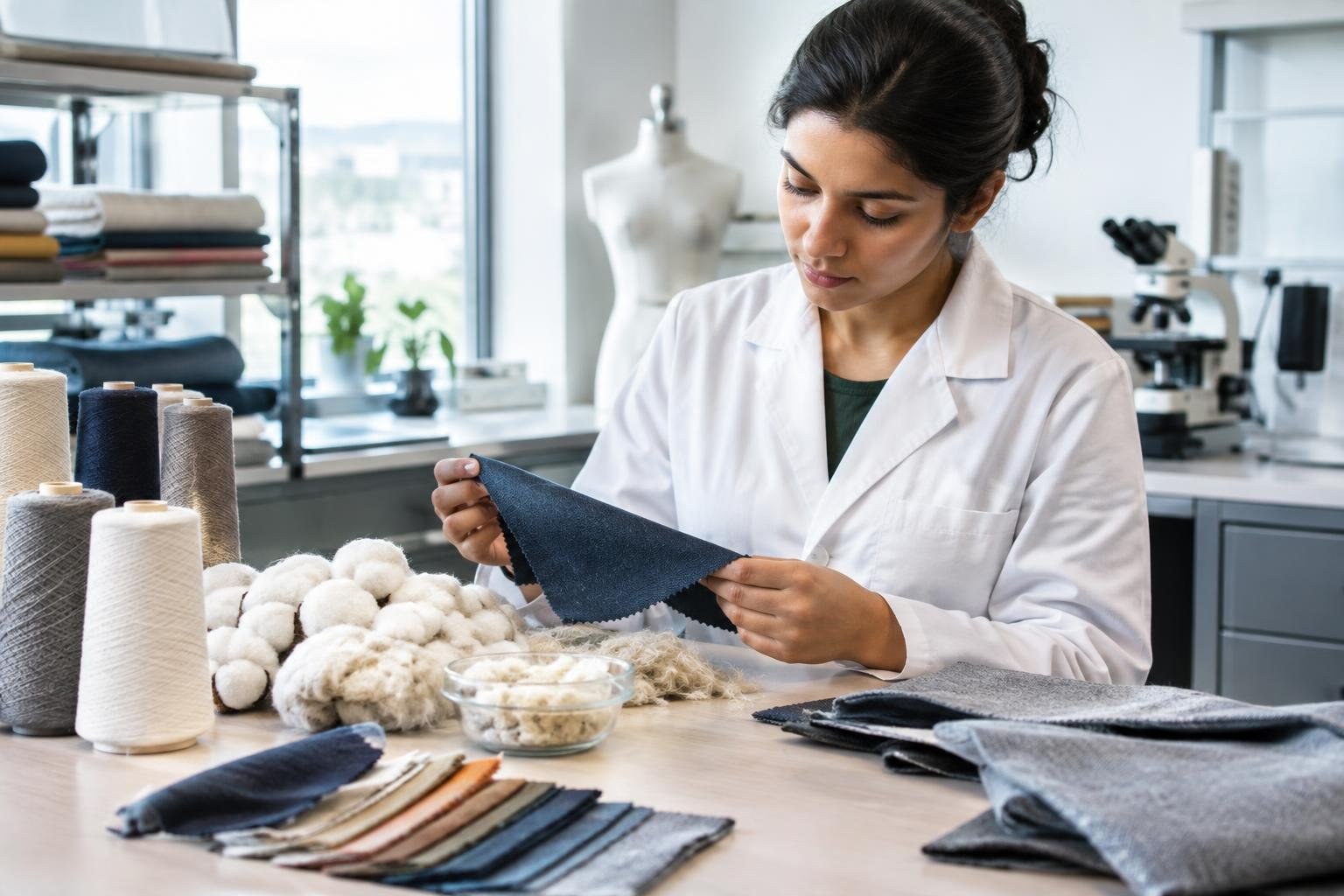
Textile Science: Compare Materials, Fashion, and Career Pathways
Textile science programs range from material evaluation to fashion merchandising and broader family and consumer sciences. Learn how to compare their coursework, practical work, costs, and career possibilities.
By David Slack · Staff Writer Assessment.com · Published October 7, 2026 · Last updated November 5, 2026
Textile science is not one standardized college major. At one school, it may mean studying fiber properties and examining fabric performance; elsewhere, textiles may sit inside a fashion or family and consumer sciences degree. That difference affects what you spend time learning and which kinds of work you may want to explore. This guide compares those approaches through their curricula and practical assignments, so you can identify the program structure that best matches your interests. For broader exploration, compare related fields on Assessment.com and consider the Free MAPP Assessment as one input to your decision.
Degree & Program Decision Insights
Explore your personal fit, education requirements, career potential and next steps.
01Motivational Fit
Discover whether this program fits you
Explore your preferences against the focus of Textile Science. These prompts are not personal MAPP results.
Subject curiosity. Would you choose to explore “the chemical and physical properties of textile materials” in depth? Ask for a sample learning activity to test that interest.
Breadth of interest. Consider the place of “end-use analysis” in this field. Is this another part you would choose to explore, or mainly a requirement you would tolerate?
Work reality. Related work can involve this task: “Recommend materials for reliable performance in various environments.” Would you want that activity to be a regular responsibility?
Interest in studying a field can differ from enjoying its related work.
Which part would you want to do repeatedly, and what would you try before deciding?
Discover Your Personal Program Fit
Before investing your time and money in your education, discover how this program aligns with your natural motivations, work preferences and career goals.
U.S. occupational wages are not guaranteed graduate earnings; OEWS excludes self-employed workers.
Projected openings include replacements as well as growth.
U.S. national estimates. A crosswalk does not establish entry-level eligibility; advanced, management and teaching roles can require further qualifications.
Compare the actual offering and credential before committing your time or money.
Request the itemized fees, materials and equipment associated with “the chemical and physical properties of textile materials”; confirm what tuition includes.
Compare the full attendance budget, course availability and time away from paid work, rather than tuition alone.
No institution- and credential-matched cost, debt or graduate-earnings amount is reported here; occupational pay is not program ROI.
Financial aid depends on the school, program and student’s eligibility.
Compare the focus and route of these distinct instructional fields; their credentials and admission requirements are not interchangeable.
Textile Sciences and EngineeringCIP 14.2801. Compare the official Textile Sciences and Engineering field description and actual course requirements; confirm which parts support your intended specialization.
Apparel and Textile ManufactureCIP 19.0902. Compare its emphasis on functional and aesthetic design and human factors research with this program’s focus.
Apparel and Textile Marketing ManagementCIP 19.0905. Compare its emphasis on applicable principles of textile and apparel design and manufacturing and sales and distribution systems with this program’s focus.
Explore your motivations. Use MAPP as a starting point for reflecting on your interest in “the chemical and physical properties of textile materials”, then test that interest against a sample learning task.
Examine the work. Compare Materials Scientists and Interior Designers on daily work and entry qualifications, as well as pay. Explore Materials Scientists.
Compare actual providers. Ask for the exact credential, course sequence and assessment methods. Compare how each provider teaches “end-use analysis”, its entry criteria and its itemized costs.
Check the evidence before applying. Confirm prerequisites and any recognition or professional requirements for your intended route; ask for applicable rules and published outcome definitions in writing.
Verify the institution’s current offering, admissions requirements and outcomes; a search result does not establish your eligibility.
Textile science can describe a subject within a larger degree, rather than the exact name of a student’s credential. Sacramento State’s family and consumer sciences catalog describes introductory study of fiber properties, textile performance, and microscopic fiber and fabric evaluation. New Mexico State University lists a course called Textile Science. These examples show why students should distinguish a course from a concentration or a full degree.
Look first at the credential awarded, then map the required textile courses. A textiles option within fashion design and merchandising may combine materials with fashion and apparel subjects. A family and consumer sciences degree may place textiles alongside other areas. Use the Assessment.com degree directory to explore fields, but confirm the exact curriculum with the college.
Program labels do not promise a particular level of technical depth. Count the required courses that address fibers, fabric evaluation, product analysis, or testing, and compare them with courses in design, consumers, and business. That course-by-course view is more useful than the title alone.
Read the Curriculum as Three Different Kinds of Study
Course lists reveal the intellectual balance of a textile program. A materials-centered sequence may introduce physical and chemical fiber properties and connect them to product performance. Sacramento State also describes microscopic evaluation of fibers and fabrics. Those topics point toward close observation and comparison, rather than fashion styling alone.
Other programs connect textiles to the choices made around products. Texas State’s fashion merchandising curriculum includes culture and consumer behavior, textile product analysis, buying principles, fashion history, economics, administration, and promotional strategies. Its broader family and consumer sciences coursework also addresses textile identification, care labeling, and sustainability-related developments in fiber and production. Together, these examples show that textile study can connect material knowledge with consumer and industry questions.
When reading a catalog, sort courses into three groups: material properties and testing; fashion, apparel, and design; and consumers, buying, or promotion. Mark which are required and which are electives. That exercise shows whether a pathway keeps textiles at its center or uses textile knowledge as one component of a larger specialty.
For a wider comparison, browse Assessment.com’s fashion designer career guide and compare the career direction with the actual courses offered by schools.
Find Out What Hands-On Study Actually Involves
A course title may sound practical without showing what students will actually do. Look for the activity behind the title: Does the class examine a sample, compare product characteristics, interpret a test, or make a recommendation? Ask whether students complete laboratory assignments, written analyses, presentations, or projects, and whether these experiences are required.
One specific example is California State University, Northridge’s textiles option within a bachelor’s degree in fashion design and merchandising. Its listed courses include textiles testing and evaluation with a lab, along with introductory textiles and an academic internship. That combination ties material study to evaluation and workplace experience, but it is an example of one degree plan, not a standard requirement across colleges.
Request a sample syllabus or assignment description if practical learning matters to you. Ask how students gain experience if they cannot attend campus regularly, and whether the internship is required or optional. A clear answer helps you decide whether the program’s applied work matches your preferred way of learning.
Choose Between Material Depth, Fashion Business, and Broad Study
Textiles can be the technical core of a program or one part of a wider study of fashion and consumers. To compare these directions, ask what kinds of questions interest you. Would you rather investigate why materials differ, study how textile products perform, or examine how consumers and businesses choose fashion products? Your answer can guide which required courses deserve the closest review.
Texas State’s fashion merchandising major includes subjects such as textile product analysis, buying, consumer behavior, fashion economics, and promotion. Northridge’s textiles option combines textiles coursework with fashion, apparel, testing, and an internship. These examples demonstrate different balances, not universal definitions of the fields.
For another contrast, Utah State University’s family and consumer sciences education curriculum spans financial literacy, relationships, child development, apparel and textiles, interior design, nutrition and foods, and leadership. That breadth may appeal to students who want more than a textiles or fashion specialization. Virginia State University also describes a family and consumer sciences degree with concentration areas including family, child, and community services and dietetics.
Compare these pathways by required courses, not assumptions. Assessment.com’s degree directory and college search can support exploration; confirm all program details with the institution.
Connect Coursework to Careers Without Assuming a Job Guarantee
Possible job directions should be treated as research questions, not promised outcomes. Material properties and textile evaluation may be relevant to work involving testing or product analysis. Fashion merchandising subjects can relate to buying, consumer decisions, and promotion. Fashion design and apparel courses point to a different mix of creative and product-focused preparation.
The supplied program descriptions do not establish occupation-level pay, employment projections, or a guaranteed job after graduation. Instead of applying a salary figure to the degree as a whole, identify exact job titles that interest you. Review current postings for the qualifications they request, then ask a department what practical coursework or experience its students can gain.
Some related careers may involve additional academic or workplace preparation. For example, a materials science direction is not the same as a textile course sequence. Explore Assessment.com’s materials scientist career guide to compare the occupation with your interests, then verify its requirements independently. For fashion, the fashion designer guide provides another point of comparison.
Keep the distinction clear: a degree shows what you studied; an employer’s requirements determine what preparation a specific role expects.
Check the Delivery Plan and the Route to Completion
The available examples do not define one standard delivery format for textile science. A program with testing and evaluation coursework may include laboratory activity, as Northridge’s textiles option does. That does not establish that every college requires campus attendance, so check the delivery mode of each required course rather than relying on a general online-program label.
Ask for the course-by-course plan. Which classes are online? Does the lab meet in person? Are internships or other required experiences tied to a particular location or schedule? If you need remote flexibility, ask how students complete evaluation work and whether all required courses are offered in a sequence that fits your timeline.
Admissions, transfer rules, and time to completion also depend on the institution. Request current requirements and a degree map, and get a transfer-credit decision from the college before estimating how many courses remain. If the program is an option within a broader major, ask whether admission to that option has separate steps.
These practical questions are especially important when comparing a technical path with a merchandising or broader family and consumer sciences sequence, since the required forms of coursework may differ.
Build a School-Specific Cost Comparison
Compare total expenses at the program level, not by assuming that textile science has one standard price. Ask each college for tuition and required fees, then add books, supplies, housing or transportation, and any course or lab expenses the institution identifies. If classes require campus visits or an internship, include those logistics in your own estimate.
Request a financial aid estimate that distinguishes grants and scholarships from loans. Compare what you would pay after aid and how the estimate changes if transfer credits do not apply as expected. The supplied college catalogs describe coursework and program structures, but do not provide a reliable shared tuition figure or a field-wide salary that would support a universal return-on-investment calculation.
Use a short comparison sheet for each school: estimated cost, required courses, practical work, format, and any extra education connected to your career interests. If you are considering borrowing, make your decision using your own aid offer and the requirements of specific jobs you are investigating, not a broad promise about the industry.
Use Projects and Internships to Test a Career Direction
Practical experience is most useful when it helps you test a particular direction. A lab or evaluation assignment can help you decide whether material-focused work interests you; an internship can expose you to a workplace setting. Northridge’s textiles option lists both testing and evaluation with a lab and an academic internship. Other schools may organize experience differently, so ask what is available and how students are assessed.
Keep examples of work you are allowed to share, such as a project summary or product analysis. Be prepared to describe the question, your approach, and what you concluded. For a merchandising interest, ask whether the curriculum includes buying, consumer behavior, or promotional work. For a technical interest, ask which required courses involve fiber properties, textile evaluation, or testing.
Do not infer that a course about care labeling or textile identification grants professional authority or a credential. The supplied program information does not establish a universal textile science license or certification. For a role with particular qualifications, check employer requirements directly. If you are interested in teaching, verify the applicable preparation and licensure with the relevant state agency and intended employer.
Decide Whether Further Study Serves a Specific Goal
Graduate study is a choice to make for a defined reason, such as pursuing more advanced subject study or meeting a requirement for a particular role. The University of Wyoming’s family and consumer sciences master’s program lists emphases that include merchandising and textiles, alongside nutrition and design. This is one example; it does not establish that a graduate degree is required for textile-related work generally.
Before applying, compare the graduate curriculum with your undergraduate preparation and the requirements of the job you want. Ask whether an employer requires the credential, prefers it, or does not mention it. Then weigh the added courses, time, and cost against the purpose you identified.
Broader alternatives also exist. A family and consumer sciences education curriculum may span multiple subject areas, while a fashion merchandising curriculum can lean toward consumers and business decisions. If your goal is a design-focused career, compare the coursework and practical expectations with those of fashion design. Assessment.com’s degree directory can help you explore adjacent fields; the specific degree plan remains the authoritative guide to what a college offers.
Make a Decision From the Required Courses and Work
Use a program comparison built around the work you want to learn, rather than selecting by title or a broad career claim. For each college, record the credential, required textile courses, lab or evaluation work, and whether fashion, merchandising, or family and consumer sciences subjects take up a substantial part of the plan. Northridge’s textiles option, for example, combines introductory textiles and testing with fashion courses and an internship. Texas State’s fashion merchandising curriculum includes consumer, buying, economic, and promotional subjects as well as textile product analysis.
Then check the practical details that could change your decision: delivery mode for required courses, transfer-credit treatment, total cost after aid, and the availability of internships or projects. Ask what the college can document about graduate outcomes, without treating a broad major name as evidence of a specific job result.
Finally, compare the curriculum with your own preferences. Do you want repeated material evaluation, fashion and consumer decision-making, or a wider study plan? Explore related degrees and careers through Assessment.com, including its career directory. Use the Free MAPP Assessment as one starting point for exploring options, not as a substitute for course and cost research.
Frequently asked questions
What does textile science focus on?
Textile science examines fibers and fabrics, their properties, and how those properties matter in product selection, performance, use, and care. Programs may treat the topic as a dedicated course, a concentration, or part of a broader degree.
Is textile science mostly chemistry and lab work?
Not always. Some programs include technical study of fiber properties and textile evaluation, while others combine textiles with fashion, merchandising, or wider family and consumer sciences coursework. Look at required courses and lab work to understand the demands of a specific program.
What careers can textile science study connect to?
Potential directions to investigate include textile testing or evaluation, fashion merchandising, buying, product analysis, and fashion design. Coursework alone does not establish eligibility for a particular job. Review current job postings and ask programs what experience and qualifications graduates pursue.
How much does a textile science degree cost?
There is no single cost for this field. Tuition, fees, supplies, living expenses, and any travel or in-person coursework vary by college and student. Request a school-specific estimate of total cost and financial aid before comparing programs.
Can I study textile science online?
The available program examples include a textiles option with testing and evaluation coursework and a lab, but they do not establish a universal online format. Ask each college which required classes and practical activities need campus attendance.
Do textile science students need a master's degree?
Some students may find a graduate program useful for advanced study or a specific career goal. The University of Wyoming lists a merchandising and textiles emphasis in its family and consumer sciences master's program. Check the job requirements and graduate curriculum before deciding whether further study is worthwhile.
People Also Ask
What does a textile scientist study?
Textile science studies fibers and fabrics, including properties that can affect product performance, evaluation, selection, use, and care. The depth and emphasis vary by course and program.
Is textile science a standalone degree?
It may be a course, an option within a broader degree, or part of a family and consumer sciences or fashion program. Check the credential name and required curriculum at each college.
What classes might I take in textile science?
Examples in the supplied college catalogs include introductory textiles, textile science, textile product analysis, and textile testing and evaluation. Some related programs also cover fashion, consumers, or merchandising.
How should I compare textile science programs?
Start with the program’s actual course requirements. Compare the amount of material evaluation, fashion or merchandising study, lab work, and broader subject matter rather than relying on the degree title.
How is textile science different from fashion merchandising?
Textile science centers on material properties and product evaluation. Fashion merchandising courses may focus more on consumers, buying, fashion economics, and promotion. Some curricula combine both areas.
Textile science can be a focused study of materials, a route into fashion merchandising, or one part of a broader family and consumer sciences education. Those paths are not interchangeable. Compare the required courses, hands-on work, and outcomes each program can document, then weigh those details against your interests and budget. Explore related careers and degree options on Assessment.com, and use the Free MAPP Assessment as one starting point for considering what fits you.
Find out which Career or College Major is right for you!
We use cookies to offer you a better browsing experience, analyze site traffic and personalize content.
Read about how we use cookies and how you can control them in our
Privacy Policy.
If you continue to use this site, you consent to our use of cookies.
×
Exciting News!
Be one of the first to Beta Test the new AI-Powered Assessment.com Platform.