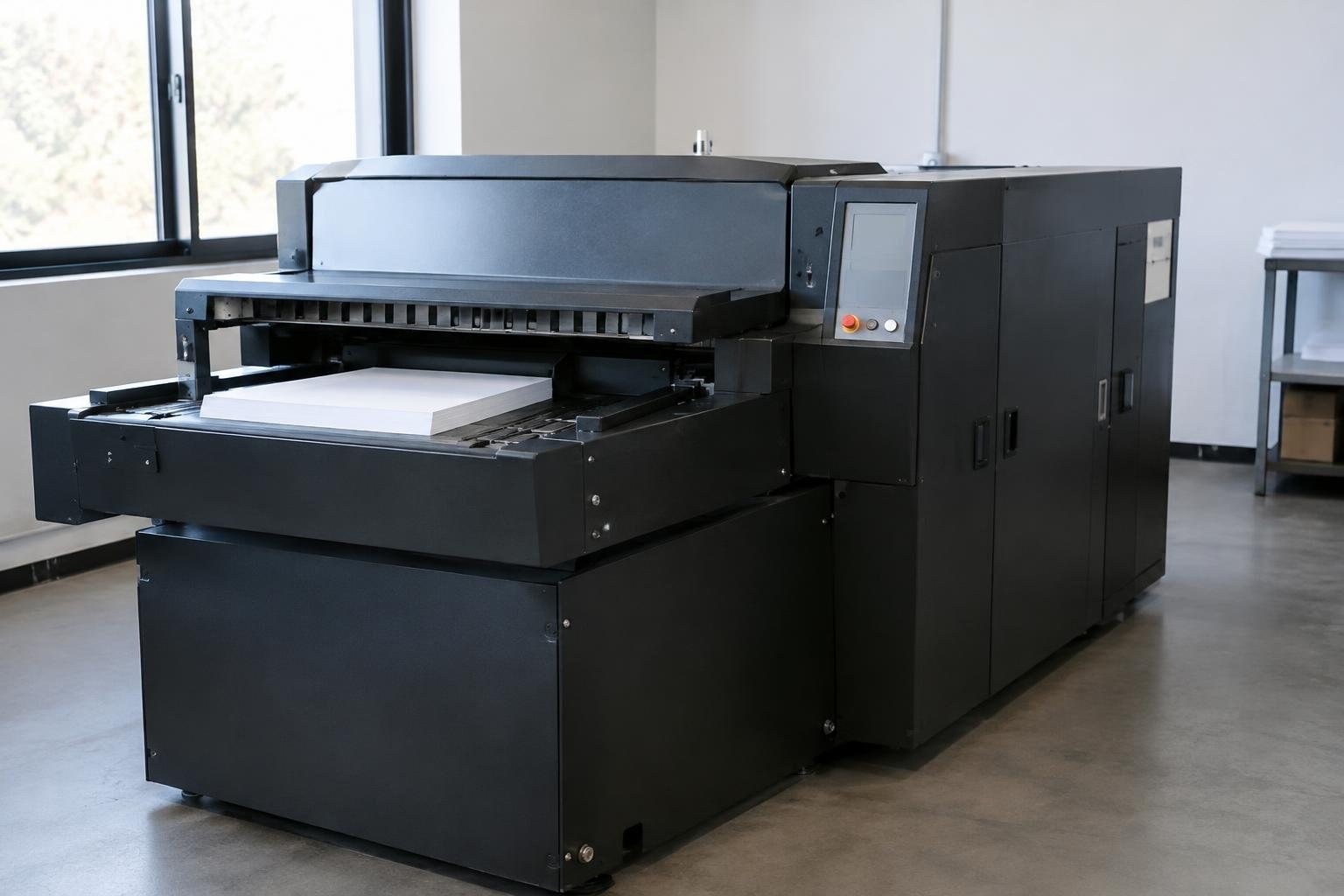
Computer Typography and Composition Equipment Operator: Program Guide
A practical guide to Computer Typography and Composition Equipment Operator programs: what the CIP title means, what to verify in a curriculum, possible career directions, and how to compare schools.
By Tome Fierre · Staff Writer Assessment.com · Published October 7, 2026 · Last updated November 5, 2026
Computer Typography and Composition Equipment Operator is a program title associated with computer-based typography and composition equipment. It falls within the broader Communications Technologies/Technicians and Support Services area, described as preparing people for equipment-operator, support-technician, and operations-management functions in graphic communications and related media industries. The specific subjects, credential, and practical experience vary by college, so the title alone is not a complete description of what you would study. This guide is for students and families comparing programs. It explains how to investigate curriculum, costs, hands-on instruction, and career relevance without assuming that every school offers the same training or that completing a program guarantees a particular job. Not sure whether this program fits you? Take the Free MAPP Career Assessment to see how your motivations, interests, and natural preferences align with this kind of study and related careers.
Degree & Program Decision Insights
Explore your personal fit, education requirements, career potential and next steps.
01Motivational Fit
Discover whether this program fits you
Explore your preferences against the focus of Computer Typography and Composition Equipment Operator. These prompts are not personal MAPP results.
Subject curiosity. Would you choose to explore “apply technical knowledge and skills to design and execute page formats” in depth? Ask for a sample learning activity to test that interest.
Breadth of interest. Consider the place of “layouts and text composition” in this field. Is this another part you would choose to explore, or mainly a requirement you would tolerate?
Work reality. Related work can involve this task: “Prepare sample layouts for approval, using computer software.” Would you want that activity to be a regular responsibility?
Interest in studying a field can differ from enjoying its related work.
Which part would you want to do repeatedly, and what would you try before deciding?
Discover Your Personal Program Fit
Before investing your time and money in your education, discover how this program aligns with your natural motivations, work preferences and career goals.
Typical occupational entry: associate's degree (BLS). BLS lists short-term on-the-job training as typical occupational training.
Prepress Technicians and WorkersSOC 51-5111 · O*NET 51-5111.00$48,690/year median (May 2025); -15.3% projected change (2025–2035); 2,100 projected openings/year.
Typical occupational entry: postsecondary nondegree award (BLS).
U.S. occupational wages are not guaranteed graduate earnings; OEWS excludes self-employed workers.
Projected openings include replacements as well as growth.
U.S. national estimates. A crosswalk does not establish entry-level eligibility; advanced, management and teaching roles can require further qualifications.
Compare the actual offering and credential before committing your time or money.
Request the itemized fees, materials and equipment associated with “apply technical knowledge and skills to design and execute page formats”; confirm what tuition includes.
Compare the full attendance budget, course availability and time away from paid work, rather than tuition alone.
No institution- and credential-matched cost, debt or graduate-earnings amount is reported here; occupational pay is not program ROI.
Financial aid depends on the school, program and student’s eligibility.
Compare the focus and route of these distinct instructional fields; their credentials and admission requirements are not interchangeable.
Printing Press OperatorCIP 10.0307. A program that prepares individuals to apply technical knowledge and skills to set up, operate, and maintain printing presses.
Explore your motivations. Use MAPP as a starting point for reflecting on your interest in “apply technical knowledge and skills to design and execute page formats”, then test that interest against a sample learning task.
Examine the work. Compare Desktop Publishers and Prepress Technicians and Workers on daily work and entry qualifications, as well as pay. Explore Desktop Publishers.
Compare actual providers. Ask for the exact credential, course sequence and assessment methods. Compare how each provider teaches “layouts and text composition”, its entry criteria and its itemized costs.
Check the evidence before applying. Confirm prerequisites and any recognition or professional requirements for your intended route; ask for applicable rules and published outcome definitions in writing.
Verify the institution’s current offering, admissions requirements and outcomes; a search result does not establish your eligibility.
A student reviewing a computer-based typography or composition workflow with an instructor
What Is This Program?
What Is a Computer Typography and Composition Equipment Operator Program?
Computer Typography and Composition Equipment Operator is an instructional-program title associated with CIP code 10.0308. It sits within the wider communications technologies area. The available field description identifies preparation for equipment operators, support technicians, and operations managers in film/video, recording, and graphic communications industries, while the program title itself is specifically focused on computer typography and composition equipment.
For a prospective student, the distinction matters: the broader category describes a family of training areas, not a promise that one program teaches every media discipline. Use the school’s catalog to establish what its particular offering covers. Also confirm the exact award. The same subject label can appear in different institutional contexts, and the title alone does not tell you whether a school awards a certificate, associate degree, or another credential.
Related labels may include graphic communications, prepress and digital imaging, printing management, or other communications technology programs. Treat these as options to compare, not interchangeable names. Review course descriptions and learning outcomes before deciding that one is a close substitute.
What You May Study
What You May Study: Read the Curriculum, Not Just the Title
The title suggests study connected with computer typography and composition equipment. However, the available program descriptions do not provide a standard course list. A school may define its own curriculum, so do not assume particular software, machines, production methods, or course sequences are included.
When reviewing a catalog, look for evidence that courses explain both the tools and the work they support. Ask how students learn to prepare, review, and revise typographic or composed material; how they understand production requirements; and whether assignments resemble practical work. If the program includes lab time, projects, internships, or a capstone, ask what students actually produce and how their work is assessed.
Request syllabi or representative assignments for courses that matter most to you. Ask whether software access is included, whether students need their own devices, and how often the equipment or applications are updated. These questions are more useful than relying on a broad program description, particularly when comparing a dedicated equipment-operator title with a broader graphic communications program.
Look for a clear connection among classroom instruction, practice, and the roles you might pursue. If the school cannot explain what learners do in a required course, ask for clarification before using that course as evidence of career preparation.
Who Is This Program For?
Who May Find This Program a Good Fit?
This program may appeal to students interested in how computer-based typography and composition work is supported by equipment and production processes. The broader field includes equipment-operator, support-technician, and operations-management preparation in graphic communications and related media industries. That range means prospective students should identify which part of the work interests them rather than assuming that every program leads to the same kind of job.
Consider how you feel about learning technical procedures, working carefully with detailed material, solving practical problems, and following production requirements. These are questions for self-reflection, not entry rules. The supplied program descriptions do not establish a required personality type, minimum skill profile, or standard admissions prerequisite.
Check each institution’s admissions page for current requirements. Ask whether applicants need a high-school diploma or equivalent, placement assessment, prior coursework, portfolio, interview, or relevant experience. Do not infer requirements from another school or from the program title. If you are a parent or counselor, help the student separate actual entry requirements from skills that can be developed after enrollment.
Does this program match you? Consider the daily activities you want, not only a job title or wage figure. The free MAPP Career Assessment and Assessment.com’s Degree Matching and Career Matching tools can help you explore interests and compare alternatives, but school catalogs and employer information should guide final decisions.
Credential Levels, Format, and Completion Time
Credentials, Format, and Time to Completion
The program context includes certificate, associate’s, bachelor’s, post-bachelor’s certificate, graduate certificate, and master’s credential levels across the wider category. That does not mean every institution offers this particular program at every level. Confirm the exact credential available at the school you are considering and whether it is a standalone program or a concentration within a larger course of study.
There is no standard completion timeline or credit total established by the program title. Ask for the total number of required credits, the usual course sequence, and the effect of part-time attendance, transfer credit, or course availability. If you need to work while studying, find out whether required courses are offered evenings, online, or only at specific times.
Online, hybrid, and campus formats are institution-specific. Ask whether students must attend in person for equipment practice, labs, or other applied learning. For an online program, find out how access to required tools is arranged and whether any on-campus sessions or placements are mandatory. Get these details in writing before committing.
Tuition, Costs, and Financial Aid
Tuition, Program Costs, and Financial Aid
The sources identifying this program do not provide a current tuition figure, and there is no single price that applies to every college. Your cost depends on the institution, credential, enrollment pattern, residency classification where relevant, and required materials or equipment. Ask for a personalized estimate rather than comparing headline tuition alone.
Request an itemized total that includes tuition, mandatory fees, course materials, software or equipment requirements if applicable, and travel or housing costs if you must attend in person. Ask which expenses are paid directly to the college and which you arrange yourself. Compare the total cost for the complete credential, not just the first term.
Contact the financial-aid office about grants, scholarships, work-study, loans, and any employer assistance available to you. Ask how aid affects your net cost and whether it depends on enrollment intensity or satisfactory academic progress. Students transferring from another institution should ask how accepted credits affect both time to completion and total charges.
To make the comparison manageable, use the same categories for each school: total estimated cost, gift aid, remaining balance, likely time to completion, and any additional required purchases. Do not treat a lower per-credit price as automatically cheaper if more credits or extra expenses are required.
Careers, Jobs, and Employment Outlook
Find out which Career or College Major is right for you!
The broader field description names equipment operators, support technicians, and operations managers in graphic communications and related media industries as areas for which instructional programs may prepare students. It does not identify a guaranteed job title for this specific program, establish placement rates, or provide pay and employment-outlook figures.
Use those occupational families as starting points for research. Ask the college for examples of recent job titles held by graduates of this exact program and whether those examples are based on verified outcomes. Then compare those titles with current job postings in locations where you would be willing to work. Postings can clarify requested experience, tools, scheduling, and education expectations.
For wage and outlook comparisons, research each occupation separately using current U.S. Bureau of Labor Statistics or O*NET information. Do not apply an average from a broad industry or a neighboring occupation to this program. Differences in location, employer, experience, and job duties can affect what an individual earns and whether a particular role is available.
Ask whether graduates commonly begin in entry-level production or support work, what additional experience employers seek, and whether a further credential is useful. Treat any advancement example as a possible pathway, not a promised progression.
Accreditation, Licensure, and Certification
Accreditation, Certification, and Licensure
The supplied descriptions do not name a required professional license or certification for this program. Do not assume that the program title itself creates a license, guarantees an industry credential, or proves that a school’s offering has a particular accreditation.
Ask the institution which organization accredits the college and whether any program-level accreditation applies. Verify the information directly with the named accreditor. If an employer or local occupation requires a credential, identify the organization that issues it, eligibility rules, examination requirements, renewal obligations, and additional fees. Confirm those details independently before enrolling.
Separate three questions: Is the institution accredited? Is this particular program accredited or approved where relevant? Does the job you want require a separate professional credential? The answers are not interchangeable. For a program without a stated licensure path, focus on whether the training and practical work match employer expectations in your target area.
How to Choose the Right Program
How to Choose a Program
Compare programs by evidence, not marketing language. Start with the curriculum: does it clearly relate to computer typography and composition equipment, and does the school explain what learners practice? Then compare the credential, required credits, delivery format, faculty experience, equipment access, class schedule, and transfer policies.
Ask about applied learning. If a college describes lab work, internships, projects, or employer partnerships, request specifics: who supervises the experience, what students do, whether participation is guaranteed, and whether additional costs apply. A general statement about career preparation is less informative than a clearly described course or experience.
Review costs and outcomes together. Request a complete financial estimate and ask what information the college can provide about completion, transfer, and graduate employment. Find out how outcomes are calculated and whether the figures apply to this program or to a larger department. Ask what career services are available to students and graduates.
Finally, compare fit. A program can have an appealing title yet be a poor match if its schedule, learning format, costs, or content do not support your goals. Use Degree Matching and Career Matching to explore alternatives, then confirm each option with its current catalog and direct conversations with program staff.
Related Degrees and Alternatives
Related Programs and Alternatives
Several nearby program titles may be worth comparing, but their names should not be treated as proof of identical coursework. Look at the actual courses, credential level, and intended learning outcomes.
Graphic Communications, General: consider it if you want to compare a broader graphic-communications focus with a title centered on typography and composition equipment.
Printing Management: consider it if you want to investigate a program whose title emphasizes management in printing rather than a specific equipment-operator focus.
Prepress/Desktop Publishing and Digital Imaging Design: consider it if you are exploring adjacent computer-based publishing or imaging topics.
Graphic and Printing Equipment Operator, General Production: compare it if you are considering a broader production-equipment title.
Communications Technology/Technician: compare it if you are looking at a wider technician-oriented program label.
Photographic and Film/Video Technology/Technician: consider it if your interests lean toward the film or video side of the broader communications technologies category.
Recording Arts Technology/Technician: consider it if you want to explore recording-focused training instead.
For each alternative, ask the same questions about classes, practical work, credential, costs, and graduate outcomes. The broader field description includes graphic communications as well as film/video and recording, but that does not mean one college program covers all of them.
Experience, Projects, and Employer Readiness
Ways to Build Experience and Stand Out
Because the program title is tied to equipment and composition work, ask how you can demonstrate practical learning. Depending on what the school offers, useful evidence may include completed class projects, documented production exercises, supervised work experience, or a portfolio that shows your role and the skills involved. Do not assume a portfolio or internship is required; ask employers and program staff what is relevant for the roles you are targeting.
Keep examples organized and explain the process behind each project: the assignment, your responsibilities, tools used, revisions made, and final result. Do not include confidential information from an employer or client. If work is collaborative, identify your contribution accurately.
Ask instructors about opportunities to participate in relevant student projects or professional events, and use career services to review applications and interview materials. Where a certification is mentioned by a prospective employer, verify its value and eligibility requirements before paying for preparation. A credential is most useful when it connects to a real requirement or clearly stated employer preference.
Graduate School and Further Education
Graduate Study and Longer-Term Options
The program context includes multiple credential levels across the larger communications technologies category, including undergraduate and post-bachelor’s or graduate credentials. That listing does not establish a standard progression for this specific program or mean that graduate study is necessary for equipment-operator work.
Before choosing a higher-level credential, identify the job or specialization it is meant to support. Ask whether the program is designed for students with relevant prior study, whether employers in your target area request that credential, and what the additional tuition and time would be. If you are considering a move into operations management or a related field, speak with employers and program advisers about the education and experience they actually value.
Do not pursue more education simply because it is available. Compare the expected benefit with its cost, the opportunity to gain work experience, and the requirements of your intended occupation.
Advantages, Drawbacks, and Value
Is This Program Worth It?
Whether the program is worth the investment depends on the specific school, total cost, credential, learning experience, and jobs you hope to pursue. The available sources establish the program’s subject area and broad industry context, but they do not provide program-specific tuition, employment rates, salary outcomes, or job-growth projections. Those figures should be obtained and checked before making a financial decision.
Potential advantages include a focused subject title and a connection to a broader field that includes equipment-operator and support-technician functions. Possible drawbacks include uncertainty about how much practical training a particular program provides, whether its credential is recognized by local employers, and whether its cost makes sense for your goals.
For a fair decision, compare total net cost with the program’s actual curriculum and documented outcomes. Consider whether you can afford the commitment without relying on unverified employment promises. If the program does not offer the subject depth or hands-on instruction you want, a related program may be a better fit.
Questions to Ask Before Enrolling
Questions to Ask Before You Enroll
What exact credential will I earn, and how is the program listed in the current college catalog?
Which courses specifically address computer typography and composition equipment?
What equipment, software, or other materials must students access or purchase?
How much practical work is included, and where does it take place?
Are internships or work placements available, required, or competitive?
What are the complete estimated costs through graduation, and what financial aid may reduce them?
Can credits transfer to another institution, and will prior credits count toward this credential?
What accreditation applies to the college or program, and how can I verify it?
Does the occupation I want require a separate certification or license?
What job titles have recent graduates pursued, and what evidence supports the program’s outcome claims?
What career services, employer connections, and application support are available?
Can I complete required courses in the format and schedule I need?
Ask for written answers when possible. The answers help you compare schools consistently and give your family a clearer view of academic expectations, affordability, and career relevance.
Want to see your options? Try our comprehensive Degree, Program & College Search tool
The program identification and field description used here are based on the U.S. Immigration and Customs Enforcement SEVIS lookup tables and published descriptions of Communications Technologies/Technicians and Support Services from Ready Set College and Careers.org. These sources establish a program classification and broad field description; they do not provide current school-level admissions details, tuition, wages, or employment projections.
For decisions, use the current catalog and financial-aid information from each college. Once you identify target occupations, research duties, wages, and outlook through the U.S. Bureau of Labor Statistics and O*NET, checking the occupation and geography that apply to your plans.
Frequently asked questions
What is a Computer Typography and Composition Equipment Operator program?
Computer Typography and Composition Equipment Operator is a program title associated with CIP code 10.0308. The available description places it within the broader Communications Technologies/Technicians and Support Services field, which prepares students for equipment-operator, support-technician, and operations-management functions in graphic communications and related media industries. Individual schools determine their own course plans and credentials.
What do you study in computer typography and composition?
The program title points to computer-based typography and composition equipment, but course requirements depend on the institution. Review the current catalog and ask whether students work with relevant equipment and software, complete production projects, and learn how work moves through a production workflow. Do not assume every program teaches the same tools or methods.
How long does this program take?
The program title alone does not establish whether a college offers a certificate, associate degree, bachelor’s degree, or another credential, or how long it takes to finish. Check the school’s catalog for the exact award, required credits, prerequisites, course schedule, and transfer policies. Ask for a term-by-term plan if you need to estimate your completion time.
What are the admission requirements?
The available program description does not specify a standard admissions GPA, required test, portfolio, or prerequisite. Ask each school for its current admissions requirements and whether placement testing, prior experience, or a portfolio is relevant. Confirm requirements for the particular credential you intend to pursue, rather than relying on a general program label.
Can I study computer typography and composition online?
Online availability and hands-on requirements vary by institution. Ask whether required equipment practice, production assignments, or other applied learning can be completed remotely, on campus, or through an approved placement. Before enrolling online, confirm that the delivery format supports the practical experience you want and whether any in-person attendance is required.
How much does a computer typography and composition program cost?
The sources available for this program do not provide a reliable national tuition figure. Total cost depends on the institution and the student’s circumstances. Request an itemized estimate that includes tuition, fees, course materials, equipment or software costs if applicable, and any travel or living expenses. Compare net cost after grants and scholarships, not just the advertised tuition rate.
What jobs can I get with this training?
The broader field description connects communications technology programs with equipment-operator, support-technician, and operations-management functions in graphic communications and related industries. A specific graduate’s options depend on the school’s curriculum, practical experience, and local employers. Review current job postings and ask programs where graduates have worked before treating any occupation as a likely outcome.
What is the salary for this career?
Pay and outlook depend on the occupation, location, experience, and employer. For a sound comparison, identify the job titles that interest you and check current U.S. Bureau of Labor Statistics or O*NET information for each occupation.
Do I need a certification or license?
The program title is a useful starting point, not proof that a particular certification or license is required or included. Ask schools whether employers in your target area expect an industry credential, whether preparation is part of the curriculum, and whether an exam or credential has separate eligibility and fees. Verify any requirement with the relevant employer or credentialing organization.
How does this program compare with graphic communications or printing management?
Compare the actual courses and intended work. Computer Typography and Composition Equipment Operator is a specific program title; Graphic Communications, General is a broader neighboring title, while Printing Management suggests a different emphasis. The names alone do not establish course content, credential level, or career outcomes, so use each school’s current catalog and outcomes information to make the comparison.
People Also Ask
What does a computer typography and composition equipment operator do?
The program name identifies a computer typography and composition equipment-operator focus within communications technologies. Check a college catalog to see exactly which tools, production processes, and credentials its program covers.
What is the CIP code for computer typography and composition equipment operator?
The title is associated with CIP code 10.0308. CIP codes classify instructional programs; the code is not a guarantee that schools use identical course lists or award the same credential.
What industries are related to communications technologies programs?
The broader field description includes graphic communications and identifies equipment-operator, support-technician, and operations-management preparation. Ask individual programs which occupations their courses and practical experiences are designed to support.
How can I compare the cost of two programs?
There is no supported universal cost figure for this program. Request a school-specific cost breakdown, then compare net price after available aid and include materials, equipment, and commuting where applicable.
What hands-on experience should a student look for?
Ask whether the program includes supervised practice with relevant equipment, production projects, or work experience. Verify how hands-on components are delivered, especially if the course is advertised as online or hybrid.
Which degrees are similar to computer typography and composition?
Compare Computer Typography and Composition Equipment Operator with related program titles such as Graphic Communications, General; Printing Management; and Prepress/Desktop Publishing and Digital Imaging Design. Course catalogs, credential details, and outcomes are more useful than names alone.
Is Computer Typography and Composition Equipment Operator Right for You? This program may be worth exploring if you want to learn about the equipment and production work behind typography and composition, and you are prepared to compare the actual training offered by individual schools. The broader communications technologies field also includes preparation for equipment-operator, support-technician, and operations-management work in graphic communications and related media industries. That broad description does not guarantee a particular job, salary, or career path. Before enrolling, confirm the program’s curriculum, credential, hands-on opportunities, total cost, and connection to the type of work you want. If you would rather focus on a neighboring area such as graphic communications, printing management, or film and video technology, compare those programs directly. Fit matters: your interests, preferred work activities, and goals should be part of the decision, alongside cost and employment information. Before Choosing a Degree, Find Out What Fits You Choosing a college program can affect years of education and decades of work. Salary, job growth, and school reputation matter, but so does whether the work fits your motivations, interests, and natural preferences. Take the Free MAPP Career Assessment to discover careers that may align with you, how related careers compare with your profile, and degrees and educational pathways connected with those careers. Assessment.com’s Degree Matching, Career Matching, and Matching Jobs tools can help you explore options. Then verify program and career details with schools and authoritative sources. Take the Free MAPP Assessment →
We use cookies to offer you a better browsing experience, analyze site traffic and personalize content.
Read about how we use cookies and how you can control them in our
Privacy Policy.
If you continue to use this site, you consent to our use of cookies.
×
Exciting News!
Be one of the first to Beta Test the new AI-Powered Assessment.com Platform.