Public/Applied History: Choose a Program by the Work
Explore public/applied history through a practical lens: compare program work, credentials, admissions, career questions, and college fit before applying.
By Kieth Nelson · Staff Writer Assessment.com · Published October 26, 2026 · Last updated November 5, 2026
Choosing a public/applied history program is less about finding the perfect label and more about checking what you will learn to do. Will you practice research, work with historical resources, and shape an interpretation for an audience? Does the credential match your next step, and can you complete it within your budget and schedule? This guide offers a decision process for prospective students and families to compare programs, test career ideas, and verify details with colleges.
Degree & Program Decision Insights
Explore your personal fit, education requirements, career potential and next steps.
01Motivational Fit
Discover whether this program fits you
Explore your preferences against the focus of Public/Applied History. These prompts are not personal MAPP results.
Subject curiosity. Would you choose to explore “historical research methods” in depth? Ask for a sample learning activity to test that interest.
Breadth of interest. Consider the place of “the planning and administration of public history projects” in this field. Is this another part you would choose to explore, or mainly a requirement you would tolerate?
Work reality. Related work can involve this task: “Collaborate with colleagues to address teaching and research issues.” Would you want that activity to be a regular responsibility?
Interest in studying a field can differ from enjoying its related work.
Which part would you want to do repeatedly, and what would you try before deciding?
Discover Your Personal Program Fit
Before investing your time and money in your education, discover how this program aligns with your natural motivations, work preferences and career goals.
Explore these official instructional-field associations. They describe possible occupational routes, not measured outcomes of this program.
History Teachers, PostsecondarySOC 25-1125 · O*NET 25-1125.00$83,820/year median (May 2025); 0% projected change (2025–2035); 1,500 projected openings/year.
Typical occupational entry: doctoral or professional degree (BLS). Postsecondary teaching is a separate appointment and may require advanced study; this programme alone is not a promise of a teaching post.
U.S. occupational wages are not guaranteed graduate earnings; OEWS excludes self-employed workers.
Projected openings include replacements as well as growth.
U.S. national estimates. A crosswalk does not establish entry-level eligibility; advanced, management and teaching roles can require further qualifications.
Archives/Archival AdministrationCIP 25.0103. Compare its emphasis on appraisal and collection development and information and records management with this program’s focus.
History, GeneralCIP 54.0101. Compare its emphasis on historiography and studies of specific periods, issues and cultures with this program’s focus.
Explore your motivations. Use MAPP as a starting point for reflecting on your interest in “historical research methods”, then test that interest against a sample learning task.
Examine the work. Compare History Teachers, Postsecondary and Historians on daily work and entry qualifications, as well as pay. Explore History Teachers, Postsecondary.
Compare actual providers. Ask for the exact credential, course sequence and assessment methods. Compare how each provider teaches “the planning and administration of public history projects”, its entry criteria and its itemized costs.
Check the evidence before applying. Confirm prerequisites and any recognition or professional requirements for your intended route; ask for applicable rules and published outcome definitions in writing.
Verify the institution’s current offering, admissions requirements and outcomes; a search result does not establish your eligibility.
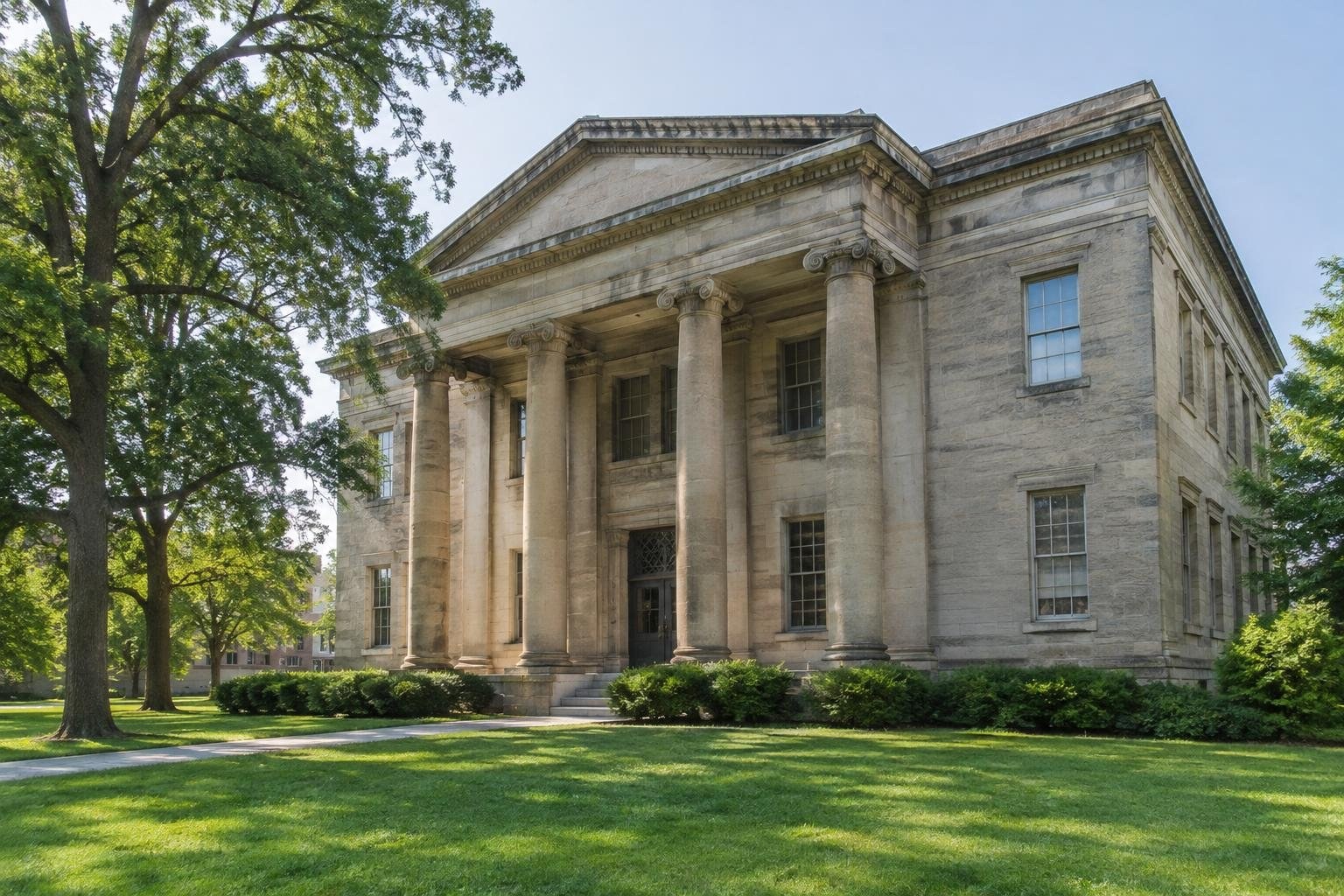
Historical research materials and a student working with archival documents
Start with the Program, Not the Label
Program names can be a poor shortcut for comparing what students actually do. A better starting point is to ask how a college connects historical inquiry to practical interpretation and what credential it awards. Appalachian State University describes its Bachelor of Science in History, Applied and Public History as building a foundation in historical interpretation. The University of South Carolina notes that its public history program began as an applied history program.
Those examples show that institutions use related labels within their own program histories. They do not define a universal curriculum or make credentials interchangeable. Read the catalog and course requirements, and ask for examples of student work. For broader major exploration, see Assessment.com’s guide to choosing college majors.
Follow the Work from Question to Interpretation
Use a project as a practical test of whether the field appeals to you. A typical research process begins with a question, then requires finding relevant evidence, considering what it can and cannot show, and explaining an interpretation. A public-facing project adds another decision: what should a particular audience understand or do with the result?
Auburn University’s graduate certificate description identifies research planning and locating secondary literature, archives, and other collections as parts of preparation. Treat this as one program example, not a guarantee that all courses follow the same plan. When reviewing a degree map, look for assignments that let students practice inquiry and interpretation, not just course titles that sound related.
Ask faculty what students produce, how research is evaluated, and whether projects are individual or collaborative. Those answers reveal more about the learning experience than a broad program description alone.
Look for Evidence of Learning
Compare programs by the evidence of learning they can show you. Ask whether students get to develop a research question, find and assess sources, explain their choices, and revise a written or public interpretation. If a program mentions applied experience, ask what students actually do and who supervises it.
Request a sample assignment or project description.
Find out whether students create a writing sample or other work they can discuss later.
Ask how instructors address source context, uncertainty, and responsible interpretation.
Check whether any software, methods, or technical tools are taught as part of required courses.
Do not assume that every program requires an internship, exhibit, or capstone. Confirm whether a practical opportunity exists, whether it is required, and how students qualify. Auburn’s description of research planning and collections can help you frame questions about the hands-on learning a specific college offers.
Test Your Interest in the Activities
Interest in a historical subject does not automatically mean you will enjoy the daily work of studying it. Try separating the topic from the tasks. Would you enjoy searching for evidence, reading material that complicates your first idea, documenting sources, and revising an explanation? Would you also be interested in shaping that explanation for people who are not specialists?
Before applying, choose a topic and write down one question you would investigate. List the kinds of sources you might seek and a possible audience for what you learn. This small exercise can help you notice whether the research process itself attracts you, rather than only the subject.
Use Assessment.com’s MAPP career assessment as a prompt for exploring interests and options, not as a prediction of academic success or employment. Then compare your reflections with actual course requirements.
Verify Admission for the Exact Credential
Admission requirements belong to a particular college, credential, and application period. Do not use one school’s criteria as a general rule for the field. For example, Arizona State University’s published Public History Graduate Certificate requirements list a 3.00 minimum cumulative GPA in the last 60 hours of a first bachelor’s degree or a 3.00 GPA in an applicable master’s degree. A separate ASU certificate page says applicants must have earned a bachelor’s or master’s degree from a regionally accredited institution.
These are program-specific examples. Before applying, confirm the current listing and ask the department which documents and deadlines apply to your intended term. If you are transferring credits, request a review of how they would count before using them to estimate your schedule or cost. Verify information directly with the institution, especially when multiple program pages describe admission.
Match the Credential and Format to Your Plan
Separate three questions that are easy to blur: what the field covers, what credential a college awards, and what format it offers. The university examples include an applied and public history bachelor’s program and graduate certificates in public history. They do not establish that every college offers all credential levels or that a certificate substitutes for a degree.
For each option, record the credential name, credit requirements, course rotation, and whether required activities involve in-person participation. Ask for a realistic completion plan that reflects your schedule and any transfer credits. A course plan matters: a credential may take longer if required courses are offered in a sequence that does not fit your intended pace.
Compare the precise credential and catalog for each institution. Appalachian State’s degree description and ASU’s certificate information are useful examples of distinct offerings, not a template for every college.
Build a Cost Comparison That Fits Your Situation
A program’s affordability is a personal calculation, not a single field-wide price. Ask the college for a current estimate based on your residency, credential, likely course load, and expected completion date. Add required fees, books and materials, and possible travel or lodging for activities that require attendance.
Then compare confirmed aid with the total amount you may need to pay or borrow. Ask the financial-aid office which grants, scholarships, work-study, payment plans, or employer benefits may apply to your circumstances. For a transfer plan, get confirmation that previous credits count before assuming they will shorten the program or lower its cost.
Use the same categories for each institution. A per-credit tuition figure and an overall attendance estimate are not equivalent comparisons. A written estimate and a course plan give families a more useful basis for weighing cost than a broad headline price.
Research Career Tasks Before Choosing a Path
Career planning works best when you begin with work tasks rather than a promise attached to a major name. Program descriptions connect public history with historical interpretation, public projects, and historical resources. Those ideas can help you generate directions to investigate, but they do not guarantee access to a particular occupation.
Search postings where you could realistically work. Record the duties, education, experience, and specialized preparation requested. Compare those requirements with what a program teaches and what opportunities it offers. Museum roles, for instance, can differ substantially; do not assume that general historical study meets the requirements for every position involving collections.
Assessment.com’s museum technicians and conservators career guide and postsecondary history teacher career guide can help you identify questions about different kinds of work. Check employers’ requirements directly.
Ask What Practical Experience Really Involves
Use practical experience to test a career idea, not as an assumption about what every program provides. Ask whether students can pursue supervised research, an internship, volunteer work, or a course project that interprets historical material for an audience. Confirm whether the option is available, required, competitive, paid, and eligible for credit.
Ask who supervises the work, what students are expected to produce, and whether there are limits on sharing project materials. Keep a record of your question, contribution, research process, audience, and final product when permitted. That record can help you describe what you learned when applying for future study or work.
Auburn’s graduate certificate description includes research planning and locating literature and collections. Use that example to ask what practice is built into other programs. Do not treat an advertised opportunity as guaranteed until the department confirms the details.
Decide Whether More Education Solves a Real Need
Graduate study is most useful when it answers a specific need. Review postings for work you are considering and note whether they repeatedly request advanced education, a specialty, or research preparation. If experience is the central requirement, investigate practical ways to build it before assuming another credential is the best next step.
Compare graduate options by curriculum, admission criteria, schedule, total cost, and access to relevant projects. A certificate is a focused credential with its own requirements; it is not automatically equal to a degree or a substitute for specialized qualifications an employer may ask for.
ASU’s published Public History Graduate Certificate requirements provide one example of an admission threshold. Auburn’s certificate description provides an example of research-focused preparation. Neither example establishes that graduate school is necessary for every student or role. Check current program information and job requirements before deciding.
Compare Neighboring Academic Options
Related programs can sound similar while emphasizing different questions or activities. A broad history major may offer a wider subject focus; a public/applied history program may foreground interpretation or work with historical resources. Museum or archival study may be worth comparing if your interest is centered on a particular kind of institution or collection. The exact distinction depends on each college’s curriculum.
Build a short comparison using four prompts: What subjects will I study? What will I do in a typical assignment? What credential will I earn? What do employers in my preferred area request? Use job postings to test whether a program’s emphasis matches your goals, rather than assuming a label predicts a career.
Assessment.com’s degree resources and major-choice guide can help organize exploration. Verify degree details with the institutions that award them.
Check Recognition and Completion Procedures Separately
Institutional recognition and a specific career requirement are separate checks. Do not assume that a college credential meets every employer’s expectations. Ask the institution about its status and consult the relevant employer or authority when a role has specific qualifications.
Also read the catalog for administrative steps beyond coursework. Virginia Commonwealth University’s Public History certificate catalog states that degrees will not be conferred until the application to graduate has been finalized. That is a rule stated for that catalog, not a general requirement for all colleges. It illustrates why students should identify application, credit, and completion procedures early.
Make a short checklist for each program: required credits, any catalog rules, graduation application steps, and any role-specific requirements you need to verify separately. This can prevent a small administrative requirement from disrupting a completion plan.
Use One Scorecard for Every College
Put programs side by side using the same decision criteria. Rate each area only after checking the underlying details, and mark anything you cannot confirm as an open question rather than a strength.
Learning: Which research and interpretation courses are required?
Practice: What supervised projects or placements can students pursue?
Access: Can you attend required courses and activities in your preferred format?
Affordability: What is the estimated total cost through completion, and which aid is confirmed?
Career fit: How do the curriculum and opportunities compare with real job requirements?
Completion: What credits, catalog rules, and administrative steps apply?
Ask for written clarification when the answer affects your eligibility, cost, transfer credits, or completion timeline. Assessment.com’s education resources and MAPP assessment can support exploration, but colleges remain the authority on their own admission and degree requirements.
Frequently asked questions
What is public/applied history?
Public/applied history connects historical research and interpretation with work beyond a traditional classroom. The emphasis and credential differ by institution, so check the actual curriculum and program requirements.
How can I tell if public history is a good fit?
Start with the work you want to try: researching historical evidence, developing an interpretation, working with collections, or communicating with a public audience. Then check whether a program provides relevant assignments or supervised projects.
What degree or certificate can I earn in public history?
There is no single credential or program format common to every college. Examples include a bachelor’s degree in applied and public history and graduate certificates in public history. Confirm what each institution currently offers.
What GPA do I need for a public history graduate certificate?
Admission criteria are set by each institution and credential. Arizona State University’s published Public History Graduate Certificate requirements include a 3.00 minimum GPA in the last 60 hours of a first bachelor’s degree or in an applicable master’s degree. Check the current program listing before applying.
Does a public history degree guarantee a museum job?
No. A credential does not guarantee a particular position or establish that you meet every employer’s requirements. Compare the training and experience a program offers with requirements in job postings for roles you may want.
How much does a public history program cost?
Costs depend on the institution, credential, residency, schedule, and personal circumstances. Request a current total-cost estimate, including fees and required materials, and compare aid and likely borrowing across programs.
Can I study public history online?
Some programs may offer online or hybrid study, but availability and in-person requirements vary. Ask whether courses, projects, or other required activities need to be completed on site.
Do I need graduate school for a career in public history?
Graduate study is not automatically necessary. Review the qualifications requested for the specific work you are considering, then decide whether further education addresses a real requirement or a clear learning goal.
People Also Ask
What might I learn in a public history program?
Look for courses and assignments that involve historical research, interpretation, and engagement with historical resources. Auburn University’s graduate certificate description identifies research planning and locating literature, archives, and collections as areas of preparation.
Are public history programs undergraduate or graduate?
The credential depends on the college. The available examples include Appalachian State University’s Bachelor of Science in History, Applied and Public History, and graduate certificates in public history at other institutions.
How do I compare program completion timelines?
Ask a college for its credit requirements, course sequence, and a completion plan based on your likely enrollment pace. Course availability and transfer-credit decisions can affect an individual schedule.
How can I explore public history career options?
Begin with job postings in places where you might work. Note the education and experience requested, then compare those requirements with program coursework and opportunities to practice.
What should I ask before applying to a public history program?
Compare required courses, practical opportunities, format, admission criteria, total cost, and completion procedures. Use the same checklist for each college so differences are easier to identify.
What expenses should I include in my college budget?
Include tuition, required fees, books and materials, and any travel or lodging costs associated with required activities. Ask the institution for a current estimate and compare aid options.
Will a public history degree qualify me for museum work?
A degree title alone does not establish that a graduate meets the requirements for a specific museum role. Review relevant postings and ask colleges what kinds of experience students can pursue.
Choose a public/applied history program by the work it lets you practice, the credential it awards, and the requirements of roles you may pursue. Compare course plans, applied opportunities, admission rules, total cost, and completion procedures across specific colleges rather than relying on a program title. Use Assessment.com’s MAPP assessment to explore career and degree options, then verify program details directly with institutions.
Find out which Career or College Major is right for you!
We use cookies to offer you a better browsing experience, analyze site traffic and personalize content.
Read about how we use cookies and how you can control them in our
Privacy Policy.
If you continue to use this site, you consent to our use of cookies.
×
Exciting News!
Be one of the first to Beta Test the new AI-Powered Assessment.com Platform.