Modeling, Virtual Environments and Simulation Degree Guide
Learn what a Modeling, Virtual Environments and Simulation degree may cover, how to compare programs, possible pathways, costs to investigate, and questions to ask before enrolling.
By David Slack · Staff Writer Assessment.com · Published October 7, 2026 · Last updated November 5, 2026
A Modeling, Virtual Environments and Simulation degree focuses on the study of computational models and simulated or virtual environments. In the federal Classification of Instructional Programs, code 11.0804 identifies this subject within the broader field of computer software and media applications. The label can cover different academic approaches, so a program’s actual courses and projects matter more than its name alone. Students considering this field should examine how a particular college balances software, modeling, visual environments, mathematics, engineering, and applied projects. Those choices can shape both the learning experience and the career directions worth exploring. The degree classification does not guarantee a specific job, salary, or professional qualification.
Degree & Program Decision Insights
Explore your personal fit, education requirements, career potential and next steps.
01Motivational Fit
Discover whether this program fits you
Explore your preferences against the focus of Modeling, Virtual Environments and Simulation. These prompts are not personal MAPP results.
Subject curiosity. Would you choose to explore “object-oriented programming” in depth? Ask for a sample learning activity to test that interest.
Breadth of interest. Consider the place of “artificial intelligence” in this field. Is this another part you would choose to explore, or mainly a requirement you would tolerate?
Work reality. Related work can involve this task: “Determine system performance standards.” Would you want that activity to be a regular responsibility?
Interest in studying a field can differ from enjoying its related work.
Which part would you want to do repeatedly, and what would you try before deciding?
Discover Your Personal Program Fit
Before investing your time and money in your education, discover how this program aligns with your natural motivations, work preferences and career goals.
U.S. occupational wages are not guaranteed graduate earnings; OEWS excludes self-employed workers.
Projected openings include replacements as well as growth.
U.S. national estimates. A crosswalk does not establish entry-level eligibility; advanced, management and teaching roles can require further qualifications.
Explore your motivations. Use MAPP as a starting point for reflecting on your interest in “object-oriented programming”, then test that interest against a sample learning task.
Examine the work. Compare Software Developers and Computer and Information Research Scientists on daily work and entry qualifications, as well as pay. Explore Software Developers.
Compare actual providers. Ask for the exact credential, course sequence and assessment methods. Compare how each provider teaches “artificial intelligence”, its entry criteria and its itemized costs.
Check the evidence before applying. Confirm prerequisites and any recognition or professional requirements for your intended route; ask for applicable rules and published outcome definitions in writing.
Verify the institution’s current offering, admissions requirements and outcomes; a search result does not establish your eligibility.
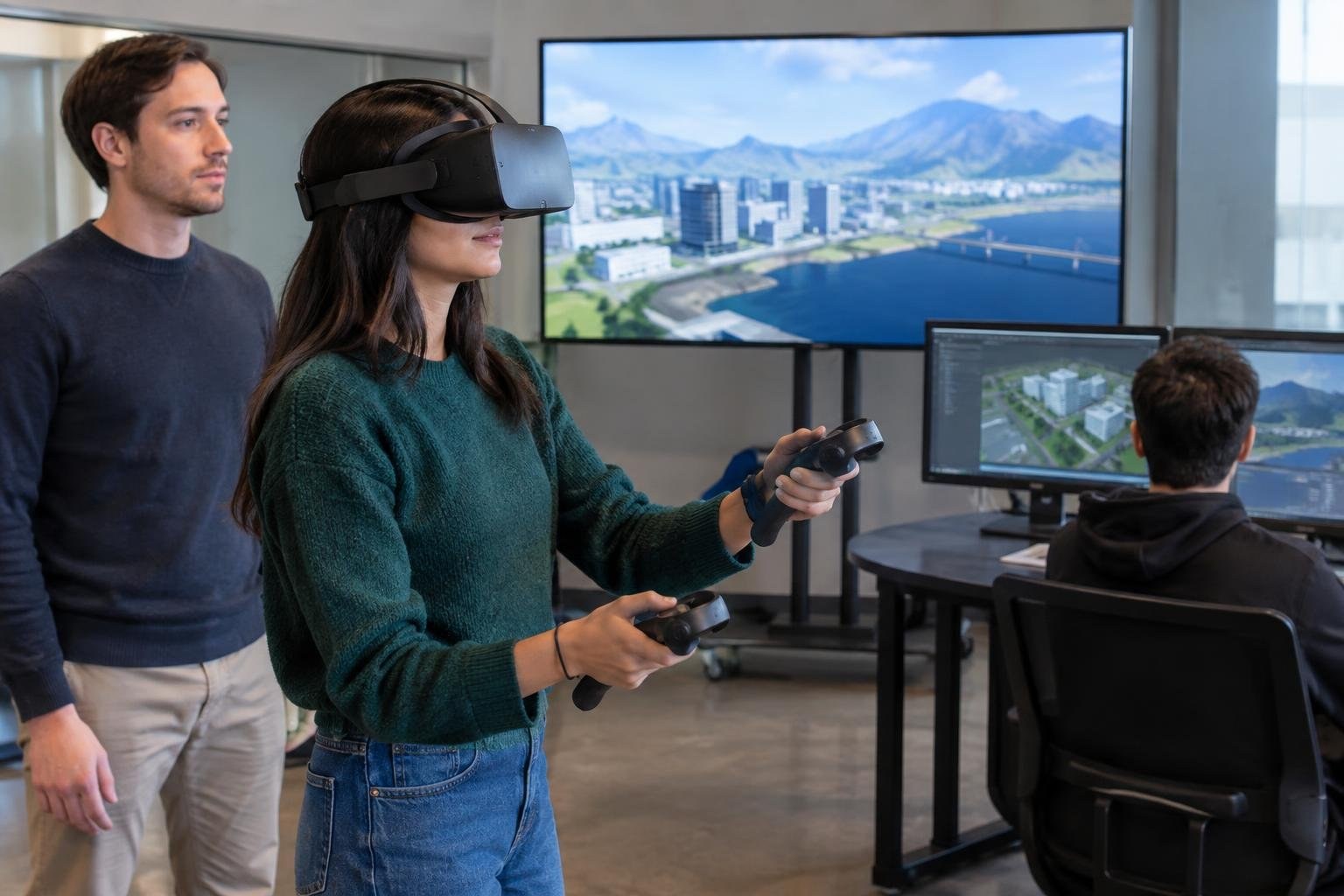
A classroom or lab scene illustrating a simulated environment, without implying a specific institution
What Is a Modeling, Virtual Environments and Simulation Degree?
Modeling, Virtual Environments and Simulation is a field of study classified as CIP 11.0804. The National Center for Education Statistics (NCES) places it within the broader category of computer software and media applications. This classification helps identify the subject area, but it does not prescribe a common curriculum across colleges.
Nearby classifications include computer graphics (11.0803), data modeling, warehousing and database administration (11.0802), and web page, digital/multimedia and information resources design (11.0801). These labels can help you frame comparisons, but course lists are the better guide to what you would actually learn.
Schools may use different program titles or combine simulation with computer science, engineering, graphics, or business. For example, Old Dominion University’s catalog describes a dual undergraduate-to-graduate option leading to a Bachelor of Science in Computer Science and an MBA, and identifies departmental support for engineering technology and modeling and simulation engineering majors. That is an example of one institution’s pathways, not a standard structure for every college.
Sources: NCES CIP code detail and Old Dominion University catalog.
What Do You Study? Read the Curriculum, Not Just the Title
The CIP label identifies a subject area, not a universal set of courses. To learn what you would study, ask each department for its current program map, course descriptions, and examples of student projects. Look for evidence of how the program teaches students to represent a real or imagined system, build or use computational models, and communicate what a simulation can and cannot show.
Questions to ask about the curriculum
How much of the required work involves programming, mathematics, statistics, graphics, or engineering?
Do students create models or virtual environments, or mainly study the concepts behind them?
Are courses organized around individual assignments, team projects, research, or a final capstone?
What software, computing equipment, or lab access do required courses assume?
Can you see sample syllabi, project briefs, or a degree plan before applying?
Compare those answers with adjacent programs. NCES separately classifies computer graphics, data modeling and database administration, and digital or web design. A college may connect subjects across departments, but the actual degree requirements show where its emphasis lies.
Who Might Enjoy This Program?
The best way to judge fit is to examine the work students are expected to do, rather than assume a particular personality type is required. You may enjoy this subject if you are curious about how systems behave, like testing ideas with models, or want to explore ways software can represent processes or environments. You may also want a program that connects technical work with visual design or an applied field.
Consider your preferences honestly. Do you like debugging and revising when a model does not behave as expected? Are you comfortable learning quantitative or technical material if the program requires it? Would you rather build a tool, examine data, design a visual experience, or study a system’s behavior? Those are questions for evaluating your interests, not admissions rules.
Does this degree match you?
Do not make the decision on salary claims, prestige, or broad job-growth headlines alone. A program can be a poor personal fit even when a related occupation appears attractive. Review the actual tasks in job descriptions, then compare them with the projects and coursework in the degree. Assessment.com’s career and degree matching tools can help you organize that reflection alongside conversations with advisers and people working in relevant fields.
Admissions, Preparation, and Common Academic Challenges
There is no single entry requirement established by the CIP classification. Admission depends on the institution and credential. Check the program’s published requirements for prior coursework, transcripts, minimum grades, placement tests, essays, portfolios, interviews, or work experience. Do not assume that every program requires or waives the same materials.
For a useful comparison, ask admissions staff and the department separate questions: what is required to apply, and what preparation will help you succeed in the first term? If you have not studied programming or mathematics recently, ask whether introductory courses, tutoring, or placement support are available. If you are transferring, request a written evaluation of credits before relying on an estimated graduation date.
For parents helping a student, encourage them to contact faculty or current students as well as admissions. Questions about course expectations, project workload, and support resources can reveal whether the student understands the day-to-day academic commitment.
Credential Levels, Study Formats, and Time to Completion
CIP 11.0804 does not define a certificate, associate, bachelor’s, graduate, or doctoral curriculum, nor does it establish a standard number of credits or years to completion. A school may offer one credential level, several levels, or a concentration within a larger degree. Completion time depends on the chosen program, course sequence, attendance pattern, transfer credit, and course availability.
Ask for a term-by-term plan for full-time and part-time study. If the program is accelerated, confirm whether required courses are available often enough to keep the proposed schedule realistic. If you are considering an online or hybrid option, verify which classes, projects, labs, or other requirements must be completed in person. Confirm whether distance students have access to the same software, faculty support, and project opportunities they need.
When a school uses a credential name that differs from “Modeling, Virtual Environments and Simulation,” ask how it identifies the program and what specific award appears on the transcript. A CIP code can aid comparison, but it is not a substitute for the official program description.
Tuition, Total Cost, and Financial Aid
Costs are school- and student-specific, so request a written estimate from each college rather than relying on a general online figure. Compare the full expected cost through graduation, not just the price per credit or the first term’s bill.
Build a complete cost picture
Tuition and mandatory institutional fees for your residency status and program.
Books, computing equipment, software, and any lab or project expenses.
Travel, housing, and other costs if you must attend in person.
Fees or extra terms that may result if required courses are not offered when expected.
How transfer credit, part-time study, or an accelerated schedule changes the total.
Ask the financial aid office which grants, scholarships, work-study options, loans, and payment plans may be available to you. Students who work should also ask whether their employer offers education assistance. Compare aid offers by distinguishing grants and scholarships from loans that must be repaid. Do not treat a projected award as final until the institution confirms eligibility and conditions.
Careers, Jobs, and Employment Outlook
Potential career exploration should start with tasks and skills, not a promise that a degree title leads directly to a particular job. The field’s classification connects it with computer software and media applications, and a university catalog shows modeling and simulation engineering as one related academic pathway. Those facts support investigating work involving simulation, modeling, virtual environments, software, graphics, or engineering, but they do not establish hiring rates or qualify every graduate for those roles.
Career directions to research
Direction to investigate
Questions for employers and programs
Pay and outlook research
Simulation or modeling projects
What technical tools, quantitative skills, and domain knowledge are expected?
Search current job titles and compare national and local labor data.
Virtual environments or computer graphics
Is a portfolio, programming experience, or visual design work expected?
Check the occupation that best matches the actual job duties.
Software or computing roles
Which programming languages, systems, or project experiences appear in postings?
Compare requirements for entry-level versus experienced roles.
Engineering-related work
Does the job require an engineering degree, particular experience, or a license?
Verify qualifications with the employer and relevant authority.
Use the U.S. Bureau of Labor Statistics and O*NET to research a specific occupation once you have a likely job title. Compare education requirements, duties, pay, and outlook by year and geography. Do not use a broad degree label as a substitute for occupational data. The sources available for this article do not establish median pay, job growth, or a list of occupations directly accessible to graduates.
Ask departments for recent graduate destinations and how those outcomes were gathered. Request the number of graduates, the time period, and whether figures include all students or only respondents. Career services can also help you compare internships, projects, and entry-level postings. Treat AI and automation as factors to investigate in the tasks of a specific occupation, not as a blanket forecast about this entire field.
Find out which Career or College Major is right for you!
Do not assume that the degree itself grants a professional license or a particular industry certification. Requirements depend on the occupation, employer, and jurisdiction.
Before paying for an exam or credential, identify a job you want and verify its qualifications directly with employers and the organization responsible for the credential. Ask whether the program prepares students for an exam, whether the credential is optional or required, and whether it has renewal or additional costs. Keep the degree, a voluntary certification, and a legally required license distinct in your comparison.
Even where no formal credential is required, project work may help demonstrate what you can do. Ask the program whether students can build a portfolio, complete applied projects, or gain experience relevant to the roles they plan to pursue.
How to Choose the Right Program
Compare programs by evidence you can inspect. Check the institution’s accreditation status with the appropriate official source and ask whether any relevant program-level accreditation applies. Do not infer accreditation from a program name, CIP code, or marketing language.
Program comparison checklist
Does the required course sequence match your interests in modeling, software, graphics, virtual environments, or engineering?
Are technical facilities, computing resources, software, and faculty support clearly described?
Are projects, research, internships, or other applied experiences available, and are they required or optional?
What is the complete cost for your attendance pattern, and what aid is confirmed?
Can transfer students get a course-by-course credit review?
How are graduate outcomes collected, and can the school explain its figures?
Does the online or hybrid format include any in-person requirements?
What career services, employer connections, or advising can students actually access?
Old Dominion University’s catalog illustrates why it is useful to inspect academic pathways: it describes a dual undergraduate-to-graduate option and related engineering majors supported by its computer science department. That single university example is not a ranking or endorsement. Ask each school for its own official catalog and current requirements.
Related Degrees and Alternatives
Related programs can offer a better fit if their required courses and outcomes align more closely with your interests. NCES lists several distinct classifications in this area. Use them as starting points for comparison, then inspect actual program plans.
Computer science: Consider it if you want to compare a broader computing program with a simulation-focused curriculum.
Computer graphics: Consider it if visual computing and graphics are the main subjects you want to study.
Data modeling, warehousing, and database administration: Consider it if you are more interested in organizing and managing data.
Web page, digital/multimedia, and information resources design: Consider it if digital design and web or multimedia work are stronger priorities.
Engineering technology or computer engineering: Consider these when you want to compare a more explicitly engineering-oriented route. Review prerequisites and requirements carefully.
These alternatives are not interchangeable, and their names do not guarantee a particular curriculum or career. Compare programming, math, design, engineering, and project requirements, then check which roles graduates pursue. NCES identifies CIP 11.0804 separately from the adjacent computer graphics, data, and digital-design classifications. Old Dominion University’s catalog also illustrates that simulation and engineering programs may connect within one institution, while remaining distinct programs.
Advantages, Tradeoffs, and Is It Worth It?
A degree can be worthwhile when its learning, cost, and opportunities make sense for the student’s goals. No classification code establishes the return on investment of a specific college program. Consider the complete tuition and living-cost estimate, time to completion, borrowing, and the kinds of work you hope to pursue.
Possible advantages: a focused subject area; an opportunity to explore models or virtual environments through coursework; and, depending on the institution, connections to computing or engineering programs. NCES’s classification and the Old Dominion example show both the distinct subject identity and one possible relationship with other academic routes.
Possible drawbacks: program names can conceal substantial differences in coursework; career outcomes and pay are not guaranteed by the degree title; and a student may need more education, experience, or employer-specific preparation for a chosen role. A narrow program may also be less attractive if its required subjects do not match your interests.
Make a decision using the actual degree plan, verified costs, and current job information for occupations you are considering. If those details are unclear, pause and ask for documentation before committing.
From Degree to Career: Plan a Flexible Path
Career progression is not automatic. A student might use a program project to explore a simulation or virtual-environment topic, then seek an entry-level role whose requirements fit their demonstrated skills. With further experience, they might specialize in a particular industry or technical area. Someone interested in research or advanced study should ask faculty about graduate pathways and prerequisites.
One institution’s catalog identifies a dual undergraduate-to-graduate option leading to computer science and MBA degrees, as well as support for modeling and simulation engineering within a computer engineering program. Treat this as an example of possible academic connections, not a promise that every college offers the same option or that it is the right route for every student.
To map your own pathway, start with two or three real job postings. List the skills and education they request, then ask the program how students develop or demonstrate those skills. Revisit that comparison each year because roles and employer expectations can differ.
Questions to Ask Before Enrolling
Use this checklist during college visits, advising appointments, and financial-aid discussions. Keep written answers so you can compare schools on the same terms.
What is the exact credential and official program title?
What courses are required, and how much work involves programming, math, graphics, modeling, or engineering?
What are the application requirements and recommended preparation?
What is the total estimated cost through completion, including fees and equipment?
Which financial-aid amounts are confirmed, and which are loans?
Can I complete the program online, and what must be done in person?
How will transfer credits affect my schedule and cost?
What projects, internships, research, or portfolio opportunities can students access?
What do graduates do, how are outcomes measured, and what year does the information cover?
Do the careers I am considering require further education, certification, or licensure?
What academic support and career services are available to students in my program?
Check that claims about program options appear in the current catalog or official department materials. NCES’s CIP directory can help clarify classification, while a college’s catalog provides its program-specific requirements.
Want to see your options? Try our comprehensive Degree, Program & College Search tool
Use official program catalogs and classification information to compare programs. These sources document the CIP classifications and the Old Dominion University academic pathways discussed in this guide.
National Center for Education Statistics: Detail for CIP Code 11
What is a Modeling, Virtual Environments and Simulation degree?
CIP code 11.0804 is the classification for Modeling, Virtual Environments and Simulation. The National Center for Education Statistics places it within computer software and media applications. Individual programs may use different names or emphasize different subjects, so review the institution’s course list and program description rather than relying on the title alone.
Is a Modeling, Virtual Environments and Simulation degree hard?
It depends on the curriculum. Before applying, check how many required courses involve programming, mathematics, statistics, graphics, engineering, or research. Ask the department for sample assignments and prerequisites, and compare those requirements with your current preparation. A program’s title by itself does not establish how technically demanding it will be.
What jobs can I get with this degree?
Potential directions to investigate include work involving simulation software, modeling, virtual environments, computer graphics, and related computing or engineering projects. These are areas of study and possible career exploration, not guaranteed job titles or outcomes. Check job descriptions, required education, and employer expectations before choosing a program.
How much can I make with a Modeling, Virtual Environments and Simulation degree?
No reliable salary estimate can be made from the program title or CIP classification alone. Pay depends on the actual occupation, education level, experience, location, industry, and employer. First identify several job titles that interest you, then compare current U.S. Bureau of Labor Statistics or O*NET information for those specific occupations.
Can I earn this degree online?
The supplied program classification does not determine whether a degree can be completed online. Ask each institution whether lectures, labs, software-intensive assignments, team projects, internships, or any in-person requirements are offered remotely. Confirm which requirements can be completed from your location and whether the format affects fees or access to facilities.
Does this degree require a lot of math?
The classification itself does not specify math requirements. Review the program’s prerequisites and required courses, and ask for syllabi or placement guidance. Depending on the curriculum, quantitative work may be central, limited, or concentrated in selected courses. Confirm the actual expectations with the department before enrolling.
Do I need graduate school for a career in simulation or virtual environments?
Graduate study is not established as a requirement by the CIP code. Whether it is useful depends on the roles you want and the education requirements employers set. Compare actual job postings and ask program advisers about graduates’ pathways before committing to a master’s or doctoral program.
Are certifications or licenses required?
The classification alone does not establish a required license or certification. Ask the program whether particular credentials are recommended for the occupations you are considering, and verify any requirements with employers or the relevant professional or licensing body. Do not assume completing the degree automatically qualifies you for a regulated occupation.
How does this degree compare with computer graphics or computer science?
CIP 11.0804 is specifically titled Modeling, Virtual Environments and Simulation, while nearby CIP 11.0801 covers web page, digital/multimedia and information resources design; 11.0802 covers data modeling, warehousing and database administration; and 11.0803 covers computer graphics. Compare course requirements and project work to find the emphasis that best matches your goals.
People Also Ask
What does CIP code 11.0804 mean?
CIP code 11.0804 classifies Modeling, Virtual Environments and Simulation within computer software and media applications. It identifies a field of study, not a standardized course plan or a promise of a specific career.
How do I choose a simulation degree program?
Compare required courses, programming and math expectations, software and lab access, projects, experiential learning, total cost, and the roles graduates pursue. Ask each college for a current degree plan and answers in writing when policies or costs are important to your decision.
How long does a Modeling, Virtual Environments and Simulation degree take?
The CIP classification does not set a standard program length. Completion time depends on the credential, required credits, course availability, transfer credit, and whether you study full time or part time. Request a degree plan showing the expected schedule for your circumstances.
Is modeling and simulation the same as computer graphics?
CIP 11.0804 is distinct from nearby classifications including computer graphics (11.0803), data modeling and database administration (11.0802), and web and digital design (11.0801). Compare actual course lists because classification names alone cannot show how much subjects overlap at a particular college.
How much does a simulation degree cost?
The classification does not specify tuition, financial aid eligibility, or required fees. Request an individualized cost estimate from each institution that includes tuition, mandatory fees, books, equipment or software, and any costs tied to travel or in-person coursework. Compare aid offers and the expected total borrowing before deciding.
Do simulation careers require a license?
The classification does not establish a license or certification requirement. Identify the occupations you are considering and verify their requirements with employers and the applicable licensing or credentialing organization before paying for an additional qualification.
A Modeling, Virtual Environments and Simulation program may be worth exploring if you want to work with computational models, simulated environments, or related software and engineering applications. The title alone does not tell you how much programming, mathematics, graphics, research, or engineering a particular program includes. Compare actual course plans, experience opportunities, total costs, and the roles graduates pursue. Use those details, along with your interests and preferred way of working, to decide whether this path fits you.
We use cookies to offer you a better browsing experience, analyze site traffic and personalize content.
Read about how we use cookies and how you can control them in our
Privacy Policy.
If you continue to use this site, you consent to our use of cookies.
×
Exciting News!
Be one of the first to Beta Test the new AI-Powered Assessment.com Platform.