Industrial Radiologic Technology/Technician Degree Guide: Courses, Careers, and Program Fit
Learn what Industrial Radiologic Technology/Technician programs teach, which jobs they may support, how to compare credentials and costs, and what to verify before enrolling.
By Tome Fierre · Staff Writer Assessment.com · Published October 25, 2026 · Last updated November 5, 2026
Industrial Radiologic Technology/Technician is a technical field focused on using radiation-based equipment to examine materials, components, and products. The NCES program classification describes instruction in x-ray analysis, nondestructive testing and inspection, and continuous measurement of paper or metal thickness. Students typically explore scientific principles alongside equipment operation and careful inspection practices. This field is not the same as medical radiologic technology. Medical radiologic programs prepare students to produce images of the human body for clinical use; industrial programs focus on inspecting materials and manufactured items. Depending on the program and employer, related career directions may include industrial inspection, nondestructive testing, or nuclear technician work. Not sure whether Industrial Radiologic Technology/Technician fits you? Take the Free MAPP Career Assessment to explore how your motivations, interests, and preferences may align with this field and related careers.
Degree & Program Decision Insights
Explore your personal fit, education requirements, career potential and next steps.
01Motivational Fit
Discover whether this program fits you
Explore your preferences against the focus of Industrial Radiologic Technology/Technician. These prompts are not personal MAPP results.
Subject curiosity. Would you choose to explore “x-ray analysis of materials” in depth? Ask for a sample learning activity to test that interest.
Breadth of interest. Consider the place of “nondestructive testing and inspection of materials” in this field. Is this another part you would choose to explore, or mainly a requirement you would tolerate?
Work reality. Related work can involve this task: “Apply safety tags to equipment needing maintenance.” Would you want that activity to be a regular responsibility?
Interest in studying a field can differ from enjoying its related work.
Which part would you want to do repeatedly, and what would you try before deciding?
Discover Your Personal Program Fit
Before investing your time and money in your education, discover how this program aligns with your natural motivations, work preferences and career goals.
Typical occupational entry: associate's degree (BLS). BLS lists moderate-term on-the-job training as typical occupational training.
U.S. occupational wages are not guaranteed graduate earnings; OEWS excludes self-employed workers.
Projected openings include replacements as well as growth.
U.S. national estimates. A crosswalk does not establish entry-level eligibility; advanced, management and teaching roles can require further qualifications.
Compare the focus and route of these distinct instructional fields; their credentials and admission requirements are not interchangeable.
Nuclear/Nuclear Power Technology/TechnicianCIP 41.0205. Compare its emphasis on basic nuclear physics and nuclear engineering and monitoring and safety procedures with this program’s focus.
Chemical Technology/TechnicianCIP 41.0301. Compare its emphasis on principles of chemistry and biochemistry and technical mathematics with this program’s focus.
Explore your motivations. Use MAPP as a starting point for reflecting on your interest in “x-ray analysis of materials”, then test that interest against a sample learning task.
Examine the work. Compare Nuclear Technicians on daily work and entry qualifications, as well as pay.
Compare actual providers. Ask for the exact credential, course sequence and assessment methods. Compare how each provider teaches “nondestructive testing and inspection of materials”, its entry criteria and its itemized costs.
Check the evidence before applying. Confirm prerequisites and any recognition or professional requirements for your intended route; ask for applicable rules and published outcome definitions in writing.
Verify the institution’s current offering, admissions requirements and outcomes; a search result does not establish your eligibility.
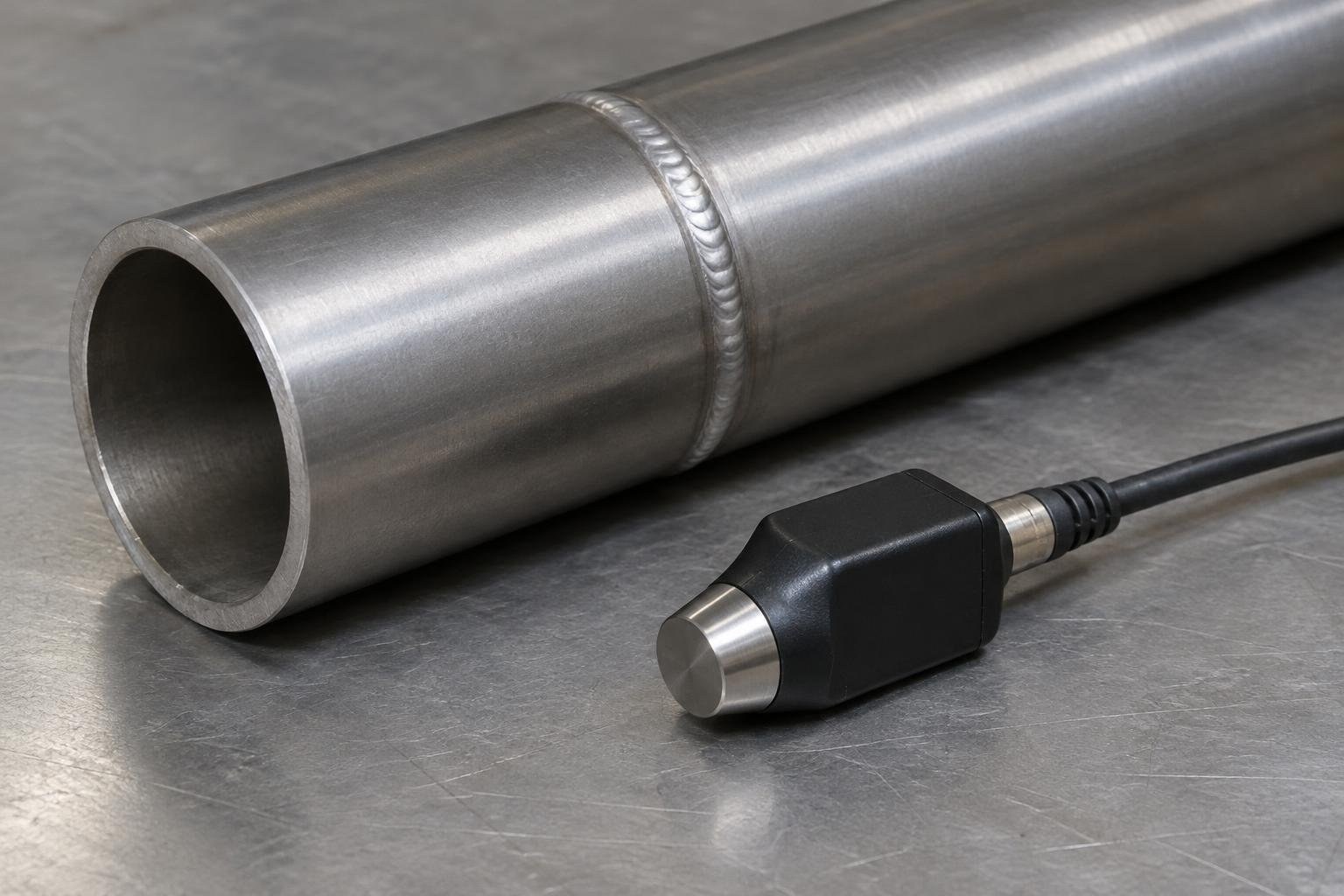
Industrial nondestructive testing equipment used to inspect a metal component
What Is Industrial Radiologic Technology/Technician?
Industrial Radiologic Technology/Technician is a program area for applying scientific principles and technical skills to equipment that uses radiation to test materials. The U.S. National Center for Education Statistics (NCES) describes instruction in x-ray analysis of materials, nondestructive testing and inspection, and continuous measurement of paper or metal thickness.
The program’s word “radiologic” can be confusing. Medical radiologic technology prepares students to create images of the human body for health care, including patient positioning and radiation protection. Industrial radiologic technology instead concerns materials, manufactured products, and research or testing equipment. A college’s use of a similar program name is not enough to establish which field it teaches.
The topic is identified as CIP 41.0204. Credential levels in this field can vary; the CIP classification describes a field of study, not a guarantee that a specific college offers every credential level. Confirm the exact award and its curriculum directly with an institution.
For the official program definition, see the NCES Classification of Instructional Programs description for CIP 41.0204.
What Do You Study? Courses and Practical Learning
Start with science and the purpose of testing
At a broad level, students learn how scientific principles apply to industrial testing equipment and how to use equipment to examine materials. Depending on the specific program, subjects may include x-ray analysis, nondestructive testing and inspection, and measurement of material thickness. The NCES description names these areas but does not prescribe one nationwide syllabus.
Look for practice, not only course names
Because the field concerns technical equipment, ask how students learn to operate the instruments and interpret inspection results. Request details about laboratory access, supervised demonstrations, field placements, project work, and equipment used in instruction. Do not assume a program includes any of these simply because the word technician appears in its title.
Industrial radiologic technology should not be confused with a medical radiography curriculum. Medical program examples describe patient positioning, radiation protection, diagnostic images, and clinical placements. Those are indicators of a health-care program, not evidence that a curriculum prepares students for industrial materials testing. Use the program description and course catalog to verify the intended field.
Curricula vary among institutions and credential levels. Review required courses, practical instruction, and any capstone or work-based learning requirement in writing before applying.
Compare the NCES industrial program description with the distinct descriptions of medical radiologic technology and clinical radiography training to see why the distinction matters.
Skills You Can Develop
The program’s stated purpose points to a blend of technical, scientific, and professional abilities. The exact skills taught depend on the college and the specific award.
Equipment use: Follow operating procedures for radiation-based industrial testing equipment.
Inspection and analysis: Examine materials, assess test information, and communicate what an inspection can and cannot establish.
Measurement: Work with measurement tasks such as thickness monitoring where included in the curriculum.
Safety-minded work habits: Follow the safety procedures taught by the program and required by the work setting.
Documentation and communication: Record observations clearly and explain technical findings to supervisors, engineers, or quality teams.
Problem solving: Notice irregularities, check procedures, and seek guidance when results are unclear.
These abilities can be relevant to industrial inspection and nondestructive testing work. They may also be useful preparation for exploring nuclear technician pathways, but course completion alone does not establish that a graduate meets a particular employer’s qualifications.
Who Is This Program Best For?
Students who may enjoy the work
This path may appeal to students who like understanding how things are made, how materials behave, and how technical tools reveal information that is not visible from the surface. It may suit people who value careful procedures, practical problem solving, and a mix of scientific concepts and hands-on equipment work.
The work can involve detailed measurements and a strong focus on following instructions. If you prefer broad, open-ended creative work or frequent social interaction as the main part of a job, compare the day-to-day work in target occupations before committing. That does not rule out the field, but it is worth testing your expectations through program visits, informational interviews, or job descriptions.
Does this degree match you?
Salary, job titles, and reputation are only part of a college decision. Consider whether you are curious about materials testing, comfortable learning technical procedures, and willing to practice careful documentation. Assessment.com’s MAPP career assessment can help you reflect on motivations and preferences. Use it as one input alongside program research, conversations with working technicians, and a review of employer requirements.
Admissions and Preparation
Entry requirements are set by individual colleges, not by the CIP code. Ask about prerequisites in mathematics, science, and reading; minimum grades; placement testing; application deadlines; and whether the program has a separate admission process. If a program lists a portfolio, interview, prior technical experience, or background screening, verify the current rule with the school rather than relying on a general field description.
Before applying, request the full course sequence and ask whether prerequisite classes must be completed before you can begin technical courses. Check whether courses are offered every term, what happens if a required course is full, and whether transfer credit can count toward program requirements.
Students preparing in high school can strengthen relevant foundations by taking available mathematics and physical science courses and practicing clear technical writing. Adult learners and career changers should ask whether prior coursework or work experience can be reviewed for credit, and whether refresher courses are available. Requirements and available options differ by institution.
Credential Levels, Format, and Time to Completion
The topic includes certificate, associate’s, bachelor’s, graduate certificate, and master’s credential levels, but that range describes the field rather than confirming that every college offers each level. Check the institution’s catalog for the exact credential, program length, required credits, and whether the award is designed for entry-level preparation or advanced study.
Completion time depends on the credential, the number of credits required, course scheduling, transfer credit, and whether a student attends full time or part time. Do not apply a timeline from another college’s similarly named program. Ask for a term-by-term plan that includes prerequisites, technical classes, laboratories, and any required field experience.
Online, hybrid, and campus formats may be available in different combinations. Equipment training cannot be evaluated from the word “online” alone. Ask which activities require campus or facility attendance, whether students arrange their own access to suitable equipment, and whether travel or scheduled daytime participation is required.
Tuition, Costs, and Financial Aid
There is no single price for an Industrial Radiologic Technology/Technician education. A student’s total budget depends on the institution, residency classification, credential level, course load, and whether study requires commuting or moving. Ask the financial aid office for a complete estimate for the specific program and academic year.
Compare more than tuition. Request a list of mandatory fees, books, equipment or protective supplies, technology costs, laboratory charges, transportation, and any expenses tied to practical training. If an activity requires travel or a schedule that limits paid work, include that effect in your personal budget.
Explore federal and state aid eligibility, institutional grants and scholarships, payment plans, and employer tuition assistance if available. A community college or a carefully planned transfer route may reduce costs for some students, but only if credits apply to the intended credential. Before enrolling, ask for written confirmation of how transfer courses will count and calculate the total cost through graduation rather than comparing only the first term.
For each option, compare estimated out-of-pocket cost, time to completion, required on-site attendance, and the credential’s relevance to jobs you actually want. Do not assume that online study costs less or that a shorter certificate is accepted by every employer.
Careers, Jobs, and Employment Outlook
Career directions to investigate
The supplied program definition connects industrial radiologic technology with testing materials, nondestructive inspection, and measurement. Related job directions may include nondestructive testing specialist, industrial inspection technician, nuclear technician, or nuclear monitoring technician. These are directions for research, not a promise that a particular program qualifies a graduate for each job.
Career direction
How the program may apply
What to verify
Nondestructive testing specialist
Industrial x-ray analysis and nondestructive inspection are identified areas of study.
Methods taught, practical experience, employer requirements, and any additional credentials.
Industrial inspection or testing technician
Equipment operation, material examination, and measurement may be relevant preparation.
Required training for the material, testing method, and work environment.
Nuclear technician
A technical foundation in radiation-related equipment may be relevant to investigating this route.
Employer-specific education, safety training, experience, and any required authorization.
Nuclear monitoring technician
The program’s scientific and measurement focus may offer related preparation.
Actual job duties and current qualifications in the target location.
The NCES program description supports the subject areas above; it does not supply occupational salaries, job-growth rates, or a guarantee of employment. Wage and outlook figures should be checked for the exact occupation and geography. An industrial technician, nuclear technician, and medical radiologic technologist are not interchangeable statistical categories.
Potential employers to investigate include organizations that manufacture, inspect, maintain, or research materials and products. Verify the hiring sectors and actual job titles in local postings rather than assuming every employer uses the same terminology. Explore Assessment.com’s nondestructive testing specialist career guide as a related career starting point.
Technology and automation
Testing equipment and data systems may change, so students should ask how a program keeps equipment practice and instruction current. Do not assume automation removes the need for skilled inspection: the responsibilities and employment impact depend on the method, industry, and employer. Build adaptable skills in careful measurement, technical documentation, and interpreting results.
Find out which Career or College Major is right for you!
Do not treat program completion, professional certification, and a license as the same thing. A college awards an academic credential; an employer, professional credentialing body, or government authority may set separate requirements for a job. The available NCES program definition does not establish a universal industrial radiologic license or certification requirement.
Ask each program which certifications, if any, its curriculum is designed to prepare students for, and request the name of the credentialing organization and current eligibility rules. Then check job postings and the applicable government or professional authority for the region where you intend to work. Confirm whether experience, supervised training, examinations, or continuing education are required before relying on a credential claim.
Industrial inspection should also be kept distinct from medical radiography. Medical radiologic programs may be explicitly structured around certification, licensure, and employment as radiographers. Those health-care requirements should not be assumed to apply to industrial testing jobs, and industrial coursework should not be assumed to qualify a student for clinical imaging.
How to Choose the Right Program
Before paying a deposit, ask what the program’s accreditation status is and which agency accredits the institution or program. Verify the claim with the accreditor and confirm that the credential will be accepted by employers or further education programs you may pursue. The supplied program classification does not identify an accrediting body for any particular college.
Look beyond a general college reputation. Request the course catalog, lab and equipment details, information about supervised practical learning, instructor experience, and written program outcomes. If a school advertises job placement, ask how it defines placement, the cohort and time period counted, and whether the result applies specifically to this program.
Talk with employers who hire for the roles you want. Ask which educational awards and inspection skills they recognize and whether a specific method or credential matters. A school’s marketing language is not a substitute for employer confirmation.
Affordability and Ways to Fund Your Education
Compare the total program cost and student aid package, not just the tuition rate. Ask whether any scholarships or employer benefits are restricted to certain terms, grades, or employment arrangements. If you are considering transfer, get a written degree audit or course-by-course evaluation before assuming credits will apply.
Students may also reduce avoidable costs by comparing public and private institutions, checking residency-based tuition rules, using eligible prior credits, and planning a course sequence that avoids unnecessary repeated classes. These options are not available or beneficial to every student. Confirm eligibility and total charges with the college before making financial decisions.
For parents and students reviewing an offer together, put the expected completion date, likely borrowing, required practical attendance, and remaining costs on one page. Compare the same items across schools so a low first-year price does not obscure a longer or more expensive route to the intended credential.
Related Degrees, Pathways, and Alternatives
Related options can serve different interests. Compare the day-to-day tasks and education requirements rather than choosing by a similar-sounding title.
Nondestructive testing: Consider this instead if your primary interest is inspection methods and evaluating material integrity. Verify the exact methods and training required by employers.
Nuclear technology: Consider this if you are more interested in technical work connected with nuclear facilities or systems. Investigate employer-specific requirements and safety training.
Materials science or materials engineering: Consider a broader materials-focused pathway if you want to study material properties and development in greater depth. Compare math and science expectations and degree requirements.
Industrial engineering technology: Consider this if process improvement, production systems, or broader manufacturing operations interest you more than radiation-based inspection.
Medical radiologic technology: Consider this if you want to create diagnostic images of patients and work in a health-care environment. This is a different educational and professional pathway.
Mechanical engineering technology: Consider this if you want a wider technical foundation in machines, equipment, and applied engineering problems.
Health physics or radiation protection: Consider this if radiation measurement and safety are central interests; confirm the curriculum and occupational qualifications at each institution.
These alternatives are broad comparison categories, not claims that every institution offers a program under those exact names. Review curriculum, credential level, practical training, cost, and target job requirements. Medical radiologic technology programs, for example, emphasize patient imaging and clinical preparation, while CIP 41.0204 describes industrial testing of materials.
Internships, Experience, and Building Employability
Experience can help you test whether the work is a good fit and demonstrate practical readiness. Ask whether a college can connect students with appropriate projects, laboratories, research, cooperative education, or employer visits. Participation and availability vary, so confirm whether an opportunity is guaranteed, optional, or arranged by the student.
Keep a record of completed technical projects, equipment exposure, safety training, and documented skills. Follow employer and school rules about confidential information; do not place restricted inspection data or proprietary material in a public portfolio. Join relevant student or professional organizations only after checking their purpose, eligibility, and value for your intended role.
How to stand out to employers
Describe the specific equipment, inspection methods, and materials you have studied, without overstating independent work experience.
Give examples of careful measurement, procedure-following, troubleshooting, and clear technical documentation.
Ask target employers what credentials or supervised experience they expect for entry-level hires.
Keep learning as methods, equipment, and employer requirements change.
Graduate School and Further Study
Graduate study may be useful for students seeking advanced scientific, technical, research, or management responsibilities, but the right next credential depends on the job goal. A bachelor’s degree or graduate program should not be treated as an automatic requirement or guarantee of advancement. Ask target employers what additional education they value before committing to a longer and more expensive path.
Potential areas to investigate include materials science, engineering technology, nuclear science, radiation protection, or a management-focused program. These are broad possibilities, not a claim that a specific graduate program is required or offered by every institution. Compare prerequisites, curriculum, research or practical work, and the connection to a defined career objective.
Questions to Ask Before Enrolling
What exact credential will I earn, and what is its CIP or program description?
Does the curriculum focus on industrial material testing rather than medical imaging?
Which laboratory equipment and inspection methods will I practice?
What are the admissions prerequisites, and when are required courses offered?
What is the full estimated cost, including fees, equipment, travel, and practical training?
What is the program’s accreditation status, and how can I verify it?
Which employers recognize this credential, and what job titles do graduates pursue?
Are any certifications or licenses relevant to those jobs, and who sets the requirements?
Can I complete the program online, and which activities require in-person attendance?
How will transfer credits apply, and what happens if I need to study part time?
What career advising, employer connections, and financial aid options are available?
How does the college calculate any published graduation or employment outcome?
Ask for answers in writing when a decision affects tuition, transfer, eligibility, or completion time.
From Degree to Career: Possible Pathways
A possible pathway could begin with Industrial Radiologic Technology/Technician coursework, continue into an entry-level materials inspection or nondestructive testing role, and build experience with particular equipment or inspection methods. With additional experience and qualifications, a worker might pursue more specialized inspection, quality, or technical responsibilities. Another student might use related technical study to compete for a nuclear technician opening after meeting that employer’s specific requirements.
These examples are not guaranteed promotions or automatic outcomes. Hiring depends on the curriculum, practical competence, location, employer needs, and any additional experience or credentials required. Use job postings and conversations with employers to map the path backward before choosing a program.
Frequently asked questions
What is Industrial Radiologic Technology/Technician?
Industrial Radiologic Technology/Technician focuses on using radiation-based equipment to examine materials and products. Students may learn about x-ray analysis, nondestructive testing and inspection, and measurement of material thickness. It is different from medical radiologic technology, which prepares students to produce images of the human body for clinical diagnosis.
Is Industrial Radiologic Technology/Technician hard?
It can be challenging if physics, careful equipment operation, safety procedures, or detailed technical records are unfamiliar. The work calls for precision and consistent attention to procedure. Review a program’s course sequence and lab expectations, and ask about academic support before deciding. The exact difficulty depends on your preparation and the program’s curriculum.
What jobs can I get with an industrial radiologic technology degree?
Possible career directions include industrial inspection and nondestructive testing roles, as well as nuclear technician or nuclear monitoring technician pathways. A degree does not by itself guarantee eligibility for a particular job; employers may require additional training, experience, or credentials. Compare the courses and practical experience in a program with the qualifications listed in job postings where you plan to work.
How much can you make with this degree?
There is no single salary for this program because graduates may enter different occupations and work settings. Compare wages for the specific job title and geographic area you are considering, and check the date and occupational definition behind each figure. Do not treat a program title or a broad nuclear-industry label as a salary category.
Can I earn an Industrial Radiologic Technology degree online?
Some lectures or general education courses may be offered online, but equipment-based learning and practical inspection skills require appropriate hands-on preparation. Ask each institution which courses are online, whether labs or field experiences are in person, and whether you must travel to a facility. Confirm that the proposed format provides the training employers expect.
Does industrial radiologic technology require math or physics?
Expect to use quantitative reasoning and scientific concepts because the program applies scientific principles to radiation-based testing and measurement. The exact math and physics requirements vary by institution and credential. Request the current course list and prerequisites, then compare them with your high-school or college preparation.
Do I need a bachelor’s or master’s degree to work in industrial radiologic technology?
Not necessarily for every entry-level pathway. The field includes multiple credential levels, but individual program availability and employer requirements vary. Ask prospective employers which credentials they accept and whether advancement into a particular role calls for additional education or specialized experience.
What certifications or licenses are needed?
The NCES CIP description identifies x-ray analysis, nondestructive testing and inspection, and measurement of paper or metal thickness as areas connected with this program. A specific certification or license requirement cannot be inferred from the degree title alone. Check applicable employer requirements and relevant state or federal rules before enrolling.
How is industrial radiologic technology different from medical radiologic technology?
Medical radiologic technology centers on producing images of a person’s body for health care; industrial radiologic technology uses testing equipment to inspect materials and products. The equipment and radiation concepts may overlap, but the training purpose, practical setting, and likely career paths differ. Verify a program’s curriculum rather than relying only on the word radiologic in its name.
People Also Ask
What does an industrial radiologic technician do?
It is a technical field that applies radiation-based testing equipment to inspect materials, examine defects, and measure properties such as paper or metal thickness. The NCES program description includes x-ray analysis and nondestructive testing. The goal is industrial inspection, not medical imaging of patients.
What is nondestructive testing in industrial radiology?
The CIP program description includes x-ray analysis of materials and nondestructive testing and inspection. These techniques are used to examine an item while avoiding damage to it as part of the inspection process. Program courses and the specific inspection methods taught vary by institution.
How long does an industrial radiologic technology program take?
No universal timeline can be stated from the program classification alone. Credential level, course availability, hands-on requirements, and whether a student attends full time all affect completion. Ask each college for its published sequence, expected time to completion, and any prerequisites that must be completed first.
Should I choose a certificate or associate degree?
A certificate may provide a more focused credential, while an associate’s or bachelor’s degree generally represents a different level of study. The precise curriculum and employer value depend on the specific program. Compare course requirements and job postings before choosing a credential level.
Are industrial radiologic technology programs fully online?
Do not assume that an online course by itself provides equipment practice. Ask whether laboratories, demonstrations, or supervised field experience are required, how often students must be on site, and where equipment training takes place. Confirm the format before committing to tuition or arranging work and family schedules.
What is the job outlook for industrial radiologic technicians?
The program classification describes skills for examining and measuring materials, but does not establish a single employment outlook for every graduate. Jobs may have different titles and requirements. Research the precise occupation, location, and employer type you are targeting, then look at current official labor-market information for that occupation.
What classes are in an industrial radiologic technology program?
Programs may include scientific foundations, equipment use, x-ray analysis, nondestructive inspection, and measurement concepts, but course titles and sequence differ. Ask colleges for a current curriculum and details about practical instruction. Make sure the coursework reflects industrial testing rather than patient imaging.
Industrial Radiologic Technology/Technician is a specialized path for students interested in using radiation-based equipment to inspect materials and identify defects without necessarily damaging the item being tested. Before enrolling, confirm that the program teaches industrial rather than medical imaging, that its hands-on training matches the jobs you want, and that its credential is recognized by employers in your target region. Compare costs and outcomes carefully, then consider whether the daily work fits your interests and preferred work setting. Assessment.com’s education and career resources can help you explore options, and the MAPP assessment can help you reflect on career and degree fit.
Want to see your options? Try our comprehensive Degree, Program & College Search tool
We use cookies to offer you a better browsing experience, analyze site traffic and personalize content.
Read about how we use cookies and how you can control them in our
Privacy Policy.
If you continue to use this site, you consent to our use of cookies.
×
Exciting News!
Be one of the first to Beta Test the new AI-Powered Assessment.com Platform.