Degree Library
Wildlife, Fish and Wildlands Science and Management Degree Guide
Learn what students study in Wildlife, Fish and Wildlands Science and Management programs, how degrees differ by level, and what to check before choosing a college or career path.
Wildlife, Fish and Wildlands Science and Management is a natural-resources field focused on understanding and managing wildlife, fisheries, habitats, and other wildland resources. Students build a foundation in ecological and biological concepts and learn how to apply them to conservation and resource-management decisions. Programs may include practical field techniques, data interpretation, and geographic information tools, but the exact curriculum depends on the college and concentration. The major can appeal to students who enjoy science, outdoor observation, and solving problems involving living systems. It is offered through different credential levels, from certificates and associate degrees to bachelor’s and graduate programs. A program’s title alone does not establish which jobs it qualifies you for, so compare its courses and field experiences with employer and certification requirements.
Millions of people Take the MAPP Career assessment to see which Degrees are the best Match!
You can too,
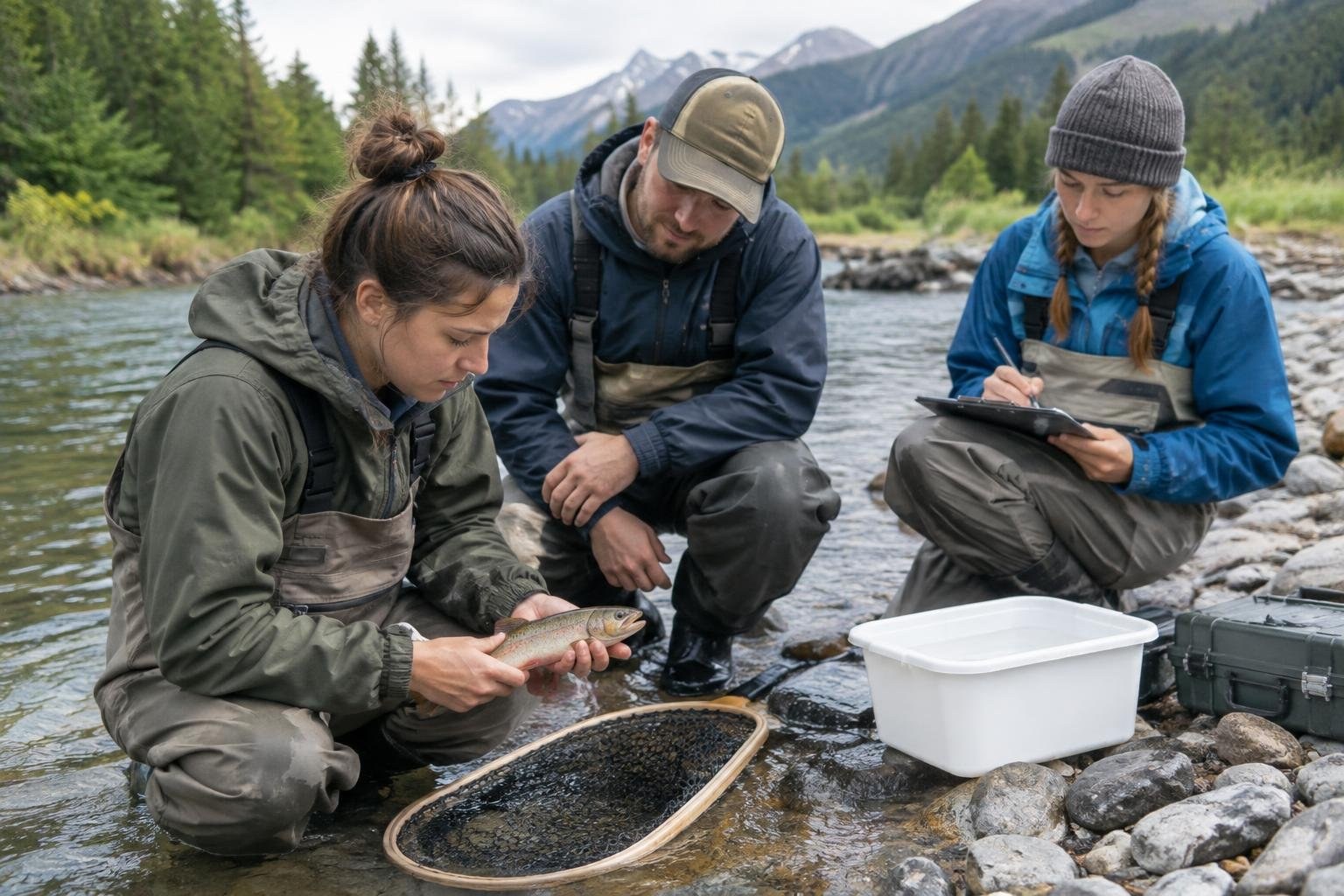
What Is Wildlife, Fish and Wildlands Science and Management?
What Is This Degree?
Wildlife, Fish and Wildlands Science and Management is a natural-resources discipline concerned with the study and stewardship of wildlife, fish, habitats, and wildland systems. Its focus is applied: students learn about organisms and ecosystems and how to use that knowledge in management and conservation contexts.
The program area includes related study in wildlife and fisheries resources, wildlife ecology, wildlands conservation, and natural-resource management. The supplied program classification is CIP 03.0601. Colleges may use different names, concentrations, and departmental homes for closely related curricula, so compare required courses rather than assuming similarly named degrees are interchangeable.
Credential options can include certificates, associate degrees, bachelor’s degrees, graduate certificates, master’s degrees, and doctorates. Each level serves different educational goals; a short credential is not automatically equivalent to a four-year degree or graduate preparation.
What Do You Study in This Major?
What Students Study
Programs commonly connect biological and ecological ideas with practical resource-management questions. Published course examples include wildlife management techniques, wildland plants, mammalogy, and geographic information science. Fisheries-focused study may examine fish anatomy, taxonomy, physiology, behavior, ecology, evolution, and distribution.
Depending on the program, students may learn to observe organisms and habitats, collect and organize field information, and interpret results to inform management decisions. A graduate program may emphasize research design and analysis; Colorado State University’s online master’s program in fish and wildlife management, for example, focuses on study design and data results.
Ask each college whether its curriculum includes field labs, research, internships, or a capstone. These experiences are not universal, and program descriptions should be checked against the current catalog and degree plan. A useful comparison is to identify which courses develop field skills, which build quantitative or mapping abilities, and which let you focus on wildlife, fisheries, or broader wildlands management.
Skills Developed in a Wildlife and Wildlands Program
Skills You May Develop
Depending on the courses and practical work in a program, students may develop skills in:
- Biological and ecological thinking: understanding organisms, habitats, and relationships within natural systems.
- Field observation: applying wildlife or fisheries management techniques and recording observations systematically.
- Data interpretation: understanding how study design and results inform resource questions.
- Geographic information: using geographic information science concepts to work with spatial information.
- Communication and teamwork: explaining observations and working with classmates, instructors, and resource professionals.
These skills can support work in applied ecology and wildlife or rangeland resource management. How much practice students receive in each area depends on the degree plan, so ask to see course descriptions and examples of student projects before enrolling.
Who Is This Program For?
Who Might Find This Program a Good Fit?
This field may appeal to students who are curious about animals, fish, habitats, and how people make decisions about natural resources. It can suit people who like connecting scientific concepts with practical questions and are willing to learn through observation, coursework, and data. Some pathways include work with habitats, fisheries, range, forest, or other wildland systems.
You do not need to arrive with a single personality type or a fixed career plan. Instead, consider whether you are interested in biology and ecology, comfortable learning methods for collecting and interpreting evidence, and open to the possibility that conservation work includes analysis and communication as well as time outdoors.
Admissions and preparation
Admission requirements are set by each institution and credential. Review the school’s published prerequisites, application requirements, transfer policies, and any expectations for prior coursework. For a bachelor’s program, ask how introductory science preparation is handled. For a graduate program, check the required academic background and application materials directly with the department; requirements are not standardized across schools.
Degree Levels, Online Options, and Completion Time
Credential Levels, Format, and Time to Completion
Students can encounter this subject at several credential levels, including certificates, associate degrees, bachelor’s degrees, graduate certificates, master’s degrees, and doctorates. The appropriate level depends on your goal: introductory learning, preparation for an undergraduate pathway, a professional foundation, advanced specialization, or research training.
Completion time is determined by the credential, credit requirements, course availability, transfer credit, and whether you study full time or part time. Confirm the total credits and realistic course sequence with each college rather than assuming all programs take the same length of time.
Online study is possible for some offerings. Colorado State University has an online master’s in fish and wildlife management for natural-resources professionals. Ask whether an online program includes any required in-person fieldwork, labs, internships, or other activities, and how students access equipment, advising, and practical experience.
How Much Does a Wildlife and Natural-Resources Degree Cost?
Tuition, Costs, and Financial Aid
There is no single price for this degree. A student’s total cost depends on the institution, credential, residency classification, delivery format, credits required, transfer credit, and additional course or field expenses. Compare the full published cost of attendance, not just the price per credit. Ask whether a program has extra costs for field activities, equipment, travel, technology, or course materials.
To make an affordability plan, review the institution’s financial-aid information and speak with its financial-aid office. Ask about grants, scholarships, work-study, eligible federal student aid, transfer pathways, and employer tuition assistance if applicable. Verify award conditions, renewal rules, and the total amount you would need to borrow. A lower initial price is not the only factor: check whether credits will transfer and whether the program offers the courses you need in a workable schedule.
Because costs and aid eligibility differ by school and student, request a written estimate for your own situation before committing.
What Can You Do With This Degree?
Careers, Jobs, and Employment Outlook
Possible career directions include applied wildlife and rangeland resource management, fisheries or wildlife biology, habitat conservation, and work with natural-resource organizations. The actual jobs open to a graduate depend on the credential, coursework, experience, geographic location, and employer requirements. A degree title alone does not guarantee eligibility for a particular position.
| Career direction | Education and preparation to investigate | How the program may apply |
|---|---|---|
| Wildlife management or conservation roles | Check the degree and experience requirements in current postings; some positions may expect specialized study or field experience. | Wildlife management techniques, habitat conservation, and ecology may be relevant. |
| Fisheries-related roles | Review employer requirements and professional certification criteria. | Fisheries coursework can address fish biology, ecology, and management. |
| Wildland or rangeland resource management | Investigate the specific employer’s required education and practical experience. | Study of plant communities and wildland systems can be applicable. |
| Research or advanced conservation work | Graduate education may be relevant for some specialized research paths; confirm for each role. | Research design and data interpretation can support further study and research work. |
Potential employers and settings described by programs include natural-resource agencies, private ranches and farms, and conservation-related organizations. For current pay and job outlook, search the U.S. Bureau of Labor Statistics by exact occupation and compare postings in the location where you plan to work. A single salary or outlook figure for the degree would not represent all these occupations.
Find out which Career or College Major is right for you!
Take the MAPP free today!Does the Degree Lead to Certification or Licensure?
Certification, Licensure, and Experience
Completing a degree and meeting a professional certification standard are separate matters. West Virginia University describes wildlife and fisheries concentrations intended to meet requirements for professional certification through The Wildlife Society or the American Fisheries Society. The University of Nebraska–Lincoln states that students in its Wildlife Ecology and Management option qualify for Associate Wildlife Biologist certification through The Wildlife Society.
These examples do not mean every program qualifies every student. Certification rules can depend on coursework and other criteria set by the professional society. Confirm current requirements with the certifying organization and ask the college to show how its curriculum maps to them.
Field experience, internships, research, volunteer work, and relevant projects can help students demonstrate practical interest and skills. Ask whether a school helps students find supervised opportunities and whether those experiences count toward course requirements. Do not assume that a degree automatically grants a professional license or certification.
How to Choose the Right Program
How to Choose a College Program
Compare programs by looking beyond their names and promotional summaries. Use the current catalog and speak with an adviser or department contact.
- Curriculum: Does the course plan include the wildlife, fisheries, ecology, field methods, or geographic information topics you want?
- Practical learning: What fieldwork, labs, research, internships, or capstone options are available, and are they required?
- Credential and next steps: Does the degree level match the occupations or graduate programs you are considering?
- Certification alignment: If a credential matters to your goal, can the school explain how its coursework relates to current certification requirements?
- Cost and schedule: What is the full estimated cost, and can you complete the required courses in your intended format and timeframe?
- Student support and outcomes: Ask about advising, career services, transfer policies, and how the department reports graduate outcomes.
Check the institution’s accreditation status through appropriate official sources and verify that any professional recognition or certification alignment is current. Never assume that a program is accredited or that a credential will transfer based only on a major’s title.
Related Degrees: Which Alternatives Should You Compare?
Related Degrees and Alternatives
Consider adjacent majors if you want a different balance of science, policy, land management, or specialization. Compare the actual course lists because degree names and emphases vary among colleges.
- Environmental science: Consider this if you want a broader focus on environmental systems rather than a concentration centered on wildlife and wildlands.
- Environmental studies: Consider this if you want to explore environmental issues through a broader mix of social, policy, and humanities perspectives.
- Fisheries science: Consider this if your main interest is fish, aquatic ecosystems, and fisheries management.
- Forestry: Consider this if you want to focus more directly on forests and forest resources.
- Range or rangeland management: Consider this if you are especially interested in plant communities and management of range and wildland systems.
- General biology or ecology: Consider this if you want a broader biological foundation before selecting a specialized conservation path.
- Natural-resource management: Consider this if you want to study resource decisions across a wider set of natural systems.
Before switching fields, check how the alternative affects prerequisites, certification eligibility, opportunities for field experience, and the graduate programs or jobs you may pursue.
Graduate School and Possible Career Pathways
Graduate School and Career Progression
Graduate study can be a next step for students seeking deeper specialization, research preparation, or advanced study in wildlife conservation biology and natural resources. University of New Hampshire offers an M.S. in Natural Resources focused on wildlife ecology and conservation science for research and field careers. Colorado State University’s online master’s program focuses on study design and data results for natural-resources professionals.
One possible pathway is a relevant undergraduate degree followed by an entry-level conservation or resource-management role, then additional experience or a specialized graduate degree if required for a later goal. Another is to continue directly into graduate study when a specific research or professional objective calls for it. Neither progression is guaranteed; job duties and qualifications vary. Speak with faculty, employers, and graduate admissions offices about how a particular credential fits your intended destination.
Is a Wildlife and Wildlands Degree Worth It?
Advantages, Tradeoffs, and Whether It Is Worth It
A potential advantage is the connection between ecological study and applied management. The subject can let students focus on wildlife, fisheries, habitats, and wildland resources, with some programs offering practical techniques or pathways aligned with professional certification.
Tradeoffs include the need to choose a suitable specialization, confirm whether the degree level matches desired jobs, and investigate the amount of field and data work involved. Employment options and earnings vary by occupation and location, and some goals may call for more education or experience. The degree is worth considering when its coursework, practical opportunities, cost, and credential level make sense for your career aims. Compare those factors with related majors rather than assuming one field is the right choice for every conservation-minded student.
Questions to Ask Before Choosing a Program
Questions to Ask Before You Enroll
- What credential will I earn, and what are the total credits and likely completion schedule?
- What is the full cost after fees, materials, field expenses, and financial aid?
- Which courses and concentrations are available, and how often are required courses offered?
- Are fieldwork, labs, internships, or research included or required?
- How does the program support transfer students and verify transfer credits?
- Is the institution appropriately accredited, and are any professional certification claims current?
- What kinds of career advising, employer connections, or graduate-school support can students access?
- What do recent graduates do, and how does the school define and document its outcome information?
- Can I speak with a faculty adviser or current student about the day-to-day academic experience?
Write down answers from each program and compare them against your priorities. If you are unsure whether this field fits, identify the parts that interest you most, such as wildlife, fisheries, field science, or land management, and explore related occupations before choosing a major.
Frequently asked questions
Is Wildlife, Fish and Wildlands Science and Management hard?
It can be challenging for students who are new to biology, ecology, statistics, or field data collection. Programs may combine science courses with practical management methods and, depending on the school, geographic information science. Review the specific curriculum and ask how much fieldwork, lab work, and quantitative coursework it includes.
What jobs can I get with this degree?
Graduates may pursue conservation and resource-management pathways related to wildlife, fisheries, rangelands, and habitat. Potential roles and qualifications differ by employer. Some positions may require a bachelor’s degree, relevant experience, or graduate education, so check current job postings and government occupational profiles for the roles and locations you are considering.
How much can I make with this degree?
Earnings vary by occupation, education, experience, employer, and location. The research available for this guide does not establish current pay figures for each career pathway, so compare specific job titles using the U.S. Bureau of Labor Statistics and current employer postings rather than relying on a single salary estimate for the degree.
Can I earn this degree online?
Some natural-resource programs offer online coursework, and online graduate options exist. For example, Colorado State University offers an online master’s in fish and wildlife management focused on study design and interpreting data results. Confirm whether any program you consider requires in-person fieldwork, labs, internships, or other campus activities.
Does this degree require math?
The exact math requirements depend on the institution and concentration. Wildlife and natural-resource study can involve collecting and interpreting data, and programs may include science and research methods. Review the course catalog for mathematics, statistics, and data-analysis requirements before applying.
Do I need graduate school for a career in wildlife conservation?
Not necessarily. Certificates and associate degrees can provide introductory or applied preparation, while a bachelor’s degree may be relevant to more advanced professional pathways. Some research-oriented and specialized roles may call for graduate education. Check job requirements for the positions you want before deciding how far to study.
What certifications can help wildlife and fisheries graduates?
Professional certification options include credentials offered by The Wildlife Society and the American Fisheries Society. Eligibility depends on the organization’s current requirements and the courses completed. Some university programs are designed to align a concentration with certification requirements, but students should confirm eligibility directly with the certifying organization.
How does this degree compare with environmental science?
This degree tends to emphasize applied management of wildlife, fisheries, and wildlands. Environmental science often has a broader focus on environmental systems and issues, while environmental studies may include more policy and social-science perspectives. Program names do not guarantee a particular curriculum, so compare required courses and field experience.
People Also Ask
What is the CIP code for Wildlife, Fish and Wildlands Science and Management?
The CIP code supplied for this program area is 03.0601. Colleges may use different major names or organize wildlife, fisheries, and wildlands study under different departments, so compare course requirements rather than relying on the title alone.
What classes are in a wildlife and wildlands science major?
Students may study wildlife habitat conservation, fisheries, ecology, wildland plants, wildlife management techniques, mammalogy, and geographic information science. The selection varies by college, degree level, and concentration.
Are wildlife and fisheries degrees available online?
Yes, some institutions offer online study in this field, including graduate-level options. Online delivery does not necessarily mean every requirement can be completed remotely; confirm any field, lab, internship, or in-person expectations with the program.
Can a college program prepare me for wildlife biologist certification?
A wildlife or fisheries concentration may be structured to meet academic requirements for professional certification, but eligibility is not automatic across all programs. Check course requirements with both the school and the relevant professional society.
How do I choose a wildlife conservation college program?
Compare the curriculum, field experience, total cost, degree level, and career services. Also ask whether the program’s coursework aligns with professional certification requirements or the qualifications listed in jobs you hope to pursue.
Do wildlife management majors take biology and statistics?
Possibly. The field includes study of organisms and ecological systems, and some programs require science coursework and data skills. Review the program’s published course sequence to understand its biology, chemistry, mathematics, and statistics expectations.
Wildlife, Fish and Wildlands Science and Management may suit students who want to combine biology, field observation, data, and practical decisions about wildlife and natural habitats. The degree can lead toward conservation and resource-management work, but the best path depends on the program’s coursework, field experience, employer requirements, and any graduate study or professional certification a target role requires. Compare total cost and outcomes, then consider whether the daily work matches your interests and strengths.
Want to see your options? Try our comprehensive Degree, Program & College Search tool
College Search ToolSources & Official Resources
- Online Master's in Fish, Wildlife & Conservation Biology | CSU Online
- Conservation Science and Wildlife Management | Academic and Career Programs | Austin Community College District
- Wildlife and Fisheries Resources, BS | West Virginia University
- Fisheries & Wildlife Major | Major | Undergraduate Programs | School of Natural Resources | University of Nebraska–Lincoln
- Wildlife Fish and Wildlands Science and Management | BYU - BYU Life Sciences
- Department of Wildlife and Natural Resources | Tarleton State University Catalog
- Natural Resources: Wildlife and Conservation Biology, M.S. - COLSA, UNH | University of New Hampshire