Degree Library
Environmental and Natural Resources Management Degree Guide: Courses, Careers, and How to Choose
Environmental and natural resources management and policy programs examine how people use, protect, and make decisions about natural systems and resources.…
By David Slack · Staff Writer Assessment.com · Published October 5, 2026 · Last updated October 6, 2026
Environmental and natural resources management and policy programs examine how people use, protect, and make decisions about natural systems and resources. Depending on the college and degree level, students may study ecology, field measurement, mapping, conservation, environmental policy, and resource planning. The aim is to connect knowledge about land, water, forests, wildlife, and communities with practical decisions about stewardship and use. Graduates may pursue technical, field, planning, policy, conservation, or research-related work. The major does not qualify every graduate for every role: employers may require particular degrees, experience, credentials, or licenses. Compare the curriculum with the work you hope to do. Not sure whether this field fits you? Take the Free MAPP Career Assessment to explore how your motivations, interests, and preferences may align with this degree and related careers.
An environmental and natural resources management and policy degree prepares students to study and support decisions about ecosystems and resources such as land, water, forests, and wildlife. Programs may combine ecology, field techniques, GIS, resource measurement, and policy. Graduates may pursue technical, conservation, planning, or policy-related careers, with further education or other qualifications required for some roles.
What Is an Environmental and Natural Resources Management Degree?
Environmental and natural resources management and policy is an interdisciplinary field concerned with how natural resources are understood, used, managed, and conserved. Programs can connect ecological and technical knowledge with the social, economic, and policy questions involved in resource decisions.
The program title is not standardized. Similar majors may be called natural resource management, environmental management, conservation, natural resources policy, or environmental and natural resources conservation. The CIP code supplied for this topic is 03.0201. Compare course requirements and learning outcomes instead of relying on the title alone.
Programs exist at different levels, including associate, bachelor’s, master’s, doctoral, and certificate options. An associate program may introduce ecological principles and resource-management foundations; a bachelor’s degree can provide broader preparation for entry-level professional work or further study. Graduate programs and certificates may suit people seeking deeper specialization or additional technical and management knowledge.
How it differs from environmental science
Environmental science often emphasizes studying environmental systems and analyzing environmental problems. Natural resources management tends to focus more directly on stewardship and decisions about resources and their use. There is substantial overlap, and individual programs may cross these boundaries.
What Do You Study? Courses and Hands-On Learning
Coursework varies by institution, degree level, and concentration. A program may move from foundational science and social concepts to applied technical work, field experience, policy, and a final project.
- Foundations: Ecological and sociopolitical concepts help students understand how natural systems function and how people and institutions affect resource decisions.
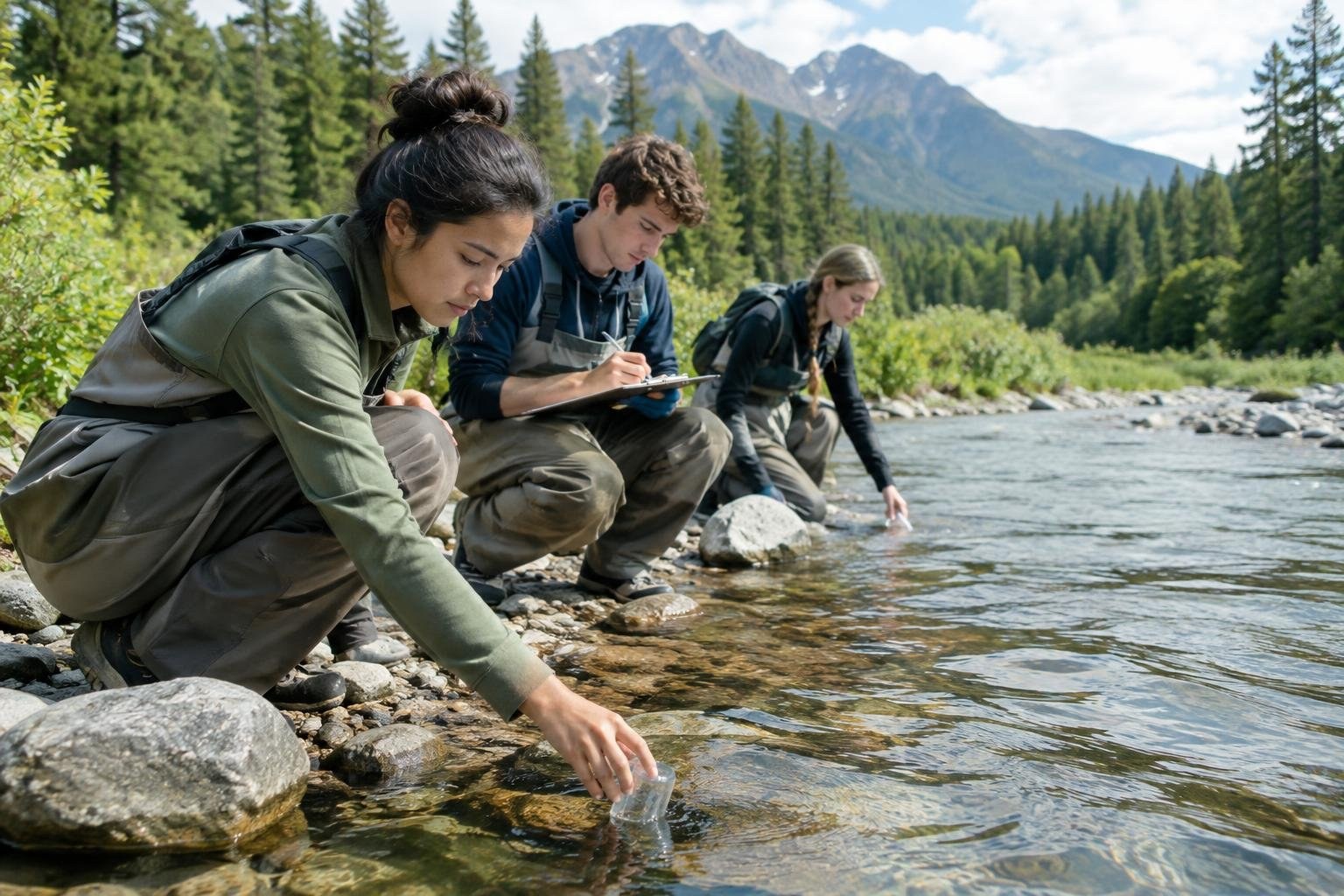
- Field and measurement methods: Depending on the program, students may practice identifying plants and trees, surveying land, measuring natural resources, monitoring soil and water, or using wildlife techniques.
- Mapping and analysis: Geospatial applications such as GIS can help students organize and interpret information about places, habitats, and resource conditions.
- Management and policy: Students may explore conservation, sustainability, environmental planning, and the policy frameworks used to balance resource protection with human needs.
- Applied learning: A college may offer laboratories, field courses, internships, research, or a capstone. Ask how much hands-on learning is required and whether it is local to campus.
For example, SUNY College of Environmental Science and Forestry describes its associate program as including applied ecological and sociopolitical concepts, technical training, and options to continue to a bachelor’s degree or enter the environmental and natural resources sector. This is an example, not a universal curriculum.
Skills You Can Develop
Students can develop a mix of scientific, technical, communication, and professional skills. Which ones receive the most attention depends on the program and selected courses.
- Technical: Field measurement, monitoring, species identification, and geospatial tools can support technician, forestry, conservation, or resource-planning work.
- Analytical: Organizing observations, interpreting measurements, and weighing evidence can help with resource assessments and management decisions.
- Communication: Explaining findings in reports, presentations, or conversations with colleagues and communities is useful in consulting, planning, education, and policy work.
- Collaboration: Resource decisions can involve agencies, land managers, scientists, businesses, and communities. Teamwork and listening help students understand competing needs.
- Technology: GIS and other mapping or data tools may be part of a program. Ask which tools students actually use and whether projects produce work samples.
These skills can connect to field technician, conservation scientist, forestry, planning, and policy-related roles. A degree is preparation, not a guarantee of employment or qualification for every position.
Who Is This Degree Best For?
This major may be worth exploring if you are curious about ecosystems and want to understand how people make decisions about land, water, forests, wildlife, or conservation. Students may enjoy a mix of outdoor observation, technical work, analysis, and policy discussion. Not every job is outdoors, and not every student needs the same balance of science and social analysis.
Consider whether you are comfortable learning scientific concepts, collecting or interpreting data, and working through questions with no simple answer. Programs can involve quantitative work, mapping, or field methods, but demands differ. Review course plans and talk with an adviser about preparation if biology, math, or technology courses concern you.
Does this degree match you?
Salary, reputation, and job growth are only part of a college decision. Daily tasks, work settings, training costs, and the kinds of problems you want to solve matter too. The Free MAPP Career Assessment can help you reflect on interests and motivations. Assessment.com’s Degree Matching and Career Matching tools can help you explore related education and occupation paths; Matching Jobs can help connect career interests to job options.
Admissions, Length, and Academic Difficulty
Admission requirements are set by each college. Applicants to undergraduate programs may need to meet general admission standards and submit transcripts. Some programs may have additional course prerequisites or requirements for transfer students. Graduate admissions can consider prior academic preparation and other materials, depending on the school and program. Check the official admissions page rather than assuming a particular GPA, test, essay, or interview is universal.
A full-time associate degree is often designed as a two-year course of study, but actual completion time depends on credits, course availability, transfer credit, and enrollment pace. Bachelor’s and graduate timelines also vary. Part-time and online enrollment may extend the schedule; accelerated study or prior credit may shorten it if the program permits.
Coursework can be demanding when science, field methods, technical software, and policy analysis meet. Students can prepare by checking prerequisites, asking how field courses work, planning time for labs or travel, and using tutoring and advising early. Confirm how transfer credits apply to required courses before enrolling.
Online vs. On-Campus Programs
Online, hybrid, and campus-based options may be available, particularly for selected certificates or graduate coursework. Online delivery does not necessarily mean a program is entirely remote. Field exercises, laboratories, internships, research, or other applied requirements may require in-person participation.
Ask where practical work takes place, whether students arrange their own local experience, and whether travel or specific equipment is required. If you are comparing online programs, confirm that the schedule, field component, and transfer rules fit your circumstances and intended career.
Cost, Financial Aid, and Ways to Save
There is no single reliable price for this degree across the United States. Total cost depends on tuition, public or private status, residency, degree level, program format, fees, books, technology, field activities, and living expenses. Ask each college for its current cost of attendance and estimate the full time needed to graduate, not just the price per credit.
Compare grants, scholarships, work-study, federal aid eligibility, and employer assistance where applicable. Community-college or associate-to-bachelor’s pathways may be worth examining, but verify course equivalencies and transfer agreements in writing. A low initial price is not necessarily a saving if credits do not count toward the next credential.
Ways to manage costs safely
- Build a term-by-term estimate that includes fees, materials, transport, and required field participation.
- Ask financial aid offices about grants, scholarships, and application deadlines.
- Check transfer agreements before taking courses elsewhere.
- Compare completion time and available course schedules, not tuition alone.
- Do not assume a certificate or credential will qualify you for a job until you verify employer requirements.
Careers, Jobs, Salary, and Outlook
Possible occupations span technical, field, scientific, forestry, planning, and policy work. The table is a starting point for research, not a promise that one degree qualifies a graduate for every job. Job titles, requirements, pay, and outlook vary by employer and location. Consult current U.S. Bureau of Labor Statistics and O*NET profiles for occupation-specific wage and outlook data; do not treat a degree title as a salary category.
Career exampleTypical preparation to investigateHow the degree may applyForest and conservation technicianOften a technical or associate-level pathway; check each postingField measurement, monitoring, and natural-resource methodsNatural resources technicianRequirements vary by employer and dutiesField data collection, mapping, and resource monitoringForesterCheck degree, experience, and any jurisdiction-specific requirementsForest resources, measurement, and management conceptsConservation scientistMay require a bachelor’s degree or additional experience; verify roleConservation, resource assessment, and applied ecological knowledgeSoil and water conservation specialistCheck employer requirements and any relevant local rulesSoil and water monitoring, conservation, and resource planningRange managerRequirements vary by organization and level of responsibilityResource management, ecological concepts, and field methodsEnvironmental planner or consultantEmployers may seek a bachelor’s degree, experience, and specialized skillsEnvironmental assessment, planning, technical analysis, or policyEnvironmental policy or sustainability roleRequirements depend on the organization; advanced study may help for some rolesResource decision-making, policy frameworks, and sustainability knowledge
Program graduates may work in public agencies, private consulting, conservation organizations, research settings, or other organizations involved in environmental planning and resource stewardship. Cal Poly’s catalog describes career areas including land conservation, environmental policy and consulting, sustainability, planning, assessment, and natural resource management. Treat these as possible pathways, not guaranteed placements.
For salary and outlook, search the specific occupation rather than “natural resources degree salary.” Employers may also value work experience, GIS familiarity, communication, and the ability to handle field or data tasks. Technology can change how monitoring and analysis are done, but it does not remove the need to evaluate evidence, explain decisions, and understand local resource conditions.
Experience, Certifications, Licenses, and Safety
Practical experience can help students connect coursework with job expectations. Look for internships, research, field projects, volunteer activities, student organizations, or class assignments that build relevant skills. Ask the college what opportunities are available and whether students receive help finding placements.
How to stand out to employers
- Keep examples of field reports, mapping projects, research, or presentations that you are allowed to share.
- Describe what you measured, analyzed, or communicated, rather than listing course titles alone.
- Build experience with tools emphasized in the jobs you want, such as GIS where relevant.
- Ask employers about required education, field experience, and credentials before paying for extra training.
- Join professional or campus groups when they offer relevant learning, networking, or project opportunities.
Completing a degree is not the same as holding a professional license. Licensing, credential, and safety requirements depend on occupation and jurisdiction. Ask the program and prospective employers which rules apply to your intended work, and verify them with the relevant state or professional authority. Do not assume that an optional certificate substitutes for a required degree or license.
Graduate School and Certificate Options
Graduate study may help students pursue specialized technical, scientific, management, or policy work, but it is not necessary for every natural resources career. Options can include a master’s in natural resources, environmental conservation, sustainability, environmental science, or a related field. An MBA may fit some management goals; a doctorate is generally a more specialized path for research, academic, or advanced subject-matter work. Check target job postings to see whether graduate education is expected.
Some colleges offer graduate certificates in areas such as sustainable resource management, GIS, natural resource decision-making, or ecosystem management. Programs differ in admission rules, credit value, and whether credits apply to a later degree. For instance, URI describes a flexible graduate certificate emphasizing sustainable resource management, GIS, and natural-resource decision frameworks. UNH describes graduate coursework that can count toward both bachelor’s and master’s study for eligible students in a particular pathway. Verify current terms with each institution.
Related Degrees and How They Compare
- Environmental science: Consider it if you want a stronger emphasis on scientific study and analysis of environmental systems.
- Environmental studies: Consider it if you want broader social, cultural, or policy perspectives on environmental issues.
- Forestry: Consider it if forest ecosystems and forest management are your main interests.
- Wildlife biology or ecology: Consider it if you want to focus more closely on animal populations, habitats, or ecological research.
- Environmental engineering: Consider it if you are interested in engineering design and technical solutions, and are prepared for its engineering prerequisites.
- Geography or GIS: Consider it if mapping, spatial data, and geographic analysis are central to your interests.
- Public policy: Consider it if you want a broader policy foundation and plan to focus on environmental or resource issues through electives or graduate study.
- Agriculture or range science: Consider it if your interests center on working lands, grazing systems, or agricultural resource decisions.
Compare required courses, fieldwork, technical depth, likely employers, and graduate-school implications. Related majors can share classes but lead to different preparation. There is no universally best choice; the strongest option is one aligned with the work you want to explore.
Advantages, Drawbacks, and Is It Worth It?
Potential advantages: The field connects ecological and technical learning with real resource decisions. Programs may offer field experience and pathways into conservation, planning, forestry, policy, sustainability, or further study. The range of specializations lets students investigate different kinds of work.
Potential drawbacks: Program names and course content can differ widely. Some careers may require graduate education, substantial experience, geographic flexibility, or qualifications beyond a degree. Field-based study may involve scheduling or travel demands, and the cost-to-career value depends on the student’s goals and local opportunities.
To judge whether it is worth the investment, compare full program cost, time to completion, practical learning, transfer options, and requirements for several target occupations. Ask the college for transparent outcomes and how those figures were collected. Consider geography and your willingness to pursue further education. No degree guarantees a particular job or salary.
How to Choose a Program: Checklist and Red Flags
Compare programs against your intended career, not just their names or promotional descriptions. A college visit, advising appointment, or conversation with current students can help answer practical questions.
- Accreditation: Check the institution’s accreditation status through authoritative education sources. If a career has specific professional requirements, verify whether the program meets them.
- Curriculum: Compare required science, policy, field, statistics, and GIS courses with jobs you may want.
- Faculty and facilities: Ask about teaching, research, field access, laboratories, and equipment relevant to the program.
- Experience: Find out whether internships, research, fieldwork, or capstones are required, optional, or supported.
- Cost and aid: Request a full cost estimate and compare financial aid, scholarships, and likely time to completion.
- Format and transfer: Confirm online or hybrid requirements, in-person components, course availability, and credit-transfer rules.
- Outcomes and career support: Ask how outcomes are measured, what career services provide, and whether employers recruit or collaborate with the program.
- Credentials and licensing: Verify any relevant requirements directly with the appropriate employer, professional body, or state authority.
Questions to ask before enrolling: What is the total expected cost? Which courses include field or lab work? What is the transfer policy? What jobs do graduates pursue, and how were outcomes measured? Does the program prepare students for any required credential? What support is available for internships and job searches?
Avoid choosing solely on a headline salary, a broad career promise, or a certificate’s name. Confirm claims with official program materials and the employers or licensing authorities relevant to your goal.
From Degree to Career: Possible Pathways
Career paths can develop in different ways, and progression is not automatic. Examples include:
- Associate degree → entry-level natural resources or conservation technician role → field experience and stronger measurement or GIS skills → specialized monitoring or resource-support work.
- Bachelor’s degree → entry-level forestry, conservation, planning, or consulting role → professional experience and a focused area of practice → project coordination or advanced specialist responsibilities.
- Bachelor’s degree → research or policy-support role → graduate study or specialized experience where useful → advanced research, management, or policy work.
Job titles, hiring standards, and advancement vary. Use current job postings and occupational profiles to identify the qualifications employers actually request.
Is This Degree Right for You?
Environmental and natural resources management and policy may be a good direction if you want to connect ecological knowledge with practical decisions about conservation and resource use. It may be less suitable if your preferred work is far removed from science, field or technical methods, or environmental and policy questions. Related majors may offer a closer match to a particular interest.
Before deciding, compare programs, costs, learning formats, transfer rules, and career requirements. Take the Free MAPP Career Assessment to explore how your motivations and preferences align with related careers, then use Degree Matching, Career Matching, and Matching Jobs as tools for further exploration. You can also compare college programs and ask admissions and academic advisers direct questions before committing.
Sources and further program information
- SUNY ESF: Environmental and Natural Resources Conservation associate program
- Cal Poly: Natural Resources Management and Environmental Sciences catalog
- University of Rhode Island: Natural Resources and the Environment graduate certificate
- University of New Hampshire: Natural Resources, Environmental Conservation and Sustainability
Frequently asked questions
Is an environmental and natural resources management degree hard?
It can be challenging because programs may combine biology, ecology, field methods, data analysis, mapping, and policy. The balance varies by college and specialization. Students who prepare for science coursework, practice technical tools, and take advantage of field and faculty support can build the skills progressively.
Is a natural resources management degree worth it?
It may be worthwhile for students whose goals align with conservation, resource management, environmental planning, policy, or related work. Value depends on total cost, the program’s practical experience, career requirements, and the jobs available where you plan to work. Compare those factors rather than assuming every graduate enters the same occupation or salary range.
What jobs can I get with a natural resources degree?
Possible paths include natural resources or environmental technician, forestry or conservation technician, conservation scientist, forester, soil and water conservation specialist, range manager, environmental planner, and policy or sustainability roles. Some positions require additional education, field experience, a specific credential, or a professional license. Check the requirements for each job title and location.
How much can you make with a natural resources degree?
There is no single salary for this degree. Pay depends on occupation, education, experience, employer, location, and responsibilities. Use current U.S. Bureau of Labor Statistics and O*NET occupational profiles to compare pay and outlook for specific careers, such as forester, conservation scientist, and environmental technician. A degree title alone does not determine earnings.
Can I earn a natural resources degree online?
Some courses, lectures, and graduate certificates may be available online. Fieldwork, laboratory activities, internships, or other practical requirements may still involve in-person participation. Confirm the format and location requirements for every required course before enrolling, especially if you live far from campus.
Does natural resources management require math?
Many programs include science and data work, but the amount of math depends on the school and specialization. Students may encounter statistics, measurement, mapping, or quantitative analysis. Review required courses and ask an adviser about preparation or support if you are concerned about math or science prerequisites.
Do you need graduate school for conservation careers?
Not for every role. Some entry-level technical and field positions may accept an associate or bachelor’s degree, while research, advanced policy, management, or specialized roles may favor or require graduate study. Employers and job duties vary, so research target positions before deciding whether a master’s or doctorate is necessary.
What certifications help with natural resources jobs?
The right credential depends on the job and jurisdiction. Some employers value GIS skills, field-method experience, or specialized training, while certain regulated positions may have licensing or education requirements. Check job postings and relevant state or professional rules rather than assuming one certificate qualifies you for every role.
What is the difference between natural resources management and environmental science?
Natural resources management often emphasizes stewardship, conservation, and decisions about land, water, forests, and wildlife. Environmental science tends to focus more directly on environmental systems, scientific measurement, and analyzing environmental problems. The fields overlap, and course plans differ by college. Compare required classes and likely occupations, not just major names.
Can I study environmental and natural resources management part time?
It can be, but an online label does not mean every component is remote. Ask whether field courses, labs, internships, or exams require campus or local participation. Also verify that the format works for your intended career and that credits transfer if you may continue to a bachelor’s or graduate degree.
People Also Ask
What is a natural resources management degree?
The major focuses on managing and conserving natural resources, with coursework that may combine ecology, field methods, technical tools, and policy.
What do you study in natural resources management?
Common topics include ecology, plant and tree identification, land surveying, GIS, soil and water monitoring, wildlife methods, and resource policy. Curricula vary by program.
What can you do with an environmental and natural resources degree?
Career options include technician, forester, conservation scientist, soil and water conservation specialist, range manager, planner, and policy-related roles. Requirements differ by job.
How much does a natural resources degree cost?
Program cost varies with institution, residency, degree level, course format, fees, living expenses, and field or technology requirements. Compare each school’s full cost of attendance and financial aid offer.
Are natural resources degrees available online?
Some coursework may be online, but fieldwork, laboratories, internships, or practical requirements may need in-person participation. Confirm the details with each program.
Do conservation jobs require a master’s degree?
It depends on the role. Some positions may be open to graduates with an associate or bachelor’s degree, while other jobs favor or require graduate study or specialized experience.
How is natural resources management different from environmental science?
Natural resources management commonly focuses on stewardship and resource decisions, while environmental science typically emphasizes studying environmental systems and problems. Programs overlap, so compare actual courses.
What skills are useful in natural resources careers?
GIS, field methods, data interpretation, communication, and knowledge of resource policy can be useful. The best preparation depends on the occupations and employers you are targeting.
A degree in environmental and natural resources management and policy can suit students who want to understand how ecosystems work and how people make decisions about land, water, forests, wildlife, and other resources. Programs can lead toward field, technical, planning, policy, and research work, but job requirements and career prospects vary by role, location, and education level. Compare course plans, total cost, field opportunities, transfer options, and the qualifications required for careers you are considering. Personal fit matters, too: use the Free MAPP Career Assessment and degree and career matching tools to explore whether the work aligns with your interests and motivations.
Sources
- Academic Programs - Environmental and Natural Resources Conservation, A.A.S.
- Natural Resources: Environmental Conservation and Sustainability (M.S.) | Natural Resources and the Environment
- Natural Resources and the Environment Graduate Certificate – Department of Natural Resources Science
- 2026 Natural Resource Management Degree Guide
- Natural Resources Management and Environmental Sciences | Cal Poly Academic Catalog
- FAQ: What Can You Do With a Natural Resources Degree? | Indeed.com
- Natural Resource Management and Sustainable Ecosystems Graduate Certificate (Retiring) | Harvard Extension School
- 2026 Environmental/Natural Resources Management and Policy Degree Guide