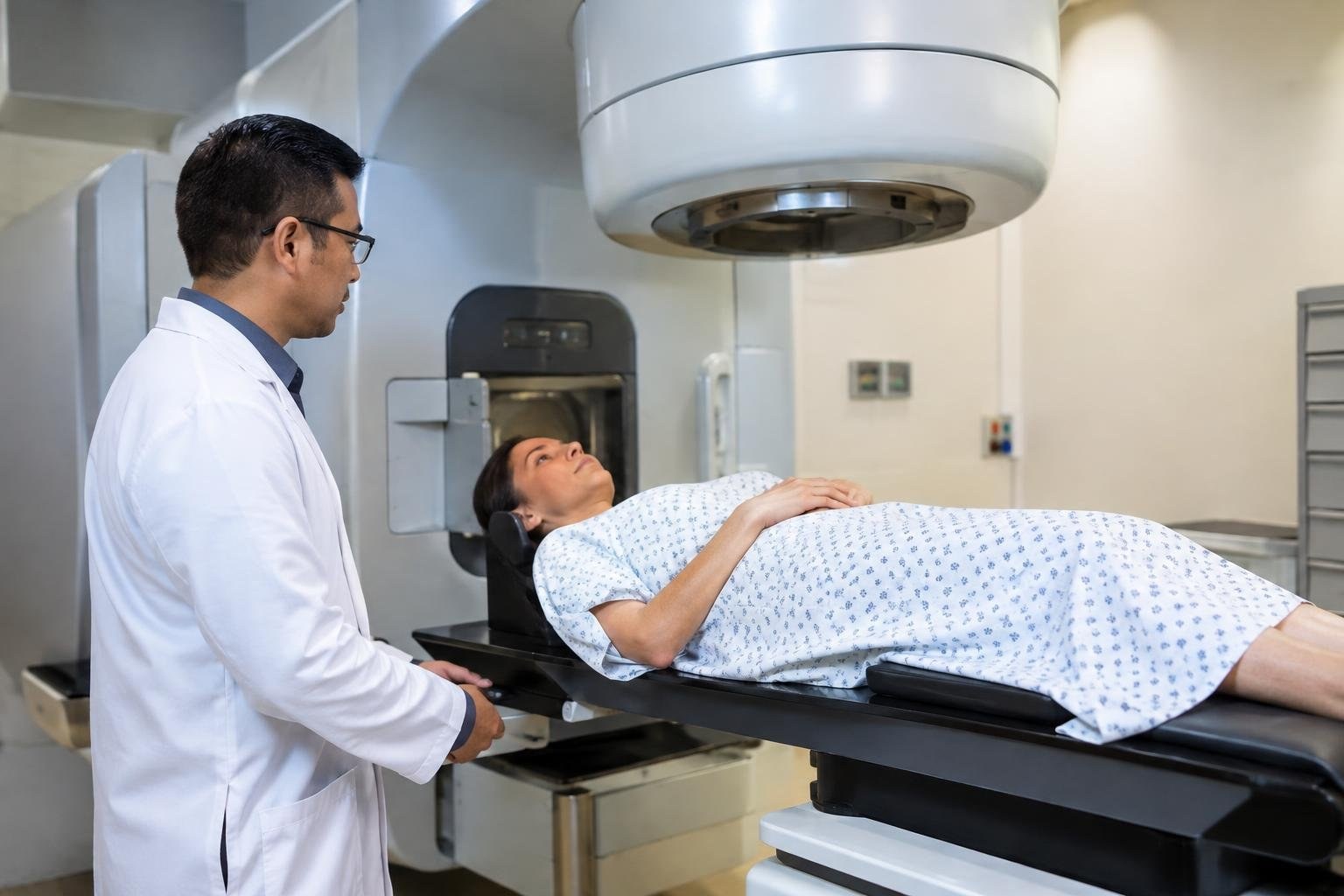
Health and Medical Physics Degree Guide: Courses, Careers, Costs, and Fit
Explore health and medical physics programs, what students study, graduate prerequisites, career possibilities, costs to investigate, and how to compare programs before enrolling.
By Tome Fierre · Staff Writer Assessment.com · Published October 26, 2026 · Last updated November 5, 2026
Health and medical physics programs apply physics, nuclear science, and engineering concepts to healthcare, radiation protection, and related research. Students may study how radiation is measured and controlled, how imaging and treatment technologies work, and how physical principles help assess health and safety questions. The field is specialized, and a program’s title does not tell you everything about its purpose. Some pathways prepare students for graduate study or research; some certificates are designed for professionals who already have substantial physics education. Compare admission prerequisites and the next step each program supports before applying.
Degree & Program Decision Insights
Explore your personal fit, education requirements, career potential and next steps.
01Motivational Fit
Discover whether this program fits you
Explore your preferences against the focus of Health/Medical Physics. These prompts are not personal MAPP results.
Subject curiosity. Would you choose to explore “radiation biophysics” in depth? Ask for a sample learning activity to test that interest.
Breadth of interest. Consider the place of “biophysics” in this field. Is this another part you would choose to explore, or mainly a requirement you would tolerate?
Work reality. Related work can involve this task: “Teach physics to students.” Would you want that activity to be a regular responsibility?
Interest in studying a field can differ from enjoying its related work.
Which part would you want to do repeatedly, and what would you try before deciding?
Discover Your Personal Program Fit
Before investing your time and money in your education, discover how this program aligns with your natural motivations, work preferences and career goals.
Typical occupational entry: doctoral or professional degree (BLS).
Health Specialties Teachers, PostsecondarySOC 25-1071 · O*NET 25-1071.00$107,310/year median (May 2025); +17.9% projected change (2025–2035); 24,900 projected openings/year.
Typical occupational entry: doctoral or professional degree (BLS). BLS lists less than 5 years of related work experience as typical for this occupation; this programme is not a direct promise of entry. Postsecondary teaching is a separate appointment and may require advanced study; this programme alone is not a promise of a teaching post.
U.S. occupational wages are not guaranteed graduate earnings; OEWS excludes self-employed workers.
Projected openings include replacements as well as growth.
U.S. national estimates. A crosswalk does not establish entry-level eligibility; advanced, management and teaching roles can require further qualifications.
Explore your motivations. Use MAPP as a starting point for reflecting on your interest in “radiation biophysics”, then test that interest against a sample learning task.
Examine the work. Compare Physicists and Health Specialties Teachers, Postsecondary on daily work and entry qualifications, as well as pay. Explore Physicists.
Compare actual providers. Ask for the exact credential, course sequence and assessment methods. Compare how each provider teaches “biophysics”, its entry criteria and its itemized costs.
Check the evidence before applying. Confirm prerequisites and any recognition or professional requirements for your intended route; ask for applicable rules and published outcome definitions in writing.
Verify the institution’s current offering, admissions requirements and outcomes; a search result does not establish your eligibility.
Health and medical physics is a field that applies physics, nuclear science, and engineering principles to healthcare, diagnostic and therapeutic processes, and protection from radiation-related hazards. The U.S. degree classification for this area includes instruction related to radiation biophysics, radiation effects, nuclear physics, radiobiology, medical radiology, dosage theory, computing, and research.
Programs may use names such as medical physics, health physics, or health and medical physics, but the names are not interchangeable guarantees of identical training. A health physics plan may emphasize environmental radiation and protection, while a medical physics track may focus more on radiation therapy or imaging. For example, UNLV describes separate environmental health physics and medical physics sub-plans within its health physics master’s program. Review the individual curriculum and track details rather than assuming all programs cover the same ground.
Credentials in this broad field can include certificates, graduate certificates, master’s degrees, and doctorates. The credential levels associated with a subject area do not mean that every institution offers every level. Verify the credential, admission requirements, and intended pathway at each college.
For a general career comparison, see Assessment.com’s physicist career guide and explore degree resources.
Program examples: UNLV’s health physics master’s program.
What Do Students Study?
Course plans vary, but medical physics training can combine theoretical study with practical work in radiation measurement and healthcare applications. One university certificate curriculum identifies radiation dosimetry, radiation biology, radiation therapy, imaging, and health physics as core areas. These subjects help students understand how radiation is quantified, how it interacts with living systems, and how physics informs medical technologies and safety decisions.
Depending on the program, students may also encounter nuclear or radiation physics, imaging systems, computer applications, health effects of radiation, and research. A research doctorate may include original work; VCU describes its medical physics PhD as combining coursework and research training applied to diagnosis and treatment of human disease.
Do not infer that every course list includes clinical practice, a lab, internship, residency, or capstone. Ask the department to identify required hands-on experiences, where they occur, who supervises them, and whether they are part of the degree or a later career step. Compare course descriptions with the job or further-study route you have in mind.
See the VCU graduate certificate course description and VCU’s medical physics graduate education overview.
Skills You Can Develop
Students in this field need a strong foundation in physics and quantitative reasoning. Coursework can develop the ability to interpret measurements, apply physical models, understand radiation and imaging concepts, and evaluate technical evidence. Depending on the track, students may work with computing and medical informatics or develop research skills.
Technical and scientific: understanding radiation physics, imaging, dosimetry, and radiation biology.
Analytical: checking calculations, interpreting data, and identifying the limits of a measurement or model.
Communication: explaining technical findings clearly to researchers, clinical colleagues, students, or decision-makers.
Professional: documenting work carefully and following program, laboratory, or workplace procedures.
These skills can support pathways in medical physics, health physics, research, and education, but a degree does not guarantee eligibility for a particular position. Match your coursework and additional training to the actual requirements of jobs you may pursue.
Who Is This Program Best For?
This field may appeal to students who enjoy physics, mathematics, careful measurement, and applying abstract ideas to practical health or safety problems. Some students are drawn to imaging and treatment; others are more interested in radiation protection, research, or teaching. The work can involve both independent technical analysis and collaboration with people from other disciplines.
It is not necessary to have one personality type to succeed. More important is willingness to work through complex quantitative material, check details, and keep learning. If you are a high school student, ask a physics teacher or counselor about course preparation. If you are a parent, help your student investigate what a medical physicist or health physicist does in practice, not just the science behind the title.
Does health or medical physics match you?
Salary, program reputation, and career possibilities are only part of the decision. Also consider whether you like the subject matter, the pace of advanced study, and the day-to-day tasks in your preferred role. Assessment.com’s MAPP assessment can be one input as you explore career and degree options; it should complement conversations with faculty, students, and professionals. Browse guidance on choosing a college major as part of that process.
Students entering graduate programs should check prerequisites early. Examples in the supplied university program information include requirements for a physics or related physical-science background and multiple upper-level physics courses. Those are examples, not universal admissions rules.
See the published requirements from Wake Forest and Columbia; verify current requirements directly with each institution.
Admissions and Academic Preparation
Admissions depend on the specific credential and institution. Graduate programs may expect a degree in physics, applied physics, engineering, or another physical science, along with substantial undergraduate physics coursework. Some programs set a minimum GPA, require standardized tests, or request additional application materials. Do not assume requirements are the same across universities or remain unchanged from one admissions cycle to another.
As a concrete example of program-specific rules, Purdue’s published graduate admissions information identifies a required general GRE, a minimum GPA, recommended GPA levels for master’s and doctoral applications, and a stated application deadline. Treat those details as Purdue-specific and confirm the current cycle’s requirements before applying.
For applicants whose undergraduate major was not physics, ask whether prerequisite coursework can be completed before admission, whether conditional admission is possible, and how the department evaluates equivalent preparation. Gather transcripts and course descriptions early, especially for upper-level physics classes.
Review Purdue’s current program admissions page and check directly with admissions for the application cycle you plan to enter.
Credential Levels, Program Format, and Time to Completion
There is no single completion timeline for all health and medical physics credentials. Certificates, master’s degrees, and doctorates differ in scope, and a student’s prior credits, enrollment pace, research obligations, and required practical experiences affect the plan. Request the term-by-term schedule for students entering with your background rather than relying on a generic estimate.
Online, hybrid, and campus formats also vary by institution. Lecture courses may be delivered remotely in some programs, but research, equipment use, supervised practice, or clinical experiences can require a physical location. The provided program descriptions do not establish that every pathway is available fully online. Ask which activities must be completed in person, whether placements are arranged by the university, and whether part-time study changes access to practical training.
Compare total credits, course sequencing, and the time needed to satisfy all program requirements. For adult learners, clarify whether work schedules are compatible with synchronous classes or fixed placement hours.
Tuition, Costs, and Ways to Fund Your Education
Program costs depend on the institution, credential, residency classification, enrollment pace, and required fees or practical activities. The supplied program information does not provide comparable tuition figures, so compare current official cost pages rather than using a broad estimate for the whole field.
Build a personal total-cost worksheet that includes tuition, mandatory fees, books, equipment or technology, travel to campus or a placement, and living expenses if relocation is necessary. Ask whether a research or teaching appointment, employer tuition support, scholarships, grants, or payment plans are available to students in the specific program. Eligibility and funding vary, so request written details before counting aid against the bill.
For students who already hold a physics or related degree, a post-degree certificate may be a different route from starting another full degree. Compare what each route qualifies you to do, its total cost, and whether it meets the requirements of your intended next step. A lower initial price is not necessarily a better value if it does not prepare you for your target pathway.
Careers, Jobs, and Employment Outlook
Possible directions connected with this subject include medical physics, health physics, physics research, and postsecondary teaching. Program descriptions establish areas of study, not guaranteed job placement or a salary. Your opportunities depend on the credential earned, the exact role, experience, additional training, and employer expectations.
Career direction
Education or preparation to investigate
How the field may apply
Pay and outlook
Medical physicist
Specialized medical physics education; check the target role’s training and credential expectations
Applies physics to medical imaging, treatment, or related technical work
Check current BLS data and local job postings for the exact occupation
Health physicist
Physics or related science preparation; track focus varies
May apply radiation science to protection and health-related assessment
Check current BLS data and local job postings for the exact occupation
Physicist or research scientist
Role-specific degree and research experience; advanced study may be needed
Uses physics methods in research or technical settings
Check current BLS data and local job postings for the exact occupation
Postsecondary health-specialties or physics teacher
Institutional requirements vary; advanced credentials may be expected
Teaches or supports learning in a relevant scientific or health field
Check current BLS data and local job postings for the exact occupation
Employers and work settings can differ by specialty. Investigate hospitals and health systems, universities, research settings, and organizations with radiation-related work through current job advertisements and program career offices. Consider how new imaging tools, software, and computational methods may change tasks, while recognizing that careful interpretation, technical judgment, and clear communication remain important.
Explore Assessment.com’s pages for physicists, postsecondary health specialties teachers, and postsecondary physics teachers. Verify salary and employment projections from current U.S. Bureau of Labor Statistics data for the exact occupation and year before using them in a personal financial plan.
Find out which Career or College Major is right for you!
Program accreditation, professional certification, and a degree are different things. A university may identify a medical physics program as accredited by CAMPEP, but accreditation status applies to a specific program and should be checked for the exact degree and current date. VCU reports CAMPEP accreditation for its PhD program, and Purdue identifies its graduate program as CAMPEP accredited in its program title and information.
Do not assume that earning a degree automatically grants professional certification or a license. The sources available for this guide do not establish one universal licensing rule for every role or state. Ask the program which certifications or other credentials its curriculum supports, then confirm the requirements with the relevant employer or professional body for the job and location you are targeting.
Be especially careful when comparing certificates. Some are aimed at people who already have a doctorate in physics or a related field; others are designed as a route for graduates without an accredited medical physics graduate degree. A certificate’s audience and purpose should be explicit in the program description.
Check current program information from VCU, Purdue, and the Rutgers certificate overview.
Research, Experience, and Preparing for Work
Experience can help you test whether the subject fits before committing to a long education pathway. Ask faculty about undergraduate research, laboratory or project opportunities, and ways to observe the work of a medical or health physics team. If you are already in a related job, discuss whether your employer supports training or tuition.
For graduate applicants, prepare a clear account of your physics coursework, quantitative preparation, research experience, and reasons for choosing a particular track. Ask whether students can join research groups, present work, or complete a practical project. Do not count on an internship, residency, or placement unless the institution confirms it is available and explains how students obtain it.
How to stand out to employers
Connect your projects to the technical skills named in target job postings.
Be ready to explain how you checked calculations, measurements, or research results.
Show that you can communicate scientific information to people outside your specialty.
Document practical experience and clarify the part you personally completed.
These steps help you present evidence of readiness, but they do not replace credentials or supervised training required for a particular position.
Related Degrees and Alternatives
Related study options can lead toward overlapping questions but differ in their emphasis. Compare course requirements and career pathways before deciding:
Physics: consider this if you want a broader foundation in physical science or research rather than a healthcare-centered program.
Health physics: consider this if radiation protection, environmental exposure, or hazard evaluation is your main interest.
Biomedical engineering: consider this if you are more interested in engineering design and development for health applications.
Nuclear engineering: consider this if you want a wider engineering focus involving nuclear systems and technologies.
Radiologic or radiation therapy technology: consider these if you want a more direct patient-facing technical role and are seeking a distinct clinical education pathway.
Biophysics: consider this if you want to study physical principles in biological systems across a wider research area.
Medical imaging science: consider this if imaging technologies are your focus and you want to compare a more specialized curriculum.
Applied physics: consider this if you want to apply physics across technical industries, not only healthcare.
These are comparison prompts, not equivalencies. A medical physics degree is not automatically a substitute for a profession-specific clinical program, engineering degree, or required credential. Use Assessment.com’s career exploration resources and degree guides to broaden your comparison.
Advantages, Drawbacks, and Is the Degree Worth It?
The value of a health or medical physics degree depends on what you want to do and whether a specific program is a credible route to that goal. Weigh tuition and living costs against the time required, the level of preparation you already have, and the additional training your intended role may demand.
Potential advantages: a focused connection between physics and healthcare; exposure to imaging, radiation, dosimetry, or protection topics; and pathways that can include research or teaching.
Potential drawbacks: demanding quantitative coursework; highly specific admissions prerequisites; limited comparability between programs with similar names; and the possibility that more education or training is needed after graduation.
It may be a poor value if you are choosing it only for a presumed salary or prestige, have not checked the route into your target occupation, or would need to take on costs that do not fit your financial plan. Compare the degree with alternatives and ask graduates or program staff about the actual next steps students pursue. No program can guarantee a particular outcome.
How to Choose the Right Program
Compare programs by how well their requirements and training match your intended path. Use this checklist when reviewing a university website or speaking with an adviser:
Accreditation: Is the specific program accredited, and does that status support the next step you want?
Curriculum: Which courses cover dosimetry, imaging, radiation biology, therapy, health physics, computing, or research?
Prerequisites: Does your transcript meet the physics and mathematics preparation requirements?
Practical learning: Are labs, research, clinical experiences, or placements required? Who arranges them?
Cost and aid: What is the full estimated cost, and which aid or funding options can students in this program actually access?
Format and timing: Which activities are online, hybrid, or in person, and what is the expected course sequence?
Outcomes: What roles do graduates pursue, and how does the department define and document those outcomes?
Career preparation: How does the curriculum address certification, further training, or employer expectations?
Transfer and prior learning: Which credits or prior courses may count, and what must be completed at the institution?
Support: What advising, research mentoring, and career services are available?
Get answers in writing when possible, especially for accreditation, total cost, and eligibility for later professional steps. Assessment.com offers education resources and college guidance resources to support informed conversations.
From Degree to Career: Example Pathways
Career pathways depend on prior education, program focus, and the requirements of a specific employer or profession. These examples illustrate possible sequences, not guaranteed promotions:
Physics bachelor’s degree → research or technical support experience → graduate medical physics study → role-specific supervised training or credentials, if required.
Doctorate in physics or a related field → medical physics certificate coursework → pursue a medical physics career route that fits the program’s stated purpose and the employer’s expectations.
Medical physics graduate study → research project or doctoral work → university, research, or teaching opportunities, subject to hiring and credential requirements.
For example, VCU describes a certificate intended primarily for retraining people who already possess a doctorate in physics or a related field, while Wake Forest describes its certificate applicants as having a doctorate in physics, engineering, or another physical-science area. That illustrates why students should not assume all certificates are introductory or interchangeable.
Ask programs which student backgrounds each pathway serves and what graduates typically do next. Explore Assessment.com’s guides to physicist careers and postsecondary physics teaching.
Questions to Ask Before Enrolling
Before you or your student enrolls, ask the department and financial aid office:
What exact credential will I earn, and what track or specialization does it cover?
Does my academic background meet the admission prerequisites?
Is the specific program currently accredited, and where can I verify its status?
What is the estimated total cost, including fees and required travel or practical work?
Which courses, labs, research projects, clinical activities, or placements are mandatory?
Can all required activities be completed in my location and preferred format?
What career steps do graduates take, and what additional education or credentials may be needed?
What scholarships, grants, assistantships, employer support, or other aid can apply to this program?
Can prior coursework transfer, and will the institution confirm this before I commit?
What advising, research mentoring, and career support can students access?
Then compare the answers with your interests, academic readiness, and financial plan. Parents and students can use the questions together, but the prospective student should have a direct conversation with program advisers and current students whenever possible.
Frequently asked questions
What is a health or medical physics degree?
Health and medical physics is the application of physics and related sciences to healthcare and radiation protection. Depending on the program, students may study radiation dosimetry, imaging, radiation biology, radiation therapy, health physics, and research. Program names and available credentials differ by institution, so review the actual curriculum and admission requirements.
Is medical physics hard to study?
It can be challenging because it draws on advanced physics, mathematics, quantitative problem-solving, and technical study. The precise demands depend on the credential and course sequence. Before applying, compare prerequisite courses with the program plan and ask about academic support, research expectations, and any clinical or practical training.
What jobs can you get with a medical physics degree?
Medical physicists work in areas connected with medical imaging, radiation therapy, radiation safety, research, and education. Which roles are realistic depends on your degree level, training, experience, and any relevant certification or other requirements. A degree alone should not be treated as a guarantee of a specific job.
Is a medical physics degree worth it?
A medical physics degree may be worth considering if you want to apply physics to healthcare or radiation-related work and are prepared for a demanding, potentially graduate-level pathway. Assess value against the full cost, time required, program preparation for your target role, and alternatives such as physics or health physics.
Does medical physics require a lot of math?
Medical physics relies heavily on quantitative reasoning, so expect substantial mathematics and physics. The exact prerequisites and course sequence vary. Review the target program's required preparation, including calculus and upper-level physics if specified, and ask admissions staff how applicants can address gaps before starting.
Can you earn a medical physics degree online?
Some programs offer online or hybrid coursework, but delivery varies and hands-on research, clinical, or practical requirements may require in-person participation. Do not assume that a program is fully online based on its course listings. Ask the institution where required activities take place and whether remote students can complete them.
Do you need graduate school to become a medical physicist?
Medical physics is commonly pursued at graduate level, and available pathways include master's, doctoral, and post-degree certificate programs. Entry requirements differ. For example, some certificate programs described by universities are intended for applicants who already hold a doctorate in physics or a related physical-science field.
What should I check about accreditation and certification?
Requirements depend on the role, program, employer, and jurisdiction. Review the target employer's expectations and the program's stated preparation for certification or other professional requirements. Check whether a program has relevant medical-physics accreditation and whether its graduates are eligible for the next training or credentialing step you intend to pursue.
People Also Ask
What is the difference between health physics and medical physics?
A health physics program may emphasize radiation protection, environmental exposure, and hazard evaluation, while medical physics applies physics to medical imaging and treatment. Some programs combine or offer both areas. Compare course plans, practical work, and stated career preparation rather than relying on the program title alone.
What background do I need to apply to medical physics?
Start by checking that your physics and mathematics preparation meets the program’s stated prerequisites. Some medical physics programs require a physics or related physical-science degree, while particular post-degree certificates may expect a doctoral degree. Requirements vary, so use the institution’s current admissions page as the authority.
How long does a medical physics program take?
No single completion time applies across certificates, master’s programs, and doctorates. Prior education, full-time or part-time enrollment, research, and practical requirements affect the timeline. Ask each institution for its expected course sequence and typical time to completion for students with your background.
Are medical physics programs available online?
The most useful comparison is not simply online versus campus. Ask whether lectures, labs, research, clinical or practical experiences, and any required in-person activities can be completed in your location and on your schedule. Confirm all requirements with the program before enrolling.
What can I do after studying medical physics?
Medical physics programs may lead toward work or further training in healthcare, research, radiation-related fields, or teaching. Specific job eligibility depends on the role and the candidate’s education, experience, and credentials. Review actual job postings and ask programs how their curriculum relates to your intended career.
Which degrees are similar to medical physics?
Compare medical physics with physics, health physics, biomedical engineering, and other healthcare technology programs. Medical physics focuses on applying physical science to medical diagnosis, treatment, or protection; other fields may emphasize broader physical research, radiation protection, or engineering design. Choose according to the work you want to do and the preparation it requires.
Health/medical physics may suit students who enjoy advanced physics and mathematics and want to apply scientific methods to healthcare, radiation safety, imaging, or research. The path usually requires substantial physics preparation, and some medical-physics routes involve graduate education and additional clinical training. Compare specific curricula, accreditation, total costs, and career requirements before choosing. A career-fit assessment can help you consider whether the day-to-day work and study demands align with your interests and motivations.
Want to see your options? Try our comprehensive Degree, Program & College Search tool
We use cookies to offer you a better browsing experience, analyze site traffic and personalize content.
Read about how we use cookies and how you can control them in our
Privacy Policy.
If you continue to use this site, you consent to our use of cookies.
×
Exciting News!
Be one of the first to Beta Test the new AI-Powered Assessment.com Platform.