Dance Therapy Degree Guide: Courses, Careers, Requirements, and Fit
Dance/movement therapy programs bring together dance, movement, psychology, and therapeutic practice. Learn what students study, which credentials may be required, how to compare programs, and what to ask before enrolling.
By Kieth Nelson · Staff Writer Assessment.com · Published October 12, 2026 · Last updated November 5, 2026
Dance therapy, often called dance/movement therapy, is a field of study focused on using creative movement therapeutically to support physical, emotional, and mental health. Students learn about movement, psychology, human development, dance, assessment, ethics, and clinical practice. A degree or certificate may support a longer pathway toward work as a dance/movement therapist, but the credential needed depends on prior education, program design, and professional or state requirements. This guide explains what to study, how to compare programs, and what to verify before enrolling. Not sure whether dance/movement therapy fits you? Explore how your motivations, interests, and natural preferences align with related degrees and careers through the MAPP career assessment.
Degree & Program Decision Insights
Explore your personal fit, education requirements, career potential and next steps.
01Motivational Fit
Discover whether this program fits you
Explore your preferences against the focus of Dance Therapy/Therapist. These prompts are not personal MAPP results.
Understanding people and societies. Would you enjoy investigating psychology, comparing perspectives rather than expecting a single simple explanation?
Breadth of interest. Consider the place of “neuroanatomy” in this field. Is this another part you would choose to explore, or mainly a requirement you would tolerate?
Work reality. Related work can involve this task: “Maintain regularly scheduled office hours to advise and assist students.” Would you want that activity to be a regular responsibility?
Interest in studying a field can differ from enjoying its related work.
Which part would you want to do repeatedly, and what would you try before deciding?
Discover Your Personal Program Fit
Before investing your time and money in your education, discover how this program aligns with your natural motivations, work preferences and career goals.
Explore these official instructional-field associations. They describe possible occupational routes, not measured outcomes of this program.
Health Specialties Teachers, PostsecondarySOC 25-1071 · O*NET 25-1071.00$107,310/year median (May 2025); +17.9% projected change (2025–2035); 24,900 projected openings/year.
Typical occupational entry: doctoral or professional degree (BLS). BLS lists less than 5 years of related work experience as typical for this occupation; this programme is not a direct promise of entry. Postsecondary teaching is a separate appointment and may require advanced study; this programme alone is not a promise of a teaching post.
Therapists, All OtherSOC 29-1129
The official crosswalk associates this instructional field with the broad Therapists, All Other group. It does not establish a particular detailed specialty or a direct programme-to-job outcome.
U.S. SOC 29-1129 Therapists, All Other is a broad occupational group. Its statistics are not estimates for a particular specialty, starting role or this programme’s graduates.
Typical occupational entry: bachelor's degree (BLS). Check the exact professional credential and jurisdiction requirements for this occupation; the classification association alone does not establish eligibility.
U.S. occupational wages are not guaranteed graduate earnings; OEWS excludes self-employed workers.
Projected openings include replacements as well as growth.
U.S. national estimates. A crosswalk does not establish entry-level eligibility; advanced, management and teaching roles can require further qualifications.
Compare the focus and route of these distinct instructional fields; their credentials and admission requirements are not interchangeable.
Movement Therapy and Movement EducationCIP 51.3601. Compare its emphasis on skilled touch techniques and kinesthetic awareness processes with this program’s focus.
Art Therapy/TherapistCIP 51.2301. Compare its emphasis on art and history and theory of art therapy with this program’s focus.
Music Therapy/TherapistCIP 51.2305. Compare its emphasis on music theory and performance and human growth and development with this program’s focus.
Explore your motivations. Use MAPP as a starting point for reflecting on your interest in “neuroanatomy”, then test that interest against a sample learning task.
Examine the work. Compare Health Specialties Teachers, Postsecondary and Therapists, All Other on daily work and entry qualifications, as well as pay. Explore Health Specialties Teachers, Postsecondary.
Compare actual providers. Ask for the exact credential, course sequence and assessment methods. Compare how each provider teaches “personality development”, its entry criteria and its itemized costs.
Check the evidence before applying. Confirm prerequisites and any recognition or professional requirements for your intended route; ask for applicable rules and published outcome definitions in writing.
Verify the institution’s current offering, admissions requirements and outcomes; a search result does not establish your eligibility.
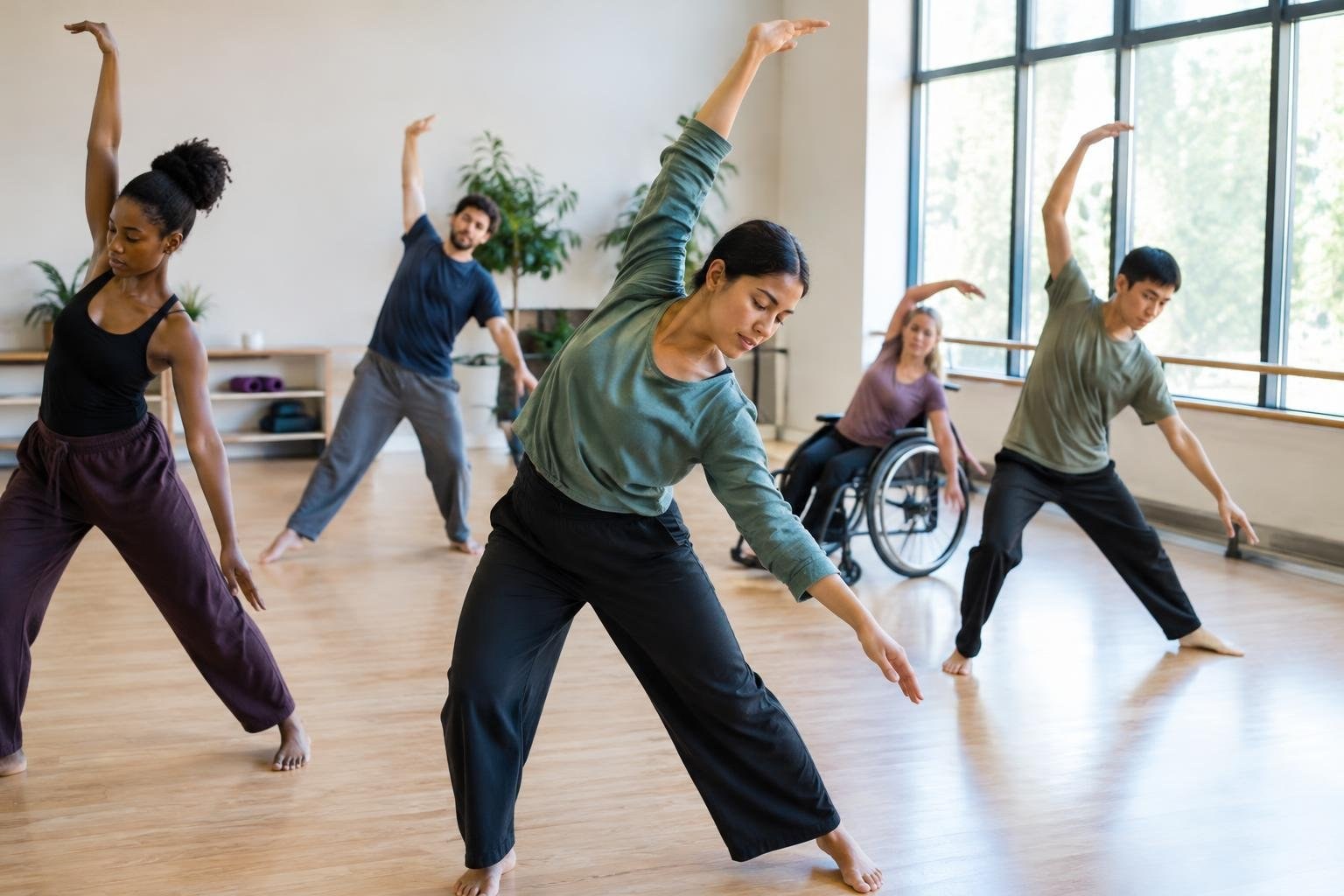
A respectful, inclusive movement-based learning session in a university studio
What Is a Dance Therapy Degree?
Dance therapy, also called dance/movement therapy, is an educational and professional field centered on the therapeutic use of creative movement. The National Center for Education Statistics describes the program area as preparation to use creative dance movement to support client rehabilitation and physical, emotional, and mental health, in consultation with rehabilitation team members or in private practice. NCES lists the field under CIP code 51.2302.
Coursework can connect dance and creative expression with psychology, movement and motor behavior, neuroanatomy, group work, client evaluation, professional standards, and ethics. Program titles may use “dance therapy” or “dance/movement therapy.” The title alone does not tell you whether the course sequence meets a particular training or credential pathway.
How it differs from neighboring fields
Dance/movement therapy specifically uses movement as a therapeutic medium. Art therapy and music therapy also use creative processes, but their primary media differ. Counseling programs may share mental health coursework while offering a different professional identity or scope. Compare training outcomes and requirements, not just program names.
What Do You Study in Dance/Movement Therapy?
The field’s curriculum blends conceptual study with practice. NCES identifies areas such as neuroanatomy, personality development, movement and motor behavior, psychology, dance, creative expression, improvisation, group psychology and leadership, client evaluation and supervision, therapy practice, and professional ethics. Institutions choose their own course sequences and may add counseling or clinical material.
For example, Drexel describes its master’s program as dance/movement therapy and counseling, with mental health counseling study in human development, psychopathology, social and cultural foundations, clinical appraisal and assessment, and group dynamics. Its catalog identifies a 90-quarter-credit master’s degree. These are details of that particular program, not universal curriculum or credit standards.
Look for applied learning
Ask how classroom learning connects to supervised practice, evaluation, and work with clients. Find out whether practicum or internship placements are required, who arranges them, and how supervision works. A course title such as “clinical practice” is not enough to establish the amount or type of experience a student will receive.
Skills You Can Develop
Students build a mix of movement, academic, and professional abilities. The program description points to understanding movement and motor behavior, applying creative movement, using improvisation, working with groups, evaluating clients, and following professional standards and ethics. Counseling-focused curricula can also strengthen knowledge of human development, assessment, psychopathology, and social and cultural foundations.
Movement and creative practice: observe movement and use dance or improvisation thoughtfully rather than treating technique or performance as the goal.
Analytical skills: connect observations to relevant psychological and movement concepts and consider client evaluation.
Communication and collaboration: explain an approach, contribute to group work, and coordinate with other rehabilitation or counseling professionals where appropriate.
Professional judgment: apply supervision, ethics, and boundaries to therapeutic practice.
Ask programs how they assess these abilities and what supervised opportunities help students practice them. Do not assume that liking dance by itself is enough preparation for clinical work.
Who Is This Program Best For?
This field may appeal to students who are curious about the relationship between movement, creative expression, and well-being, and who want to support people through a therapeutic process. It asks students to engage with both embodied practice and academic subjects such as psychology, human development, group dynamics, and assessment. You do not need to fit one personality type or define yourself as a professional performer to investigate the field.
Consider whether you are comfortable learning through movement, reflecting on your own practice, receiving supervision, and approaching client work with care. Also consider whether you want a career that may require extended education beyond an undergraduate degree. The best fit depends on your interests, abilities, financial circumstances, and preferred work setting.
Does dance/movement therapy match you?
Salary, reputation, and projected job growth are only parts of a degree decision. Day-to-day tasks and professional requirements matter too. Assessment.com’s MAPP career assessment can be one tool for exploring how your motivations and interests relate to careers and educational paths. Treat assessment results as a starting point for research, not as a substitute for reviewing course plans, talking with advisors, and checking credential rules.
Admissions, Credential Levels, and Time to Completion
Admission requirements depend on the credential and school. A student entering a master’s program may need a bachelor’s degree, while a post-bachelor’s or graduate certificate can have a different purpose and entry profile. One Brenau certificate page identifies a bachelor’s degree from an accredited college or university among its requirements and references transcripts documenting clinical or counseling master’s or doctoral education. Confirm the current criteria with the institution rather than assuming this example applies elsewhere.
Ask whether applicants need previous dance or movement experience, psychology coursework, professional experience, an interview, an essay, references, or a portfolio. The available program descriptions do not establish one national admissions standard. If you are a high school student, start by asking colleges which undergraduate preparation they recommend before graduate study.
Plan the full timeline
Completion time depends on entry point, course load, transfer credit, and clinical or supervised requirements. Drexel’s catalog lists one 90-quarter-credit master’s program; Antioch describes a 29-credit specialization designed around alternate-route training requirements. Neither figure should be treated as a standard duration or credit total for every institution. Ask for a written sample plan for full-time and part-time study.
Online, Hybrid, and On-Campus Options
Programs may be offered on campus, online, or in a hybrid format, but the format label does not reveal all attendance requirements. Movement-based courses and supervised clinical learning may require in-person participation. The supplied program information does not establish a universal online format, so ask each school to explain what must be completed face to face and whether placements must be found near campus.
Before applying, request a complete list of campus sessions, intensive residencies, clinical placements, travel expectations, and remote participation rules. If you work or have caregiving responsibilities, verify that required experiences fit your schedule. Confirm whether students can complete placements in their own communities and who is responsible for approving a site and supervisor.
Tuition, Total Cost, and Financial Aid
There is no single tuition figure that applies to dance/movement therapy programs. Total cost depends on the institution, credential, enrollment pace, and the requirements attached to clinical or in-person learning. Request a complete estimate that includes tuition, fees, books, supplies, travel, and any placement-related expenses. Compare the total cost to completion, not just the advertised per-credit rate.
Ask the financial aid office which grants, scholarships, work opportunities, payment plans, or loans may apply to your specific program and enrollment status. Eligibility and availability are determined by the relevant school and aid program. Students changing fields should also ask whether previous credits transfer and whether transfer credit affects time to completion or aid eligibility.
Keep the comparison specific
Build a side-by-side budget for each school, including living costs if you would relocate and costs for any required travel or supervised experiences. Ask what happens financially if a placement is delayed or a course is offered only once a year. Do not rely on broad national averages when the program and location are not yet selected.
Careers, Jobs, and Employment Outlook
“Dance therapist” is the central occupation associated with this field, but a degree title by itself does not establish that a graduate is eligible for a particular job, credential, or license. Berklee’s career guidance says that working as a dance therapist generally requires an undergraduate degree plus a master’s degree or post-graduate program approved by the American Dance Therapy Association. This describes a general pathway, not a guarantee of employment or a complete statement of every state’s rules.
One university describes graduates of its dance/movement therapy and counseling program as eligible for the Registered Dance/Movement Therapist (R-DMT) credential and for professional counseling licensure in Pennsylvania after completing post-graduation requirements. Those outcomes are tied to that program and jurisdiction. Check the current requirements directly with the credentialing body, state licensing authority, and prospective employers.
Employment, pay, and outlook
Dance/movement therapists may work in consultation with other rehabilitation team members or in private practice, as described in the NCES program definition. The research available for this guide does not provide current, comparable U.S. median pay or employment projections specific to this occupation. To assess local opportunities, review current job postings, ask programs for transparent graduate-outcome information, and verify which occupational classification best matches the position you want.
Find out which Career or College Major is right for you!
Separate these three milestones: completing a program, qualifying for a professional credential, and meeting state requirements to practice under a regulated title. One program’s description of eligibility does not prove that every program has the same outcome or that additional steps are unnecessary. Drexel notes that its graduates may be eligible for R-DMT and Pennsylvania counseling licensure upon completing post-graduation requirements. This is a specific program and state example, not a nationwide licensure rule.
Ask the school to identify the credential pathway its curriculum supports and to explain any supervised hours, exams, post-graduation steps, or state-specific limits. Then verify the answer with the relevant credentialing organization and state authority. If you expect to move after graduation, check requirements in both your current and intended jurisdictions before choosing a program.
Ways to Make the Education More Affordable
Affordability is more than finding the lowest tuition. A program with a lower listed rate may still require extra travel, extend the time needed to finish, or lack the specific training route you need. Compare the full cost, likely duration, required learning experiences, and stated credential outcomes together.
Request a written estimate of charges for the complete program, including fees and required experiences.
Ask financial aid staff which funding options are available to you and whether part-time enrollment changes eligibility.
Check whether credits from previous college or graduate study can transfer before paying an application deposit.
Ask about assistantships, scholarships, employer support, and payment options, then verify eligibility and conditions in writing.
Compare the likely cost of relocating or traveling for required in-person learning against a local or hybrid option.
Do not take on additional debt based only on an assumed salary or job placement. Seek school-specific outcomes and compare them with opportunities where you plan to work.
Related Degrees and Alternatives
Related programs can lead toward different kinds of work, so compare professional scope and training rather than assuming similar names mean interchangeable qualifications.
Art therapy: consider this if visual art is the creative medium you want to use therapeutically.
Music therapy: consider this if music is the central medium that interests you.
Counseling: consider a counseling-focused program if your main interest is a broader mental health counseling curriculum; confirm its own licensure pathway.
Dance or choreography: consider this if performance, teaching, or creating dance matters more to you than therapeutic client work.
Recreational therapy: investigate it if you are drawn to therapeutic recreation and activity-based support; check its distinct education and credential expectations.
These are comparison points, not claims that one credential qualifies someone for another profession. Review each field’s curriculum, hands-on requirements, and professional rules. For undergraduate students, a psychology, counseling-related, or dance background may provide useful preparation, but ask the graduate programs you are considering what they accept and recommend.
Program Names and Training Pathways
Program titles, credential levels, and training routes can be confusing. NCES classifies Dance Therapy/Therapist as CIP 51.2302, but a CIP label describes a field of study, not a promise that every institution offers every credential or that all programs lead to the same professional result. Certificate, bachelor’s, master’s, and doctoral options in a field inventory should not be mistaken for confirmed availability at a particular college.
Ask each institution which credential it awards, who the program is intended for, whether the coursework follows an ADTA training route, and what its graduates may be eligible to pursue. Antioch describes a 29-credit specialization designed to meet ADTA Alternate Route training requirements. That is one stated program design, not a universal rule or assurance of eligibility under all current credential policies.
How to Choose the Right Program
A careful comparison can prevent an expensive mismatch. Start with the professional outcome you want, then work backward to the required education, training, credential, and location-specific rules. Read the full course plan rather than relying on a marketing summary.
Program purpose: Is it an entry-level graduate degree, a certificate, counseling preparation, or alternate-route training?
Curriculum: Does it include movement, psychology, evaluation, ethics, and the clinical learning you expect?
Practicum and supervision: How are placements found, approved, and supervised?
Cost and time: What is the total program estimate and a realistic completion plan for your circumstances?
Credential outcome: What credential eligibility does the school state, and which requirements remain after graduation?
Format and access: Which parts are online, on campus, or completed at a placement site?
Evidence: Can the school explain completion, placement, and employment outcomes, and how it calculates them?
For help reflecting on educational fit, Assessment.com also offers degree and career exploration through its education resources. Use that exploration alongside direct conversations with faculty, admissions, financial aid, and licensing authorities.
From Degree to Career: Possible Pathways
Career development is not automatic, but a few possible planning sequences can help you ask better questions:
Dance or psychology undergraduate study → graduate dance/movement therapy training → supervised clinical learning → verify R-DMT eligibility and local practice requirements.
Existing counseling or clinical graduate education → an eligible dance/movement therapy certificate or alternate-route program → confirm the credential pathway and any remaining requirements.
Dance/movement therapy and counseling master’s → complete applicable post-graduation requirements → investigate relevant clinical, rehabilitation, or counseling roles in the intended jurisdiction.
These examples describe possible education planning, not guaranteed job progression. Ask programs where graduates work, which settings hire them, and what additional training or requirements were needed. Keep a record of answers and confirm important claims independently.
Questions to Ask Before Enrolling
Before you or your family commit, ask each school the same questions and keep the answers together:
What exact credential does the institution award, and what training route is the curriculum designed to support?
What are the current admission prerequisites, including any prior degree or clinical education?
What is the estimated total cost to completion, and which fees, travel, or placement expenses are excluded?
What movement-based coursework and supervised clinical experiences are required?
Who arranges placements, and what happens if a placement is unavailable?
What portions are online, on campus, or completed in person at a clinical site?
What professional credential eligibility does the program claim, and what requirements remain afterward?
How does the school advise students about state rules and portability if they relocate?
What transfer credit, financial aid, career services, and employer connections are available?
Can the institution explain how it tracks completion, credential eligibility, and graduate employment?
Do not rely on verbal assurances for a requirement that could affect your career. Request written information and verify important credential or state-practice details with the responsible organization.
Is Dance/Movement Therapy Right for You?
Dance/movement therapy may be a strong direction to explore if you want to combine creative movement with psychology, client support, and therapeutic practice. It may be less suitable if your main goal is a dance performance career, a short training path, or a job that does not require extensive education or supervised learning. A related field may fit better if you prefer another creative medium or a different professional scope.
Before selecting a program, make the intended career and credential route explicit, compare total costs, and verify admission and practice requirements. Talk with advisors and ask institutions direct questions about clinical learning and graduate outcomes. To explore whether this direction fits your interests and motivations, use the MAPP career assessment and continue comparing career and degree options through Assessment.com.
Frequently asked questions
What is dance/movement therapy?
Dance/movement therapy uses movement and creative dance within a therapeutic process to support physical, emotional, and mental health. Students may study movement behavior, psychology, neuroanatomy, group work, assessment, ethics, and therapy practice. Program content and credential pathways vary, so compare each curriculum with the training requirements for the role and state where you hope to work.
Is a dance/movement therapy program hard?
It can be academically and personally demanding because study may combine movement practice, psychology, clinical learning, reflection, and work with clients. The physical and emotional demands depend on the program and placement. Ask about prerequisites, practicum expectations, supervision, and weekly workload. A prospective student does not have to be a professional dancer, but should review each program’s movement-related admission requirements.
Is a dance/movement therapy degree worth it?
A short answer is that a degree may be worthwhile when its curriculum and supervised training support a clear career goal and the total cost is manageable. The investment is harder to assess without comparing specific schools, fees, credential requirements, and likely employment settings. Confirm the qualification employers expect in your region before committing to a program.
What jobs can I get with dance/movement therapy training?
Dance/movement therapist is the clearest occupation connected to this field. The work applies creative movement therapeutically and may take place in consultation with other rehabilitation professionals or in private practice. Program completion alone does not establish that you meet every employer, credential, or state licensure requirement. Verify the applicable pathway before choosing a degree or certificate.
How much do dance/movement therapists make?
The available research here does not provide a current, comparable U.S. median salary or job-growth figure for dance/movement therapists. Pay can depend on role, employer, location, experience, and credentials. For a realistic estimate, compare current job postings in your target region and consult authoritative labor-market data for the closest occupational classification, while noting that job titles may not map exactly to this specialty.
Can I earn a dance/movement therapy degree online?
Some coursework may be available online or in a hybrid format, but whether a particular program can be completed fully online depends on its design. Movement-based learning, supervised clinical experience, or other in-person requirements may affect flexibility. Ask the program to identify all required campus visits, placement hours, and location restrictions before enrolling.
Does dance/movement therapy require math?
The program description emphasizes movement, psychology, neuroanatomy, dance, and therapeutic practice rather than identifying a specific mathematics sequence. Individual institutions set their own general education and program requirements. Review the degree plan, including any research or assessment courses, to see whether statistics or other quantitative coursework is required.
Do you need a master's degree to become a dance/movement therapist?
For therapeutic practice, graduate-level or post-baccalaureate training is commonly part of the pathway described by the supplied career guidance. The exact route depends on prior education, the program, the credential sought, and state rules. Some certificates are designed for people who already hold clinical or counseling graduate education, so check eligibility and professional outcomes carefully.
What certification can dance/movement therapists earn?
The Registered Dance/Movement Therapist credential, or R-DMT, is named as an outcome for graduates of one dance/movement therapy and counseling program. A program’s stated eligibility is not a guarantee that every student qualifies, and it does not replace any separate state licensure requirements. Ask the institution and credentialing organization to confirm current eligibility details.
How does dance/movement therapy compare with art or music therapy?
Dance/movement therapy centers movement and dance as therapeutic tools. Related fields use different creative or clinical approaches. Compare curricula, supervised practice, professional credentials, and intended client work rather than choosing by title alone. If you are considering art therapy or music therapy, check the separate education and credential pathways for those professions.
People Also Ask
What does a dance/movement therapist do?
Dance/movement therapy applies creative movement and dance in a therapeutic context to support client rehabilitation and physical, emotional, and mental health. The practitioner may work with other rehabilitation professionals or in private practice.
What do you study in dance/movement therapy?
The program description includes neuroanatomy, personality development, movement and motor behavior, psychology, dance, improvisation, group psychology and leadership, client evaluation, supervision, therapy practice, and professional ethics. Actual course lists differ by institution.
What degree do you need to study dance/movement therapy?
A master’s program may be one route, while post-bachelor’s or graduate certificates may serve students with specific prior education. Check whether the program is intended for beginners, people with a bachelor’s degree, or clinicians who already have graduate training.
How long does a dance/movement therapy program take?
The timeline depends on credential level, prior credits, enrollment pace, and required clinical experiences. One published example is a 90-quarter-credit master’s degree, but that is a specific institution’s program rather than a standard that applies to every school.
What is an alternate route in dance/movement therapy?
Some certificates are intended to meet alternate-route dance/movement therapy training requirements, while other programs combine dance/movement therapy with counseling coursework. Ask what training route the program follows and what credential eligibility it supports.
Can you become a dance therapist with a bachelor's degree?
The relevant preparation can include psychology, movement, dance, creative expression, assessment, group leadership, supervised practice, and ethics. Whether an undergraduate degree alone qualifies someone for a job depends on the employer and role; it should not be assumed to qualify someone for therapeutic practice.
Who can apply for a dance/movement therapy certificate?
A certificate can be a focused training option, but admission and suitability vary. For example, one university describes a certificate requiring a bachelor’s degree and documentation related to clinical or counseling graduate education. Check current admissions criteria directly with each institution.
What is the difference between dance therapy and counseling?
Compare dance/movement therapy with art therapy by the creative method used, and with counseling by the curriculum and professional scope. Review supervised training, credential eligibility, and local licensure rules for each option before deciding.
Dance/movement therapy combines movement, creative expression, psychology, and therapeutic practice. It may suit students who want to work with people through embodied, creative approaches and are prepared for graduate-level training and supervised clinical learning. Before enrolling, confirm that a specific program fits your intended credential pathway, budget, learning format, and state practice requirements. Explore relevant degrees and careers, and consider whether the work matches your motivations and interests.
Want to see your options? Try our comprehensive Degree, Program & College Search tool
We use cookies to offer you a better browsing experience, analyze site traffic and personalize content.
Read about how we use cookies and how you can control them in our
Privacy Policy.
If you continue to use this site, you consent to our use of cookies.
×
Exciting News!
Be one of the first to Beta Test the new AI-Powered Assessment.com Platform.