Electrical and Electronics Engineering Degree Guide
Learn what electrical and electronics engineering students study, how program formats and credentials differ, what career paths may follow, and how to compare colleges.
By Tome Fierre · Staff Writer Assessment.com · Published October 7, 2026 · Last updated November 5, 2026
Electrical and electronics engineering is the study of electrical systems, electronic devices, and the principles used to design and analyze them. Programs can combine theory with practical learning in classrooms, laboratories, and, in some cases, field settings. The exact mix depends on the college and degree level. Students may encounter circuits, digital logic, and electronic devices, then apply those foundations to engineering problems. The field can lead toward work designing electrical devices and systems, while further study may help students build knowledge in a focused area. Electrical and electronics engineering is offered at multiple credential levels, but not every format or level is available at every institution. Not sure whether electrical and electronics engineering fits you? Take the Free MAPP Career Assessment to explore how your motivations, interests, and preferences may align with engineering study and related careers.
Degree & Program Decision Insights
Explore your personal fit, education requirements, career potential and next steps.
01Motivational Fit
Discover whether this program fits you
Explore your preferences against the focus of Electrical and Electronics Engineering. These prompts are not personal MAPP results.
Exploring an open field. The classification for Electrical and Electronics Engineering does not provide a detailed curriculum. Which questions within this field would you want to investigate? Ask for actual course and project examples before deciding.
Choosing a learning environment. Compare actual Electrical and Electronics Engineering offerings. Would their reading, projects or practical work suit how you prefer to learn? Confirm the format rather than assuming one from the field name.
Work reality. Related work can involve this task: “Plan or implement research methodology or procedures to apply principles of electrical theory to engineering projects.” Would you want that activity to be a regular responsibility?
Interest in studying a field can differ from enjoying its related work.
Which part would you want to do repeatedly, and what would you try before deciding?
Discover Your Personal Program Fit
Before investing your time and money in your education, discover how this program aligns with your natural motivations, work preferences and career goals.
Electrical and Electronics Engineering. CIP 14.1001 (2020).
The classification alone does not establish a credential level, duration or delivery format.
Duration is not established by this classification; confirm the actual schedule, enrollment intensity and completion requirements.
Field focus (not a school course list):
apply mathematical and scientific principles to the design, development and operational evaluation of electrical and electronic systems and their components, including electrical power generation systems
the analysis of problems such as superconductor, wave propagation, energy storage and retrieval, and reception and amplification
Entry prerequisites and delivery format depend on the actual offering; verify its catalog.
U.S. occupational wages are not guaranteed graduate earnings; OEWS excludes self-employed workers.
Projected openings include replacements as well as growth.
U.S. national estimates. A crosswalk does not establish entry-level eligibility; advanced, management and teaching roles can require further qualifications.
Telecommunications EngineeringCIP 14.1004. Compare its emphasis on telecommunications and computer networking with this program’s focus.
Laser and Optical EngineeringCIP 14.1003. Compare its emphasis on wave theory and mechanics and electromagnetic applications with this program’s focus.
Explore your motivations. Use MAPP as a starting point for reflecting on your interest in “Electrical and Electronics Engineering”, then test that interest against a sample learning task.
Examine the work. Compare Electrical Engineers and Electronics Engineers, Except Computer on daily work and entry qualifications, as well as pay. Explore Electrical Engineers.
Compare actual providers. Ask for the exact credential, course sequence and assessment methods. Compare how each provider teaches “Electrical and Electronics Engineering”, its entry criteria and its itemized costs.
Check the evidence before applying. Confirm prerequisites and any recognition or professional requirements for your intended route; ask for applicable rules and published outcome definitions in writing.
Verify the institution’s current offering, admissions requirements and outcomes; a search result does not establish your eligibility.
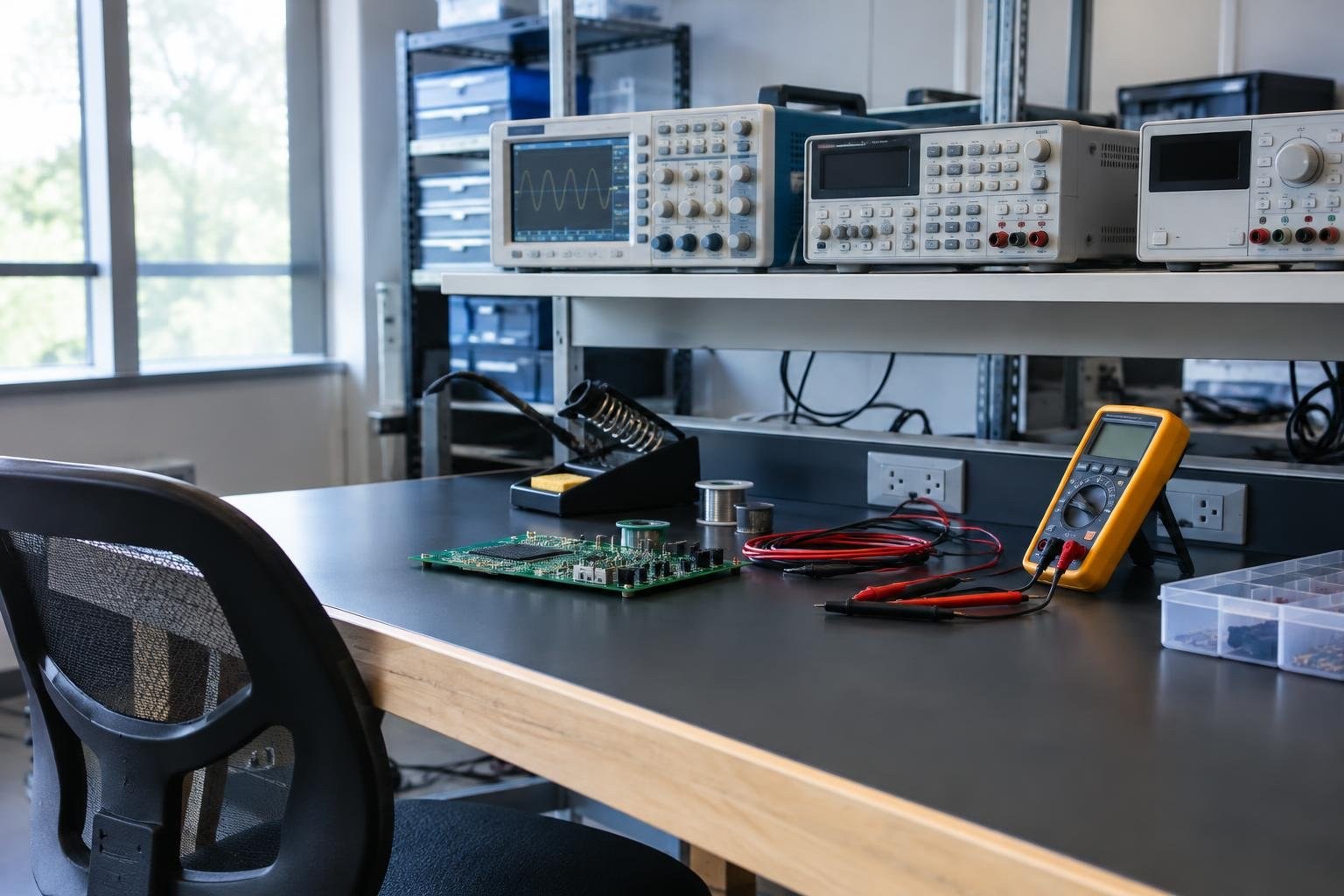
An engineering lab bench with a circuit board, measurement instruments, and students collaborating
What Is Electrical and Electronics Engineering?
What Is an Electrical and Electronics Engineering Degree?
Electrical and electronics engineering is an engineering discipline concerned with electrical systems and electronic devices. Students learn to analyze how circuits and components behave and how design choices affect a system. The name may appear as electrical engineering, electronics engineering, or electrical and electronic engineering in college catalogs. Program titles alone do not tell you whether two curricula cover the same topics, so compare the required courses and practical learning.
Credential options can include undergraduate and graduate study, as well as post-baccalaureate or graduate certificates. The U.S. Bureau of Labor Statistics identifies a bachelor's degree in electrical engineering, electronics engineering, or a related engineering field as the typical education for electrical and electronics engineers. A certificate is a different kind of program and should not automatically be treated as equivalent to an engineering bachelor's degree.
Sacramento State, for example, offers a Bachelor of Science in Electrical and Electronic Engineering. That program title illustrates one naming variation, not a universal curriculum. Review each college's catalog to understand its specific emphasis.
For an overview of the occupational education requirement, see the BLS Occupational Outlook Handbook profile for electrical and electronics engineers. For a program-specific example, consult the Sacramento State catalog.
Courses, Labs, and What Students Learn
What Do You Study?
Course plans vary, but the supplied program descriptions offer a useful view of core subject matter. The University of Washington Bothell's Electrical and Computer Engineering Foundations graduate certificate covers theory, design, analysis, and application of DC and AC circuits. Its listed topics also include digital logic, Boolean algebra, Karnaugh maps, number systems, and electronic devices.
These subjects build different kinds of understanding. Circuit study develops ways to describe and analyze electrical behavior. Digital logic introduces ways to represent and reason about logic systems. Work with electronic devices considers their characteristics and how components can function within a design. At the advanced certificate level, the material is drawn from core electrical and computer engineering coursework and is intended for post-baccalaureate students.
Electrical and electronics engineering programs may combine classroom, laboratory, and field studies, according to the BLS. Ask colleges how their courses connect concepts to practical work: which experiences are required, what students produce, and whether any components take place in person. Do not assume a course title means the same thing across schools.
Useful questions for an admissions adviser include: How much of the curriculum focuses on circuits, electronics, or digital systems? How are lab activities delivered? Are there prerequisites for advanced courses? Which courses are required, and which are electives?
See the University of Washington Bothell certificate curriculum and the BLS description of classroom, laboratory, and field study for examples.
Skills and Learning Outcomes to Evaluate
Skills You Can Build
Coursework in circuits, digital logic, and electronic devices can develop the ability to describe a technical problem, analyze how components behave, and reason through design choices. The University of Washington Bothell certificate explicitly connects its curriculum with theory, design, analysis, and application. How far a student develops a skill depends on the courses taken and the amount of practice provided by the program.
Students should also look for opportunities to explain technical decisions clearly, document their work, and collaborate on projects. These are sensible capabilities to evaluate in a program, but the supplied program descriptions do not establish a standard skill list for all graduates. Ask schools what their labs and assignments require and how students receive feedback.
When reviewing curriculum, connect each proposed skill to evidence: a required course, lab, project, or other assessed work. That makes it easier to judge whether a program fits your learning goals rather than relying on broad claims in a brochure.
Who Should Consider This Program?
Who Is This Degree Best For?
This program may appeal to students who are curious about electrical devices and systems and willing to work through technical concepts step by step. It may be worth exploring if you want to understand how circuit behavior, digital logic, and electronic components relate to design and analysis. You do not need to arrive knowing whether you prefer a particular engineering specialty; use introductory courses and program advising to test your interests.
Be realistic about your readiness and support needs. Ask what mathematics and science preparation is expected, which subjects appear in the first year, and whether tutoring or academic support is available.
Does Electrical and Electronics Engineering Match You?
Salary, reputation, and job-market claims are only part of a college decision. A better fit also depends on whether you find the coursework interesting, can see yourself practicing the skills, and are comfortable with the time and expense involved. The Free MAPP Career Assessment can help you reflect on interests and motivations. Use Degree Matching and Career Matching tools, where available, as starting points for research rather than as substitutes for reviewing course requirements and talking with advisers.
Parents, counselors, and students can make this process practical: compare a few programs, read sample course descriptions, and discuss which assignments sound engaging or challenging. Ask the student to explain what they want to learn, not just what job title they hope to earn.
Admissions, Length, and Difficulty
Admissions, Length, and Academic Difficulty
Requirements differ by credential and institution. For graduate study, expect the college to specify its own prerequisites and admission rules. As one example, Stanford Online's Electrical Engineering Graduate Certificate lists a conferred bachelor's degree in science or engineering and an undergraduate GPA of 3.0 or better. That is a program-specific example, not a universal requirement for certificates or degrees.
Before applying, check required prior coursework, transcripts, deadlines, fees, and whether the program expects a particular academic background. For undergraduate programs, request the current admissions checklist directly from the college. Do not infer admission standards from the name or level of a program.
Time to completion depends on the credential, course load, transfer credit, and the institution's schedule. A bachelor's degree is typically the relevant starting degree for electrical and electronics engineer roles, while post-baccalaureate certificates are designed for students who already have prior education. Ask for a sample course sequence and a realistic part-time plan if you will be balancing study with work or family responsibilities.
Technical subjects can be challenging because they build on one another. Review introductory material before classes begin, use office hours, and seek help early if you struggle with foundational concepts. The right preparation is specific to the program, so ask departments which prior topics students commonly need to know.
Check the Stanford Online admissions page for its certificate example and confirm current requirements with any program you are considering.
Can You Study Electrical Engineering Online?
Online, Hybrid, and On-Campus Study
Programs may include classroom, laboratory, and field studies, according to the Bureau of Labor Statistics. When comparing delivery formats, ask whether lectures, labs, exams, and project work are online, hybrid, or campus-based. Find out whether any activity requires travel, scheduled attendance, specialized equipment, or access to a campus lab.
Confirm the current format and any in-person requirements directly with each institution before applying. Check that the format fits your schedule and allows you to complete the learning experiences required by the program.
Cost, Affordability, and Ways to Pay
Tuition, Costs, and Financial Aid
There is no single cost for an electrical and electronics engineering education. Compare each college's current estimate for tuition and mandatory fees, then ask what additional expenses may apply to your specific program. Depending on the course and format, your budget questions might include books, equipment, lab-related charges, technology, travel, and living expenses. Verify which items are actually required rather than assuming every student pays the same amount.
Request a term-by-term cost estimate and review the financial aid offer before accepting admission. Ask about grants, scholarships, payment plans, employer tuition assistance, and rules for keeping aid. If you have completed college coursework, request a transfer-credit review before enrolling; accepted credits may affect both the schedule and total cost, but policies vary.
For graduate certificates, clarify the price per credit and whether credits can apply to a later degree. Penn State World Campus notes that its nine-credit electrical engineering post-baccalaureate certificate courses earning a B or better can be applied to the World Campus, but confirm the current conditions and the specific program involved directly with the school.
Compare net cost, not just advertised tuition. A lower price may not be the best value if the schedule, format, or curriculum does not fit your needs. Conversely, avoid paying for a credential without understanding whether it supports your intended next step.
Review the Penn State World Campus certificate information for its credit-application example and ask the college for current costs and policies.
What Can You Do With This Degree?
Careers, Jobs, and Employment Outlook
Electrical and electronics engineering can provide academic preparation for engineering work involving electrical devices and systems. The BLS says electrical and electronics engineers typically need a bachelor's degree in electrical engineering, electronics engineering, or a related engineering field. Penn State describes its post-baccalaureate certificate as supporting work as an engineer who designs electrical devices and systems. Neither an individual degree nor a certificate guarantees a job or a particular career outcome.
Career direction
Education context
How the program may apply
Electrical or electronics engineer
BLS identifies a bachelor's degree in electrical engineering, electronics engineering, or a related engineering field as typical.
Study of circuits, electronic devices, theory, analysis, and design may be relevant to engineering work.
Electrical-device or system design work
Role titles and requirements vary by employer; check the job posting.
Relevant post-baccalaureate study may build knowledge of electrical devices and systems, but does not replace verifying employer requirements.
Use current BLS occupation profiles to research duties, pay, and outlook for the precise job title you are considering. The supplied evidence supports the education requirement for electrical and electronics engineers but does not provide a current salary or employment-growth figure, so do not rely on a single unsourced number. Pay and opportunity can also depend on location, experience, employer, and specialty; compare recent postings and official occupational data when making a decision.
Employers and roles can differ substantially. Read job descriptions for recurring requirements and ask colleges whether they can share program-level outcomes and explain how those outcomes were measured. Treat career services and employer connections as useful support, not a promise of placement.
Find out which Career or College Major is right for you!
A degree and a professional license are not the same thing. The available sources establish that a bachelor's degree is typical for electrical and electronics engineers, but they do not establish a universal licensing rule for every job or state. If a position you want requires a license or another credential, verify the requirement with the relevant state authority and employer before choosing a program.
Ask colleges for the exact name and scope of any accreditation they claim, and verify it with the accrediting organization. Also ask whether the curriculum is intended to prepare students for any professional examination or credential relevant to their goals.
For graduate certificates, distinguish continuing education or specialized coursework from a degree and from occupational licensure. A certificate can add focused academic study, but its value depends on the student's previous education and target role.
Experience and How to Stand Out
Internships, Projects, and Standing Out to Employers
Ask program staff how students gain practical experience and whether internships, project work, or research opportunities are available. The BLS describes classroom, laboratory, and field study in electrical and electronics engineering education, so compare how a program connects those settings to its course goals. Availability and requirements are institution-specific.
Keep a record of substantial projects and be prepared to explain the problem, your approach, what you learned, and what you would improve. Seek feedback from instructors and use career services to practice describing technical work in clear language. For students pursuing graduate study, ask whether faculty research or advanced coursework aligns with the area they want to explore.
When comparing colleges, ask about internship access, project expectations, faculty advising, and the help available to students seeking relevant experience. Do not assume that a program guarantees an internship or that participation alone guarantees employment.
Graduate Study and Specialization
Graduate School and Continuing Education
Possible next steps include a graduate certificate, a master's degree, or doctoral study. The appropriate choice depends on what you want to learn and what the roles you are targeting require. A graduate certificate may offer a way to study a specialty without committing to a master's program; UMass Lowell describes its graduate certificates as suitable for bachelor's-prepared engineers who want to update their knowledge or investigate another specialty.
Examples demonstrate how requirements differ. Stanford Online lists a bachelor's degree in science or engineering and a 3.0 undergraduate GPA for its Electrical Engineering Graduate Certificate. The University of Washington Bothell describes its foundations certificate as post-baccalaureate study drawing on an electrical and computer engineering core. These examples are not universal admissions rules.
Before applying, ask whether certificate credits can transfer into a master's program, whether a separate application is required, and whether the courses support your intended academic or career direction. Get the policy in writing from the institution.
Explore current details from UMass Lowell's graduate certificate catalog, Stanford Online, and the University of Washington Bothell.
Related Degrees and Pathways
Related Degrees and Alternatives
Compare programs by their required courses and the work you hope to pursue, rather than relying on degree titles alone. The University of Washington Bothell describes its Electrical and Computer Engineering Foundations certificate as drawing on an electrical and computer engineering core. Review each college's curriculum to understand its specific focus.
Computer engineering: Compare the required courses and practical work with your interests and goals.
General engineering: If you are considering a broader program, ask how students select or enter a specific area of study.
Electrical engineering graduate certificate: A focused certificate may suit bachelor’s-prepared engineers seeking further study without committing to a master’s program. Check the prerequisites and whether its coursework supports your plans.
Electronics engineering: Compare course requirements related to devices, circuits, and systems across programs.
Request sample course plans, descriptions, and advising guidance before deciding. The best comparison is based on what each program actually requires and how that curriculum aligns with your goals.
Advantages, Drawbacks, and Value
Advantages, Tradeoffs, and Is It Worth It?
Potential benefits include studying a defined technical field, learning about electrical devices and systems, and building a foundation relevant to engineering roles. The BLS identifies a bachelor’s degree as typical for electrical and electronics engineers, so consider the time and cost of undergraduate study if that is your intended occupation.
Tradeoffs include demanding technical coursework and uncertainty about how a particular program will connect to your intended job. A graduate certificate is focused additional study, and its value depends on your previous education and goals. It should not automatically be treated as equivalent to the bachelor’s degree typically needed for electrical and electronics engineer roles.
Whether the degree is worth it depends on your academic interests, total cost, career goals, and the requirements of the work you want. Compare required courses with actual job postings, and use official college and labor-market information to check your assumptions.
How to Compare Colleges and Programs
How to Choose the Right Program
Use a consistent checklist when comparing colleges. First, verify the exact credential and program requirements. Then compare the required curriculum, format, practical learning, and current cost. Ask about academic advising, transfer-credit review, career services, internship support, and the kinds of student outcomes the college can document.
What courses are required, and which can be selected as electives?
How are laboratories and field experiences scheduled and delivered?
What are the total estimated costs for your expected course load?
What admissions prerequisites apply, and what academic support is available?
How are transfer credits evaluated, and what is the likely completion plan?
What accreditation applies to the program, and where can its status be verified?
Does the program prepare students for any specific credential or license relevant to their target role?
What career advising, employer connections, internships, and outcome data can the college document?
Look for answers in the catalog, financial aid materials, and written program policies. If a claim matters to your decision, ask the school to explain it clearly. Assessment.com's Degree Matching and Career Matching resources can help you organize options around goals and interests; confirm all admissions, cost, and credential details with the college.
Possible Education-to-Career Paths
From Degree to Career: Possible Pathways
Educational and career paths are not guaranteed sequences. Use these examples as questions to investigate rather than promises of progression:
Bachelor's study in electrical engineering → explore entry-level electrical or electronics engineering positions → build experience in a work area that matches your interests → consider a graduate certificate or further degree if it supports a specific goal.
Relevant bachelor's degree → complete focused post-baccalaureate coursework in electrical engineering → assess whether the additional study supports a role change, skill development, or graduate-school plan.
The BLS identifies a bachelor's degree in electrical engineering, electronics engineering, or a related field as typical for electrical and electronics engineers. Certificate examples from Penn State, Stanford, UMass Lowell, and the University of Washington Bothell demonstrate distinct forms of advanced study, with different purposes and conditions. Verify how an employer evaluates any credential before investing in it.
Enrollment Decision Checklist
Questions to Ask Before Enrolling
Before accepting an offer, ask the college and yourself:
What is the total estimated cost for my expected schedule, and which expenses are not included in tuition?
Which credits can transfer, and how will they affect my course plan?
What courses and practical experiences are required for this credential?
Are labs, field activities, or exams in person?
What admissions prerequisites and academic support apply?
What program accreditation can I verify, and what does it cover?
Does the career I want require a particular degree, license, or other credential?
What internship and career-support services are available, and what outcomes can the program document?
Can certificate credits count toward a later degree, and what rules or grade conditions apply?
What grants, scholarships, employer support, and other aid should I investigate?
Make a side-by-side comparison and keep copies of written answers. This helps students and parents separate verified program details from assumptions.
Frequently asked questions
What is an electrical and electronics engineering degree?
Electrical and electronics engineering combines the study of electrical systems and electronic devices. Programs cover concepts such as circuits, digital logic, and electronic components, with learning that may include classroom, laboratory, and field work. The exact curriculum depends on the institution and credential.
Is electrical and electronics engineering hard?
The difficulty depends on your preparation and the program, but expect technical material involving circuit theory, analysis, and design. A University of Washington Bothell graduate certificate, for example, includes DC and AC circuits, digital logic, and electronic devices. Ask colleges about prerequisites, course sequencing, and academic support before enrolling.
What jobs can I get with an electrical and electronics engineering degree?
Electrical and electronics engineers typically need a bachelor's degree in electrical engineering, electronics engineering, or a related engineering field, according to the U.S. Bureau of Labor Statistics. Other roles may have different requirements. Review the education requirements for specific job titles rather than assuming every engineering-related job requires the same credential.
Do electrical engineers need a master's degree?
A bachelor's degree is the typical education level identified by the BLS for electrical and electronics engineers. Graduate certificates, master's degrees, or doctoral study may be relevant for people seeking advanced study or specialization, but whether further education is useful depends on the role and employer.
Can I earn an electrical engineering degree online?
Study format and delivery details depend on the institution and program. Before enrolling, confirm whether lectures, labs, practical learning, and exams are online, hybrid, or campus-based, and whether any in-person activities are required.
How much does an electrical and electronics engineering degree cost?
Compare the full program cost rather than tuition alone. Ask each college for a current estimate of tuition, mandatory fees, books, equipment, and any costs related to laboratory work or required campus visits. Then compare grants, scholarships, employer assistance, and transfer-credit policies using the college's current information.
What is the difference between electrical and computer engineering?
Course names and scope vary, so compare actual requirements rather than relying on program titles. For example, the University of Washington Bothell describes a certificate drawing on an electrical and computer engineering core. Review each program's curriculum and practical learning to see how it fits your goals.
What certifications or credentials help electrical engineers?
A bachelor's degree is a common starting credential for electrical and electronics engineering work. Graduate certificates can provide focused study after a bachelor's degree, while master's and doctoral programs offer additional academic study. Confirm admissions and career requirements for the specific program and role you are considering.
People Also Ask
What classes do electrical and electronics engineering students take?
Curricula vary by college and credential. The University of Washington Bothell certificate curriculum includes DC and AC circuits, digital logic, and electronic devices, with attention to theory, design, analysis, and application.
What is an electrical engineering graduate certificate?
The University of Washington Bothell post-baccalaureate certificate covers selected material from an electrical and computer engineering bachelor's core. It is focused advanced study, so check the requirements of any degree or job you are considering.
Are online electrical engineering programs common?
Before assuming a program can be completed online, ask the institution how it delivers lectures, labs, exams, and other practical learning. Confirm whether any scheduled campus attendance or travel is required.
What degree do electrical and electronics engineers need?
The BLS says electrical and electronics engineers typically need a bachelor's degree in electrical engineering, electronics engineering, or a related engineering field. Requirements for other occupations and individual employers can differ.
Is a graduate certificate in electrical engineering worth considering?
A graduate certificate can offer additional study without the commitment of a master's program. UMass Lowell describes its graduate certificates as an option for bachelor's-prepared engineers seeking to refresh knowledge or explore a specialty. Check the certificate's prerequisites and credit policies.
How do I choose an electrical engineering college program?
Start by comparing required courses, lab and field learning, delivery format, total cost, transfer policies, and the program's fit with the work you hope to pursue. Ask each college for current details rather than assuming programs with similar names are equivalent.
Electrical and electronics engineering may suit students who want to understand how electrical devices and systems work and are ready for rigorous technical study. The degree can prepare students for engineering work, but the right credential, curriculum, and career direction depend on their goals. Compare programs carefully, verify current requirements, and consider whether the subject matter fits your interests before committing to the time and cost.
Want to see your options? Try our comprehensive Degree, Program & College Search tool
We use cookies to offer you a better browsing experience, analyze site traffic and personalize content.
Read about how we use cookies and how you can control them in our
Privacy Policy.
If you continue to use this site, you consent to our use of cookies.
×
Exciting News!
Be one of the first to Beta Test the new AI-Powered Assessment.com Platform.