Degree Library
Architectural History and Criticism Degree Guide: Courses, Careers and Program Fit
Explore what architectural history and criticism programs cover, how they differ from professional architecture degrees, possible career directions, and what to compare before enrolling.
An architectural history and criticism degree focuses on how architecture develops, what buildings and places communicate, and how design relates to art, culture, society, environment, and urbanism. Depending on the program, students may pursue a broad undergraduate foundation or specialized graduate study connected with history, criticism, preservation, or another area of architecture. Possible career directions include research, teaching, curatorial work, and related fields, but the degree name alone does not determine job eligibility or pay. Prospective students should compare curricula and career requirements carefully, especially when deciding between historical study and professional architecture training.
Millions of people Take the MAPP Career assessment to see which Degrees are the best Match!
You can too,
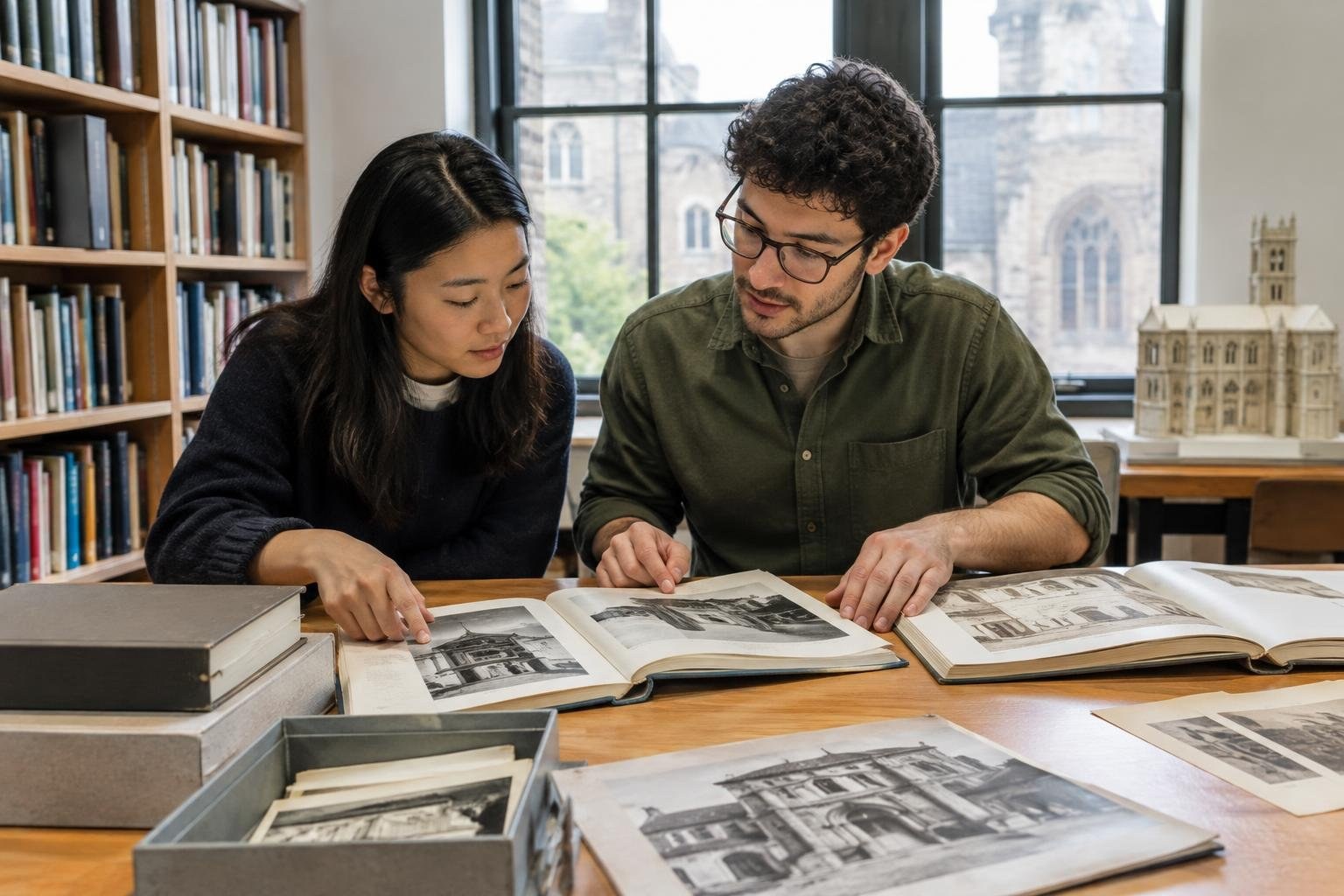
What Is an Architectural History and Criticism Degree?
Architectural history and criticism is the study and interpretation of architecture in context. It asks how buildings and design ideas develop, how they relate to their societies and environments, and how people understand the places they build and use. It is an area within the wider architecture and related services field, which includes programs at multiple credential levels.
Program labels are not interchangeable. Architectural history, architectural studies, architectural criticism, and professional architecture may overlap in subject matter, but they can lead to different preparation. For example, an architectural studies B.A. can provide a broad foundation for professional master’s study in architecture and other design disciplines, while a professional architecture degree has a distinct purpose. Review course requirements and outcomes rather than assuming a title tells the full story.
Before applying, ask whether the program centers on historical research and interpretation, studio design, technical building topics, preservation, or a mix. That distinction is especially important if your goal is to become a licensed architect.
What Do Students Study?
What You May Study
Course plans vary, but a history- and criticism-focused program may connect architectural design with art, culture, society, environment, and urbanism. Students explore how design choices relate to their historical settings and how buildings and places can be interpreted. Some programs include work across related disciplines, while others focus more narrowly on architectural history.
At the undergraduate level, a program may establish a broad foundation that students later build on in professional or specialized graduate study. Graduate programs may provide deeper preparation in preservation or another professional specialization. The University of Virginia describes its historic preservation program as developing practitioner skills while also examining preservation work across related fields. That example illustrates why it is useful to inspect both the required courses and the program’s stated purpose.
Ask schools for a current course list and examples of final projects. Look for the kinds of work you want to do: research papers, design analysis, archival inquiry, field observation, or studio projects. Do not assume every program includes the same mix.
Skills You May Develop
Skills and Ways of Working
Architectural history and criticism can help students build skills in interpreting design, organizing research, and explaining how architecture relates to wider cultural and environmental questions. Depending on the curriculum, students may also develop visual analysis and presentation abilities by examining buildings, plans, images, and other evidence. The particular skills gained depend on the courses and assignments a program actually offers.
Consider the day-to-day work implied by the subject. Students often need to be comfortable reading closely, asking questions about context, comparing sources, and supporting interpretations with evidence. If a program includes design or technical coursework, it may call for additional forms of visual or spatial problem-solving. Ask about software, research methods, writing expectations, and studio requirements before enrolling.
These skills can be useful in careers that involve explaining, documenting, researching, or interpreting architecture. They do not, by themselves, establish that a graduate meets a specific employer’s hiring requirements.
Who Is This Degree Best For?
Who Might Find This Program a Good Fit?
This subject may appeal to students curious about buildings and cities, interested in how design reflects a particular time or culture, and willing to investigate questions through reading and research. It can suit someone who enjoys connecting visual details to broader social, historical, or environmental ideas. There is no single personality type required; a student’s interest in the actual coursework matters more than a label.
It may be less suitable for someone whose main goal is to design buildings professionally if the program does not provide the required professional preparation. In that case, compare accredited professional architecture pathways. Students interested in protecting historic places may also want to investigate preservation programs and the specific practitioner skills they teach.
Does Architectural History Match You?
Salary, school reputation, and broad claims about job prospects cannot tell you whether you will enjoy the work. Think about whether you want to spend time interpreting buildings, developing research questions, and communicating evidence. Assessment.com’s free MAPP Career Assessment, Degree Matching, and Career Matching tools can help you reflect on preferences and explore related pathways; use the results as a starting point, not as a guarantee of fit or employment.
Admissions, Length, and Difficulty
Admissions, Program Length, and Academic Challenge
Admission requirements are set by individual institutions. Before applying, confirm the required prior education, application materials, deadlines, and any portfolio, interview, or subject preparation. Do not assume that every history-focused program requires a design portfolio, or that every design program admits students under the same rules.
Time to completion depends on credential, transfer credits, study pace, and the structure of a particular program. One specific professional route, the Bachelor of Architecture, is a five-year undergraduate degree focused on architectural design and technical skills. That duration should not be applied to every architectural history or criticism program. Check the published program map and ask how transfer credits or part-time study affect completion.
Students may find the reading, research, writing, and interpretation demanding. If the program includes studios or technical coursework, those can add different kinds of workload. Review sample syllabi, weekly expectations, and required project formats so you can judge the commitment realistically.
Online vs. On-Campus Programs
Online, Hybrid, and Campus Study
Delivery format varies by college and by course. Some students may be able to complete parts of a program online; others may need campus-based study, particularly where the curriculum includes studio or in-person learning.
Ask whether the degree can be completed fully online, whether required courses rotate by term, and whether research, archives, site visits, studio work, or presentations require travel or campus attendance. For a hybrid program, request a clear schedule of in-person expectations before you commit.
Also check whether online students have access to advising, research support, faculty contact, and career services. A format is only practical if you can complete the requirements while balancing work, family, and other responsibilities.
Cost and Financial Aid
Tuition, Total Cost, and Financial Aid
There is no single price for an architectural history and criticism degree. The amount you pay depends on the institution, credential, residency classification, enrollment pace, and the time needed to finish. Build a full cost estimate that includes tuition and mandatory fees, books and materials, housing or commuting, technology, and any travel or project expenses required by the program.
Ask the financial aid office for an individualized estimate and details about grants, scholarships, work opportunities, loans, and payment plans for which you may qualify. Parents and students should distinguish gift aid from aid that must be repaid, and compare the expected cost through graduation rather than looking only at a first-term bill.
To manage costs, compare public and private institutions, investigate transfer-credit policies, and check whether prior coursework will count toward the degree. Confirm all assumptions in writing. A shorter route is not necessarily cheaper if it changes aid eligibility or adds requirements later.
Careers and Employment Outlook
Find out which Career or College Major is right for you!
Take the MAPP free today!Careers, Jobs, and Employment Outlook
Possible career directions associated with architectural history include historian, researcher, curator, and teacher. Related options may involve preservation or other architecture specializations, depending on further education, experience, and the requirements of a particular employer. A bachelor’s degree, graduate degree, certificate, and professional architecture credential do not necessarily prepare students for the same work.
Use job titles as research leads, not promises. Search current postings for the occupations you are considering and record the education, experience, and skills employers request. Ask departments what types of work graduates pursue and what additional preparation those roles may require. Pay and hiring prospects depend on the occupation and location; do not infer a salary or employment outlook from the major name alone.
How to Build Experience
Look for research, volunteer, internship, or project opportunities connected with archives, museums, preservation, or the built environment, when available. Ask whether the program helps students find such experience and whether students can produce work samples that demonstrate research and communication skills.
Accreditation, Licensure, and Certification
Accreditation, Licensure, and Credentials
Do not treat an academic degree and a professional license as the same thing. The National Architectural Accrediting Board recognizes three professional architecture degree types: Bachelor of Architecture, Master of Architecture, and Doctor of Architecture. If you want to practice as an architect, verify the current education and licensure requirements with the relevant licensing authority and confirm that a program’s accreditation applies to the credential you intend to earn.
An architectural history or criticism degree is not automatically one of those professional degrees. Ask the school to explain whether its program is professional, pre-professional, or focused on history and criticism. If you are considering preservation or another specialty, ask employers and relevant graduate programs what education or credentials they expect. Do not assume a certificate or concentration replaces a required professional qualification.
Related Degrees and Alternatives
Related Degrees and Pathways
Compare these options by the work they prepare you to do, not only by the names of the departments:
- Architectural studies: Consider this if you want a broad foundation connecting design with art, culture, society, environment, and urbanism, potentially as preparation for professional graduate study.
- Professional architecture: Consider this if your goal is architectural design and a professional pathway. Confirm the degree type and accreditation.
- Historic preservation: Consider this if you want focused preparation for work related to conserving historic places and understanding preservation practice.
- Architectural history: Consider this if your main interest is the historical study and interpretation of architecture, with possible directions in research, teaching, or curatorial work.
- Urban design or real estate development: Consider these areas if you are drawn to the broader design of places or to development-related questions; confirm what each specific program teaches.
Graduate specializations can also include sustainable and resilient design, construction management, design for health and wellbeing, hospitality design, and classical and traditional design. These are examples of focus areas offered in architecture education, not a guarantee that every school offers them.
Graduate School Options
Graduate School and Specialization
Graduate study may be useful for students seeking deeper preparation in professional architecture, preservation, design, or another specialized direction. An architectural studies B.A. can provide a broad foundation for professional master’s degrees in architecture and other design disciplines, but eligibility and prerequisites are determined by each graduate program. Ask admissions staff to review your specific coursework and explain any gaps.
Specializations identified by architecture schools include historic preservation, urban design, sustainable and resilient design, construction management, design for health and wellbeing, hospitality design, and real estate development. Choose a concentration based on the work you want to pursue and the preparation employers or professional programs actually request. Graduate school is a major investment of time and money, so compare its purpose and total cost with other routes to your goal.
How to Choose a Program
How to Choose the Right Program
Compare programs with a consistent checklist. Read the course plan and identify whether the emphasis is historical interpretation, criticism, design, technical preparation, preservation, or a combination. Confirm the exact degree awarded and whether any professional accreditation applies to that degree. Ask about faculty interests, research opportunities, available resources, and how students get feedback on their work.
Then compare the practical details: total cost, aid, completion schedule, campus requirements, transferability, advising, internship or research support, and career services. Ask departments for documented examples of graduate destinations and the additional qualifications those roles required. If the goal is licensure, contact the appropriate licensing authority rather than relying on broad marketing language.
Assessment.com’s Degree Matching and Career Matching tools can be one input as you explore. Pair any matching results with direct conversations with program advisers, current students, and professionals in the roles you are considering.
Questions to Ask Before Enrolling
- What exact degree or certificate will I earn, and what does it prepare me to do?
- How much will the complete program cost, including fees, materials, and required travel?
- Which classes focus on history and criticism, and which involve studio or technical work?
- Is the program accredited for the professional pathway I want, if applicable?
- What are the in-person requirements, and can I complete the program in my preferred format?
- Which credits can transfer, and how could they affect my expected graduation date?
- What research, internship, volunteer, or project opportunities are available?
- What kinds of work do graduates pursue, and what further education or experience do those jobs require?
- What financial aid, scholarships, and payment options may apply to my situation?
Use the answers to compare schools side by side. If an institution cannot clearly explain the credential, total cost, or path from coursework to your intended career, pause and seek clarification before making a commitment.
Possible Routes from Study to Work
From Degree to Career: Possible Pathways
Career progress is individual, and these examples are not guaranteed sequences. A student might follow a path such as:
- Architectural history studies → research or project support → deeper research experience → historian or researcher roles. Confirm the education and experience employers require for specific positions.
- Architecture or architectural studies coursework → further study in preservation → preservation-related work → specialization in a relevant area. Graduate preparation and practitioner skills may matter for the role.
- Architectural history studies → museum, archive, or cultural organization experience → further education or curatorial experience → curatorial work. Check job postings for position-specific qualifications.
These pathways connect the field to career directions identified in the available program information. They do not guarantee employment, advancement, or a particular salary. Build a plan by checking real job requirements early and choosing coursework and experience that address them.
Advantages, Drawbacks, and Value
Is an Architectural History and Criticism Degree Worth It?
The degree may be worthwhile for a student whose goals align with historical study, research, interpretation, or a related built-environment path and who understands the education that path requires. Its value depends on the program’s cost, the student’s plans for further study, and whether the curriculum builds relevant experience. It is not possible to assess the return from the degree title alone.
Potential benefits include a focused way to study architecture in its cultural and environmental context and a foundation for some related graduate programs. Tradeoffs may include needing additional education or experience for certain roles and having to plan carefully for jobs that specify particular qualifications. Compare the program with alternatives such as architectural studies, professional architecture, or preservation. Evaluate the likely total cost against your own career priorities rather than assuming a universal answer.
Frequently asked questions
What is an architectural history and criticism degree?
Architectural history and criticism studies the development, interpretation, and context of buildings, design, and the built environment. Depending on the program, students may examine how design connects with art, culture, society, environment, and urbanism. Program names and course offerings vary, so review the curriculum rather than relying on the title alone.
Is architectural history a difficult major?
It can be challenging for students who are not prepared for sustained reading, research, writing, and close analysis of buildings and design ideas. The balance of history, studio work, technical content, and research varies by school and credential. Ask to review sample course requirements and student work before deciding.
What jobs can I get with an architectural history degree?
Possible directions include architectural historian, researcher, curator, or teacher, depending on the role and the applicant’s education and experience. Some students also continue into preservation or related design fields. A degree does not guarantee a job, and requirements for particular roles should be confirmed with employers and relevant graduate programs.
How much can you make with an architectural history degree?
There is no single salary for this degree. Pay depends on the occupation, experience, location, employer, and any additional education or credentials. Compare current compensation for the specific careers you are considering, rather than treating a degree title as a salary estimate.
Can I study architectural history online?
Some architecture programs offer online or hybrid study, while others rely on campus-based courses or studio experiences. Availability varies by institution and degree. Confirm whether required courses, research, studio work, or any in-person components can be completed in your preferred format.
Does architectural history require a lot of math?
Math demands depend on the program and whether it includes technical architecture or design coursework. Architectural history and criticism may emphasize interpretation, reading, research, and writing, while professional architecture pathways may include more technical preparation. Check required courses at each school before applying.
Do I need graduate school to work in architectural history?
Not always. A bachelor’s program may provide a foundation for further study, while some teaching, research, preservation, or curatorial positions may expect advanced education or relevant experience. Requirements vary by job and institution, so review current postings and ask prospective graduate programs what preparation they expect.
How is architectural history different from a professional architecture degree?
A professional architecture degree is designed to prepare students for professional architectural practice and may be part of a path toward licensure. Architectural history and criticism focuses more on interpreting architecture and its context. Compare the credential, curriculum, and career requirements of specific programs before choosing.
People Also Ask
What does architectural history and criticism mean?
The name can describe programs that focus on architecture’s history, interpretation, and cultural context. Read the curriculum to see whether a school emphasizes historical research, design studies, criticism, preservation, or professional architecture preparation.
Does an architectural history degree qualify you to be an architect?
No. An architectural history or criticism degree should not be assumed to be a professional architecture degree. NAAB recognizes the B.Arch, M.Arch, and D.Arch as professional architecture degree types; check a program’s accreditation and your state’s licensure requirements if your goal is to practice as an architect.
What can I study after an architectural history bachelor’s degree?
Possible areas of further study include professional architecture, historic preservation, urban design, and other design or built-environment specializations. What preparation is needed depends on the program and the student’s prior coursework.
How do I choose an architectural history program?
Compare course content, research opportunities, faculty areas, total cost, credential, delivery format, and the career preparation the school can document. Ask how graduates pursue the roles you are considering and whether those roles require further education or experience.
Should I choose architectural history or architectural studies?
It depends on the program and the role you want. A broad architectural studies degree may provide a foundation for professional master’s programs, while architecture history programs may connect to research, preservation, teaching, or curatorial paths. Compare actual course plans and graduate-school prerequisites.
Are architectural history courses available online?
Yes, but online availability and course format differ by institution. Ask whether the program is fully online, hybrid, or requires campus participation, and confirm how any studio, archival, or research requirements are completed.
An architectural history and criticism program may suit students who want to understand how buildings and places reflect design ideas, culture, society, and the built environment. It can also support paths in research, teaching, curatorial work, preservation, and related areas, but the program title alone does not establish a professional license or guarantee a particular job. Compare the actual curriculum, total cost, credential, and career preparation with your goals. If you are unsure whether this subject fits your interests and preferred work, use Assessment.com’s MAPP assessment and degree and career matching tools to explore your options.
Want to see your options? Try our comprehensive Degree, Program & College Search tool
College Search ToolSources & Official Resources
- Historic Preservation | University of Virginia School of Architecture
- Architecture (ARCH) < University of Arkansas
- Degrees in architecture and related services conferred by degree-granting institutions, by level of degree and sex of student: Selected years, 1949-50 through 2003-04
- Architectural Studies Degree - B.A. Degree | Kent State University
- Certificates | School of Architecture | University of Miami