Degree Library
Zymology and Fermentation Science Degree Guide: Courses, Careers, Costs, and Fit
Learn what a zymology or fermentation science degree covers, how programs differ, what careers may be available, and how to compare costs, experience, and career fit.
Zymology, also called fermentation science, is the study of fermentation and how it can be used to make or transform products. Depending on the program, students may connect microbiology and food science with practical work involving beverages, baking, food processing, or quality practices. Fermentation is not limited to one product or industry, and course offerings vary widely by college. A fermentation-focused program may appeal to students interested in applied science, laboratory work, food and beverage production, or product development. The credential might be offered as a concentration, a major, or coursework within a broader food science or agricultural program. That distinction matters: the degree name alone does not tell you how much hands-on practice, chemistry, or production experience you will receive. Not sure whether fermentation science fits you? Take the Free MAPP Career Assessment to see how your motivations, interests, and natural preferences align with this degree and the careers it can lead to.
Millions of people Take the MAPP Career assessment to see which Degrees are the best Match!
You can too,
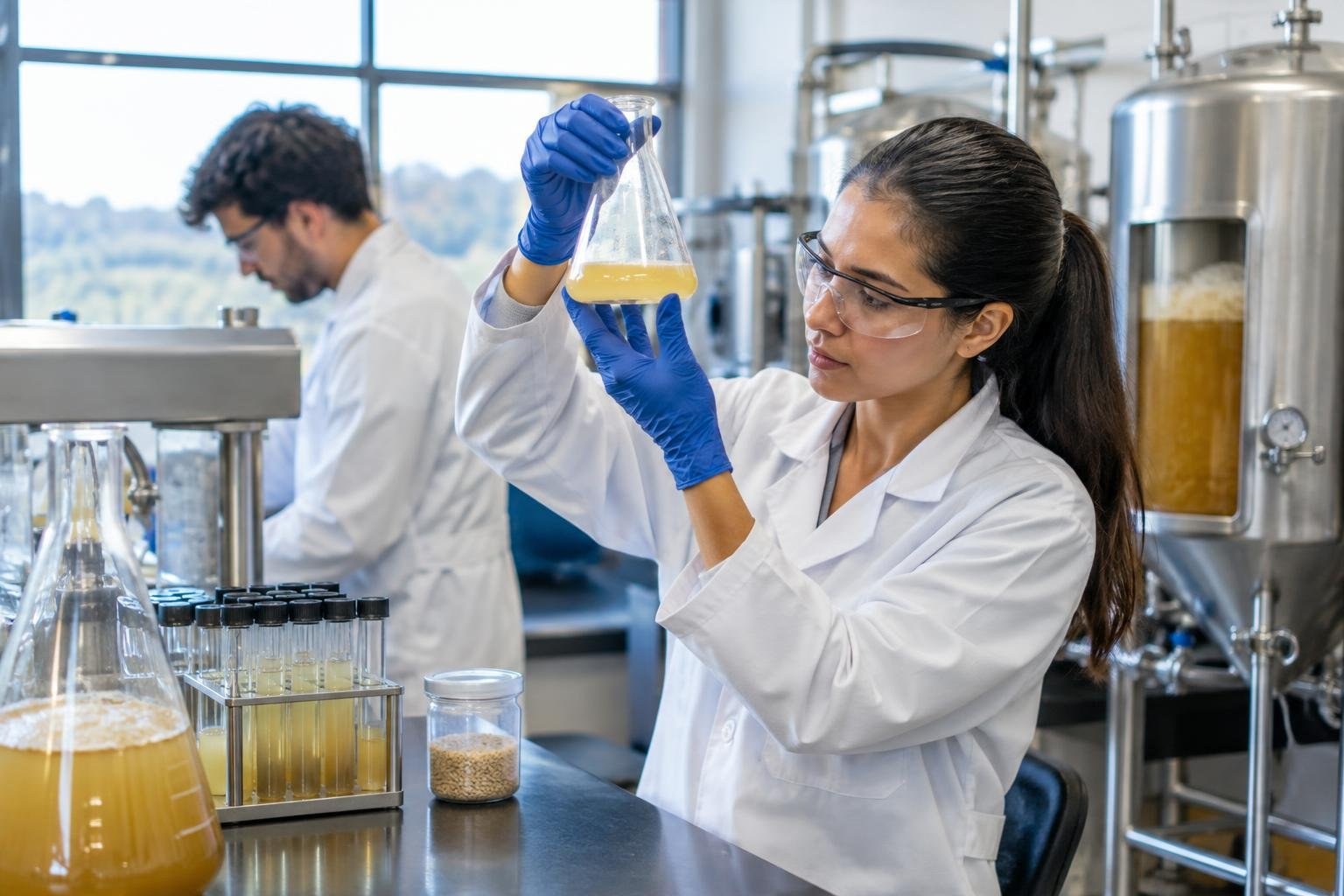
What Is a Zymology or Fermentation Science Degree?
Direct answer: Zymology is the science of fermentation. Fermentation science applies that knowledge to processes and products, including areas such as alcoholic beverages and baking. The field draws on biological and food science, but degree titles and course depth are not standardized across colleges.
The supplied program classification places this subject in Food Science and Technology and gives CIP code 01.1005. At a college, it may appear as a named major, concentration, certificate, or set of courses within a broader program. Verify the exact credential on the college catalog and transcript description.
Do not confuse a focused fermentation program with a general food science degree, brewing course, or hobby-level workshop. Each may have a different academic depth, lab component, and employment purpose. Read the curriculum rather than relying on promotional program names.
What Do You Study? Courses and Hands-On Learning
Courses depend on the institution and credential level. A focused pathway may introduce fermentation concepts and the scientific foundations behind them, then build toward applied work. Food science programs can include food chemistry, processing, additives, packaging, preparation, storage, shipping, and health and safety topics.
- Foundations: biology, chemistry, microbiology, and introductory food science may support later fermentation study.
- Applied topics: fermentation processes, product handling, quality concepts, and production methods may appear, depending on the program.
- Practice: labs, demonstrations, projects, internships, or capstones may help students apply concepts. These are not guaranteed; ask how many hours and what facilities are involved.
Ask for a sample four-year plan or credential map. Check whether the program covers the products and processes that interest you, whether course sequencing delays graduation, and whether students can access supervised practical work.
Skills You Can Develop
Students can build scientific literacy, careful observation, data recording, problem-solving, and clear communication. Lab or production activities may help them follow procedures, document results, and notice when a process behaves differently than expected. Team projects can also develop collaboration and planning.
These skills may apply to production operations, laboratory support, quality-focused work, and product development. Their usefulness depends on how students practice them and how closely projects resemble workplace tasks. Ask whether graduates leave with documented lab, project, or internship experience.
Software, instruments, and technical methods vary by program and employer. Avoid assuming a particular tool is taught just because it is common in a related industry. Request examples of equipment, lab methods, and software used in required courses.
Who Is This Degree Best For?
This field may suit students who enjoy asking how biological processes work and how they can be applied to useful products. It may also appeal to people who like structured experiments, practical problem-solving, careful documentation, and food or beverage systems.
You do not need one fixed personality type. Some students are drawn to laboratory science; others prefer production environments, quality work, or product-oriented projects. The key is to understand the actual daily work associated with possible careers, including routine procedures and attention to detail.
Does Fermentation Science Match You?
Salary, program reputation, and employment trends are only part of a college decision. Consider whether the subjects, learning environment, and likely work tasks fit your motivations and preferences. Assessment.com’s Free MAPP Career Assessment, Degree Matching, and Career Matching tools can help you reflect on possible directions; use them as decision aids, not guarantees.
Admissions, Length, and Academic Difficulty
Entry requirements and completion plans are set by each institution, so check the catalog for the exact credential and its prerequisites. Zymology or fermentation science is described as a focused area within food science, and programs may be offered at different credential levels. That means the course sequence and time to completion can differ by program and credential.
Ask the department for a term-by-term plan, including required science courses and any practical work. Review the course descriptions before applying so you understand the scientific foundations and food science topics involved. If you are unsure about preparation, ask an adviser what introductory coursework or academic support is available.
Online or On Campus: What to Expect
Some schools offer online courses in this field, but that does not establish that every program or credential can be completed fully online. Delivery options and requirements depend on the institution and course plan.
Before enrolling, check the catalog and ask the department which courses are online, whether any practical work requires in-person participation, and whether travel or other arrangements are part of the plan. Compare those requirements with your schedule before choosing a format.
Cost, Financial Aid, and Ways to Save
Compare the total cost for the specific credential and program you are considering. Programs in this field are available at different credential levels, and the course plan can differ, so request an itemized estimate from each institution rather than assuming costs are alike.
Ask each school which tuition, fees, books, equipment, practical-course expenses, and travel costs apply to your plan. Check with its financial aid office about available assistance and payment options, and confirm transfer-credit decisions with the receiving institution before relying on them in your budget.
Careers, Pay, and Job Outlook
A specialized degree does not guarantee a particular job or salary. Possible areas to investigate include beverage or food production, production operations, quality assurance, laboratory support, and product development. Related food science coursework can address food processing and safety, but employers set their own minimum qualifications.
| Career area to research | Typical preparation to verify | How the degree may apply |
|---|---|---|
| Food or beverage production technician | Relevant coursework; employer-specific training and experience | Process knowledge and practical science foundations |
| Quality assurance or quality-control support | Food science or related preparation; role-specific training | Careful observation, documentation, and understanding of product processes |
| Laboratory support technician | Science coursework and demonstrated lab skills; requirements vary | Scientific foundations and supervised lab experience |
| Product development assistant | Relevant food science study and project experience | Understanding of ingredients, processing, and applied product questions |
| Production supervisor or specialist | Often requires relevant experience; employer requirements differ | Process familiarity may support later advancement |
These are career directions to investigate, not guaranteed outcomes. Pay and outlook depend on the actual occupation, region, experience, and employer. Consult current BLS Occupational Outlook Handbook and O*NET profiles for precise job titles and current labor-market information; do not treat a degree-level average as a reliable salary estimate.
Some entry-level roles may be accessible after a relevant undergraduate credential, while research-intensive or specialized positions may require further education or experience. Automation and measurement technologies can change production tasks, but they do not eliminate the need to verify employer-specific responsibilities and skills.
Find out which Career or College Major is right for you!
Take the MAPP free today!Experience, Credentials, and Preparing for Employment
Internships, supervised labs, research projects, production experience, and relevant student organizations can help connect coursework to work. Ask whether the college helps students find placements, whether positions are paid, and how students receive feedback. Keep a portfolio of eligible projects, written procedures, and presentations without including confidential employer information.
How to Stand Out to Employers
- Build experience with careful recordkeeping and team-based projects.
- Describe your role and methods clearly on a résumé.
- Seek relevant practical experience before graduation where possible.
- Ask local employers which skills and credentials they actually request.
There is no universal professional license for every fermentation-related role. Do not assume that completing a degree automatically grants permission to perform regulated work. Confirm any role-specific safety, food-handling, or employer training requirements with the employer and relevant authorities.
Related Degrees and Graduate Study
Related pathways include food science and technology, microbiology, biology, chemistry, agricultural science, and brewing or beverage-focused study. Consider food science if you want a broader base spanning processing and safety. Consider microbiology if your strongest interest is microorganisms beyond food applications. A chemistry or biology degree may provide wider scientific foundations but may require electives or experience to build a food-industry focus.
Compare each option by course requirements, lab time, practical experiences, graduate-school pathways, and the job qualifications you find in real postings. A narrow program can provide focus; a broader degree may allow more flexibility. Neither is automatically the better choice.
Graduate study may make sense for students pursuing advanced research, specialized technical work, or academic careers. It is not a universal requirement for fermentation-related employment. Speak with program faculty and professionals before committing to additional education.
Is a Fermentation Science Degree Worth It? Pros and Cons
Advantages: focused study can connect scientific ideas with applied food and beverage processes; practical coursework may help students test their interests; and the subject can lead toward several types of work rather than one job title.
Tradeoffs: the major may be offered at relatively few institutions, program names may obscure differences in content, hands-on study can affect schedule and cost, and job eligibility depends on experience and employer needs. A narrow degree may require deliberate planning to keep other options open.
Whether it is worth it depends on your total cost, chosen credential, target occupation, location, and the amount of practical experience the program provides. Compare course plans with current job postings and ask colleges for transparent outcomes information. Avoid enrolling based only on broad promises about salary or industry growth.
How to Choose a Program and a Qualified College
Use this checklist when comparing colleges and discussing the decision as a family:
- What is the exact credential, and how does the college describe the program?
- Which fermentation, food science, biology, and chemistry topics appear in the required courses?
- How much practical work is included, and what projects can students complete?
- What is the itemized cost for your intended course plan?
- What are the course delivery requirements and completion sequence?
- How does the curriculum connect to the kinds of work you want to investigate?
- What academic advising, career support, and financial aid options can the institution explain?
Compare program plans directly. A focused fermentation pathway shares foundations with food science but may differ in its emphasis and available coursework. Use the catalog and conversations with program staff to verify what each option actually includes.
Explore colleges and programs that fit your goals, then use Assessment.com’s Degree Matching and Career Matching tools as one input alongside direct research.
From Degree to Career: A Realistic Pathway
Career development is not automatic, but a possible path could look like this: fermentation-focused coursework → entry-level production or laboratory-support role → practical experience → quality, process, or product specialization → advanced technical or supervisory opportunity.
Some graduates may instead pursue broader food science roles, further study, or a different sector. Progression depends on job performance, additional skills, employer needs, location, and qualifications. Before enrolling, identify several possible first jobs and check what employers require.
Timing, Safety, Red Flags, and an Enrollment Checklist
Before you apply
Confirm that the course plan covers the fermentation and food science topics you want to study. Compare the exact credential, course sequence, costs, delivery format, and practical learning opportunities. Ask what projects are available and what preparation they require.
Red flags to watch for
Be cautious if program descriptions do not clearly identify the credential or required courses, or if employment claims are not connected to specific roles and qualifications. Compare the college catalog with information from program staff before making a decision.
Food science coursework can address health and safety topics. Ask how those subjects appear in the curriculum and what protocols apply to any laboratory or production work. Follow the instructions provided by the institution for practical activities.
Final Decision: Is Fermentation Science Right for You?
Is Zymology or Fermentation Science Right for You?
This path may fit students who want to study fermentation and its applications in areas such as alcoholic beverages or baking. It may be less suitable if you want a broader course plan or if the programs available to you do not connect with the subjects and work you want to explore.
Before deciding, compare a focused fermentation program with food science and related majors. Review course requirements, practical opportunities, and the total cost for each option. The subject is a focused area within food science, so the program title alone does not tell you how its curriculum is structured.
Before Choosing a Degree, Find Out What Fits You
Choosing a college program can affect years of education and decades of work. Consider whether the subjects, learning environment, and work you hope to pursue fit your motivations and interests.
Take the Free MAPP Career Assessment to explore careers that may match you, how related careers align with your profile, degrees tied to those careers, and potential jobs connected with those paths. You can also explore Degree Matching, Career Matching, and Matching Jobs as starting points for further research.
Take the Free MAPP Assessment →
Factors That Affect the Project
For a fermentation-related class project, start by defining the question and the product or process you want to study. Fermentation involves biochemical processes, and the selection and characteristics of yeast or bacteria can be part of the subject. Those choices should fit the project’s aim and the material being studied.
The factors to consider may therefore include the fermentation process, the microorganisms being studied, and the food or beverage application. A program’s course plan can also affect what practical project work is available: fermentation science is a focused area within food science, while course content differs among programs. Ask faculty what projects students complete and what preparation is expected.
Frequently asked questions
What is zymology or fermentation science?
Zymology and fermentation science study fermentation, the science and controlled use of processes involving microorganisms. Students may examine how fermentation is used in products such as wine, beer, and baked goods, alongside related food science topics. Programs differ, so review each curriculum to see whether it emphasizes food processing, beverage production, microbiology, or another area.
Is fermentation science a difficult major?
It can be challenging for students who are new to biology, chemistry, microbiology, or quantitative coursework. The exact demands depend on the program. Ask for a course list and check whether laboratory classes, production work, or advanced chemistry are required. Reviewing introductory biology and chemistry can help you prepare.
What jobs can I get with a fermentation science degree?
Graduates may explore food and beverage production, quality assurance, laboratory support, product development, or production operations. Specific eligibility depends on the role and employer, and some positions require a related degree, prior experience, or additional training. Confirm job requirements in the locations and industries where you plan to work.
How much can I earn with a fermentation science degree?
Pay varies by occupation, degree level, region, experience, and employer. A degree title does not correspond to one standard salary. Compare the specific job titles you are considering using current U.S. Bureau of Labor Statistics and O*NET information, then review local job postings for experience and education requirements.
Can I earn a fermentation science degree online?
Some coursework may be available online, but the feasibility of a fully online program depends on whether the curriculum includes laboratory, production, or other in-person learning. Ask the college which activities must be completed on campus or at an approved site and whether those requirements add travel or other costs.
Does fermentation science require a lot of math or science?
Many programs related to food science include chemistry and biology, but the amount of math and science varies. Check the required course sequence rather than relying on the major title. Ask an adviser about prerequisites, lab hours, and whether tutoring or introductory courses are available.
Do I need graduate school to work in fermentation?
Not necessarily. Entry-level production, laboratory-support, or quality-related roles may have requirements that differ from research, management, or specialized technical positions. Graduate study can be useful for advanced research or some specialized work, but check job postings and speak with faculty before treating it as necessary.
What certifications help in fermentation careers?
There is no single credential required for every fermentation-related job. Employers may prioritize relevant coursework, lab or production experience, food safety training, or role-specific qualifications. Ask prospective employers and program advisers which credentials are valued for the particular work you want to do.
How does fermentation science compare with food science?
Fermentation science focuses on the science and application of fermentation. Food science is broader and may cover food chemistry, processing, packaging, storage, safety, and other topics. A fermentation-focused program may suit students seeking specialized study, while a broader food science degree may leave more options across food industries.
Is a fermentation science degree worth it?
Potential value depends on tuition, time to completion, hands-on opportunities, transfer credit, and access to relevant jobs. Compare the program’s total cost with realistic entry requirements for target positions. Talk to current students and graduates, and check whether the curriculum builds experience employers request.
People Also Ask
What is the difference between zymology and zymurgy?
Zymology is the science of fermentation, while zymurgy often refers to the practical application of fermentation, especially in brewing. The terms can overlap in general use, so check how each college defines its program.
Is fermentation science its own college major?
Not always. A focused fermentation program may be available as a major or concentration, but some colleges offer fermentation coursework within food science, microbiology, or another related program. Review actual course requirements.
What can I do with a fermentation science major?
Potential roles include production, quality, laboratory support, and product development, but education requirements vary. Search for job titles in your target industry and compare the stated qualifications with the program curriculum.
How long does a fermentation science degree take?
The exact time depends on credential level, course load, transfer credits, and whether required labs are offered each term. Ask each college for a term-by-term completion plan.
Can fermentation science be studied online?
Some coursework may be online, but lab or production requirements can require in-person participation. Confirm the format and any travel expectations before enrolling.
What subjects do you study in fermentation science?
Programs may include chemistry, biology, microbiology, and quantitative coursework. The balance differs, so review prerequisites and required courses before applying.
Should I study food science or fermentation science?
A broader food science major can cover more areas of food production and safety, while a fermentation concentration may offer more focused study. Compare course lists and work experience options.
Do fermentation careers require certification?
There is no universal certification for all fermentation-related careers. Employers may value role-specific training and relevant practical experience; verify expectations for your intended job.
Zymology and fermentation science can suit students who want to understand how microorganisms and controlled processes transform ingredients into foods and beverages. The degree’s practical value depends on the curriculum, hands-on experience, local industry opportunities, and the roles you want to pursue. Compare programs carefully, verify costs and outcomes directly, and consider whether the day-to-day science and production work match your interests before enrolling.
Want to see your options? Try our comprehensive Degree, Program & College Search tool
College Search ToolSources & Official Resources
Sources and further reading: University of Wisconsin–Madison, Animal Sciences course outcomes; Colorado State University, Animal Science major catalog; RUReadyND program description of food science coursework; EBSCO Research Starters, “Zymology and Zymurgy”; College Factual, related majors in Zymology/Fermentation Science; GradDegree, Zymology/Fermentation Science overview. For current pay and occupational outlook, consult the U.S. Bureau of Labor Statistics and O*NET using the specific occupation title.